
There is something frustrating about letting go.
Most of us don’t fight because we love what we’re holding. We fight because we have no idea what happens after we let go. The familiar, even when it hurts, feels safer than the unknown.
That’s why people stay in jobs that drain them every Monday morning. They keep friendships that haven’t felt genuine in years. They replay conversations that ended months ago. They carry guilt for mistakes that no one else even remembers.
It becomes heavy, but it’s familiar. So we convince ourselves it’s easier to keep carrying it.
Watch someone trying to pick up groceries while both hands are already full. They fumble. Things fall. They have to put something down before they can grab anything else.
Life works the same way.
You can’t make space for a healthier relationship while you’re still emotionally invested in the one that’s already over. You can’t enjoy a new opportunity when you’re comparing every step to the path you didn’t take. You can’t hear new ideas when your mind is busy defending old ones.
We spend so much time asking for more.
More success. More peace. More love. More confidence.
Sometimes the answer isn’t getting more. It’s carrying less.
Letting go isn’t giving up. It’s deciding that something no longer deserves your energy.
That might be the need to prove yourself to people who made up their minds years ago. It could be the habit of saying yes because disappointing others feels worse than exhausting yourself. It might be the version of you that everyone else expects, even though you’ve quietly outgrown it.
Growth often looks smaller before it looks bigger.
A tree drops thousands of leaves without questioning whether spring will come back. It doesn’t cling to every leaf because it knows holding on to dead things doesn’t keep it alive.
People aren’t as good at that.
We hold onto identities that stopped fitting years ago. We introduce ourselves with achievements that no longer excite us. We protect routines that no longer help us because changing them would mean admitting we’ve changed too.
There comes a point where the weight you’re carrying costs more than the comfort it gives you.
You feel it in small moments.
You dread opening your inbox.
You avoid certain phone calls.
You replay the same argument during your commute.
You keep checking a message that isn’t coming.
None of those things ask for your permission. They simply take your attention, one piece at a time.
Imagine what your days would feel like if that attention came back to you.
The energy you spend holding onto resentment could become patience for someone who actually deserves it. The hours spent chasing approval could become time learning a skill you’ve wanted to master. The space occupied by regret could become curiosity about what’s still possible.
Life rarely takes something away just to leave an empty space.
It creates room.
Room for people who meet you where you are instead of where you used to be.
Room for work that challenges you instead of trapping you.
Room for peace that doesn’t depend on everything going your way.
Empty hands can feel uncomfortable.
They can also build, create, hug, help, write, and reach for things that were impossible to hold before.
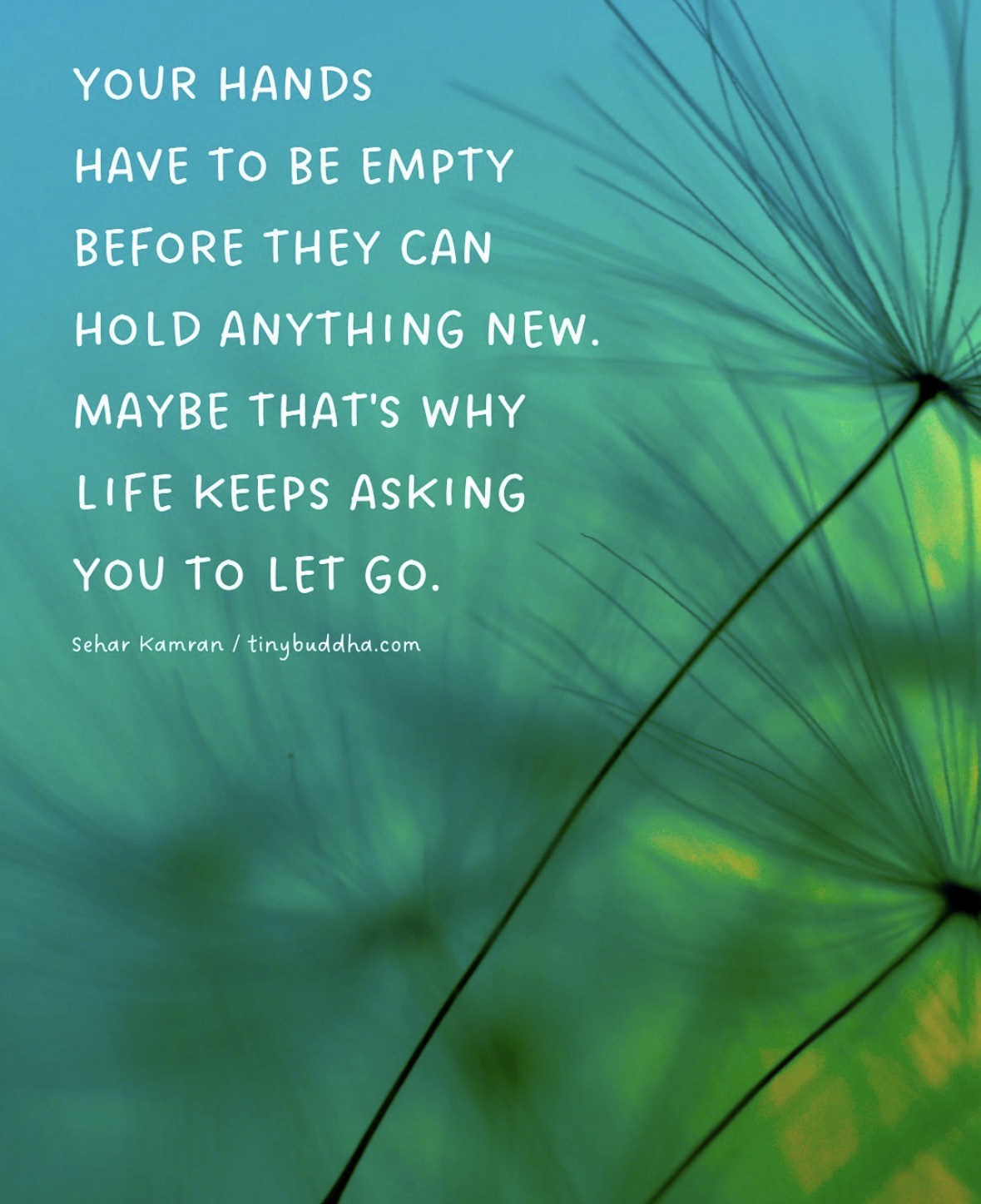
Maybe that’s why life keeps asking you to let go.

