
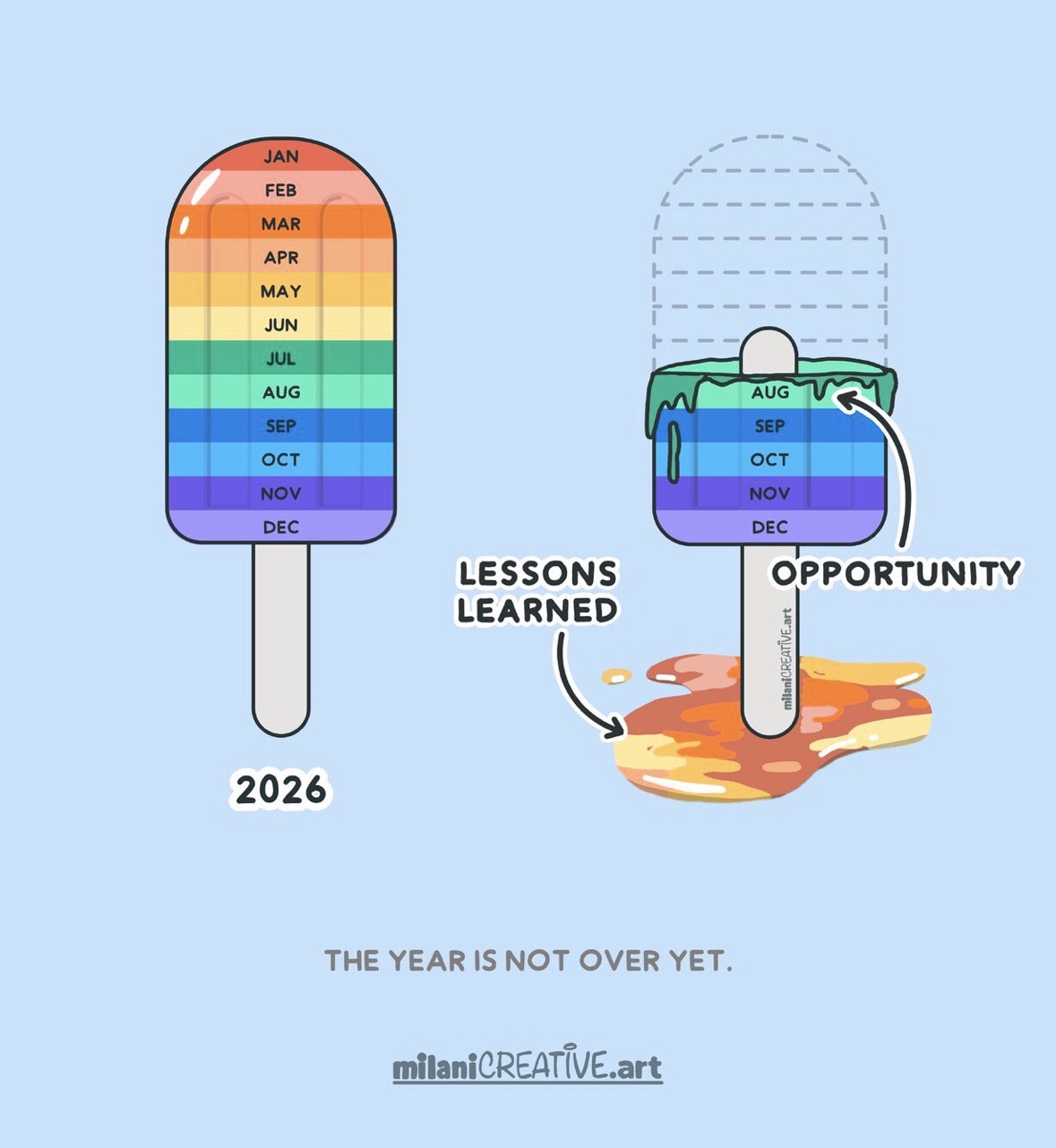
By August, a lot of people have already decided what kind of year they’re having.
“This wasn’t my year.”
“I should have done more.”
“I’ll start fresh next January.”
That way of thinking quietly steals the months you still have.
A rough start doesn’t lock you into a rough finish. One bad season doesn’t get to decide the rest of the story unless you let it.
The biggest mistake people make is treating time like a single opportunity instead of a series of them.
Missed a promotion? You still have time to become the obvious choice for the next one.
Didn’t stick to your fitness goal? The gym doesn’t care what happened in February. It only cares if you show up today.
Spent too much money? Your savings account isn’t keeping score of your past decisions. It responds to the habits you build now.
Life is surprisingly forgiving when you’re willing to begin again.
The problem is that most of us spend more energy replaying what already happened than creating what comes next.
We replay conversations.
We think about the chances we didn’t take.
We wonder how things would be different if we had spoken up, worked harder, or made another choice.
None of that changes tomorrow.
What changes tomorrow is what you decide to do after closing this page.
The lessons you’ve picked up this year already cost you something.
Some cost your confidence.
Some cost your time.
Some cost money.
Some cost relationships.
Some cost sleep.
Don’t pay for those lessons twice by refusing to use them.
Experience only becomes valuable when it changes your behavior.
If you’ve learned that constantly saying yes leaves you exhausted, start protecting your time.
If you’ve learned that your health won’t improve on its own, schedule the walk, cook the meal, book the appointment.
If you’ve learned that you’ve been waiting for someone else to believe in you, stop waiting.
Knowledge without action is just an expensive memory.
People often underestimate what can happen in a few focused months.
Five months is enough to finish a certification.
Enough to read books that completely change the way you think.
Enough to build healthier habits.
Enough to repair a relationship that still matters.
Enough to save more money than you’ve ever managed before.
Enough to create work that opens doors you didn’t know existed.
The reason those goals feel impossible is because we imagine the finished result instead of the next step.
A healthier life isn’t built in one decision.
It’s built by choosing water instead of soda.
Taking the stairs.
Going to bed thirty minutes earlier.
Walking when you don’t feel like it.
Those small choices don’t look impressive on any single day.
Stack enough of them together and people start calling it discipline.
The same is true for every meaningful change.
Great careers aren’t built during moments of inspiration. They’re built during ordinary evenings when someone decides to learn one more skill instead of scrolling for another hour.
Strong relationships aren’t created by grand gestures. They’re built through conversations, apologies, shared meals, and showing up when it’s inconvenient.
Confidence doesn’t appear before action.
It grows because of action.
You don’t need a perfect Monday.
You don’t need the first day of the month.
You don’t need a new notebook, a new planner, or a motivational quote.
You need one decision that you’ll repeat tomorrow.
And the day after that.
The calendar doesn’t reward perfect starts.
It rewards consistency.
Some of the biggest turning points in people’s lives begin on completely ordinary days. No countdown. No celebration. No announcement. Just a quiet decision that enough is enough.
The months ahead don’t know whether you’ve had a great year or a difficult one.
They only know what you choose to do when they arrive.

