
Some conversations leave you with a choice that feels impossible.
You can say what you’re thinking and risk upsetting someone. Or you can stay quiet, keep the peace, and carry the weight home with you.
Most of us are taught that silence is the mature option. We tell ourselves it isn’t worth the argument. We don’t want drama. We don’t want to look difficult. So we nod, smile, and let the moment pass.
At first, it feels like the easier decision.
Then it happens again.
A friend makes a joke that crosses a line. A manager takes credit for your work. A family member keeps making decisions for you. A partner dismisses something that matters to you. Each time, you swallow the words sitting at the back of your throat.
Eventually, you stop noticing that you’re doing it.
The strange thing about silence is that it doesn’t stay in one moment. It follows you.
You replay conversations while driving home. You think of the perfect response in the shower. You imagine how differently things could have gone if you had spoken up for just thirty seconds.
The other person may have forgotten the conversation before dinner.
You haven’t.
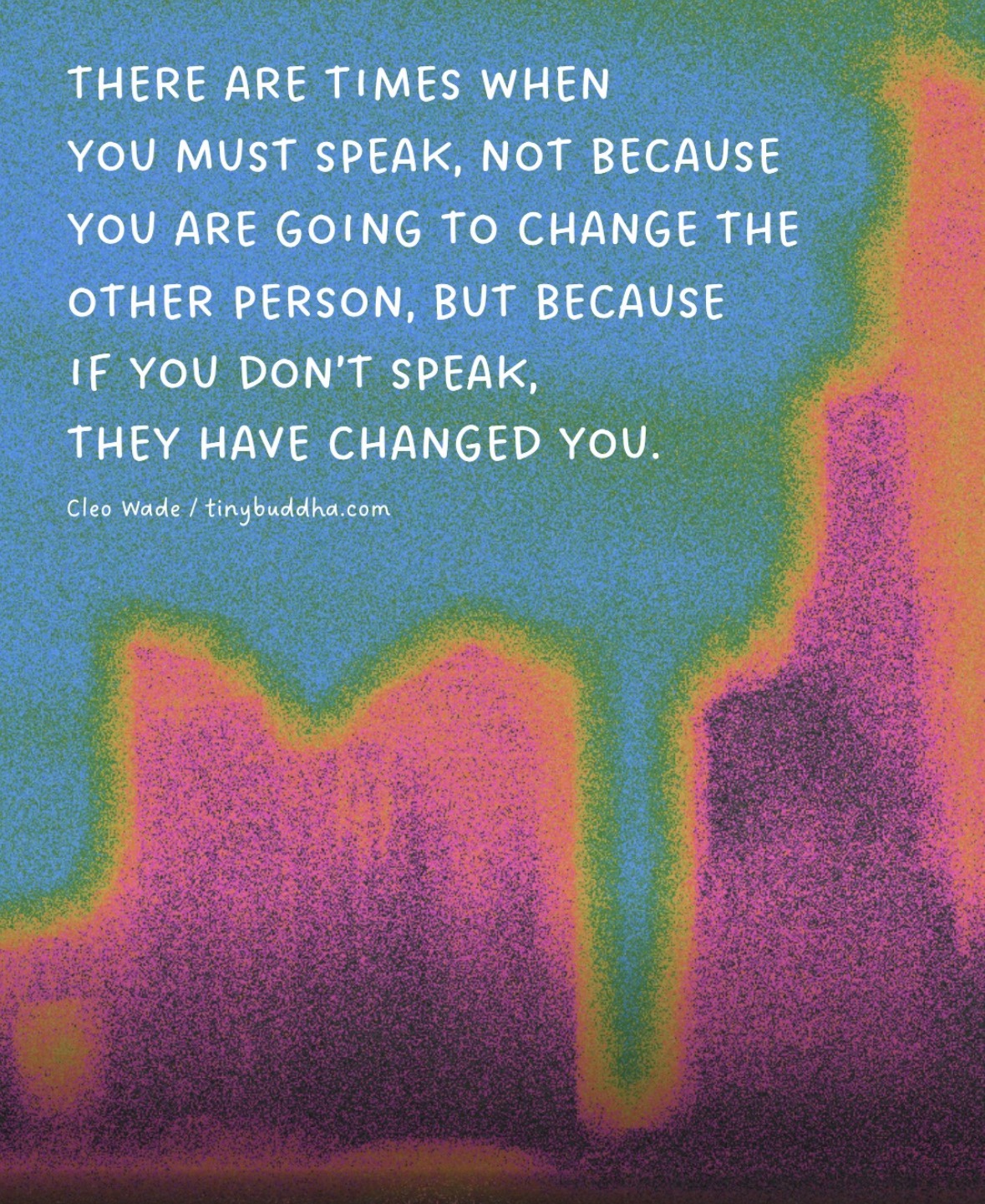
People often think speaking up is about changing someone else’s mind. Sometimes that happens. Most of the time, it doesn’t.
Someone who has ignored your feelings for years probably won’t wake up because of one conversation. A stubborn coworker won’t suddenly become generous. A person who refuses to listen may keep refusing.
That doesn’t make your words pointless.
The first person who needs to hear your voice is you.
Every time you stay silent to avoid discomfort, you send yourself a quiet message. My opinion can wait. My boundaries are optional. Keeping everyone comfortable matters more than keeping my self respect.
Repeat that often enough and it starts shaping how you see yourself.
Confidence rarely disappears overnight. It fades through hundreds of small moments where you decided your voice wasn’t worth hearing.
Speaking up works in the opposite direction.
You tell someone, “I don’t appreciate being spoken to like that.”
You say, “That wasn’t my mistake.”
You admit, “I’m not okay with this.”
Maybe the other person argues. Maybe they roll their eyes. Maybe nothing changes at all.
Something still changes.
You leave knowing you stood beside yourself instead of walking away from yourself.
There’s a difference between speaking with anger and speaking with clarity.
Anger tries to win.
Clarity tries to be honest.
You don’t need a rehearsed speech. You don’t need the last word. One calm sentence often carries more weight than ten emotional ones.
Some people will respect you more after you set a boundary.
Some people will like you less.
That second group tells you something valuable. They benefited from the version of you who stayed quiet. Your voice interrupted an arrangement that only worked for them.
Healthy relationships survive honest conversations. Unhealthy ones depend on silence.
Of course, timing matters. Safety matters. Not every situation calls for confrontation in the moment. There are times when walking away is the wiser choice.
Even then, don’t confuse choosing the right moment with convincing yourself there will always be a better one.
There comes a point where silence stops protecting the relationship and starts erasing pieces of you.
Your voice doesn’t exist only for celebrations, presentations, or casual conversations. It exists for the uncomfortable moments too. The moments when your stomach tightens. When your heart races. When every instinct tells you to let it go.
Sometimes you should let it go.
Sometimes you should let it be heard.
The goal isn’t to become louder. It’s to become someone who doesn’t abandon themselves every time honesty feels uncomfortable.
People will remember many things about you. They may remember your kindness, your patience, or your work.
Make sure you remember something too.
Remember that when the moment asked whether your voice mattered, you answered it.

