
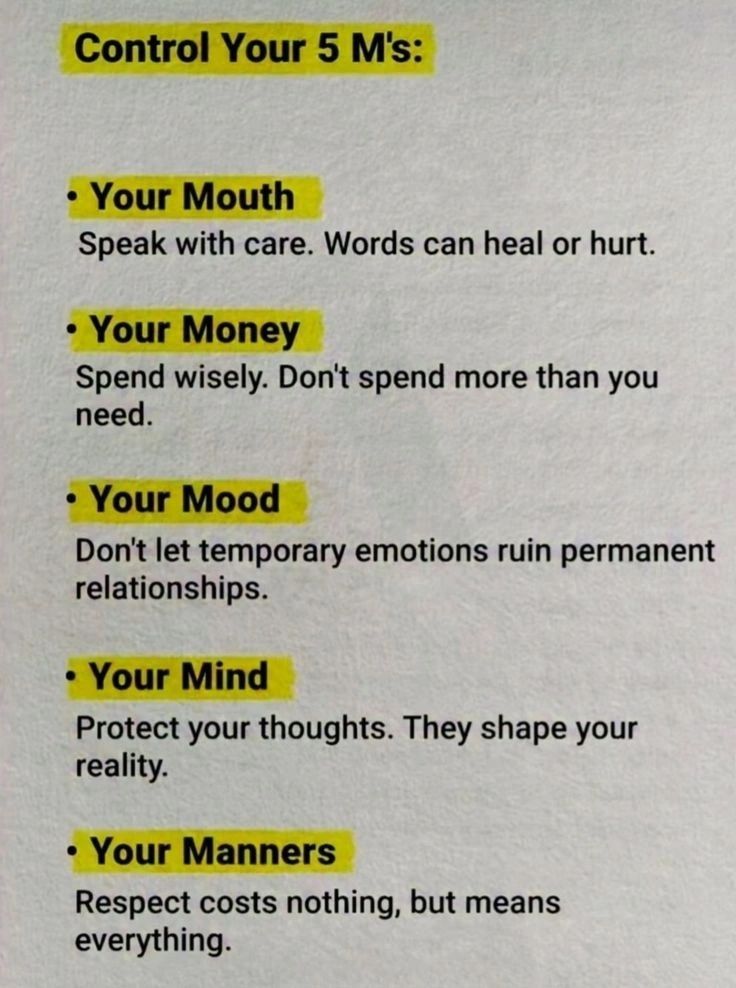
In life, business, and leadership, real control is not about controlling others.
It is about controlling yourself. Psychology teaches us that small daily behaviors, when repeated consistently, shape our identity, reputation, and results. The 5 M’s are simple, but mastering them creates powerful inner discipline.
1. Your Mouth
Words are not just communication tools; they are emotional triggers. What we say can build trust or destroy it in seconds. Emotionally intelligent people pause before speaking. They understand that calm words reflect a strong mind, not weakness.
2. Your Money
Money decisions are deeply emotional. Overspending often comes from ego, fear, or comparison. Financial discipline is not about restriction it is about clarity. When you control money, you reduce stress, improve focus, and create long-term freedom.
3. Your Mood
Temporary emotions should never control permanent decisions. Psychology shows that most conflicts happen during emotional peaks. Learning to regulate your mood protects relationships, career growth, and decision quality. Self-control here is true maturity.
4. Your Mind
Your thoughts become habits, and habits become destiny. A protected mind filters negativity, fear, and distractions. High performers train their thinking just like muscles daily, intentionally, and with purpose.
5. Your Manners
Respect is silent leadership. Manners show emotional stability, confidence, and self-awareness. In business and life, people may forget your words, but they never forget how you made them feel.
Final Thought:
When you master your 5 M’s, you don’t just improve your behavioryou upgrade your mindset, relationships, and results. Self-control is the highest form of power.
Shine Anyway
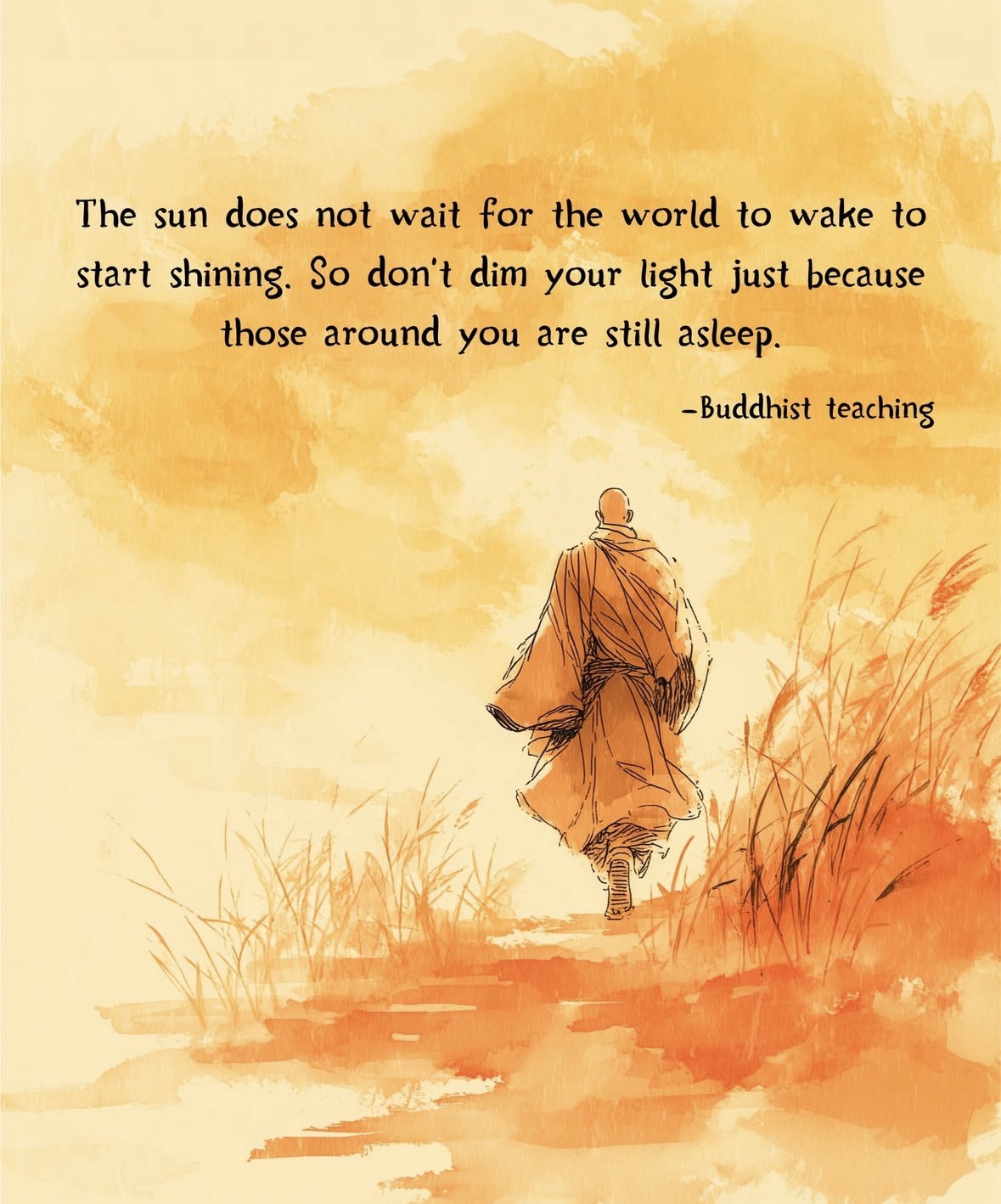
The sun doesn’t check the time before it rises. It doesn’t peek around to see who’s awake, who’s ready, or who’s paying attention. It shows up because that’s what it does. Every single day. No permission required.
Somewhere along the way, we start believing we should do the opposite. We wait. We lower our voice. We soften our opinions. We hold back our ideas because the room feels quiet, or cautious, or not quite ready. We tell ourselves, now isn’t the moment, they won’t get it yet, maybe later. And little by little, we dim our own light.
Most people around you aren’t asleep because they’re lazy or unaware. They’re just comfortable in the dark they know. Change takes effort. Growth asks questions. Light reveals things we might not be ready to see yet. So when you show up fully—curious, hopeful, ambitious, kind, different—it can feel unsettling to those still figuring things out.
That discomfort isn’t a signal for you to shrink. It’s often a sign that you’re early.
Being early can feel lonely. You talk about ideas others haven’t considered. You feel urgency where others feel none. You see possibility while the rest of the room is still rubbing its eyes. It’s tempting to slow down, to blend in, to wait until there’s applause or validation or at least a few nodding heads. But light isn’t meant to wait. Its job is to illuminate, not to convince.
Think about how often you’ve been inspired not by someone who waited for the perfect moment, but by someone who simply went first. They didn’t have all the answers. They weren’t universally understood. But their willingness to shine gave others permission to wake up. Your light can do the same, even if you never see it happen.
There’s also a quieter truth here: dimming yourself doesn’t actually make things easier. It just makes you smaller. And over time, that shrinking comes at a cost. You feel it in the hesitation before you speak. In the ideas you keep to yourself. In the exhaustion of pretending you’re less than you are. The world doesn’t benefit from that version of you, and neither do you.
Shining doesn’t mean being loud or flashy or constantly visible. It can be steady. Consistent. Grounded. It can look like doing good work when no one’s watching, choosing integrity when shortcuts are easier, or staying hopeful in spaces that thrive on cynicism. Light takes many forms, and all of them matter.
Some people will wake up because of you. Some won’t. That’s not your responsibility. Your responsibility is simpler and harder at the same time: don’t dim what was never meant to be hidden.
The sun rises whether the world is ready or not. And eventually, the world adjusts. Let that be your cue. Shine anyway.
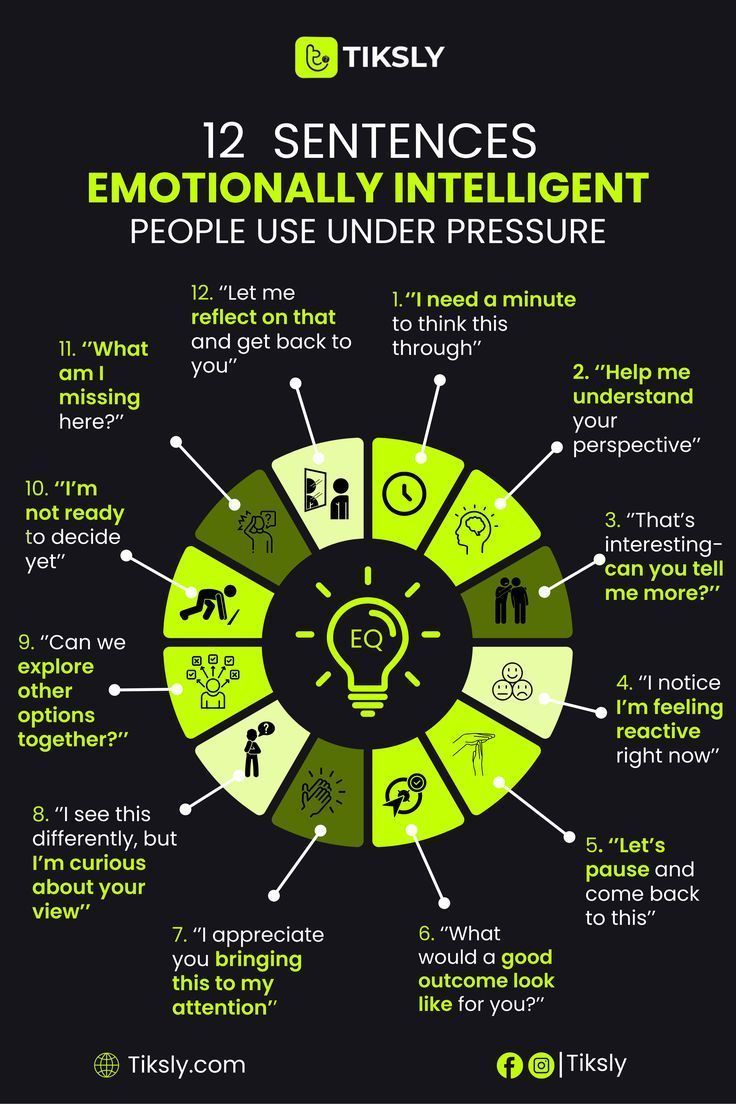
12 Sentences Emotionally Intelligent People Use Under Pressure
Anyone can seem calm in easy situations.
But real emotional intelligence shows up under stress.
When others get defensive, reactive or passive-aggressive—
High-EQ people stay grounded and intentional.
Here are 12 phrases emotionally intelligent people use when it matters most:
“I need a minute to think this through.”
↳ Pause before speaking. It protects relationships.
“Help me understand your perspective.”
↳ Curiosity disarms conflict.
“That’s interesting—can you tell me more?”
↳ Invite clarity, not conflict.
“I notice I’m feeling reactive right now.”
↳ Self-awareness is emotional self-defence.
“Let’s pause and come back to this.”
↳ Space brings solutions.
“What would a good outcome look like for you?”
↳ Outcome > ego.
“I appreciate you bringing this to my attention.”
↳ Gratitude keeps tension low.
“I see this differently, but I’m curious about your view.”
↳ Disagreeing respectfully = power move.
“Can we explore other options together?”
↳ Collaboration, not control.
“I’m not ready to decide yet.”
↳ Pressure off, clarity on.
“What am I missing here?”
↳ Humility beats defensiveness.
“Let me reflect on that and get back to you.”
↳ Deliberate beats reactive.
Memorise these. Practise them.
You’ll become the person everyone wants in the room when pressure hits.
The Quiet Rebellion
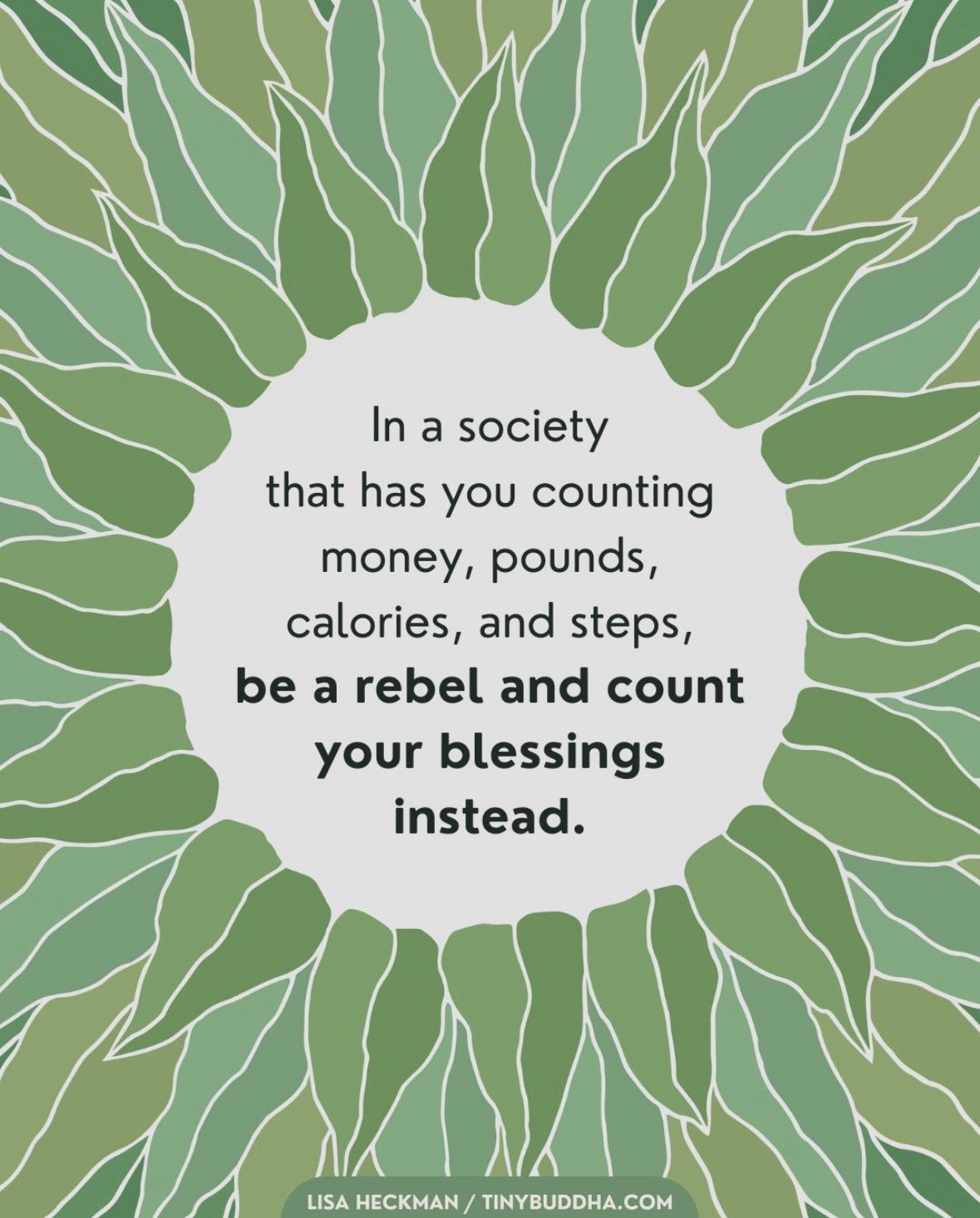
We live in a world obsessed with numbers. How much you earn. How much you weigh. How many calories you burned. How many steps you took before noon. Dashboards everywhere, progress bars for everything, gentle nudges that somehow feel like constant judgment. Even rest has metrics now. Sleep scores. Recovery scores. Productivity streaks.
It’s not that counting is bad. Numbers help us understand patterns. They keep planes in the air and budgets from collapsing. But somewhere along the way, we started measuring the wrong things too often, and trusting those measurements more than how we actually feel.
You can hit every target and still feel empty.
You can miss half of them and feel deeply, quietly content.
That’s the part no app can track.
Counting blessings isn’t about pretending life is perfect or forcing gratitude when things genuinely hurt. It’s not toxic positivity. It’s not denial. It’s a conscious decision to shift attention from what’s being optimized to what’s already meaningful.
It’s noticing that your coffee tasted good this morning.
That someone checked in on you without needing a reason.
That your body carried you through another day, even if it complained along the way.
These things don’t show up on charts. They don’t trend. They don’t unlock badges. But they anchor you.
There’s something quietly rebellious about that.
Because the system rewards comparison. More than yesterday. Less than them. Ahead. Behind. On track. Off track. Counting blessings steps out of that race entirely. It says, “I’m not upgrading my life right now. I’m inhabiting it.”
And strangely, that’s when life starts to feel fuller.
When you stop tallying deficits, you notice abundance in unexpected places. Time with people you love. Work that challenges you. Even the hard moments that taught you something you couldn’t have learned any other way. Not everything is a blessing in the moment, but many things reveal themselves as one later, once the noise settles.
Gratitude doesn’t make you complacent. It makes you grounded. From that place, ambition becomes healthier. You still want to grow, but you’re no longer running from a sense of not-enough. You’re building from a place of already-here.
That changes the pace. And the pressure.
Some days, counting blessings looks poetic and profound. Other days, it’s stubborn and practical. It’s saying, “Today was messy, but I’m still grateful for this one small thing.” That counts too. Especially that.
So yes, track your goals if they help you. Count your steps if they motivate you. Use the tools. Just don’t let them become the scoreboard for your worth or the sole evidence of a life well lived.
Because the most meaningful things often resist measurement.
And choosing to notice them, again and again, in a culture that keeps asking you to count everything else?
That’s a rebellion worth joining.
Emotional Intelligence
It’s a way of living.
A way of living built on habits.
Being emotionally intelligent isn’t about being perfect.
It’s about showing up, growing, and leading with balance.
Emotions are powerful tools.
They can connect or divide, lift or limit.
Because:
– They’re spontaneous.
– They require awareness.
– They are not controlled easily.
And sometimes, they demand a choice….
A choice to act with intention instead of reaction.
In short, emotional intelligence…
Isn’t something you just have.
It’s also something you practice.
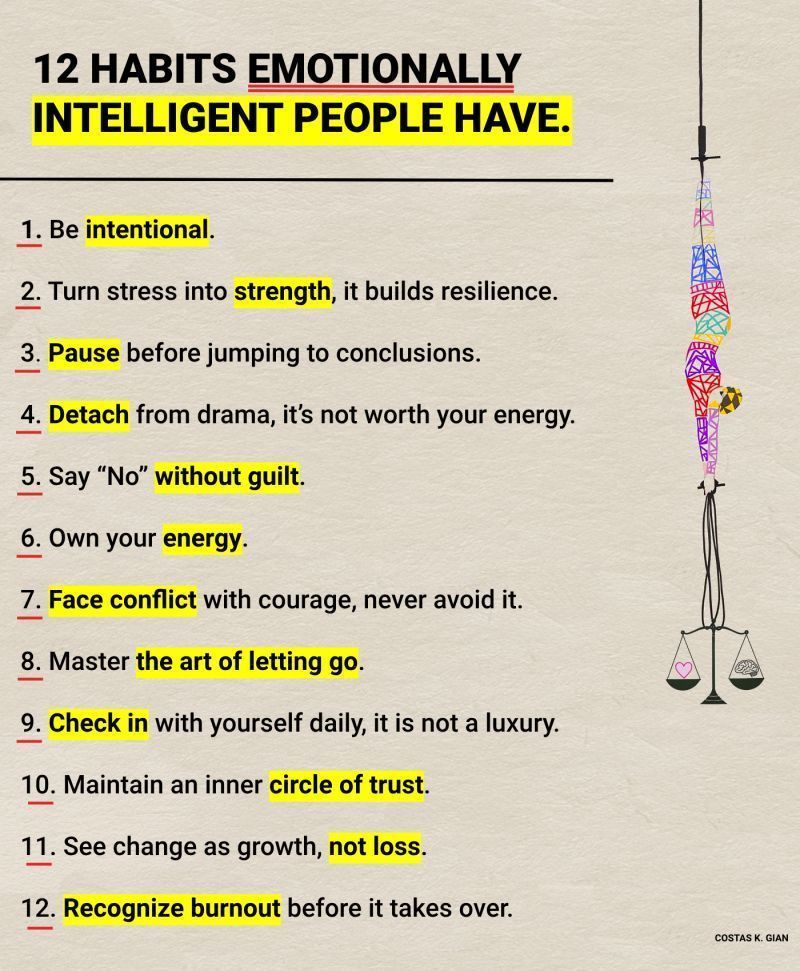
Here are 12 Habits for Emotional Intelligence:
1. Be intentional
– Reflect and decide what truly matters most.
– Let purpose guide your actions all day.
2. Transform stress into strength.
– See struggles as lessons, not setbacks.
– Build resilience with each calm response.
3. Pause before jumping to conclusions.
– Slow down and think things through.
– Ask questions to uncover the truth.
4. Detach from drama.
– Protect your peace at all costs.
– Be smart and let go of negativity that drains you.
5. Say “no” without guilt.
– Respect your time and your limits.
– Create space for what truly matters.
6. Own your energy.
– Bring positivity into every moment.
– Be mindful of the emotions you share.
7. Face conflict with courage.
– Speak up with honesty and care.
– Focus on resolving, not assigning blame.
8. Master the art of letting go.
– Release what holds you back from joy.
– Create room for growth and new beginnings.
9. Check in with yourself daily.
– Reflect on what you feel and need.
– Align your actions with your core values.
10. Maintain an inner circle of trust.
– Surround yourself with those who uplift you.
– Invest in relationships built on respect and care.
11. See change as growth, not loss.
– Focus on the possibilities ahead of you.
– Let change help you learn and evolve.
12. Recognize burnout before it takes over.
– Pay attention to your emotional and physical cues.
– Use self-awareness to spot early warning signs.
These habits build on each other.
It’s the compound effect.
When you stay intentional, strength multiplies.
When you lead with empathy, trust multiplies.
When you embrace change, growth multiplies.
Remember:
“Emotional intelligence is the ability to make emotions work for you…
Not of against you.”
The Art of Floating Without Guilt
There’s a quiet kind of courage in not pushing. In not optimizing the moment. In not turning every pause into a stepping stone for what comes next. We don’t talk about that enough. We celebrate momentum, progress, hustle, next steps. We praise the people who are always “on it,” always moving, always climbing. But life doesn’t actually feel like that most of the time. It ebbs. It drifts. It asks you to slow down even when your mind is still obsessed with speed.
Some days, moving forward feels heavy. Not because you’re lazy or lost, but because you’ve been carrying too much for too long. Your mind is full. Your body is tired in ways sleep doesn’t quite fix. And yet the instinct is still to push—one more task, one more goal, one more thing checked off the list. As if rest has to be earned. As if pausing is the same as falling behind.
But what if it isn’t?
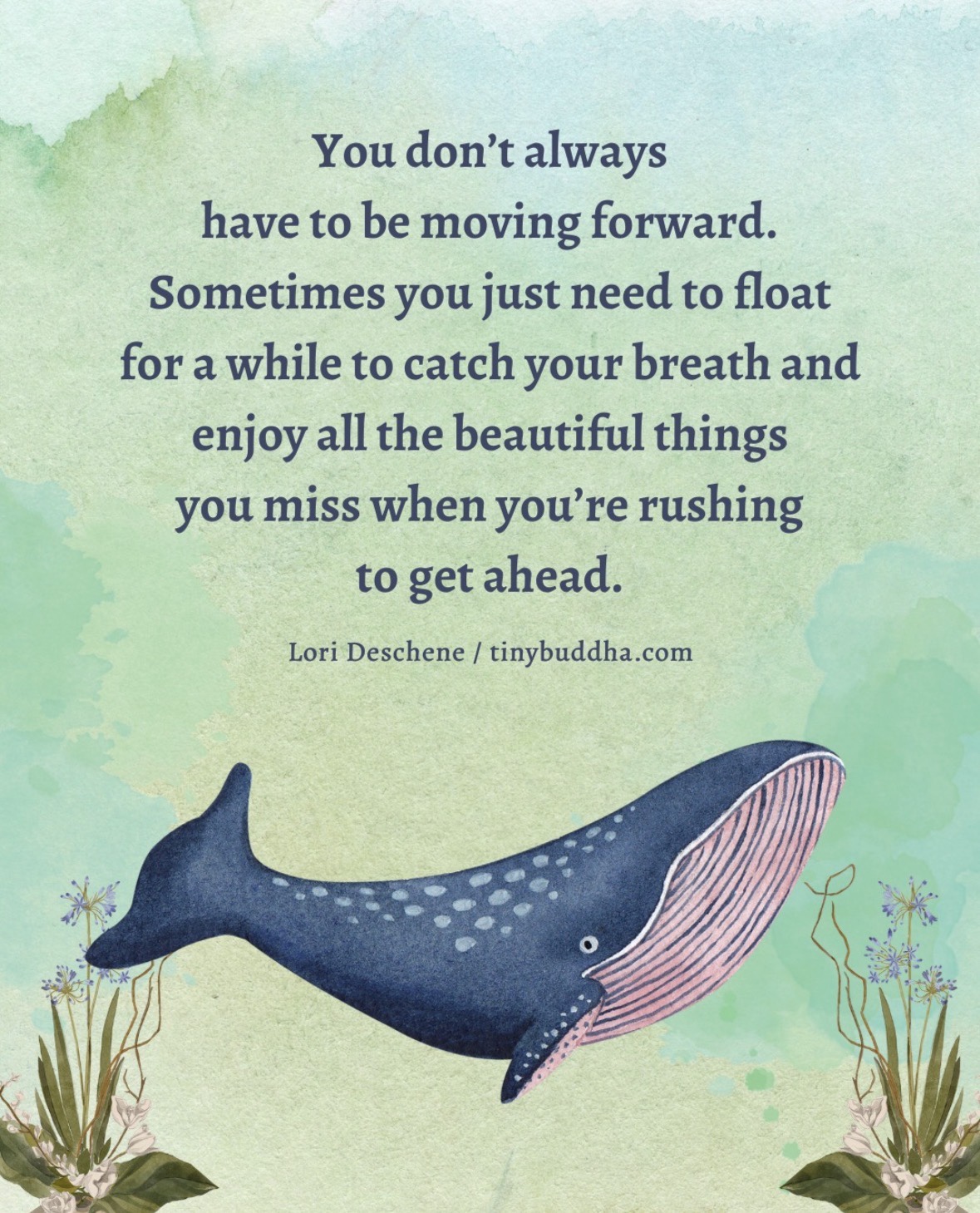
Floating is different from quitting. Floating doesn’t mean you’ve given up on where you’re headed. It means you trust the water enough to hold you for a moment. It means you’re letting your nervous system unclench. Letting your breath deepen. Letting the noise settle so you can hear yourself think again.
When you’re constantly rushing, you miss things. You miss the way the light shifts in the afternoon. You miss the small wins that don’t look impressive on paper but matter deeply to your soul. You miss conversations because you’re already mentally in the next room, the next meeting, the next version of yourself. You miss joy because you’re too busy chasing fulfillment.
Floating gives those things space to surface.
There’s also something honest that shows up when you stop striving for a bit. Without the distraction of constant progress, you notice what you’ve been avoiding. Sometimes that’s uncomfortable. Sometimes it’s clarifying. Often it’s both. But it’s real. And real beats rushed every time.
We’ve been conditioned to believe that stillness is dangerous—that if we slow down, we’ll lose our edge, our ambition, our relevance. But look closely at the people who sustain the longest, who burn steady instead of burning out. They know when to swim and when to float. They understand that rest isn’t the opposite of growth; it’s part of it.
Floating is where perspective comes back. It’s where you remember why you started in the first place. It’s where creativity sneaks in, unannounced, because it finally has room. It’s where gratitude shows up—not the forced kind, but the quiet realization that there’s beauty here, right now, even without the next milestone.
And no, floating doesn’t last forever. It’s not meant to. Eventually, you’ll feel the pull again. Direction will return. Energy will build. But it will be cleaner then. More intentional. Less frantic. You’ll move forward not because you’re afraid of standing still, but because you’re ready.
So if you’re in a season where everything feels a bit slower, a bit softer, a bit less defined—don’t rush to label it as wasted time. You might just be catching your breath. You might be recalibrating. You might be noticing all the beautiful things that only appear when you stop racing past them.
Sometimes progress looks like floating. And that’s not weakness. That’s wisdom.
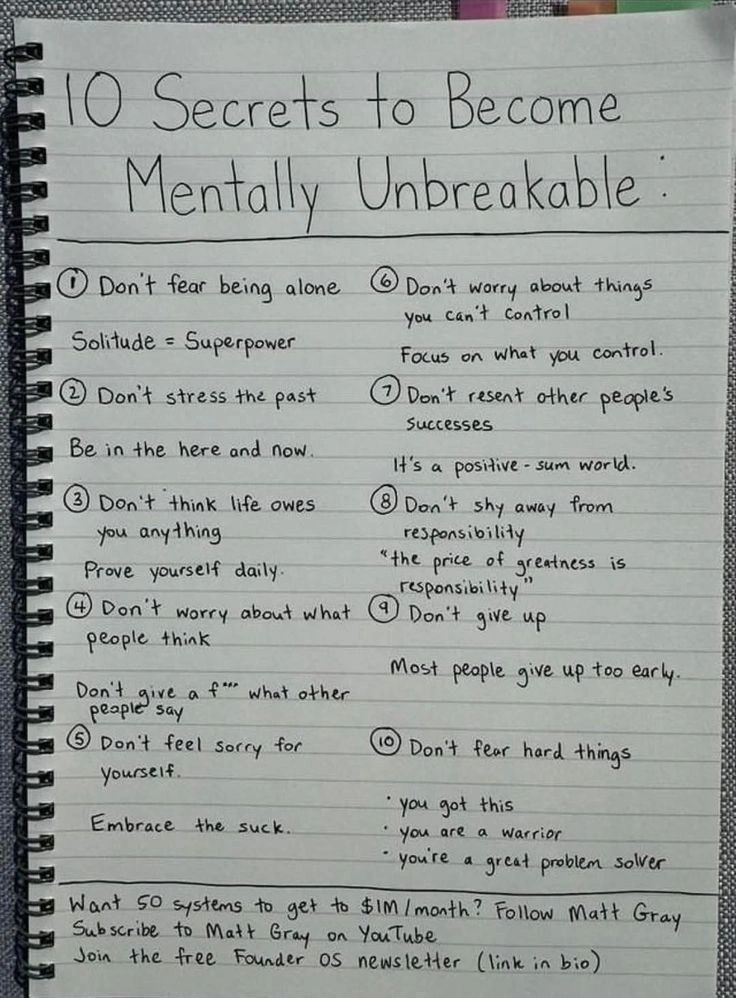
10 Secrets to Become Mentally Unbreakable
Mental strength is not about being emotionless or tough all the time.
It is about clarity, responsibility, resilience, and self-control.
Here is a deep yet simple explanation of the 10 principles that help build an unbreakable mindset:
1️⃣ Don’t fear being alone
Solitude is not weakness. It is a space where self-awareness grows.
When you are comfortable alone, you stop depending on external validation and start trusting your own thoughts.
👉 Solitude builds clarity, creativity, and inner confidence.
2️⃣ Don’t stress about the past
The past cannot be changed, but it can drain your mental energy if you keep revisiting it.
Strong minds learn from mistakes and move forward without carrying emotional baggage.
👉 Growth happens in the present moment, not in regret.
3️⃣ Don’t think life owes you anything
No one is entitled to success, respect, or comfort.
Mentally strong people earn their place through effort, discipline, and consistency.
👉 Prove yourself daily through action, not expectations.
4️⃣ Don’t worry about what people think
Other people’s opinions are shaped by their own limitations.
If you live for approval, you lose authenticity and focus.
👉 Confidence grows when your standards matter more than public opinion.
5️⃣ Don’t feel sorry for yourself
Self-pity weakens the mind and delays progress.
Life is unfair to everyone in different ways. Accept it and move forward.
👉 Embrace discomfort. Growth often comes through struggle.
6️⃣ Don’t worry about things you can’t control
Anxiety increases when attention is placed on uncontrollable outcomes.
Mentally strong people focus only on effort, attitude, and decisions.
👉 Control your response, not the situation.
7️⃣ Don’t resent other people’s success
Someone else’s success does not reduce your chances.
The world rewards value, not jealousy.
👉 Learn from winners instead of competing emotionally.
8️⃣ Don’t shy away from responsibility
Responsibility builds confidence, leadership, and self-respect.
The more responsibility you accept, the stronger you become.
👉 The price of greatness is responsibility.
9️⃣ Don’t give up too early
Most people quit not because they fail, but because they lose patience.
Consistency beats motivation every time.
👉 Stay longer in the game; results come with time.
🔟 Don’t fear hard things
Hard situations are mental training grounds.
Challenges sharpen thinking, discipline, and emotional strength.
👉 You are stronger than the problem in front of you.
Final Thought:
Mental toughness is built daily through small decisions, discipline, and self-belief.
You don’t need to be perfect. You just need to be consistent.
💡 You’ve got this. You are resilient. You are capable.
The Gift Hidden in the Curveball
Most of us say we like certainty. Plans. Roadmaps. A clean calendar that behaves itself. There’s comfort in knowing what comes next, in believing that if we just think hard enough, prepare long enough, and control enough variables, life will cooperate.
But it rarely does.
Surprises have a way of showing up uninvited. A conversation that shifts your thinking. A door that closes just as you were getting comfortable. A delay, a detour, a moment that doesn’t fit the plan you so carefully made. And when that happens, the reaction depends less on the surprise itself and more on the mindset we’re carrying into it.
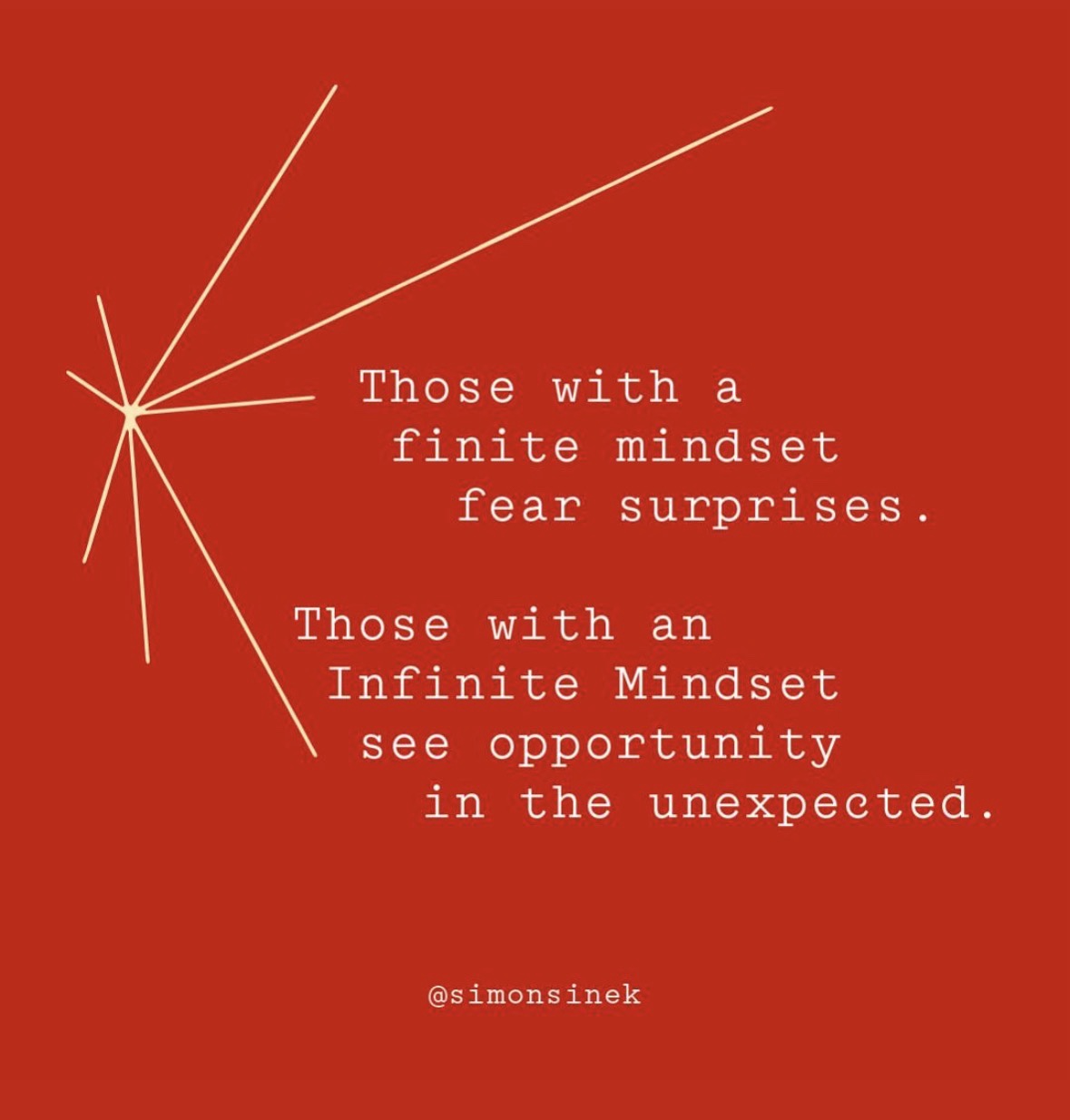
A finite mindset treats surprises like threats. Something went wrong. Someone messed up. This wasn’t supposed to happen. The instinct is to retreat, protect, explain, or rush to restore things back to “normal.” The goal is stability. Predictability. Getting back to the version of the story that feels safe.
An infinite mindset sees the same moment differently. Not as a disruption, but as information. Not as a loss of control, but as a signal. Something new just entered the frame. Pay attention.
This doesn’t mean infinite thinkers enjoy chaos or chase uncertainty for sport. It means they understand something subtle but powerful: growth rarely arrives wrapped in familiarity. The most meaningful changes often come disguised as inconvenience, discomfort, or confusion.
Think about how many pivotal moments in your life began as surprises you didn’t ask for. A job you didn’t plan to take. A move you were unsure about. A setback that forced you to re-evaluate what you were chasing in the first place. In the moment, they may have felt like interruptions. In hindsight, they often read like turning points.
Finite thinking asks, “How do I avoid this next time?”
Infinite thinking asks, “What is this trying to teach me?”
That shift in question changes everything.
When you fear surprises, you shrink your world to what you can predict. You optimize for short-term certainty, even if it costs long-term possibility. You stay close to what you know, not because it’s best, but because it’s familiar. Over time, that safety can quietly turn into stagnation.
When you see opportunity in the unexpected, you widen your horizon. You stay curious longer. You resist the urge to immediately label an outcome as good or bad. You give yourself permission to explore what could emerge instead of clinging to what was planned.
This mindset shows up everywhere. In leadership, it’s the difference between teams that punish deviation and teams that learn from it. In careers, it’s the difference between rigid ladders and evolving paths. In life, it’s the difference between merely managing change and actually being shaped by it.
None of this means surprises are easy. Even with an infinite mindset, uncertainty can be uncomfortable. It can shake confidence. It can force decisions before you feel ready. But there’s a quiet confidence that comes from knowing you don’t need the full map to take the next step. Just awareness. Just openness. Just the willingness to adapt.
The irony is that the more you trust yourself to handle the unexpected, the less threatening it becomes. You stop needing life to behave perfectly in order to move forward. You start believing that whatever shows up, you’ll find a way to work with it.
Finite mindsets look for guarantees before they begin.
Infinite mindsets begin, knowing the guarantees will never come.
And somewhere in that acceptance, surprises stop being enemies. They become collaborators. Nudging you toward paths you couldn’t have designed on your own. Expanding your thinking beyond what you thought was possible. Reminding you that the future isn’t something to defend against, but something to grow into.
The unexpected will keep showing up. That part is unavoidable.
What’s optional is whether you meet it with fear, or with curiosity.
When Feedback Fails
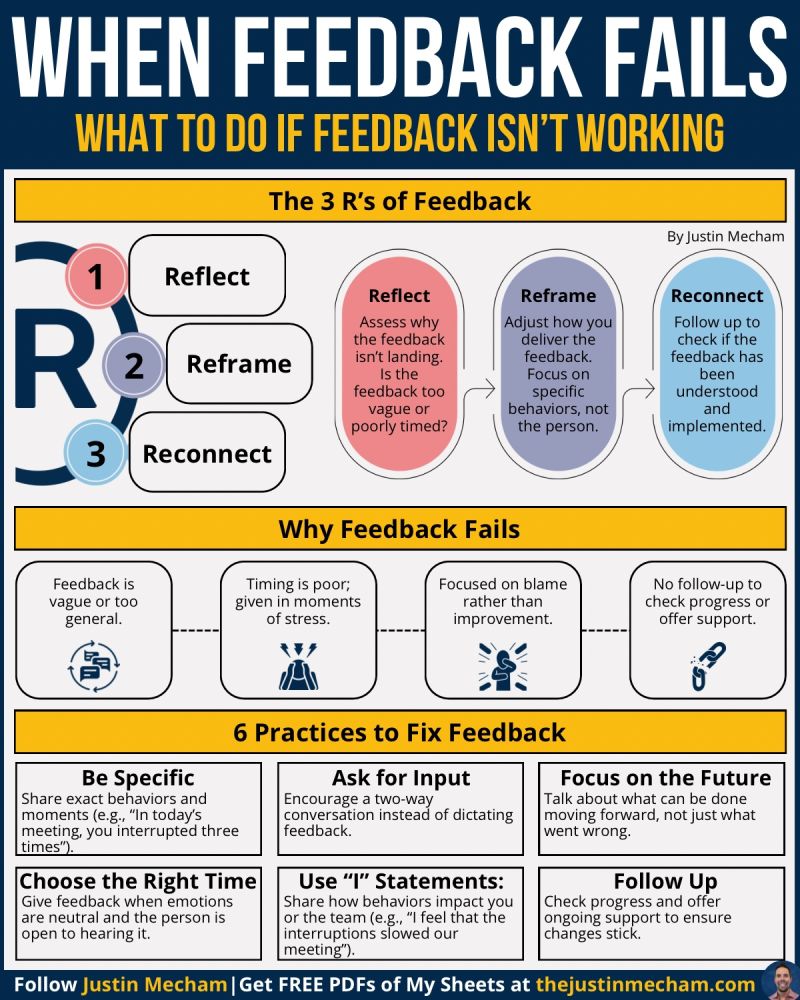
If your feedback isn’t working,
Try my system:
If feedback isn’t landing,
it’s not a people problem.
It’s a process problem.
Feedback usually fails because:
🔸 It’s too vague
🔸 No one follows up
🔸 It’s criticism, not clarity
🔸 It’s in the heat of the moment
The fix?
It’s a cycle—not a one-time comment.
Start with my 3 steps:
1️⃣ Reflect
Is the message clear?
Is it just poorly timed?
2️⃣ Reframe
Shift from judging the person
to describing the behavior.
3️⃣ Reconnect
Feedback doesn’t end with the meeting.
Check in and support the change.
To make feedback stick:
🟣 Follow up so it becomes habit
🟣 Use “I” to describe the impact
🟣 Say exactly what happened
🟣 Talk about what’s next
🟣 Pick a calm moment
🟣 Invite their input
Feedback should be a bridge,
not a wall.
Feedback is a signal of respect.
It fails when it lacks direction.
Systems make that direction clear.
The Permission Slip You Never Asked For
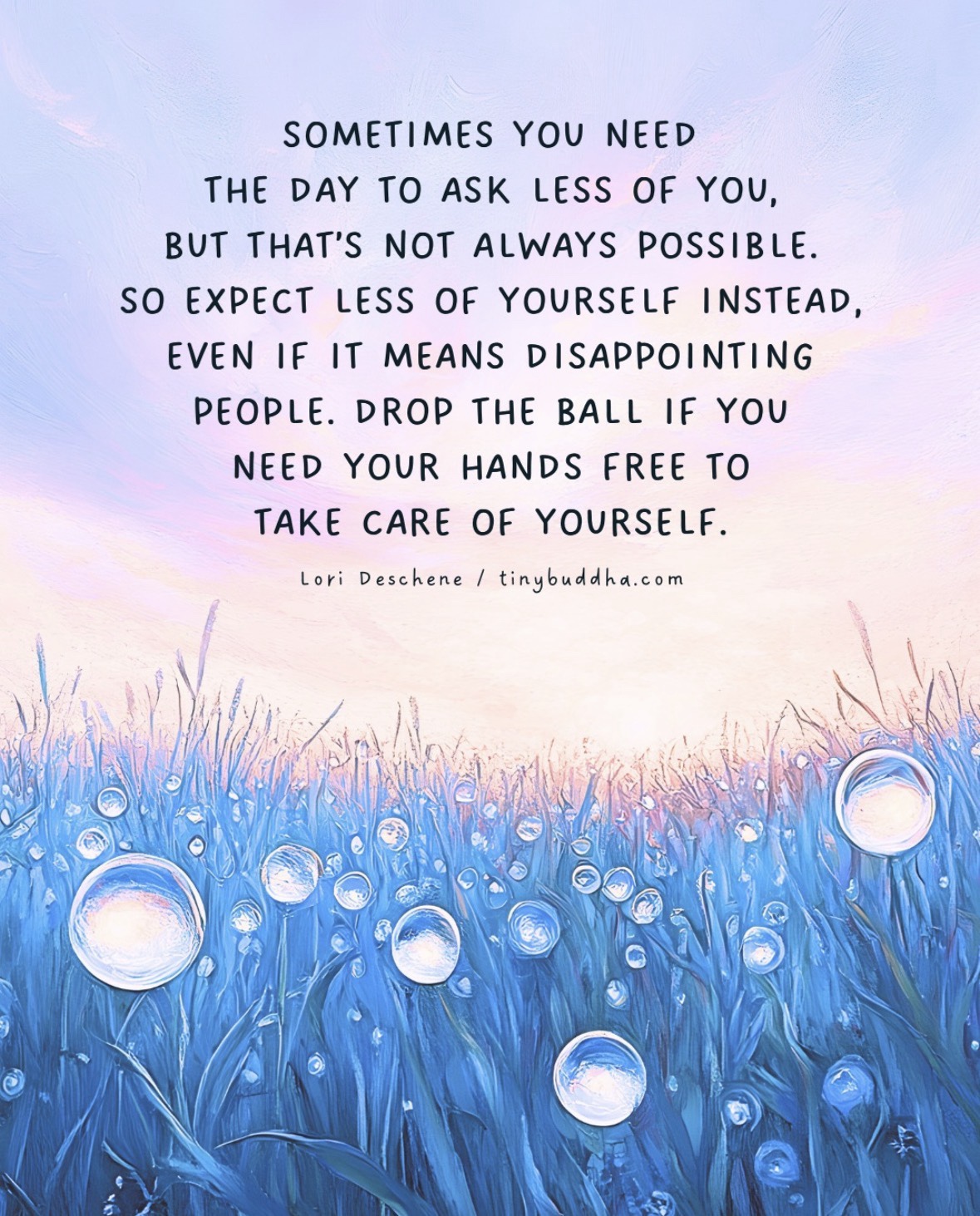
Some days you wake up already tired. Not the kind of tired a good night’s sleep fixes, but the kind that sits deeper. The kind that comes from carrying too much for too long. On those days, the advice is always the same: take a break, slow down, ask less of yourself. And sure, that sounds lovely. But real life doesn’t always cooperate.
Deadlines don’t move. Kids still need you. Work still expects results. People still show up with their needs and assumptions. The world doesn’t pause just because you’re running on empty. And that’s where the quiet pressure builds—because if the day won’t ask less of you, you feel like you have no choice but to keep pushing.
But there’s another option we don’t talk about enough.
If the day can’t be lighter, you can be gentler with yourself.
That doesn’t mean quitting. It doesn’t mean giving up on what matters. It means adjusting your expectations so they fit the version of you that showed up today, not the one you wish you were on your best day. It means accepting that effort looks different when your energy is low, and that “good enough” can still be good.
Some days, doing your best means replying slower. Some days, it means saying no without a long explanation. Some days, it means dropping a ball on purpose because your hands are already full trying to hold yourself together. That doesn’t make you irresponsible. It makes you human.
We’re taught to believe that disappointing people is always a failure. But that belief quietly turns into self-abandonment. You start choosing everyone else’s comfort over your own well-being. You start measuring your worth by how much you can endure. And eventually, something gives—your patience, your joy, your health.
The truth is, you can disappoint people and still be a good person. You can miss a deadline and still be competent. You can step back and still care deeply. Most people don’t need you at your maximum capacity all the time. They just got used to it.
And yes, it can feel uncomfortable to reset those expectations. You might worry about how it looks. You might replay conversations in your head. You might feel guilty for choosing yourself when you’ve always been the reliable one. But guilt is often just a sign that you’re breaking an old pattern, not that you’re doing something wrong.
Expecting less of yourself isn’t lowering your standards. It’s responding honestly to your current reality. It’s saying, “This is what I have today, and I’m going to work with it instead of fighting it.” That kind of self-respect builds resilience far more than constant pushing ever could.
What people rarely tell you is that rest isn’t always a full stop. Sometimes it’s a comma. Sometimes it’s doing the bare minimum and calling that enough for now. Sometimes it’s surviving the day without making it harder than it already is.
You don’t need permission to take care of yourself—but if you’ve been waiting for it, consider this your sign. You’re allowed to slow down internally even when life won’t slow down externally. You’re allowed to choose sustainability over applause. You’re allowed to protect your energy so you can show up again tomorrow.
Because the goal isn’t to never drop the ball. The goal is to make sure you don’t drop yourself in the process.
And if today is one of those days where all you can do is less—let that be enough.
 Kenrick Vaz