When Silence Becomes the Answer

We grow up believing that every story deserves an ending. Not just any ending, but one where everything is explained, feelings are acknowledged, and loose ends are tied neatly together. We imagine conversations where both sides finally understand each other. Where someone admits they were wrong, where we say everything we’ve been holding in, and somehow the air clears.

But life doesn’t always work that way.

Sometimes the conversation never happens. Sometimes it happens, but it goes nowhere. And sometimes you leave it feeling more unheard than before.

That’s the uncomfortable truth about closure. It doesn’t always arrive through words.

We often hold onto the idea that if we could just explain ourselves better, if we could just get the other person to truly listen, things would make sense. We rehearse the conversation in our heads. We imagine the moment they finally understand our perspective. We picture the apology, the accountability, or at least the acknowledgment.

But there are moments when the hardest realization isn’t what someone did.

It’s realizing they’re not willing to see it.

Or they can’t.

Some people simply don’t have the ability to reflect on their own role in things. Others avoid uncomfortable truths because it threatens the story they’ve built about themselves. And some people hear you—but only enough to defend themselves, not enough to understand you.

When you’re dealing with someone like that, no amount of explaining will change the outcome. You can speak calmly, carefully, and honestly, and still feel like your words are bouncing off a wall.

That’s the moment many people get stuck.

Because we think closure is something the other person gives us. We think it arrives when they validate our feelings or admit their mistakes. Until then, we keep trying to reopen the door.

But sometimes closure isn’t something that’s handed to you across a table in a heartfelt conversation.

Sometimes it’s something you quietly claim for yourself.

It comes in the moment you stop expecting the other person to understand. Not because what you felt was wrong, and not because your experience didn’t matter. But because you recognize that their willingness—or ability—to face it simply isn’t there.

That realization can feel disappointing at first. Even unfair.

There’s a certain grief in accepting that someone won’t meet you in honesty or accountability. Especially if you cared about them, trusted them, or believed they were capable of more.

But there’s also a strange kind of peace that follows.

Because once you stop waiting for someone else to acknowledge the truth, you stop giving them control over your sense of resolution.

You stop replaying the conversation you wish you could have.

You stop wondering what else you could have said.

You stop carrying the weight of proving your side of the story.

Closure, in those moments, isn’t dramatic. It doesn’t come with a final speech or a perfect exchange of words. It’s quieter than that.

It’s the moment you accept that someone isn’t willing or able to truly hear you.

And instead of chasing that understanding, you choose to move forward without it.

Not everyone will understand you. Not everyone will own their part. And not every relationship will end with clarity.

But your peace doesn’t have to depend on their awareness.

Sometimes closure isn’t about finishing the conversation.

Sometimes it’s about realizing the conversation was never going to give you what you needed—and deciding that you’re done waiting for it.

Ship It Before It’s Perfect

There’s a quiet trap many thoughtful people fall into. It looks like productivity from the outside, but inside it’s something else entirely.

Perfectionism.

It starts with good intentions. You want the work to be better. Clearer. Sharper. More useful. So you improve it. Then you improve it again. Then once more. Each revision feels justified, even responsible. After all, quality matters.

But somewhere along the way, improvement turns into postponement.

The work never quite feels ready.

While perfectionism keeps polishing the same idea, another voice appears: maybe there’s a better idea. Suddenly a fresh concept seems more exciting. Cleaner. More promising. So you jump.

New idea. New start. New momentum.

For a while it feels energizing. Until the cycle repeats. Another idea arrives before the first one reaches the finish line. Over time, your notebook fills with beginnings while the world sees very few endings.

Then comes overthinking.

You think through every angle. Every scenario. Every potential flaw. The mind starts running simulations faster than reality can keep up. The more you think, the harder it becomes to move. Action begins to feel risky because thinking has already explored every possible mistake.

Meanwhile something else sneaks in—learning as entertainment.

You read more books. Watch more videos. Save more articles. Take another course. Learning feels productive, and often it is. But learning without applying slowly turns into a comfortable form of procrastination. Knowledge accumulates while action quietly waits.

The truth is simple but uncomfortable: improvement, new ideas, thinking, and learning are all valuable. But none of them create impact on their own.

Only action does.

Ideas don’t matter until they are finished.

That blog post sitting in drafts.
That side project half-built.
That concept you’ve been refining in your head for months.

None of it exists for the world until you publish it.

Finishing something imperfect teaches more than endlessly refining something invisible. Once an idea is out in the world, reality begins to shape it. Feedback arrives. Experience sharpens it. Progress finally begins.

Perfectionism wants certainty before action.

Real progress happens the other way around.

Action first. Refinement later.

So if you’re caught in the loop—improving, restarting, thinking, learning—try something different today.

Finish one thing.

Publish the article.
Ship the project.
Share the idea.

Let it be imperfect. Let it be real.

Because the people who create meaningful things aren’t the ones with the best ideas sitting in notebooks.

They’re the ones who take an idea…

and apply it.

The Weight of Small Things

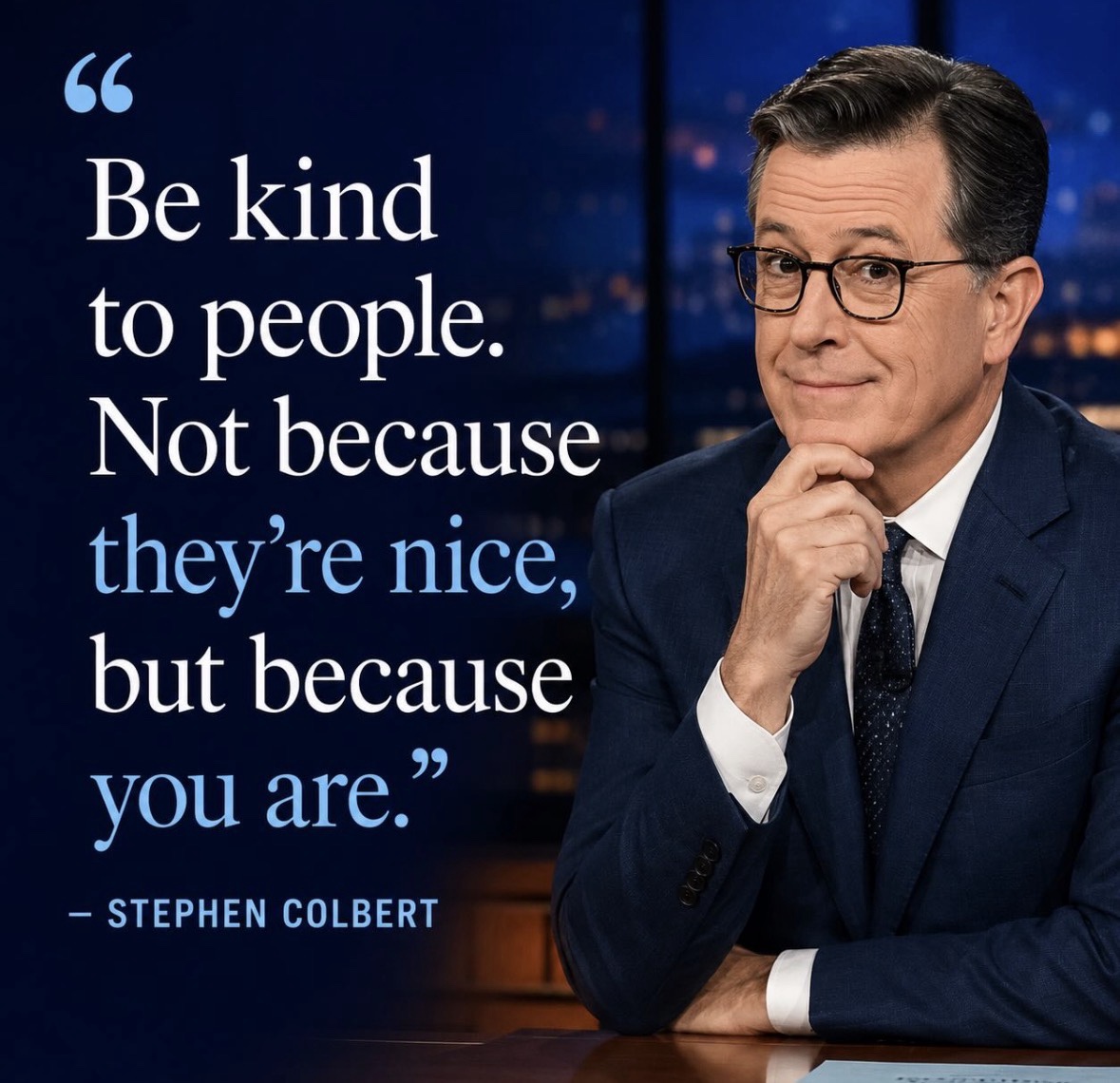
Please be kind.

It sounds simple, almost too simple to matter in a loud, fast world that celebrates big gestures and dramatic moments. But most of life is not lived in grand scenes. It’s lived in small, ordinary interactions — a passing comment, a tone of voice, a message sent too quickly, a joke made without thinking.

And those small things carry more weight than we realize.

Someone might laugh along when a remark lands a little too sharply, but later that night they replay it in their mind. Someone might brush off being excluded, pretending it doesn’t matter, but the quiet feeling of being invisible lingers longer than anyone notices. A careless word can echo far beyond the moment it was spoken.

Sometimes kindness is simply the choice not to add weight to someone else’s day.

You never really know what someone is carrying when they show up in front of you. The coworker who seems quiet might be dealing with something heavy at home. The friend who declines an invitation might be struggling just to get through the week. The person who made a mistake might already be harder on themselves than anyone else could ever be.

Life is already difficult enough without us making it harder for one another.

There are people who skip meals because anxiety sits heavier than hunger. There are people who dread waking up because another day means facing the same environment that drains them. There are people who sit quietly at the edge of groups wondering if anyone would notice if they weren’t there at all.

And sometimes the difference between someone feeling a little lighter or a little heavier comes down to something small — a word of encouragement, an invitation, a moment of patience instead of irritation.

Kindness is rarely dramatic. It doesn’t always get applause. Most of the time, it goes unnoticed by everyone except the person who needed it.

Holding the door. Including someone in the conversation. Choosing understanding over judgment. Pausing before sending the message that might sting. Deciding not to pile on when someone is already struggling.

These are quiet choices, but they ripple outward.

The strange thing about words and actions is that they stay with people long after we forget them. A sentence spoken in passing can sit in someone’s memory for years. A small act of generosity can become the moment someone points to when they say, “That was the day I felt seen.”

We underestimate how permanent ordinary moments can become in someone else’s story.

None of us get it right all the time. We’re impatient. We’re distracted. We’re human. But every day gives us dozens of chances to tilt the scale a little toward kindness instead of indifference.

Not because the world demands perfection, but because people remember how we make them feel.

So before the quick remark, the sarcastic joke, the eye roll, the message typed in frustration — pause for a second.

Choose the version of yourself that leaves people lighter, not heavier.

Please be kind.

You may never know the difference it made. But someone will carry it with them longer than you imagine.

The Quiet Majority

There are days when the world feels heavy.

You turn on the news, scroll through your phone, or overhear conversations that make you wonder if things are falling apart faster than anyone can fix them. The loudest stories are often the hardest ones to hear—conflict, cruelty, dishonesty, people cutting corners or looking out only for themselves. It can start to feel like that’s the whole picture.

But it isn’t.

The truth is, most goodness in the world doesn’t make headlines.

It happens quietly. In small choices. In ordinary moments that never go viral and never get applauded.

It’s the teacher who stays late because a student is struggling and they don’t want that child to feel alone. It’s the nurse who speaks gently to someone who is scared, even after a twelve-hour shift. It’s the neighbor who checks in on the older couple down the street just to make sure they’re doing okay.

No camera. No recognition. Just the quiet decision to do the right thing.

There are people who return wallets they could have kept. People who apologize when they’re wrong. People who stop to help a stranger push a stalled car out of traffic. People who hold doors, offer kind words, give second chances, and choose patience when frustration would be easier.

You rarely hear about them because goodness tends to be quiet.

But it is everywhere.

Every day there are parents doing their best to raise kind children. Coworkers covering for someone who’s having a rough week. Friends sending messages that say, “I’m thinking about you.” Volunteers giving up their weekends. Someone donating anonymously so another person can catch a break.

These moments don’t trend online. They don’t dominate conversations.

But they keep the world moving forward.

It’s easy to forget that the loudest voices are not always the most common ones. The outrage, the cruelty, the selfishness—they grab attention because they shock us. They disturb us. They make us pause.

But they are not the majority.

The majority is quieter.

It’s the people who try.

People who try to be fair even when it costs them. People who try to tell the truth. People who try to forgive. People who try to leave things better than they found them.

Not perfect people.

Just people who keep choosing the better path when they could easily choose the easier one.

If you’re someone who tries to live that way—who pauses before speaking harshly, who helps when no one is watching, who carries a sense of responsibility for the kind of world we’re building—then you’re part of that quiet majority.

You might not always feel like it matters.

But it does.

Every act of decency creates a ripple. Every moment of integrity sets a tone. Every bit of kindness makes it a little easier for someone else to believe that goodness still exists.

And when enough people keep doing the right thing, even in small ways, it builds something stronger than all the noise.

It builds trust.

So on the days when everything feels wrong, remember this.

There are millions of people out there waking up each morning trying to do the right thing. They may never meet each other. They may never be recognized for it.

But together, they are quietly holding the world together.

If you’re one of them, thank you.

The world needs more people exactly like you.

The Spiral Is the Way

For a long time, many of us imagine life as a straight road.

You start somewhere, you move forward, and eventually you arrive at a place where things finally make sense. Growth looks like progress in one direction. Lessons are learned once, neatly wrapped up, and then placed behind you like chapters you’ve already finished reading.

But life rarely moves like that.

More often, the path is a spiral.

You move forward, yes—but you also circle back. You find yourself revisiting the same ideas, the same struggles, the same questions you were sure you had already figured out. At first it can feel frustrating. You might even wonder if you’re going backwards.

Why am I dealing with this again?

Didn’t I already learn this lesson?

But the spiral has a quiet wisdom to it. Each time you return, you’re not standing in the exact same place. You’re seeing the same truth from a different height, a different angle, a different version of yourself.

Think about the things you believed you understood five or ten years ago—friendship, patience, forgiveness, love, purpose. At the time, you probably felt certain you had a clear grasp on them. And in a way, you did.

But then life kept happening.

More people entered your story. Some stayed, some left. Some surprised you with kindness. Others taught you hard lessons you never asked for. Time reshaped you in quiet ways you didn’t notice while they were happening.

And suddenly, something you thought you understood reveals another layer.

You reread a quote that once felt simple and now it feels profound.

You have a conversation that makes an old memory click into place.

You face a familiar situation but respond with a deeper patience than before.

The lesson didn’t change.

You did.

The spiral brings you back not to repeat the past, but to deepen your understanding of it.

It’s a little like walking through a city you’ve lived in your whole life. The streets are the same, the buildings are the same, but one day you notice a detail you’ve somehow never seen before—a mural tucked into an alley, a café that’s been there for years, a quiet park just beyond the corner you usually turn.

Nothing new appeared.

You simply arrived ready to see it.

This is how wisdom grows. Not in straight lines, but in widening circles.

You return to patience after losing it.

You return to forgiveness after holding onto resentment.

You return to courage after moments of doubt.

And each time, the understanding gets a little deeper. The reaction becomes a little softer. The perspective becomes a little wider.

What once felt like failure starts to look more like refinement.

The spiral also explains something many people feel but rarely talk about: growth can look strangely repetitive from the outside. You might still be working on boundaries, still learning to trust, still practicing self-compassion.

But the version of you doing that work today is not the same person who started.

You carry more awareness now. More context. More empathy. Even your mistakes have become teachers.

The spiral honors that kind of growth—the kind that doesn’t rush, doesn’t pretend to be finished, and doesn’t expect perfection on the first pass.

It allows life to unfold in layers.

So the next time you feel like you’ve come back to something you thought you already understood, pause before assuming you’ve failed or regressed.

Look closer.

You may simply be standing on a higher loop of the spiral, seeing the same truth with clearer eyes.

And that is not going backwards.

That is what deeper understanding looks like.

The Quiet Language of Real Friendship

Adult friendships speak a quieter language.

When we were younger, friendship felt effortless. You saw each other every day at school, after class, on weekends. Conversations stretched for hours without planning. Time was abundant and responsibilities were few. Being close simply meant being around.

But adulthood rewrites the rhythm of friendship.

People are busy. Not the casual kind of busy where you can squeeze someone in between things, but the kind where days blur together with responsibilities, deadlines, family, worries, healing, and growth. Everyone is carrying something. Sometimes it’s visible. Most of the time it isn’t.

Adult friendships require grace.

Grace for the friend who takes a week to reply to a message. Grace for the one who disappears for a while because life is heavy. Grace for the seasons when someone is focused on rebuilding themselves, caring for a family member, chasing a goal, or simply trying to breathe through a difficult chapter.

It’s easy to misunderstand silence. When messages slow down or plans become rare, the mind starts filling in the blanks. Maybe they don’t care anymore. Maybe the friendship faded. Maybe you mattered less than you thought.

But the truth is often much simpler.

People are healing.

Some are quietly working through heartbreaks they never talk about. Some are untangling old wounds. Some are learning how to become healthier versions of themselves. Healing takes time, and sometimes it takes solitude too.

People are growing.

Growth isn’t always loud or obvious. Sometimes it looks like someone stepping back to focus on their career, their family, their mental health, or their faith. Sometimes it looks like someone learning to set boundaries, or learning to rest after years of running nonstop.

And people are finally learning to take care of themselves.

Self-care is something many adults discover later than they should have. After burnout. After disappointment. After realizing they can’t keep pouring from an empty cup. When someone starts protecting their time and energy, it may look like distance. But often, it’s just someone learning how to stay whole.

None of that means love disappeared.

One of the quiet truths about adult friendship is that love doesn’t always show up as constant conversation. Sometimes it shows up as a random message after months apart that feels like no time passed at all. Sometimes it shows up as a quick “thinking of you today.” Sometimes it shows up as a friend who will drop everything the moment you truly need them.

Real friendship doesn’t require constant maintenance. It requires understanding.

The older we get, the more we realize that presence isn’t measured by frequency. It’s measured by sincerity. A friend who checks in after a long silence with genuine care is often more meaningful than a hundred surface-level conversations.

So don’t mistake less communication for less love.

Life stretches people in different directions. Careers move them to new cities. Families grow. Responsibilities pile up. Everyone is navigating their own storms and seasons. But the best friendships aren’t fragile things that disappear when life gets complicated.

They bend. They pause. They wait.

And when the moment comes, they pick right back up.

That’s why adult friendship asks for grace instead of assumptions. Instead of quietly drifting away, choose curiosity. Instead of assuming distance means disinterest, choose generosity. Send the message. Make the call. Check in.

Not because friendships should be perfect, but because they’re worth protecting.

The strongest friendships in adulthood aren’t the ones that talk every day. They’re the ones that understand life happens, and still choose each other anyway.

So check in, not out.

A simple message can remind someone they’re still held in your life, even in the quiet seasons. And sometimes, that small act of reaching out is exactly what keeps a friendship strong enough to last through all the growing, healing, and becoming that adulthood brings. 🤍

Get Off at the First Stop

Someone once said that if you get on the wrong train, you should get off at the first stop. The longer you stay on, the more expensive the return trip will be.

They weren’t talking about trains.

They were talking about that job you knew wasn’t right three months in, but you stayed three years. They were talking about the relationship that felt heavy from the beginning, but you kept convincing yourself it would get lighter. They were talking about the habit you picked up “just for now” that quietly became your normal.

The thing about the wrong train is that it rarely feels wrong at the platform. It looks polished. It sounds convincing. Sometimes everyone else is boarding it too. There’s momentum. There’s excitement. There’s the subtle pressure of not wanting to look foolish by stepping back off.

So you sit down. You tell yourself it’s fine. You’ll reassess later.

But later has a cost.

Every stop you pass makes it harder to admit you shouldn’t be there. Pride gets involved. So does fear. You start calculating what you’ve already invested — the time, the money, the emotional energy — and instead of cutting your losses, you double down. You stay because you’ve stayed.

That’s the trap.

We think leaving early is failure. We think changing direction means we were wrong. But staying on the wrong path doesn’t prove commitment. It just increases the price of correction.

The real courage isn’t in enduring something misaligned. It’s in recognizing it quickly.

It’s in saying, “This isn’t for me,” before the sunk cost becomes your excuse.

It’s in walking away when it’s still awkward instead of waiting until it’s unbearable.

Most people don’t get stuck because they can’t see the wrong train. They get stuck because they don’t want the discomfort of getting off. Getting off means explaining yourself. It means disappointing someone. It means facing uncertainty.

But staying means something else.

It means slow erosion.

It means waking up years later wondering how you got so far from where you meant to be.

And here’s the quiet truth: the earlier you course-correct, the cheaper it is. Not just financially. Emotionally. Spiritually. Mentally.

The first stop might feel inconvenient. The second might feel embarrassing. By the tenth, it feels devastating.

There’s wisdom in small exits.

Quitting the conversation when it turns toxic.

Changing strategy when the data says it’s not working.

Pivoting the project before you burn the team out.

Ending the pattern before it becomes identity.

You don’t have to stay just because you started.

You don’t have to keep proving something that no longer needs proving.

Sometimes growth looks less like pushing through and more like stepping off.

The people who build lives they actually want aren’t the ones who never choose wrong. They’re the ones who refuse to stay wrong for long.

They listen to that early discomfort. They pay attention to that quiet nudge. They respect the first stop.

So if something feels off right now — a direction, a decision, a dynamic — don’t ignore it just because it hasn’t become catastrophic yet. Catastrophe is just what happens when we keep riding past the obvious exit.

There’s no medal for enduring the wrong journey.

There’s only relief in choosing the right one sooner.

And sometimes the bravest, smartest, most self-respecting thing you can do is stand up, grab your bag, and step off at the very next stop.

Guard the Mic in Your Head

There’s a voice in your life that never clocks out.

It doesn’t sleep. It doesn’t take weekends. It doesn’t ask for permission.

It just talks.

And the wild part? It believes everything you say.

Your mind is not a judge. It’s a recorder. A processor. A builder. It takes your words—especially the ones you repeat—and starts laying bricks with them.

“I’m not good enough.”

Brick.

“I always mess things up.”

Brick.

“This is just who I am.”

Brick.

Before long, you’re standing inside a house you didn’t mean to build.

Most of us are careful with what we say to others. We filter. We soften. We encourage. But when it comes to ourselves, we can be ruthless. We speak in absolutes. Always. Never. Everyone. No one. We narrate our lives like we’re the villain in our own story.

And your mind? It doesn’t argue back.

If you tell it you’re behind, it scans for proof.

If you tell it you’re unwanted, it highlights every delayed reply.

If you tell it you’re incapable, it magnifies every small mistake.

It will always find evidence to support the script you hand it.

But here’s the other side of that truth.

If you tell your mind, “I’m learning,” it starts looking for growth.

If you tell it, “I can handle this,” it searches for strength.

If you tell it, “I am loved,” it recalls the faces, the moments, the quiet loyalty you forgot to count.

Same brain. Different fuel.

Faith isn’t pretending everything is perfect. It’s choosing to believe that difficulty isn’t the end of your story. It’s reminding yourself that progress counts, even when it’s slow. It’s speaking possibility into places that feel stuck.

Truth matters too. Not toxic positivity. Not denial. Truth.

The truth is you’ve survived every hard day so far.

The truth is you’ve grown in ways you don’t even fully see.

The truth is you are more than your worst moment.

And love—love might be the most powerful thing you can feed your mind.

Love sounds like:

“I’m allowed to rest.”

“I’m allowed to try again.”

“I’m allowed to take up space.”

“I’m allowed to be a work in progress.”

When you start talking to yourself with love, something shifts. Your shoulders drop. Your breathing steadies. Your decisions come from clarity instead of fear. You stop hustling for worth and start living from it.

This isn’t about chanting affirmations in the mirror until the universe rearranges itself. It’s about responsibility. You are the narrator. You are the one holding the mic.

Every thought you rehearse becomes easier to think again. Neural pathways strengthen with repetition. What you practice, you believe. What you believe, you become.

So pay attention to what you’re practicing.

Catch the sentence before it becomes a story.

Replace “I always fail” with “That didn’t work.”

Replace “I’m terrible at this” with “I’m still figuring this out.”

Replace “No one cares” with “I feel lonely right now.”

Small edits. Massive impact.

You don’t have to lie to yourself. You don’t have to inflate yourself. You just have to be intentional.

Your mind is listening.

It’s building.

It’s shaping how you see the world, how you show up in rooms, how you love, how you lead, how you recover.

Feed it faith so it doesn’t quit when things get hard.

Feed it truth so it doesn’t drift into fantasy or fear.

Feed it love so it doesn’t turn against you when you need it most.

Because the conversation in your head is not background noise.

It’s architecture.

The Ones Who Stay, the Ones Who Sway

I’ve been thinking about how friendships change over time. Not in a dramatic, movie-scene kind of way. Just quietly. Gradually. Almost invisibly.

If you look closely, you’ll notice there are different kinds of friends in your life. Not better or worse. Just different. And understanding that difference saves you a lot of confusion.

Some people are leaves.

They show up in a particular season. A new job. A new city. A new phase of life. You see them almost every day. You share inside jokes. Late-night conversations. Coffee breaks. Maybe even secrets. It feels solid because it’s consistent.

But leaves don’t stay forever.

When the season changes, they drift. Not because anyone did anything wrong. Not because there was betrayal or drama. Just because life shifted. The shared context disappeared. The daily proximity faded. And what felt permanent turns out to have been tied to a moment.

It’s easy to resent leaf friends. To wonder why they didn’t fight harder to stay. But leaves aren’t meant to survive winter. They were never built for that. They were there to add color while the sun was out.

Then there are branches.

Branches are stronger. They can hold weight. You can lean on them. They’ve seen you struggle. They’ve been around longer. They’re present across multiple seasons.

Branches feel dependable. And often, they are.

But branches can snap under pressure.

Life brings strain—misunderstandings, distance, unmet expectations, personal growth that moves in opposite directions. And sometimes what seemed unbreakable fractures. Not because it was fake. Not because it wasn’t real. But because it wasn’t built to withstand certain storms.

Losing a branch hurts more than losing a leaf. There’s history there. Investment. Shared chapters. When a branch breaks, you feel the crack in your chest.

And then there are roots.

Roots are different.

Roots aren’t loud. They’re not always in your everyday orbit. You might go weeks or months without talking. But when something real happens—when life caves in or opens up in a way that feels too big to hold—you know exactly who to call.

Roots don’t panic when you change. They don’t compete with your growth. They don’t disappear when it’s inconvenient. They’re anchored beneath the surface, steady and unseen, holding you upright even when you don’t realize it.

Roots don’t need constant maintenance to survive. They’re tied to something deeper than shared hobbies or current circumstances. They’re tied to who you are.

The mistake most of us make is expecting every friendship to be a root.

We meet a leaf and expect permanence. We lean on a branch as if it can hold unlimited weight. And when they fall away, we question our worth or our judgment.

But maybe the real wisdom is recognizing people for what they are without demanding they be something else.

Leaves teach you joy in the moment.

Branches teach you resilience and boundaries.

Roots teach you what unconditional really looks like.

If you’re honest, you’ve probably been all three to different people.

You’ve been someone’s leaf—close for a season, then gone.

You’ve been a branch—strong until you couldn’t carry the strain anymore.

And if you’re fortunate, you’ve been a root for someone too. The steady voice. The safe place. The one who stayed.

Life isn’t about collecting the most friends. It’s about recognizing the roots when you find them. Nurturing them. Protecting them. Showing up when it matters.

Because when storms come—and they always do—it’s not the leaves that hold you up. It’s not even the branches.

It’s the roots.

And if you look at your life right now, even in the quiet moments, you’ll probably realize something comforting:

You don’t need many.

You just need a few that go deep.

The Quiet Impact You’ll Never Fully See

You have no idea how many people are better off because they met you.

Not in a dramatic, movie-scene kind of way. Not because you gave a life-changing speech or built a billion-dollar company. Just because you showed up as you.

There are people who are calmer because you listened to them without interrupting. People who are braver because you believed in them before they believed in themselves. People who are still here because you answered a late-night call instead of letting it ring.

You probably don’t remember half of it.

That time you encouraged someone to apply for a job they thought was out of reach. The moment you told a friend, “You’re actually really good at this,” and they carried that sentence with them into rooms you’ll never enter. The way you handled a tough situation with integrity, and someone watching decided that’s the kind of adult they want to become.

Impact rarely announces itself. It whispers. It compounds quietly.

We tend to measure our lives by visible milestones—promotions, awards, followers, numbers. But the real math of a life well-lived is invisible. It’s in the habits you model. The standards you hold. The kindness you normalize. The patience you practice when you could’ve chosen ego.

Someone treats their team better because of how you once treated them.

Someone apologizes faster because they saw you take responsibility.

Someone decides not to give up because you didn’t.

You might never get a thank-you note for any of that.

And that’s the strange beauty of it. The most meaningful influence is often untraceable. It travels through conversations you’ve forgotten. Through ordinary Tuesdays. Through small decisions that felt insignificant at the time.

Maybe you think you’re just doing your job. Just being a parent. Just being a friend. Just surviving your own battles.

But while you’re busy worrying about whether you’re doing enough, someone else is quietly grateful that you exist.

You don’t see the ripple because you’re standing at the center of it.

There’s a version of you that someone talks about with deep respect. “They really helped me.” “They changed the way I think about things.” “They made that season easier.” You may never hear those sentences. They still exist.

And here’s the part we don’t talk about enough: your impact isn’t limited to your strengths. Even the way you’ve handled your struggles has shaped people. The way you set boundaries. The way you walked away from what wasn’t healthy. The way you rebuilt after something broke.

You showed someone that it’s possible.

You may not feel extraordinary. You may feel tired. Behind. Unsure. But the standard you set by simply trying—by choosing decency when it would be easier not to—has done more good than you can quantify.

We underestimate the power of steady goodness.

We assume we have to be louder, bigger, more impressive. But what changes lives is consistency. Reliability. The quiet decision to keep caring.

You have no idea how many people are better off because they met you.

And maybe that’s okay.

Maybe you don’t need to see the scoreboard. Maybe the point isn’t to track your influence but to trust that it exists. To keep being the kind of person who makes rooms feel safer. Conversations feel lighter. Hard seasons feel survivable.

One day, years from now, someone might repeat your words to someone else. They might pass along a habit you modeled. They might choose kindness in a tense moment because you once did.

And the ripple will continue.

You won’t be there to measure it. You won’t need to be.

Just keep showing up.