
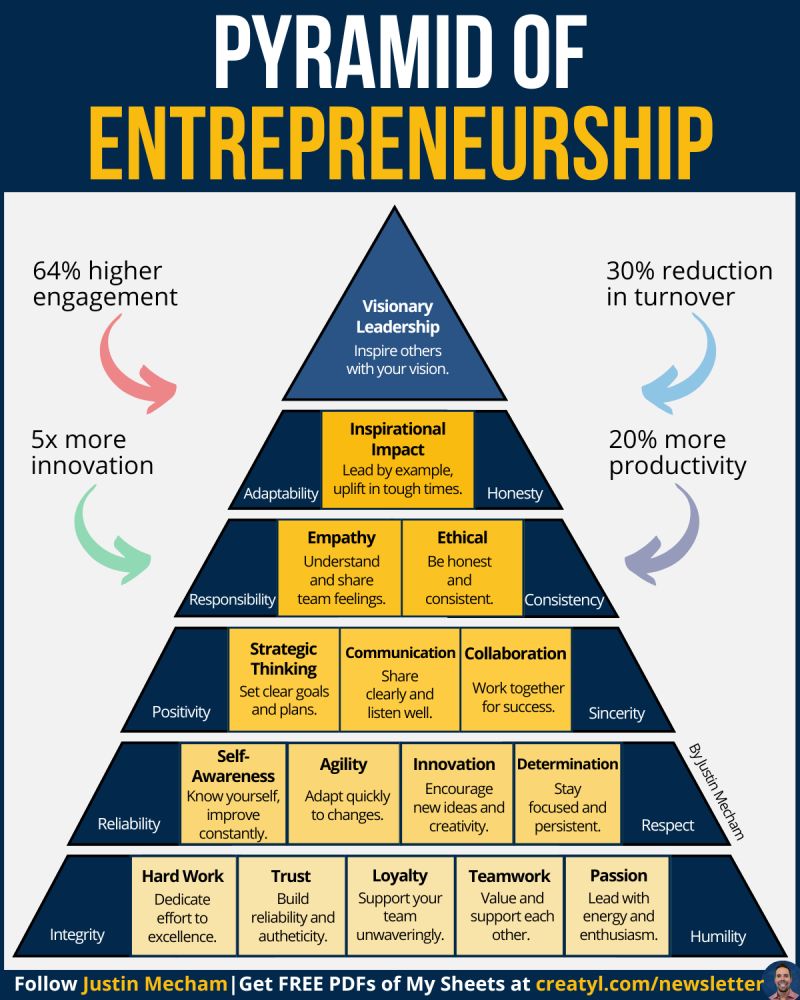
You do not build a strong business
from the top down.
You build it from the ground up:
I can spot a shaky company in minutes.
Big vision.
Weak base.
Vision does not rescue weak foundations.
It only exposes them.
Here is what actually builds
a business that lasts.
🧱 The fundamentals:
• Hard work
• Trust
• Loyalty
• Teamwork
• Passion
This is where momentum begins.
When people feel safe and valued,
they give more than you asked.
Integrity keeps you steady.
Humility keeps you growing.
🌱 Personal growth:
• Self-awareness
• Agility
• Innovation
• Determination
Know your gaps.
Adjust fast.
Stay when it gets uncomfortable.
That is where most people quit.
📈 Skills that scale:
• Clear thinking
• Clear communication
• Real collaboration
A smart plan helps.
Clear words move people.
Listening builds trust faster
than talking ever will.
💡 Leadership deepens:
• Empathy
• Ethics
People do not follow titles.
They follow how you make them feel.
Consistency proves you mean it.
🌟 Vision.
Not hype.
Direction.
Something real enough
that people want to build it with you.
When the base is strong:
• Engagement climbs
• Innovation increases
• Turnover drops
• Productivity rises
Not magic.
Structure.
🔁 Try this reset today:
• Fix one base habit
• Show empathy once
• Say one thing clearly
• Model the standard
Strong companies are not loud.
They are steady.
Pull Up a Chair
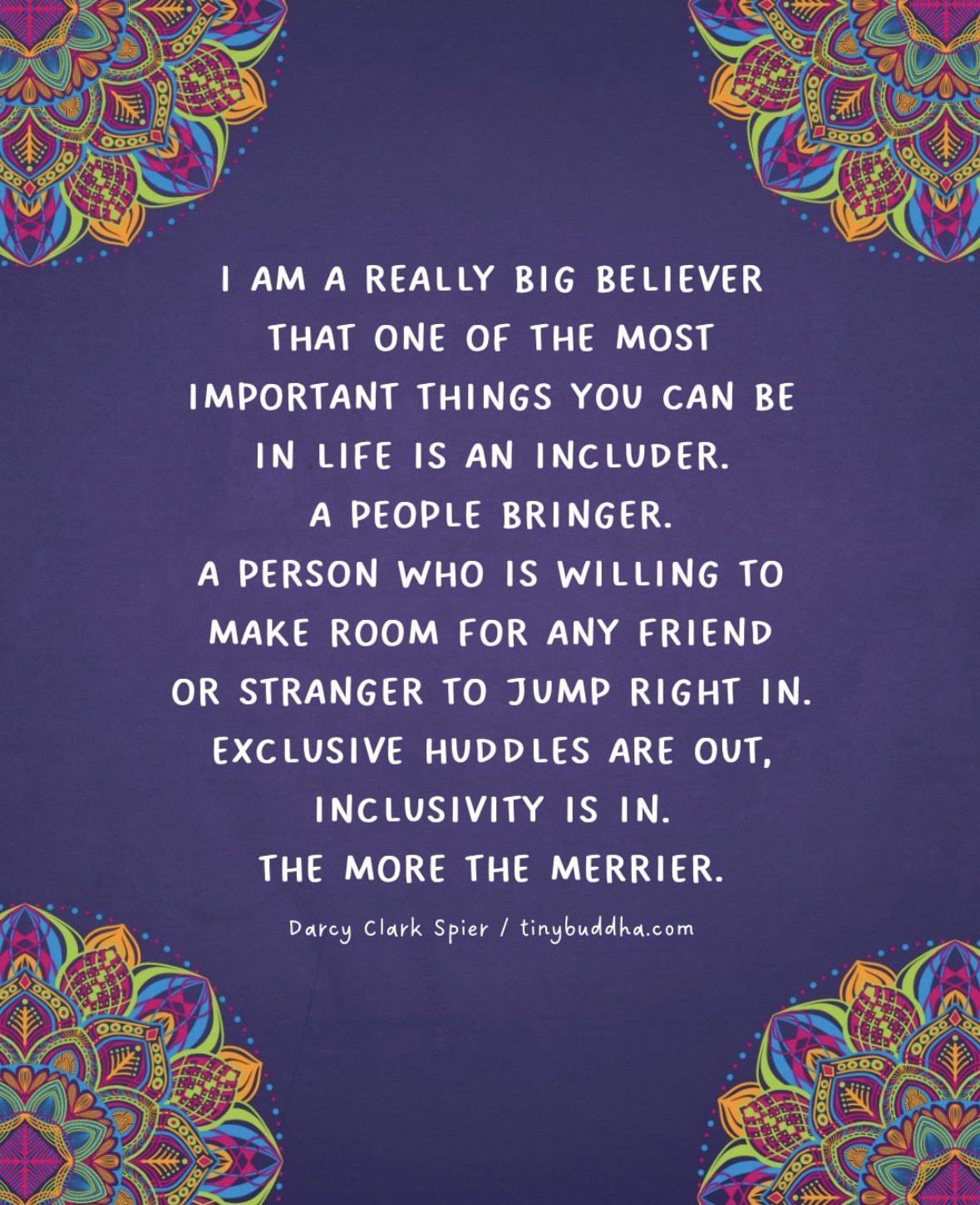
There’s a certain kind of person everyone remembers. Not the loudest in the room. Not the most impressive on paper. But the one who notices when someone is standing alone and does something about it. The one who says, “Hey, come join us,” and actually means it.
That kind of person changes the temperature of a room.
It’s easy to underestimate how powerful that is. We tend to think impact comes from big gestures, big wins, big moments. But more often, it’s built in the small, almost invisible decisions—like choosing to include instead of exclude. Choosing to make space instead of guard it.
Being an includer isn’t complicated, but it does take intention. It means paying attention. It means resisting that quiet instinct to stay within your comfortable circle. It means recognizing that while exclusivity can feel safe, it rarely makes anything better—just smaller.
Think about the last time you walked into a space where you didn’t know anyone. Maybe it was a new job, a social gathering, a meeting, a church, a classroom. There’s always that brief moment of scanning the room, wondering where you fit, if you fit. And then someone makes eye contact, smiles, gestures you over. Instantly, everything shifts. You go from outsider to included in seconds.
That’s not a small thing. That’s everything.
And here’s the part most people miss: inclusion isn’t about grand generosity. It’s about mindset. It’s about deciding that your table isn’t full, even when it looks like it is. It’s about believing there’s always room for one more—one more voice, one more perspective, one more story.
Because when you bring people in, you don’t lose anything. You gain. Conversations get richer. Ideas get sharper. Energy gets lighter. The room becomes more alive. “The more the merrier” isn’t just a saying—it’s a way of experiencing life more fully.
Of course, it’s not always effortless. There are moments when including someone feels inconvenient. When it disrupts the flow. When it asks you to stretch a little socially, emotionally, even culturally. But those are usually the moments that matter most. Anyone can include when it’s easy. It takes something different to include when it’s not.
And let’s be honest—exclusivity can be subtle. It doesn’t always look like shutting people out. Sometimes it’s inside jokes that never get explained. Plans that aren’t extended. Conversations that quietly close themselves off. No one announces it, but people feel it.
Inclusion works the same way, just in the opposite direction. A quick introduction. A simple “you should come.” A pause to bring someone into the conversation. These things seem small, but they send a clear message: you belong here.
That message sticks.
Over time, being an includer becomes less about what you do and more about who you are. You start to notice people differently. You look for the ones on the edge instead of just the ones in front of you. You become someone others trust, because they know you won’t leave them out.
And the ripple effect is real. People who feel included are far more likely to include others. It spreads. What starts as one person making space turns into a culture where space is always being made.
That’s how environments change—teams, communities, even families. Not through policies or slogans, but through consistent, everyday choices by people who decide that no one should feel like an outsider if it can be helped.
You don’t need a title or a platform to do this. You don’t need to be the host, the leader, or the most confident person in the room. You just need to care enough to look around and act on what you see.
So the next time you’re in a group—any group—pay attention. Who’s quiet? Who’s new? Who’s hovering just outside the circle? That’s your moment. Not to make a big deal out of it, but to make a difference in it.
A simple gesture can open a door someone didn’t think was available to them.
Pull up a chair. Scoot over. Make room.
You’ll be surprised how much better everything feels when you do.
The Unbreakable Leader
What’s the real difference between breaking and bending under pressure?
(Hint: It’s probably not what you think.)
It’s not:
❌ Willpower
❌ Rubbing dirt on it
❌ Powering through
It’s science-backed self-management.
Resilient leaders don’t just grit their teeth and hope for the best.
They shift how their brain and body respond.
On purpose.
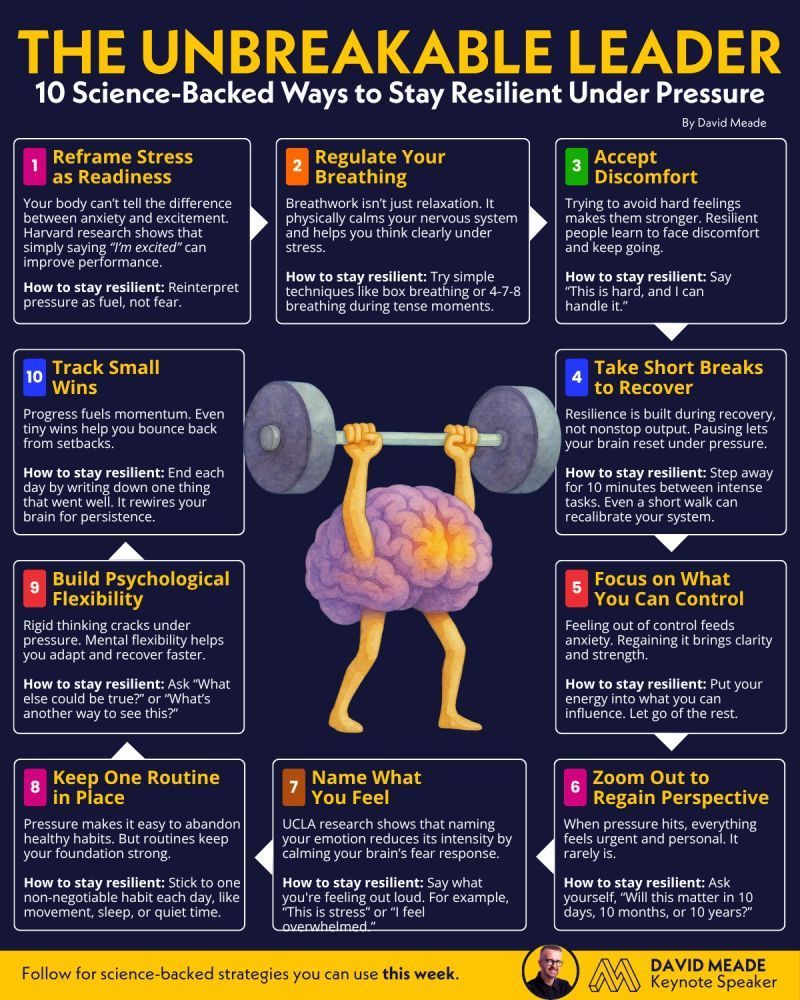
Here are 10 science-backed techniques that actually work:
1. Reframe Stress as Readiness
→ Your racing pulse isn’t a warning. It’s preparation.
→ Anxiety and excitement use the same neurochemicals.
2. Regulate Your Breathing
→ Four counts in, hold for four, out for four.
→ Your vagus nerve responds in seconds.
3. Accept, Don’t Avoid, Discomfort
→ Resilient people keep moving — even when it’s uncomfortable.
→ Avoidance feeds the fear loop. Acceptance breaks it.
4. Take Short Breaks to Recover
→ Your brain resets during rest, not grinding.
→ Elite performers schedule recovery like work.
5. Focus on What You Can Control
→ List what you can influence — and what you can’t.
→ Put your energy in column one only.
6. Zoom Out to Regain Perspective
→ Ask: “Will this matter in 10 years?”
→ Distance creates clarity. Pressure creates tunnel vision.
7. Name What You Feel
→ Saying “I’m anxious” reduces amygdala activation by up to 30%.
→ Your brain stops scanning once it knows the threat.
8. Keep One Routine in Place
→ One steady habit becomes your anchor in chaos.
→ It signals: you’re still in control.
9. Build Psychological Flexibility
→ Rigid thinking cracks. Flexible thinking adapts.
→ Hold your plans lightly, your values tightly.
10. Track Small Wins
→ Your brain defaults to scanning for problems.
→ Logging wins rewires it toward resilience.
The leaders who bend instead of break?
They’re not stronger.
They’re just more strategic when the pressure’s on.
Which of these have you used when the pressure’s on…
And it actually worked?
Be the Calm People Can Breathe Around
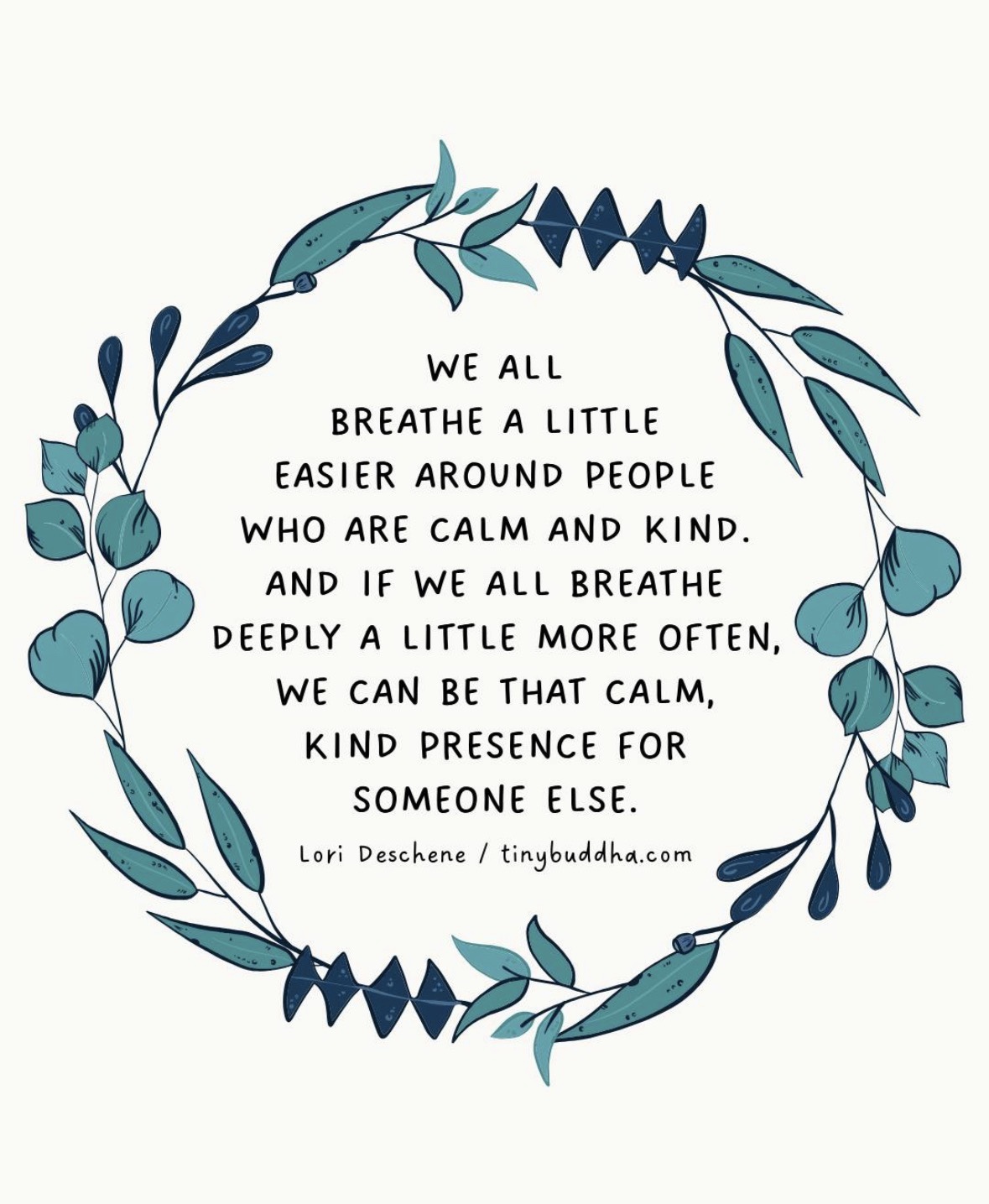
You can feel it almost immediately.
Some people walk into a room and nothing changes. Others walk in and everything softens just a little—the tension loosens, conversations slow down, shoulders drop. It’s subtle, but it’s real. Being around them feels like taking a deeper breath without even trying.
We don’t talk enough about how powerful that is.
In a world that runs on urgency, noise, and constant reaction, calm is rare. Kindness, too, has become something people notice because it stands out against the rush. And when the two come together—calm and kind—it creates a space where people feel safe. Not judged. Not rushed. Not measured. Just… allowed to be.
Think about the people you feel most at ease around. It’s not always the loudest or the most impressive. It’s usually the ones who listen without interrupting. Who don’t escalate when things get tense. Who respond instead of react. The ones who carry a quiet steadiness that says, “You’re okay here.”
That kind of presence isn’t accidental.
It’s built in small, almost invisible choices. Choosing not to match someone else’s frustration. Choosing to pause before speaking. Choosing to assume good intent instead of jumping to conclusions. Choosing to slow your breathing when everything in you wants to speed up.
Because calm is contagious—but so is chaos.
If someone brings agitation into a room, it spreads quickly. Voices get sharper, patience gets thinner, and suddenly everyone feels on edge. But the opposite is just as true. One calm person can steady an entire moment. One kind response can interrupt a chain reaction of negativity.
The problem is, most of us wait for the environment to calm down before we relax. We think, “Once things settle, I’ll be better.” But it doesn’t work that way. The environment rarely settles on its own. Someone has to go first.
That “someone” can be you.
Not by pretending everything is perfect. Not by suppressing what you feel. But by choosing how you carry it. By recognizing that you don’t have to add more noise to what’s already loud.
Sometimes it’s as simple as taking a breath before responding. A real breath. The kind that slows your heart down just enough to think clearly. It sounds small, but it changes everything. That one pause creates space—space for patience, for understanding, for kindness to show up where it might not have otherwise.
And kindness doesn’t have to be dramatic to matter.
It’s in the way you speak to someone who’s clearly having a hard day. It’s in giving people the benefit of the doubt. It’s in choosing not to make everything about being right. It’s in noticing when someone feels overlooked and making space for them.
These moments don’t make headlines. But they change how people feel—and that matters more than we often admit.
Here’s the part that’s easy to miss: being that calm, kind presence isn’t just for others. It changes you too.
When you slow down your breathing, you steady your own mind. When you respond with kindness, you step out of the cycle of reaction. You stop letting every external situation dictate your internal state. You become less reactive, more grounded. Less overwhelmed, more intentional.
It’s not about being perfect. You’ll still have moments where you lose patience, where stress gets the better of you. That’s human. The goal isn’t to eliminate those moments—it’s to recover from them quicker. To come back to center faster. To choose, again and again, the kind of presence you want to be.
Because people remember how they feel around you.
Long after conversations are forgotten and details fade, that feeling stays. The ease. The safety. The sense that they didn’t have to brace themselves. That they could just breathe.
And in a world where so many people are holding their breath—waiting for the next stress, the next demand, the next thing to go wrong—that’s a gift.
So maybe the goal isn’t to be the smartest person in the room, or the most impressive, or even the most heard.
Maybe it’s to be the one people breathe easier around.
And maybe it starts with something as simple—and as powerful—as taking a deeper breath yourself.
How Executives Solve Problems
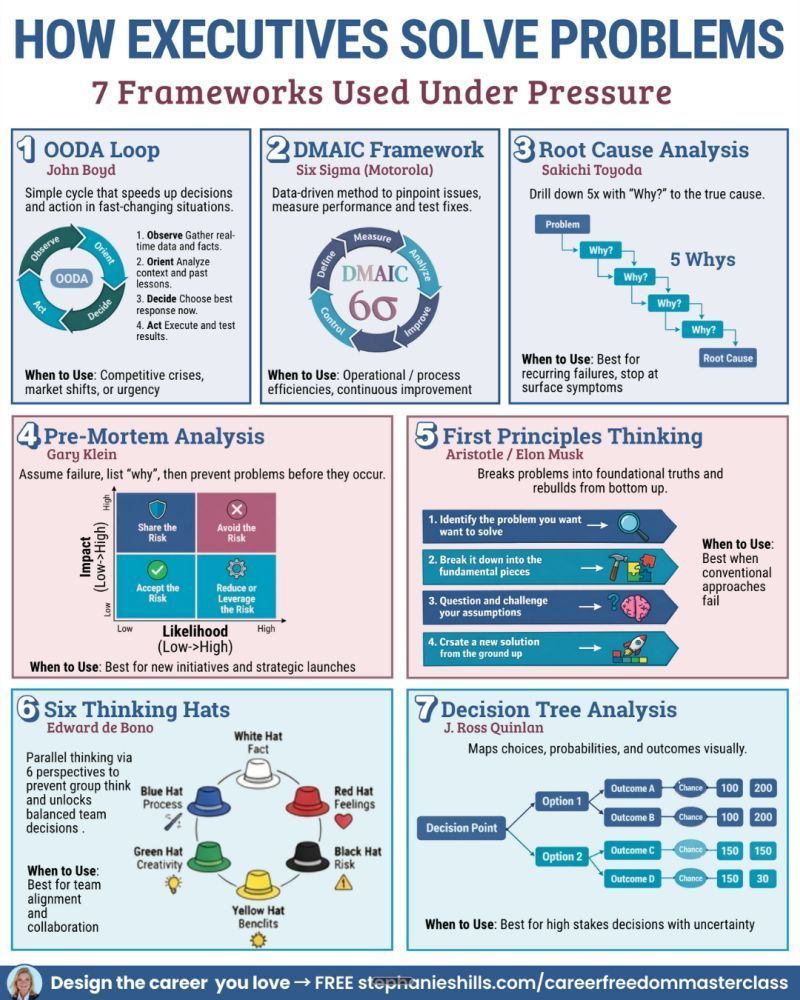
This is how real executives think
when there’s no room for mistakes.
I’ve always been known as a problem solver.
Not because I was the smartest person in the room.
Not because I had all the answers.
Not because I had the best ideas.
But because I knew how to think clearly
when the pressure was high.
I’ll never forget one situation
early in my executive career.
A $50M customer had already decided to fire us.
The relationship was broken.
Quality issues were stacking up.
Delivery was delayed.
Trust was gone.
There was no time to debate.
No room for politics.
No margin for error.
Wednesday, I was pulled in.
Thursday, I met with our executive team
That same day,
I met with the global engineering team
We whiteboarded everything
that wasn’t working.
Friday, I met with engineering leadership.
Saturday and Sunday, I built the plan.
Sunday night, I presented it to our executives.
Monday, I flew to Canada and met with the customer.
We solved the quality issues.
We fixed the delays.
We kept the account.
Not because I was better than anyone else.
But because I relied on proven ways of thinking
when everything was on the line.
Here are the exact frameworks I’ve relied on throughout my career 👇
🧠 7 PROBLEM-SOLVING FRAMEWORKS EXECUTIVES USE
1️⃣ OODA Loop
→ Speeds up decisions and action in fast-changing situations
→ When to use: Competitive crises, market shifts, or urgency
2️⃣ DMAIC Framework
→ Data-driven method to pinpoint issues, measure performance, and test fixes
→ When to use: Operational and process efficiency, continuous improvement
3️⃣ Root Cause Analysis (5 Whys)
→ Drills down past symptoms to uncover the true cause
→ When to use: Recurring failures that keep resurfacing
4️⃣ Pre-Mortem Analysis
→ Assumes failure in advance to identify risks before they happen
→ When to use: New initiatives and strategic launches
5️⃣ First Principles Thinking
→ Breaks problems into fundamental truths and rebuilds from the ground up
→ When to use: When conventional approaches fail
6️⃣ Six Thinking Hats
→ Uses parallel thinking to balance facts, emotion, risk, and creativity
→ When to use: Team alignment and collaboration
7️⃣ Decision Tree Analysis
→ Maps choices, probabilities, and outcomes visually
→ When to use: High-stakes decisions with uncertainty
This is the difference between reacting and leading
🔁 Share with a leader who makes decisions under pressure
The Cost of a Good Heart

There’s a quiet kind of strength in having a good heart. Not loud, not attention-seeking, not something that demands recognition. It shows up in the way you forgive when it would be easier to walk away. In the way you choose patience over pride. In how you give people chances, even when part of you knows they might not deserve another one.
But if you’re not careful, you can start to feel like that goodness is a weakness.
Because not everyone knows how to handle someone who leads with kindness. Some people misunderstand it. Some take advantage of it. Some simply outgrow it, or maybe they never had the capacity to meet it in the first place. And when they leave, it’s easy to sit there and wonder what you did wrong.
You replay conversations. You question your intentions. You think maybe you were too much or not enough. Maybe you cared too deeply. Maybe you trusted too quickly. Maybe if you had just held back a little, things would’ve turned out differently.
But here’s the uncomfortable truth. Having a good heart will cost you people.
Not because there’s something wrong with you, but because not everyone is built to stay.
Some people are only meant to experience a version of your kindness, not carry it with them long term. Some are drawn to your light but don’t know how to live in it. And others benefit from your presence without ever truly valuing it. That’s not a reflection of your worth. It’s a reflection of their limits.
A good heart doesn’t mean you tolerate everything. It doesn’t mean you chase people who are walking away. And it definitely doesn’t mean you shrink yourself to make others comfortable. It means you show up as you are, fully, honestly, without playing games or keeping score.
And yes, sometimes that means you’ll be the one left behind.
But look closer. Were you really left behind, or were you simply released from something that couldn’t hold what you had to offer?
Because the right people don’t get overwhelmed by your kindness. They don’t question your intentions. They don’t make you feel like loving deeply is something you need to fix. They recognize it. They respect it. And most importantly, they return it.
It’s easy to become guarded after being hurt. To build walls and call it growth. To convince yourself that caring less is safer. But there’s a difference between protecting your peace and abandoning who you are.
You don’t need to harden your heart to survive. You just need to be wiser about where you place it.
Not everyone deserves access to your energy. Not everyone earns the right to your vulnerability. And that’s okay. Discernment doesn’t make you cold. It makes you grounded.
So if people have walked away from you, don’t rush to label it as loss.
Sometimes people leaving is clarity. Sometimes it’s protection. Sometimes it’s the quiet way life makes room for something better aligned with who you’re becoming.
You didn’t lose them.
They lost someone who was willing to love them honestly, stand by them, and see the good in them even when it wasn’t obvious.
That’s not something everyone finds twice.
So keep your heart.
Just don’t hand it out blindly.
The right people won’t make you regret having one.
Workaholic vs High-Performing
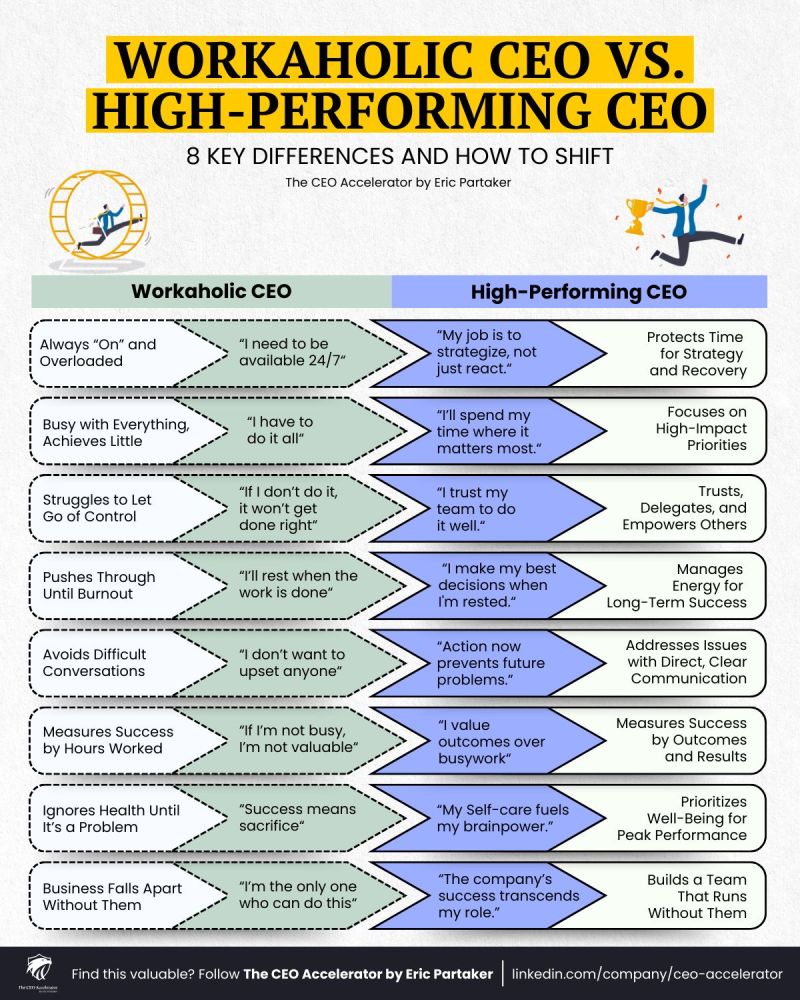
76% of leaders experience burnout.
I’ve been the victim and the culprit…
I was that CEO who wore “busy” like a badge of honor.
Every notification answered.
Every meeting attended.
Every crisis managed personally.
Until my health couldn’t handle it anymore.
My team couldn’t handle it.
My family couldn’t handle it.
My business couldn’t handle it.
I needed to change.
So I did.
And here are 8 differences between the two
(so you can shift too):
🔄 From “Always On” to Strategic Protection
↳ Workaholics are always available.
↳ High-performers block time for thinking,
rest, and focus.
🔄 From “Doing It All” to Meaningful Focus
↳ Workaholics do it all and move nothing forward.
↳ High-performers focus on what actually counts.
🔄 From Control Freak to Trust Builder
↳ Workaholic: “If I don’t do it, it won’t get done right.”
↳ High-performer: “I trust my team to do it well.”
🔄 From Pushing Through to Energy Management
↳ Workaholics work until burnout.
↳ High-performers prioritize rest.
🔄 From Conflict Avoidance to Direct Communication
↳ Workaholics keep heads down and avoid critical issues.
↳ High-performers address issues early.
🔄 From Hours Worked to Outcomes Delivered
↳ Workaholics focus on busyness.
↳ High-performers focus on impact.
🔄 From Health Sacrifice to Wellbeing Priority
↳ Workaholics put themselves last.
↳ High-performers take care of themselves first.
🔄 From Indispensable to Team Builder
↳ Workaholics think they are indispensable.
↳ High-performers build teams that are.
Here’s what I’ve learned (the hard way):
The transformation from workaholic to
high-performer isn’t just better for your health.
It’s better for your business.
For your people.
And for you.
Start the shift now.
One habit.
One boundary.
One mindset at a time.
Which shift do you need most today?
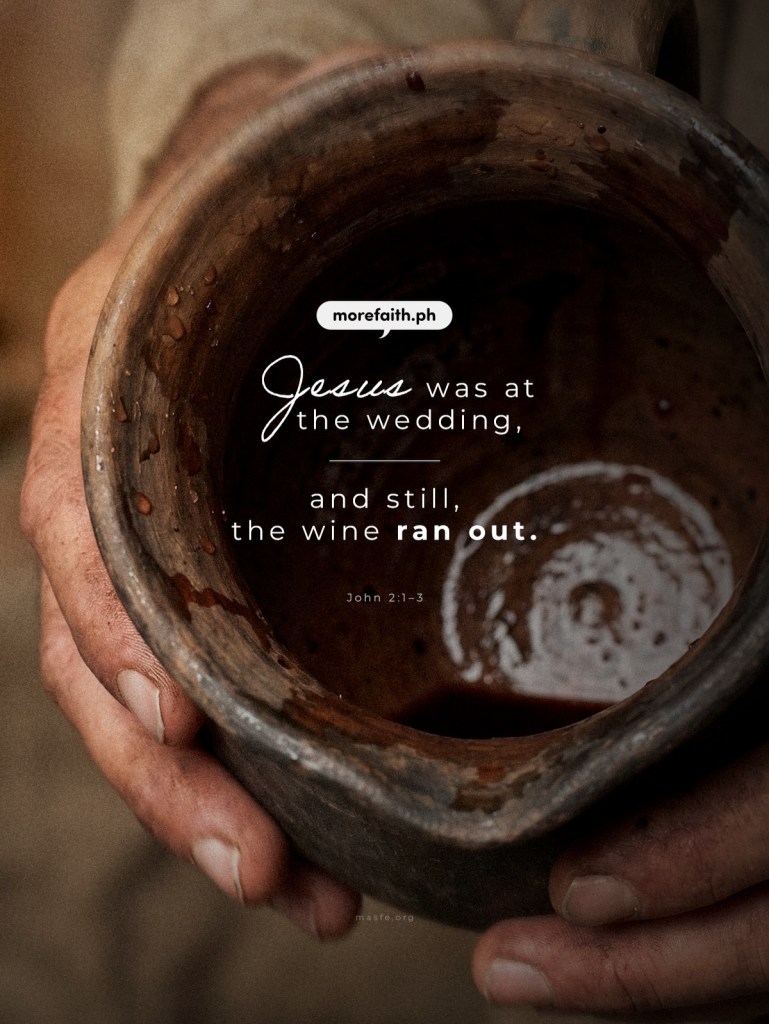
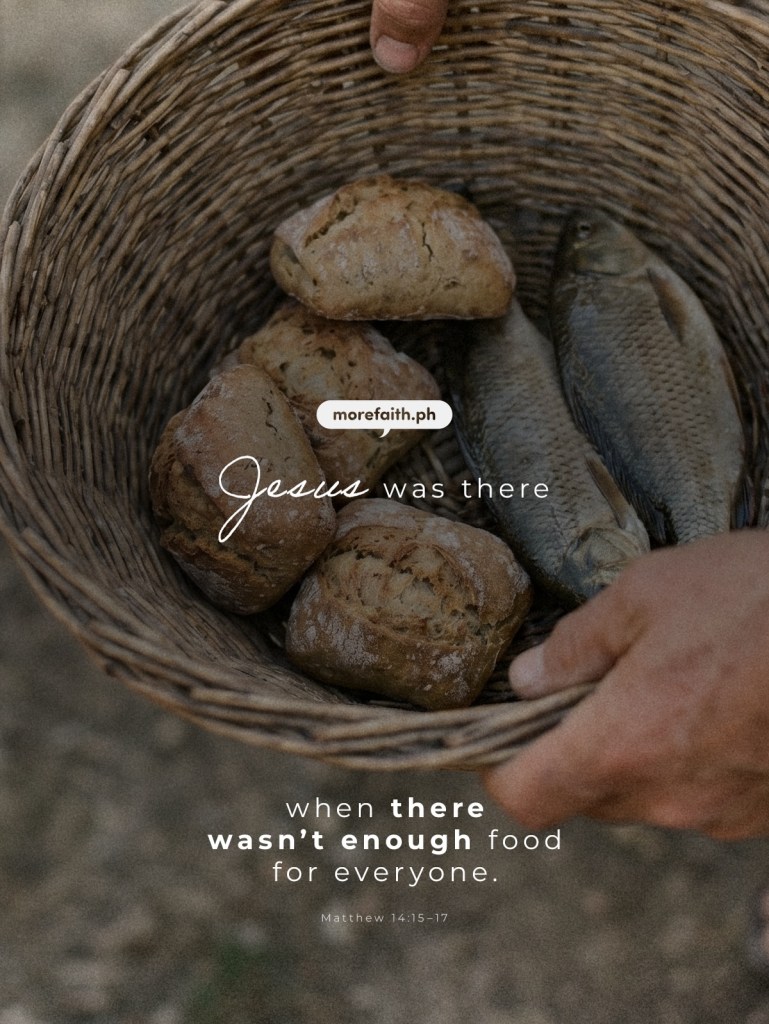
You’re Never Alone

If you’ve ever felt alone, you’re not. God is always with you. Have you ever felt that way?
Source: Link


10 Laws of Strong Leadership
If you only followed 3 of these,
Your team would feel the difference…
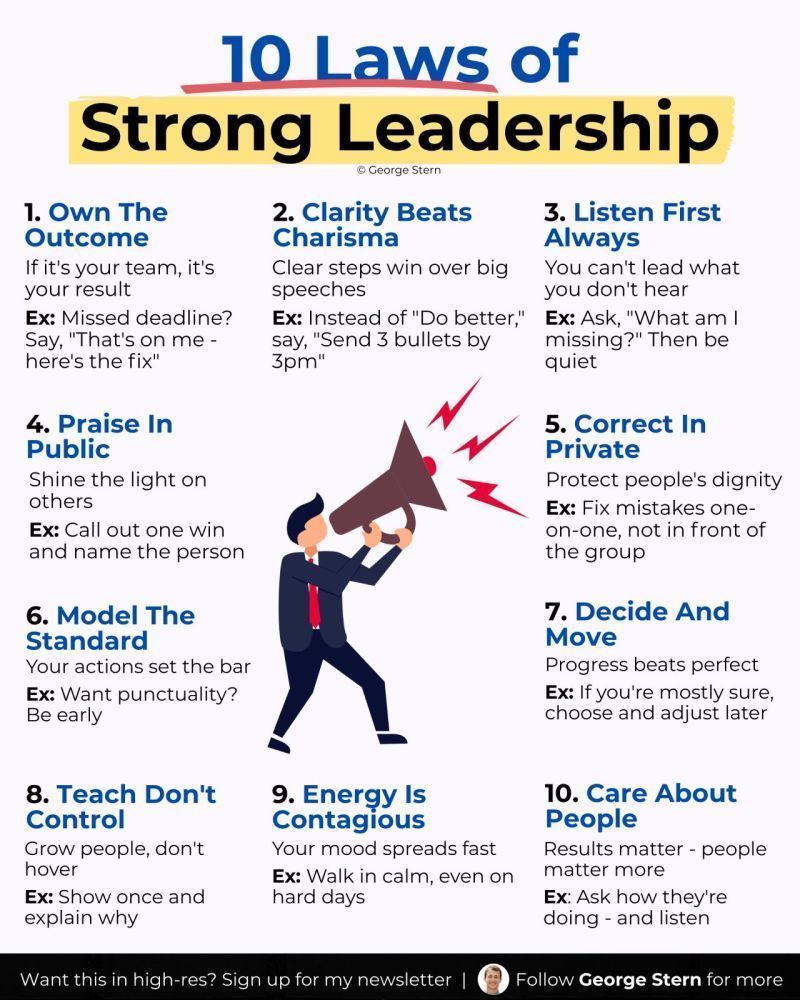
10 laws of strong leadership:
1. Own The Outcome
↳If it’s your team, it’s your result
↳Ex: Missed deadline? Say, “That’s on me – here’s the fix”
2. Clarity Beats Charisma
↳Clear steps win over big speeches
↳Ex: Instead of “Do better,” say, “Send 3 bullets by 3pm”
3. Listen First Always
↳You can’t lead what you don’t hear
↳Ex: Ask, “What am I missing?” Then be quiet
4. Praise In Public
↳Shine the light on others
↳Ex: Call out one win and name the person
5. Correct In Private
↳Protect people’s dignity
↳Ex: Fix mistakes one-on-one, not in front of the group
6. Model The Standard
↳Your actions set the bar
↳Ex: Want punctuality? Be early
7. Decide And Move
↳Progress beats perfect
↳Ex: If you’re mostly sure, choose and adjust later
8. Teach Don’t Control
↳Grow people, don’t hover
↳Ex: Show once, explain why, let them try
9. Energy Is Contagious
↳Your mood spreads fast
↳Ex: Walk in calm, even on hard days
10. Care About People
↳Results matter – people matter more
↳Ex: Ask how they’re doing – and listen
Leadership isn’t about being loud.
It’s about being steady.
Be the Light That Doesn’t Move
Not everything in life is meant to connect.
We’re taught, almost instinctively, to become bridges. To link people, to fix gaps, to bring things together. Be the one who resolves tension. Be the one who makes peace. Be the one who spans the distance.
And sometimes, that’s right. Sometimes being the bridge is exactly what the moment calls for.
But not always.
Because being a bridge comes with a quiet cost. You get walked on. You carry weight that isn’t yours. You stretch yourself thin trying to hold two sides together that may not even want to be held.
And eventually, you start to crack.
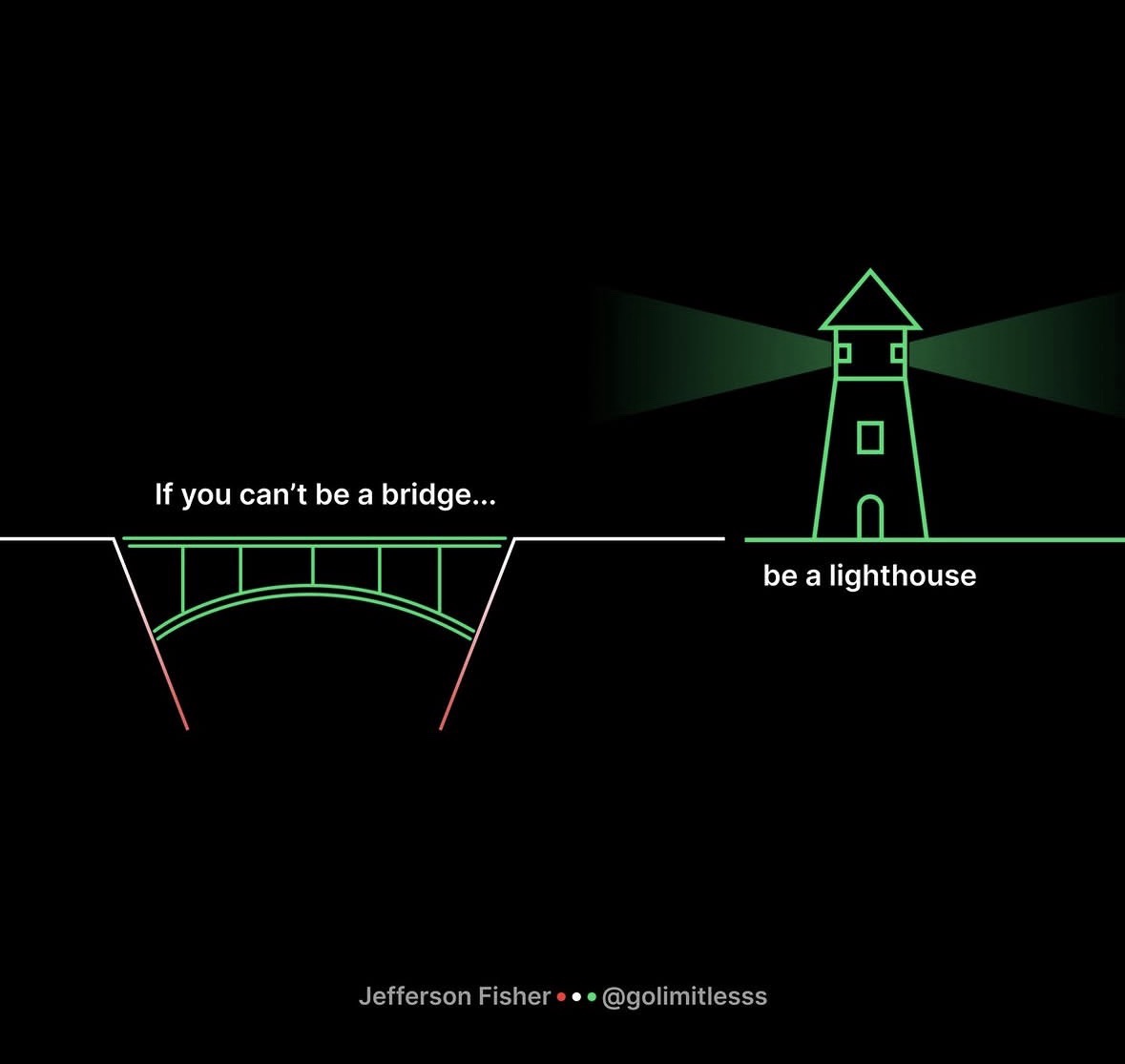
That’s when you need to remember: if you can’t be a bridge, be a lighthouse.
A lighthouse doesn’t chase ships. It doesn’t force direction. It doesn’t try to connect the ocean to the shore. It simply stands where it is—steady, grounded, unshaken—and shines.
That’s it.
It offers clarity in chaos. It gives guidance without control. It helps others find their way without losing its own.
There’s something deeply powerful about that kind of presence.
You’re not responsible for fixing every broken connection in your life. Not every relationship needs saving. Not every conflict needs your intervention. Not every distance needs closing.
Sometimes people need to navigate their own storms.
And sometimes, the best thing you can do is stay rooted in who you are, clear in your values, and visible in your truth.
That doesn’t mean you stop caring. It doesn’t mean you become distant or cold. It just means you stop overextending yourself trying to hold things together that aren’t yours to carry.
A lighthouse still serves. It still helps. But it does so without sacrificing its foundation.
Think about the times you’ve tried to be the bridge when you shouldn’t have. The conversations you forced. The tensions you absorbed. The compromises you made just to keep things from falling apart.
Did it really fix anything? Or did it just delay the inevitable while draining you in the process?
Being the lighthouse is different. It requires patience. It requires restraint. It requires trust—trust that people will find their way, even if it’s not the way you would choose for them.
And it requires something else too: the courage to stand alone if needed.
Because lighthouses are often isolated. They’re not in the middle of the crowd. They’re not surrounded by noise. They’re placed exactly where they’re needed most—on the edge, where things are uncertain.
That’s where your light matters.
You don’t need to chase people to be meaningful in their lives. You don’t need to fix every situation to be valuable. Sometimes your consistency, your integrity, your quiet strength—that’s what guides others more than any forced connection ever could.
So if you find yourself exhausted from trying to be everything for everyone, consider a different role.
Stop stretching.
Start standing.
Let your presence speak. Let your actions shine. Let your boundaries hold.
And trust that the people who need your light will see it.
Not because you pulled them in.
But because you never stopped shining.

