
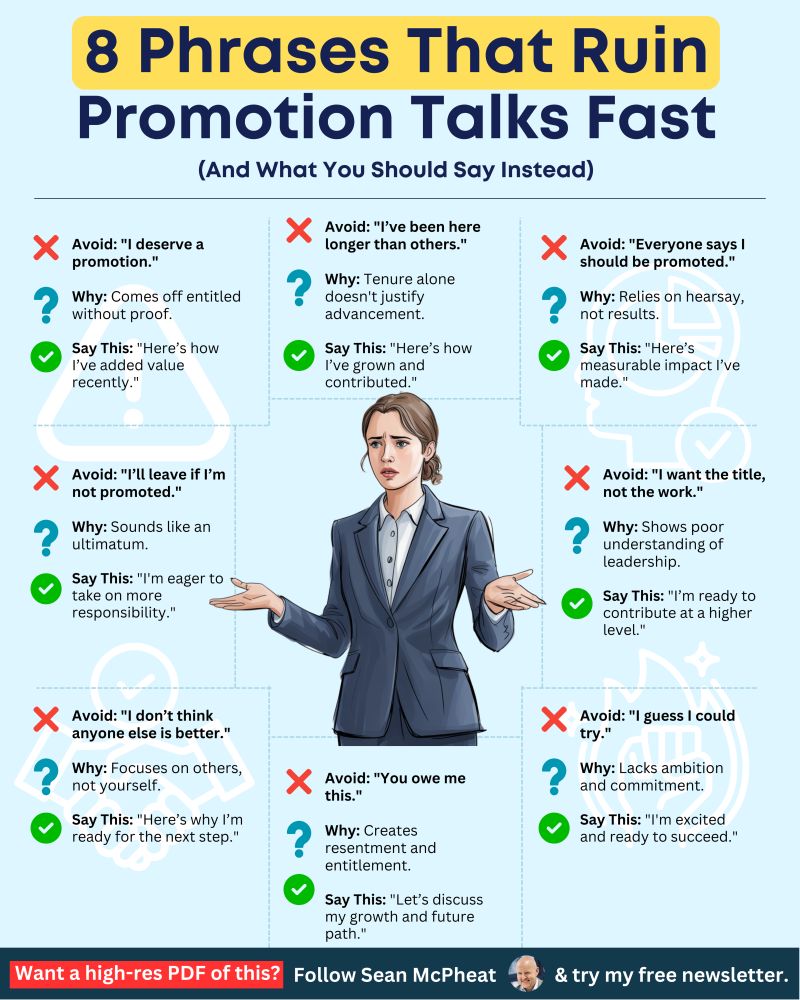
Promotions don’t just go to top performers.
They go to the best communicators too ⬇️
You’re not being overlooked.
You might just be saying the wrong things in
promotion conversations.
Statements like:
“I deserve a promotion.”
“I’ve been here longer than others.”
“I’ll leave if I’m not promoted.”
These might feel bold but they often backfire.
Why? Because they create pressure without proof.
Here’s what managers actually hear:
❌ “You owe me this.”
Creates resistance, not recognition.
❌ “Everyone says I should be promoted.”
Sounds like gossip, not evidence.
❌ “I want the title, not the work.”
Signals ego, not readiness.
Strong candidates use facts, not force.
They lead with value, not volume.
✅ “Here’s how I’ve added value in the last 6 months.”
✅ “Here are measurable results I’ve delivered.”
✅ “I’m ready to take on more responsibility, here’s how I’ve prepared.”
Promotions don’t go to those who shout the loudest.
They go to those who show they’re already doing the job they want.
So if you want to be promoted:
– Start acting the part now
– Back yourself with evidence
– Focus on how you help the business grow
🧠 Remember; the strongest case for a promotion
is made with data, not desperation.
The Chapters You Don’t See Yet
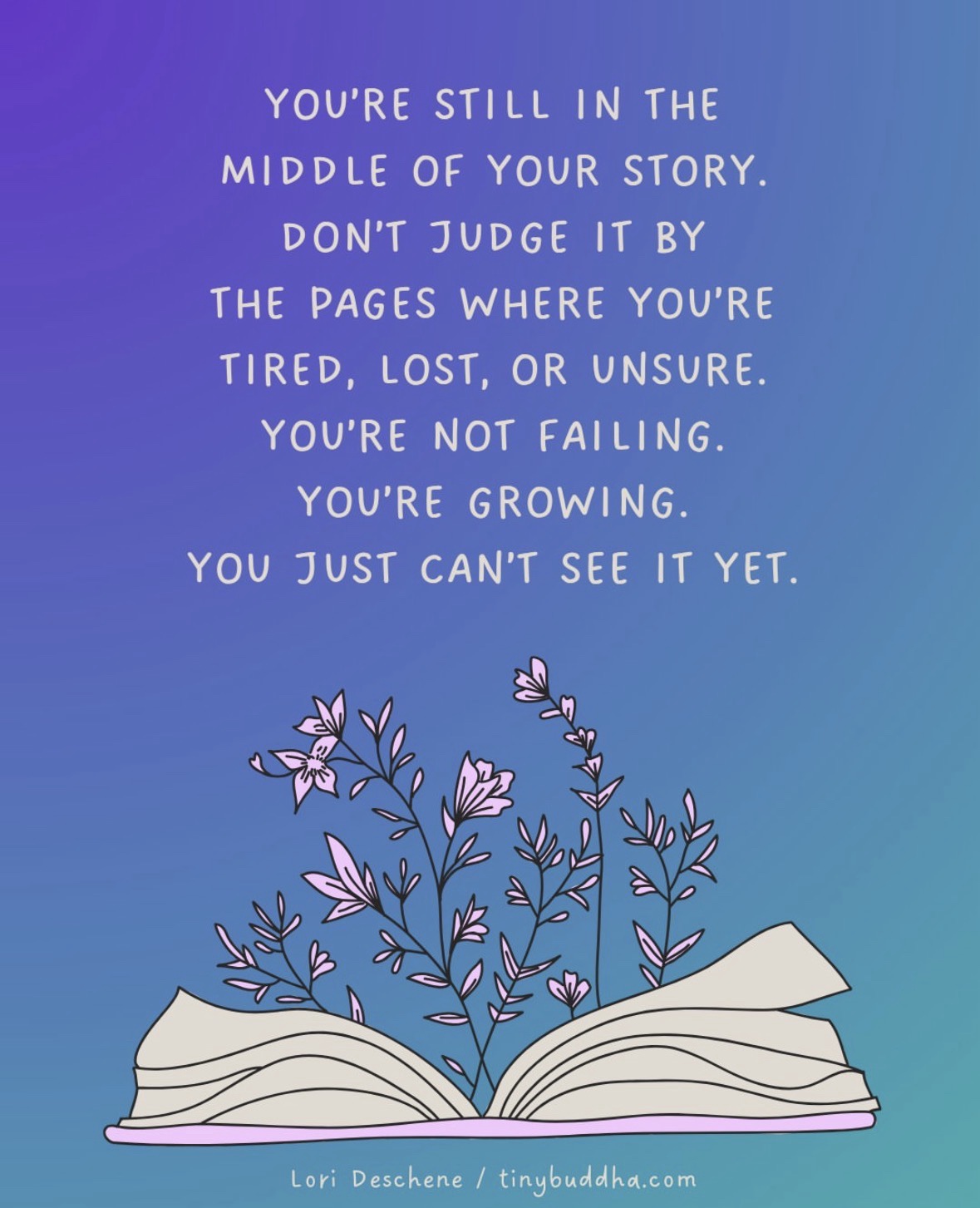
Some days feel like you’re stuck in the messiest part of your own story. You know the chapters—where everything feels slow, heavy, confusing, or downright exhausting. The pages where you’re doing your best but it still feels like you’re falling short. It’s easy to look at those moments and think the whole book is going downhill. But those aren’t the chapters that define you. They’re just the ones you happen to be reading right now.
And today, with Thanksgiving in the air, there’s something grounding about that reminder. Gratitude isn’t about pretending the hard chapters don’t exist. It’s about noticing the quiet strength that’s kept you moving through them. It’s about acknowledging the small, unglamorous victories—getting up when you didn’t want to, showing up when it was easier not to, trying again when yesterday drained you. Sometimes the most meaningful things to be thankful for are the ones you almost overlook.
We rarely give ourselves credit for the parts of growth we can’t see. We notice the struggle, not the shift. We feel the uncertainty, not the alignment quietly happening underneath. You don’t realize you’ve grown until something that used to break you suddenly doesn’t. You don’t recognize your progress until a moment arrives where you handle things differently—calmer, stronger, clearer. And even then, you might miss it because you’re already worried about the next thing.
Holidays have a way of making us pause, even if just for a moment. And in that pause, you can look around and realize that even if everything isn’t perfect, even if you’re still figuring things out, you’ve made it this far. That counts for something. Maybe more than you think. Gratitude doesn’t erase the tired or lost or unsure pages, but it does remind you that you’ve survived every chapter you once thought you couldn’t.
Sometimes growth feels like failure because it’s uncomfortable, unfamiliar, and slower than we want it to be. But growth is rarely loud. Most of the time it’s subtle—like soft rewiring happening beneath the chaos. You don’t always notice it while you’re in the middle of it, and that’s exactly why these moments feel so uncertain. You’re not meant to see the whole picture yet. You’re meant to trust that the work you’re putting in is shifting something, even if you can’t name it.
Think about all the past chapters in your life that once felt impossible—how you moved through them, how you changed because of them. Back then, you didn’t realize you were building a version of yourself that could hold more, handle more, hope more. This season will be no different. And maybe today, gratitude can be your bookmark—a small reminder that even the unfinished parts of your story hold meaning.
So if the page you’re on feels heavy, don’t assume it’s the whole story. Don’t mistake discomfort for defeat. You’re not stuck—you’re transitioning. You’re not failing—you’re forming into someone stronger than before. Trust that something is happening beneath the surface, even if it’s not visible yet.
You’re still in the middle of your story, and that’s a beautiful place to be. The best chapters don’t come from having it all figured out—they come from making it through the parts where you almost gave up but didn’t. And today, of all days, give yourself a moment to be thankful for the courage it took to get here—and the hope quietly carrying you forward to whatever comes next.
5 Proven Innovation Frameworks
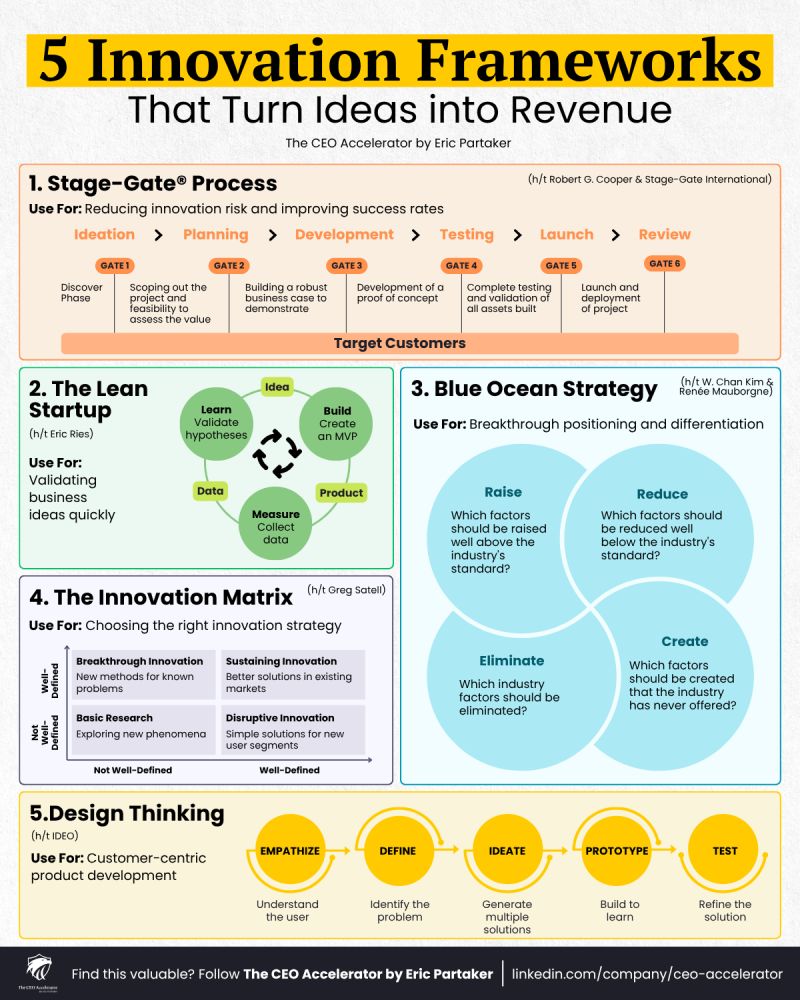
5 proven innovation frameworks that turn ideas into revenue.
(Here’s exactly when to use each one.)
Most innovation efforts fail.
Not because the ideas are bad.
But because leaders use the wrong approach for their situation.
Think of frameworks like power tools.
A drill won’t help you cut wood.
A saw won’t help you drive screws.
Here are 5 frameworks that work—when you use them right:
1. Stage-Gate® Process
↳ Perfect for: Managing $1M+ initiatives
↳ ROI driver: Stops 73% of doomed projects early
↳ Key move: Each gate saves you from disaster
2. The Lean Startup
↳ Perfect for: Validating business ideas quickly
↳ ROI driver: 10X faster time to revenue
↳ Key move: Build-Measure-Learn in weeks
3. Blue Ocean Strategy
↳ Perfect for: Breakthrough positioning and differentiation
↳ ROI driver: 3X margins in new markets
↳ Key move: Make competition irrelevant
4. The Innovation Matrix
↳ Perfect for: Choosing the right innovation strategy
↳ ROI driver: Right strategy = 5X success rate
↳ Key move: Match problem type to solution path
5. Design Thinking
↳ Perfect for: Customer-centric product development
↳ ROI driver: 87% less product failures
↳ Key move: Empathize before you build
The real insight?
Innovation isn’t about having more ideas.
It’s about executing them effectively.
These frameworks are simply tools that help you do that.
Like having the right equipment for the job.
Your next move:
Look at your biggest opportunity right now.
What’s blocking you from turning it into reality?
Pick the tool that solves that specific problem.
Ideas are everywhere.
Execution is everything.
These frameworks help you bridge the gap.
Confidence
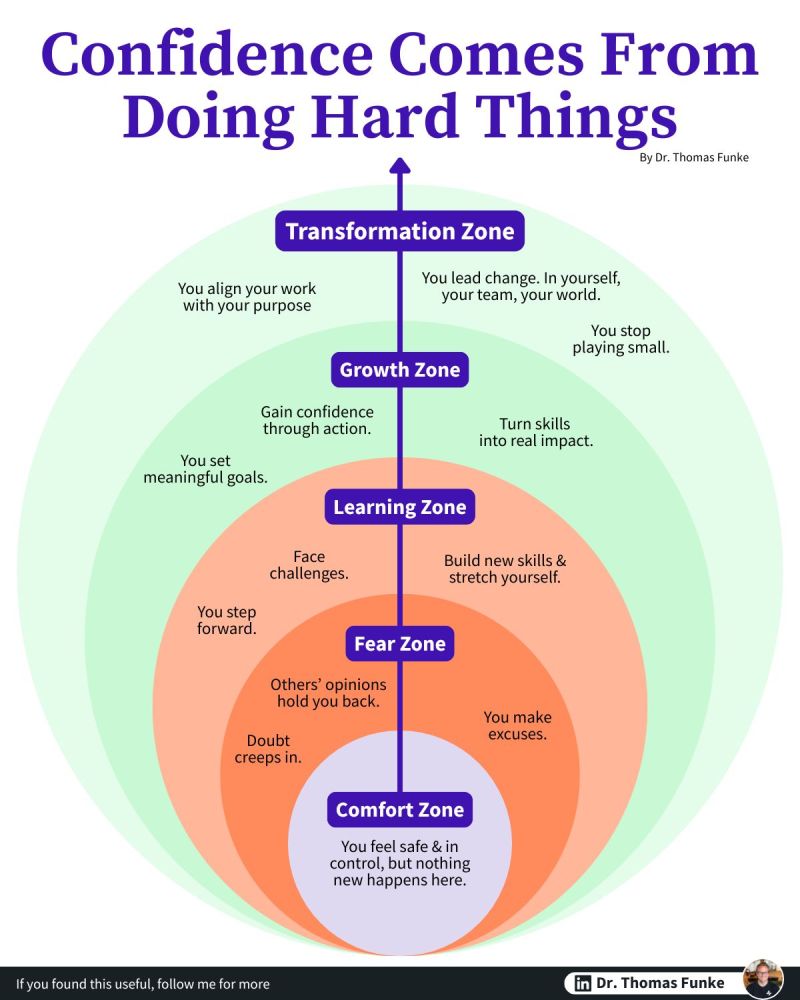
Confidence isn’t built in your comfort zone.
It’s earned one scary step at a time.
The people who land those $200k+ roles aren’t always the most qualified.
They’re the ones living in the learning zone.
Here’s what each zone actually teaches you:
1. Comfort Zone
→ You feel safe, but nothing grows here
→ Your skills stay the same
→ Your opportunities stay limited
2. Fear Zone
→ This is where most people quit
→ Doubt creeps in. Others question you
→ But here’s the secret: This zone is temporary
3. Learning Zone
→ You face real challenges
→ You build new skills that matter
→ You step forward instead of staying stuck
4. Growth Zone
→ You set goals that actually move the needle
→ You turn skills into measurable impact
→ Confidence starts flowing from action, not theory
5. Transformation Zone
→ You align work with purpose
→ You lead change instead of following it
→ You stop playing small
The breakthrough happens when you realize:
Confidence doesn’t come from knowing everything.
It comes from trusting yourself to figure it out.
That promotion you want?
That leadership role calling your name?
That career pivot you keep postponing?
It’s waiting for you in the learning zone.
Not when you feel ready.
Not when you have all the answers.
Right now.
The question isn’t whether you’re qualified.
It’s whether you’re willing to become qualified.
Every successful leader started exactly where you are.
Scared.
Uncertain.
But moving forward anyway.
Your next level is closer than you think.
The 4 Types of Thinking Leaders Need to Practice
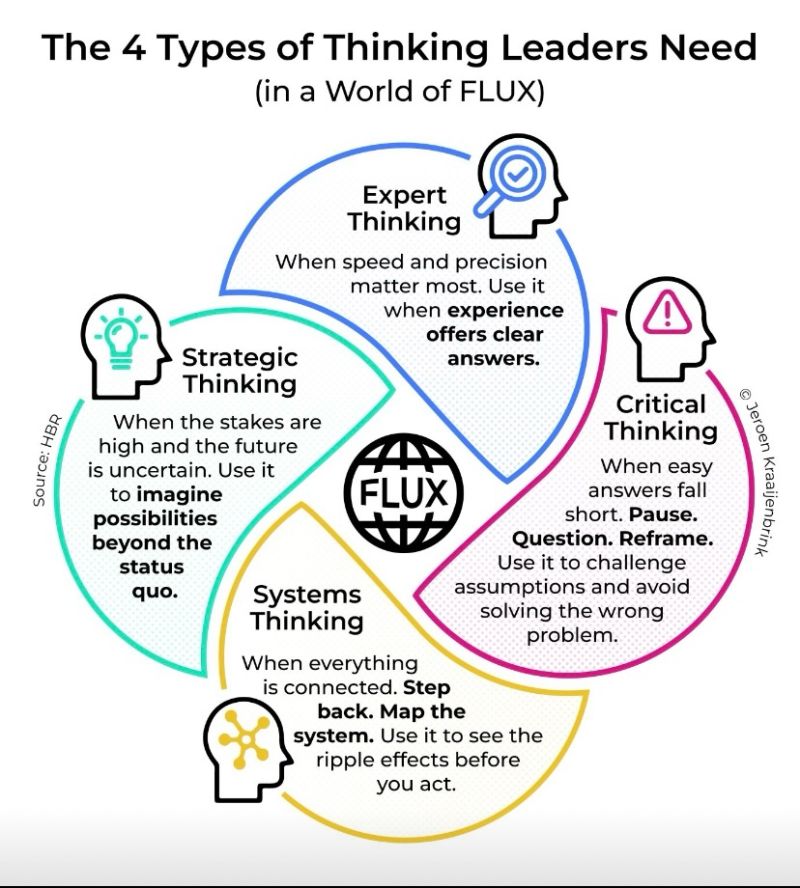
Great leaders don’t just think better—they think differently, depending on the challenge at hand.
If you want to solve the right problems—and solve them in unexpected, high-impact ways— you need to master four distinct types of thinking, according to a recent article in Harvard Business Review.
✴️ Expert Thinking
When speed and precision matter most. Use it when experience offers clear answers.
✴️ Critical Thinking
When easy answers fall short. Pause. Question. Reframe. Use it to challenge assumptions and avoid solving the wrong problem.
✴️ Strategic Thinking
When the stakes are high and the future is uncertain. Use it to imagine possibilities beyond the status quo.
✴️ Systems Thinking
When everything is connected. Step back. Map the system. Use it to see the ripple effects before you act.
These aren’t just buzzwords. They’re distinct tools for different kinds of leadership challenges.
This directly points to the relevance of our recently developed Big 5 of Strategy © competency framework—covering the five core competencies leaders need to survive and thrive in today’s world in flux.
These competencies go beyond just thinking—and include execution and adaptation. And they are not just for leaders—they are for everyone in an organization.
We’re currently accepting a select number of early adopters and pioneers who want to explore the Big 5 in their teams or organizations. We currently focus on large organizations. DM me or send me an email if your organization wants to be one of them.
The Crossing Paths Theory

There’s this quiet truth we rarely sit with: most of the people who step into our lives won’t stay forever. Some drift in like a breeze, soft and barely noticeable. Others crash in like a storm, loud and impossible to ignore. And then there are a few who settle in, shaping our days in ways that feel steady and familiar. We don’t get to choose who arrives or how long they stay, but we always get to choose what we carry forward.
The funny thing is, the real impact often reveals itself later—sometimes years later, when you’re looking back at your own story and suddenly realize that a stranger, a friend, a colleague, or even someone who simply shared a moment with you changed something small that eventually changed something big. A sentence they said. A kindness they didn’t realize mattered. A challenge they unknowingly pushed you toward. You don’t notice it as it’s happening. Life rarely announces its turning points.
People cross our path for reasons we only decode once enough time has passed. Maybe they teach us patience. Or resilience. Or boundaries we didn’t know we needed. Maybe they remind us we deserve better, or show us what “better” even looks like. Maybe they shake us awake when we’ve been drifting too long. Sometimes they’re just a mirror, reflecting the version of us we didn’t know was ready to emerge.
And yes, some leave abruptly—long before we’re ready. It can feel unfair, confusing, even a little hollow. But even those short chapters have a strange way of rerouting us. They clear space. They force growth. They help us drop old versions of ourselves we’d been dragging around because we didn’t know any different. Not everyone who leaves is a loss; some are simply a lesson completing itself.
When someone stays, that’s its own kind of gift. It means your paths didn’t just cross—they aligned. Maybe for a season, maybe for a lifetime, but either way, there’s meaning in the overlap. These are the people who walk with you through your changes, who witness your becoming, who see the contradictions, the fears, the victories, the quiet battles, and choose to stay. They don’t always have the right words or perfect timing, but they show up, and showing up is its own language.
And then, of course, there are the passersby—the ones who brush past your world so quickly you barely catch their name. Yet somehow, something about that brief crossing lingers. A piece of advice from someone you met on a flight. A moment of unexpected kindness from someone at a grocery store. A story a coworker shared on a random Tuesday that stuck with you. We underestimate how deeply small interactions can echo when our heart is open enough to hear them.
Maybe the whole point isn’t to hold on tightly or to resist the inevitable comings and goings. Maybe it’s to stay awake to the meaning that’s woven into each crossing. To accept that some people arrive as blessings, others as lessons, and many as both. To trust that even the painful departures plant seeds we’ll only recognize when we’ve grown enough to understand them.
People are maps in motion, and every time a path crosses ours, the journey shifts—sometimes subtly, sometimes dramatically, but always for a reason. We don’t get to control the timing or the duration. We don’t get to script who stays and who drifts off the page. But we do get to decide how each encounter shapes us, and what we choose to carry into the next chapter.
In the end, every path that touches yours—lightly or deeply—adds something to your story. And the beautiful part? You’re adding something to theirs too, often without even knowing it.
OKRs That Work
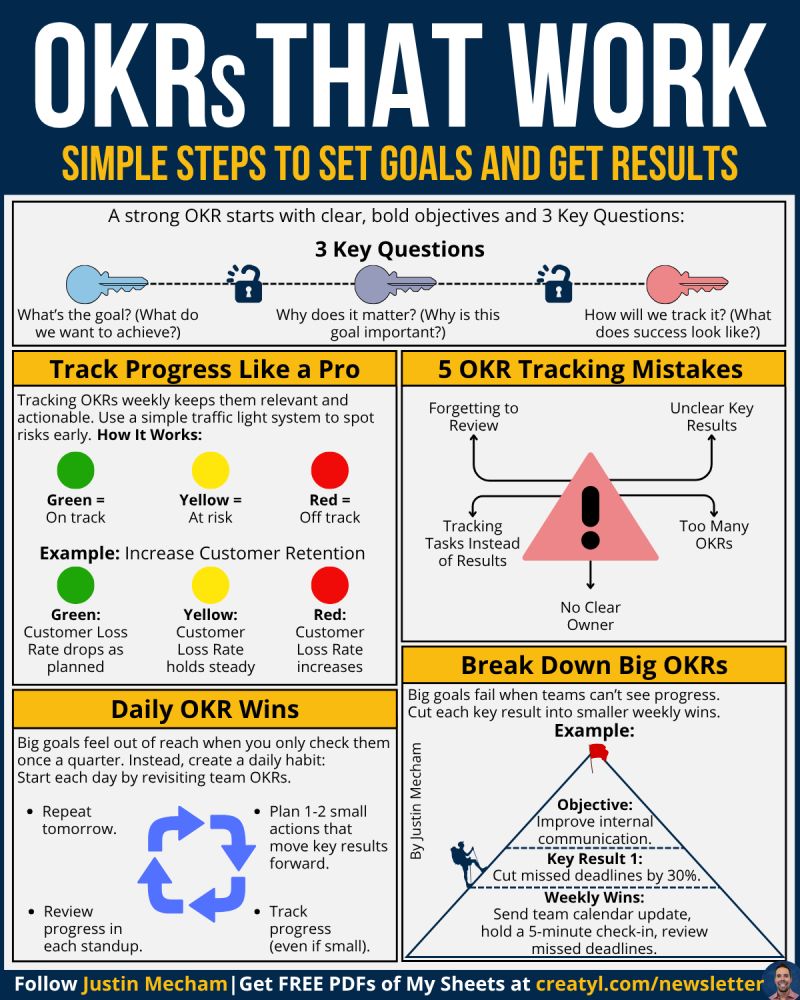
You’re not missing effort—
You’re missing structure:
Most teams set goals.
But many fail to reach them.
Goals without a clear path are just guesswork.
OKRs turn guesswork into action.
Without OKRs, teams struggle with:
🔴 Missed deadlines.
🔴 No clear ownership.
🔴 Unclear expectations.
🔴 Too many objectives at once.
🔴 Goals forgotten until it’s too late.
🔴 Tracking busywork instead of results.
Strong OKRs keep teams on track with:
🟢 Smaller wins that add up to big success
🟢 Clear, measurable results
🟢 Simple progress tracking
🟢 Daily action steps
Use my sheet to master OKRs.
Because real success doesn’t
come from big ideas alone.
It comes from:
• Clear goals.
• Daily progress.
• Measurable results.
Day after day.
Small wins become momentum.
Momentum turns goals into reality—
And reality into lasting success.
Career Advice
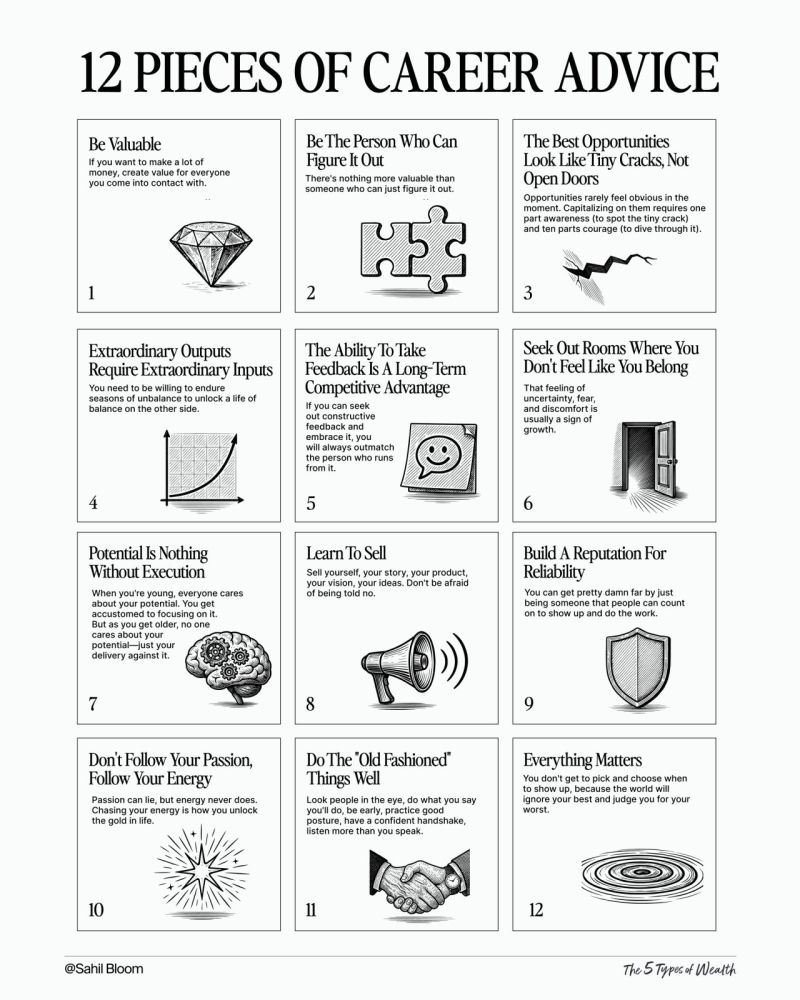
12 pieces of career advice that changed my life…
(they don’t teach you in school):
I get a lot of messages asking for career advice.
This is my attempt to synthesize a few years of responses into short, actionable lessons.
Behind each is a longer (probably painful) story. But I’ll spare you those details (for now!).
1. Be valuable
Create value, receive value. If you want to make a lot of money, create value for everyone you come into contact with. Money earned is a direct byproduct of value created.
2. Be the person who can figure it out.
Early on, you’ll be given a lot of tasks you have no idea how to complete. There’s nothing more valuable than someone who can just figure it out. Do some work, ask key questions, get it done.
3. The best opportunities look like tiny cracks, not open doors.
Opportunities rarely feel obvious in the moment. Capitalizing on them requires one part awareness (to spot the tiny crack) and ten parts courage (to dive through it).
4. If you want extraordinary outputs, you need to be willing to contribute extraordinary inputs.
Life is filled with challenging, painful tradeoffs and sacrifices. There’s no cheat code or hack to get around it.
5. The ability to take feedback is a long-term competitive advantage.
Everyone says they want feedback, but most just mean they want positive feedback. If you can seek out constructive feedback and embrace it, you will always outmatch the person who runs from it.
6. Seek out rooms where you don’t feel like you belong.
That feeling of uncertainty, fear, and discomfort is usually a sign of growth.
7. Potential is nothing without execution.
When you’re young, everyone cares about your potential. You get accustomed to focusing on it. But as you get older, no one cares about your potential—just your delivery against it.
8. Learn to sell.
Sell yourself, your story, your product, your vision, your ideas. Don’t be afraid of being told no.
9. Build a reputation for reliability.
My grandfather once told me: “You’ll achieve much more by being consistently reliable than by being occasionally extraordinary.” I will never forget that.
10. Don’t follow your passion, follow your energy.
Passion can lie, but energy never does. When you have energy for something, you’re prone to giving your deep attention to learn more about it.
11. Do the “old fashioned” things well.
Look people in the eye, do what you say you’ll do, be early, practice good posture, have a confident handshake, listen more than you speak.
12. Everything matters.
You don’t get to pick and choose when to show up, because the world will ignore your best and judge you for your worst.
The Three Word Tension Defuser
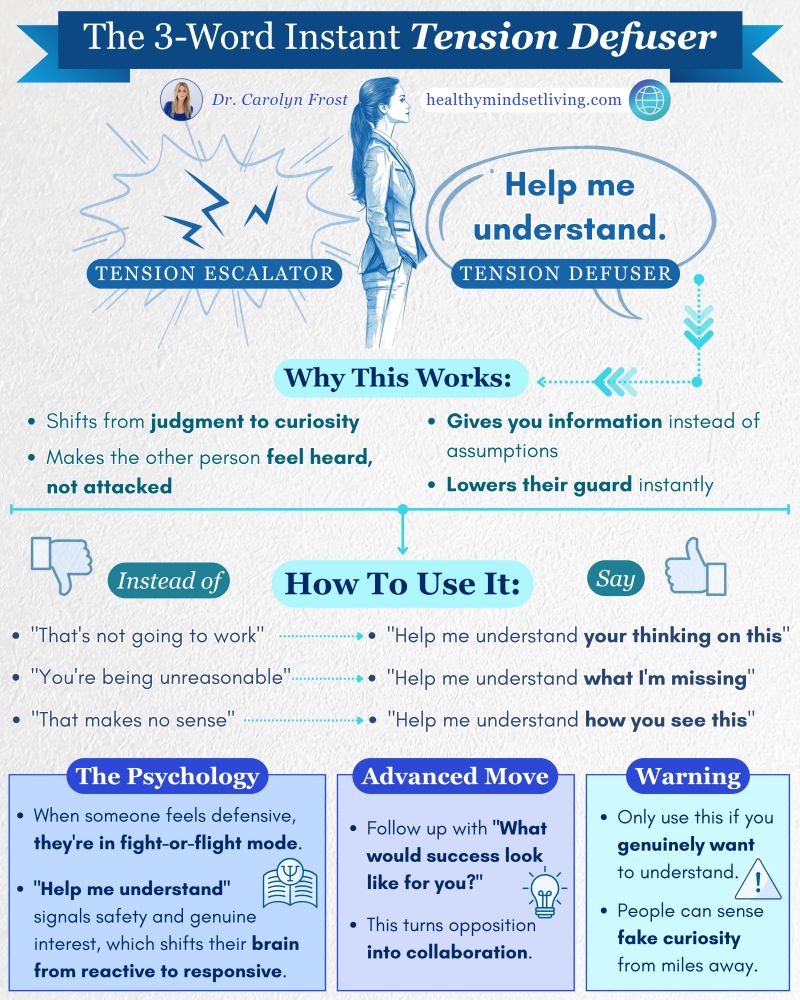
Your defensive responses are killing conversations.
This 3-word phrase flips the script instantly:
It happens faster than you think.
One minute you’re having a nice conversation.
The next, someone’s defensive and the whole thing goes sideways.
Here’s what most people do:
❌ Jump in with solutions, take sides, or try to “fix” the emotions.
Here’s what emotionally intelligent people do instead:
✅ They say 3 words, “Help me understand.”
𝗪𝗵𝘆 𝘁𝗵𝗶𝘀 𝘄𝗼𝗿𝗸𝘀 👇🏼
Shifts from judgment to curiosity
↳ Moves you from opponent to ally instantly
Makes the other person feel heard, not attacked
↳ Their brain switches from defensive to responsive mode
Gives you information instead of assumptions
↳ You learn what’s really driving their reaction
Lowers their guard immediately
↳ People can sense genuine interest vs. manipulation
𝗛𝗼𝘄 𝘁𝗼 𝘂𝘀𝗲 𝗶𝘁👇🏼
Instead of: “That’s not going to work”
Say: “Help me understand your thinking on this”
Instead of: “You’re being unreasonable”
Say: “Help me understand what I’m missing”
Instead of: “That makes no sense”
Say: “Help me understand how you see this”
Connection happens when someone feels heard.
Conflict happens when they don’t ✨
What’s one tense situation where “Help me understand” could change everything?
Where Courage Quietly Begins

Change has a way of knocking on the door long before we feel ready to answer it. It creeps up in moments when life feels predictable, almost comfortable, and then suddenly whispers, “Is this really where you want to stay?” And that whisper is inconvenient—because on one hand, the familiar feels safe, but on the other, the familiar can feel like being stuck in a room that’s slowly shrinking.
It’s a strange, heavy place to stand, knowing you’re scared of what comes next but also afraid of what happens if nothing comes next. You can feel both at once—uncertain about moving and uneasy about staying—and somehow it still makes sense. Because deep down, you know something is shifting. You know you’ve outgrown certain versions of yourself, even if you haven’t quite stepped into the new one yet.
We don’t talk enough about that in-between space—the quiet tension between who we’ve been and who we’re becoming. It’s not dramatic. It’s not loud. It’s not even obvious from the outside. But inside, it’s a tug-of-war: comfort versus potential, ease versus growth, the life you know versus the life you could have. And it’s exhausting to pretend you don’t feel it.
But here’s the thing about that tension: it means you’re paying attention. It means you’re not sleepwalking through your own story. It means you’re noticing the places where you’ve stopped expanding, where something inside you is asking for more.
Change doesn’t demand that you suddenly become fearless. It doesn’t need you to leap off cliffs or reinvent your world overnight. Most of the time, it starts in tiny ways—a thought you can’t shake, a feeling that nudges you forward, a quiet knowing that your current chapter has done what it was meant to do. Courage isn’t always loud or dramatic. Sometimes it’s just choosing not to ignore yourself anymore.
Maybe you don’t have the whole map yet. Maybe you’re only holding the first step. That’s okay. Most worthwhile journeys start exactly like that—one small, shaky step at a time, taken by someone who wasn’t fully ready but knew they couldn’t stay where they were.
Being scared of change doesn’t make you weak. Being afraid of staying the same doesn’t make you restless. It makes you human. It means you care about the person you’re becoming. And even if you move slowly—hesitant, unsure, a little scared—that movement still counts.
Because somewhere inside you, courage is already quietly beginning.
 Kenrick Vaz