
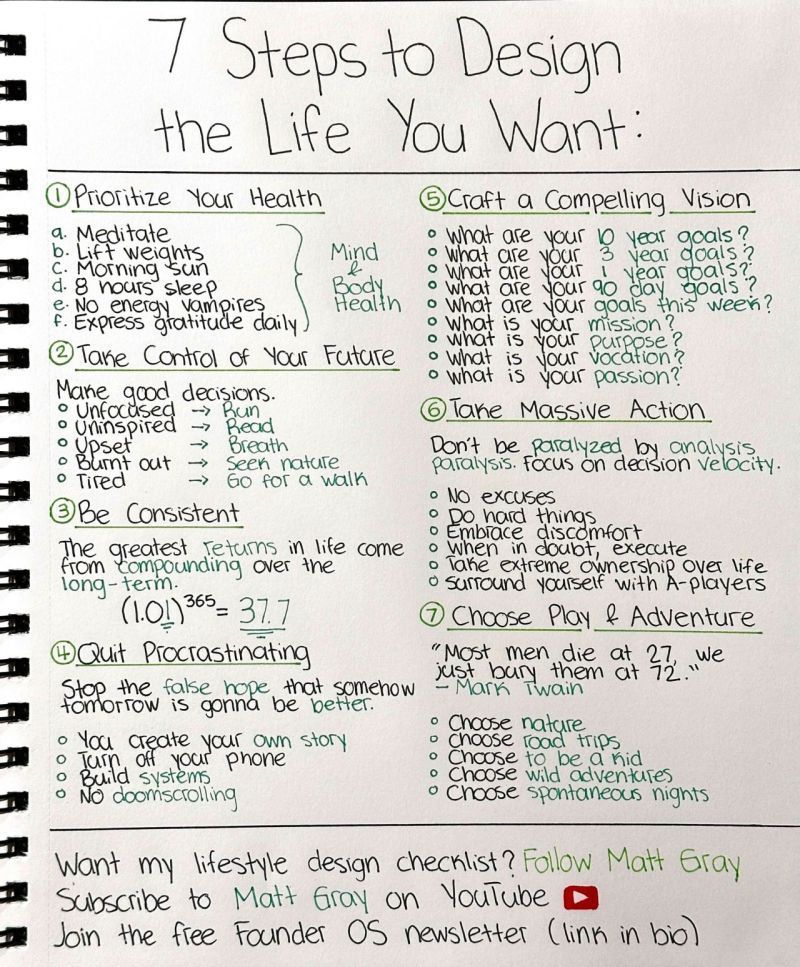
Take these steps:
“Luxury is feeling unrushed. It is designing a life that allows you to do what you want with high leverage, with many options, all while feeling unrushed.”
– Tim Ferriss
The power of lifestyle design:
• Intentional action
• Unlocking your time
• Finding what you enjoy
Step 1: Build a Habit of Reflection
Learn to become keenly in tune with how your body feels.
What words describe your feelings right now?
• Flowing?
• At ease?
• Confused?
• Exhausted?
Begin to track how you feel and analyze why you might feel that way.
This builds a habit of constant reflection.
You begin to understand:
• What makes me feel good? bad?
• What are the nuances of my good moods? my bad ones?
When I started, I learned I was in a negative mood 70% of the time!
That completely shocked me.
Step 2: Assume Control
Repeat this message:
“I am the root cause of my feelings.”
You are the one in control of your actions. You’re never powerless to change how you feel.
Sounds easy, but it’s the most difficult step.
We hate assuming responsibility for how we feel.
Hate your job? Who’s forcing you to stay in the current one?
Feel frustrated with friends? Who’s stopping you from communicating?
It may seem impossible.
But taking small steps creates instant relief.
You reassume control and learn that you can fix any problems that come up.
Step 3: Create Your Ideal Future
Write answers to these prompts:
• Do you prefer spontaneity or routine?
• What kind of diet is important to you?
• What does your ideal 24-hour-day look like?
• Where do friends and family play a role in your ideal life?
More:
• Are you pursuing FIRE?
• Where is your dream location?
• Can you combine hobbies with work?
• Do you want more hobbies/less? Which do you actually love?
• Do you want to experiment with philosophies like downshifting, slow living or minimalism?
Get to a granular level:
• What does working out feel like?
• What does working my job feel like?
• What does waking up feel like on an ideal day?
Step 4: Take Action
Synthesize all your answers to the past prompts.
Instead of setting a written goal, create an image of your ideal future in your head.
Whenever you need motivation, bring up that image to fill you with an unstoppable drive.
Then begin to reverse-engineer your better lifestyle.
• Create a group of regular gym-goers
• Set up a budget to help you hit FIRE
• Make the purchases to improve your sleep stack
• Begin to incorporate mindfulness practices weekly, then daily
Small steps, big goals.
Empathy
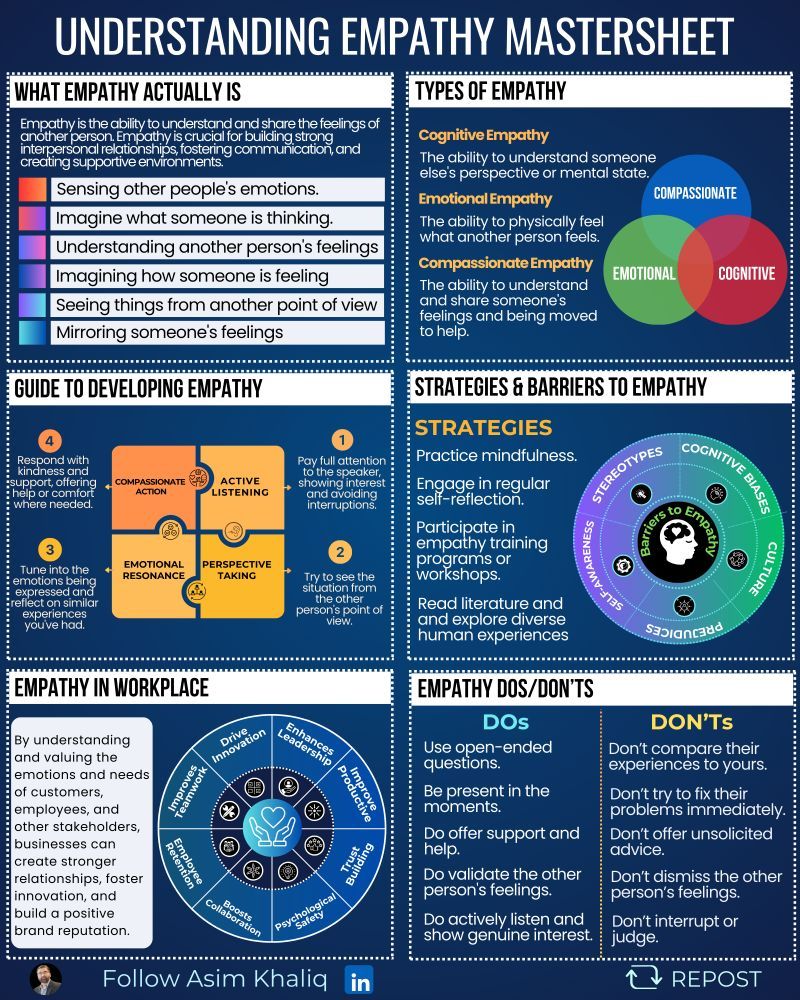
These Stats Will Shock You:
In business, we often focus on improving innovation, employee retention, and productivity by seeking solutions elsewhere.
According to the 2023 Ernst & Young LLP survey, mutual empathy between leaders and employees leads to an increase in:
-> Efficiency (88%)
-> Creativity (87%)
-> Job satisfaction (87%)
-> Idea sharing (86%)
-> Innovation (85%)
-> Revenue (83%).
Think about these numbers.
As a leader, your ability to connect with your team on an emotional level can transform your workplace.
And it’s not just about your internal team.
Understanding your customers’ emotions can dramatically improve your relationships with them, increasing loyalty and satisfaction.
Many leaders focus heavily on their IQ, aiming to outthink their competitors.
The most successful leaders aren’t just smart; they’re emotionally attuned to the needs of their people.
Key takeaways for You:
Empathy is not optional; it’s essential.
Let’s reimagine your workplaces as communities built on empathy.
PS: What steps can you take today to understand empathy truly?
9 Oprah’s Principles for hiring the perfect team
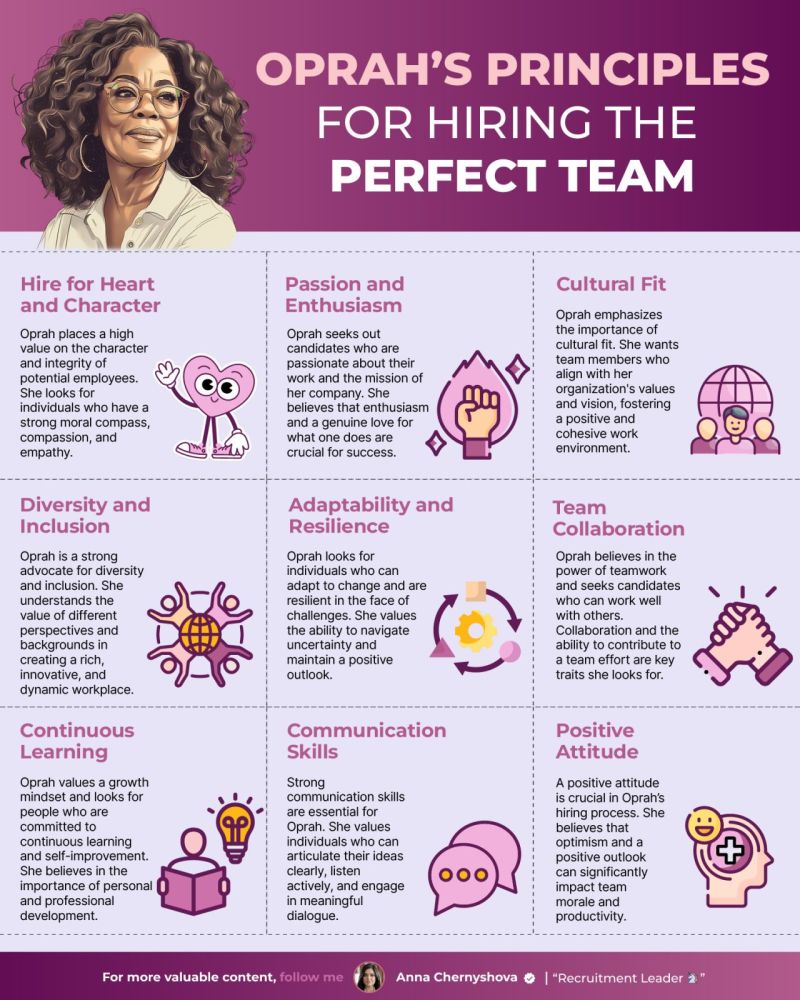
Oprah Winfrey’s hiring principles offer powerful guidance for identifying:
➡ passion
➡ integrity
➡ collaboration
Here are 9 of her Principles for hiring a perfect team:
1. Hire for Heart and Character
↳ Look for honesty, kindness, and a strong sense of integrity.
Ask: “Tell me a time when you did the right thing, even when it was hard?”
2. Passion and Enthusiasm
↳ Look for genuine excitement about the role and company mission.
Ask: “What excites you most about this role and our mission?”
3. Cultural Fit
↳ Hire those who share your company’s values.
Ask: “What type of work culture helps you do your best work?”
4. Diversity and Inclusion:
↳ Build a team with different backgrounds and ideas.
Ask: “How do your unique experiences shape how you approach challenges?”
5. Adaptability and Resilience:
↳ Choose people who handle change well and stay strong under pressure.
Ask: “Tell me a time you faced a challenge and how you handled it.”
6. Team Collaboration:
↳ Choose team players with strong examples of working well with others.
Ask: “Describe a time you worked closely with a team to achieve a goal?”
7. Continuous Learning:
↳ Hire those eager to learn and improve. They’ll help your company grow, too.
Ask: “What new skills have you learned recently, and why?”
8. Communication Skills:
↳ Hire those who have the ability to explain ideas and listen actively.
Ask: “How do you approach sharing feedback with colleagues?”
9. Positive Attitude:
↳ Hire those with a positive outlook, boosting team morale and productivity.
Ask: “How do you stay motivated during challenging times?”
Great teams start with great hires.
Focus on character, passion, and collaboration, and ask the right questions.
Which of these principles resonated with you?
12 Phrases To Ban
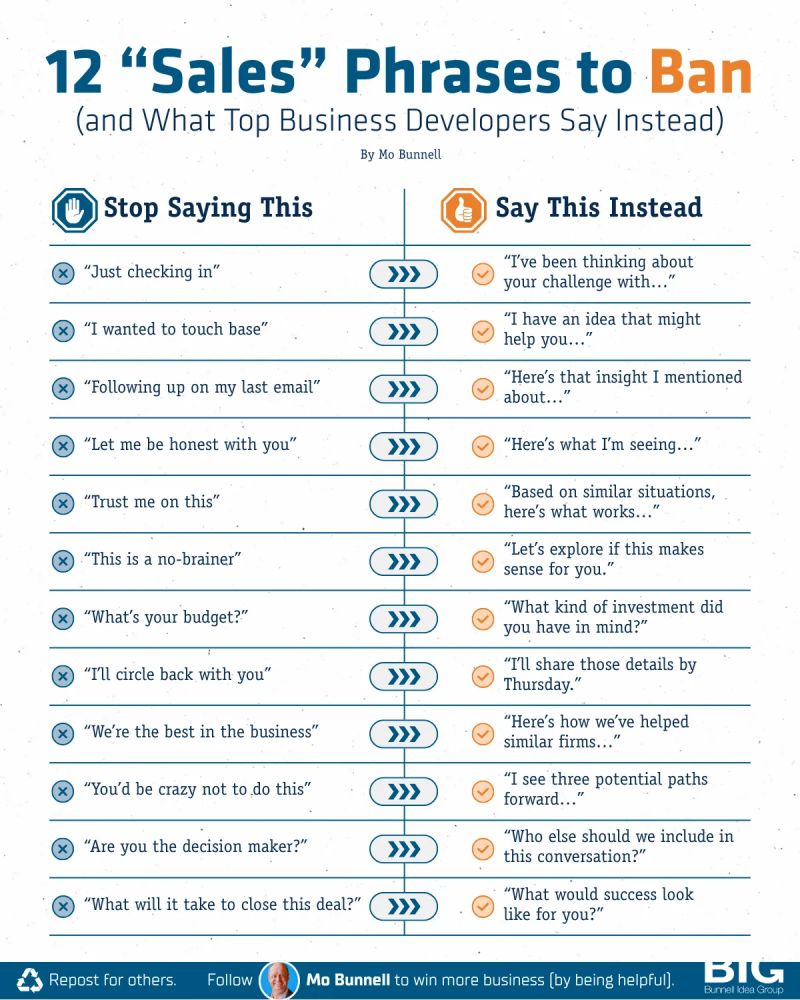
12 silent credibility-killers hiding in your vocabulary.
(How many do you use?)
If “sales” makes you uncomfortable, you’re not alone.
Most client-facing professionals never received formal sales training.
And honestly? That’s okay.
You don’t need to become a “salesperson” to build strong business relationships.
But here’s what I’ve noticed after training thousands of professionals.
We all use certain phrases that accidentally push clients away.
Even when we’re trying to help.
The good news? Once you spot the patterns, they’re surprisingly easy to fix.
Look for these 12 phrases that might be killing your credibility:
❌ “Just checking in”
❌ “Trust me on this”
❌ “This is a no-brainer”
❌ “What’s your budget?”
❌ “I’ll circle back with you”
❌ “I wanted to touch base”
❌ “Let me be honest with you”
❌ “You’d be crazy not to do this”
❌ “Are you the decision maker?”
❌ “Following up on my last email”
❌ “We’re the best in the business”
❌ “What will it take to close this deal?”
Each one says “I’m not listening.”
Top performers say things like:
✅ “Who else should we include in this conversation?”
✅ “Based on similar situations, here’s what works…”
✅ “What kind of investment did you have in mind?”
✅ “I’ve been thinking about your challenge with…”
✅ “Let’s explore if this makes sense for you.”
✅ “Here’s how we’ve helped similar firms…”
✅ “Here’s that insight I mentioned about…”
✅ “What would success look like for you?”
✅ “I see three potential paths forward…”
✅ “I have an idea that might help you…”
✅ “I’ll share those details by Thursday.”
✅ “Here’s what I’m seeing…”
Small tweaks.
Massive impact.
The shift is simple:
Stop pushing your agenda.
Start solving their problems.
Your next conversation is your chance to practice.
You don’t need to become a “salesperson.”
You just need to be helpful, curious, and focused on what matters to your clients.
Dance Before the Music Starts
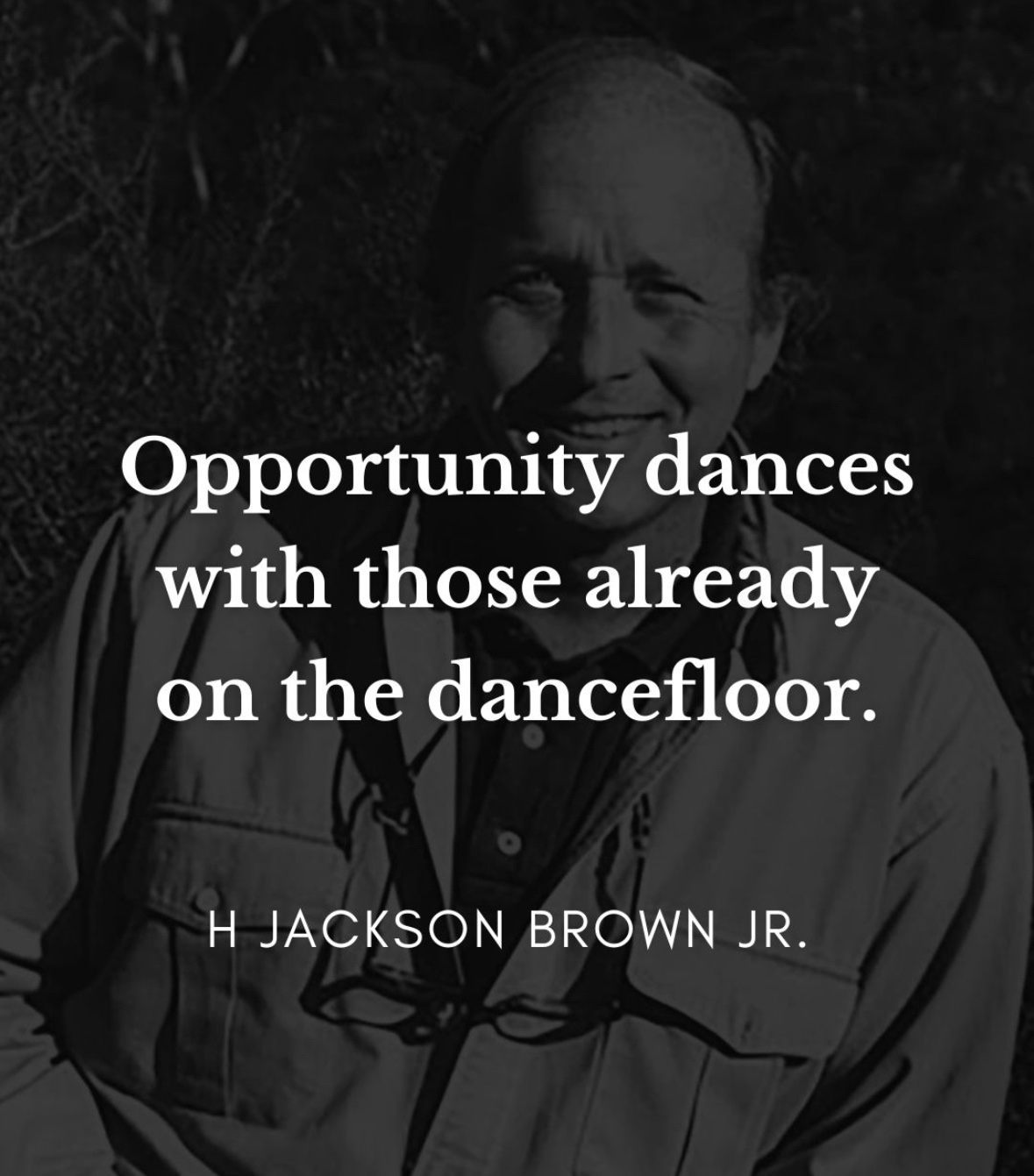
Most people wait for life to tap them on the shoulder before they take a step. They sit on the sidelines, hoping opportunity will notice them, call their name, and pull them into the spotlight. But that’s not usually how it works. Opportunity tends to wander toward the noise, the motion, the energy. It gravitates to the ones already moving, already trying, already doing something—anything—with what they have.
It’s a bit like walking into a party and seeing a few people dancing before the DJ has even warmed up. They’re not waiting for the perfect beat. They don’t care if the lights aren’t dazzling yet or if the crowd hasn’t filled the room. They’re already on the floor. They’re already in the moment. And strangely, that’s exactly when things begin to happen.
So many of us freeze because we think we’re not ready. We think we need more time, more skill, more confidence, more clarity. But readiness is a moving target. You don’t get ready and then begin; you begin and then become ready. The courage to start while your legs are shaking is often the very thing that steadies them.
There’s a funny thing about movement: it attracts momentum. The small step you take today becomes the reason a bigger step appears tomorrow. The call you dared to make opens a door you didn’t even know existed. The project you started without knowing the ending becomes the bridge to the one that changes everything. People who are in motion pick up things others miss simply because they’re on the floor when opportunity decides to show up.
And the dancefloor doesn’t always look glamorous. Sometimes it’s messy. Sometimes it’s awkward. Sometimes it feels like you’re the only one out there, moving to music only you can hear. But that’s exactly when opportunity notices you—when you’re willing to move even without applause.
You don’t have to know the choreography. You don’t need the perfect rhythm. You don’t have to impress anyone. Just show up. Try things. Build things. Learn things. Put your ideas out there, even if they wobble at the start.
Opportunity rarely visits the couch. It likes to dance. And it tends to pick partners who are already in motion.
So step onto the floor. Let your feet stumble if they must. Let your heart race. Let the music be imperfect. What matters is that you’re out there—visible, present, alive, moving. Because once you’re on the floor, the universe knows exactly where to find you.
Managing Your Manager
Most managers won’t tell you this—
But they wish you’d do it:
They want fewer surprises.
Fewer loose ends.
Less guessing what you need.
And more help carrying the weight.
The truth?
Managing your manager is a skill—
And most people never learn it.
They wait.
They assume.
They hope things just work out.
But the ones who rise?
They know how to lead up, not just down.
Here’s how to make that shift—
And start earning real trust:
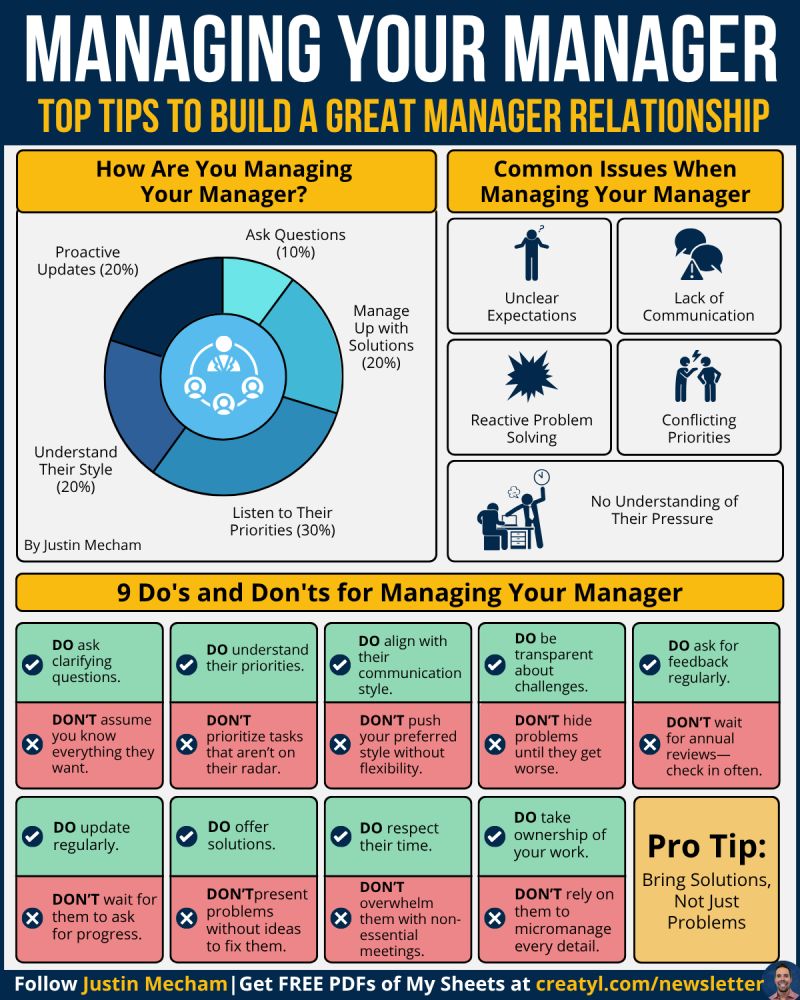
💡How You Support Your Manager
→ Share updates before they ask
→ Ask clear, simple questions
→ Match their goals and style
⚠️What Holds You Back
→ Letting fear stop you
→ Avoiding honest talks
→ Focusing on the wrong things
→ Waiting too long to get direction
✅❌Do’s vs. Don’ts
→ Do: Speak up, take action,
offer solutions, respect their time.
→ Don’t: Assume they know what you need,
hide problems hoping they disappear.
Behind every manager is
someone under pressure.
They don’t always know what you need.
They don’t always say what they feel.
But they always notice who shows up ready.
Make sure that person is you.
Dangerous Employees
The most valuable employees aren’t waiting for training.
They’re creating their own edge.
And they’re already two steps ahead.
They’re the ones quietly:
→ Upskilling in AI after hours
→ Learning leadership through podcasts
→ Preparing for what’s next while others stand still
Here’s why they’ll transform your company (and why you need to watch them closely):
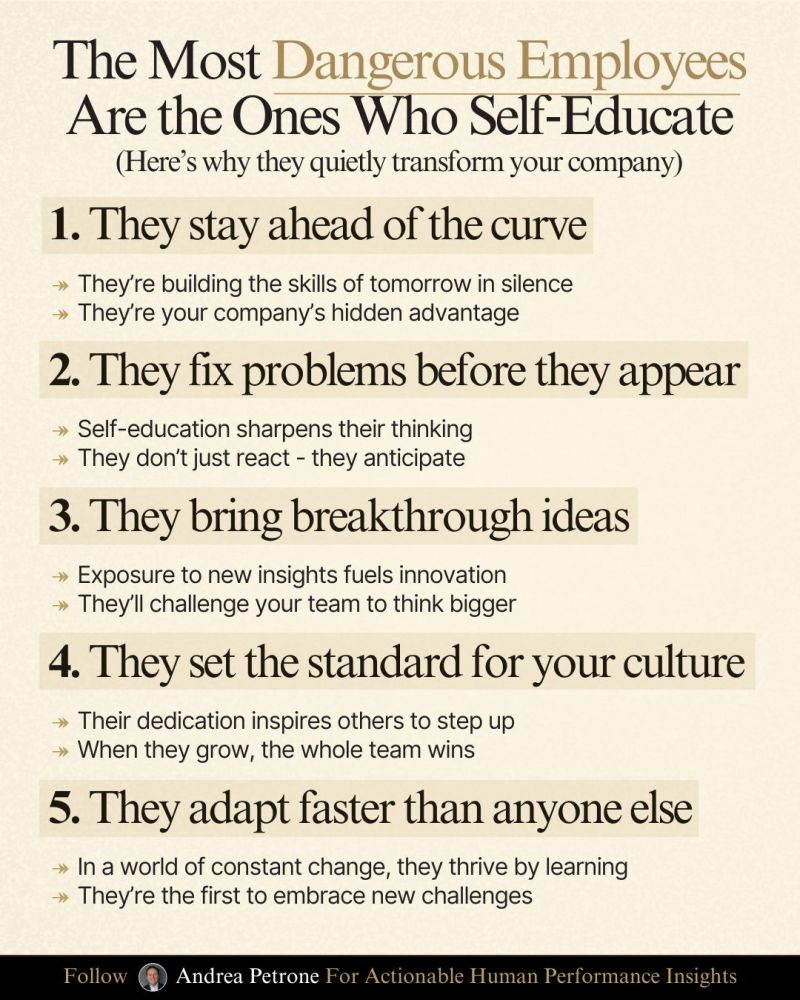
1. They stay ahead of the curve
→ They’re building the skills of tomorrow in silence
→ They’re your company’s hidden advantage
2. They fix problems before they appear
→ Self-education sharpens their thinking
→ They don’t just react—they anticipate
3. They bring breakthrough ideas
→ Exposure to new insights fuels innovation
→ They’ll challenge your team to think bigger
4. They set the standard for your culture
→ Their dedication inspires others to step up
→ When they grow, the whole team wins
5. They adapt faster than anyone else
→ In a world of constant change, they thrive by learning
→ They’re the first to embrace new challenges
Here’s your wake-up call:
If you don’t recognize their value,
someone else will.
Your goal:
Spot them.
Support them.
Or watch them grow for someone else.
Do you know who these employees are on your team?
9 Powerful Ways to Open a Presentation
The First 10 Seconds Can Make or Break Your Presentation
If you don’t hook your audience immediately, you risk losing them.
The best speakers don’t just start talking—they command attention from the first sentence.
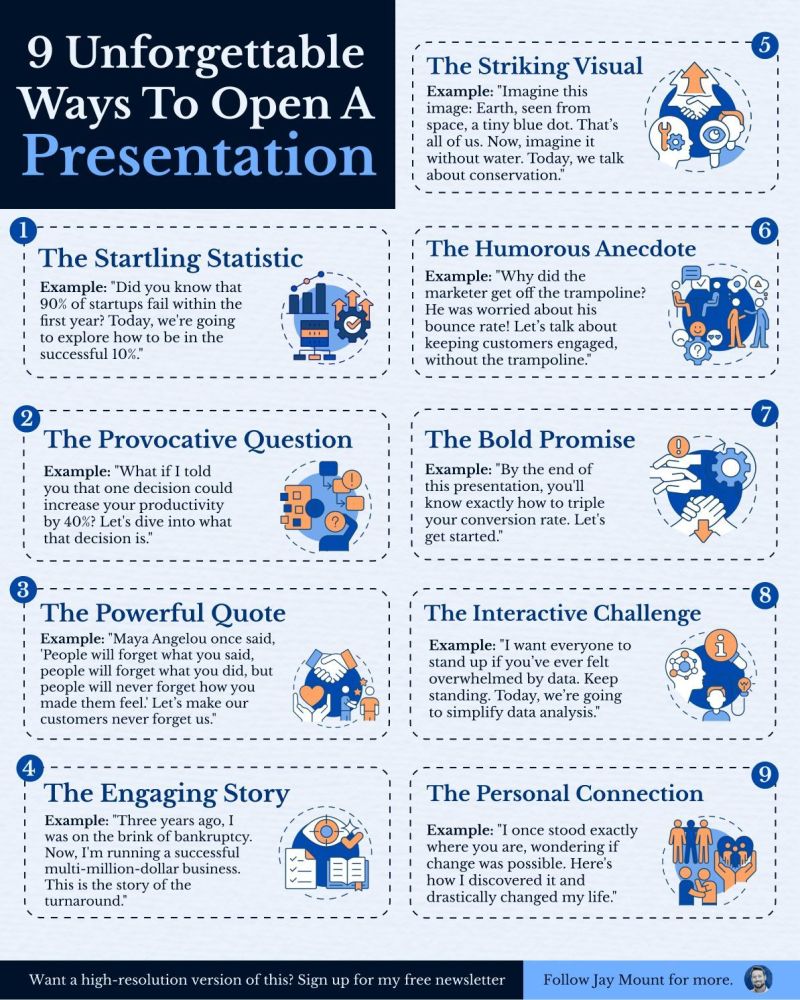
Here are 9 powerful ways to open a presentation and captivate your audience:
—
1. Lead with a Shocking Statistic
➝ “Did you know 80% of presentations fail to keep the audience engaged?”
✅ Why it works: It grabs attention and sparks curiosity.
2. Ask a Thought-Provoking Question
➝ “What if one small habit could double your productivity?”
✅ Why it works: It invites the audience to think and engage.
3. Share a Compelling Quote
➝ “Steve Jobs once said, ‘The most powerful person in the room is the storyteller.’”
✅ Why it works: Adds credibility and sets the tone.
4. Tell a Personal Story
➝ “Five years ago, I bombed my first public speech… and here’s what I learned.”
✅ Why it works: Stories create emotional connections.
5. Paint a Vivid Scenario
➝ “Picture this: You’re on stage. The room is silent. Every eye is on you…”
✅ Why it works: It activates imagination and draws people in.
6. Use Humor
➝ “Public speaking is like coffee—some love it, some need it, and some just pretend to enjoy it.”
✅ Why it works: It relaxes the audience and builds rapport.
7. Make a Bold Promise
➝ “By the end of this talk, you’ll have a strategy to turn any speech into a standing ovation.”
✅ Why it works: It keeps people interested in what’s coming next.
8. Engage with a Challenge
➝ “Raise your hand if you’ve ever struggled with stage fright.”
✅ Why it works: It creates instant interaction and energy.
9. Relate to the Audience’s Experience
➝ “I know exactly how nerve-wracking this moment can feel—I’ve been there too.”
✅ Why it works: It builds connection and trust.
—
### The Best Openers Do One Thing:
They grab attention and set the stage for impact.
💡 Choose an opener that fits your message, and watch your audience stay engaged from the very first word.
The Importance of Being in the Right Place

Sometimes life tricks you into thinking your effort is the problem. You push harder, stay longer, stretch yourself thinner than you should, and yet the results never look like what you hoped for. You start wondering if you’re the weak link, if you’re not talented enough, not smart enough, not disciplined enough. But what if the issue isn’t you at all? What if you’re just standing in the wrong place?
There are environments that ask you to shrink before you even begin. Places where your ideas feel “too much,” where your kindness is mistaken for weakness, where your strengths go unnoticed because no one is looking in your direction. In those spaces, even your best effort feels like a drop in a bottomless bucket. You could give everything you have, and somehow it still feels like you’re failing. It’s not because you’re lacking. It’s because the soil was never meant for you to bloom in.
And then, there are the other kinds of places—the right ones—where something shifts the moment you walk in. You don’t have to prove your worth; it’s already recognized. Your energy is welcomed. Your strengths aren’t just tolerated; they’re valued. Here, even your smallest contributions feel meaningful. You can breathe deeper. You can think clearer. You feel seen without having to perform.
What’s wild is how subtle this difference can be. Two people can do the exact same thing—same talent, same effort, same heart—and in one environment they are ignored, while in another they’re celebrated. That’s not luck. That’s alignment.
Finding your place isn’t always about geography; sometimes it’s a room, a team, a relationship, a community, a calling. And often, you don’t realize you were in the wrong place until you finally experience the right one. The right place doesn’t demand perfection. It doesn’t keep score. It doesn’t dim your light. It does the opposite—it reminds you that your presence alone has value.
So if you’ve been fighting to be enough lately, maybe it’s time to pause and ask a harder question: Am I giving my best in the wrong place? Because effort shouldn’t feel like drowning. Growth shouldn’t feel like punishment. And being appreciated shouldn’t feel like a miracle.
You deserve to be somewhere that recognizes you without making you beg for it. Somewhere your gifts are obvious, your voice matters, and your existence is met with, “We’re glad you’re here.”
Right place. Right people. Right soil.
And suddenly, without changing a single thing about yourself, you begin to bloom.
Elon Musk’s 6 Rules of Productivity
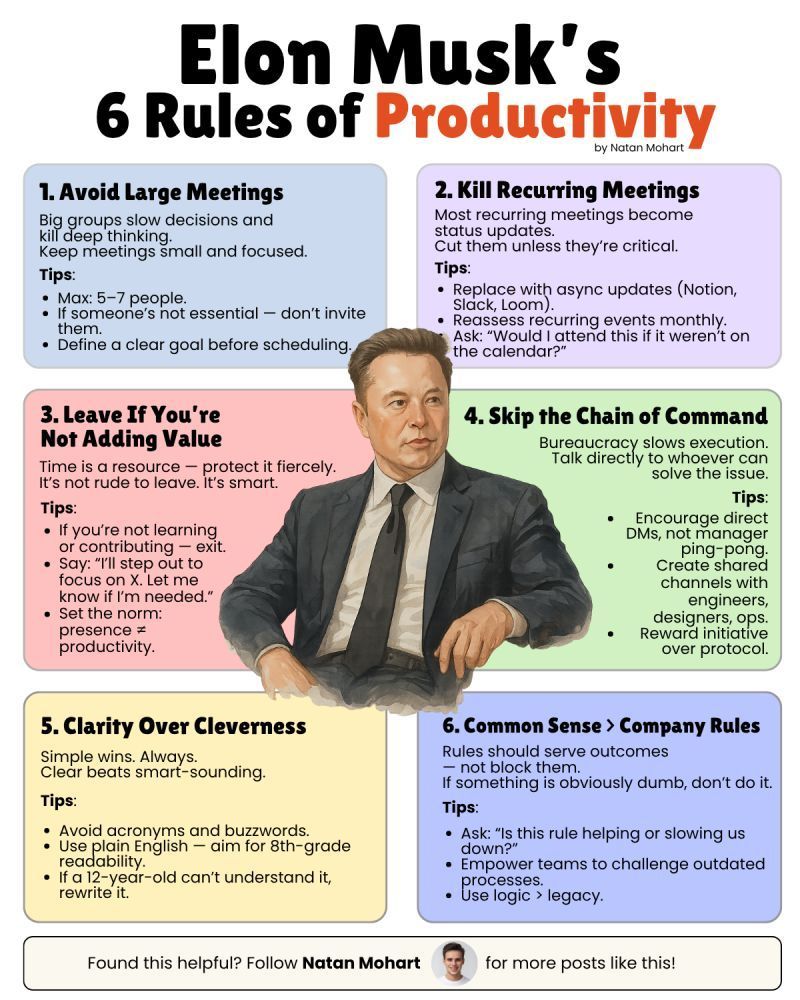
Most people waste time pretending to be productive.
Elon Musk doesn’t have that luxury.
He runs 6 companies.
Most can’t handle one.
So how does he do it?
A leaked internal email revealed the 6 ruthless rules he lives by to maximize productivity.
Save this. Live by it.
Your calendar will thank you.
1/ Avoid Large Meetings
↳ Big meetings = collective procrastination.
↳ Only include people who are actually contributing.
2/ Kill Recurring Meetings
↳ Regular meetings are often performative.
↳ Build things, don’t just talk about building them.
3/ Leave If You’re Not Adding Value
↳ Walking out of a pointless meeting isn’t rude.
↳ Wasting people’s time is.
4/ Skip the Chain of Command
↳ Talk directly to the person who can get it done.
↳ Middle managers slow down momentum.
5/ Clarity Over Cleverness
↳ If you can’t explain your idea simply, you don’t understand it well enough.
↳ Jargon ≠ intelligence.
6/ Common Sense > Company Rules
↳ If a rule makes no sense in context — change it.
↳ You’re here to get results, not follow bureaucracy.
 Kenrick Vaz