

Listening is a superpower –
Here’s how you can get it:
We talk about communication skills…
But forget that listening
is communication.
The best leaders aren’t the loudest.
They’re the ones who listen the most.
True listening is how trust is built.
It’s how teams feel seen, heard, and valued.
Poor listening leads to:
🔻 High turnover
🔻 Lower team morale
🔻 Missed opportunities
🔻 Lack of accountability
🔻 Damaged relationships
🔻 Wasted time and energy
🔻 Decreased motivation
🔻 Unclear expectations
🔻 Repeated mistakes
🔻 Frustrated teams
The solution?
Learn to truly LISTEN:
🔹 L-earn
🔹 I-nterpret
🔹 S-upport
🔹 T-une in
🔹 E-mpathize
🔹 N-urture
And use the HURIER model by Dr. Judi Brownell:
👂 Hearing
🧠 Understanding
📝 Remembering
🔍 Interpreting
📊 Evaluating
💬 Responding
Real listening isn’t about staying quiet.
It’s about being fully present,
with the intent to understand.
Top leaders listen more.
They speak last, not first.
They want to learn, not win.
Stay Calm, Stay Powerful
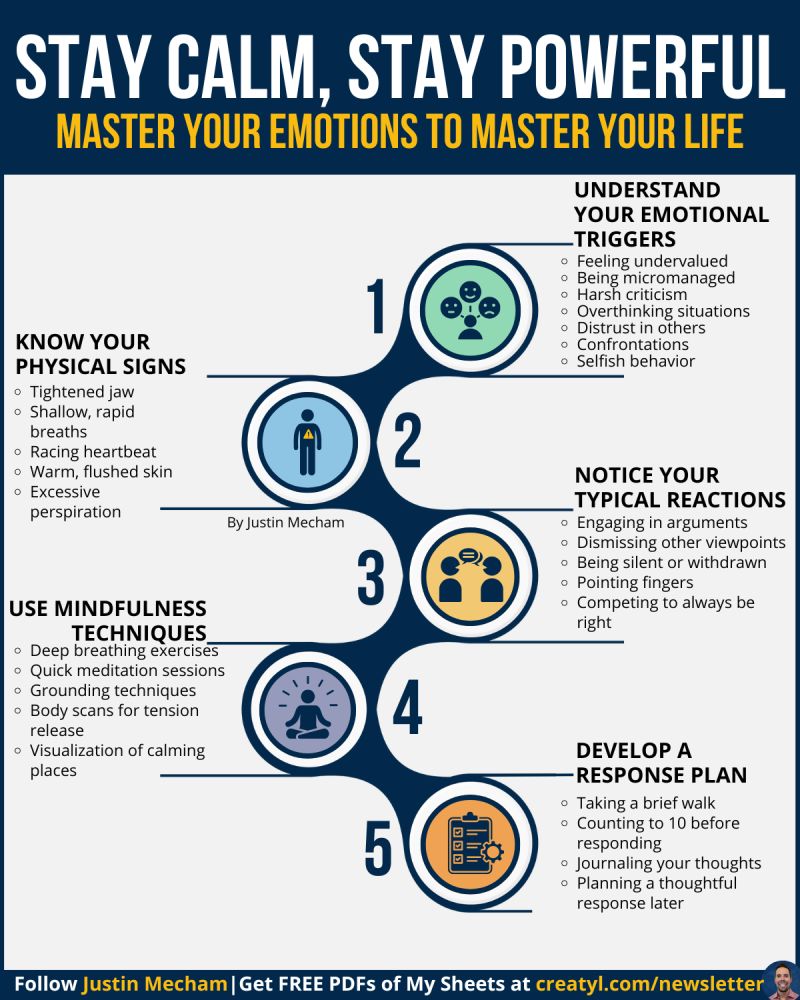
Calm isn’t passive—
It’s controlled power in motion:
Staying calm isn’t about
hiding how you feel—
It’s about knowing what to do with it.
Most people don’t blow
up because they’re weak.
They explode because they never learned
what’s happening under the surface.
This helps you handle it before it handles you:
🟢Watch your stress signals
🔵See what triggers your emotions
🟡Pay attention to how you usually respond
🟣Try one calming trick that works
🟠Create a go-to response plan
Use this when:
‼️ You feel overwhelmed in the moment
‼️ You want to lead with clarity, not emotion
You don’t need to be less emotional.
You just need tools that help
you respond instead of react.
You can’t control every moment.
But you can control how you meet it.
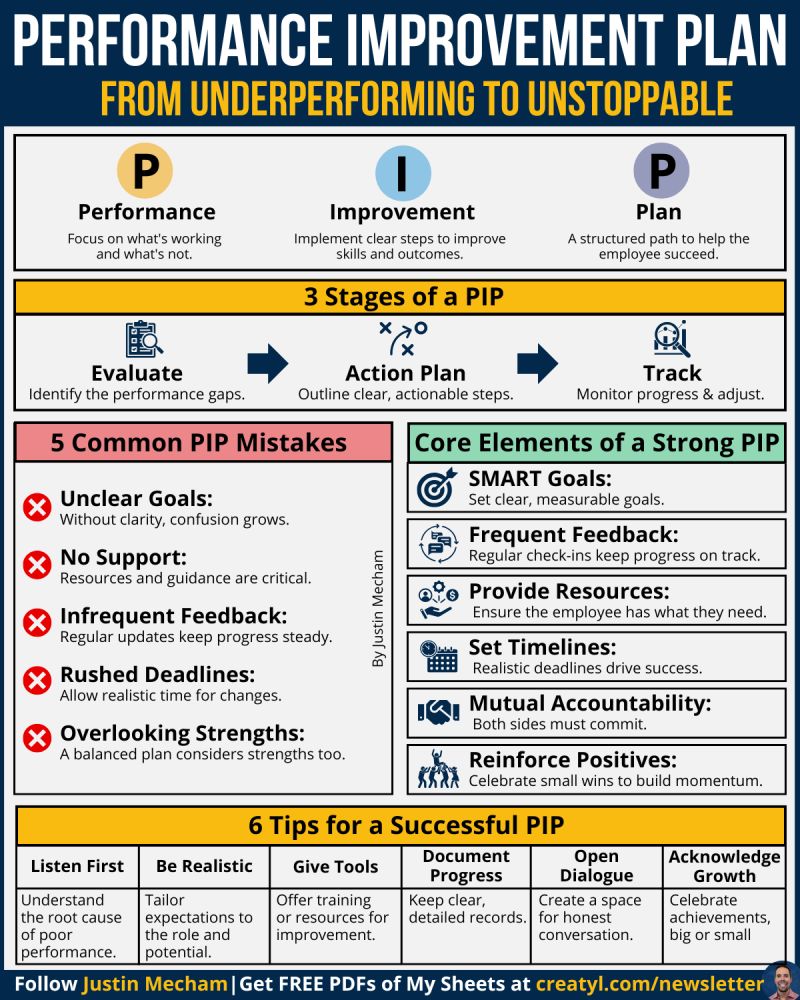
Performance Improvement Plan
Your people won’t improve –
As long as your plan is broken:
A Performance Improvement Plan (PIP)
shouldn’t feel like a punishment.
It should feel like a path forward.
But here’s what usually goes wrong:
❌ Vague goals
❌ Rushed deadlines
❌ Ignoring strengths
❌ Infrequent feedback
❌ No support or resources
And when that happens –
Performance doesn’t improve.
People disengage.
Trust is lost.
A strong PIP includes:
✅ Shared accountability
✅ Celebrating progress
✅ Tools and resources
✅ Ongoing feedback
✅ Realistic timelines
✅ SMART goals
Done right –
A PIP doesn’t just fix performance.
It builds confidence.
It strengthens trust.
It creates a culture of growth.
Use my guide to do it right.
Because PIPs don’t fail people.
Broken systems do.
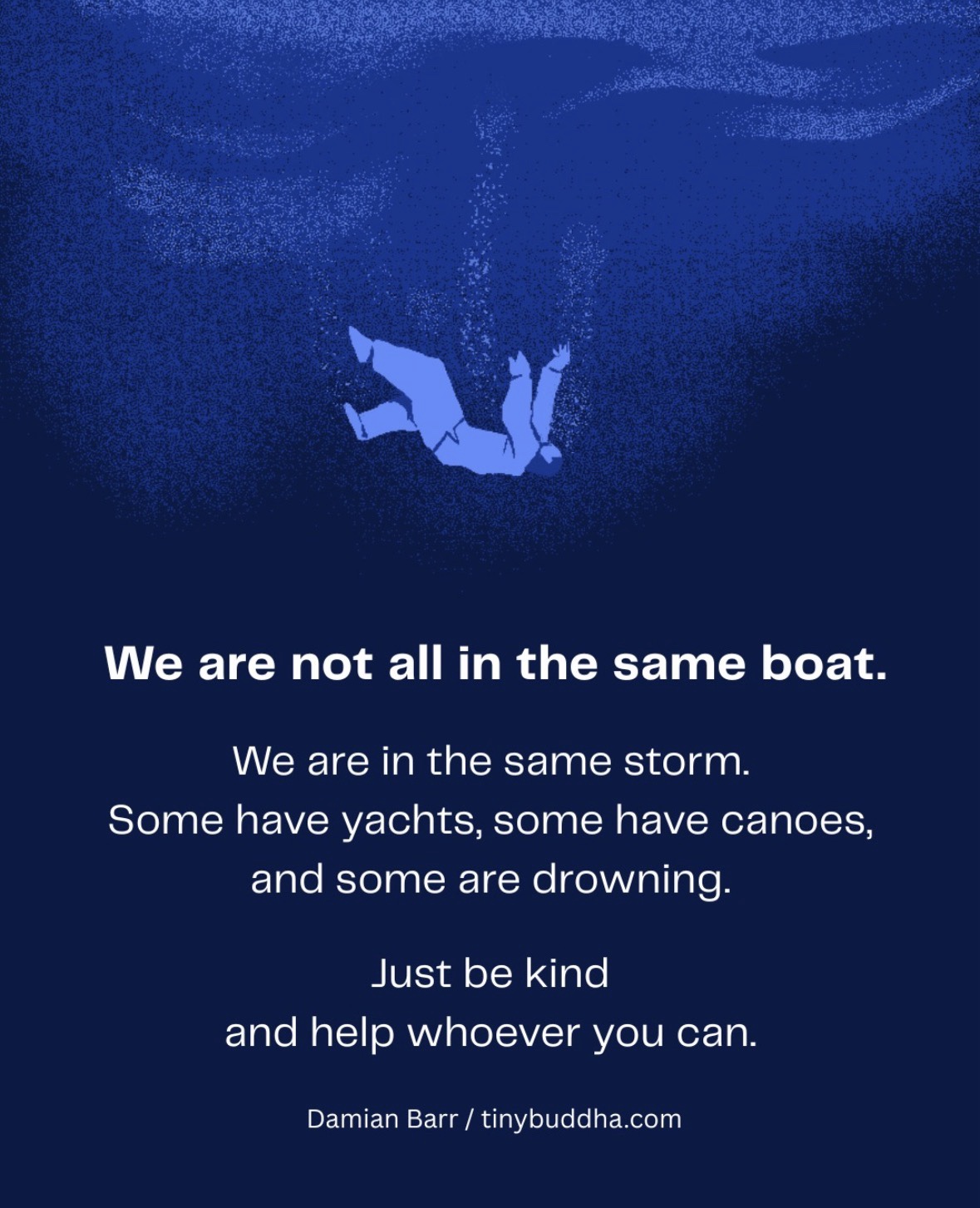
Same Storm, Different Boats
It’s comforting to say we’re all in the same boat. It makes hard seasons feel shared, equal, almost fair. But if we’re honest, that line falls apart pretty quickly.
We’re not in the same boat.
We’re in the same storm.
The rain is hitting all of us. The wind is loud for everyone. The uncertainty is real across the board. But what we’re standing on as we try to stay afloat looks very different.
Some people are riding it out on yachts. They have stability, savings, support systems, flexible jobs, good health, or simply fewer things going wrong at once. The storm is inconvenient, maybe even scary, but their boat is solid. They can wait it out, adjust the sails, trust that they’ll be okay.
Some are in canoes. Light, shaky, exposed. One wrong wave and things start tipping fast. They’re working hard just to keep balance. They might be doing “okay” on the outside, but it takes everything they have to stay upright. There’s no room for extra weight, no margin for error.
And then there are people who aren’t in a boat at all. They’re in the water. Tired. Panicking. Barely keeping their head above the surface. They don’t need motivation quotes or reminders to be grateful. They need help. They need air.
When we forget this, kindness is usually the first thing to go.
We compare someone’s reaction to our own and silently judge.
“Well, I handled it.”
“It wasn’t that bad for me.”
“They should be stronger by now.”
But strength isn’t just about character. It’s also about context. About resources. About what you’re carrying before the storm even hits.
Two people can face the same event and walk away with completely different scars. Not because one is weaker, but because one had more protection.
This is why empathy matters more than ever in hard seasons. Not the performative kind. The quiet kind. The kind that pauses before judging. The kind that asks, “What might their boat look like?”
Kindness doesn’t always mean big gestures. Often, it’s small and unremarkable.
Checking in without needing an update.
Offering help without attaching advice.
Listening without trying to fix.
Giving grace when someone is slower, quieter, sharper, or more withdrawn than usual.
And if you’re on a yacht, this isn’t about guilt. It’s about awareness. You didn’t build the storm, but you might have the ability to help someone else survive it. Sometimes that means throwing a rope. Sometimes it’s just not creating extra waves.
If you’re in a canoe, it’s okay to admit this is hard. You don’t need to minimize your struggle because others have it worse. You’re still in the storm. You’re still allowed to be tired.
And if you’re in the water, hear this clearly: struggling doesn’t mean you failed. It means the conditions are heavy. It means you’re human. Reach out where you can. Even floating for a moment counts.
We don’t need everyone to be heroes. We just need more people to be kind.
Because storms pass faster when we stop arguing about whose boat is better and start helping each other stay afloat.
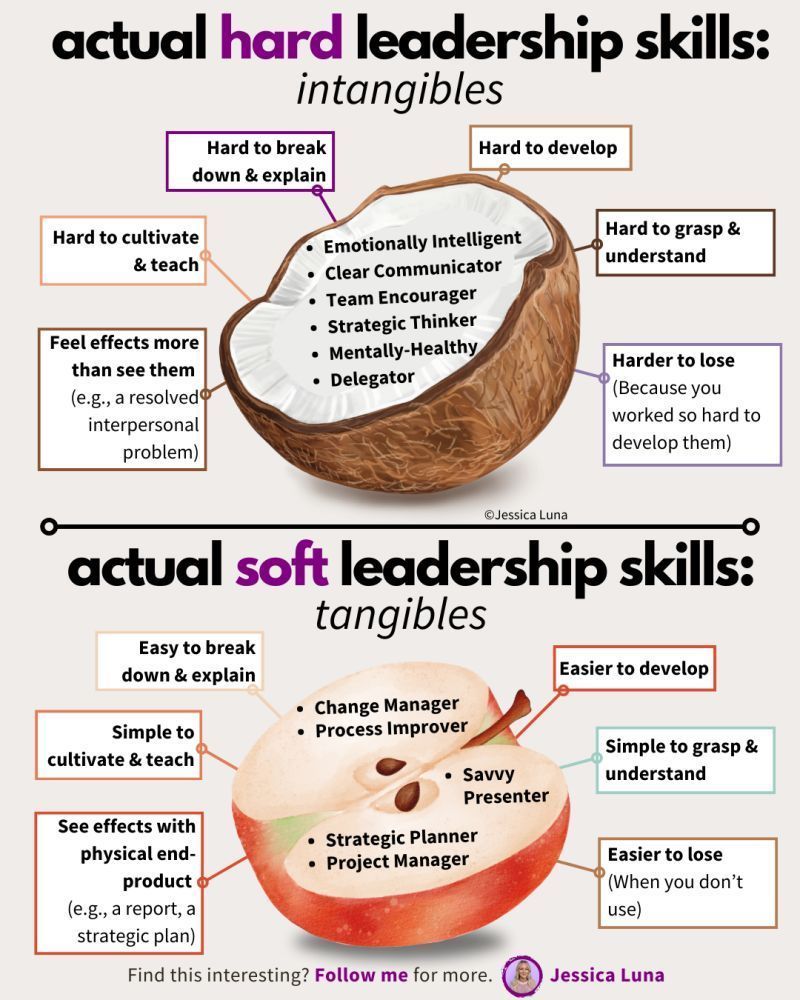
Hard vs. Soft Leadership Skills
The truth behind “soft” & “hard” skills leaders need
to understand to help their teams grow:
We got it wrong when we started referring to skills as hard & soft.
🪨 Hard skills as we know them – technical skills like computer programming, writing, machinery.
☁️ Soft skills as we know them – interpersonal skills like empathy, communication, patience.
Ask anyone you know – Which is harder: writing a proposal or reading a room?
Most will answer the latter.
It’s because the skills we call “soft” are actually hard. 🥥
They’re mostly hard to:
→ Understand
→ Develop
→ Explain & teach
→ Display (because we have to overcome the associated limiting beliefs)
This is why when someone doesn’t have one of these skills, we often dismiss them.
We think they’re a lost cause because we don’t want to put in the hard investment of helping them develop.
We move onto another candidate or employee that already has it.
The skills we call “hard” are actually soft. 🍎
They’re mostly easier to:
→ Grasp
→ Break down for consumption
→ Replicate
→ And lose
Where do we go from here?
How do we get better?
Let’s stop treating the “soft skills” as something we need to teach in a “soft way” but instead break them down.
We can use our more tangible skills of problem solving, root cause analysis, & training to break down the intangible skills we want in leaders like EQ.
They can all be broken down to their roots & taught. 🧱
Critical thinking is at its core just being curious & questioning everything.
That’s how you build your objectivity & data collection muscles.
And the basis for strategy creation – looking at the pieces on the table & finding the connections between everything.
Use this cheat sheet to start changing the narrative today & identify the must-have tangible & intangible leadership skills.
“Awareness is the greatest agent for change.”
– Eckhart Tolle
One Page Strategy Map
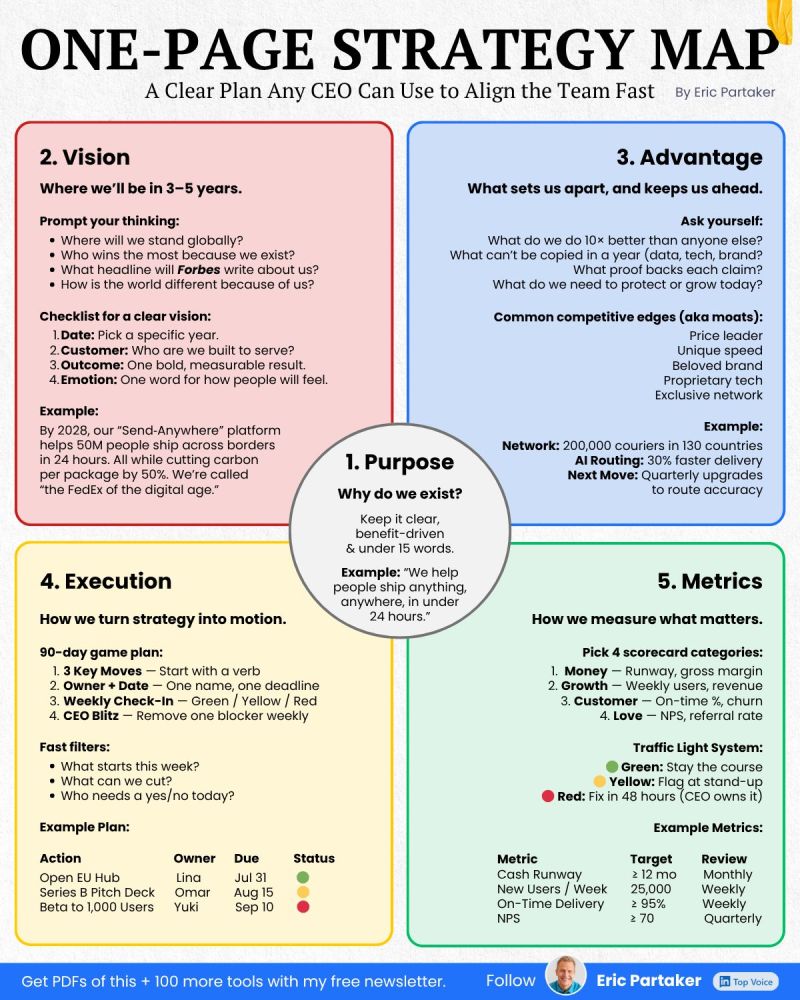
Most teams aren’t misaligned.
They’re just working off 9 different strategies.
Every exec sees the business from a different angle.
And when everyone’s rowing in their own direction,
the boat spins in circles.
Fix that with clarity.
Start here:
1. Purpose – Why do we exist?
→ One simple line. Focused on impact.
2. Vision – Where are we going?
→ Think 3–5 years out. Make it bold, measurable,
and worth chasing.
3. Advantage – Why will we win?
→ Define your edge. Protect what others can’t copy.
4. Execution – How will we move?
→ Focus on 3 key moves. Assign owners.
Check progress weekly.
5. Metrics – How will we know?
→ Pick 4 numbers that track money, growth,
customer success, and love.
Alignment isn’t a 50-slide deck.
It’s a 1-page playbook your whole team can run with.
No fluff. Just clarity, focus, and speed.
That’s how real strategy gets done.
How to Restart Yourself
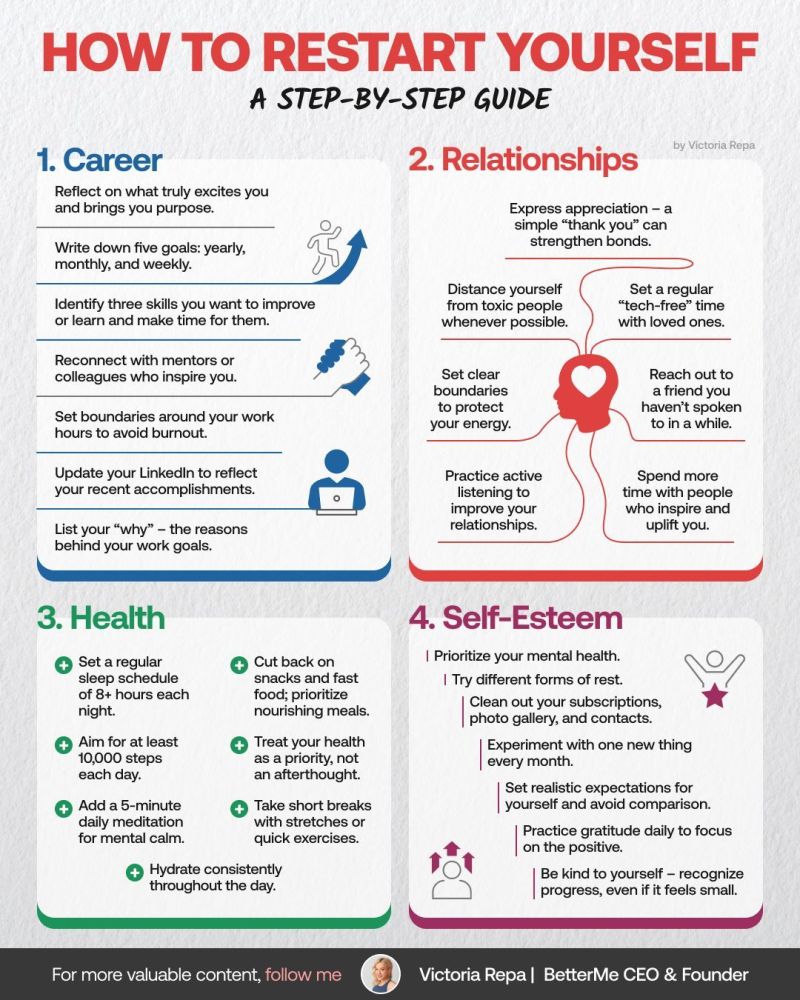
How To Restart Yourself: A Step By Step Guide
Credits to Victoria Repa, make sure to follow!
_____
Feeling stuck and apathetic?
I know that feeling all too well:
↳ Work is fine, but motivation is nowhere to be found.
↳ You don’t feel like you’re growing in life or in your career.
↳ You’re going through the motions, but something’s missing.
That’s a sign — it’s time for a reset.
You don’t need to quit or change everything.
Here’s a step-by-step guide to refresh all areas of your life:
💼 Career:
• Reflect on what truly excites you and brings you purpose.
• Write down five goals: yearly, monthly, and weekly.
• Identify 3 skills you want to improve or learn and make time for them.
• Reconnect with mentors or colleagues who inspire you.
• Set boundaries around your work hours to avoid burnout.
• Update your LinkedIn to reflect your recent accomplishments.
• List your “why”—the reasons behind your work goals.
🤝 Relationships:
• Distance yourself from toxic people whenever possible.
• Set clear boundaries to protect your energy.
• Spend more time with people who inspire and uplift you.
• Reach out to a friend you haven’t spoken to in a while.
• Practice active listening to improve your relationships.
• Express appreciation—“thank you” can strengthen bonds.
• Set regular “tech-free” time with loved ones.
💪 Health:
• Hydrate consistently throughout the day.
• Cut back on snacks and fast food; prioritize nourishing meals.
• Aim for at least 10,000 steps each day.
• Set a regular sleep schedule of 8+ hours each night.
• Add a 5-minute daily meditation for mental calm.
• Take short breaks with stretches or quick exercises.
• Treat your health as a priority, not an afterthought.
⭐️ Self-Esteem:
• Prioritize your mental health.
• Try different forms of rest—explore all seven types.
• Clean out your subscriptions, photo gallery, and contacts.
• Experiment with one new thing every month.
• Set realistic expectations and avoid comparison.
• Practice gratitude daily to focus on the positive.
• Be kind to yourself—recognize progress, even if it’s small.
Start with just one point in one area today,
and build from there.☝️
Every step forward will make your life better.
Even 1% at a time can change everything.
Body Language

Psychologists like Albert Mehrabian and Paul Ekman proved long ago:
— words matter less than tone, gestures, and micro-expressions.
That means — most people reveal their true thoughts without saying a word.
If you know how to read the signals, you understand people on a whole new level.
Here are the Body Language Secrets you need 👇
👀 Eyes – Interest, memories, guilt.
👄 Lips – Thought, frustration, anxiety.
🦶 Feet – Insecurity, escape, readiness to leave.
✋ Hands – Openness, authority, confidence.
Once you notice these cues, you can’t unsee them.
And you’ll never look at conversations the same way again.
Leadership with Maslow

Your team won’t grow—
If they don’t feel safe:
It’s not about perks.
It’s about needs.
Leaders often push for performance…
Before building the foundation.
Start with Maslow’s Hierarchy of Needs
(credit – Abraham Maslow):
It shows us what teams need first
before they can truly perform.
If any level is missing, growth stalls.
Here’s what matters most:
🟧 Physiological needs
Rest. Food. Stability.
Without them, there’s no focus.
🟦 Safety needs
Trust. Job security. Clear expectations.
Without this, there’s fear.
🟩 Love & belonging needs
Connection. Camaraderie. Communication.
Without this, there’s silence.
🟨 Esteem needs
Respect. Recognition. Achievement.
Without this, there’s doubt.
🟪 Self-actualization needs
Purpose. Potential. Growth.
Without this, there’s burnout.
Use my sheet to lead with intention.
Because when people feel supported,
they don’t just work harder—
They think bigger.
They connect deeper.
They lead themselves.
A Night of Harmonies, Memories, and Gratitude

Some concerts entertain you. Others stay with you. The Pentatonix concert we attended—on the very last night of their tour—was firmly in the second category.
Going to a concert with my mother-in-law made the evening even more special. Music has this quiet power to dissolve age gaps and preferences, and Pentatonix proved, once again, that great artistry speaks to everyone in the room. From the moment the lights dimmed, there was a shared sense that this wasn’t just another stop on the tour—it was a celebration, a culmination, and a thank-you to the fans who had followed them all the way to the end.
Pentatonix walked onto the stage to thunderous applause, and it was clear they felt it too. There was an energy in the room that felt different—looser, warmer, more emotional. You could sense that this final show carried extra meaning for them, and they poured every ounce of it into the performance. Every harmony was tight, every beat perfectly timed, every note delivered with joy and intention.
What continues to amaze me about Pentatonix is how they fill an entire arena with nothing but their voices—and Kevin’s cello, which deserves its own standing ovation. Hearing that deep, resonant cello live is a completely different experience. It doesn’t just support the music; it anchors it, wrapping the vocals in warmth and depth. Watching my mother-in-law’s reaction during those moments—eyes closed, smiling—was a reminder of how powerful live music can be when it’s done right.
The setlist was a beautiful journey through their catalog, blending fan favorites with newer pieces, all reimagined for the stage. Their Christmas arrangements, in particular, felt magical—layered harmonies soaring through the venue, creating moments where the entire audience seemed to breathe in sync. Between songs, the group spoke candidly about the tour, the exhaustion, the gratitude, and how surreal it felt to be standing there at the very end of it all. Those small, human moments made the night feel intimate despite the size of the crowd.
What stood out most was their connection—with each other and with the audience. There was laughter, a few emotional pauses, and that unmistakable sense of “we did this together.” It wasn’t polished to perfection in a manufactured way; it was real, joyful, and deeply sincere. That authenticity is rare, and it’s why Pentatonix has built such a devoted following over the years.
The last concert of a tour is supposed to be special. Pentatonix didn’t just meet that expectation—they elevated it. It was an amazing performance, yes, but more than that, it was a reminder of why live music matters. Because for a couple of hours, strangers become a community, voices become instruments, and memories are made that stay long after the lights come back on.
And honestly? I wouldn’t have wanted to experience that final night any other way.
 Kenrick Vaz