
How to deal with stress at work?
Today, Harris asks:
—
“How can I stop stressing about everything that’s happening at work?”
—
Welcome to Episode 180 of AskMatty!
Here’s my answer, Harris:
—
Ready with pen and paper?
Let’s dive in!
1. So, grab pen and paper.
Draw a line down the middle to create two columns.
On the left, write:
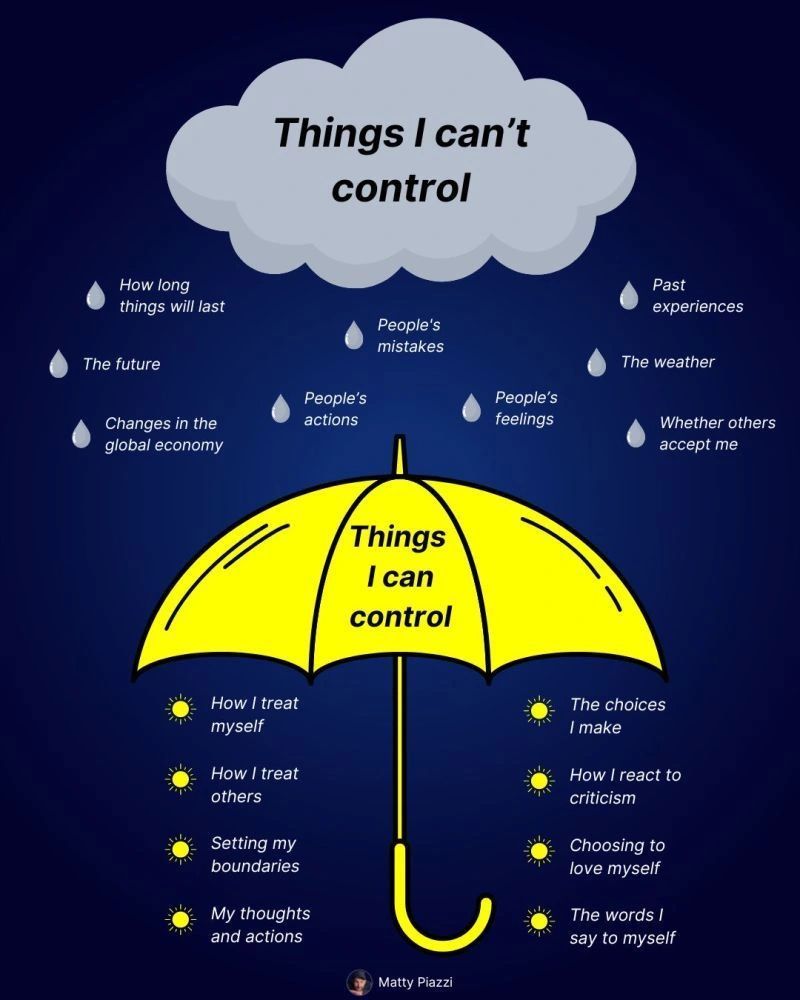
→ What I can control
On the the right, write:
→ What I can’t control
I’m not joking — Do it! :)
2. Now take a few minutes to think about your work life.
Under “What I can control”, jot down things like:
→ How I respond to feedback
→ My attitude toward my tasks
→ The effort I put into my projects
→ How I manage my energy and time
Then, under “What I can’t control”, write things like:
→ Office politics
→ Other people’s attitudes
→ Unexpected changes in plans
→ What my boss thinks of my work
We can’t control all of that, right?
3. Now, look at your lists.
Focus on the items in the “What I can control” column.
Choose one or two that you can take action on this week.
For example, let’s say you wrote down:
→ How I respond to feedback
Now, instead of getting defensive when you get feedback, you could:
→ Take a deep breath and consider their perspective
→ Say “Thanks for your input! I’ll think about how I can improve.”
Got it?
Now your question is:
→ Um, Matty, why should this exercise work?
Because it helps you shift your focus from:
→ what’s stressing you out
to
→ what you can actively change
When we focus on what we can change, we immediately feel better.
Why?
Because we can see our improvement.
And when we see our improvement, we start feeling fulfilled.
And there is no “bad stress” with fulfillment :)
12 Habits That Make Everyone Want To Work With You
Want to be everyone’s favorite teammate?
It’s simple. (But not easy):
Just do the obvious things right.
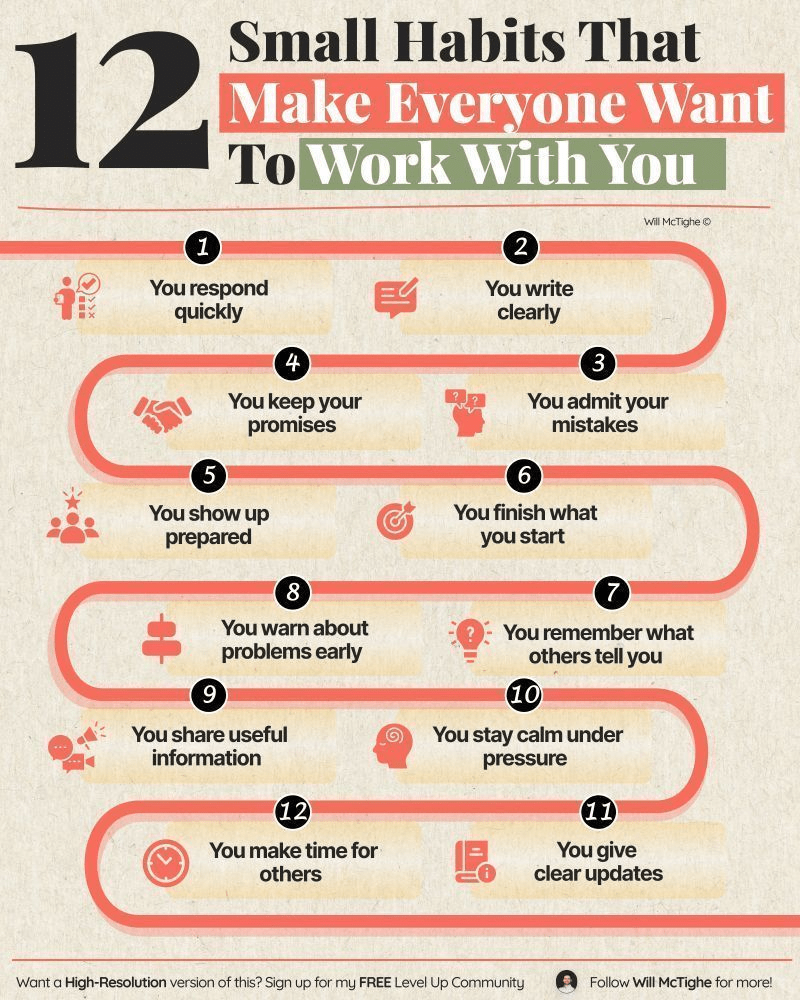
Here are 12 small habits that make a huge difference:
1/ You respond quickly
↳ Set a “24-hour response” rule for all messages
2/ You write clearly
↳ Start every long email with a one-line summary
3/ You keep your promises
↳ Create a “promises tracker” in your notes and review it daily
4/ You admit mistakes
↳ Practice saying “I made a mistake, here’s how I’m fixing it”
5/ You show up prepared
↳ Review the agenda and prepare 2 talking points before every meeting
6/ You finish what you start
↳ Break every project into visible milestones and track progress
7/ You warn about problems early
↳ Send a “heads up” email the moment you spot potential issues
8/ You remember what others tell you
↳ Keep a dedicated “people notes” section in your work journal
9/ You share useful information
↳ Share one useful resource weekly with a relevant teammate
10/ You stay calm under pressure
↳ Practice the 3-breath rule before responding to tense situations
11/ You give clear updates
↳ Send progress updates before being asked
12/ You make time for others
↳ Block 30-minutes of weekly “open office” time for teammates
Small habits, practiced daily, create exceptional careers.
How To Make Fast And Accurate Decisions
Fighter pilots use this to stay alive.
Leaders use it to stay ahead ⬇️
Fast decisions don’t have to be reckless.
They just need structure.
Enter: the OODA Loop
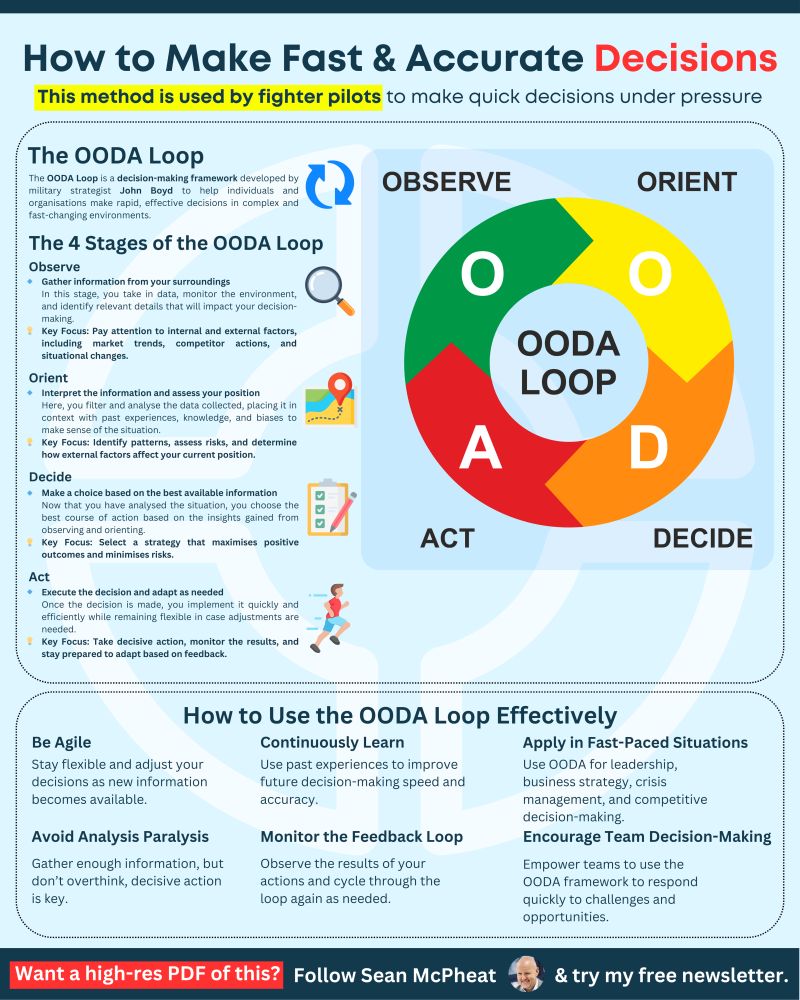
It’s a 4-step framework used by fighter pilots…and smart leaders!
Here’s how it works:
Observe
↳ Gather key info. Scan for patterns. Spot what others miss.
Orient
↳ Assess your position. Filter through experience, context, and external factors.
Decide
↳ Pick the best course of action based on what you’ve seen and learned.
Act
↳ Move quickly. Adapt as new feedback comes in. Go again.
To use it well:
Stay agile – adjust decisions as things change.
Avoid analysis paralysis – act before it’s too late.
Monitor feedback – cycle through the loop again.
Use it in fast-paced situations – leadership, crisis, strategy.
Encourage teams to think this way too – so you move as one.
🧠 Remember; the best decisions don’t come from pressure.
They come from clear thinking – and a reliable loop.
Washed in the Word: A Cleansing We All Need

There’s something deeply refreshing about a shower at the end of a long day. The dirt, sweat, and weariness wash away, and you feel renewed. But just as our bodies need cleansing, so do our hearts and minds. That’s what Paul is pointing to in Ephesians 5:26 when he says Christ cleanses His people “by the washing with water through the word.”
The imagery is powerful: the Word of God isn’t just ink on paper or verses we memorize for comfort. It’s alive, active, and cleansing. It scrubs away lies we’ve believed, stains of guilt we carry, and the heaviness of voices that tell us we’re not enough.
Think about the daily barrage we face—news cycles that stir fear, social media that breeds comparison, workplaces that demand constant proving. All of it leaves residue. But when we open Scripture, something different happens. The Word reminds us of who God is, who we are in Him, and what truth looks like. It washes away the grime of the world and leaves us standing clean, renewed, and deeply loved.
And notice—washing is not a one-time event. Just as you wouldn’t shower once and call it good for life, being washed by the Word is a rhythm, a daily soaking. Sometimes it’s a gentle rinse through a verse that comforts. Other times it’s a deep scrubbing as God confronts us with truths that challenge and convict. Both are necessary, and both are acts of His love.
So the invitation is simple but profound: let yourself be washed. Don’t just skim the Bible for knowledge—immerse yourself in it. Read it, reflect on it, pray through it. Let it speak to the corners of your soul that need cleansing and renewal.
Because at the end of the day, it’s not about what we wash off, but what we become. In Christ, through His Word, we don’t just get clean—we are transformed.
Accountability Ladder

Great leaders don’t make excuses.
They make things happen.
They don’t look for someone to blame.
They look for solutions and stay accountable.
As Bruce Gordon said:
Things either happen to you or
they happen because of you.
So, where do you stand?
Accountable leaders climb the ladder:
1️⃣ Make it happen: “I’ve got this, and I’ll follow through.”
2️⃣ Own it: “This is my responsibility, and I’ll take action.”
3️⃣ Find solutions: “There’s still time, I’ll make it happen.”
4️⃣ Acknowledge reality: “I missed this, now I’ll fix it.”
Others stay stuck in victim mode:
1️⃣ Wait and hope: “I’ll just wait and see what happens.”
2️⃣ Make excuses: “I didn’t have enough time.”
3️⃣ Blame others: “It wasn’t my fault.”
4️⃣ Deny responsibility: “I didn’t even know.”
The good news? Anyone can climb the ladder.
Here’s how:
✅ Set the example: Lead and they’ll follow.
✅ Own your choices: Good or bad, they’re yours.
✅ Solve, don’t blame: Focus on fixing, not faulting.
✅ Discuss mistakes: Own them, make them lessons.
Remember:
Accountability is a choice.
Every step up builds trust.
Each rung conquered grows respect.
Keep climbing.
The view from the top is worth it.
Walking Through Washington, D.C.

I arrived in Washington, D.C. a day early for a client visit tomorrow, and instead of staying cooped up in the hotel, I decided to stretch my legs and explore the city on foot. Best decision I could’ve made.
Before heading into D.C., I spent a little time in Alexandria, Virginia, where I’m staying. Right across from my hotel stands the historic Alexandria Courthouse—a stately building with its brick façade and classic columns. There’s something timeless about it, a reminder that history here isn’t confined to museums or monuments; it’s part of the everyday scenery.





I then took a cab to the heart of Washington and started my walk with a glimpse of the White House. Even though I’ve seen it countless times in movies, photos, and news clips, standing there in person had its own magic. There’s something surreal about seeing such an iconic building right in front of you.






From there, I wandered over to the Washington Monument. It’s hard to put into words just how massive and elegant it is, rising into the sky and anchoring the city’s landscape. Around me, there were tourists snapping photos, families picnicking, and people just enjoying the evening—it gave the whole place an energetic yet calm vibe.




Next stop: the World War II Memorial. With its fountains and stone pillars, it was both peaceful and powerful. I slowed down there, reading some of the inscriptions and just taking in the weight of the history.










Then came one of my favorite moments of the walk: reaching the Lincoln Memorial. Climbing the steps and seeing Lincoln seated in all his quiet dignity, looking out across the Reflecting Pool toward the Washington Monument—it felt like stepping into history. It’s easy to see why so many important speeches and gatherings have happened right there.







Still curious (and not ready to call it a night), I decided to keep going and made my way all the way to Capitol Hill. On the way, I passed the Smithsonian museums, each one tempting me to step inside, and I took a little detour through the Sculpture Garden, which added an artistic touch to the journey.
























By the time I reached the Capitol, my step counter was pushing close to 15,000 steps. My feet were definitely feeling it, but I was more amazed than tired. The grand architecture, the unexpected greenery, and the sense of walking through history made every step worth it.
















Work may be the reason I came to D.C., but this evening walk reminded me why it’s always worth arriving a little early—you never know what kind of adventure the city might offer!
Authentic Leadership
Your leadership style affects people more than you think.
The harsh truth…
Your style can make someone quit a dream job.
Or help them discover their true potential.
Only 1 in 5 leaders consistently shows authenticity.
Most leaders focus on what they do.
Few pay attention to how they show up.
Real leadership isn’t about:
🚫 Never showing weakness
🚫 Always being in control
🚫 Having all the answers
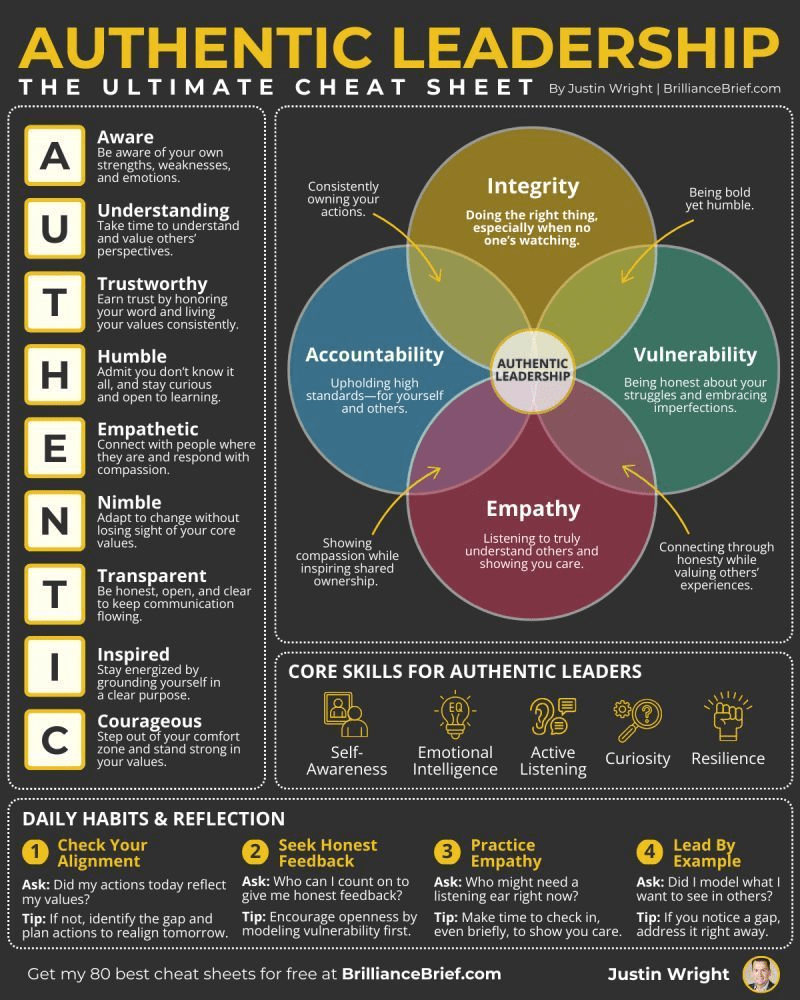
It’s about being authentic.
That means:
✅ Owning what you don’t know
✅ Leading with empathy, not your ego
✅ Building trust through consistent actions
I’ve seen toxic leaders with perfect numbers
destroy entire teams in months.
And I’ve seen authentic leaders transform
struggling teams into unstoppable forces.
The difference?
Authentic leaders:
➟ Build people up instead of tearing them down
➟ Listen to understand, not just to respond
➟ Focus on growth, not just results
And this is key:
Your team remembers how you make them feel
long after they forget what you say.
Leadership isn’t about power.
It’s about impact.
So ask yourself:
Are you the kind of leader you’d want to follow?
Because your leadership style isn’t just building a team.
It’s shaping futures.
15 Things A True Leader Won’t Micromanage

I really don’t want to hear THIS from my employees.
[and no, it’s not because I don’t care]
Here are 15 things a true leader won’t control or monitor:
1/ How many hours you worked.
2/ Whether you arrived late to work.
3/ If you take a day off during the week.
4/ If you have a midday doctor’s appointment.
5/ The number of breaks you take.
6/ How you handle minor mistakes.
7/ Whether you’re in the office or working remotely.
8/ Your choice of work tools and technology.
9/ The way you manage your time.
10/ Your absence due to personal emergencies.
11/ Who you talk to and how often at work.
12/ Why you’re unavailable during off-hours.
13/ Your personal dress code.
14/ How you organize your workspace.
15/ If you have a side hustle.
As long as you’re getting the work done you’ve been trusted to do,
NONE of this should concern your leader.
The truth is:
If a leader doesn’t trust the employees they hired,
it means they don’t trust their own decisions and judgment.
Enough, Just As You Are
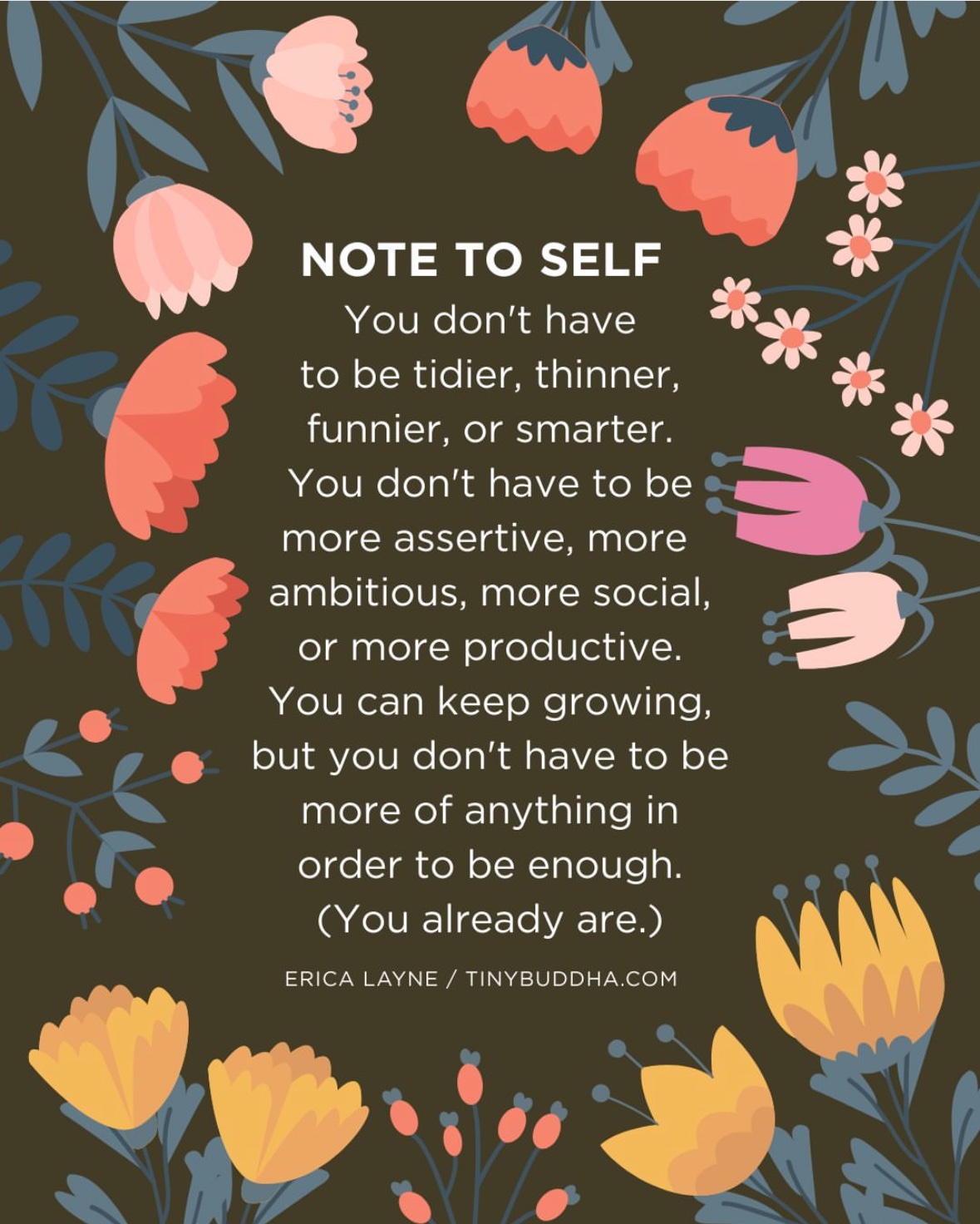
We live in a world that constantly whispers—and sometimes shouts—that we should be “more.” More productive. More ambitious. More successful. More fit. More entertaining. More everything. It’s as if our worth has become a checklist, and we’re forever racing to tick the next box before we fall behind.
But here’s the truth we so often forget: you don’t need to be more of anything to be enough.
Yes, growth is beautiful. Learning, evolving, stretching into new versions of ourselves—that’s part of being human. But growth doesn’t have to come from a place of deficiency. It doesn’t mean you’re lacking now. It simply means you’re exploring what’s possible.
When we start chasing “more” as proof of our worth, we step onto a treadmill that never stops. Even when we achieve one milestone, another pops up on the horizon. The finish line keeps moving. And along the way, joy slips quietly through our fingers because we’re too busy running toward “better” to see the beauty of “enough.”
Imagine this: you wake up tomorrow morning and, before reaching for your phone or replaying yesterday’s mistakes, you remind yourself—I already am enough. Your body doesn’t need to shrink to be worthy. Your voice doesn’t need to be louder to matter. Your ambition doesn’t need to double for you to belong.
From that place of enoughness, growth becomes lighter. You pursue goals not because you must prove something, but because you want to discover something. You try new things not to fill a gap, but to expand your joy. You learn not because you aren’t smart enough, but because curiosity is alive in you.
Here’s the paradox: when we finally believe we’re enough, we give ourselves permission to grow in the most authentic ways. Not rushed. Not pressured. Not measured against someone else’s timeline. Just naturally, at our own rhythm.
So, write this down—literally, if you need to:
Note to self: I am enough. Right now. As I am.
And if you choose to grow, let it be because it delights your soul, not because it quiets your insecurities.
Because the truest version of you—the one breathing, feeling, and showing up in this very moment—is already worthy.
12 Ways Great Managers Defend Their Teams

1) They take the blame
↳Take the hits in public – never let them take the fall alone
↳Ex: Say “That was my call” on a missed target in a leadership meeting
2) They protect time off
↳Protect their vacations – no guilt trips, no interruptions
↳Ex: Say “I’ll handle anything urgent” and mean it when someone goes on leave
3) They stop disrespect
↳Don’t allow clients or senior leaders to speak down to your people
↳Ex: Follow up with a client who yelled and say, “We expect mutual respect on both sides”
4) They push back on scope creep
↳Say no when requests pile up and threaten burnout
↳Ex: Tell the client, “That’s outside the original agreement – let’s discuss a change order”
5) They translate chaos
↳Translate unclear or shifting strategies into clear plans
↳Ex: Turn a rambling leadership email into a one-page action plan for the team
6) They fight for fair pay
↳Advocate for the raises, promotions, and bonuses they earn
↳Ex: Push for someone’s promotion months early after they took on major responsibilities
7) They cancel pointless meetings
↳Block the ones that waste their time and add no value
↳Ex: Decline a standing weekly meeting with no major action items and send a summary email instead
8) They confront toxic behavior
↳Step in early – even when the offender is a high performer
↳Ex: Call out a top seller (in private) who belittles other people
9) They reject unrealistic deadlines
↳Push back when the timeline is impossible or harmful
↳Ex: Tell leadership, “If you want this done by Friday, we need to cut features or add resources”
10) They explain decisions
↳Explain the why, not just the what, behind big changes
↳Ex: Say, “I fought to keep this project, but we lost budget – here’s what that means”
11) They block office politics
↳Shield them from drama and blame games
↳Ex: Defend a team member from unfair criticism by saying, “They’re following my direction”
12) They ask what people need
↳Ask what they need – and act like their answer matters
↳Ex: After a tough sprint, ask “What would make next week better?” – then make it happen
Too many bad managers say, “I’ve got your back.”
But when it really matters, their team is left exposed.
Great managers don’t just support their teams when it’s easy.
They show up when it’s hard, uncomfortable, and inconvenient.
Be that leader.
Your team will be unstoppable.
 Kenrick Vaz