
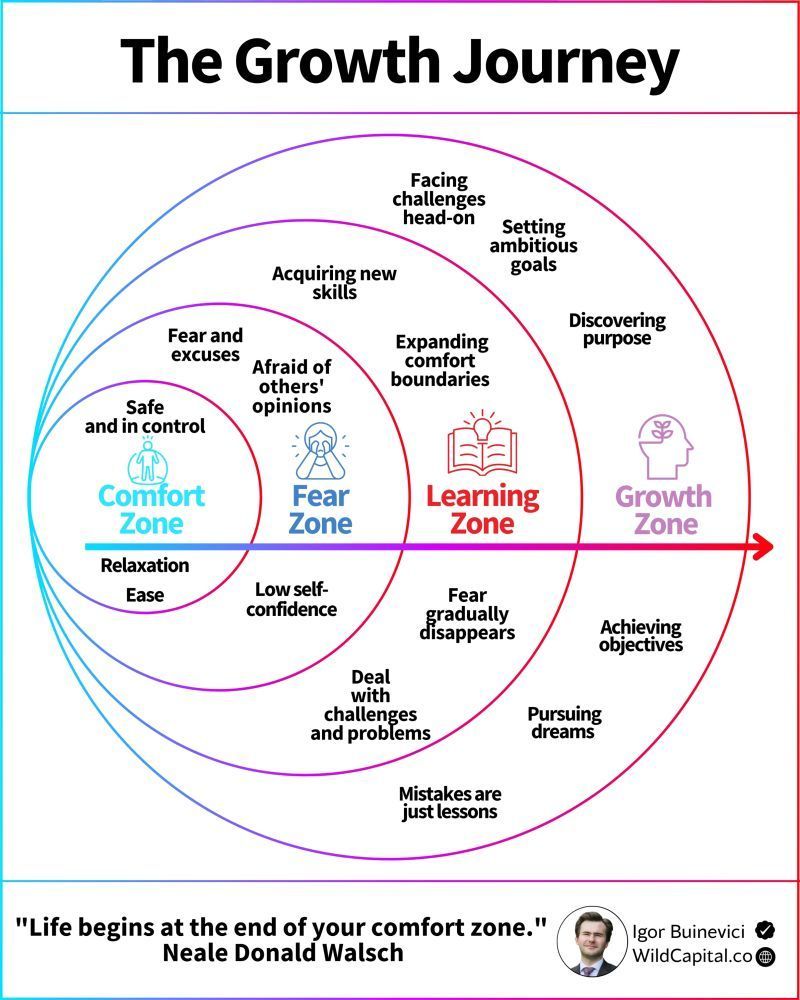
Many people hesitate to leave their comfort zones.
But did you know there are three more zones:
Fear, Learning, and Growth?
To truly grow, you need to move through all of them.
Let’s break them down:
1. Comfort Zone:
We stick to what feels safe and predictable.
It’s a place of routine, where we avoid discomfort.
2. Fear Zone:
Just beyond comfort lies fear.
Here, we confront anxieties and uncertainties, which is essential for breaking limits.
3. Learning Zone:
In this zone, we overcome fears.
We embrace new challenges, develop new skills, and grow from mistakes.
4. Growth Zone:
This is where transformation happens.
In the growth zone, we face fears head-on and unlock our full potential.
Everyone should aim to reach the growth zone.
Here’s how you can get there:
Set clear goals for progress.
Celebrate every step forward.
Stay determined and persistent.
Keep learning from experiences.
Surround yourself with support.
Identify the fears holding you back.
Start small with manageable goals.
Build resilience to handle challenges.
View failure as a learning opportunity.
Keep pushing boundaries and expand your growth.
Use these steps to grow beyond limits!
P.S. Which zone are you currently in?
What is Leadership
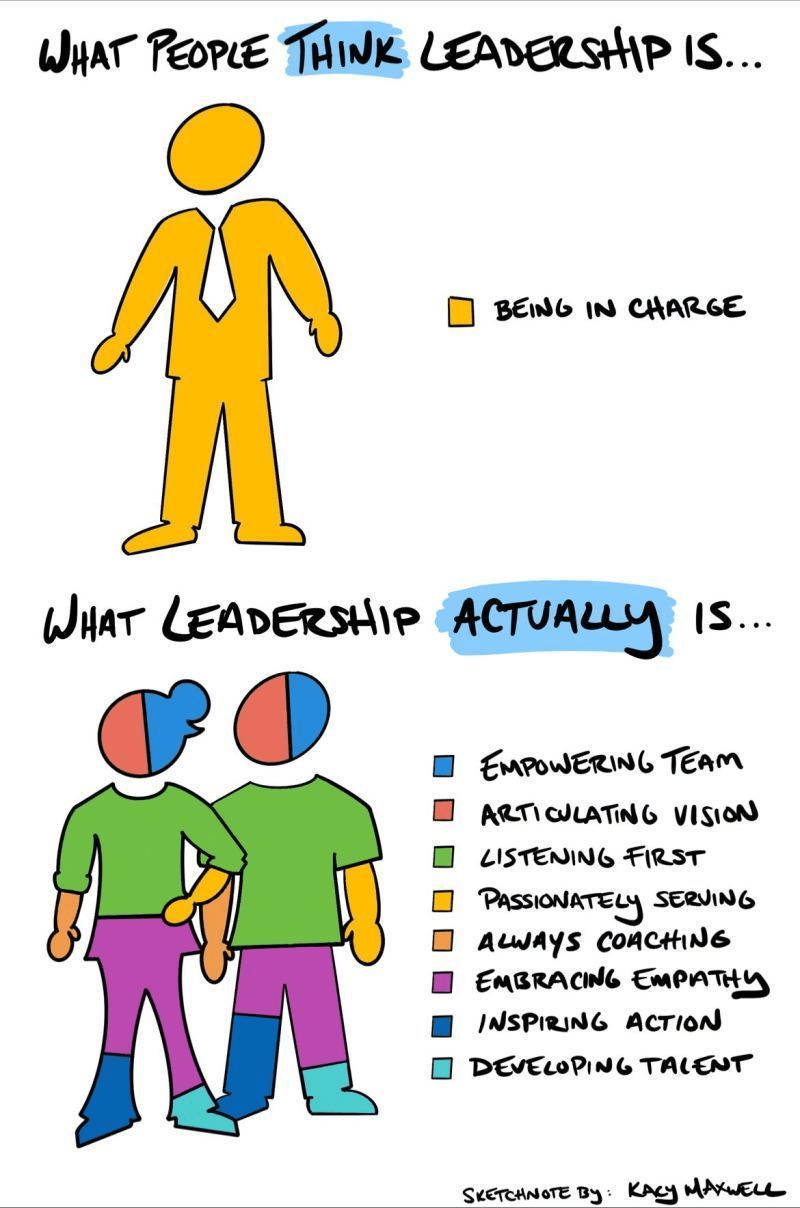
Real leadership goes beyond authority. Leaders create emotional and mental shifts that drive team performance.
By focusing on empathy, listening, and vision, leaders activate powerful brain chemicals like oxytocin (trust) and dopamine (motivation).
The result? Teams feel valued, motivated, and ready to excel.
Here’s some of the neuroscience behind effective leadership:
1. Empowerment – Builds trust and confidence pathways.
2. Vision – Creates oxytocin-fueled bonds through shared purpose.
3. Listening – Activates empathy circuits, making people feel valued.
4. Serving – Releases endorphins, creating positive connections.
5. Coaching – Strengthens learning and adaptability.
6. Inspiring – Triggers dopamine, fueling motivation.
7. Developing Talent – Supports growth and resilience.
So remember, leadership isn’t control – it’s connection.
Feel Over Flash

Let’s be honest—we live in a world that’s obsessed with aesthetic.
Perfect feeds. Curated updates. Milestone reels.
And it’s easy to get caught up in the chase for likes, validation, and that external nod of approval.
But what if we just… didn’t?
What if we cared less about how it looks and more about how it feels?
More walks that calm your soul than photos that rack up views.
More honest conversations than filtered perfection.
More joy that bubbles up for no reason than planned “happy moments” on schedule.
There’s something powerful about shifting the focus inward.
Asking, “How does my life feel to me today?”
Not to my followers. Not to the outside world. Not even to the version of myself trying to impress others.
Because here’s the thing: peace doesn’t always photograph well.
And fulfillment? It rarely comes with a hashtag.
So here’s to building a life that feels good from the inside.
Even if it doesn’t look impressive to anyone else.
That’s not the goal anymore!
80-20 Rule for Leaders

20% of your actions drive 80% of your outcomes.
The smartest leaders understand this
and leverage it to maximize their impact.
The 80/20 rule isn’t just about efficiency.
It’s about zeroing in on what truly matters.
Here are 10 ways smart leaders apply this principle:
1. Talent Development
↳ Invest deeply in your top performers
↳ Their growth elevates the entire team
2. Smart Hiring
↳ Prioritize candidates who align with your culture
↳ Look for those who will create lasting value
3. Culture Building
↳ Focus on a few actions that drive engagement
↳ Create an environment where everyone thrives
4. Decision-Making
↳ Channel your energy into decisions that shape the future
↳ Let go of minor choices that don’t require your input
5. Removing Bottlenecks
↳ Identify the key issues holding progress back
↳ Solving these opens the door to exponential gains
6. Better Meetings
↳ Retain only the meetings that lead to real outcomes
↳ Ensure every minute delivers value
7. Effective Delegation
↳ Pass on tasks others can handle
↳ Reserve your focus for strategic initiatives
8. Client Relationships
↳ Cultivate the connections that fuel growth
↳ Build partnerships that stand the test of time
9. Problem-Solving
↳ Address the root causes behind recurring challenges
↳ Identify and resolve the issues that truly matter
10. Team Focus
↳ Align your team on high-impact goals
↳ Direct their energy where it counts most
Here’s the secret many leaders miss:
It’s not about working harder.
It’s about working smarter — on the right things.
Start today.
Find your 20%.
Watch your results multiply.
Already Enough

You ever catch yourself scrolling through someone’s vacation pics, new car reveal, dream home tour — and suddenly, your own life feels… kinda meh?
Yeah, same.
It’s so easy to get caught up in chasing the next thing — a better job, cooler gadgets, more recognition, that “ideal” version of life we think we’re supposed to have. And while there’s nothing wrong with ambition, sometimes we forget to notice the good that’s already right here.
Like:
The random laugh you had with a friend. That morning coffee that just hit different. The fact that you’re healthy enough to read this right now. A cozy corner at home that feels like peace.
Truth is, we’re often living the very moments we once wished for — we’re just too busy to notice.
Appreciation doesn’t mean you stop striving. It just means you pause to notice the small stuff that’s already beautiful.
So maybe take a second today. Breathe. Look around. Say thank you — even silently — for the little things.
Because you might already have more than you think.
And that?
That’s already enough.
7 Leadership Myths (That might be hurting your team)

Your beliefs about leadership can hurt your team’s success.
Many people believe leadership looks a certain way.
Myths have been passed down as
“strong leadership principles.”
But over time, they quietly undermine the positive
culture you’ve worked tirelessly to build.
Here are 7 common leadership myths and
alternative approaches that inspire teams:
“Leaders must have all the answers.”
↳ Teams know more than any one person can.
↳ Ask your team. Let them share ideas.
“Tough leaders get the best results.”
↳ Fear makes people quiet, not their best.
↳ Be kind. Show care. Teams work better.
“Micromanaging ensures quality.”
↳ Too much oversight deflates confidence.
↳ Ask for what you need, then let them work.
“Work always comes first.”
↳ Tired teams can’t do their best work.
↳ Show it’s okay to rest sometimes too.
“Feedback should always be critical.”
↳ Feedback works best when it feels safe.
↳ Don’t just correct, recognize what’s working too.
“Strong leaders never show weakness.”
↳ Honesty earns more trust than pretending does.
↳ Share when you’re learning too. It builds trust.
“More meetings improve communication.”
↳ How you meet matters more than how much.
↳ Keep talks short. Make every word count.
The truth?
Leadership isn’t about control or volume.
It’s about creating space for others to thrive.
When you let go of these leadership myths,
You unlock energy, trust, and real momentum.
Saying No Without Guilt

Turn uncomfortable no’s into power moves.
10 scripts for respect without confrontation:
Every day you face the choice:
Cave to pressure or protect your priorities.
But saying no doesn’t have to feel uncomfortable.
These scripts transform boundary-setting into your greatest strength:
1. “I’m at capacity through [date]. Which project should I de-prioritize?”
↳ Puts the decision back where it belongs – no conflict needed
2. “Could we handle this via email? I’ll respond within 2 hours.”
↳ Maintains control while showing clear commitment
3. “My plate is full with [project]. Which takes priority?”
↳ Turns overwhelm into strategic conversation
4. “I have commitments after 6pm. I’ll tackle this first thing tomorrow.”
↳ Sets expectations without needing to explain
5. “I’ll review and respond by [time] tomorrow.”
↳ Creates space without creating tension
6. “I’m unavailable weekends. What’s the true priority?”
↳ Clear, professional, impossible to argue with
7. “I’m offline after 6pm. Catching up tomorrow at 9.”
↳ Simple boundaries that command respect
8. “I can’t accommodate rush requests. Let’s plan ahead next time.”
↳ Teaches others how to work with you effectively
9. “This needs [X days]. Want to adjust scope or timeline?”
↳ Offers solutions while holding firm
10. “My boundaries are non-negotiable. Let’s find a solution.”
↳ Your power move when everything else fails
Your time is valuable.
Your boundaries are non-negotiable.
Which script will transform your next challenging conversation?
How to Retain Employees

Here’s a painful truth that many leaders don’t want to accept:
Employees rarely leave companies with a healthy culture. ☝️
You can’t force employees to stay,
but you can create an environment where they want to.
Employees stay when they feel:
1. Appreciated:
Regularly say “thank you” and offer competitive salaries.
2. Safe:
Foster a supportive and secure work environment.
3. Valued:
Recognize their contributions and achievements.
4. Trusted:
Empower them with responsibility and trust.
5. Included:
Involve them in decision-making and key discussions.
6. Heard:
Actively listen to their ideas and feedback.
7. Supported:
Provide necessary resources and training.
8. Recognized:
Celebrate their successes and milestones.
9. Challenged:
Offer opportunities for growth and new responsibilities.
10. Fair:
Ensure equity in promotions, raises, and opportunities.
Creating a culture where employees feel these things will naturally lead to higher loyalty.
And it’s not just about keeping employees;
it’s about building a thriving workplace where people want to grow.
Ask

I used to be a shy!
And I missed out on so many opportunities:
↳ Invitations I didn’t accept.
↳ Networking events I avoided.
↳ Roles I didn’t think I deserved.
But then, a wise boss noticed my shyness
and gave me one piece of advice that changed everything:
“If you don’t ask, the answer is always NO”
Here’s why asking matters:
1) It opens doors you didn’t know were there.
Waiting for someone to notice your potential? You might wait forever. Asking creates chances that wouldn’t appear otherwise.
2) It builds confidence, not just skills.
Putting yourself out there—even at the risk of rejection—builds inner strength. The more you ask, the easier it gets.
3. It turns “what if” into “what’s next”.
Asking brings clarity. Whether it’s a yes or no, every answer moves you forward.
4. It makes you seen and heard.
Leaders and peers notice those who ask. It shows you’re invested, committed, and ready to grow.
So, the next time you hesitate to ask for something —
a raise, an opportunity, or even advice…
Remember this:
Silence guarantees a “no”.
And you’re just one “yes” away from your next big step.
So go ahead, ask.
The Power of Quiet People
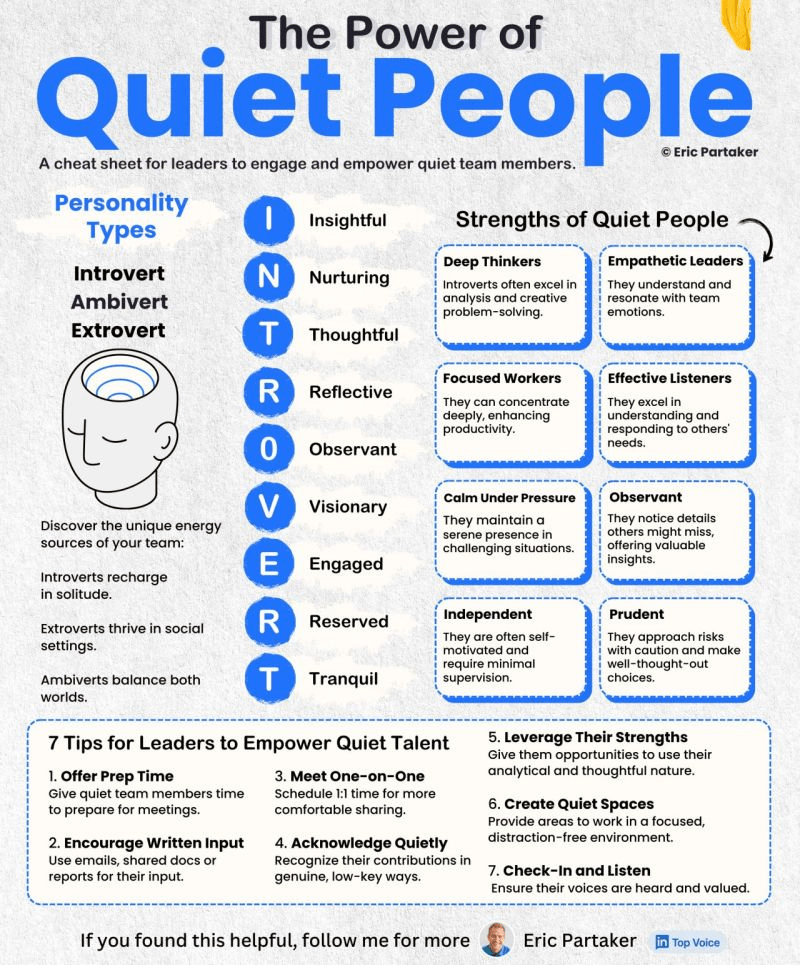
“Quiet people have the loudest minds.” – S. Hawking
Too often, quiet team members are underestimated.
But they carry some of the most powerful strengths
on your team.
Quiet doesn’t mean disengaged.
It means focused, observant, and deeply thoughtful.
💪 8 Quiet Strengths Leaders Can’t Afford to Miss:
➨ Deep Thinkers: excel in creative problem-solving.
➨ Empathetic Leaders: understand team emotions.
➨ Focused Workers: able to concentrate deeply.
➨ Effective Listeners: listen for the root cause.
➨ Calm: serene presence in tough situations.
➨ Observant: an eye for details & insights.
➨ Independent: operate autonomously.
➨ Prudent: well-thought-out choices.
These aren’t soft skills. They’re superpowers.
🚀 7 Simple Ways to Empower Quiet Talent
1/ Offer More Prep Time
2/ Encourage Written Input
3/ Meet One-on-One
4/ Acknowledge Quietly
5/ Leverage Their Strengths
6/ Create Quiet Workspaces
7/ Check-In & Really Listen
Quiet talent doesn’t ask for the spotlight.
But they absolutely deserve to be seen.
Make room for their voice.
And watch your team’s performance soar.
 Kenrick Vaz