
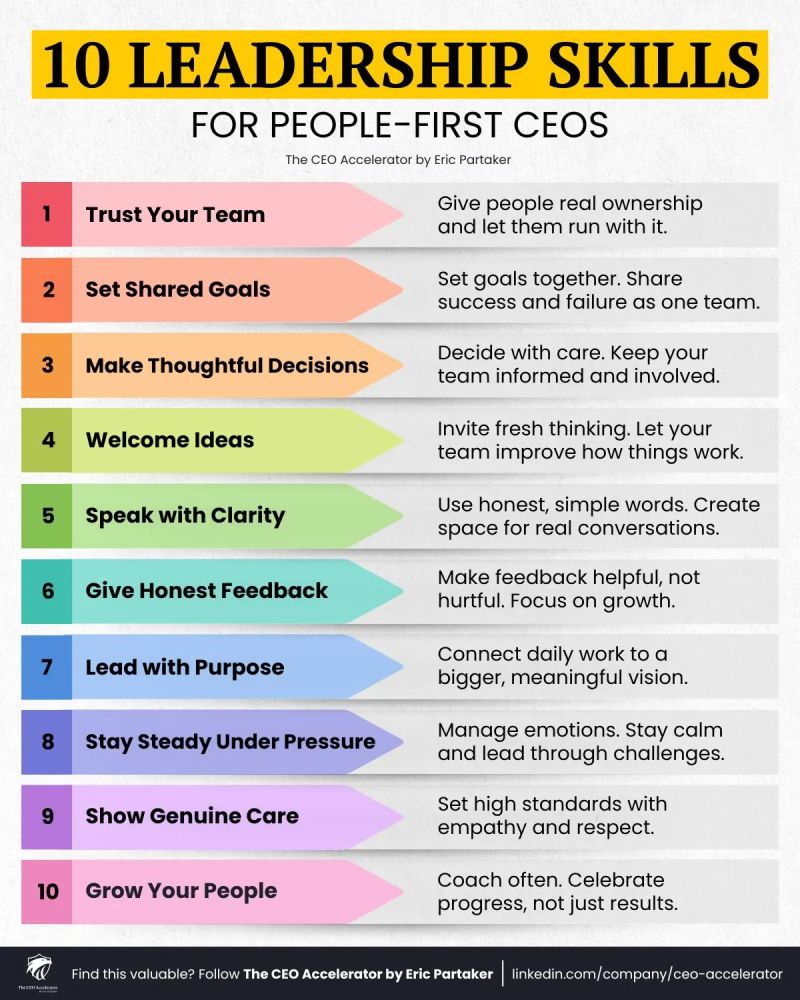
After coaching 100s of CEOs,
I’ve seen one indisputable truth:
The best leaders put their people first.
Because when you take care of your people,
they take care of the business.
Master these 10 skills, and you’ll be the leader
everyone wants to follow:
1. Trust Teams
↳ Set expectations, then step aside
↳ Handoff responsibility and don’t take it back
↳ Let people surprise you with better solutions
2. Win Together
↳ Share the highs and the lows
↳ Co-create goals, don’t just assign them
↳ Build a team that backs each other, not just the boss
3. Thoughtful Decisions
↳ Lead with clarity—not control
↳ Pause before acting on impulse
↳ Bring the right voices into the room
4. Welcome Ideas
↳ Make curiosity part of your culture
↳ Encourage bold thinking, not just safe answers
↳ Let your team challenge the “way it’s always been”
5. Speak Clearly
↳ Say less, mean more
↳ Avoid jargon and fluff
↳ Create space for honest, two-way conversations
6. Give Feedback
↳ Focus on actions, not identity
↳ Don’t save it for annual reviews
↳ Make it easier to grow—not harder to perform
7. Lead Forward
↳ Keep the big picture in view
↳ Make progress feel like purpose
↳ Help your team see the ‘why’ behind the work
8. Stay Steady
↳ Respond, don’t react
↳ Be the calmest person in the room
↳ Let your presence lower the temperature
9. Lead With Care
↳ Give feedback with compassion
↳ Lead in a way that earns trust, not fear
↳ Hold the bar high—but hold people higher
10. Grow People
↳ Celebrate effort and improvement
↳ Coach often, not just when things go wrong
↳ Invest in your team like they’re staying forever
What makes a leader truly great?
They work on these skills every single day.
Which skill do you need to get better at?
Love Is the Quiet Force That Changes Everything
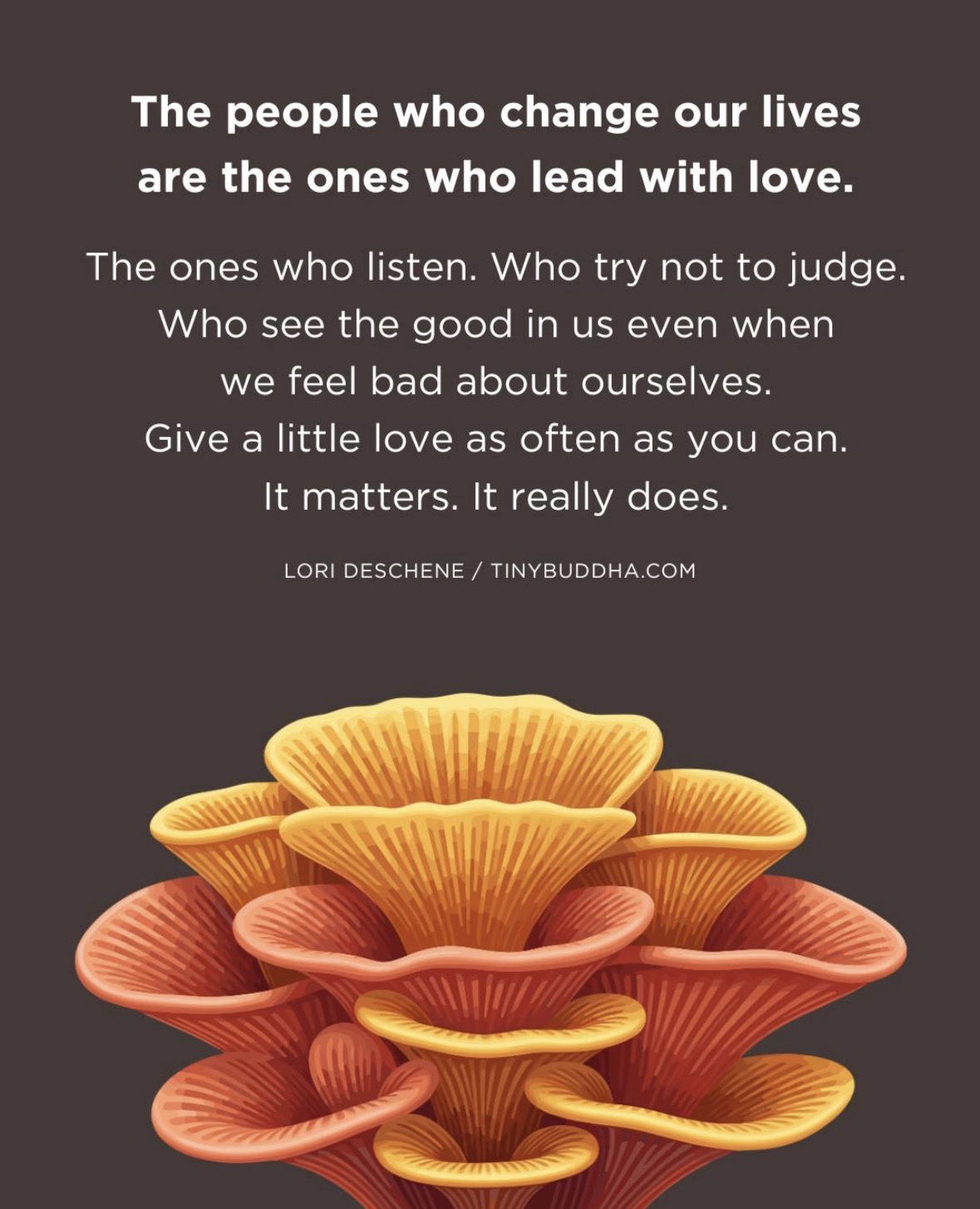
Some people change our lives without ever raising their voice. They don’t arrive with grand speeches or dramatic gestures. They show up gently. Consistently. With love.
They’re the ones who listen—really listen—without planning their reply while you’re still talking. The ones who don’t rush to fix you, label you, or explain you away. They sit with you in the mess, the uncertainty, the self-doubt, and somehow make it feel lighter just by being there.
We underestimate how rare that is.
So much of the world is built on judgment. Quick takes. Hot opinions. Snap reactions. We’re taught to assess, evaluate, and categorize almost instantly. Strong. Weak. Successful. Failing. Worthy. Not enough. Over time, that noise seeps into our own heads, and we start speaking to ourselves in the same harsh language.
That’s where these people matter most.
They see the good in us even when we can’t find it ourselves. Especially then. When we’re tired, ashamed, overwhelmed, or quietly questioning our own worth, they reflect something back to us that we’ve temporarily lost sight of. Not a fantasy version of who we should be, but the truth of who we already are.
Love, in that form, is not loud. It doesn’t demand attention. It doesn’t keep score.
It notices.
It notices when you’re quieter than usual. When your laugh doesn’t quite reach your eyes. When you’re trying your best to hold it together. And instead of asking intrusive questions or offering empty platitudes, it simply says, “I’m here.” Sometimes without words at all.
That kind of love changes people.
Not because it pressures them to be better, but because it gives them permission to breathe. To soften. To grow at their own pace. When someone feels seen without being judged, something remarkable happens—they begin to trust themselves again. And from that place, real change becomes possible.
What’s beautiful is that this isn’t reserved for a special few. You don’t need a title, a platform, or a perfectly healed heart to lead with love. You can do it in ordinary moments.
In how patiently you respond to frustration.
In how you choose curiosity over criticism.
In how you give someone the benefit of the doubt.
In how you speak to a child, a colleague, a friend, or even a stranger who’s clearly having a hard day.
Give a little love as often as you can.
Not because it guarantees anything in return, but because it ripples outward in ways you may never see. A kind word can interrupt someone’s worst inner dialogue. A moment of listening can keep someone from feeling alone. A small act of grace can become the reason someone believes they’re still worthy of care.
And yes, sometimes love won’t be acknowledged. Sometimes it won’t be returned. That doesn’t make it wasted.
Love is not a transaction. It’s a practice.
It shapes the atmosphere around us. It sets a tone. It quietly reminds people—often at just the right moment—that they matter, even when life is telling them otherwise.
So if you’re wondering whether it’s worth the effort, whether your kindness makes a difference, whether showing up with compassion actually changes anything—let this be your reminder:
It does.
It really does.
And more often than not, the lives it changes include your own.
8 Rules for a Great Meeting
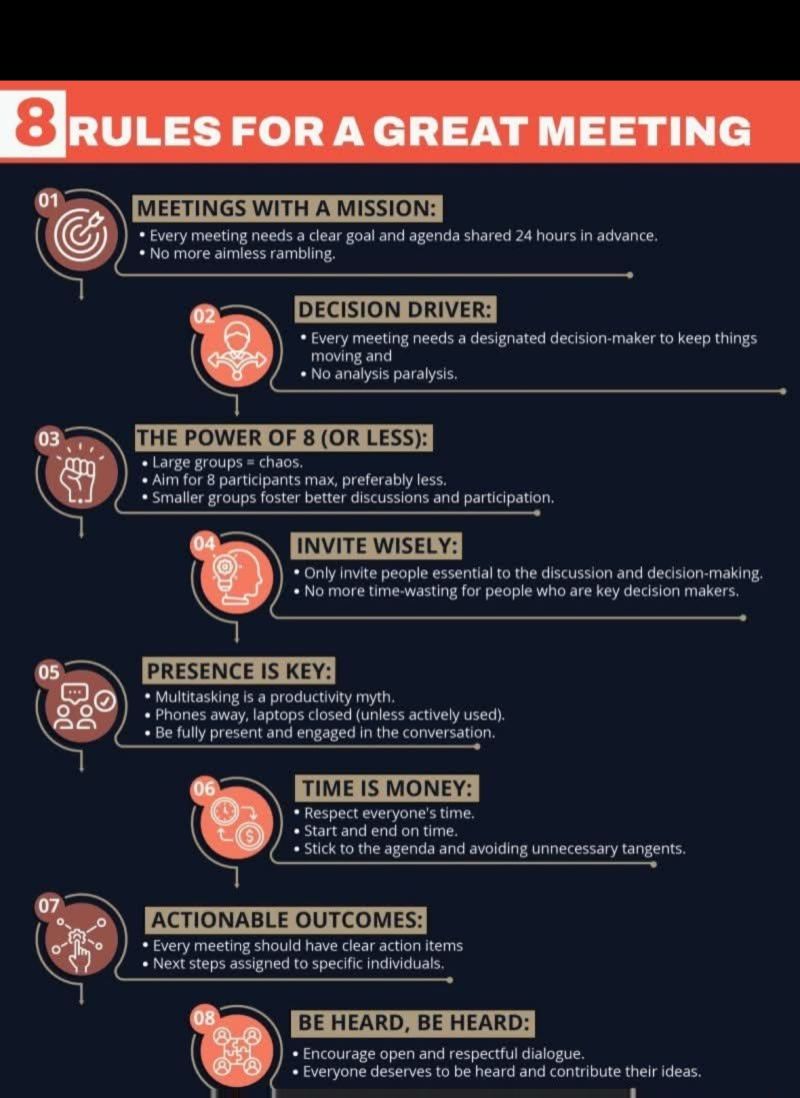
Stop having meetings about meetings. Start having meetings with a mission. 🚀
We’ve all been there: a calendar full of back-to-back calls, yet by 5 PM, it feels like nothing actually got done. Bad meetings aren’t just boring—they are expensive and drain team morale.
If you want to transform your meeting culture from “time-wasting” to “high-impact,” here is the framework for success:
1. Define the Mission 🎯
Every meeting needs a clear goal and an agenda shared at least 24 hours in advance. No agenda, no attendance.
2. Appoint a Decision Driver ⚖️
Designate one person to keep the conversation moving and prevent “analysis paralysis”.
3. The Power of 8 (or Less) 👥
Large groups often lead to chaos. Aim for a maximum of 8 participants to foster better discussion and participation.
4. Invite Wisely 🔍
Only include people essential to the discussion. Respect the time of your key decision-makers.
5. Presence is Key 📵
Multitasking is a productivity myth. Phones away, laptops closed, and be fully engaged in the conversation.
6. Time is Money ⏳
Start and end on time. Stick strictly to the agenda and avoid unnecessary tangents.
7. Actionable Outcomes ✅
A meeting without action items is just a chat. Ensure every meeting ends with specific next steps assigned to individuals.
8. Be Heard, Be Heard 🤝
Encourage open, respectful dialogue where everyone feels they can contribute their best ideas.
Great leadership is shown in how you respect your team’s time. By implementing these 8 rules, you turn your calendar from a burden into a tool for execution.
Which of these rules does your team need to work on the most?
Your Move

There’s a quiet kind of power in stepping back.
Not storming out. Not arguing. Not trying to correct, coach, convince, or control.
Just stepping back.
One of the hardest lessons I’ve had to learn in leadership, in friendships, even in family is this: you cannot force alignment. You cannot manufacture maturity. You cannot edit someone into the version you wish they were.
People will show up exactly how they choose to show up.
Sometimes that is generous and consistent. Sometimes it is distracted and half hearted. Sometimes it is all passion and no follow through. Sometimes it is silence when you needed support.
And here is the uncomfortable truth. That is data.
We spend so much energy trying to interpret behavior like it is a puzzle. Maybe they did not mean it. Maybe they are just stressed. Maybe if I explain one more time.
Maybe.
But patterns do not lie.
If someone is always late, that is a choice. If someone avoids hard conversations, that is a choice. If someone steps up when it matters most, that is also a choice.
The mature move is not to judge them. It is to observe them.
Allow people to be who they are.
Let them speak the way they speak. Let them prioritize what they prioritize. Let them operate at the level of effort they are comfortable with.
Stop trying to negotiate reality.
In my own journey, whether building teams, pitching big ideas, or navigating life outside of work, I have realized that clarity is kinder than control. When someone shows you their standards, believe them. When someone shows you their ceiling, do not keep trying to raise it for them.
It is not your job to upgrade someone else’s character.
It is your job to decide what you are willing to accept.
There is a difference between compassion and self betrayal. Compassion says, I understand you. Self betrayal says, I will shrink my expectations so this feels okay.
One builds connection. The other builds resentment.
And resentment is expensive.
It drains your energy. It distracts your focus. It makes you second guess your instincts. You start negotiating with yourself instead of standing firm in what you value.
That is when things get blurry.
I have learned this especially in high performance environments. In business, we talk about alignment all the time. Values, goals, culture. But alignment is not something you enforce with a slide deck. It shows up in how people respond under pressure. In how they handle accountability. In whether they do right by the client when no one is watching.
You do not need a long debate to know if someone’s approach matches yours.
You need honesty.
The same applies in personal life. You can love someone and still realize their version of effort does not match yours. You can appreciate someone and still know that their communication style drains you. You can respect someone’s freedom to choose their path and still choose not to walk it with them.
That is not cold.
That is clear.
The most empowering shift is this. Instead of trying to manage how others behave, manage your response.
You do not control the move they make.
You control your move.
Do you lean in or lean out. Do you double down or step away. Do you adjust your expectations or raise your standards.
It is your call.
And here is the beautiful part. When you stop trying to reshape people, you create space for the right ones to step forward. The ones whose effort matches yours. The ones who do not need convincing. The ones who show up fully, not occasionally.
Life gets lighter when you stop fighting reality.
Allow people to be who they are.
Let them show up how they choose.
Then decide, calmly and confidently, without drama, if that is enough for you.
Your move.
Reset
I made a huge mistake in my productivity routine.
I filled every hour.
And left zero space to reset.
It felt like I was getting things done.
But I was just staying busy.
And slowly burning out.
No matter how many systems I used…
How many hours I worked…
How many tools I tried…
I just stayed stuck in survival mode.
The lesson was simple:
You don’t run out of time.
You run out of energy.
And once your energy is gone, your ideas, leadership,
and momentum go with it.
That’s why resets aren’t a luxury.
They’re a strategy.
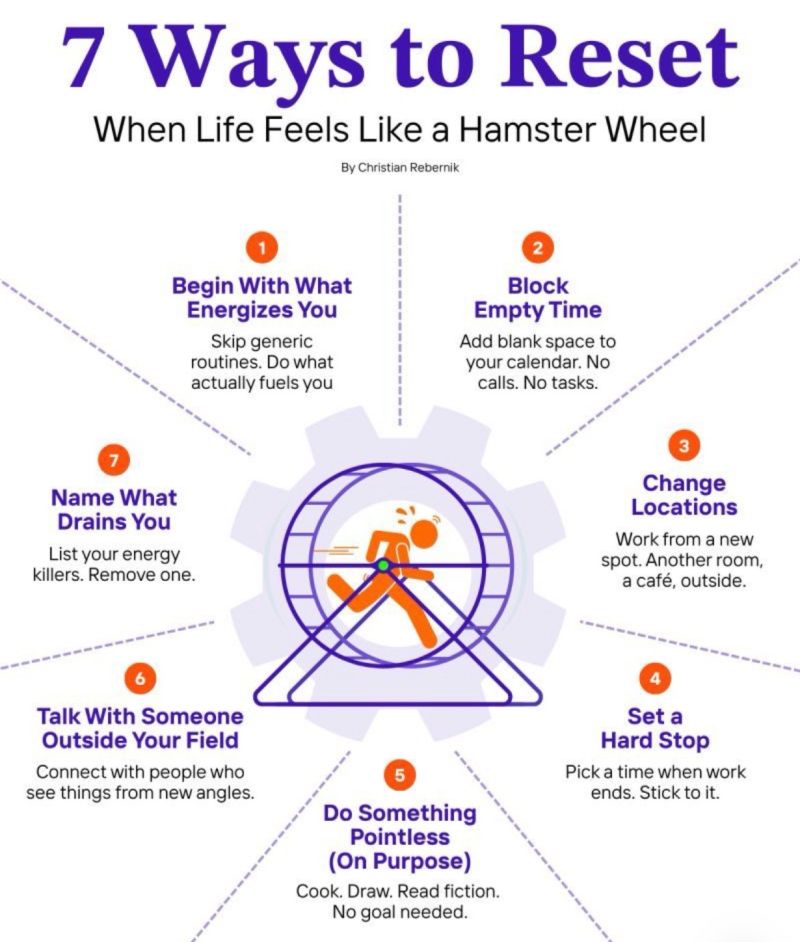
Here are 7 simple ways to reset, without overhauling
your life:
1. Start With What Energizes You
• Do what lights you up first
• Skip the “shoulds.”
• Let energy lead
2. Block Empty Time
• Add blank space to your calendar
• No meetings, no tasks
• Clarity shows up in the quiet
3. Change Your Location
• Move to a different room
• Step outside
• Let your brain catch a new signal
4. Set a Hard Stop
• Pick a shutdown time
• Add it to your calendar
• Actually stick to it
5. Do Something Pointless (On Purpose)
• Read fiction
• Cook slowly
• Wander without a goal
6. Talk to Someone Outside Your Field
• Call a friend in a different industry
• Ask how they solve problems
• Look for what surprises you
7. Name What’s Draining You
• Write down 3 energy leaks
• Pick one to remove
• Start this week
We’ve been taught to manage our time.
But high performance doesn’t come from packing more
into your day.
It comes from protecting the energy that makes those
hours meaningful.
The leaders who sustain momentum aren’t
just productive.
They know how to pause.
On purpose.
Raise Brave, Not Popular

There’s a quiet pressure that starts earlier than we admit.
Be nice.
Be polite.
Don’t make a scene.
Make sure everyone likes you.
And somewhere in all that well-intentioned advice, courage gets edited out.
But here’s something I’ve been thinking about a lot lately: I don’t want to raise a child who is liked by everybody in the room. I want to raise a child who is respected by the right people in the room.
Because those are not the same thing.
Being liked often means blending in. It means softening your opinion so it doesn’t ruffle feathers. It means laughing at jokes that don’t feel right. It means staying quiet when something feels off.
Standing up for what is right is different. It requires a voice. And a backbone. And sometimes the willingness to be the only one raising your hand.
When you’re a parent, these lessons show up in the smallest ways. It’s when your child says, “That’s not fair.” It’s when they tell another kid to stop. It’s when they refuse to join in teasing. It’s when they correct you because something you said doesn’t match what you taught them yesterday.
Those moments are inconvenient. They’re uncomfortable. They’re not always socially smooth.
But they’re powerful.
Because what we’re really teaching in those moments is identity. We’re telling them: Your voice matters. Your values matter. Your instincts matter. Even if it costs you applause.
And let’s be honest—this doesn’t just apply to kids.
As adults, we feel the same pull. In meetings. In group chats. In client conversations. In boardrooms. In family discussions.
There’s always a tension between harmony and honesty.
I’ve been fortunate to work with leaders who make the expectation clear. One of them says it simply: “We must always do right by our clients.”
Not “what keeps everyone happy.”
Not “what protects us from friction.”
Not “what looks good in the short term.”
Do right.
That line carries weight. Because doing right isn’t always the most comfortable path. It can mean hard conversations. It can mean pushing back. It can mean choosing integrity over convenience.
And kids are watching that.
They may not understand quarterly goals or contracts or strategy decks. But they understand tone. They understand courage. They understand whether we mean what we say.
If we tell them to stand up for what is right, but they watch us shrink in the face of pressure, the lesson won’t stick.
If we tell them their voice matters, but we silence ours to avoid being disliked, they will learn that belonging is more important than conviction.
And here’s the truth: not everyone will like you when you choose integrity.
Some people prefer comfort over challenge. Some prefer silence over accountability. Some prefer agreement over growth.
That’s okay.
Your job—and your child’s job—is not to win a popularity contest. It’s to build character.
Because popularity is fragile. It shifts with the room. It depends on trends and moods and who holds influence that day.
Character is steady. It’s who you are when the room goes quiet.
Imagine a generation of kids who aren’t afraid to say, “That’s not right.” Who don’t measure their worth by applause. Who understand that kindness doesn’t mean compliance. Who know that respect is earned by consistency, not charm.
That’s the kind of confidence that doesn’t crumble under pressure.
As parents, we don’t need to raise the loudest kids in the room. We need to raise the clearest. Kids who know what they stand for. Kids who can disagree without being disrespectful. Kids who understand that having a voice is a responsibility, not a weapon.
And it starts small.
It starts at the dinner table when they challenge an idea.
It starts at the playground when they defend someone else.
It starts at home when they say, “I don’t think that’s fair,” and we don’t immediately shut it down.
Teach them that being liked by everybody is impossible.
Teach them that being trusted by a few is powerful.
Teach them that courage sometimes costs approval—but it always builds strength.
And most importantly, show them.
Because one day, they’ll walk into rooms without you. Rooms full of opinions. Pressure. Expectations.
And when that moment comes, I hope they remember this:
It’s better to stand alone for what is right than to sit comfortably in a crowd that knows better.
Raise brave.
The world doesn’t need more agreeable voices.
It needs more honest ones.
Master Your Calendar
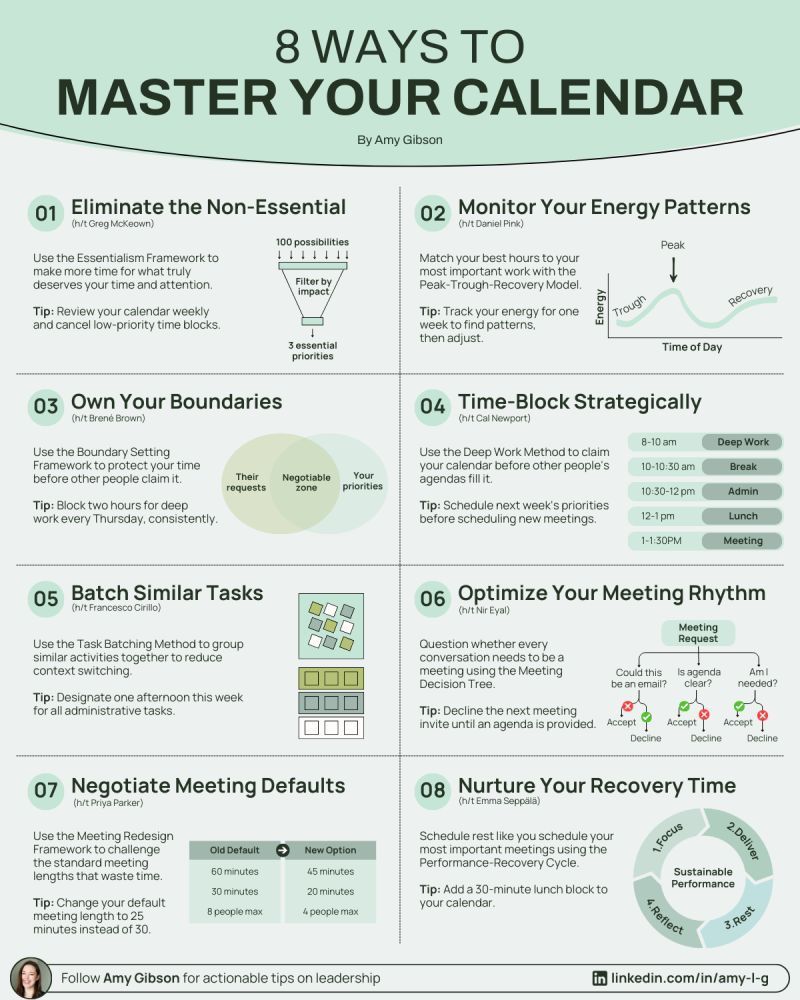
The most productive people I’ve worked with don’t have superhuman focus.
They’ve stopped letting others fill their calendar.
And started designing it on purpose.
Here are 8 ways to master your calendar:
1️⃣ Eliminate the non-essential
↳ Most requests feel urgent but aren’t important
↳ Asking “what if I don’t do this” shows what’s essential
2️⃣ Monitor your energy patterns
↳ Your best thinking hours are limited and most valuable
↳ Low-stakes tasks work better during energy dips
3️⃣ Own your boundaries
↳ Saying ‘yes’ to everything says ‘no’ to what matters
↳ Clear boundaries teach others when you’re available
4️⃣ Time-block strategically
↳ Empty space gets claimed by other people’s priorities
↳ Blocking important work first keeps it protected
5️⃣ Batch similar tasks
↳ Switching between work types drains energy fast
↳ Grouping similar tasks creates momentum
6️⃣ Optimize your meeting rhythm
↳ Not every conversation needs 30 minutes
↳ Async updates often work better
7️⃣ Negotiate meeting defaults
↳ Standard meeting lengths prioritize convenience
↳ Shorter meetings force clarity and respect time
8️⃣ Nurture your recovery time
↳ Rest enables work to be done well
↳ Protecting recovery time protects your ability to lead
Your calendar tells the truth about your priorities.
What you protect with your time reveals what actually matters to you.
Where You Don’t Have to Prove You Belong
There’s a quiet kind of exhaustion that comes from always trying to be enough.
You show up early. You stay late. You overthink every word, every decision, every reaction. You give your best ideas, your best energy, your best intentions. And still, something feels off. The praise is rare. The effort feels invisible. You start wondering if you need to try harder, be louder, shrink yourself, or somehow become a different version of you.
That’s usually the moment when the problem isn’t effort anymore. It’s placement.
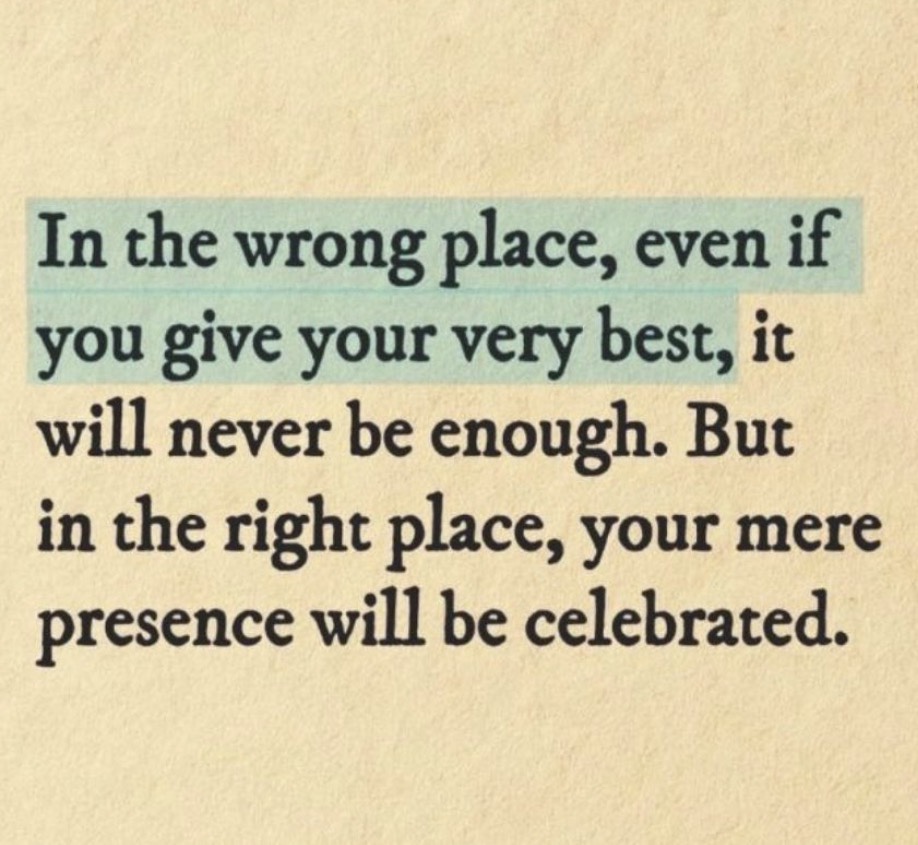
In the wrong place, even your very best will feel insufficient. Not because it is, but because the environment was never built to recognize it. Some rooms only value a certain kind of voice. Some systems reward familiarity over contribution. Some spaces are so busy measuring people against narrow definitions of success that they miss real value standing right in front of them.
And when you’re in one of those places, you internalize the mismatch. You assume the friction means failure. You start editing yourself. You question instincts that once came naturally. Over time, confidence erodes not from lack of ability, but from lack of alignment.
What’s tricky is that the wrong place rarely announces itself clearly. It often looks respectable. It might even look successful from the outside. The misfit shows up in subtler ways. You feel drained instead of energized. You’re tolerated more than trusted. Your wins are minimized, your mistakes magnified. You’re always “almost there,” but never quite fully seen.
Contrast that with what happens in the right place.
In the right place, you don’t need to perform belonging. You don’t have to translate who you are. Your strengths land naturally. Your questions are welcomed instead of judged. Your presence adds something, even on days when you’re not operating at 100%.
In the right environment, people don’t celebrate you only when you overdeliver. They value the perspective you bring simply by being you. Effort still matters, but it’s met halfway. Growth feels expansive instead of defensive. You’re not constantly bracing yourself.
That shift is powerful because it reminds you of something essential: your worth was never conditional. It was contextual.
This applies far beyond work. Friendships, communities, relationships, even creative pursuits all have their own versions of “fit.” You can be generous, thoughtful, loyal, and still feel unappreciated in the wrong dynamic. You can give endlessly and still feel empty if the space doesn’t know how to hold what you’re offering.
And the opposite is just as true. In the right place, small things count. A quiet contribution matters. A simple idea sparks momentum. You don’t have to burn yourself out to earn respect.
None of this means you stop trying or stop growing. It means you stop confusing struggle with destiny. Not every challenge is a signal to push harder. Sometimes it’s an invitation to step sideways into a space that actually fits.
The hardest part is letting go of the belief that if you just do a little more, the wrong place will finally see you. Sometimes it won’t. And that’s not a reflection of your value. It’s a reflection of the room.
When you find the right place, there’s a sense of relief that’s hard to describe until you experience it. You realize how much energy you were spending just to stay afloat. You remember what it feels like to be steady. To be trusted. To be celebrated not for perfection, but for presence.
If you’ve been giving your all and still feeling like it’s never enough, pause before you criticize yourself. Ask a different question. Not “What’s wrong with me?” but “Is this the right place for me to shine?”
Because when you’re in the right place, you don’t have to prove you belong. Your being there already says enough.
Good people don’t fail in good systems.
I watched a director spiral last year.
Call him “Marcus.”
Three people on his team underperforming.
Missing deadlines. Withdrawn in meetings.
Quality slipping.
His first instinct?
Performance improvement plans.
More check-ins.
“Accountability conversations.”
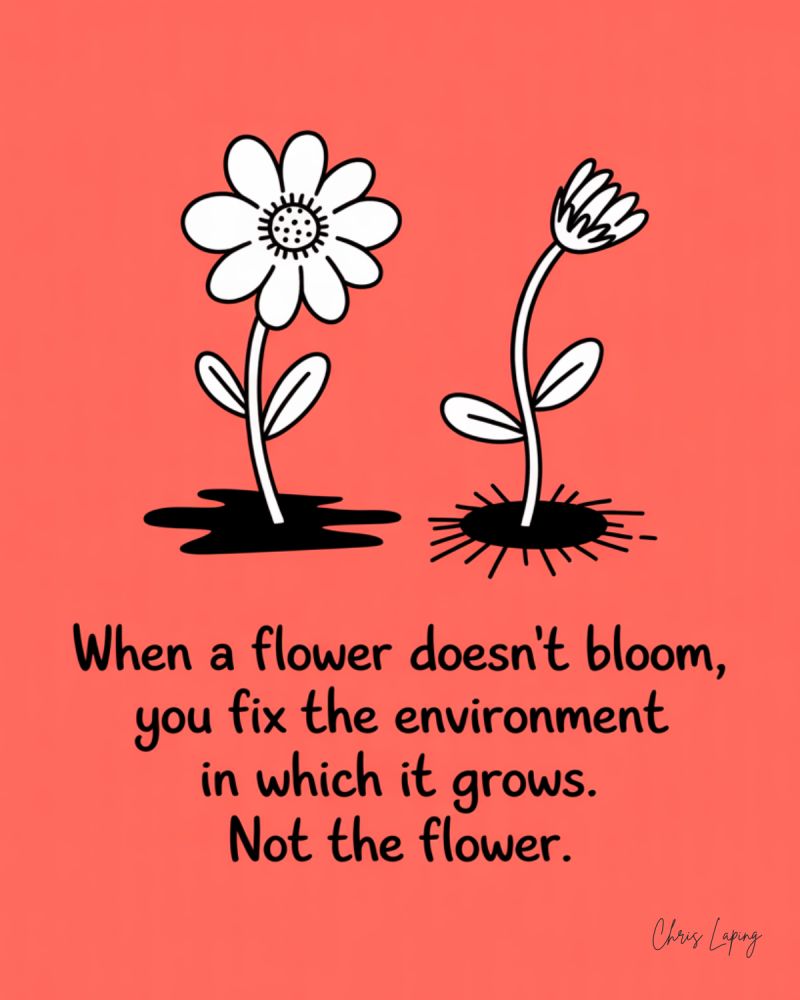
He was trying to fix the flowers.
But when we looked closer:
Competing priorities from above.
No clarity on what actually mattered.
Meetings that could’ve been emails.
And a culture where asking for help
meant you weren’t “leadership material.”
The soil was toxic.
Marcus thought he had a people problem.
He had an environment problem.
When someone’s struggling,
look past the person for a moment.
What’s the system doing to them?
What’s unclear, unfair, or unsustainable?
What are you tolerating that’s poisoning
the conditions they need to grow?
Sometimes the strongest thing a leader does
isn’t pushing people harder.
It’s fixing what’s breaking them.
The Rope Was Never the Enemy
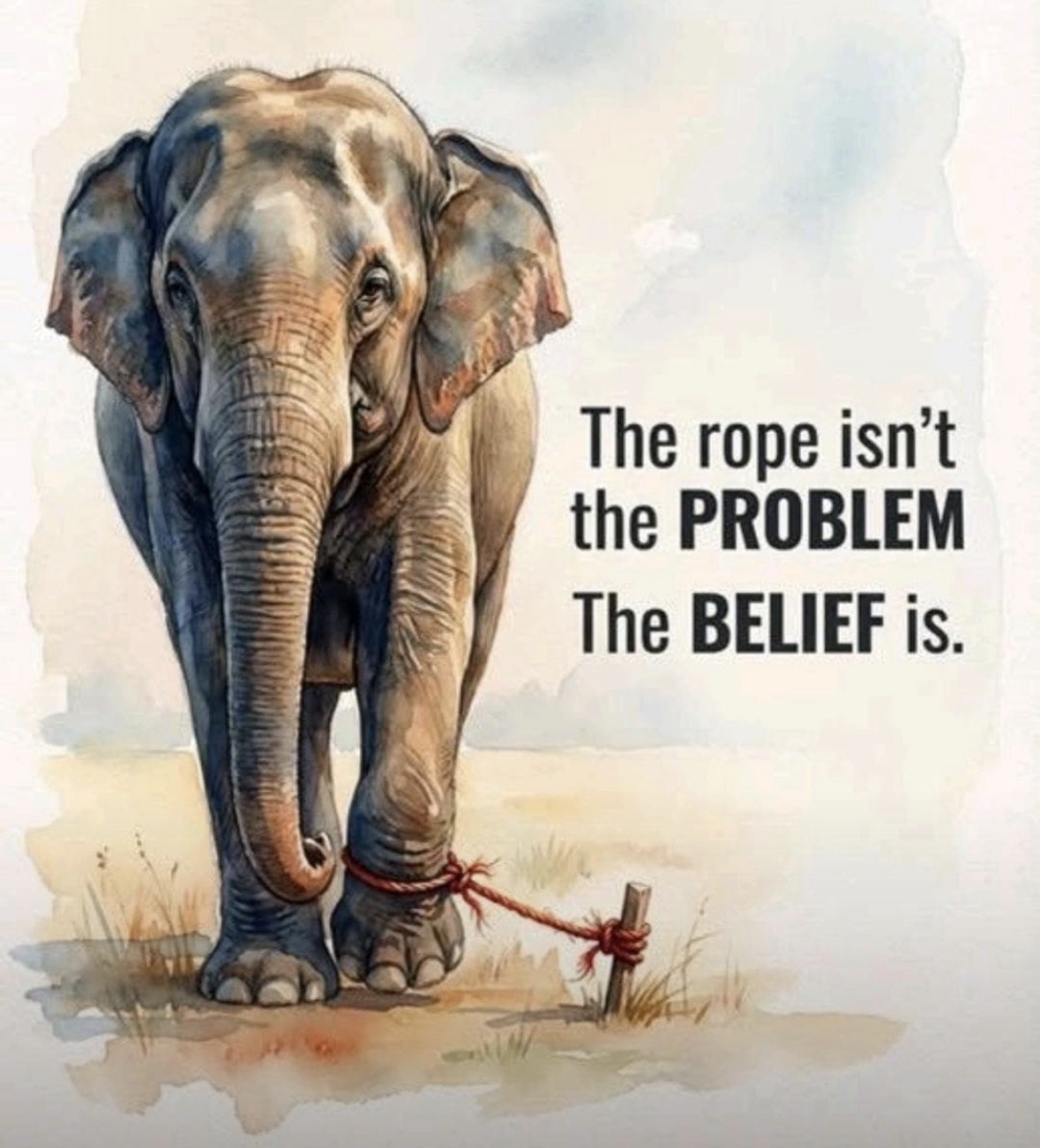
This image has stayed with me ever since I first saw it: a massive elephant standing still, held in place by a small rope tied to its leg.
At first glance, it feels absurd. An animal with enough strength to pull down trees, restrained by something it could snap without effort. And yet, the elephant doesn’t move. It doesn’t test the rope. It doesn’t resist. It simply accepts the boundary.
That image isn’t really about the rope.
It’s about the belief.
As a calf, the elephant was restrained by a rope. Back then, it didn’t have the strength to break free. It pulled, failed, and learned a lesson: this is as far as I can go. Over time, that lesson hardened into truth. When the elephant grew stronger, the rope got smaller—but the belief stayed the same.
That’s how most limitations in our lives are formed.
Early failures, old feedback, past circumstances teach us what we think is possible. At the time, those conclusions might even have been reasonable. But we rarely go back to update them. We carry childhood ropes into adult lives. Junior-level fears into senior-level roles. Survival beliefs into seasons where we’re no longer just surviving.
So when we feel stuck, we point to the rope. The job. The role. The market. The family expectations. The timing. We tell ourselves, If only this weren’t here, I’d move.
But like the elephant, we often have far more strength than we think. We’ve grown. We’ve learned. We’ve changed. The rope hasn’t.
The dangerous part isn’t that the rope exists—it’s that we never test it again. We stop pulling. We stop experimenting. We stop asking, What if this no longer applies to me?
Beliefs have a quiet way of turning into cages. They don’t shout. They don’t threaten. They simply whisper, Don’t bother. You already know how this ends.
And because the belief feels familiar, we mistake it for truth.
The irony is that ropes aren’t always meant to trap. Sometimes they’re there for safety. Sometimes they’re reminders of where we started. Sometimes they exist simply because no one thought to remove them. But when belief steps in and assigns meaning—you are stuck, you are limited, you cannot—the rope gains power it never had.
Growth doesn’t always require breaking free in dramatic fashion. Sometimes it starts with a small, almost innocent act: a tug. A question. A challenge to an assumption you’ve been living under for years.
What if this rope can’t actually hold me anymore?
What if the last time I tried was when I was half the person I am today?
The elephant doesn’t need to become stronger. It already is. It just needs to relearn what’s possible.
And so do we.
Because the rope was never the problem.
The belief was.
 Kenrick Vaz