
I’ve been thinking about growth lately.
(not just in business, but in life too)
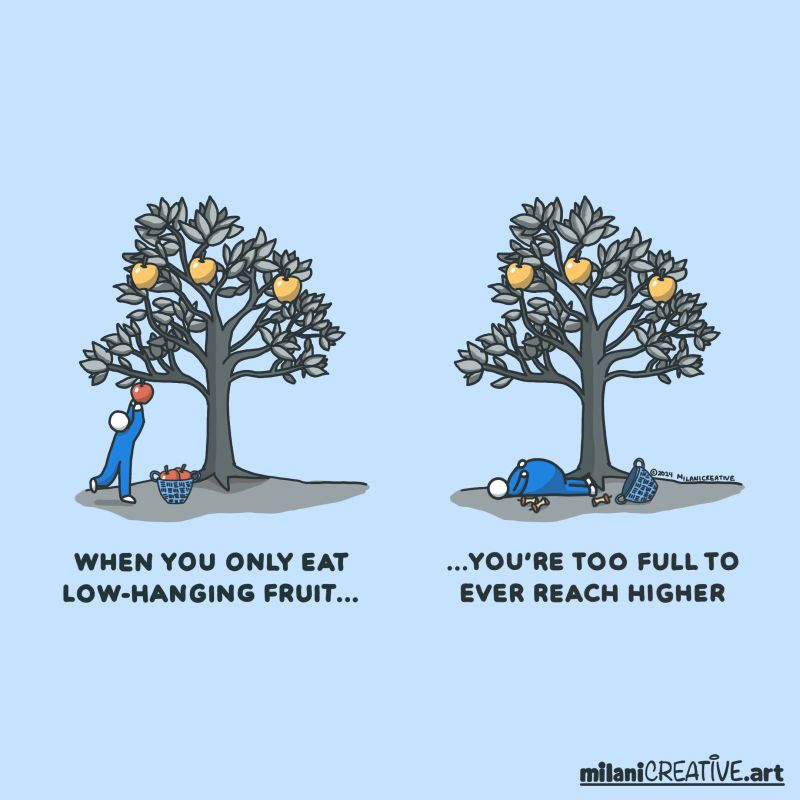
When you only pick the easiest opportunities:
→ The quick wins
→ The safe clients
→ The comfortable projects
You might feel productive at first.
You fill your basket with early success.
But there’s a hidden cost.
Each easy win adds weight to your basket.
Each comfortable choice makes you more comfortable.
Each safe decision builds habits of safety.
Until one day…
You look up and realize you can’t reach higher anymore.
Not because you’re incapable.
But because you’ve trained yourself to stay low.
The most valuable opportunities rarely hang at eye level.
They require stretching.
Sometimes even climbing.
I’m catching myself in this pattern lately.
Working with the clients who find me.
Writing about what’s already in my comfort zone.
But the real growth is higher up in the tree.
“If we only do what we’re familiar with,
we might miss what we’ve been made for.”
– Bob Goff
P.S. What’s one “higher fruit” you’re going to stretch for next week?
I’d love to hear what you’re reaching toward.
Communicate

Poor communication will cost you big time—
Here’s how to fix it:
Most people think communication
is about saying more.
It’s not.
It’s about saying what matters—
clearly, calmly, and at the right moment.
But here’s the problem:
We were never taught how to do this.
So we:
Ramble.
Assume.
Hold back.
Talk in circles.
Say one thing—but mean another.
Over-explain.
Interrupt.
Misread.
Guess.
Real communication looks like this:
🟡 Acknowledging what’s said
🔴 Connecting with people
🟤 Owning your intentions
🔵 Asking good questions
🟠 Listening with purpose
🟢 Responding clearly
🟣 Being transparent
When you lead with clarity—
everything starts to click:
→ Trust builds
→ Tension drops
→ Feedback flows
→ Meetings shorten
→ Goals align faster
→ Clients stay longer
→ Problems get solved
Communication isn’t just a soft skill—
It’s your sharpest competitive edge.
Say the right thing.
In the right way.
At the right time.
7 Types of Intelligence
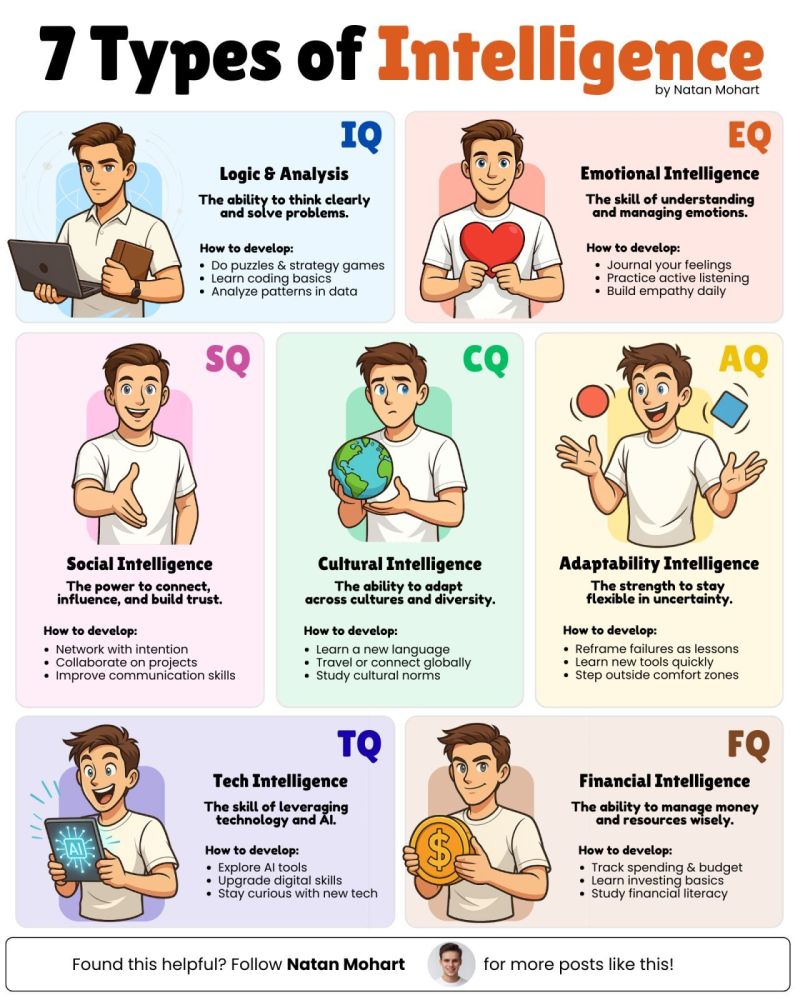
7 types of intelligence.
And only one often decides whether you rise higher…
or stay where you are.
When we hear the word “intelligence”,
we almost always think of IQ.
But intelligence is not just logic.
It’s different forms of power.
And each of them reveals itself in the right moment.
📊 IQ — the ability to see patterns and calculate moves.
→ Useful in strategy, but helpless in chaos.
❤️ EQ — the ability to manage emotions.
→ Master yourself and you’re resilient. Understand others and you’re influential.
🤝 SQ — trust and relationships.
→ A talented lone wolf can go far, but only a network turns talent into a system.
🌍 CQ — cultural intelligence.
→ The world is global: those who understand different rules play on a bigger field.
🔄 AQ — adaptability.
→ The strong break in chaos. The flexible use chaos to grow.
🤖 TQ — technology.
→ The lever that accelerates any form of intelligence. Without it, even the smartest remain slow.
💰 FQ — financial intelligence.
→ Money isn’t the goal, but the lifeblood of a system. It turns strategy into reality.
And here lies the paradox:
📌 Success doesn’t belong to just one type of intelligence.
Sometimes logic wins.
Sometimes emotions.
Sometimes adaptability or technology.
The truth is that no form of intelligence works alone.
Success comes to those who see their interconnection…
and turn this sum into a system.
⚖️ So the question isn’t which intelligence is “the best.”
The question is: which one is closest to you —
and are you ready to develop it further?
💬 Which of the 7 types of intelligence is your strongest?
No Finish Line, Just the Feeling
Somewhere along the way, life started feeling like a race we never signed up for. Not a fun one either. No cheering crowds, no clear track, no finish ribbon waiting at the end. Just an invisible clock ticking louder every year, urging us to move faster, do more, be more. We sprint through mornings, power-walk through conversations, multitask our meals, and treat rest like a guilty pleasure we haven’t earned yet.
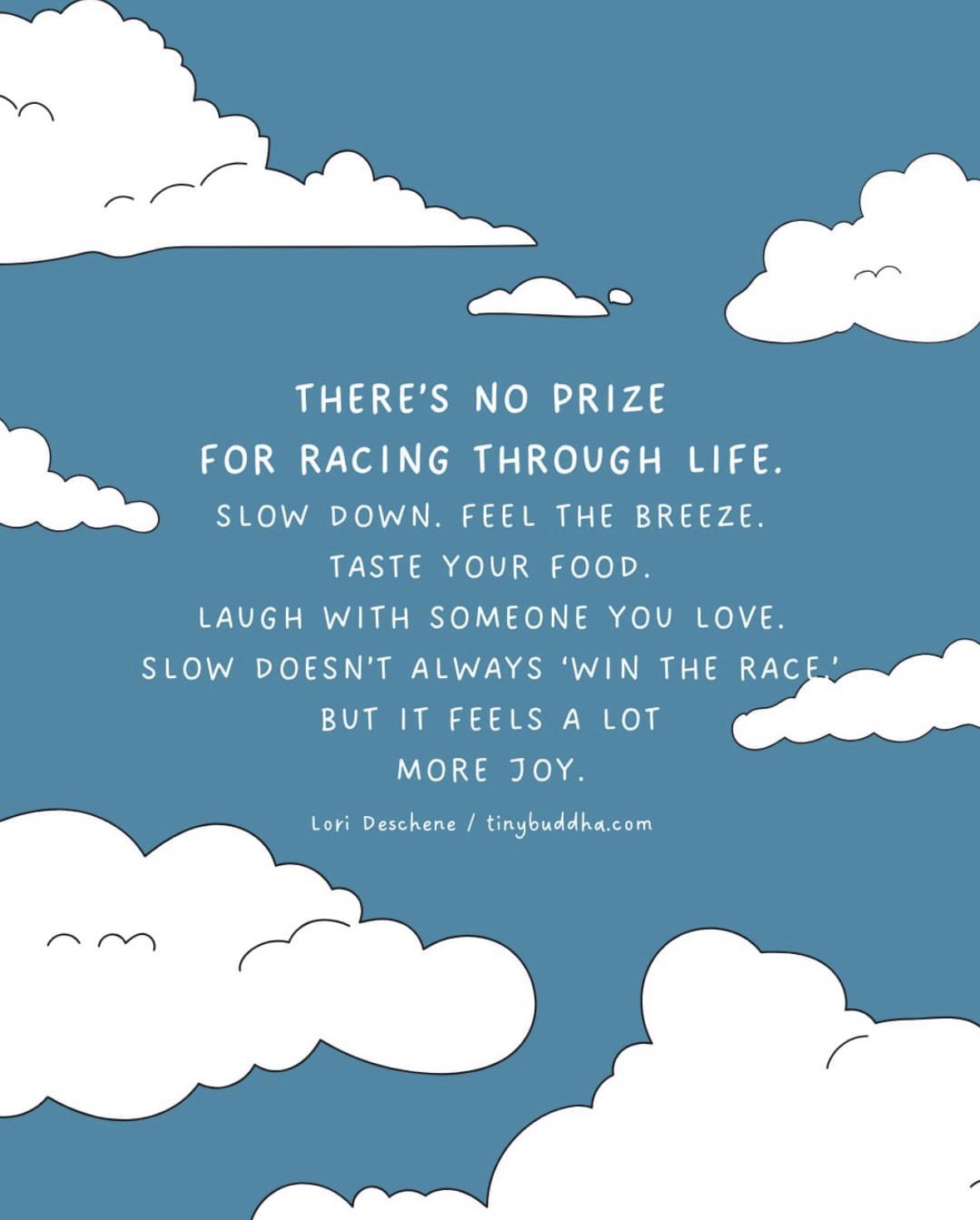
And yet—there’s no prize.
No medal for answering emails at midnight. No trophy for eating lunch while staring at a screen. No applause for being the busiest person in the room. We keep running anyway, convinced that if we slow down, we’ll fall behind. Behind what, exactly, is never very clear.
Slowing down sounds almost rebellious now. It feels irresponsible, even indulgent. But slowing down doesn’t mean giving up. It doesn’t mean losing ambition or momentum. It just means choosing to actually be present for the life you’re already living.
Feel the breeze. Not as a metaphor, but literally. The air on your face when you step outside. The way the temperature shifts just before sunset. The small reminder that the world is still moving at its own pace, regardless of how fast your calendar looks.
Taste your food. Really taste it. Not the rushed bites between meetings or the mindless snacking while scrolling. The warmth, the spice, the sweetness, the comfort. Food was never meant to be fuel alone. It’s memory. It’s culture. It’s care. When did we decide it deserved only half our attention?
Laugh with someone you love. Not the polite chuckle or the distracted smile, but the kind of laugh that sneaks up on you. The one where you forget to check your phone. The one that reminds you how easy connection can be when you’re not in a hurry to get somewhere else.
Slow doesn’t always win the race. That’s true. The world tends to reward speed. Faster replies. Faster growth. Faster results. We’re surrounded by stories that celebrate hustle and glorify burnout as if exhaustion is proof of worth. But those stories rarely talk about how it feels to live that way for years on end.
Slow feels different. Slow feels grounded. It feels like breathing fully instead of shallow gasps between tasks. It feels like noticing your child’s expression when they’re explaining something important, even if it takes longer than you expected. It feels like sitting in silence without needing to fill it. It feels like joy—not the loud, performative kind, but the steady, quiet kind that lasts.
Joy doesn’t rush. It lingers.
When you slow down, you start to notice how much you’ve been missing. The ordinary moments that quietly carry meaning. The conversations that deepen when you’re not watching the clock. The clarity that shows up when your mind isn’t constantly sprinting ahead.
This doesn’t mean life suddenly becomes easy. Responsibilities don’t disappear. Deadlines still exist. But your relationship with time changes. You stop treating every moment as something to get through and start treating it as something to experience.
There’s a strange freedom in realizing that you don’t have to keep up with everything. That not every opportunity needs to be seized, not every message needs an immediate response, not every day needs to be optimized. Some days just need to be lived.
Slowing down is not a failure. It’s a choice. A conscious one. A choice to value how life feels, not just how it looks from the outside. A choice to measure success by presence, not pace.
At the end of it all, no one looks back and wishes they’d hurried more. They wish they’d noticed more. Felt more. Loved more. Laughed longer. Sat still without guilt. Enjoyed the breeze without checking the time.
There’s no prize for racing through life. But there is something far better waiting when you slow down: the chance to actually be there for it.
13 Ways to Win your Time
Most people don’t manage time—
They react to it:
You can’t outrun a chaotic day.
But you can out-plan it.
Before your next to-do list:
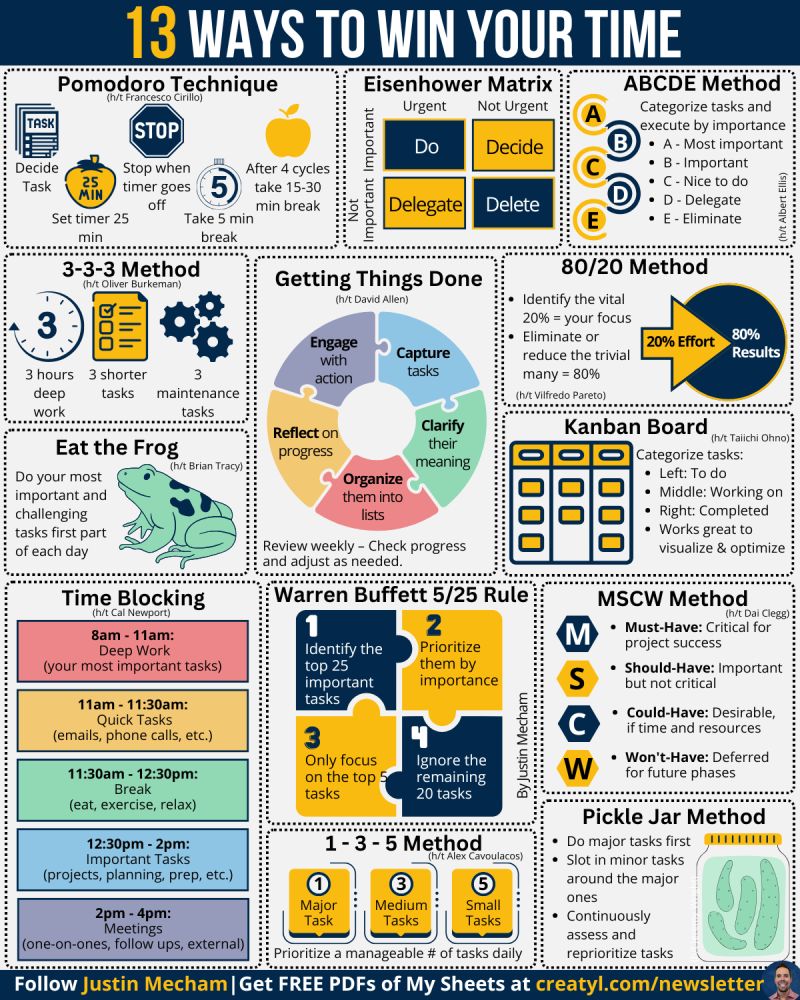
Pick one of these 13 timeless methods—
and test it for just one week.
🟨 Eisenhower Matrix
➝ Separate urgent from important
➝ Make clearer choices—fast
🟦 Time Blocking
➝ Set blocks for deep work and admin
➝ Protect what matters with your calendar
🟥 1–3–5 Method
➝ 1 big, 3 medium, 5 small tasks
➝ Keeps your day from overflowing
🟧 ABCDE Method
➝ Rank every task A to E
➝ Work by value—not volume
🟪 Kanban Board
➝ Visualize tasks: To Do → Doing → Done
➝ See progress in real time
🟩 Eat the Frog
➝ Do your hardest task first
➝ Everything else feels easier
⬛ Pomodoro Technique
➝ 25-minute focused sprints
➝ Breaks built in to reset your mind
⬜ 3–3–3 Method
➝ 3 hours deep work, 3 short tasks, 3 admin
➝ Balances focus with momentum
🟫 Getting Things Done (GTD)
➝ Capture → Clarify → Organize
➝ Keeps your brain free for thinking
🟨 80/20 Method
➝ 20% of effort → 80% of results
➝ Double down on what moves the needle
🟦 Warren Buffett 5/25 Rule
➝ Pick top 5 priorities, ignore the rest
➝ Cuts distractions ruthlessly
🟥 MSCW Method
➝ Must / Should / Could / Won’t
➝ Filters out what doesn’t matter
🟧 Pickle Jar Method
➝ Schedule rocks first, then sand
➝ Prioritize big tasks before filler
Try one of these this week and let
me know which is your favorite.
Protect your time like it’s your future—
Because it is.
Storytelling for Leaders
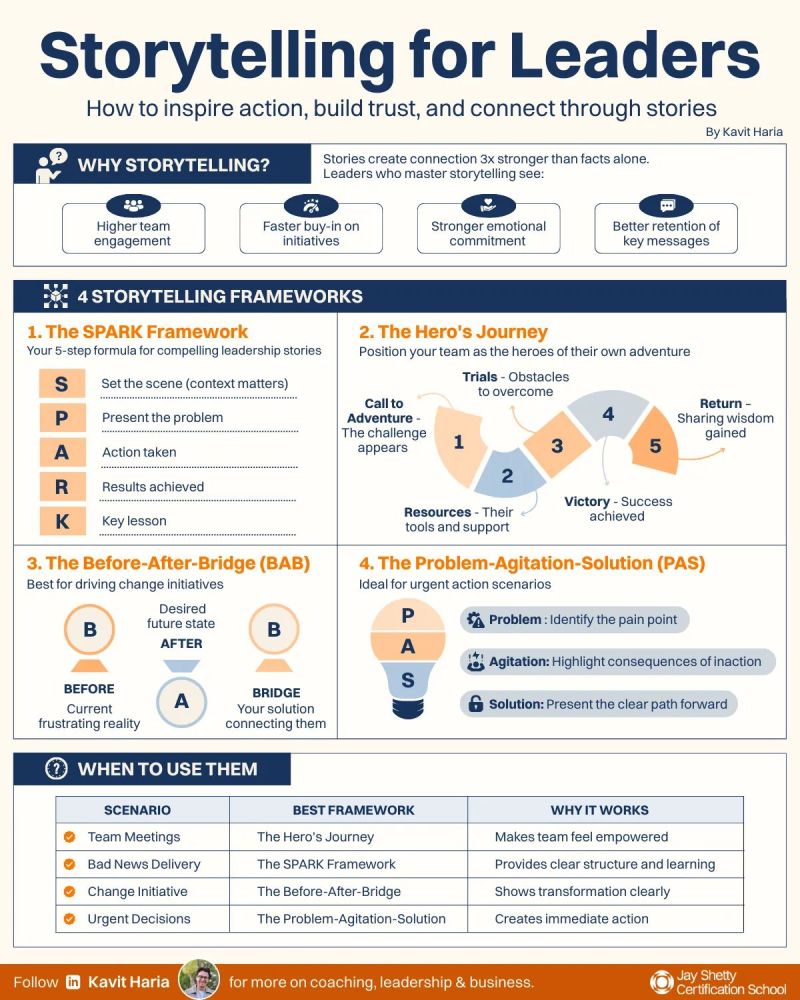
Facts tell. Stories sell.
Yet most leaders still lean on slides.
What separates magnetic leaders from forgettable ones?
They’ve learned that stories build connection 3x stronger than facts.
Not theory. Results.
➡️ Numbers make people evaluate
➡️ Stories make people engage
And engagement drives action.
The leaders who get instant buy-in?
They’ve mastered this shift.
Here’s what they do differently:
They make others the hero
↳ Stop being the main character
↳ Position your team as the ones who win the day
They share the struggle first
↳ Victory without conflict feels empty
↳ Show the mountain before the summit
They plant visual anchors
↳ “Picture this…” beats “The data shows…”
↳ Make them see it, not just hear it
They end with transformation
↳ Not just what happened, but what changed
↳ Leave them different than you found them
The hidden cost of data-only leadership:
➡️ People forget 90% within a week
➡️ Emotional disconnect fuels quiet quitting
➡️ Great ideas die in spreadsheet graveyards
➡️ Teams comply but don’t commit
Meanwhile, story-driven leaders spark movements.
Because we’re not wired for charts.
We’re wired for meaning.
Your next presentation doesn’t need more data.
It needs a story they’ll feel.
The question isn’t if you have stories worth telling.
It’s whether you’re ready to tell them.
The T.R.U.S.T Model

2 in 3 employees are ready to quit.
Here’s the leadership secret that’s changing their minds.
Servant Leadership is an “employee-focused” style that’s been studied for over 30 years.
Companies like Starbucks and Southwest Airlines have recently adopted its principles.
The reason?
Straightforward, ethical guidelines that transform work at all levels.
Here’s a framework based on years of research
(To catch you up in 2 minutes):
The TRUST Model of Servant Leadership:
1. Train
• Develop leaders who prioritize team growth
• Instill a mindset of service and support
2. Reflect
• Encourage self-assessment and personal growth
• Promote transparency and accountability at all levels
3. Uplift
• Identify and nurture each team member’s unique strengths
• Create opportunities for employees to lead
4. Support
• Foster an inclusive environment
• Provide resources and remove obstacles
5. Transform
• Align company culture with servant leadership principles
• Reward servant leader behaviors
5 Practical Tips to Practice Servant Leadership:
• Listen closely
• Lead by example
• Invest in leadership growth
• Foster open, honest feedback
• Celebrate servant leadership acts
Top companies are recognizing the power of this “person-first” approach.
And it’s saving teams and organizations worldwide.
Now’s the time to embrace the “new school” of leadership!
How do you promote TRUST in your teams?
The Gifts That Don’t Need Wrapping
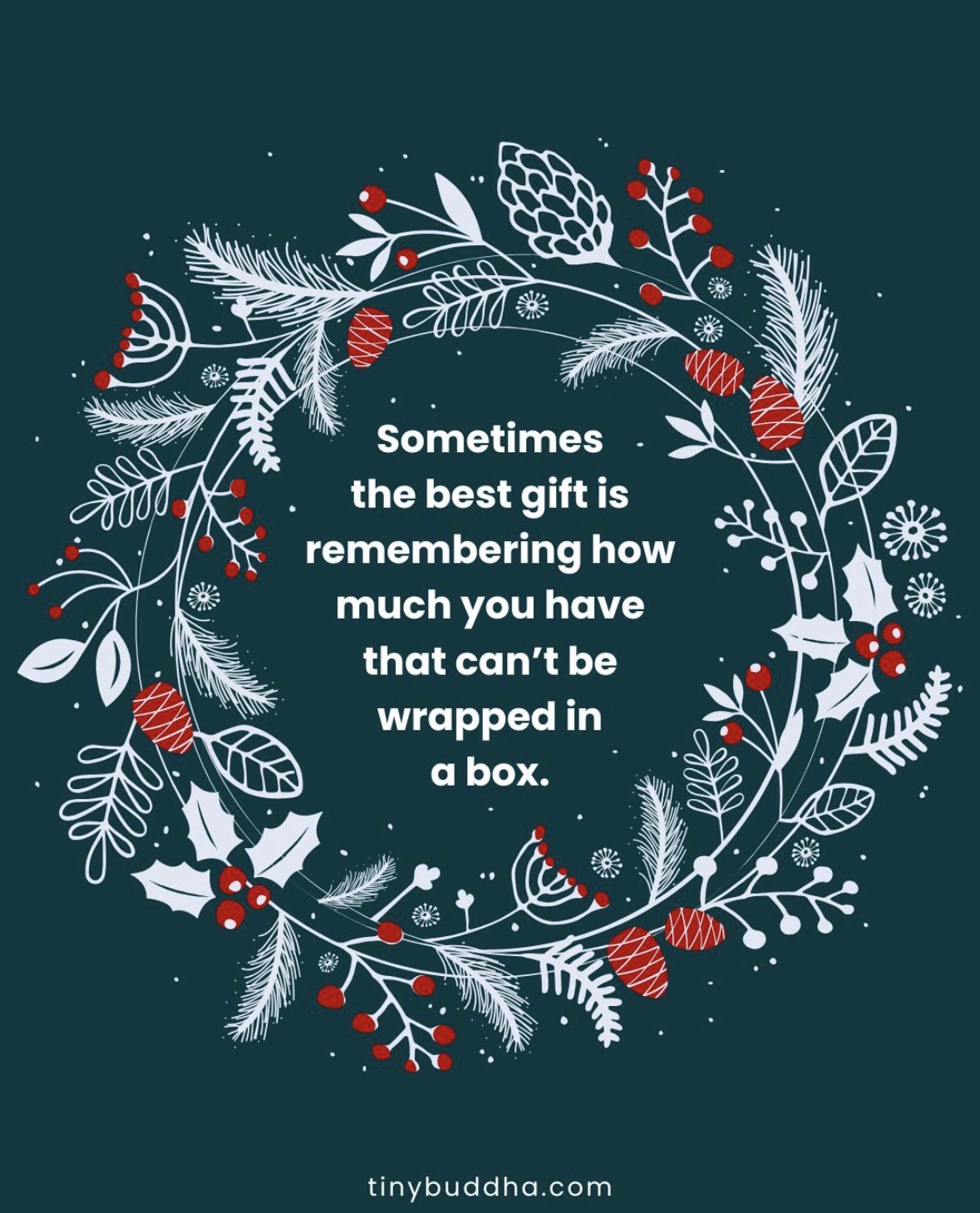
Around Christmas, everything feels wrapped in something. Boxes stack up under trees, paper crinkles, ribbons curl, and we try to guess what’s inside before it’s time. There’s a special kind of joy in giving and receiving gifts this season, in watching faces light up and sharing in that small moment of surprise. But somewhere between the lists, the shopping, and the wrapping, it’s easy to forget that some of the most meaningful gifts of all don’t come in boxes.
Sometimes the best gift doesn’t arrive with shiny paper or a bow that takes five minutes to untangle. It shows up quietly, usually when you’re not looking for it. It’s the moment you pause long enough to realize how much you already have—things that could never fit inside wrapping paper anyway.
We spend so much time chasing the next thing. The upgrade. The milestone. The version of life that feels just a little more complete than the one we’re living right now. And there’s nothing wrong with wanting more. Growth matters. Dreams matter. But somewhere along the way, it’s easy to forget that a lot of what makes life feel full is already here, woven into our ordinary days.
It’s in the people who know your stories without needing the long version. The ones who notice when you’re quieter than usual, or who send a message just to say they were thinking about you. It’s in shared jokes that don’t make sense to anyone else, in comfortable silences, in the simple relief of not having to explain yourself.
It’s in your health on the days you wake up and your body quietly does what it’s supposed to do. In the ability to walk, to breathe deeply, to hold someone’s hand. These are things we rarely celebrate, mostly because we don’t want to imagine life without them. But they are gifts all the same—fragile, precious, and often invisible until they’re gone.
It’s in the small routines that feel boring until they disappear. Morning light through a familiar window. A cup of something warm you didn’t have to rush. The drive you’ve done a hundred times. The sound of laughter from another room. None of these show up on wish lists, yet they’re the threads that hold our days together.
It’s also in the version of you that made it through hard seasons. The resilience you didn’t know you had. The lessons you paid for with time, mistakes, and discomfort. You can’t wrap growth, but it’s there—in how you respond differently now, in what you no longer tolerate, in the boundaries you finally learned to keep.
Sometimes gratitude gets framed as forced positivity, like you’re supposed to ignore what’s hard. That’s not what this is. You can acknowledge what’s missing and still honor what’s present. Both can exist at the same time. In fact, they usually do.
Remembering what you have isn’t about settling. It’s about grounding. It’s about realizing that even while you’re reaching forward, there’s solid ground beneath your feet. It gives you a place to stand, to breathe, to move from intention instead of lack.
Maybe that’s why this kind of remembering feels like a gift, especially at Christmas. It asks nothing from you. No money, no planning, no perfect timing. Just a moment of awareness. A gentle shift in perspective. A quiet thank you—to life, to others, to yourself.
When the paper is recycled, the boxes are put away, and the lights glow a little softer, come back to this. Look around. Notice what’s holding you up. Notice what’s stayed.
Some of the best gifts never needed wrapping at all.
Fear of Asking for Business
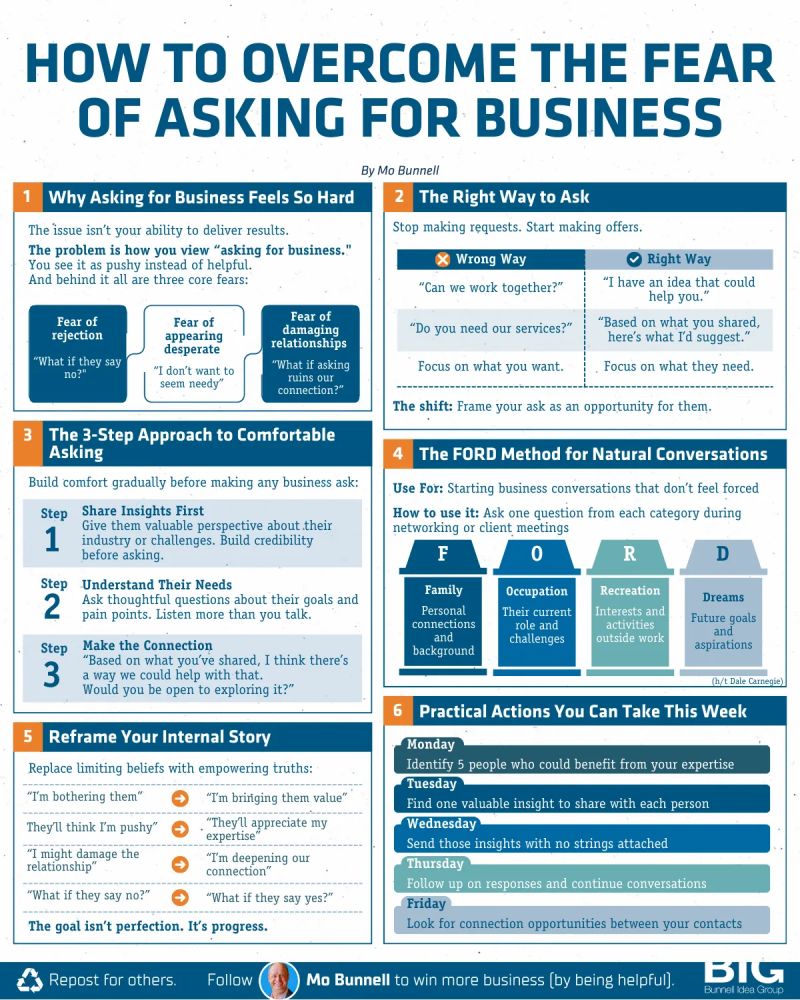
Does asking for business make your stomach drop?
You’re not alone.
(And the reason may surprise you.)
Most professionals think the discomfort comes from
bad timing…
Or needing the perfect words.
But here’s the truth:
Asking feels terrifying when it’s about you.
When it’s about them, and how you can help, it becomes
natural, even welcome.
So how do you make that shift?
Here’s the 3-Step Approach we teach for Comfortable Asking:
1. Share Insights First
✔️ Offer a relevant idea or trend.
✔️ Give value without expecting a return.
✔️ Spark curiosity, not obligation.
2. Understand Their Needs
✔️ Ask open, thoughtful questions.
✔️ Let them do most of the talking.
✔️ Listen for where you can help.
3. Make the Connection
✔️ Summarize what you heard.
✔️ Share a quick story that relates.
✔️ Suggest a next step—only if it fits.
At the end of the day, the top BD professionals don’t
“ask” for business.
They spot the moment when help is needed.
And offer it generously.
Try this approach this week and let me know what happens.
Who in your network could benefit from your expertise
right now?
Culture
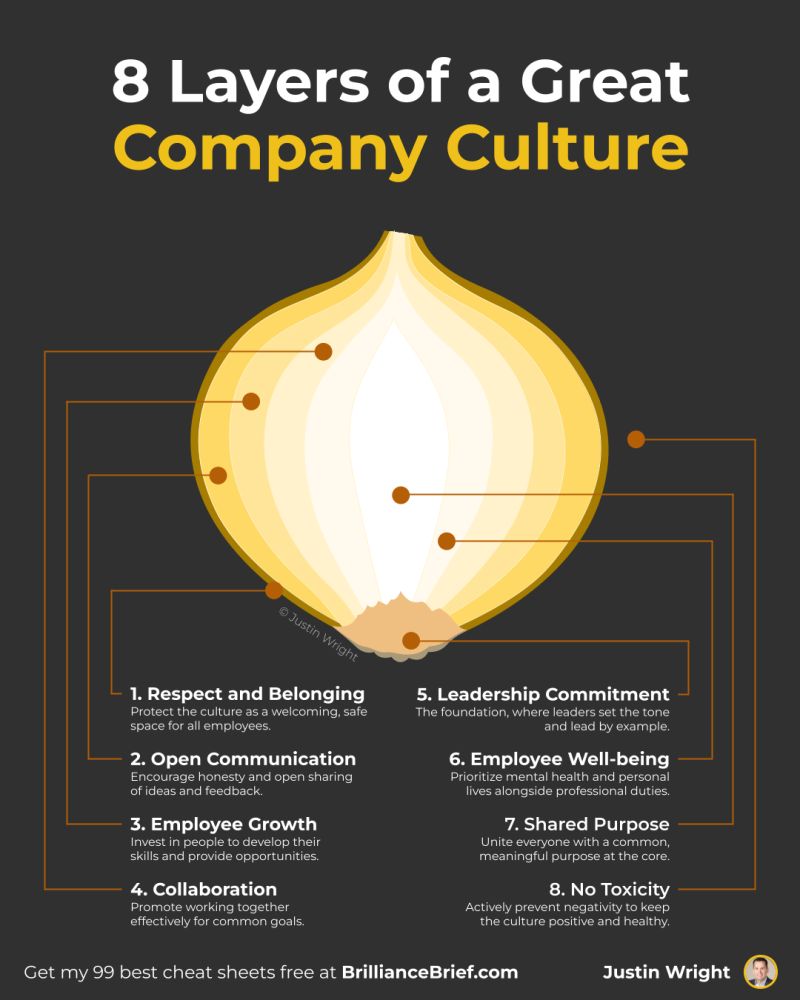
77% of people say culture affects job performance.
The other 23% don’t know it does. Here’s why:
Imagine spending your day in a place where you feel:
• Isolated
• Invisible
• Unheard
• Stressed
• Powerless
• Controlled
• Intimidated
• Overworked
• Out of place
• Disrespected
• Unappreciated
• Micromanaged
Not fun, right?
Now imagine a workplace where you feel:
• Appreciated
• Empowered
• Connected
• Respected
• Supported
• Motivated
• Confident
• Inspired
• Trusted
• Valued
• Heard
• Safe
That’s the power of culture.
Culture is more than just values or rules.
➟ It’s how people treat one another.
➟ It’s the feeling you get at work every day.
➟ It’s what makes you want to go to work (or not).
But why does it matter so much?
Because a great culture leads to happier employees.
And happy employees are more motivated.
✅ They care more about the work they do.
✅ They’re more creative and innovative.
✅ They take better care of customers.
✅ They stay with the company longer.
Leaders, listen up!
You are the cultivators of culture.
You set the tone with your:
➡️ Words
➡️ Actions
➡️ Example
And, with what you tolerate 👀.
Want to boost performance?
Have happier, more motivated employees?
Start by nurturing a culture where everyone can feel:
• Supported
• Included
• Trusted
• Valued
Here’s how:
1. Listen More
Ask for feedback and act on it.
2. Build Trust
Be transparent. Keep promises. Trust your team.
3. Recognize Efforts
Say “thank you.” Celebrate wins, big and small.
4. Support Growth
Offer training. Help with career paths. Let people grow.
5. Prioritize Well-Being
Offer flexible hours. Make sure they don’t burn out.
6. Encourage Collaboration
Create a sense of community where everyone belongs.
7. Lead by Example
Be kind. Be fair. Be honest.
With these steps, you can transform your workplace.
Or protect the great culture you already have.
It’s not just good for your people.
It’s good for your business, too.
Culture matters. Make yours count.
Have you seen culture affect job performance?
 Kenrick Vaz