The Moment Your Feet Leave the Ground

There’s a very specific kind of fear that shows up right before change. It’s not loud panic. It’s quieter than that. It’s the hesitation that says, What if this doesn’t work? The pause that keeps you standing at the edge, convincing yourself that waiting a little longer is the responsible thing to do.

Most of us know that feeling well.

It shows up when you’re thinking about leaving a job that no longer fits, even though it still pays the bills. When you’re considering having a hard conversation you’ve been rehearsing in your head for months. When you feel the pull to start something new—a project, a habit, a relationship, a version of yourself—but can’t quite bring yourself to move.

Fear has a way of dressing itself up as logic. It tells you you’re being practical. That you’re being patient. That now isn’t the right time. And sometimes, yes, waiting is wise. But other times, waiting is just fear wearing a very convincing disguise.

The truth is, the scariest jumps usually feel scary because they matter.

If it didn’t matter, there wouldn’t be fear. You wouldn’t feel that tightness in your chest or that loop of overthinking in your head. You’d just do it and move on. Fear often shows up at the doorway of growth, not because you’re about to fail, but because you’re about to change.

What rarely gets talked about is what happens when you don’t jump.

At first, nothing dramatic. Life keeps going. You tell yourself you’ll revisit the idea later. Weeks turn into months. Months turn into years. And slowly, that edge you once stood on starts to fade from view. Not because the opportunity disappeared, but because you adjusted to staying put.

Staying feels safe in the short term. It’s familiar. Predictable. You know how to survive here. But over time, staying comes with a quieter cost. Regret doesn’t usually hit all at once—it accumulates. It’s the nagging thought of I wonder what would have happened if I tried. It’s the low-grade dissatisfaction that creeps in when you realize you’re repeating the same year over and over, just with different dates on the calendar.

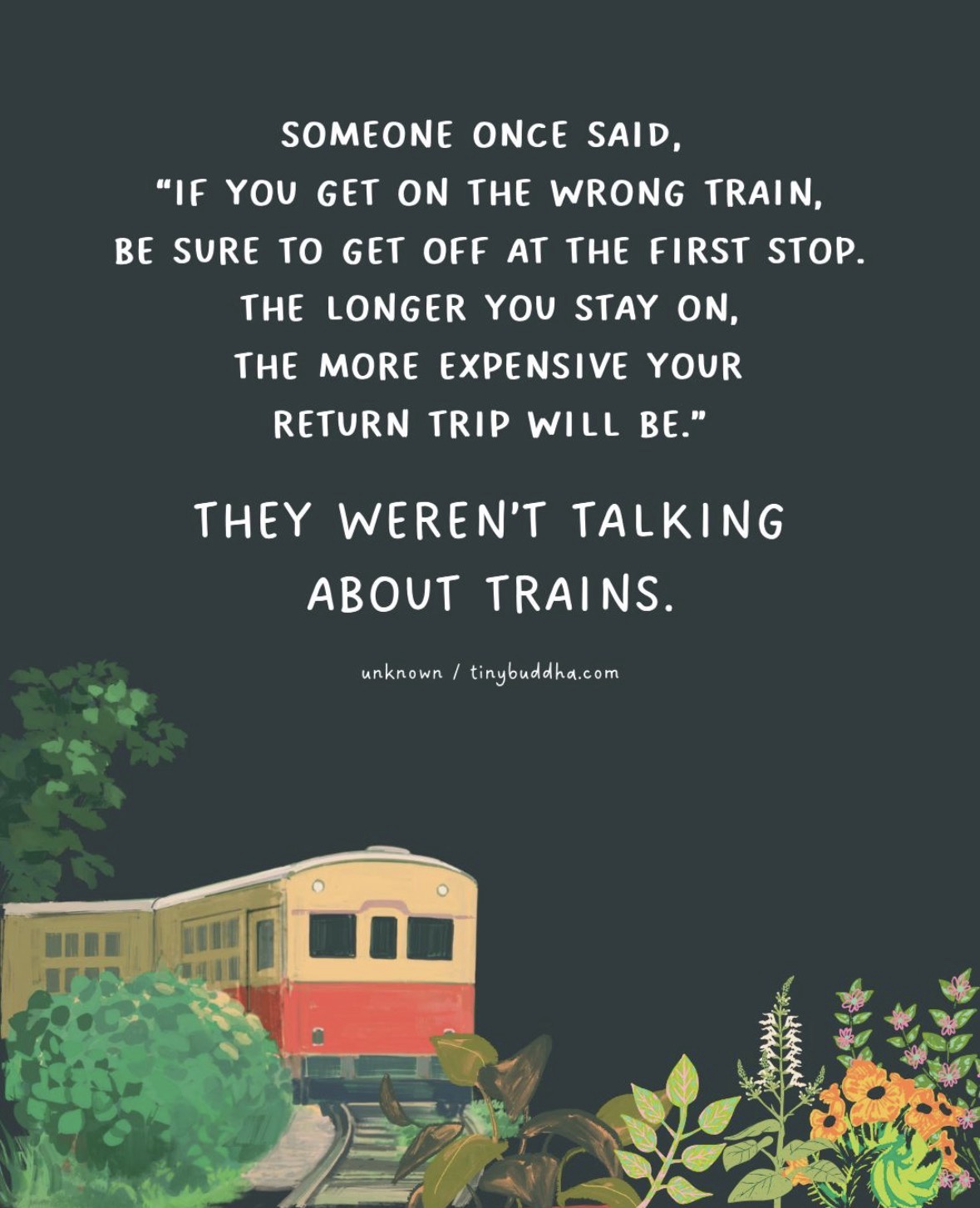
Jumping doesn’t guarantee success. That part is important to say out loud. You can jump and still stumble. You can jump and realize you misjudged something. You can jump and have to course-correct midair.

But here’s the difference: when you jump, you’re moving. When you don’t, you’re frozen.

Movement creates options. Momentum creates learning. Even a “failed” jump teaches you more than standing still ever will. You learn what you’re capable of. You learn what doesn’t work. You learn that you can survive uncertainty, which is a lesson that quietly changes everything.

Most people who look back on their lives don’t regret the jumps they took. They regret the ones they talked themselves out of. The call they didn’t make. The risk they delayed until it felt safe—and never did. The version of themselves they kept postponing.

Fear doesn’t go away before you jump. That’s another lie we often wait for. Confidence rarely arrives first. It usually shows up after action, not before it. You don’t jump because you’re fearless. You jump because you decide that staying stuck is scarier than trying.

And yes, your legs might shake. Your voice might crack. You might not feel ready. But readiness is overrated. Most meaningful things in life are done slightly unprepared.

Jumping doesn’t have to mean blowing up your entire life overnight. Sometimes it’s a small step that still feels terrifying because it breaks inertia. Sending the email. Signing up. Saying no. Saying yes. Admitting the truth. Starting before you feel qualified.

Those small jumps add up. They change how you see yourself. You stop identifying as someone who waits and start becoming someone who moves.

If you’re standing at an edge right now, feeling that familiar fear, pay attention. Ask yourself whether this fear is protecting you—or imprisoning you. Ask yourself what staying will cost you a year from now. Five years from now.

Because the real danger isn’t falling. It’s building a life so comfortable and constrained that you never leave the ground at all.

When it feels scary to jump, that’s often the sign.

That’s when you jump.

10 Silent Culture Killers

High-EQ leaders make their people the priority.

10 silent culture killers every leader needs to know:

1. When you don’t communicate or give feedback.
2. When you haven’t set clear job expectations.
3. When you promote the wrong people.
4. When you hold too many meetings.
5. When you fail to support growth.
6. When you let toxic managers stay.
7. When you allow micromanagement.
8. When you don’t manage workloads well.
9. When you allow favoritism in the workplace.
10. When you don’t pay people what they’re worth.

If you care more about your profits than your people,
you’ll eventually have neither.

Business is positive-sum.
They win. You win.
Repeat.

A Key to Conflict

I remember when a comment from a colleague made me feel attacked.

My first reaction was almost the classic “fight or flight”.

Then, instead of becoming a hostage, I remembered a metaphor: to “put the fish on the table.”

It’s a messy, smelly job, and no one wants to do it. However, if you don’t clean it, the fish will just stay there and rot, and everything will worsen.

So, I took a breath and asked the person to have a chat after the meeting. I put the fish on the table, saying something like, “When you said X, I felt Y. Can we talk about it?”

At first it was uncomfortable, but it was worth it. We clarified the intention, the impact, and the misunderstanding.

Our conversation wasn’t simply about that comment; it was instead about how we could work together.

And now our professional relationship is much stronger because we chose to have that conversation, and we trust that we’ll raise any future issue with the same transparency.

Conflict itself isn’t the problem, avoiding conflict is. The “messy” part is where trust is built.

And in reality, we have these conversations because we care, and respect the person, and that’s why it is important to put the fish on the table.

The “fish on the table” metaphor that helped me so much comes from the incredible work of the dear George Kohlrieser, a professor at IMD.

When was the last time that addressing a conflict actually improved a relationship for you?

Tips for Great Product Ideas

Great ideas aren’t found—

They’re shaped step by step:

You don’t need
a “perfect” spark—

Just a system to test
and shape what works.

Here’s how top creators do it:

🟪Dump fast
• Set a 2-minute timer.
• Write every idea without stopping.

🟦Mix & match
• List 3 skills × 3 problems
× 3 formats = 27 new angles.

🟩Check interest
• Search your top 3 ideas.
• If people are already asking, go for it.

🟨Score it
• Rate 10 ideas by fun + money.
• The highest score wins.

🟧Test the twist
• Weird ideas often lead
to the best paths.

🟥Shape & refine
• Group your list.
• Pick the one you still love.
• Make it stronger.

🟫Write the offer
• “I help ___ go from ___ to ___ in ___.”
• Keep it simple, then polish.

‼️Final step:
• Move it to your board
• Raw → Shaping → Ready.

Use our sheet to get the full system
and start turning ideas into products today.

The best products don’t start perfect—

They start proven, shaped,
and ready to sell.

When You Let Gravity Do the Work

A wise man once said, “Don’t seek revenge. The rotten fruits will fall by themselves.”

It sounds simple, almost too calm for a world that constantly nudges us to react, respond, and retaliate. But the older I get, the more this line feels less like a quote and more like a quiet survival strategy.

We’re taught—subtly, sometimes loudly—that if someone wrongs us, we must do something about it. Say something sharp. Prove a point. Even the score. There’s a strange pressure to show that we weren’t weak, that we noticed, that we won’t let it slide. Revenge, in many ways, is marketed as self-respect.

But real life doesn’t work like movies. Revenge rarely delivers closure. It delivers noise. It keeps the wound open longer than it needs to be.

The idea of “rotten fruits falling on their own” assumes something radical: that time, truth, and gravity are far more effective than our interference. Rotten fruit doesn’t need to be yanked off the branch. It reveals itself. It softens, smells, weighs itself down, and eventually drops—often when no one is even paying attention.

People, situations, behaviors—they work the same way.

When someone acts out of jealousy, ego, insecurity, or deceit, it may look like they’re getting away with it. For a while. From the outside, it can feel deeply unfair. You’re left holding your silence while they seem to collect wins. That’s usually the moment when revenge feels tempting. Not because you’re cruel, but because you want balance restored.

But here’s the uncomfortable truth: most consequences don’t arrive dramatically. They arrive quietly.

The person who lies often has to keep lying. The one who manipulates has to keep track of too many versions of themselves. The one who burns bridges eventually runs out of places to stand. None of that requires your involvement. In fact, your involvement often delays the natural fallout.

Revenge pulls you into the same soil that produced the rot in the first place.

There’s also a hidden cost we don’t talk about enough: attention. When you seek revenge, you keep giving mental space to someone who already took enough from you. You replay conversations. You imagine scenarios. You draft responses in your head that will never be sent. That energy doesn’t punish them—it drains you.

Choosing not to retaliate isn’t weakness. It’s restraint. And restraint is a form of power that doesn’t announce itself.

There’s a deep confidence in saying, “I don’t need to prove anything. I don’t need to explain myself to someone committed to misunderstanding me. I don’t need to fight a battle that time is already winning on my behalf.”

This doesn’t mean pretending nothing hurt. It doesn’t mean suppressing anger or bypassing healing. It means processing your emotions honestly, but not turning them into weapons. It means deciding that your peace is more valuable than temporary satisfaction.

One of the hardest parts of this approach is patience. Rotten fruit doesn’t fall on your schedule. Sometimes it hangs there longer than you think it should. Sometimes people applaud it, unaware of the decay beneath the surface. That’s the real test—not whether you believe the fruit will fall, but whether you can live well while it’s still hanging.

And here’s the part that rarely gets mentioned: sometimes the fruit falls, and you’re no longer even around to notice. You’ve moved on. You’ve grown. You’ve found better things to carry. That’s not avoidance—that’s progress.

Life has a way of evening things out, but not always in ways that satisfy our ego. The outcome may not look like justice in bold letters. It may look like distance. Irrelevance. A quiet realization on their part that something keeps going wrong, over and over again.

Meanwhile, your job isn’t to watch the tree. Your job is to tend your own ground.

Protect your character. Protect your time. Protect your capacity to stay soft in a world that rewards hardness. Not every offense deserves a response. Not every slight deserves your voice. Some things deserve only your absence.

When you stop reaching for revenge, you create space for something better—clarity, freedom, and a lighter heart. And eventually, without your help, gravity does what it always does.

The rotten fruits fall.

You don’t have to be standing underneath them.

Bonus Plans

A quick way to destroy trust?

Have a bonus plan no one understands:

If people don’t know how the prize is earned—

You’re not rewarding performance.

You’re just guessing.

And guessing destroys motivation.

Most bonus plans fail because
they’re vague, hidden, and unfair.

Here’s how to fix that:

✅ Pick clear company goals
— No fluff. No buzzwords.
— Just 3 measurable priorities.

✅ Split the bonus 50/50
— Half based on company results.
— Half based on personal goals.
— Fair. Simple. Balanced.

✅ Score company goals
— Only count goals that hit 70% or more.
— If one misses, don’t let it sink the rest.

✅ Track individual goals with numbers
— 3 goals per person.
— Set them early. Score each 0–100%.
— Not just “met” or “not met.”

✅ Use this formula:
— (50% × Company Score) +
(50% × Personal Score) = Final Bonus %
— No guesswork. No surprises.

✅ Apply judgment — and explain it
— Managers can adjust by 10–20% for
things like leadership or extra effort.
— But only with clear reasons.
— And it must be consistent.

This isn’t about money.
It’s about meaning.

It’s how you turn effort into impact—

And loyalty into culture.

The Snowball System

Business development isn’t about big wins on day one.
It’s about building unstoppable momentum…

With the actions you take every day.

✅ One article
✅ One insight
✅ One introduction

These small steps might seem minor at first.
But each one moves you forward.

And over time, they start to work together, building
momentum that leads to real growth.

Here’s how it builds—step by step, like a snowball:

1. The Push (Starting Small)
→ Send something useful
→ Share an insight that helps
→ Make a thoughtful introduction

2. The Roll (Building Consistency)
→ Repeat what works
→ Show up weekly with value
→ Let habits lead the way

3. The Mass (Earning Trust)
→ Add value before being asked
→ Follow through every time
→ Make generosity your default

4. The Force (Accelerating Growth)
→ Your name shows up before you do
→ New opportunities start finding you
→ Growth becomes the natural next step

You don’t need a breakthrough moment to succeed.
You just need to keep moving, one helpful step at a time.

In business development, motion creates opportunity.
And momentum does the rest.

And remember:

Don’t measure replies or results.
Measure what you control: your actions.

That’s the real snowball system.

What’s one small step you can take today to build
your snowball?

Drop it in the comments. 👇
I’d love to hear it.

♻️ Valuable? Repost to help someone in your network.
📌 Follow Mo Bunnell for client-growth strategies that
don’t feel like selling.

P.S. Are you a lawyer looking to grow your legal practice?

I’m cohosting a live webinar on October 1:
Beyond the Billable Hour: Mastering Relationship Development to Build a Thriving Legal Practice

It’s normally a paid event, but I have a code that makes it free for you: BBHCLE25.

💡 Shift from transactions to trust
💡 Focus on the right relationships
💡 Use simple systems to grow consistently

Most lawyers spend years perfecting their craft. But the truth is,
your relationships drive your practice.

Future of Jobs with AI

Future of Jobs with AI

Most career advice for kids is outdated. Especially in the age of AI.


Here’s how I’m preparing my own kid—and what I’d tell any parent asking the same question.

I have thought about this a lot over the last weeks.

The result is this: I have identified 3 future-proof path for our kids (and probably ourselves too!)

1. THE MEGA EXPERT
Their superpower: judgement
Mantra: “An AI can generate answers. I provide the right one.”

What they actually do:
– Spot when AI recommendations ignore real-world signals
– Choose the 1 insight that matters from 1,000 AI-generated options
– Add context, nuance, and “so what?” to raw AI analysis
– Catch flaws in AI forecasts before they mislead leadership

How to become one:
– Get a Master’s degree or specialized certifications
– Become a voracious reader of foundational texts and research
– Find a master mentor with 20+ years in the field
– Practice explaining complexity simply

Hidden risk: Intellectual stubbornness


2. THE AI SAVVY
Their superpower: acceleration
Mantra: “I don’t work harder. I build systems that work for me.”

What they actually do:
– Build internal AI tools (e.g. churn-risk detectors from CRM data)
– Vibe code tools/apps with no-code + LLM APIs
– Launch outbound campaigns with AI-personalized messaging
– Automate workflows using LLMs and APIs

How to become one:
– 2h Daily practice with AI tools (ChatGPT, Claude, Lovable)
– Build small AI projects to solve real problems
– Mastering prompt engineering (I have FREE infographics + courses about this, go to my page & follow)
– Think like an engineer: “Where’s the friction AI can remove?”

Hidden risk: Superficiality where you become a jack of all tools with no depth or impact


3. THE META HUMAN
Their superpower: influence
Mantra: “The best algorithm can’t close a deal or inspire a team. I can.”

What they actually do:
– Mediate conflicts between data and intuition-driven teams
– Present complex AI plans persuasively to the board
– Sense what AI can’t like human nuance, company politics, taste
– Lead cross-functional teams with psychological safety

How to become one:
– Study human nature
– Seek high-stakes communication roles
– Learn to lead without a title
– Practice active listening

Hidden risk: Strategic miscalculation—ignoring what AI can/can’t do and risking poor judgment

You don’t need to master all 3 right now.
Here is what you can do:
– Choose one of these 3 as your major
– But also one of them to develop as your minor

Which of the 3 personas do you see yourself becoming?

Still Early. Still Becoming. Still Yours.

There’s a quiet kind of power in realizing that the voice in your head is not always telling the truth. Especially the one that whispers limits. The one that says you’re late, behind, not ready, not capable enough. That voice sounds convincing because it’s familiar, not because it’s right.

You are more than you think you’re capable of. Not in a loud, chest-thumping way. In a steady, grounded, lived-in way. The kind that doesn’t announce itself, but shows up anyway.

Think about how many things you’ve already survived that once felt overwhelming. Moments you didn’t feel prepared for. Seasons you didn’t choose. Conversations you didn’t want to have. And yet, here you are. Not untouched, maybe a little wiser, maybe a little tired, but still standing. Still learning. Still moving.

That didn’t happen by accident.

You showed up for yourself when it would’ve been easier to disappear into distraction or doubt. You got out of bed on days when motivation was nowhere to be found. You kept going even when progress felt invisible. That counts. More than you give yourself credit for.

We often underestimate ourselves because we’re measuring against imaginary timelines. Someone else’s highlight reel. Someone else’s chapter five while we’re still rereading chapter two. We forget that growth isn’t linear and life isn’t a race with a shared finish line. It’s a collection of moments where you choose to try again, even when you’re unsure.

You can handle what’s coming. Not because everything will be easy, but because you are adaptable. Because you’ve learned how to bend without breaking. Because you’ve built resilience quietly, over time, through experience rather than intention.

Strength doesn’t always feel like strength when you’re in it. Sometimes it feels like showing up tired. Like asking for help. Like taking one small step instead of the giant leap you thought you needed. Sometimes it looks unimpressive from the outside. But it’s real.

And no, you’re not too late.

That idea is one of the most damaging lies we carry. As if life shuts its doors at a certain age. As if opportunity checks a calendar before showing up. As if growth has an expiration date.

It doesn’t.

You’re allowed to begin again. You’re allowed to pivot. You’re allowed to want different things now than you wanted before. You’re allowed to outgrow old versions of yourself without apologizing for it.

2026 doesn’t need you to be perfect. It doesn’t need a fully formed plan or a dramatic reinvention. It just needs your honesty. Your willingness. Your presence.

Your journey didn’t end because a year changed. In many ways, it just began—because now you know yourself better than you did before. You know what drains you. You know what matters. You know where you’ve been pretending you can’t when you actually can.

This is not the year to disappear into comparison or self-doubt. It’s the year to trust the quiet work you’ve been doing. To believe that consistency will take you further than intensity ever could. To remember that becoming yourself is not a destination, it’s a practice.

Some days you’ll feel confident. Other days you won’t. Both are okay. Progress isn’t about feeling unstoppable all the time. It’s about continuing even when you feel unsure.

So take a breath. You don’t need to rush. You don’t need to prove anything to anyone. Just keep showing up. Keep choosing yourself. Keep believing that the story isn’t finished yet.

Because it isn’t.

You’re capable of more than you think.

You’re stronger than you realize.

And you’re right on time—for your life.

Still Standing

God’s faithfulness isn’t proven by what He removes –

but by what He carries you through.

Some things didn’t disappear.

Some prayers weren’t answered the way you hoped.

Some battles lasted longer than expected.

And yet…

you’re still here.

Still breathing.

Still believing.

Still standing – not because it was easy, but because grace was sufficient.

God doesn’t always change the situation.

Sometimes He changes your strength, your endurance, your depth.

And that kind of faith?

It lasts longer than a quick rescue.

If God carried you through something He didn’t remove, put “Still standing.”