
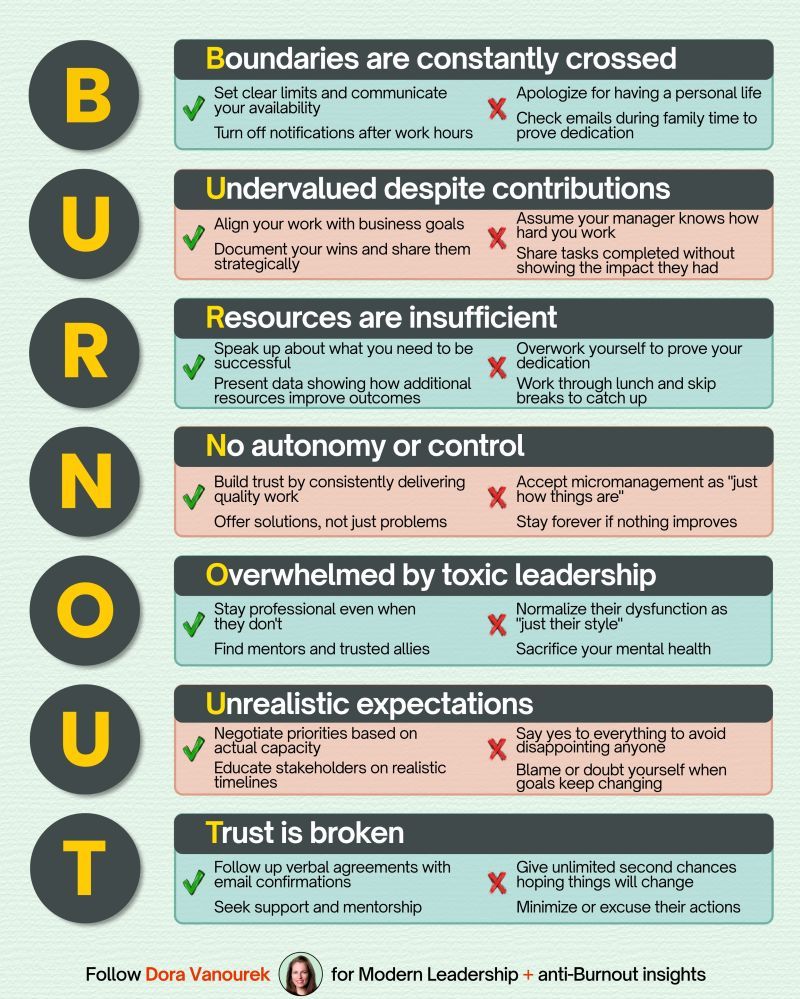
Cutting your hours to avoid burnout is like
spending less time in a toxic relationship to fix it.
It doesn’t solve the real problem.
Burnout isn’t just about long hours.
It’s about what’s draining your energy every day:
B – Boundaries are constantly crossed
✅ Set clear limits and communicate your availability
❌ Apologize for having a personal life
U – Undervalued despite contributions
✅ Document your wins and share them strategically
❌ Share completed tasks without showing the impact
R – Resources are insufficient for workload
✅ Speak up about what you need to be successful
❌ Overwork yourself to prove your dedication
N – No autonomy or control
✅ Propose solutions, not just problems
❌ Accept micromanagement as “that’s how things are”
O – Overwhelmed by toxic leadership
✅ Protect your energy and seek allies
❌ Sacrifice your mental health
U – Unrealistic expectations
✅ Negotiate priorities based on actual capacity
❌ Say yes to everything to avoid disappointing anyone
T – Trust is broken
✅ Follow up verbal convos with email trails
❌ Give unlimited second chances
You aren’t here just to survive another week.
You deserve to thrive, feel good, and love your life.
The Feeling People Carry After Working With You
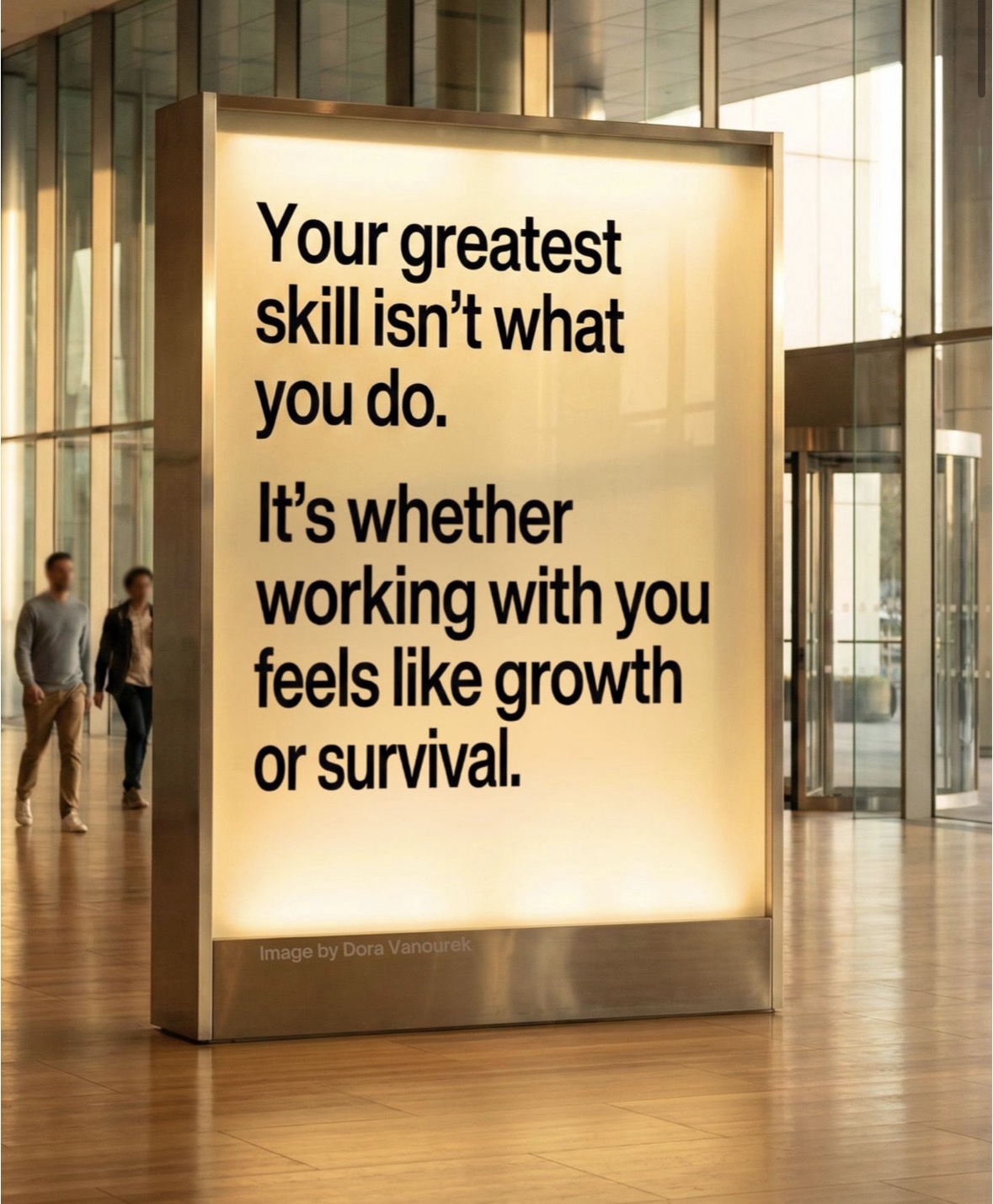
There’s a lot of emphasis on skills these days. What you know. What you’ve shipped. How fast you can deliver. The stack you’ve mastered. The results you can point to on a slide. All of that matters, of course. Competence is table stakes. But it’s rarely the thing people remember most.
What lingers is the feeling.
People may forget the exact details of a project, but they never forget what it felt like to work with you. Whether conversations left them clearer or more confused. Whether meetings drained them or energized them. Whether collaboration felt like a shared climb or a constant battle for air.
That’s where your real reputation is formed.
Some environments feel like growth. You leave a conversation sharper than you entered. You feel challenged, but supported. There’s space to ask questions without fear. Mistakes are addressed, not weaponized. Feedback is honest, but never demeaning. Even on hard days, there’s a sense that you’re moving forward together.
Other environments feel like survival. You’re constantly bracing yourself. Reading between the lines. Protecting your energy. Doing just enough to stay afloat. Every interaction feels like a test, a trap, or a threat. Progress happens, maybe—but at a personal cost that quietly accumulates.
The uncomfortable truth is that two people can deliver the same results and leave wildly different impacts. One can make a team better, stronger, more confident. The other can burn people out while hitting every milestone.
And often, neither realizes the difference they’re creating.
This isn’t about being “nice” all the time or avoiding difficult conversations. Growth is rarely comfortable. Real progress involves tension, disagreement, and accountability. But there’s a world of difference between pressure that sharpens and pressure that suffocates.
When someone works with you, do they feel seen or managed? Do they feel trusted or monitored? Do they feel like their ideas are welcome, or merely tolerated until a decision is already made?
Small moments matter more than we think. How you respond when someone pushes back. How you handle stress when things go wrong. Whether you listen to understand or listen to reply. Whether your presence makes the room feel safer—or smaller.
Over time, those moments add up.
People start to associate your name not just with outcomes, but with an experience. They know whether bringing you into a room will raise the level of thinking or raise everyone’s blood pressure. They know whether working with you will stretch them in a good way or leave them exhausted.
The most impactful professionals aren’t just good at what they do. They make others better at what they do. They create momentum instead of friction. They leave behind confidence, clarity, and a sense of progress—even when the work is hard.
That’s a skill no résumé can fully capture, but everyone can feel.
So maybe the real question isn’t how impressive your work looks from the outside. It’s what kind of environment you create on the inside. Because long after the project ends, that’s what people carry with them.
And that might be your greatest skill of all.
10 Boundary Tests You Didn’t Know Existed

Your boundaries are being tested daily.
Most people fail without realizing it.
People don’t announce “I’m testing your boundaries now.”
They do it subtly, constantly, to see what you’ll accept.
Here are 10 boundary tests happening right now:
1) 📅 Last-Minute Meeting Request
↳ Test: Will you drop everything for poor planning?
↳ Pass: “I can meet Thursday at 2pm. Does that work?”
2) 📱Weekend “Quick Question” Text
↳ Test: Are your personal hours protected?
↳ Pass: Respond Monday: “Catching up on weekend messages…”
3) 😔 Guilt Trip for Saying No
↳ Test: Can they manipulate you into changing your mind?
↳ Pass: “I understand you’re disappointed. My answer remains no.”
4) 🕰️ Assumption You’ll Stay Late
↳ Test: Will you sacrifice personal time without being asked?
↳ Pass: “I have commitments at 6pm. Let’s tackle this tomorrow.”
5) 🏆 Credit-Taking Behavior
↳ Test: Will you let them claim your work?
↳ Pass: “Actually, I developed that strategy. Happy to walk you through it.”
6) ⚡ Response Time Pressure
↳ Test: Can they train you to be instantly available?
↳ Pass: Respond when it works for your schedule, not theirs.
7) ❌ Constant Interruption Pattern
↳ Test: Can they access you anytime they want?
↳ Pass: “I’m in focused work until 2pm. Can we talk then?”
8) 📚 Overloading Assignment
↳ Test: How much can they pile on before you push back?
↳ Pass: “I can take this on if we extend the deadline to…”
9) 🎭 Personal Favor Disguised as Work
↳ Test: Can they get free personal help under work pretense?
↳ Pass: “This seems personal. Happy to refer you to someone who specializes in this.”
10) 🗣️ Emotional Dumping Session
↳ Test: Will you become their free therapist?
↳ Pass: “This sounds tough. Have you considered talking to someone professional?”
Your boundaries aren’t suggestions.
They’re non-negotiable standards.
The people who respect them stay.
The ones who don’t reveal exactly who they are.
Which boundary test do you recognize most in your daily work life?
Win Back Your Time
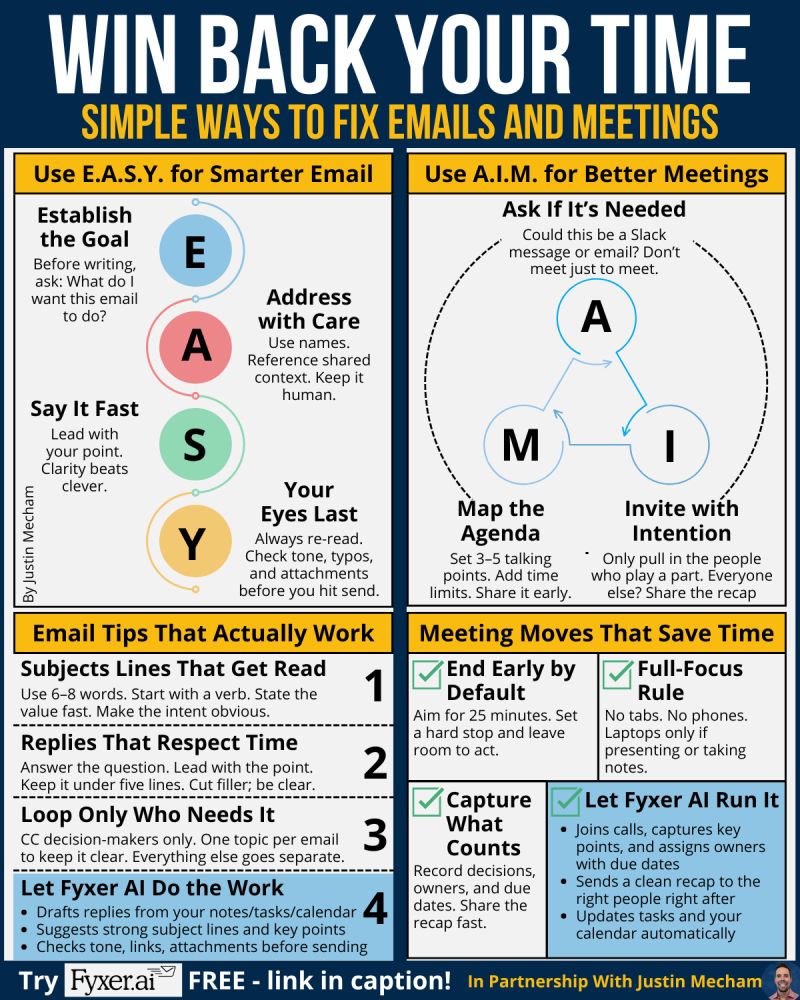
You lose 4+ hours daily to email and meetings—
Here’s how to win back your time:
The real enemy isn’t time.
It’s the friction in how we communicate.
Every day, it’s the same cycle:
🚫 Emails that spiral into threads
🚫 Meetings that are managed poorly
🚫 Decisions that are dragging out for days
The numbers are brutal:
🗓 Email and poorly handled meetings
— Consumes over half the workweek
(Microsoft)
That constant churn:
🔴 Drains focus
🔴 Slows decisions
🔴 Crowds out real work
Want to win back those hours each week?
🟢 Drafts clear, on-point replies
using your notes, calendar, and tasks
🟢 Joins meetings, captures key points,
and assigns owners with deadlines
🟢 Sends clean recaps so nothing slips
If you cut even 30 minutes a day from emails
and by making meetings more effective,
you save 3+ weeks a year.
That’s time you can spend on actual work…
Or on a life outside of it.
Priority

A bloated calendar isn’t a badge of honor.
It’s a red flag.
Most leaders confuse motion with progress.
Here’s the truth:
Busy doesn’t mean effective.
It means distracted.
If you’re chasing tasks instead of outcomes,
you’re not leading, you’re reacting.
Here’s the formula elite leaders use to decide what *actually* matters:
– Purpose before productivity
– Ruthless elimination
– Impact over activity
– Own your calendar
– Review weekly
– Identify energy peaks
– Think in systems
– Your time = your legacy
Time doesn’t get managed.
It gets owned.
Still Standing, Even When It Drizzles

There’s a quiet confidence that comes from having lived through enough hard seasons. Not the loud, chest-thumping kind. The kind that settles into your bones. The kind that changes how you react when life throws something small but annoying your way. Because when you’ve survived real storms, raindrops don’t get the same reaction anymore.
Storms teach you things nothing else can. They strip away illusions. They test your limits. They force you to find strength you didn’t know you had, patience you didn’t ask for, and resilience you didn’t plan on developing. And once you’ve walked through a few of those, something shifts inside you.
You stop panicking at every dark cloud.
You stop treating every inconvenience like an emergency.
You stop giving your energy to things that would have once rattled you.
That doesn’t mean you’re numb. It means you’re wiser.
There was a time when every delay felt personal. Every setback felt like failure. Every comment lingered longer than it should have. You replayed conversations, worried about outcomes, questioned your worth. Back then, the smallest drizzle could ruin your entire day.
But life had other plans. It introduced you to loss. To uncertainty. To moments where there was no quick fix, no shortcut, no reassurance. Moments where all you could do was keep going, even when you were tired of being strong.
And you did.
That’s the part people don’t always see. They see you calm now. Grounded. Unbothered. They mistake it for indifference. But it’s not that you don’t care. It’s that you’ve learned where your care actually belongs.
You’ve learned that not every problem deserves a reaction.
Not every opinion deserves space in your head.
Not every rough day deserves to steal your peace.
Storms refine your priorities.
When you’ve had your foundations shaken, you become protective of what keeps you steady. Your time. Your energy. Your inner quiet. You start choosing rest without guilt. Silence without explanation. Distance without apology.
You realize that resilience isn’t about pushing harder all the time. Sometimes it’s about knowing when not to push at all.
There’s also a deep kindness that comes from surviving storms. You recognize struggle in others more easily. You listen differently. You offer grace because you remember what it felt like to need it. You don’t rush people through their pain, because you know healing isn’t linear.
And yes, there are still days when the rain feels heavier than it should. You’re human. Strength doesn’t mean you never feel tired. It means you don’t doubt yourself when you do. You trust that you’ll find your footing again, because history says you always have.
That trust is earned.
It comes from the nights you thought you wouldn’t get through.
The mornings you showed up anyway.
The chapters you never thought would end, but did.
So when something small goes wrong now, you pause instead of spiraling. You breathe instead of bracing. You remind yourself that this isn’t new territory. You’ve navigated worse.
Raindrops don’t scare someone who knows how to rebuild after a flood.
And maybe that’s the quiet gift of everything you’ve endured. Not that life gets easier, but that you get steadier. You stop measuring your strength by how little you feel, and start measuring it by how well you recover.
You don’t need to prove anything anymore.
You don’t need to react to everything.
You don’t need to explain how you got here.
You’re here because you survived.
And that’s why the rain can fall without shaking you.
Let it come.
You know how to stand.
Great Leaders

Great leaders don’t climb to the top alone.
They build ladders for others.
I’ve watched this truth play out for years.
12 signs you’re working with a true leader:
💡 They Ask Better Questions
Not to prove they’re smart.
But to help others find their answers.
💪 They Choose With Courage
No endless debates.
No death by committee.
They listen, decide, and move forward.
🏆 They Share the Spotlight
Team gets the wins.
They own the setbacks.
Every single time.
⭐️ They Stand for What’s Right
Even when profits take a hit.
Even when no one’s watching.
Even in the hardest moments.
🚀 They Welcome New Ideas
Different thinking isn’t threatening.
It’s how we all grow stronger.
📍 They Paint Clear Pictures
Everyone sees the destination.
Everyone knows their part.
The path might be tough, but the goal shines bright.
🌊 They Stay Steady in Storms
Markets shift. Competition grows.
They keep the team focused and calm.
🤝 They Trust Their People
No hovering. No controlling.
Just clear space to do great work.
👂 They Listen Deeply
Not waiting for their turn.
Truly trying to understand.
🎯 They Make Things Clear
Complex problems become simple steps.
Everyone knows what’s next.
📈 They Guide Growth
Direct enough to help you improve.
Kind enough to make you want to.
🔭 They See Tomorrow
While others chase quick wins,
they’re building what lasts.
Your legacy isn’t in your climb.
It’s in who you lift up along the way.
It’s in the ladders you leave behind.
Ask yourself:
Are you climbing alone?
Or are you building ladders?
That’s the difference between good and legendary.
The Art of Strategy

Strategy isn’t a slide.
It’s how you decide what gets funded, what gets killed, and what gets shipped.
When you’re the founder, clarity is leverage.
Every “yes” drains runway.
Every “no” protects momentum.
The fastest-growing companies don’t just build hard.
They decide better.
Because they filter every GTM move through a lens that forces tradeoffs.
Here are 6 tools—rewired for founders who have to execute:
→ Cut faster
→ Align tighter
→ Build trust through clarity
Most don’t use them.
Not because they’re broken—
But because they surface truths most teams avoid.
𝗧𝗵𝗲 𝗿𝗲𝗮𝗹 𝘀𝘁𝗿𝗮𝘁𝗲𝗴𝘆?
It’s not what you think.
It’s what you’re finally willing to stop doing.
💬 Which of these would make your team uncomfortable to run this week?
You are being let go

You lost your job—
You didn’t lose your worth:
That role was a chapter, not your story.
Getting let go isn’t the end—
It’s a sharp turn you didn’t ask for.
But you can still choose where the road goes.
Most people freeze.
Some spiral.
Very few move with intention.
So here’s the plan:
📍Choose your next step based
on what you need most—
not what others
expect.
4 Mindsets for getting let go:
🔵 ACCEPT: stay calm and clear-headed
→ Ask direct questions
→ Exit with professionalism
→ Focus on facts, not feelings
🟢 BRAVE: respond with dignity
→ Treat this as a pivot, not a failure
→ Say thank you anyway
→ Pause before reacting
🔴 RESET: reframe the story
→ Close the door kindly
→ Lean on trusted support
→ A lost job doesn’t mean lost worth
🟡 RISE: move forward
→ Rebuild your resume and your next step
→ Elevate what’s next over what’s gone
→ Reflect without blame
The role ended. That’s all that ended.
Your talent, your story, your future —
Still intact.
You’re not broken. You’re in between chapters.
Now you get to build what comes next —
On your terms.
The Quiet Power of Not Forcing It
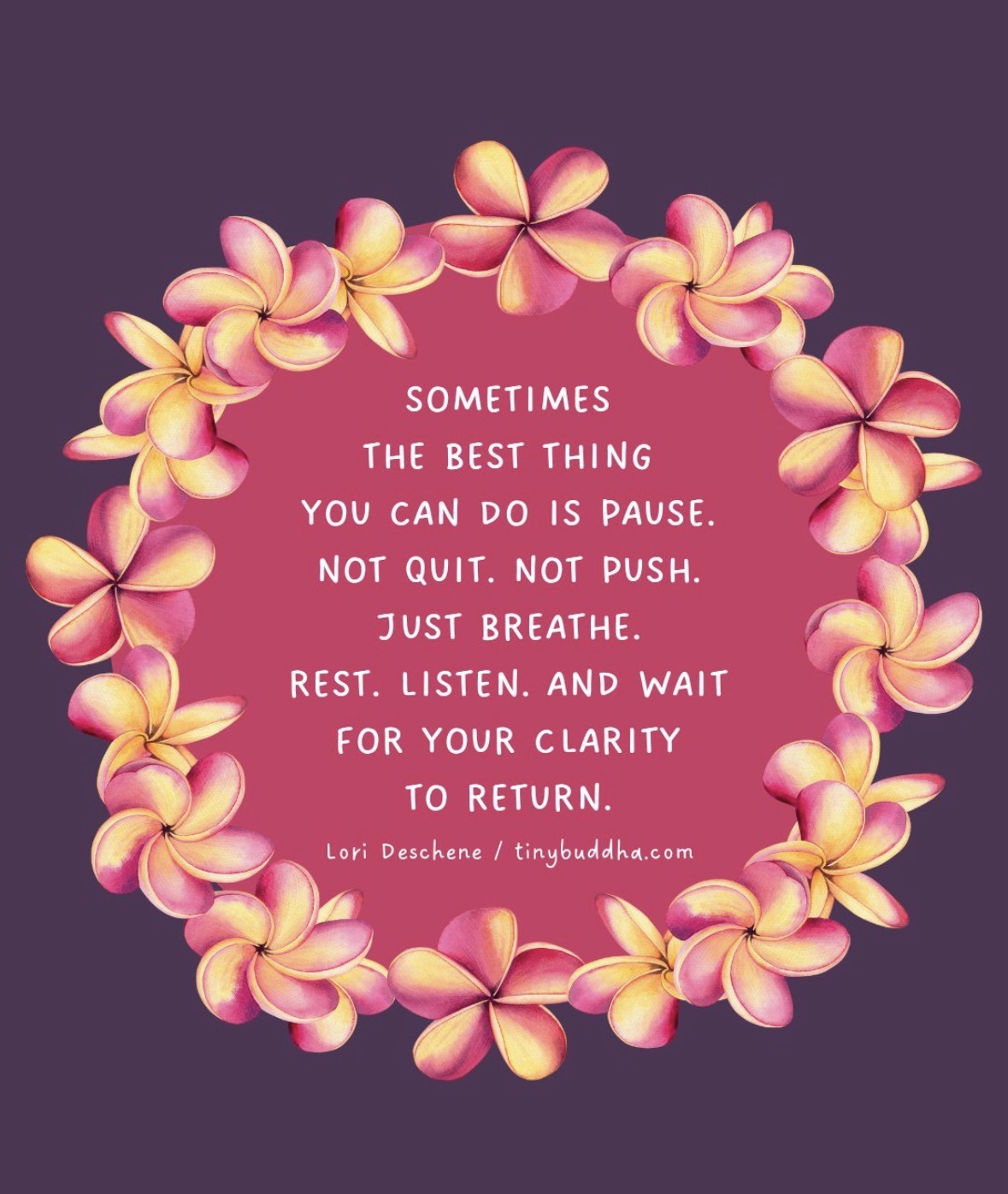
We live in a world that treats momentum like a moral virtue. If you’re not moving forward, you must be falling behind. If you’re tired, the answer is more effort. If you’re unsure, the solution is to decide faster. Push through. Hustle harder. Figure it out on the fly.
But sometimes the bravest, wisest thing you can do is stop.
Not quit. Not give up on the dream or abandon the work you care about. Just pause.
There’s a difference, even though the world loves to blur it. Quitting is walking away because you no longer believe. Pausing is staying because you do—but you recognize that something inside you needs space to breathe.
Most of us don’t pause because we’re lazy. We avoid pausing because we’re afraid of what we’ll feel when things go quiet. Without the noise of productivity and constant motion, the doubts get louder. The fatigue becomes undeniable. The truth you’ve been outrunning taps you on the shoulder and asks to be heard.
So we keep going. We push past the tightness in our chest, the dullness in our thinking, the irritability that shows up in conversations we care about. We tell ourselves rest will come later—after this deadline, this milestone, this phase of life. And somehow, later never arrives.
The problem is that clarity doesn’t respond well to force. You can’t bully your way into insight. You can’t exhaust yourself into wisdom. The harder you push when you’re depleted, the further clarity seems to drift away.
Pausing isn’t doing nothing. It’s doing something very specific and very intentional. It’s choosing to breathe instead of react. To rest instead of prove. To listen instead of fill the silence with noise.
When you pause, you give your nervous system permission to settle. You let your thoughts slow down enough to sort themselves out. You create room for your intuition—the quiet, easily drowned-out voice that usually knows what you need long before your mind catches up.
Think about the moments when things finally made sense for you. The decision that became obvious. The next step that suddenly felt clear. Chances are, it didn’t happen in the middle of frantic activity. It happened in the shower, on a walk, late at night when everything else went still. Clarity tends to arrive when it’s invited, not demanded.
Rest has a bad reputation. It’s often confused with weakness or indulgence. But real rest is disciplined. It requires honesty about your limits and courage to respect them. It means trusting that you don’t have to constantly perform in order to be worthy of progress.
Listening is just as uncomfortable. When you slow down, you might hear that you’ve been saying yes to too many things. Or that you’ve been carrying expectations that aren’t yours. Or that the path forward isn’t wrong—it just needs to be walked at a different pace.
Waiting, too, feels countercultural. We’re taught that waiting is wasted time. But waiting, when done with intention, is active. It’s observing patterns. Noticing what pulls at you even when you stop pushing. Letting the fog thin on its own instead of thrashing around inside it.
This kind of pause doesn’t last forever. It’s not an escape from responsibility. It’s a recalibration. A return to center. And when clarity does come back—and it usually does—it tends to be quieter but stronger. Less frantic. More grounded.
You move again, not because you’re panicking, but because you know. The step feels steadier. The direction feels truer. The effort feels aligned instead of desperate.
So if you’re in a season where everything feels heavy, unclear, or just slightly off, consider the possibility that the answer isn’t more pressure. It might be less.
Pause. Breathe. Rest your mind and body. Listen without rushing to fix. Wait without judging yourself.
You’re not falling behind. You’re giving clarity the time and space it needs to find you again.
 Kenrick Vaz