THE ONLY OPINION THAT BUILDS YOU

There’s a point in life when you realise the world has a lot to say about you—some of it good, some of it unnecessary, and some of it completely made up. People observe, assume, judge, measure, compare, and conclude… all without actually knowing the chapters you’ve lived. And for the longest time, you might carry those opinions on your shoulders as if they’re weights you’re obligated to hold.

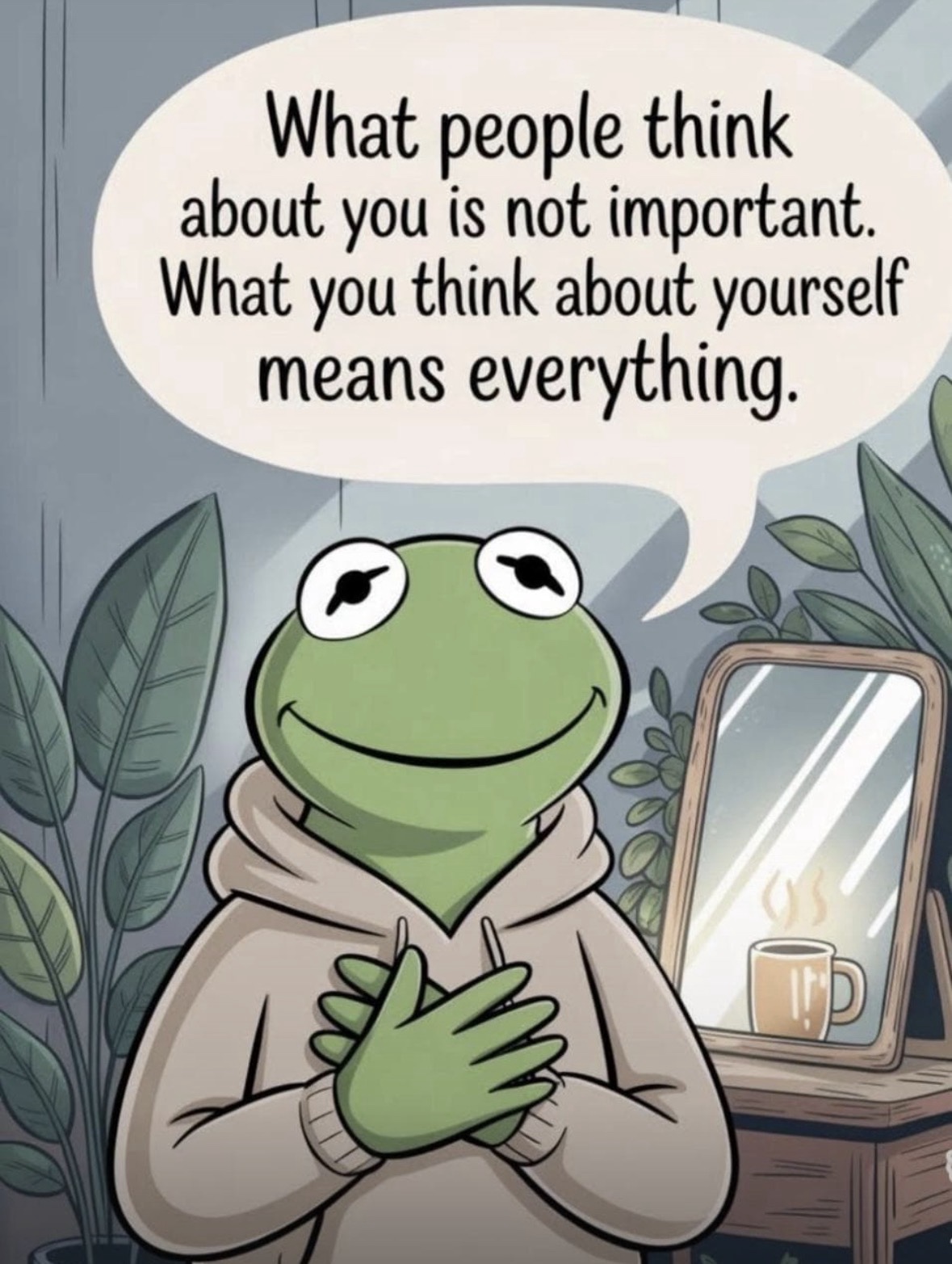
Then one quiet moment hits you—maybe on a random evening, maybe in the middle of a tough week—and you finally see it clearly: what people think about you isn’t your responsibility. It never was. Their opinions don’t define you. They don’t pay your bills, they don’t heal your wounds, and they certainly don’t build your future. They’re just noise in the background.

But what you think about yourself? That’s everything. That’s the root system under your feet. That’s the voice you wake up with and fall asleep to. That’s the truth that shapes how you walk into a room, how you take decisions, how you bounce back after setbacks, and how you rise into the version of yourself you’re slowly becoming.

It’s funny how we’re trained to seek approval from outside when the real approval that changes your life comes from within. Imagine how much energy you free up when you stop rehearsing other people’s opinions in your mind. Imagine how much lighter life feels when you stop trying to meet expectations that were never yours to begin with. You stop performing. You start living.

And here’s the shift that matters: the moment you genuinely like who you are becoming, the outside world loses its power over you. You don’t need validation. You don’t need applause. You don’t need everyone to understand your journey. You realise your self-worth isn’t a public vote—it’s a personal decision.

There’s a calm confidence in knowing yourself deeply. In recognising your intentions, your effort, your values, and your heart. In being proud of how you treat people, how you show up, and how you keep moving even on days no one sees. That self-belief? That’s the real foundation. It makes you steadier. It gives you clarity. It gives you freedom.

People will always talk. People will always assume. People will always misunderstand something. But you don’t need to correct every narrative. You don’t need to chase every misperception. Your life isn’t a PR campaign. It’s a journey. And the only voice that should matter most is the one that lives inside you.

So hold your head a little higher today. Speak a little kinder to yourself. Trust your path a little more. Stand by your choices. Stand by your progress. Stand by the person you’re becoming.

Because at the end of the day, what people think about you is just echo.

What you think about yourself?

That’s the truth you build your entire life on.

Effective Communication

Why some conversations stick and others don’t?

Last week, I re-watched Amy Cuddy’s famous TED talk about power posing.

She explained the same concept three different ways.
First with data, then with a story, finally with a live example.
By the third explanation, everyone got it.

That’s Alan Alda’s communication advice for me: our brains are terrible at holding onto new information.

We need repetition, but not the boring kind.

She didn’t just say “confident posture makes you confident” three times.
She showed the hormone research (testosterone +20%, cortisol -25%).
Then she shared her personal brain injury story.
And finally she had everyone strike a Wonder Woman pose.
Same insight, three completely different ways in.

Here’s what I’ve learned works:

Keep it to three main points, instead of cramming everything into a powerpoint.

Explain the same idea differently multiple times. Like sharing data, telling a story about it, and using an analogy or demo.

Repeat important things multiple times (not word-for-word). Introduce an idea, expand on it, then recap at the end.

The real insight isn’t the technique.

It’s that communication fails when we forget we’re talking to humans, not information-processing machines.

When was the last time someone explained something so well that you immediately ‘got it’? What did they do differently?

McKinsey’s 7S Model

Every high-performance organization runs on 7 engines:

SHARED VALUES – The Mission Engine
↳ The core beliefs everyone shares
↳ Guides choices without asking
↳ Skip this? Teams pull apart

STRATEGY – The Direction Engine
↳ Your plan to beat the competition
↳ Shows what matters most
↳ Get it wrong? Everyone’s confused

STRUCTURE – The Organization Engine
↳ Clear roles and decision rights
↳ Makes things fast or slow
↳ Mess up? Everything stalls

SYSTEMS – The Process Engine
↳ Your step-by-step playbooks
↳ Makes success repeatable
↳ Skip this? Start from zero daily

STYLE – The Leadership Engine
↳ What leaders do, not what they say
↳ Creates the real culture
↳ Fake it? Teams know

STAFF – The Talent Engine
↳ Right people in right seats
↳ All rowing the same way
↳ Wrong fit? Nothing works

SKILLS – The Capability Engine
↳ The abilities that matter
↳ Built by doing, not reading
↳ Don’t have them? You lose

The pattern never changes:

🟢 Great companies align all 7
🟡 Stuck companies fix only 3-4
🔴 Failing companies ignore 5+

Key truths:

✓ Fix one, affect all others
✓ Small gaps become big problems
✓ Most leaders can’t see the whole picture
✓ The “soft” stuff breaks you

Big mistakes leaders make:

❌ Think new org charts fix culture
❌ Believe good strategy beats bad execution
❌ Hope computer systems replace leadership
❌ Assume people learn skills alone

When all 7 parts work together:

✅ Decisions happen 10x faster.
✅ Teams stop fighting each other.
✅ Growth becomes automatic.

And best of all?

Your business stops feeling like separate pieces
and starts working like one machine.

So, stop fixing only what you like.
Start fixing the whole system.

8 Toxic Behaviours

My manager is constantly micro-managing and it’s driving me nuts. I think it’s time to leave.,” said a friend of mine recently…

And it certainly wasn’t the first time I heard that, nor the last time.

Toxic management is like a slow poison; it might not be visible immediately, but over time, it erodes the very foundation of an organisation’s culture, stifling growth, creativity, and ultimately, its success.


I’d hate to leave you with a list of negative behaviours – so here’s what managers should strive to do instead (i.e. the opposite):

EMPOWER EMPLOYEES: Encourage autonomy and trust employees to take initiative, fostering innovation and job satisfaction through ownership of their work.

SHARE INFORMATION TRANSPARENTLY: Keep lines of communication open, sharing necessary information to ensure everyone is aligned and can contribute effectively to the team’s goals.

VALUE EMPLOYEES HOLISTICALLY: Recognize employees as individuals with unique contributions, promoting a culture that values personal well-being alongside professional achievements.

SERVE AS A GUIDE: Understand leadership as a behaviour focused on guiding and inspiring others, not just holding a position of authority.

TREAT EVERYONE EQUALLY: Ensure all employees feel valued by offering equal opportunities for recognition and advancement based on merit, fostering a fair and inclusive work environment.

UNITE AND STRENGTHEN THE TEAM: Foster a collaborative environment that encourages teamwork, strengthening trust and cooperation among team members.

BE ACCESSIBLE AND SUPPORTIVE: be available for guidance and feedback, supporting employees’ growth and addressing issues promptly to enhance job satisfaction and team cohesion.


What’s your take – is toxic management behaviours just an odd occurrence, or more prevalent?

THE QUIET COURAGE OF CHOOSING JOY

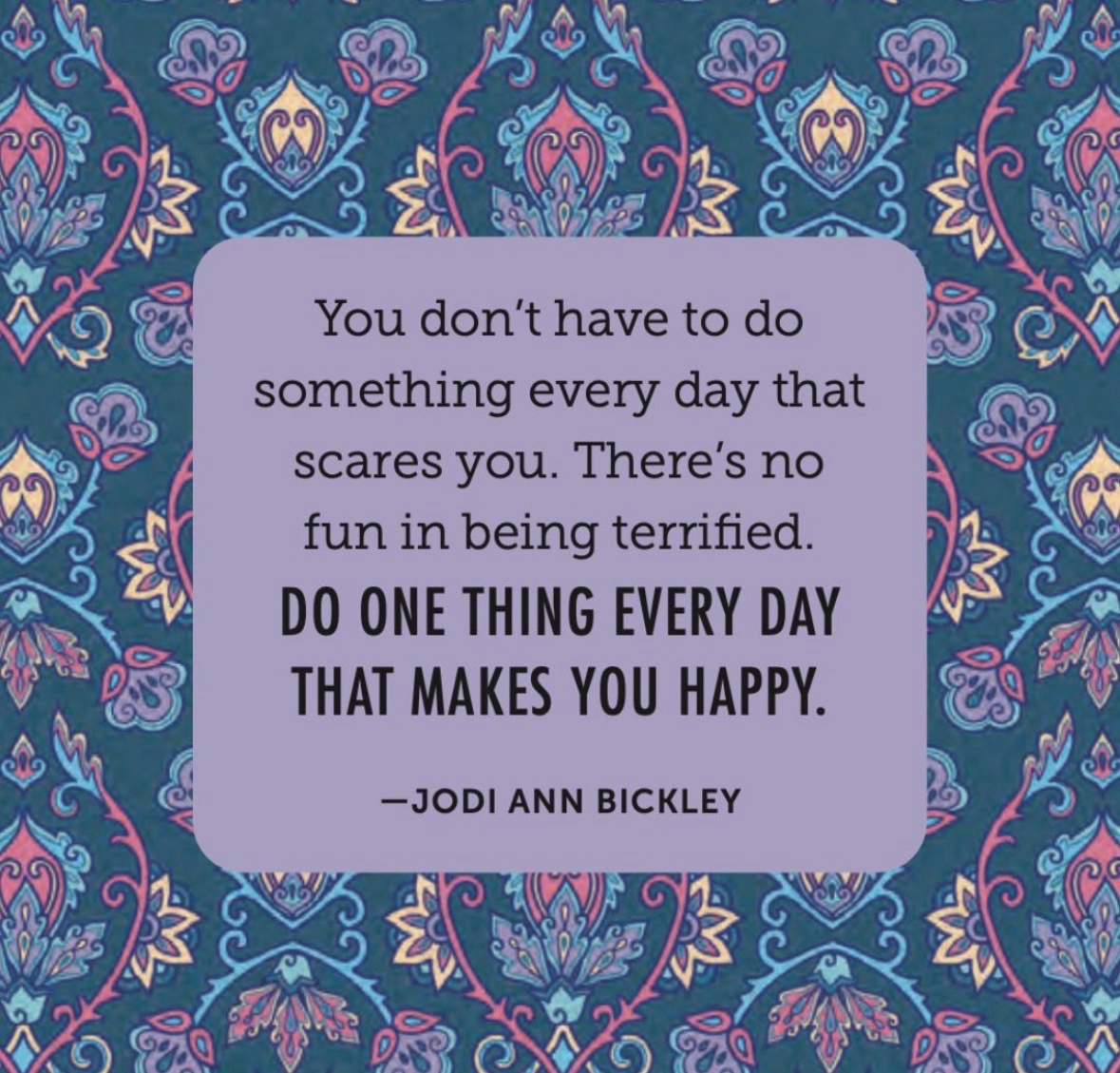
Some ideas sound great on paper but fall apart the moment real life gets involved. “Do one thing every day that scares you” is one of them. It’s catchy, it’s bold, it feels like the kind of quote you’d see next to a mountain climber hanging off a cliff. But honestly? Who wants to live in a constant state of fear just to feel like they’re growing? Being terrified every day isn’t brave—it’s exhausting.

What’s actually hard, strangely enough, is choosing happiness on purpose. Not the loud kind, not the Instagram-worthy peaks, but the small, steady choices that make life lighter. The tiny pieces of your day you look forward to—the walk outside before the world wakes up, the coffee you make exactly the way you like it, the song you play on repeat because it hits the right spot, the text to someone you love just to say hi. None of that is dramatic. None of it is terrifying. But all of it builds a life that feels like yours.

And somewhere along the way, I realized that doing what makes you happy isn’t the easy route. It’s the brave one. It means saying no to noise, no to pressure, no to the version of you that’s constantly performing. It means admitting that joy matters just as much as achievements, deadlines, and whatever everyone else is applauding that week.

So maybe the challenge isn’t to scare yourself. Maybe the real courage is in slowing down long enough to notice what lifts you. And then doing more of that—not because it looks impressive, but because it feels real.

Do one thing every day that makes you happy. That’s it. Some days it’ll be something tiny. Some days it’ll be something unexpected. Some days it’ll just be choosing peace over chaos, softness over stress, yourself over your checklist.

That’s the stuff that fills a life. That’s the kind of consistency that creates calm, not panic. That’s the kind of practice that actually transforms you—not through fear, but through joy.

And honestly? That’s a much better way to live.

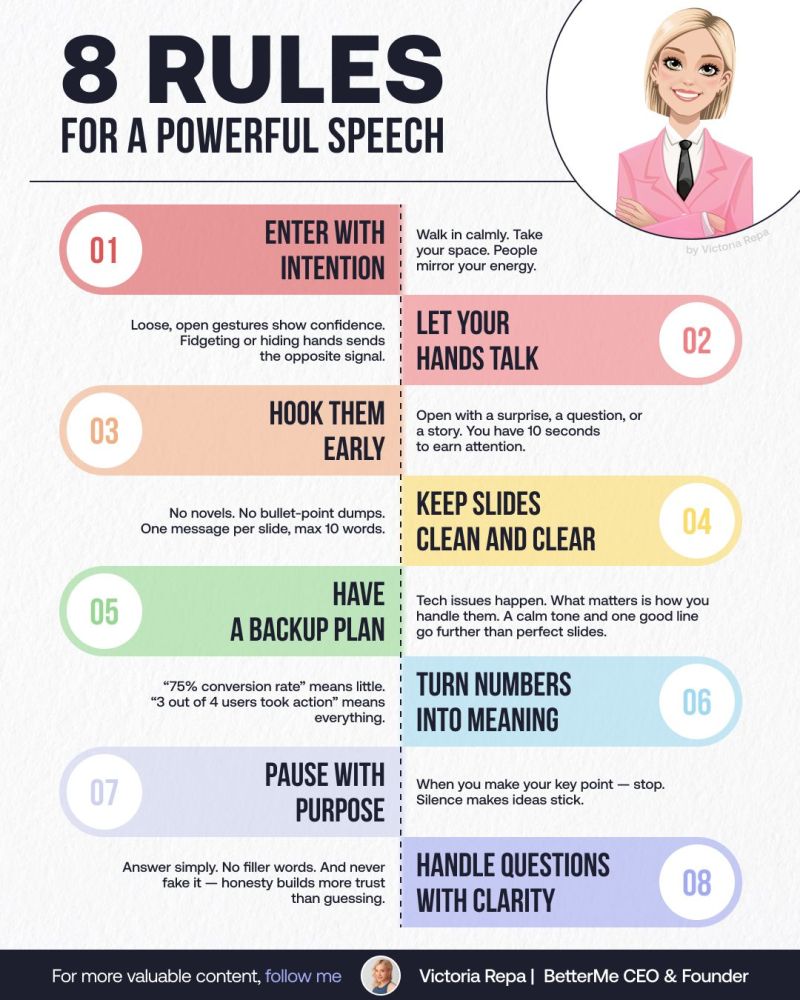
8 Rules for a Powerful Speech

After dozens of keynotes, team meetings, and investor calls,
I realized it’s not about being loud or “natural.”

It’s about being intentional.

Here are 8 rules that instantly upgrade how you speak:
(whether you’re on stage, in a pitch, or leading your team)

1/ Enter with intention

Walk in calmly. Take your space.
People mirror your energy.

2/ Let your hands talk

Loose, open gestures show confidence.
Fidgeting or hiding hands sends the opposite signal.

3/ Hook them early

Open with a surprise, a question, or a story.
You have 10 seconds to earn attention.

4/ Keep slides clean and clear

No novels. No bullet-point dumps.
One message per slide, max 10 words.

5/ Have a backup plan

Tech issues happen. What matters is how you handle them.
A calm tone and one good line go further than perfect slides.
6/ Turn numbers into meaning

“75% conversion rate” means little.
“3 out of 4 users took action” means everything.

7/ Pause with purpose

When you make your key point — stop.
Silence makes ideas stick.

8/ Handle questions with clarity

Answer simply. No filler words.
And never fake it. Honesty builds more trust than guessing.

The best speakers don’t try to impress.
They aim to connect.

And the more you simplify,
the more people will listen.

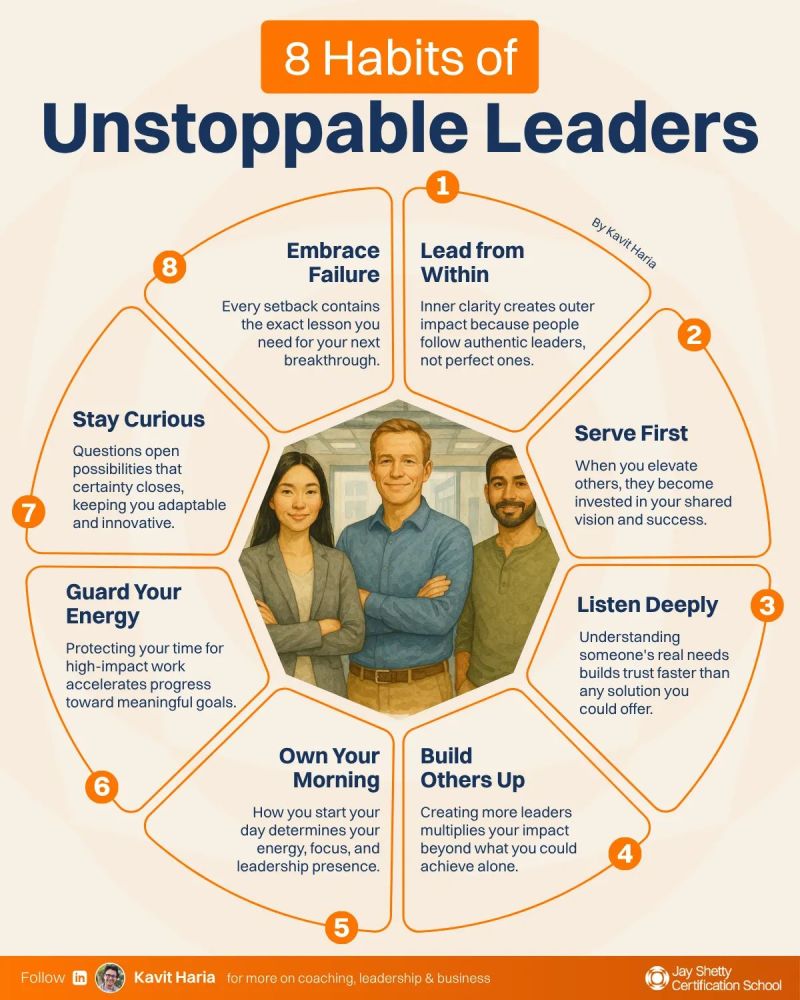
8 Habits of Unstoppable Leaders

I used to believe this too.

Until I started paying closer attention.

The leaders who seem effortless?

They’re actually the most intentional about their
daily practices.

Here’s what great leaders do differently:

💡Lead from Within
→ Inner clarity creates outer impact
→ People follow authentic leaders, not perfect ones

👐Serve First
→ Ask “How can I help?” before “What can you do?”
→ When you elevate others, they become invested
in your vision

👂Listen Deeply
→ Before offering help, offer your attention
→ Understanding someone’s needs builds trust faster

📣Build Others Up
→ Creating more leaders multiplies your impact
→ Your job isn’t to be the smartest person in the room.
It’s to make everyone smarter

⏰Own Your Morning
→ How you start your day determines your energy
→ Win the morning, win the day

🛡️Guard Your Energy
→ Protecting your time accelerates progress
→ Say no to good so you can say yes to great

🧠 Stay Curious
→ Questions open possibilities that certainty closes
→ When you think you know it all, you stop growing

🔥Embrace Failure
→ Every setback carries the lesson needed most
→ Let that fuel your next breakthrough

Leadership isn’t about perfection or natural gifts.

It’s about progression.

Each of these habits is a step forward.

Not toward becoming someone else,
but toward becoming more of who you already are.

The world needs leaders who show up
consistently, not perfectly.

So which step will you take first?

12 Morning Habits To AVOID

12 morning habits to avoid to regain control:

1) Snooze Button Trap 😴
↳ Set just one alarm and place it across the room.
↳ Getting up right away will make everything easier.

2) Morning Dehydration 💧
↳ Keep a water bottle by your bed.
↳ Empty it before coffee to kickstart your system.

3) Instant Scrolling 📱
↳ Resist checking social media first thing.
↳ Read something uplifting instead.

4) Sugar for Breakfast 🍩
↳ Skip the blood sugar crash.
↳ Choose protein-rich and whole-food options.

5) No Preparation 🎒
↳ Lay out clothes and prep your bag the night before.
↳ 10 minutes of prep saves an hour of chaos.

6) Skipping a Gratitude Practice 🙏
↳ Name 3 things you’re grateful for.
↳ It rewires your brain for optimism.

7) Calendar Review 📅
↳ Check it after your first coffee.
↳ Prioritize what really matters.

8) Not Making Your Bed 🛏️
↳ Make it part of your wake-up ritual.
↳ A small win builds early momentum.

9) Not Getting Morning Sunlight ☀️
↳ Get outside for at least 10 minutes.
↳ Pair it with a walk to boost mood and focus.

10) Multitasking Madness ⚡
↳ Prep one thing at a time.
↳ Less stress, more speed.

11) Not Setting Daily Goals 🧭
↳ Write down your top 3 for the day.
↳ Define what success looks like.

12) Checking Emails First Thing 📩
↳ Set a specific time for email later.
↳ Start your day proactively, not reactively.

Build Your Dream Leadership Team

Most CEOs are babysitting their leadership teams.
(And they don’t even realize it.)

You’re solving problems your execs should handle.

Making decisions they should own.

Pushing for results they should drive.

Meanwhile, your competition has leaders who think like owners and deliver without oversight.

The difference? They stopped managing and started building.

After coaching 400+ CEOs, I’ve seen the pattern.

Average leaders hire smart people then do all the heavy lifting.

Great leaders build systems that create self-managing teams.

7 steps that actually work:

1. Stop imposing your vision. Co-create it.

When leaders build the future together, they defend it.

One CEO spent 2 days with his team crafting their vision.

Result? They hit targets he never even set.

2. Put the right people in the right seats.

Rate every leader:
Do they live your values?
Excel in their role?

Below 7/10 on either?
Make the move. Fast.

3. Create your operating system together.

How will you debate? Decide? Disagree?
Document it. Live it. Reference it daily.

Dysfunction disappears when everyone follows agreed rules.

4. Build trust through conflict.

Teams that never disagree never excel.

Your new response to pushback: “Thank you, tell me more.”

Watch what happens when disagreement becomes safe.

5. Give autonomy with clarity.

Define the sandbox. Then get out.

What decisions can they make alone?
What’s their budget authority?

Answer these or keep babysitting forever.

6. Make accountability transparent.

It’s not about catching failures.
It’s about creating visibility.

When everyone sees everyone’s commitments, standards rise naturally.

Public scoreboards beat private conversations.

7. Invest in growth conversations.

Your highest-leverage hours aren’t in strategy sessions.

They’re asking: “How can I help you grow?”

Then actually investing in their answer.

Most CEOs think building great teams takes years.

It doesn’t.

It takes deciding you’re done being the bottleneck.

Here’s what no one tells you:

Your team could be extraordinary right now.

They’re just waiting for you to stop managing.

And start building the system that lets them soar.

Your next quarter doesn’t depend on you doing more.

It depends on you letting them become more.

12 Brutal Truths

Too many leaders say they want honesty.
But what they really want is validation.


So when someone shares a hard truth, they:

→ Get defensive
→ Shift the blame
→ Shut the conversation down


That’s not leadership.
That’s ego-protection.


Real leaders do the opposite:

✅ Listen without interrupting
→ Feedback isn’t an attack; it’s a gift.
✅ Pause before reacting
→ Defensiveness kills trust faster than mistakes.
✅ Ask questions, not excuses
→ “Help me understand” opens doors, “That’s not true” slams them shut.
✅ Act on what you hear
→ If nothing changes, the honesty stops coming.
✅ Thank people for the courage
→ Speaking truth to power is never easy.


If you only accept feedback when it feels good, you’re not leading.
You’re avoiding growth.


12 brutal truths every employer needs to hear:

1️⃣ When top people leave, it’s on you.
2️⃣ Remote work isn’t the issue. Trust is.
3️⃣ Can’t take feedback? You won’t last.
4️⃣ Say values. Act different. Lose trust.
5️⃣ All leaders look the same? Diversity’s fake.
6️⃣ Underpay = short-sighted, not smart.
7️⃣ Toxic culture kills brands. Always.
8️⃣ Employees first. Customers second.
9️⃣ Micromanaging = weak leadership.
🔟 No growth? No top talent.
1️⃣1️⃣ Fear-driven teams fail.
1️⃣2️⃣ Don’t pay them? Someone else will.