9 Phrases That Make You Sound Desperate 

(and what to say instead)

Words don’t just inform. They signal.

Every message you send tells the buyer two things:

– What you’re offering

– How much leverage you think you have

The problem?

Most reps say the right thing,

 but sound like they have none.

And it shows up in tiny phrases that quietly kill your posture.

So I pulled 9 of the most common offenders- 

 and rewrote them to sound confident, clear, and in control:

– “Just bumping this to the top of your inbox.”

 ➡️ “Still relevant on your end?”

– “Any updates?”

 ➡️ “Is [X] still a focus for you?”

– “Following up on my last email…”

 ➡️ “Thought this might help with [problem].”

– “Any updates on your side?”

 ➡️ “Based on where we left off, is X still your top priority?”

– “We’d love to work with you.”

 ➡️ “If it’s a fit, here’s how we support you best.”

– “Any thoughts on the proposal?”

 ➡️ “Anything you’d tweak before next steps?”

– “Let me know if you’re interested.”

 ➡️ “Should we move forward or pause for now?”

– “Let me know either way.”

 ➡️ “Totally fine if it’s a no — just want to make sure we don’t leave it open-ended.”

– “Totally understand if now’s not the right time.”

 ➡️ “Want to revisit this next quarter?”

Sales isn’t just about what you say.

It’s about what your words signal.
The Power of the Pause

In a world that moves at lightning speed, our first instinct is often to react—quickly, emotionally, and without a second thought. Someone says something we don’t like? We fire back. A situation feels unfair? We make assumptions. But here’s the truth: those first impulses rarely lead to our best decisions.

That’s why practicing the pause is such a powerful habit. It’s that brief, intentional moment where you hit the brakes before your emotions hit the gas.

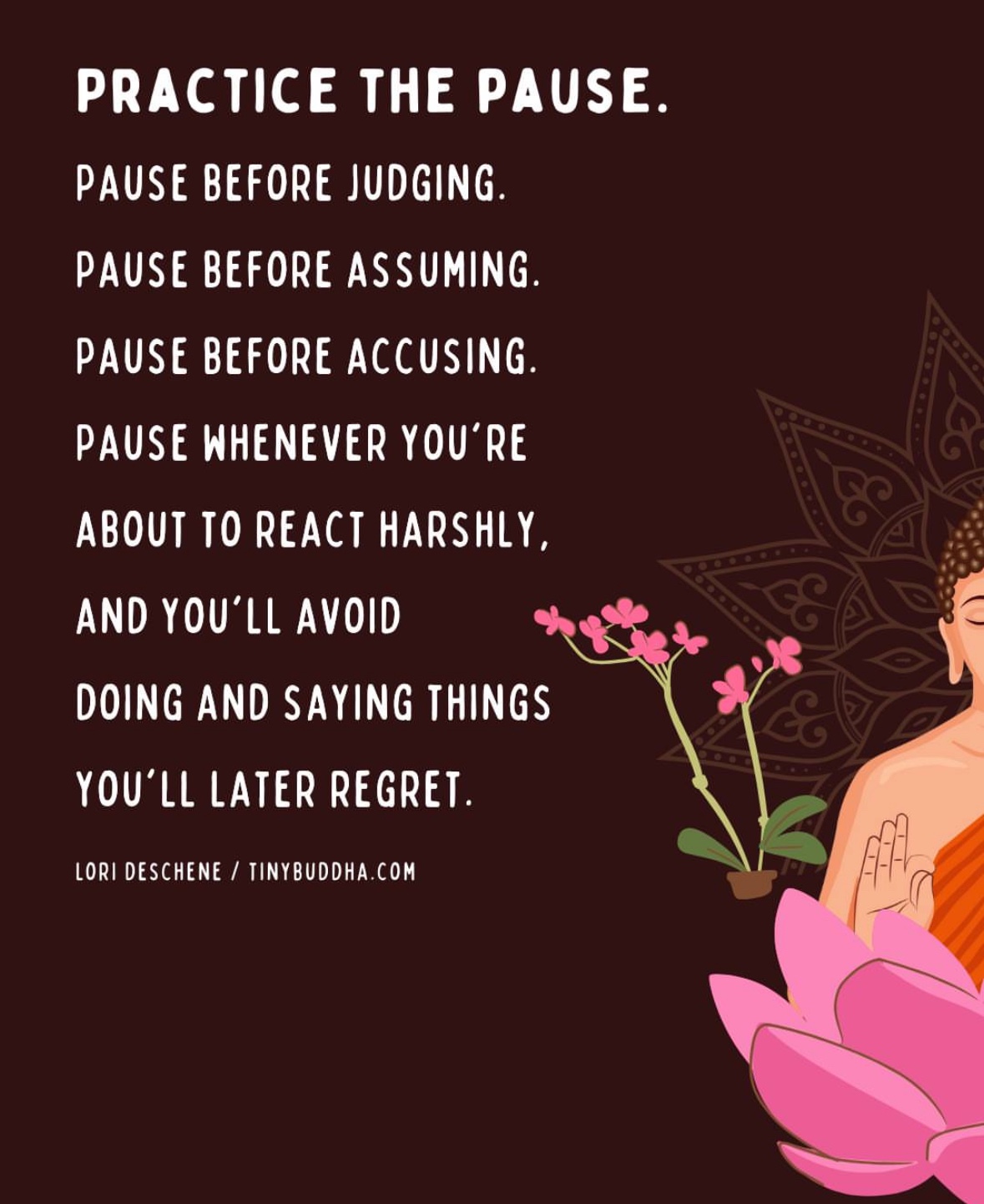
Pause before judging—because what you see may not be the whole story.

Pause before assuming—because assumptions often say more about us than about others.

Pause before accusing—because words, once spoken, can’t be taken back.

And most importantly, pause before reacting harshly. That split second can mean the difference between escalation and understanding, between regret and peace.

The pause doesn’t make you weak—it makes you wise. It gives you control over what you say, how you act, and the energy you choose to put into the world.

So the next time you feel that rush to react, stop. Breathe. Count to three if you need to. That tiny pause could save you from a lifetime of “I wish I hadn’t.”

Because sometimes, the most powerful thing you can say… is nothing at all!

Your Team’s Happiness Isn’t Luck

7 signs you’ve built a healthy work culture:

1. Monday mornings don’t feel like punishment.
↳ People actually want to show up.

2. Ideas flow from every level.
↳ The intern’s voice matters as much as the VP’s.

3. Mistakes spark learning, not blame.
↳ Growth beats perfection every time.

4. People celebrate each other’s wins.
↳ Success isn’t a zero-sum game.

5. You can have a life outside of work.
↳ Because you’re treated as a person, not just a worker.

6. Tough conversations happen with respect.
↳ Honesty without brutality.

7. Your best people stay.
↳ And tell their friends to join.

Here’s the truth leaders need to hear:

Culture isn’t what you write on the wall.
It’s what happens when you’re not in the room.

It’s not about:
❌ Pizza parties
❌ Ping pong tables
❌ “We’re a family” speeches

It’s about:
✅ Real flexibility
✅ Genuine respect
✅ Actual growth opportunities

Your team knows the difference.

They can feel when it’s real.

Leaders, here’s your wake-up call:

You control the weather in your workplace.

Make it somewhere people thrive,
not just survive.

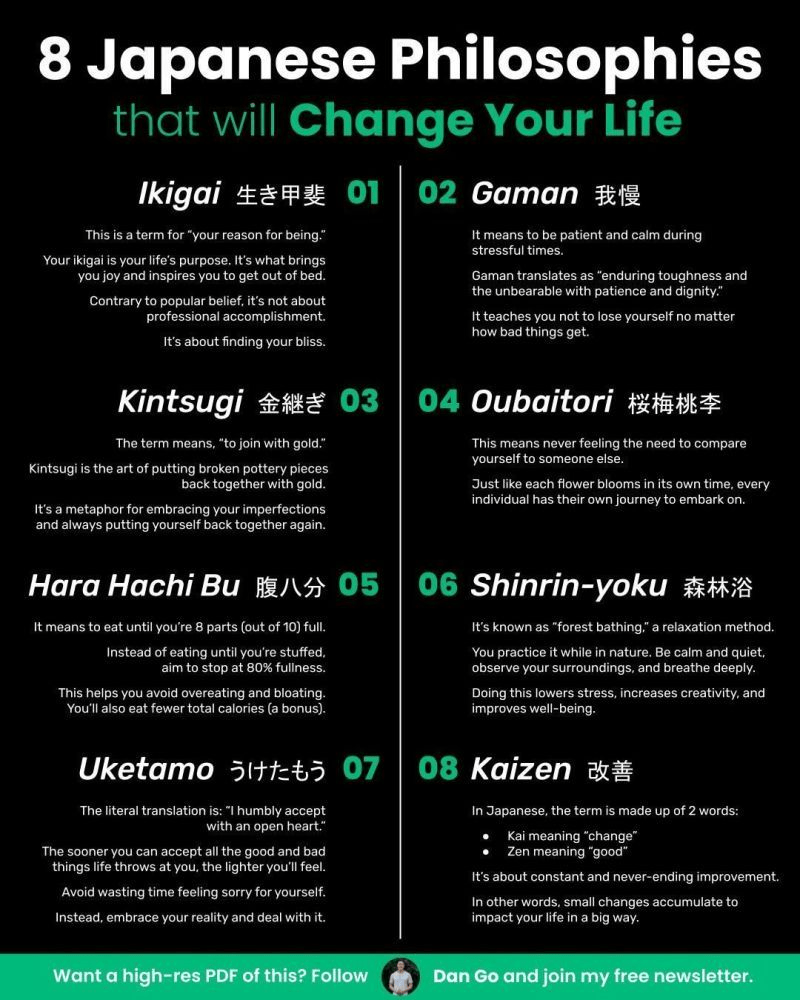
8 Japanese Philosophies that Will Change Your Life

Improve your life with 8 powerful Japanese concepts: 

Japanese people are known for living long, happy lives. It’s partly due to their unique philosophies. 

These simple yet powerful ways of living bring more: 

• Mindfulness 

• Happiness 

• Fulfillment 

• Resilience 

• Balance 

• Clarity 

• Peace 

• Joy 

💡Save my cheat sheet with 8 life-changing ideas. 

Here’s a tip to build each of them into your routine: 

1. Ikigai: Find your passion; what inspires & fulfills you. 

Tip: Think of activities that make you lose track of time. 

2. Gaman: Build resilience; face challenges with grace. 

When feeling stressed, take deep breaths to stay calm. 

3. Kintsugi: See beauty in flaws; they make you unique. 

Reflect on your past mistakes and the lessons learned. 

4. Oubaitori: Don’t compare; treasure your own journey. 

Jot down 1 personal win a week, no matter how small. 

5. Hara Hachi Bu: Eat mindfully; stop when at 80% full. 

Slow down & focus on your food [not the phone or TV]. 

6. Shinrin-yoku: Rejuvenate by connecting with nature. 

Plan a daily walk in a park or green space for 10 mins. 

7. Uketamo: Keep your heart open to embrace life fully. 

Journal about a tough time & how it strengthened you. 

8. Kaizen: Aim for small, continuous self-improvement. 

Choose 1 small habit to change or develop this week. 

Start weaving these concepts into your daily routine. 

You’ll gain a richer, more balanced life. 

Embrace the change and see your world transform. 

The Whisper That Changes Everything

We often think of kindness as something grand—a heroic gesture, an elaborate gift, or a big moment that makes the world stop. But in reality, the most profound kindness often comes softly. It doesn’t announce itself. It doesn’t need applause.

It shows up in the friend who checks in when you’ve gone quiet. The colleague who shares a smile when you’re having a rough day. The stranger who holds the door when your hands are full. These aren’t headline-worthy acts. They are whispers in the chaos of life—tiny reminders that you matter.

I’ve learned to deeply appreciate these quiet heroes. The ones who try, in their own way, to lift a burden or bring a little light. They don’t do it for recognition; they do it because they care.

And in the end, that’s what stays with us—not the fireworks, but the flickers. Not the noise, but the gentle reassurance that even in our hardest moments, we are not alone.

So, here’s to the whispers. The small acts of kindness. The quiet reminders that love doesn’t always need to shout—it just needs to show up.

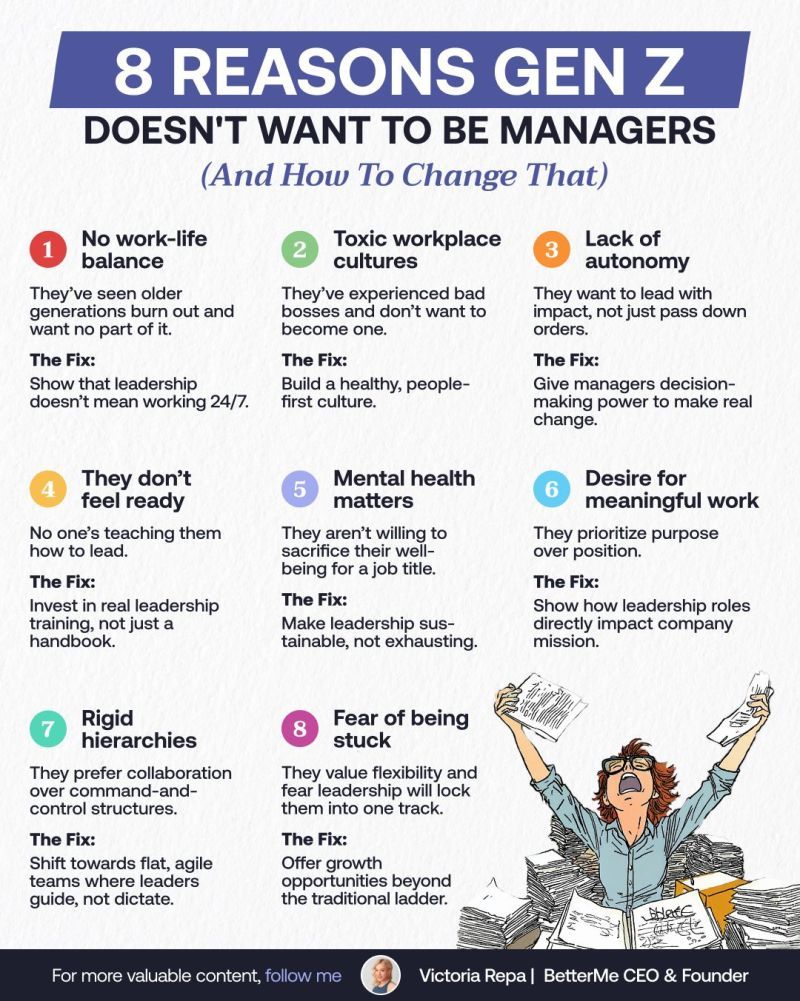
Why Gen Z Doesn’t Want to Be Managers

Gen Z is smart, creative, and incredibly driven.

But when it comes to management roles?
Many are simply saying, “No, thanks.”

Why?
Because they see leadership as stressful, thankless, and limiting.

Here are 8 reasons Gen Z is avoiding management:

1. No work-life balance
They’ve seen older generations burn out and want no part of it.

2. Toxic workplace cultures
They’ve experienced bad bosses and don’t want to become one.

3. Lack of autonomy
They want to lead with impact, not just pass down orders.

4. Fear of being stuck
They value flexibility and fear leadership will lock them into one track.

5. Mental health matters
They won’t sacrifice well-being for a job title.

6. Rigid hierarchies
They prefer collaboration over command-and-control structures.

7. Desire for meaningful work
They prioritize purpose over position.

8. They don’t feel ready
No one’s teaching them how to lead.

Gen Z isn’t afraid of leading.
They just want to lead differently.

The companies that listen and adapt now — will raise the strongest leaders of the future.

What do you think:
Is Gen Z resisting leadership — or redefining it?

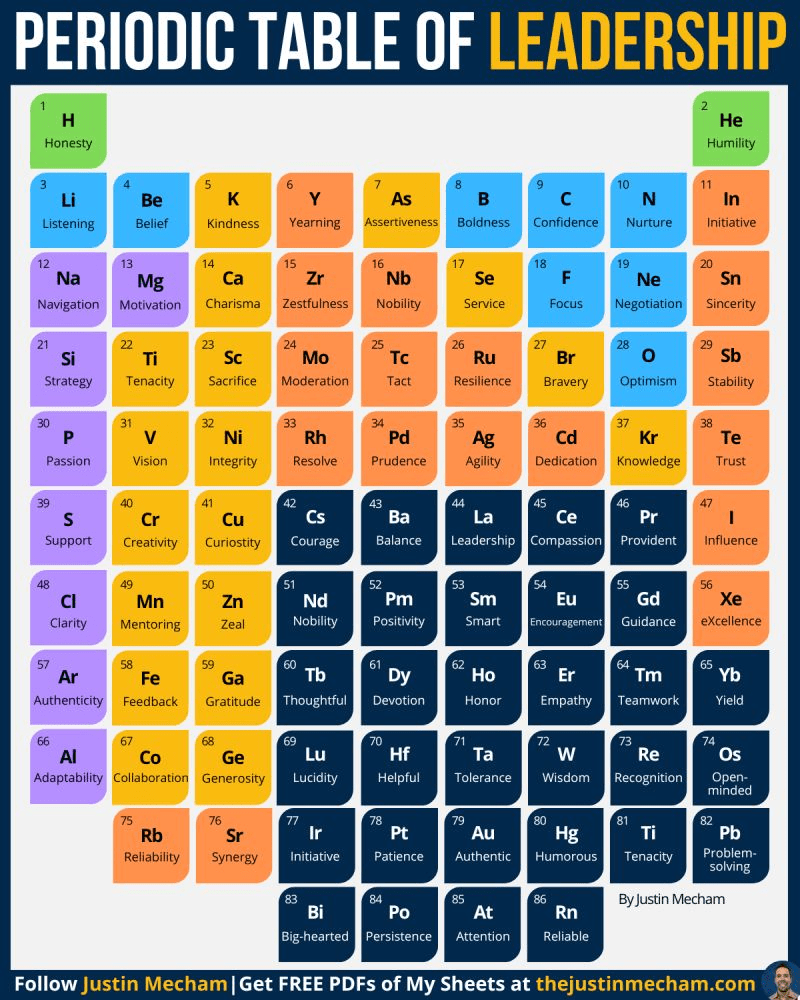
Every great leader has a formula

Here’s what it looks like:

The best leaders don’t just show up.

They live by a set of elements

that define their impact.

They don’t just push through challenges—

They embody the values that

carry their teams through.

It’s not about being perfect.

It’s about mastering the pieces that matter.

These elements combine to create strong leaders:

✅ Tc Tact

✅ Te Trust

✅ V Vision

✅ Be Belief

✅ Ag Agility

✅ Ho Honor

✅ Hf Helpful

✅ S Support

✅ Ir Initiative

✅ H Honesty

✅ Ti Tenacity

✅ Ni Integrity

✅ W Wisdom

✅ Nb Nobility

✅ Y Yearning

✅ Sr Synergy

✅ B Boldness

✅ Li Listening

✅ Pt Patience

✅ Rh Resolve

✅ At Attention

✅ O Optimism

✅ Sn Sincerity

✅ Cu Curiosity

✅ Cr Creativity

✅ Ta Tolerance

✅ Pm Positivity

✅ Pd Prudence

✅ Rb Reliability

✅ Gd Guidance

✅ Mn Mentoring

✅ Ru Resilience

✅ Mg Motivation

✅ Tm Teamwork

✅ Na Navigation

✅ Al Adaptability

✅ Xe Excellence

✅ Ge Generosity

✅ Ne Negotiation

✅ Po Persistence

✅ Ce Compassion

✅ Co Collaboration

✅ Eu Encouragement

✅ Pb Problem-solving

✅ Os Open-minded

✅ As Asertiveness

✅ Re Recognition

✅ Mo Moderation

✅ Ar Authenticity

✅ La Leadership

✅ Bi Big-hearted

✅ Zr Zestfulness

✅ Cd Dedication

✅ Kr Knowledge

✅ Tb Thoughtful

✅ Hg Humorous

✅ C Confidence

✅ Fe Feedback

✅ Ca Charisma

✅ Ga Gratitude

✅ Au Authentic

✅ Pr Provident

✅ Dy Devotion

✅ Cs Courage

✅ Sc Sacrifice

✅ Er Empathy

✅ Rn Reliable

✅ Ba Balance

✅ He Humility

✅ K Kindness

✅ Sb Stability

✅ Si Strategy

✅ Se Service

✅ Nd Nobility

✅ Lu Lucidity

✅ Ti Tenacity

✅ Br Bravery

✅ I Influence

✅ P Passion

✅ Sm Smart

✅ N Nurture

✅ In Iitiative

✅ Cl Clarity

✅ Yb Yield

✅ F Focus

✅ Zn Zeal

Leadership isn’t a title.

It’s the actions you take every day.

It’s the elements you do when no one is watching.

Beyond the Moment: A World Awaits

There are days when the weight of what we feel seems overwhelming—when struggles close in so tightly that it feels like there’s nothing beyond the storm inside us. In those moments, it’s easy to forget that what we’re feeling now isn’t the entirety of life.

But here’s the truth: there’s a whole world beyond what we feel right now. A world that holds sunsets you haven’t seen, laughter you haven’t heard, and possibilities you haven’t imagined yet.

Struggles can make our vision narrow. They convince us that this is all there is—that the hard thing in front of us is permanent. But feelings, no matter how heavy, are like passing clouds. Beyond them, the sky is still there.

When you find yourself drowning in the moment, pause. Breathe. Remember that outside the bubble of your current emotions, life continues—bigger, wider, and brighter than this instant. This isn’t all there is. There is more. Always more.

Hold on. Look up. The world is still waiting for you!

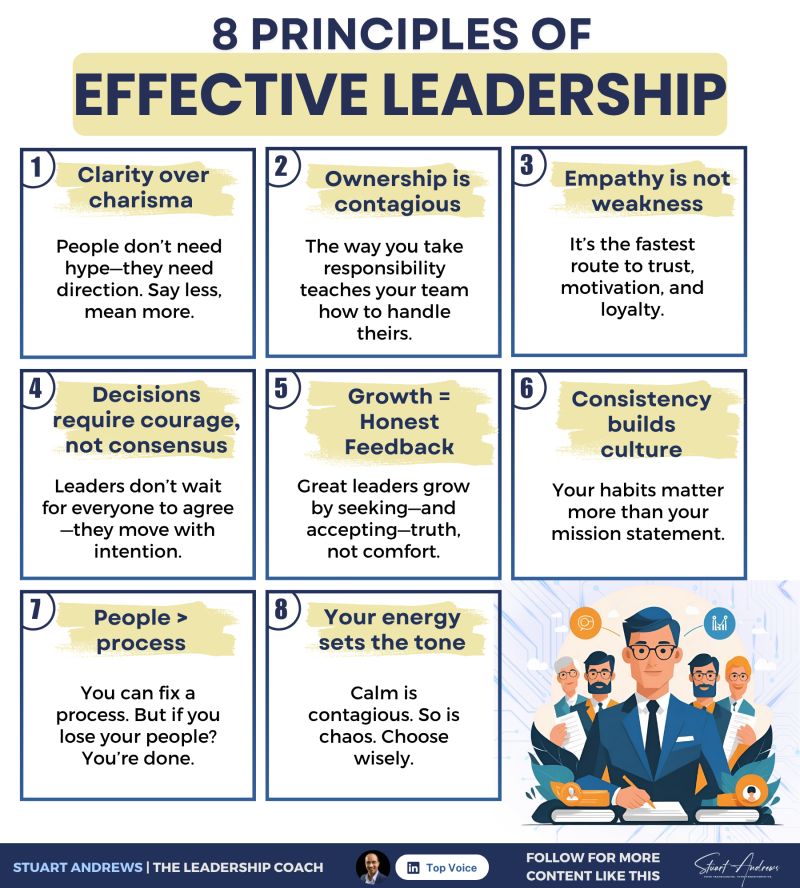
8 Principles of Effective Leadership

No one prepares you for how personal leadership gets.

It’s not just about goals, metrics, or strategies.
It’s about how you show up
— especially when it’s hard.

When people are tired.
When pressure is high.
When you don’t have all the answers.

These 8 principles have kept me grounded
— in the wins, the mess, the pivots, and the quiet moments of doubt.

1. Clarity over charisma
↳ Your team doesn’t need hype. They need
direction.
↳ Say less. Mean more. Speak to what matters.

2. Ownership is contagious
↳ When you take full responsibility, your team
learns to do the same.
↳ Accountability doesn’t need to be taught
— it needs to be shown.

3. Empathy is not weakness
↳ It’s how you build trust
— the kind that fuels loyalty and long-term
results.

4. Decisions require courage, not consensus
↳ Leadership isn’t a group vote.
↳ It’s choosing direction when it counts
— even if you stand alone.

5. Growth = Honest Feedback
↳ Comfort keeps you stuck.
↳ Truth—even when it stings
—is what pushes you forward.

6. Consistency builds culture
↳ People don’t follow your slogans.
↳ They follow your habits. Daily.

7. People > process
↳ You can rebuild a broken system.
↳ But a team that feels unseen? That’s much
harder to repair.

8. Your energy sets the tone
↳ Frantic leaders create anxious teams.
↳ But a grounded presence? That’s what gives
people room to rise.

Leadership is felt more than it’s seen.
And how you lead when no one’s watching is what defines everything.

Which one of these hit home for you?

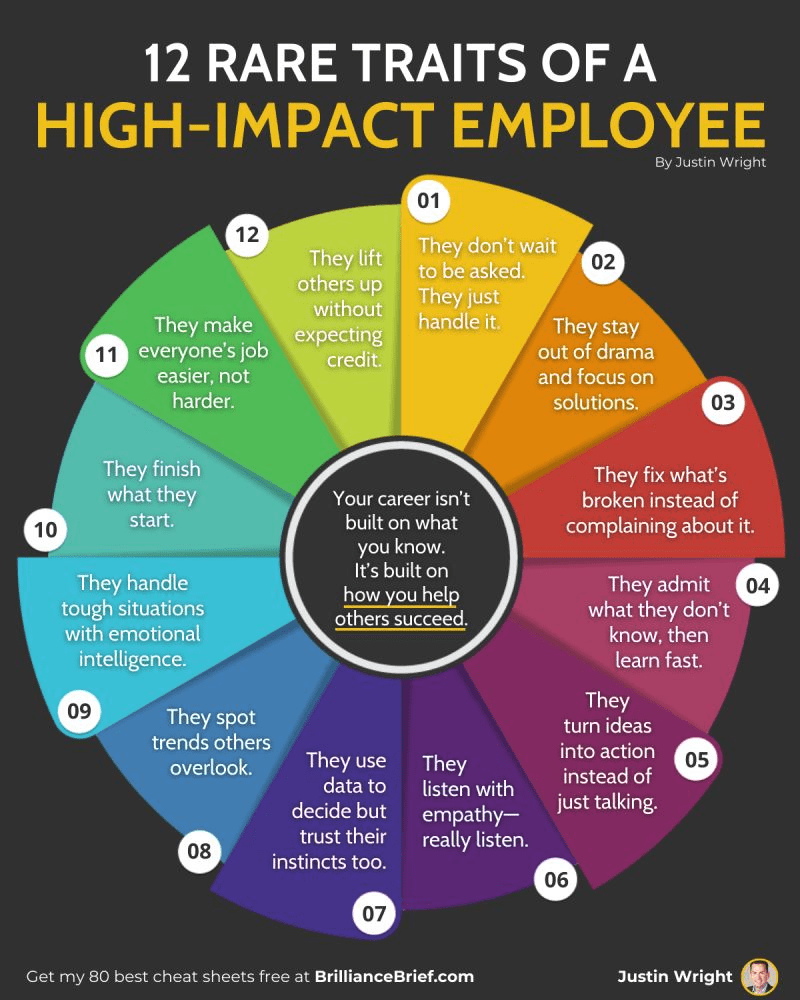
12 traits I see in every high performer.

(They’re not born this way.)

They build these habits over time.

And you can too.

Here’s what the top 1% do differently:

1. They don’t wait to be asked.

↳ They see what needs doing and handle it.

↳ They take action without being told.

2. They stay out of drama.

↳ Office politics drain energy. Solutions create it.

↳ They focus on results, not rumors.

3. They fix what’s broken.

↳ Anyone can point to problems. They solve them.

↳ They bring answers, not just complaints.

4. They admit what they don’t know.

↳ “I’ll find out” shows strength, not weakness.

↳ Then they learn fast to close the gap.

5. They turn ideas into action.

↳ Talk is easy. Execution is rare.

↳ While others discuss, they deliver.

6. They truly listen.

↳ Not just waiting for their turn to speak.

↳ They hear what others really need.

7. They balance data with instinct.

↳ Numbers matter. So does intuition.

↳ They know when to trust each.

8. They spot hidden patterns.

↳ Where others see random events, they see connections.

↳ This ability to anticipate creates massive value.

9. They handle challenges with high EQ.

↳ Pressure reveals character. Stress tests resilience.

↳ They respond thoughtfully, not just react emotionally.

10. They finish what they start.

↳ Starting is common. Finishing is valuable.

↳ Their word is their bond.

11. They make work better for others.

↳ Value isn’t just about your personal output.

↳ It’s about helping the whole team shine.

12. They lift others up without seeking credit.

↳ True help comes with no strings attached.

↳ They cheer for team wins like their own.

These traits aren’t about talent or IQ.

They’re about daily choices and commitment.

Anyone can develop them.

Few actually do.