The High Cost of Staying on the Wrong Train: Why Early Exits Save More Than Just Time

Life is an ongoing journey, often filled with choices that set us on particular paths. We embark on new careers, commit to relationships, pursue ambitious projects, or adopt certain habits, all with the hope of moving towards a better future. Yet, despite our best intentions, there are moments when we find ourselves on a trajectory that simply doesn’t feel right, a path that deviates significantly from our true north. It’s in these pivotal moments that we are faced with a crucial decision, perfectly encapsulated by a timeless piece of wisdom:

“If you get on the wrong train, get off at the nearest station; the longer it takes you to get off, the more expensive the return trip will be.”

This profound metaphor applies to nearly every aspect of our lives, from career choices and personal relationships to financial investments and daily habits. It speaks to the critical importance of self-awareness, the courage to admit mistakes, and the wisdom of acting decisively to correct course.

Recognizing You’re on the Wrong Track

The first step in getting off the wrong train is admitting you’re on it. This isn’t always easy. We often invest significant time, effort, and even money into our chosen paths, making it difficult to acknowledge that they might be leading us astray. Signs you might be on the wrong train include a persistent feeling of dread or exhaustion, a lack of passion for what you’re doing, constant friction or struggle without meaningful progress, or a deep sense of misalignment with your core values. It could be a career that drains your spirit, a project that’s clearly unsustainable, or a habit that’s detrimental to your well-being. Listening to these subtle cues, rather than dismissing them, is vital for early detection.

The Power of the “Nearest Station”

The quote emphasizes getting off “at the nearest station.” This highlights the power of immediate action. The sooner you recognize and act on a misstep, the less damage is done, and the easier it is to pivot. This isn’t about impulsive decisions, but rather about decisive action once the realization hits. It takes courage to admit a mistake, especially when others might expect you to continue down a certain path. However, clinging to a suboptimal situation out of stubbornness or fear of judgment only perpetuates the problem. Embracing the “nearest station” mentality means prioritizing your well-being and long-term success over short-term discomfort or the “sunk cost fallacy” – the mistaken belief that past investments justify future poor decisions.

The Escalating Cost of Delay

The latter part of the quote rings particularly true: “the longer it takes you to get off, the more expensive the return trip will be.” This “expense” isn’t just financial. It encompasses a wide array of costs that accumulate over time:

  • Time: Precious years spent on something that doesn’t serve you, years that could have been invested in a fulfilling direction.
  • Energy: Emotional, mental, and physical exhaustion from battling an uphill struggle or suppressing your true desires.
  • Financial: Money invested in training, education, or ventures that yield no positive return, or even incur losses.
  • Opportunity Cost: The paths not taken, the growth opportunities missed while you were stuck.
  • Emotional Toll: Regret, resentment, diminished self-confidence, and a sense of being trapped.
  • Relational Strain: Relationships can suffer when you’re deeply unhappy or pursuing a misaligned path.

Each passing day on the “wrong train” adds to this cumulative burden, making the eventual pivot harder, more disruptive, and more painful.

The wisdom of getting off the wrong train at the nearest station is a profound reminder that our journey is our own to navigate. It champions self-awareness, courage, and decisive action over inertia and the fear of change. By listening to our inner compass and being willing to course-correct early, we not only minimize the costs of misdirection but also free ourselves to find the paths that truly lead to fulfillment and success. Don’t let the momentum of a mistaken journey dictate your destination; choose your path wisely, and be ready to change tracks when necessary.

Team Motivation

Most leaders get motivation wrong.

They throw money at the problem, instead of

considering what research shows:

Motivation runs much deeper than that.

🔖 Save this cheat sheet of what (actually)

motivates most people.

1. Autonomy

↳ Give your people room to make decisions

↳ Build trust through independence

↳ Watch ownership naturally grow

2. Purpose

↳ Link daily work to larger goals

↳ Show how tasks create impact

↳ Help work feel meaningful

3. Mastery

↳ Support continuous learning

↳ Provide growth opportunities

↳ Let skills develop naturally

But here’s what ties it all together:

A culture of real appreciation.

✅ Make recognition specific

↳ Tell them exactly what impressed you.

✅ Give real-time feedback

↳ Acknowledge effort when it happens.

✅ Make it personal

↳ Understand whether your team member 

prefers public or private praise.

The practical steps matter too:

— Guide, don’t micromanage

— Listen more than you speak

— Provide needed resources

— Delegate meaningful work

— Make learning part of work

The truth is:

Motivation isn’t complicated.

It just requires consistent attention.

Your team wants to do good work.

Your job is creating the right conditions.

7 Types of Rest

Your rest habits are killing your potential.

7 types of rest that change everything:

You’ve normalized exhaustion
Made burnout your baseline
Trained your body to run on empty

But peak performers know:

Strategic rest isn’t weakness.
It’s your competitive advantage.

7 types of rest that transform everything ⚡

1) Mental Rest
↳ Write down thoughts for 2 minutes, then close notebook
↳ Change physical spaces between big tasks
↳ Block 20 minutes for complete digital silence daily

2) Physical Rest
↳ Feet up wall for 5 minutes (set a timer)
↳ Roll shoulders while filling water bottle
↳ Stand and stretch arms overhead between every call

3) Emotional Rest
↳ Name emotions when triggered
↳ Place hand on chest, count 5 breaths
↳ Step outside for 2 minutes between meetings

4) Social Rest
↳ Take lunch away from your desk
↳ Have one real conversation daily (not about work)
↳ Schedule 10-minute buffer between meetings

5) Sensory Rest
↳ Close eyes for 20 seconds every hour
↳ Work from different spot for 30 minutes
↳ Turn off all notifications for 90 minutes

6) Creative Rest
↳ Write with opposite hand for 1 minute
↳ Listen to new music genre while working
↳ Take different route to regular places

7) Spiritual Rest
↳ State one value you’re honoring today
↳ Spend 2 minutes in sunlight, arms open
↳ Send appreciation message to someone

The 99% push through fatigue.
The 1% master strategic recovery.

Which type of rest do you need today?

Idea credit: Sandra Dalton-Smith, MD.

Consistency Beats Intensity

I used to think I could change things with one big push.

One intense workout.
One long night of grinding.
One burst of motivation.

But real progress doesn’t come from what you do once.
It comes from what you do again. And again. And again.

The gym session means nothing if you don’t go back.
The business plan is useless if you don’t follow through.
A single drop looks like nothing, until years later, it’s carved a hole in stone.

Consistency isn’t loud.
It’s not exciting.
It’s slow.
It’s boring.
And that’s the quiet habit behind every successful person I know.

Here’s how to build that kind of mindset:

1. Set bold goals
→ Stop playing it safe. Set goals that stretch you.
→ Big goals pull you forward. Small ones keep you busy.

2. Embrace the setbacks
→ Every challenge is a chance to learn.
→ Be thankful for the lessons hidden in each one.

3. Stay consistent
→ Motivation comes and goes.
→ Discipline makes hard things feel easy over time.

4. Surround yourself with supporters
→ The right people see your potential before you do.
→ They nudge you forward when you hesitate.

5. Celebrate progress
→ Acknowledge every win, no matter how small.
→ Don’t wait for the finish line to feel proud of how far you’ve come.

6. Practise gratitude
→ Write down three things you’re grateful for every day.
→ Seeing the positives in what you do keeps the journey enjoyable.

Keep showing up.
Keep chipping away.

Because one day, you’ll look back and realise
you didn’t just endure the process.
You became something new because of it.

Greatness isn’t one big step.

It’s a thousand small ones in the right direction.

Go With the Flow

We live in a world that praises hustle, glorifies grind, and sometimes confuses burnout with success. We’re told to “push through” and “make it happen”—as if forcing things into place is the only path to progress.

But there’s a quieter, healthier wisdom that’s starting to rise to the surface:

Focus on flowing, not forcing.

The Force Trap

Forcing things usually feels like swimming upstream. You’re stressed, frustrated, and drained. Whether it’s a job, a relationship, a creative project, or even your personal growth—when you’re constantly forcing something, it often means you’re out of sync with your own rhythm.

It’s not about giving up. It’s about tuning in.

What Flow Feels Like

Flow isn’t lazy. Flow is aligned.

It’s that state when ideas click, timing feels right, and even the hard stuff feels purposeful. When you focus on flowing, you’re more aware. You start asking different questions:

“What’s working naturally here?” “What doors are opening with ease?” “Am I holding on too tight to an outcome?”

You trade the ego’s grip for the soul’s guidance.

Flow Brings Freedom

When you stop forcing:

You stop should-ing yourself. You stop measuring your worth by your productivity. You start moving from a place of inner clarity and confidence.

It’s not about doing less—it’s about doing what feels right.

Let It Flow, Let It Grow

Think about nature. Rivers carve canyons, not with force, but with persistence in flow. Flowers don’t bloom by yanking open their petals—they open in their own time.

Why should we be any different?


One of the healthiest habits you can build is learning when to let go, when to listen, and when to simply flow. Your peace of mind, your creativity, and your joy will thank you for it.

Flow isn’t passive. It’s powerful.

And the more you trust it, the more you’ll realize:

Life flows better when you do too.

Let me know if you’d like a shorter version or a caption to go along with it!

7 Rare Skills Every Leader Needs In 2025

These 7 skills separate the best leaders from the rest.

And in 2025, they’re becoming rarer than ever.

After two decades of working with leaders, I’ve noticed something surprising:

👉 Everyone talks about these skills, but very few actually master them.

Whether you’re leading a team today or striving to become a leader tomorrow, these skills are game-changers.

And to help you level-up in 2025, I’ve included an actionable framework or tool to help you develop each skill below:

1️⃣ Listening Without Interrupting

In a world of constant noise, true listening builds trust and uncovers insights others miss.

Pro tips:

* Use the 3-Second Rule: Pause for 3 seconds before responding to ensure the other person has fully finished speaking.

* Summarize What You Heard: “What I’m hearing is…” shows you’re engaged and clarifies understanding.

2️⃣ Admitting When You’re Wrong

Nothing builds accountability faster than owning your mistakes.

Try this:

* Use “I Statements”: Say “I made a mistake” rather than deflecting responsibility.

* Model Vulnerability: Share lessons learned from your mistakes in meetings to normalize growth over perfection.

3️⃣ Giving Credit Where It’s Due

Recognizing contributions amplifies motivation and morale.

I suggest:

* Shoutouts in Meetings: Start each meeting by acknowledging individual or team wins.

* Be Specific: Instead of “Great job,” say, “Your creativity on [project] made all the difference.”

4️⃣ Making Decisions Without Overthinking

Analysis paralysis kills momentum and delays results.

How to Fix It:

* Set a Decision Deadline: Commit to making a decision by a certain date.

* Prioritize “Good Enough”: Use the 80/20 rule to focus on the elements that matter most.

5️⃣ Giving Honest Feedback With Compassion

The right feedback improves performance and builds trust.

How to Master It:

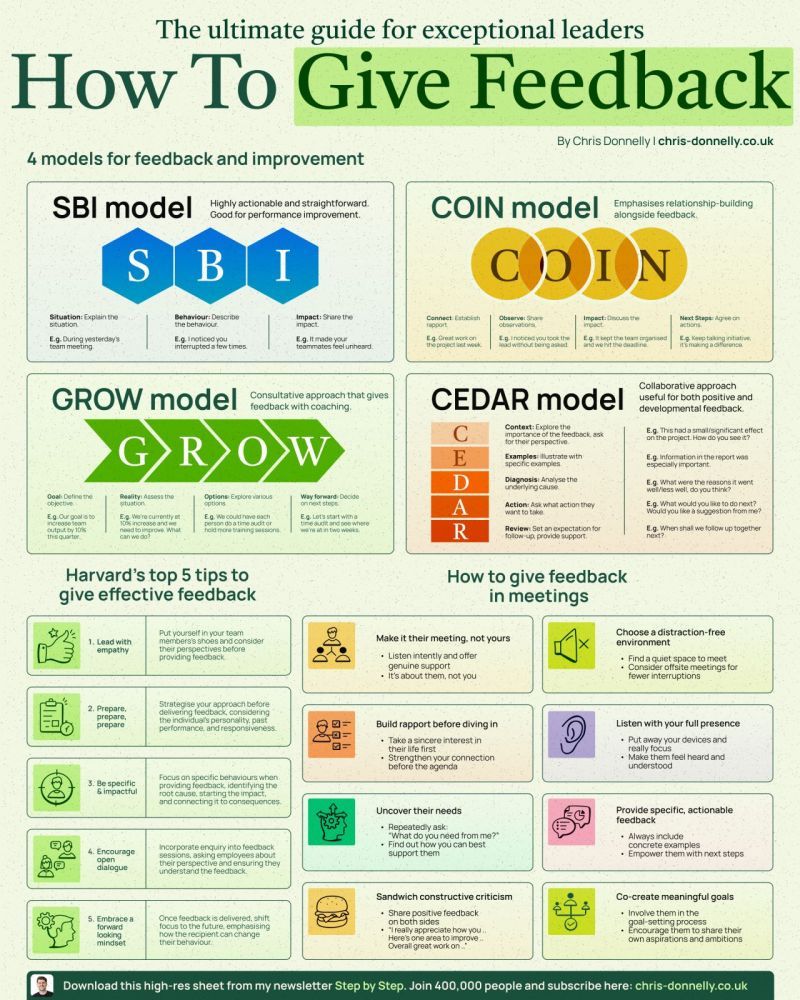
* Use the SBI Model: Focus on Situation, Behavior, and Impact to structure feedback constructively.

* Keep It Balanced: Aim for a 3:1 ratio of positive to constructive feedback to maintain morale.

6️⃣ Saying “No” to Protect Focus

Every “yes” adds to the workload and dilutes focus.

Do this:

* Use a Priority Framework: Tools like OKRs (Objectives and Key Results) help evaluate requests against strategic goals.

* Explain the “why”: Explain the reasoning behind your “no” to build understanding and trust.

7️⃣ Defending Your Team

Teams thrive when they feel protected and supported.

Remember to:

* Be Their Advocate: Speak up for your team in meetings or with leadership.

* Address Criticism Privately: Handle mistakes privately rather than publicly shaming.

The harsh reality is…

These skills are rare because many of them come with discomfort.

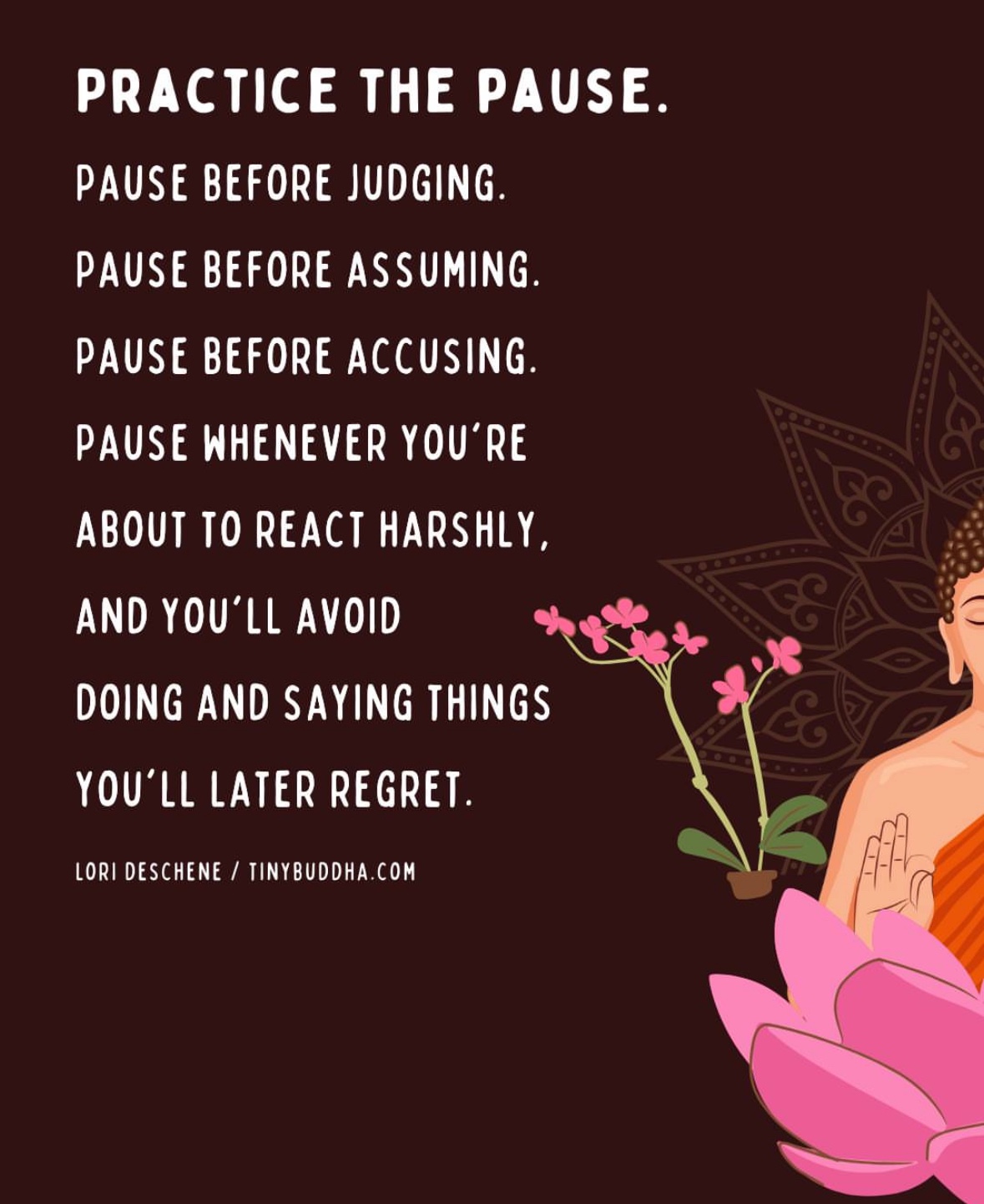
Practice the Pause

A leader never reacts….

Practice the pause.
When in doubt, pause.
When angry, pause.
When tired, pause.
When stressed, pause.
And when u pause, keep calm.

Stepping back allows for a clearer perspective on decisions, enabling better choices in the long run. hashtag#Perspective hashtag#DecisionMaking

“Pause and reflect sessions” are great for fostering learning, adaptation, and continuous improvement across all aspects of life and work. hashtag#Learning hashtag#ContinuousImprovement

Reflecting on your past experiences, both successes and failures, helps identify areas for growth. hashtag#Growth hashtag#SelfReflection

“Pause and Reflect” sessions highlight areas of weakness, strength, and opportunities, fostering a deeper understanding of yourself. hashtag#SelfAwareness hashtag#Opportunities

By evaluating your situation and identifying areas that need attention, “pause and reflect” can save you time and effort in the long run. hashtag#TimeManagement hashtag#Efficiency

Regularly pausing and reflecting allows for learning and adaptation, leads to better outcomes over time. hashtag#Adaptation hashtag#BetterOutcomes

“Pause and Reflect” is a valuable tool for collaboration and building stronger relationships within a team. hashtag#Teamwork hashtag#Collaboration

They can be incorporated into different activities. hashtag#Flexibility hashtag#Integration

Build ‘pause and reflect’ into project timelines to assess progress, identify challenges, and adapt strategies. hashtag#ProjectManagement hashtag#Strategy

Allocating time for reflection during team meetings can facilitate discussions about successes, failures, and areas for growth. hashtag#TeamMeetings hashtag#Facilitation

You can use “pause and reflect” techniques to evaluate your own performance, learn from mistakes, and set goals. hashtag#PerformanceEvaluation hashtag#GoalSetting

When facing a complex problem, taking a moment to pause and reflect can help you identify the root cause and develop effective solutions. hashtag#ProblemSolving hashtag#RootCauseAnalysis

The New ASAP: A Slower, Softer Revolution

“ASAP” has always carried a weight that feels urgent, frantic, even anxious. It’s the mantra of hustle culture — a race against time, a badge of busyness. But what if we flipped it? What if ASAP meant something else entirely?

Let’s redefine it:

As Slow As Possible.

As Soft As Possible.

As Soulful As Possible.

As Sustainable As Possible.

As Sincere As Possible.

As Steady As Possible.

Suddenly, it’s not a command to rush, but an invitation to breathe.

In a world that glorifies urgency, choosing slowness is an act of rebellion. When everything is speeding up, the ones who pause, reflect, and move intentionally are the ones who build things that last. It’s not about laziness — it’s about mindfulness. It’s not about apathy — it’s about alignment.

What if your next ASAP email didn’t cause panic, but peace?

This new ASAP isn’t just a shift in pace; it’s a shift in purpose.

Slow honors process over pressure. Soft means choosing empathy over ego. Soulful means doing work that aligns with your values. Sustainable means thinking long-term, not just for the deadline, but for the planet and our well-being. Sincere is showing up with authenticity. Steady means trusting the journey.

And perhaps most importantly:

Allow Space And Pause.

Let the silence do some of the talking. Let the moments between actions become meaningful. That’s where clarity lives.

So next time you see “ASAP,” pause.

Breathe.

And remember — the most powerful things in life are often done with intention, not urgency.

Your Title Doesn’t Make You A Leader 

Your title does NOT make you a leader. 

Here are 8 traits that do 👇 

A title might get you in the door, but these traits make true leaders. 

1️⃣ Empathy: They understand and care about their team’s well-being. 

↳Empathy allows leaders to connect deeply and build trust within their teams. 

2️⃣ Integrity: A leader with integrity acts as a moral compass for their team. 

↳They show honesty with words and actions. They set a standard for everyone to follow. 

3️⃣ Humility: Great leaders have humility. They admit their mistakes and have the courage to learn from them. 

↳This builds a culture of trust where everyone can learn and grow. 

4️⃣ Empowerment: A true leader empowers others. 

↳They provide the tools and support for their team members. They guide them to advance their roles and continue to grow. 

5️⃣ Communication: Effective communication is crucial in leadership. 

↳They share their vision, expectations, and concerns clearly. This prevents misunderstandings and keeps everyone aligned and motivated. 

6️⃣ Resilience: The path to success often includes setbacks. 

↳A resilient leader stays the course through challenges. They inspire strength in their team. 

7️⃣ Vision: Leadership involves looking ahead and seeing what others don’t. 

↳A clear vision reduces uncertainty and motivates the team to innovate and commit. 

8️⃣ Accountability: A leader who practices accountability sets a strong example for their team 

↳They promote a culture of responsibility and trust. 

Developing these qualities improves our leadership and drives meaningful change.

Rewire Your Reactions

Business doesn’t just test your strategy.

It tests your reactions.

You’ll get ignored.

You’ll get bad news mid-launch.

You’ll pitch, and they’ll pass.

What matters isn’t what happens— It’s how you 𝘳𝘦𝘴𝘱𝘰𝘯𝘥.

These 8 strategies help you stay grounded when the pressure hits:

—> Recognize your triggers: Know what sets you off so it doesn’t run the show.

—> Create response space: Even 3 seconds of pause can save a deal or a team moment.

—> Challenge assumptions: That “no” might not mean what you think it does.

—> Turn pressure into data: Every stress spike tells you something useful.

—> Set clear boundaries: So you don’t burn out chasing someone else’s urgency.

—> Build stress immunity: Like reps in the gym—exposure builds resilience.

—> Reset your state: Posture, breath, pattern interrupts.

—> Focus forward: Don’t dwell. Ask: “What’s next?”

You don’t need to be invincible.

You just need better responses.