Featured

Our Miracle

Today we complete 7 years since we said “I do” and it’s a little over 7 months since Keanah came into this world. My heart is filled with gratitude for the amazing journey we’ve been on so far. Biblically, the number 7 is often considered a symbol of completeness and perfection. And through the ups and downs, through the days and nights I’ve fought with the Lord, asking Him “Why Lord???”, as I look back today, I can definitely say that so far He has made things beautiful, perfect and complete in HIS time. 

I thought today is a perfect opportunity to share our journey with you through 7 major miracles that tested and deepened my faith. Both Ana and myself were drawn to share our journey so that when Keanah grows up we have this to share with her without missing any details as to why we call her our miracle.

Miracle 1: Pain
Our journey starts in June 2020 when we first conceived. We were so so happy, we had been trying for little less than a year. However, our hearts broke when we went for our ultrasound in the 7-8th week and heard no heartbeat. Our gynaec told us that it’s a blighted ovum and there’s nothing to worry. We then conceived again in April 2021. The challenging part this time was that I was down with Covid. Again, no heartbeat in the 7-8th week.  We were really upset this time and the worst part is we had to deal with it alone for sometime as I was in isolation. Our gynaec made us do a full set of tests to figure out why the foetus wasn’t growing. We then got to know that Ana has a condition where her immunity is high. It was treating the foetus as a foreign body and hence attacking it. Why do I say this is a miracle? Well if not diagnosed, her high immunity would eventually lead to conditions like autoimmune diseases. It’s good we could deal with this now so that we don’t have to suffer with other catastrophic consequences. 

Miracle 2: Conception
In July 2022, we had decided to move to the US for a few years. Everyone kept asking me why aren’t you going there and it seemed like a good time to make the move. God had other plans! 

On August 10, Mama’s birthday, Ana woke up feeling very sick. And then got even more cranky as she had planned to do a few things to celebrate her Mama’s birthday and now couldn’t do anything. Towards the afternoon, we did a test and got to know we’re pregnant! Our plan to move went out of the window and our focus now was solely on ensuring things go ahead with all that we learned from our past two experiences. 
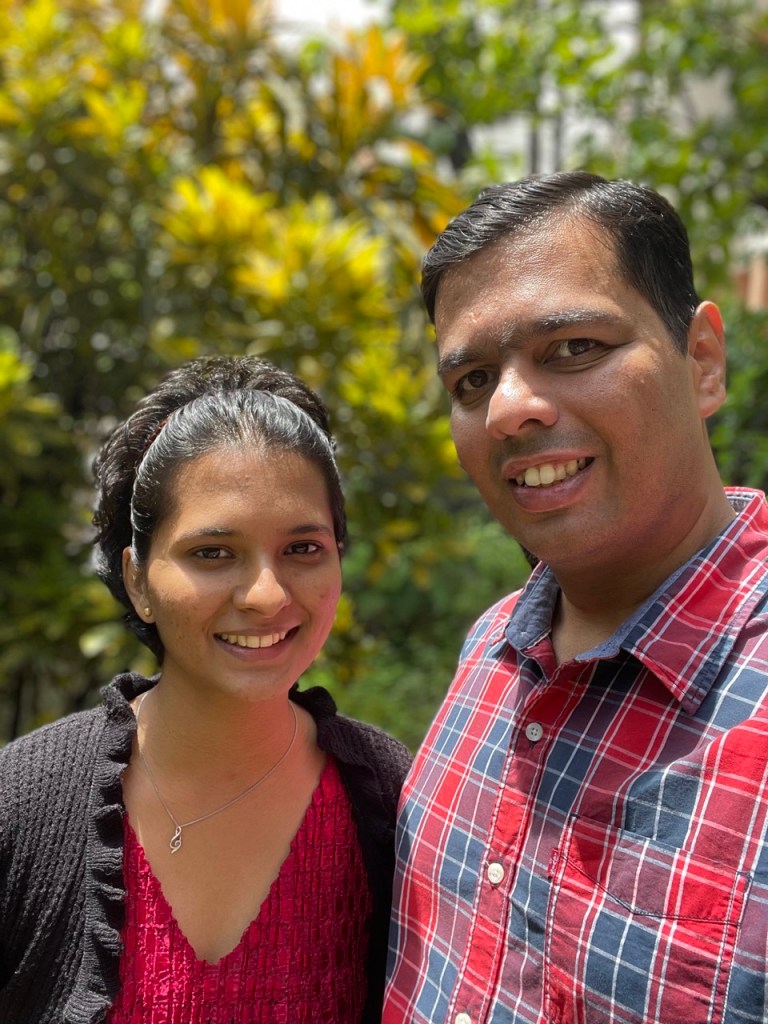
A few days after we got to know we are pregnant!

Miracle 3: Finding Dr. Payal
Even though we started on all the medication as prescribed by our gynaec, when we went for the ultrasound in the sixth week, we didn’t hear the heartbeat. We visited our gynaec and we weren’t happy when we left her clinic. 

Recently a new maternity hospital, Motherhood, had opened just near our place. So we decided to visit them for a second opinion. Since I could go only in the evening (because of work!), we saw Dr. Payal available. I quickly checked online and saw good reviews about her. When we met her, both Ana and I immediately felt she is so much like my sister Melanie. At once we felt at home and comfortable with her. 

We spent over 45 minutes explaining to her everything. She patiently and calmly listened to us. And told us to continue the medication and do the ultrasound again on 1 September. When we left her cabin we both knew that this is the doctor who we would love to continue with. She made us feel understood, answered all our questions so well and assured us that we’re in the right hands. I don’t think we’ve ever had such an experience with a doctor. It was different, felt perfect for us and we both trusted her completely. We don’t know what we would have done without her and her ever positive attitude. She played an important part in our journey and words aren’t enough to make anyone understand how much she means to the both of us. 

Dr. Payal with Keanah

Miracle 4: The Heartbeat
On 1 September we went for the ultrasound. We’ve been for 6 ultrasounds before this one and I knew Ana was nervous, scared and tensed. I was a wreck too but I had to appear strong for her, being positive. Before leaving I had a quick chat with Shweta, my work colleague who has become a very close friend. She told me “I’m praying, I know everything will go well this time and I want a girl!” 

Shweta with Keanah

Ana went in for the ultrasound at Motherhood and my heart was in my mouth when the nurse came out in a matter of minutes. I then realised she came to call me in as well. This was the first time I’d be in the room for the ultrasound. The previous ones, at other hospitals, didn’t allow me in. 

When the Dr started, we heard the heartbeat for the very first time. It was music to my ears, the best thing I had ever heard till date. Tears rolled down my face with joy and I almost jumped off my stool to hug the doctor! We were over the moon!

The tough part was from then till February, Ana had to take injections everyday along with blood thinners to help ensure there’s good blood supply going to the foetus. The daily injections changed to alternate days after November. Giving those injections every time with a brave face is definitely one of the most difficult things I’ve had to do, but Ana had to endure much more, bearing all that pain in addition to all the changes taking place in her body with the baby growing inside her. It’s amazing how situations bring out so much strength that we have within us. 

Miracle 5: Special? Of course!
In mid-October our gynaec sent us for our NT scan. It’s a test where the nuchal fluid behind the baby’s neck is measured. A high level indicates that there’s a 80% chance of your baby having genetic defects like Down syndrome. Our hearts broke when we saw our reading. It was 3.92, whereas the normal is not more than 2.5. We were so upset. And when our gynaec said this is the highest she’s ever seen, I was a mess. We cried bitterly when we returned. That period is probably the most I’ve fought with God. Why all this when we do so much for you and the church? Why!?

I wasn’t happy with the test, so Dr. Payal sent us to one of the best fetal specialists in Pune, Dr. Pooja Lodha. Our appointment was at 1pm but we finally went in at around 4pm. The NT this time was 2.6, still high. But again, Dr. Pooja took her time to explain everything to us in great detail. We had two issues, one where the pressure at the artery supplying blood to baby was high. And secondly there were multiple fibroids. She said it’ll be a miracle if we have a normal delivery. 

Dr. Pooja is definitely a gem of a person and absolutely fantastic at what she does. Again we were blessed with the best. What we loved the most are the lovely pics she shared of baby at almost every visit of ours. 

Since the level was still high Dr. Payal then told us that since this scan is only 80% accurate and could also be a false positive, there are additional tests. The most accurate one is where they extract fluid from the foetus to test. It’s a risky procedure with a chance of miscarriage. I then asked her what is the point of doing all these tests. Anyway it’s a genetic issue and there’s nothing we with can do. So she replied that if we’re sure it’s a genetic issue you have the option to abort. I immediately told her there’s no way we’re aborting this baby. We’ve struggled to get here and we will accept it. It’s a gift from God. And moreover our religion doesn’t allow us to abort. So she still advised us to do the tests as we will have peace of mind if it’s all good, rather than stressing for the remaining 6 months wondering what’s going to happen.

We came home, discussed with each other and with our immediate family. Ana and I then decided that we won’t do the tests. We had already done enough of tests so far and we trusted God completely. The miracle? We did the genetic tests after Keanah was born and the reports came back completely normal! When we shared this with Dr. Payal, she told us the whole team at Motherhood rejoiced when they heard about the report. She then smiled and added “good comes to those who do good” 

Miracle 6: Amniotic Cocktail
In February, at 32 weeks, we did our ultrasound with Dr. Pooja followed by our visit to Dr. Payal. We got a little startled when Dr said that Ana needs to get admitted as the amniotic fluid level is very low. It’s 5 whereas it’s supposed to be 15. After Ana got admitted Dr told me that if the levels don’t come up we will have to deliver immediately. However, Ana was on blood thinners and injections till that point. We needed her to be off them for at least 6-7 days before we can operate her. Miraculously the high pressure at the artery connecting the foetus was normal for the first time ever! If that was still high we would have had one more complication to deal with. Ana was given drips to increase her amniotic fluid. The fluid was thick and the drips were very painful. 

That evening I came home for a quick bath and to collect a few things. I fell to my knees and begged God to bring up the amniotic levels. That’s the best outcome for us. Thankfully it went up to 10 over the next 3-4 days. We were so relieved. However we had to go back every alternate day to get those extremely painful amniotic cocktails to maintain the fluid levels. I don’t understand how Ana had the strength to put on a brave face through it all.

Miracle 7: 26 March
We visited Dr. Payal at our 36 week mark and she said baby is doing well, why do you want to suffer with those painful drips any longer? Baby is ready, let’s admit Ana on 25th late night and try inducing. By morning if we’re not successful, we will do a c-section. We weren’t expecting it to be so soon. I remember talking to my cousin Neisha about a few things regarding the delivery just before we got to know it’s going to happen in a matter of hours! 

Before we left for the hospital, 25 March 2023

At midnight we got admitted to Motherhood. And just as Ana entered the labour room, she went naturally into labour. Dr. Payal who was with Ana said “baby also knew that it’s time to come out!”  After around 11 hours, Keanah was born, natural delivery, a miracle in Dr. Pooja’s words! And Shweta’s wish was answered, she got her girl! 😊


Many who were present at Keanah’s baptism heard us singing Michael Buble’s “Forever now”. And both Ana and I were very emotional. I was overwhelmed with emotions as I sang the lines “you’ve got so much strength inside you, a strength we pray you’ll never need”. After all we had gone through, these words just meant a lot, we identified so strongly with them. We wouldn’t want Keanah or anyone to have these experiences. And yet we’re so grateful because this journey has definitely strengthened our relationship with each other and more importantly with God. 

Thank you Nihal for capturing this :)

Even though the journey has been something I was never prepared for, He made sure that He sent his angels to take care of us. Our families have been our strongest pillars of strength through it all, they stormed heaven with their prayers and have been with us at every step of the way. Dr. Payal and Dr. Pooja were heaven sent, came in at the right time when we needed them the most and hence we always knew we were in the best of hands always. So many of our family and friends showed up when we needed them the most. The community at Mount Carmel’s and our priests at our parish along with our Sunday school teachers and choir kids prayed fervently for us, we’re eternally grateful to all of them for their prayers. It’s amazing how much love, prayers and support we’ve been showered with on this journey.

The view of Mount Carmels (Ana’s alma mater) from Motherhood

As we hold our precious little Keanah in our arms, we are filled with gratitude for the incredible journey that brought us to where we are today. The challenges and triumphs along the way have made this experience all the more profound and beautiful. Our hearts are full, and we can’t wait to embrace the adventure that lies ahead as a family. This miraculous journey has just begun, and we are eager to see where it takes us.

Featured

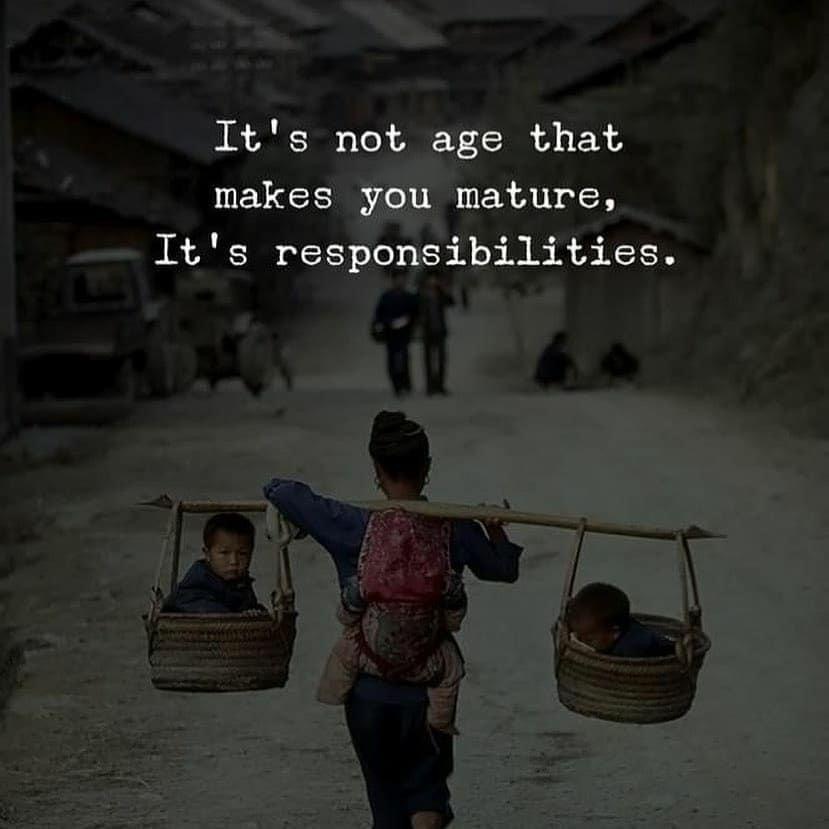
How Mature Are You?

Age alone does not an adult make. But what does? What makes you finally, really an adult? Adulthood is a social construct. For that matter, so is childhood. But like all social constructs, they have real consequences. They determine who is legally responsible for their actions and who is not, what roles people are allowed to assume in society, how people view each other, and how they view themselves. But even in the realms where it should be easiest to define the difference—law, physical development—adulthood defies simplicity.

You can’t drink until you are 21, but legal adulthood, along with voting and the ability to join the army, comes at age 18. Or does it? You’re allowed to watch adult movies at 17. In many countries kids can hold a job as young as 14, depending on state restrictions, and are even allowed to deliver newspapers, babysit, or work for their parents even younger than that.

Chronological age is not a particularly good indicator [of maturity], but it’s something we need to do for practical purposes. We all know people who are 21 or 22 years old who are very wise and mature, but we also know people who are very immature and very reckless. We’re not going to start giving people maturity tests to decide whether they can buy alcohol or not.

There is definitely no certain age at which maturity sets in. In my personal experiences, I’ve observed that age has little or nothing to do with it. I have met young people who are mature well beyond their years, and I’ve known older folks who act childish, only thinking about themselves. So the question is: What are the character traits that show maturity? And do “mature” people exhibit them 100% of the time?

Well, I’m not sure that we can be mature in every situation that presents itself to us because we are always growing and learning as human beings, and I’m pretty sure that all of us have been guilty of at least some of these negative behaviors at least once in our lives. That being said, by considering these 25 tell-tale signs, perhaps we can be more aware of the interludes in which our whiny, complaining, adolescent self rears its immature head…

1. Realizing how much you don’t know.

2. Listening more and talking less.

3. Being aware and considerate of others as opposed to being self-absorbed, self-centered, and inconsiderate.

4. Not taking everything personally, getting easily offended, or feeling the need to defend, prove, or make excuses for yourself.

5. Being grateful and gracious, not complaining.

6. Taking responsibility for your own health and happiness, not relying on others to “fix” you or placing blame for your circumstances.

7. Having forgiveness and compassion for yourself and others.

8. Being calm and peaceful, not desperate, frantic, or irrational.

9. Showing flexibility and openness as opposed to resisting, controlling, or being unreasonable.

10. Helping yourself, not just expecting others to do it for you out of a sense of entitlement.

11. Doing good deeds even when there is nothing in it for you other than knowing you helped, being selfless.

12. Respecting another’s point of view, beliefs, and way of life without judgment, not insisting you are right, belittling another, or using profanity or violence to get your point across.

13. Sharing your good fortune with others.

14. Being able to turn the other cheek without wishing harm on another.

15. Thinking before acting and having good manners, not going off half-cocked, lashing out, or being rude.

16. Encouraging and being supportive of others.

17. Finding joy in the success of someone else, not envy or criticism.

18. Knowing there is always room to grow and improve and reaching out for help.

19. Having humility and laughing at yourself.

20. Recognizing that which does not work in your life and making an effort to do something different.

21. Passing up instant gratification in favor of long term benefits.

22. Accepting, liking, and loving yourself, not needing someone else to “complete” you.

23. Standing up for fairness and justice for yourself and others and choosing to do the right thing.

24. Making sacrifices for the good of others without resentment.

25. Not clinging to materialistic items or bragging.

I’m sure there are probably other signs, but this list covers at least the majority of them. I know we can always do a better job displaying our mature sides. I also know that, by doing so, we lift each other up through our example. What’s most important, however, is seeing the negative side of our behavior and knowing we must do something positive to change it…And that, my friends, is WISDOM.

The Chair Theory

Came across this post on Instagram where the author shares about her grandma having a way of explaining life in the simplest possible scenes.

No lectures. No big theories. Just small moments that somehow said everything.

One day she shared this “The Chair Theory.”

She said walk into any room where there aren’t enough chairs. Then don’t speak. Don’t ask. Just watch.

Watch what people do.

At first, it seems like nothing. People are just… settling in. Adjusting themselves. Getting comfortable.

But if you look closer, something quietly revealing is happening.

Someone notices you immediately. They stand up, drag a chair from the corner, and place it next to them like it was always meant to be there.

Someone else smiles and offers you their seat without hesitation, already halfway up before you can respond.

Another person starts shifting things around, making space where there wasn’t any before. It’s not perfect, but it’s intentional.

And then there are the others.

The ones who see you standing there… and do nothing.

They don’t look away out of cruelty. They don’t push you aside. They just stay exactly where they are—comfortable, undisturbed, unchanged.

That’s the part most people miss.

It’s not always about what people do to you.
Sometimes it’s about what they don’t do for you.

Life works the same way.

You’ll walk into spaces—friendships, workplaces, relationships—where there isn’t automatically a place for you.

And in those moments, people reveal themselves without saying a word.

Some will make room.

They’ll check in on you. They’ll include you in conversations. They’ll think about you when decisions are made. They’ll adjust their lives, even in small ways, so you don’t feel like an afterthought.

These are the people who pull up chairs.

Then there are others who will watch you struggle to belong.

Not because they dislike you. Not because they want to hurt you. But because making room for someone else requires effort—and they’ve decided, consciously or not, that they’re not willing to give it.

So they stay seated.

And here’s the hard truth: you can spend a lot of your life trying to earn a seat in rooms where no one is willing to move.

You’ll overexplain yourself. Overextend yourself. Overstay in places that never made space for you to begin with.

But the Chair Theory isn’t about judging people.

It’s about recognizing patterns.

It’s about noticing who instinctively makes space for you—and who expects you to stand quietly in the background.

Because the people who pull up chairs don’t just do it once.

They do it again and again, in different forms.

They make time when they’re busy.
They show up when it’s inconvenient.
They celebrate you without competition.
They support you without keeping score.

They don’t see your presence as something to tolerate.

They see it as something to welcome.

And once you start noticing this, something shifts.

You stop chasing seats.

You start choosing rooms.

You stop trying to convince people to value you.

You start valuing the people who already do.

Because the truth is, you were never meant to stand in places where you’re invisible.

You were meant to sit where someone looked up, saw you, and said—“Hey, come here. There’s room for you.”

So pay attention.

Not to the loud promises.
Not to the occasional gestures.

Pay attention to the quiet, consistent actions.

The ones who pull up chairs without being asked.

Those are your people.

The rest?

Let them stay seated.

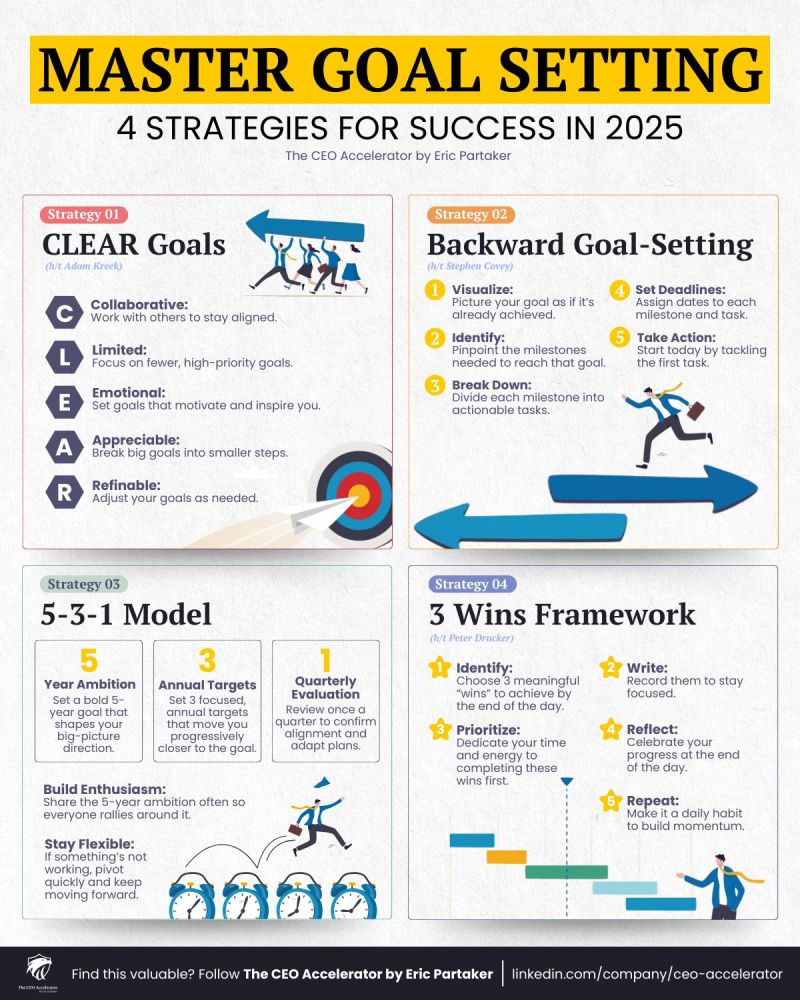
Master Goal Setting

83% of New Year’s resolutions fail by February.

After years of setting ambitious goals only to
abandon them, I discovered something interesting:

The most successful people don’t count on motivation.

Instead, they use proven frameworks that make
success automatic.

4 goal-setting frameworks that actually work:

1. CLEAR Framework (h/t Adam Kreek)
↳ Get your team rowing in the same direction
↳ Stop chasing everything. Focus on fewer, better goals
↳ Connect goals to what truly motivates you
and your team
↳ Break big dreams into bite-sized steps
↳ Be willing to adjust when reality hits

2. Backward Goal-Setting (h/t Stephen Covey)
↳ Start with the end clearly in mind
↳ Map out every milestone needed to get there
↳ Break each milestone into specific actions
↳ Set clear deadlines for everything
↳ Begin with the very first step TODAY

3. The 5-3-1 Model
↳ Set ONE bold 5-year vision that excites you
↳ Define THREE annual targets that move you closer
↳ Check alignment QUARTERLY and course-correct
↳ Share your vision often to build team enthusiasm
↳ Stay agile. Pivot fast when something’s not working

4. Three Wins Method (h/t Peter Drucker)
↳ Identify 3 meaningful “wins” to achieve each day
↳ Write them down to stay laser-focused
↳ Prioritize your best energy for these wins
↳ Reflect on progress every evening
↳ Make it a daily habit

One final thought:

Goals not written down are just wishes.
And frameworks without action are just theory.

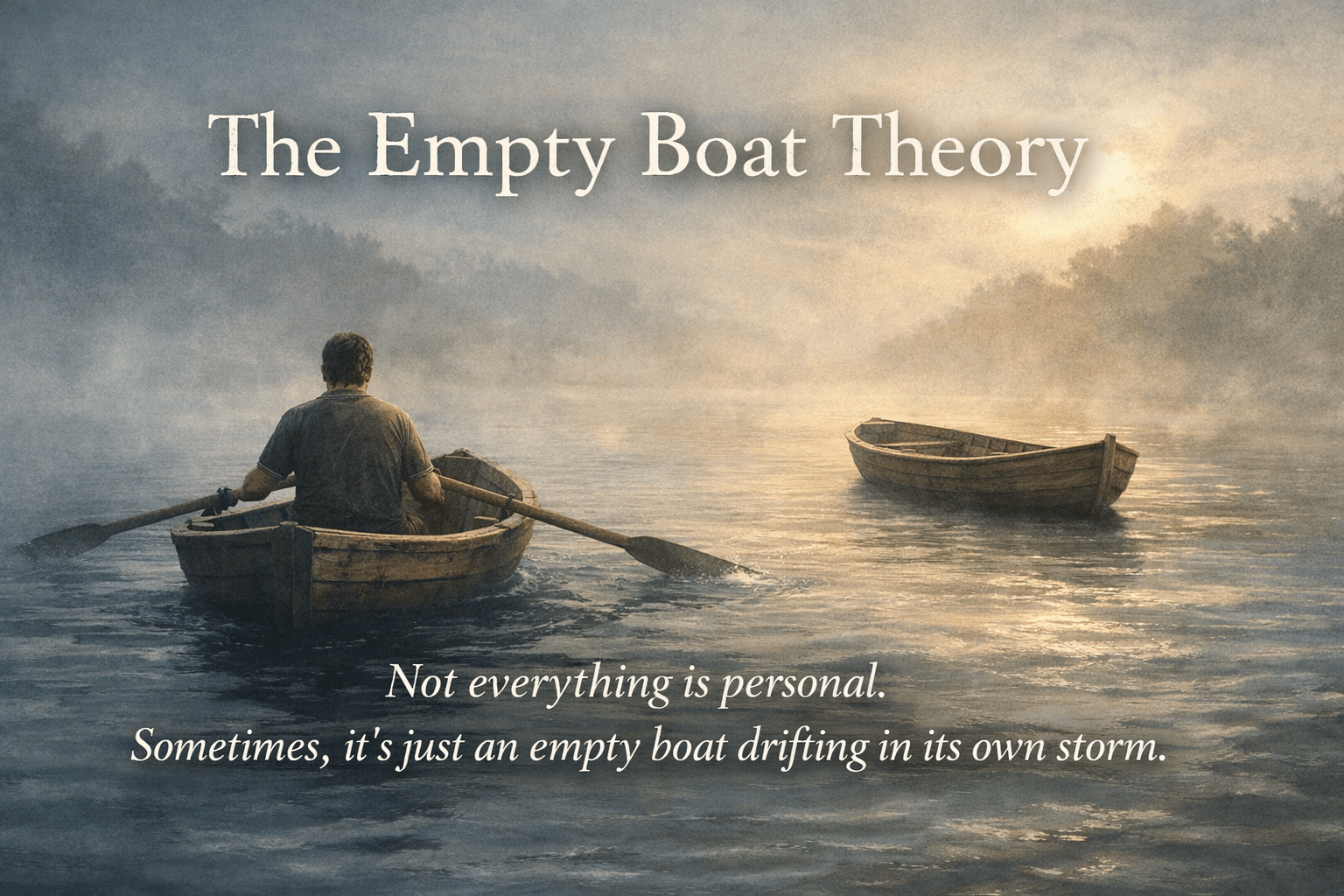
The Empty Boat Theory Might Change How You See People Forever

There’s an old story from ancient philosophy that feels strangely modern.

Imagine you’re rowing across a river.

It’s quiet. Calm. You’re focused.

Then suddenly, another boat slams into yours.

Instantly, your body reacts.

You tense up. You get irritated. Maybe angry. Maybe ready to yell.

Who rows like that?
What’s wrong with people?

But then you look up.

And the boat is empty.

No one’s inside.

And just like that… the anger disappears.

Same collision.
Same impact.
Same inconvenience.

But the emotional charge is gone.

Why?

Because there’s no one to blame.

That’s the heart of the Empty Boat Theory.

It’s such a simple image, but once it clicks, it’s hard to unsee.

A lot of what hurts us emotionally isn’t just what happened.

It’s what we think it means.

Someone cuts you off in traffic.
A coworker gives a short reply.
A friend doesn’t text back.
Someone interrupts you.
Someone seems cold, dismissive, distracted, rude.

And before you even realize it, your mind starts filling in the blanks.

They disrespected me.
They ignored me on purpose.
They don’t care.
They’re being difficult.
They’re trying to get under my skin.

Most of us do this automatically.

Psychology has a name for it: attribution.

We’re constantly assigning reasons to people’s behavior. We don’t just observe what they did — we decide why they did it.

And a lot of the time, especially when we’re already stressed, tired, or emotionally loaded, we assume intention where there may be none.

That’s what makes the Empty Boat Theory so powerful.

It reminds us that sometimes we’re not reacting to the actual event.

We’re reacting to the story we attached to it.

That story might be true.

But it also might not be.

Maybe the person who was short with you is overwhelmed.

Maybe the person who forgot to reply is buried in something heavy.

Maybe the person who seemed rude is anxious, distracted, or carrying pain you know nothing about.

Maybe they’re not attacking you.

Maybe they’re just in their own storm.

That doesn’t excuse genuinely harmful behavior. Not every boat is empty.

Some people are careless. Some actions are intentional. Boundaries still matter. Accountability still matters.

But the problem is that we often treat every collision like it came from a full boat.

And that’s exhausting.

Because when you assume intention too quickly, everything starts to feel personal.

Every delay feels like disrespect.
Every silence feels like rejection.
Every bad mood feels like an attack.
Every misunderstanding feels like betrayal.

That’s a heavy way to move through life.

And most of that weight was never yours to carry.

There’s a concept in psychology called cognitive reappraisal — basically, the ability to reinterpret a situation in a less emotionally reactive way.

Instead of asking, Why are they doing this to me?
You ask, What else could be true here?

That shift sounds small.

But it changes everything.

Because the moment you stop assuming malice, your nervous system relaxes.

Your anger softens.
Your defensiveness lowers.
Your clarity returns.

You become less reactive and more grounded.

You stop handing your peace over to every bump in the river.

That doesn’t mean becoming passive.

It means becoming wiser.

It means learning the difference between what actually happened… and what your mind immediately made it mean.

That’s a life skill.

Honestly, one of the most freeing realizations in adulthood is this:

Not everything is personal.

Not every awkward moment is rejection.
Not every delay is disrespect.
Not every mistake is betrayal.
Not every difficult interaction is about you.

People are often just tired.
Distracted.
Wounded.
Human.

They’re navigating their own currents, their own fears, their own invisible battles.

And sometimes, their boat hits yours not because they meant to hurt you…

but because they’re drifting too.

So the next time someone frustrates you, pause for a second before you let the story take over.

Ask yourself:

Is this a full boat… or an empty one?

That one question can save you from a lot of unnecessary anger.

A lot of misread situations.

A lot of emotional weight you were never meant to carry.

Because sometimes the real peace in life doesn’t come from controlling what bumps into you.

It comes from learning not to assume every collision is personal.

And when you stop taking everything personally…

you stop fighting ghosts in empty boats.

Balancing Your Energy

If you feel tired all the time,

This might be why:

I used to think I was low on motivation.

I was wrong.

I was leaking energy all day
and calling it “being busy.”

You and I are not running on one tank.

We’re running on five.

When one drains,
the others try to cover for it.

That works for a while.

Then the crash shows up.

Here’s what most people miss:

🟣 Mental energy
— Too many tabs open equals quiet exhaustion.

🔵 Emotional energy
— Unfelt feelings do not disappear.
— They pile up.

🟠 Physical energy
— No movement equals slow burnout.

🔴 Social energy
— Some people refill you.
— Some quietly empty you.

🟢 Spiritual energy
— When meaning fades, effort feels heavy.

Balance is not doing everything evenly.

Balance is noticing what is low
before everything breaks.

Here is a reset that actually works:

💼 At work
• Do one thing.
• Finish it.
• Pause on purpose.

🏚️At home
• Lower the noise.
• Move your body a little.

👥 With people
• Spend time where energy returns.

✨ With purpose
• Remember why today matters.

Energy is not fixed.

It is guided.

Stop pushing through.

Start paying attention.

The Black Coffee Rule: A Simple Mindset That Can Quietly Change Your Life

There’s something powerful about black coffee.

Not because it’s trendy. Not because it makes you look disciplined. And definitely not because everyone genuinely loves the taste on day one.

It’s powerful because black coffee is honest.

No sugar. No cream. No sweetener to soften the edges.

Just coffee.

And that’s exactly why the “Black Coffee Rule” has become such an interesting life mindset.

At its core, the Black Coffee Rule is simple: learn to appreciate things for what they are, not just for how they can be made easier, sweeter, or more comfortable.

That applies to a lot more than coffee.

It applies to work. Relationships. Discipline. Fitness. Growth. Patience. Even the way we handle boredom.

We live in a world that constantly offers add-ons. Shortcuts. Filters. Upgrades. Distractions. A little something extra to make everything more immediately enjoyable. And while there’s nothing wrong with comfort, there’s a subtle cost when we become dependent on it.

The Black Coffee Rule asks a harder question:

Can you still show up when the “extras” are gone?

Can you do the work when nobody’s praising you?
Can you stay consistent when progress feels slow?
Can you enjoy your own company without reaching for noise?
Can you commit to the process before the reward arrives?

That’s where the real lesson lives.

Black coffee is rarely love at first sip. For most people, it’s an acquired taste. But that’s the point. You’re not just drinking coffee — you’re training yourself to stop needing everything to be instantly pleasing.

And that’s a surprisingly valuable skill.

Because some of the best things in life don’t arrive sugar-coated.

A strong career is built in the boring reps.
A healthy body comes from routines, not motivation.
A deep relationship survives beyond the highlight reel.
A calm mind is usually built in silence, not stimulation.

The Black Coffee Rule doesn’t mean life should be joyless or stripped down for the sake of suffering. It’s not about rejecting pleasure. It’s about building the ability to handle reality without constantly needing it dressed up.

That’s a different kind of strength.

It’s the kind that says:
I can do hard things without needing immediate comfort.
I can sit with discomfort without escaping it.
I can value substance over packaging.
I can grow without applause.

And once you start applying that mindset, you begin to notice how often we avoid the raw version of things.

We avoid difficult conversations by coating them in half-truths.
We avoid effort by waiting for inspiration.
We avoid stillness by filling every empty moment with scrolling.
We avoid beginnings because we want polished outcomes before we’ve earned them.

The Black Coffee Rule quietly challenges all of that.

It reminds you that not everything meaningful needs to be easy to be worth it.

In fact, some things become meaningful because they weren’t easy.

That first bitter sip eventually becomes familiar.
Then tolerable.
Then strangely enjoyable.
And one day, you realize you’re not forcing it anymore.

That’s how discipline works too.

At first, waking up early feels brutal.
Working out feels inconvenient.
Saving money feels restrictive.
Reading instead of doomscrolling feels boring.
Having boundaries feels uncomfortable.

Until it doesn’t.

Eventually, what once felt “too plain” starts to feel clean.
What once felt “too hard” starts to feel grounding.
What once felt “not fun enough” starts to feel like peace.

That’s the shift.

The Black Coffee Rule is really about maturity — not in a boring, serious way, but in a grounded way. It’s about reaching a point where you stop needing life to constantly entertain you in order for it to matter.

You begin to appreciate depth over decoration.
Consistency over intensity.
Truth over polish.
Substance over sweetness.

And ironically, that’s when life starts tasting richer.

Because when you stop depending on extras, you become more grateful for them.

A celebration feels better when you know how to live without constant reward.
A compliment means more when you’ve learned to work without validation.
Comfort becomes sweeter when you’re no longer addicted to it.

That’s the hidden beauty of the Black Coffee Rule.

It’s not anti-joy.
It’s anti-dependence.

It teaches you to build a life where your peace, discipline, and sense of self don’t collapse the moment the “cream and sugar” disappear.

So maybe the next time life feels bitter, plain, slow, or unpolished, don’t rush to fix it immediately.

Sit with it for a second.

There may be more value in learning to handle the raw version than in constantly trying to make it easier to swallow.

Because sometimes growth doesn’t need more flavor.

Sometimes it just needs your willingness to stay.

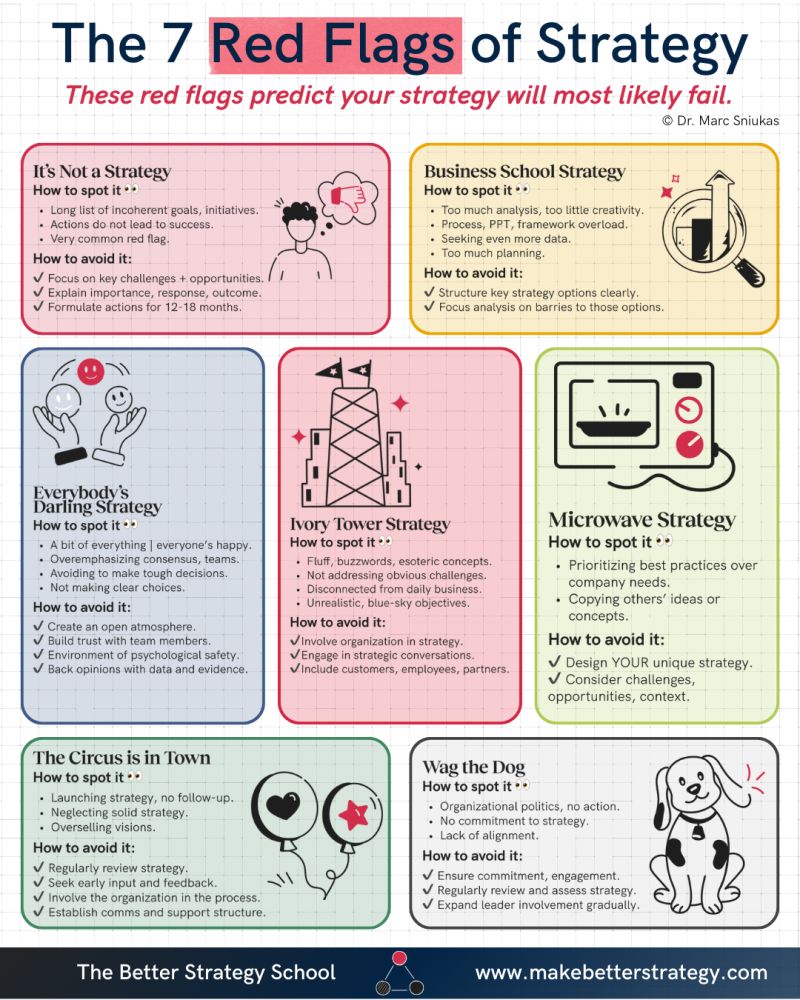
The 7 Red Flags of Strategy

Most organizations do not fail at execution.
They fail at strategy, then blame execution.

👉 The illusion of strategy is more dangerous than the absence of strategy.
When a strategy is not a strategy.
The organization moves.
Progress seems visible.
Yet the actions do not lead to success.

👉 The business school approach substitutes analysis for judgment.
Frameworks and PowerPoint create the appearance of rigor.
More data is gathered as a way to postpone difficult choices.
The work feels productive.
The thinking remains shallow.

👉 The everybody’s darling strategy avoids making clear choices.
A bit of everything is included so no one is unhappy.
Consensus is mistaken for coherence.
Tough decisions are deferred.
The organization feels aligned.
The strategy remains directionless.

👉 The ivory tower speaks in buzzwords and abstractions.
Obvious challenges are not addressed.
The work floats above daily reality.
Unrealistic objectives are set.
The vision sounds impressive.
The organization cannot reach it.

What these patterns reveal is that weak strategy creates the illusion of progress.

The organization is busy.
The deck is complete.
The launch is announced.
The strategy was never there.

❓ A question I’ll leave you with:
What is one initiative your organization is pursuing that creates the appearance of progress without addressing the real challenge?

The Life You’re Chasing Might Already Be Here

We spend so much of life in pursuit mode.

The next milestone. The next upgrade. The next trip. The next version of ourselves. We tell ourselves that once we get there, then we’ll finally feel settled. Happy. Proud. At peace.

But what if the life we keep running toward isn’t somewhere far ahead?

What if it’s already here… and we’re just moving too fast to notice it?

That’s the strange thing about “living your best life.” Most of us imagine it as something loud. Something obvious. Something that looks good in pictures and sounds impressive when we talk about it. We picture big wins, major moments, dramatic transformations. We assume it has to feel extraordinary all the time.

But real life rarely announces itself like that.

Sometimes your best life doesn’t look like fireworks. Sometimes it looks like a quiet morning. A slow cup of coffee. Your child laughing in the next room. A peaceful drive with no rush. A conversation that doesn’t need to be profound to be meaningful. A regular Tuesday where nothing spectacular happened… except that you were actually present for it.

And maybe that’s the point.

We’ve been conditioned to believe that more is always better. More success. More productivity. More plans. More movement. More proof that we’re doing something with our lives. Slowing down can almost feel irresponsible in a world that celebrates hustle like it’s a personality trait.

But slowing down isn’t laziness.

It’s awareness.

It’s choosing not to let your whole life blur past while you’re busy trying to optimize it.

Because the truth is, a lot of us are standing in answered prayers while still acting like we’re waiting for life to begin.

The home you once hoped for.

The family you dreamed about.

The stability you prayed through hard seasons to find.

The peace you begged God for when things felt uncertain.

The version of you that made it through what you thought might break you.

And yet, because there’s always another mountain in the distance, we barely stop to look around at what’s already been built.

That doesn’t mean ambition is bad. It doesn’t mean you stop growing, stop striving, or stop wanting more for yourself. There’s nothing wrong with goals. There’s nothing wrong with dreaming bigger.

But there is something important about not letting your dreams rob you of your gratitude.

If every good thing in your life only counts after the next thing happens, you’ll keep moving the finish line forever.

You’ll miss the beauty of the season you’re actually in.

And so much of life is seasonal.

Not every chapter is meant to be exciting. Not every chapter is meant to be fast. Some seasons are for building. Some are for healing. Some are for surviving. Some are for celebrating. And some are simply for noticing. Noticing how far you’ve come. Noticing what’s working. Noticing the people around you. Noticing that joy doesn’t always arrive dramatically—it often shows up quietly, in ordinary clothes, asking if you’re paying attention.

That kind of joy is easy to miss.

It doesn’t shout. It doesn’t demand to be posted. It doesn’t always come with applause. But it’s real. And it’s often much deeper than the temporary high of achievement.

There’s a kind of peace that only shows up when you stop trying to squeeze every second for output and start allowing yourself to actually live inside your own life.

To breathe in it.

To look at it.

To appreciate it without immediately turning it into a stepping stone for something else.

Maybe the best moments aren’t the ones where everything changes.

Maybe they’re the ones where nothing changes at all—but you finally see clearly.

You realize the people at your table matter more than the image in your head.

You realize rest isn’t a reward; it’s part of being human.

You realize that enough can be beautiful.

You realize that contentment isn’t the enemy of progress—it’s what keeps progress from becoming emptiness.

And maybe that’s what this season is trying to teach you.

Not to give up on becoming more, but to stop overlooking what already is.

Because if you can’t recognize goodness in the life you have now, there’s a good chance you won’t recognize it later either. You’ll just be busier, more tired, and still convinced that happiness lives somewhere slightly out of reach.

Maybe it doesn’t.

Maybe it’s here, in the ordinary details.

In the small mercies.

In the slower pace.

In the things that don’t look glamorous but feel grounding.

In the life that may not be perfect, but is still deeply, quietly good.

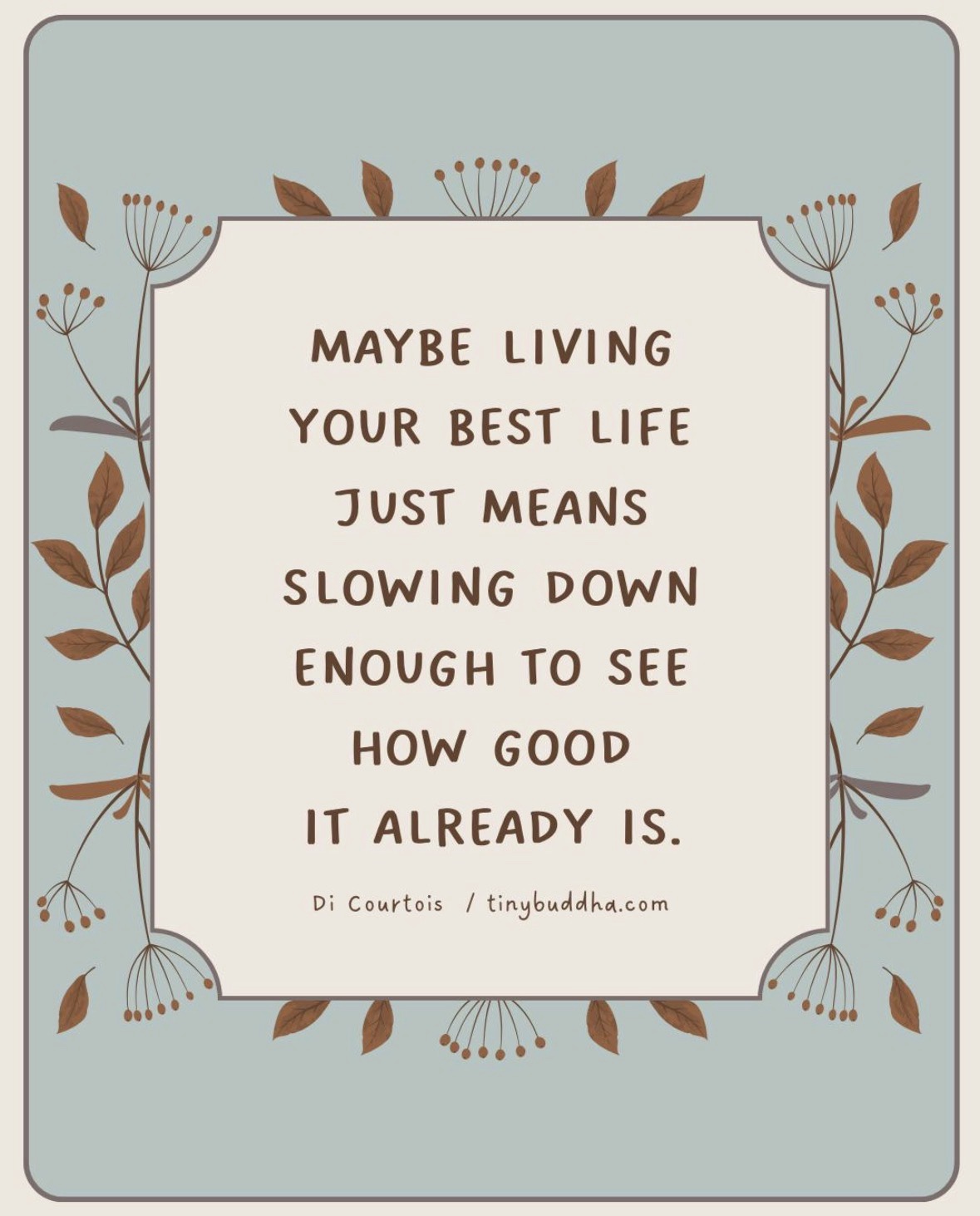
So maybe living your best life isn’t about chasing harder.

Maybe it’s about slowing down long enough to realize you’re already holding parts of it in your hands.

And maybe that realization changes everything.

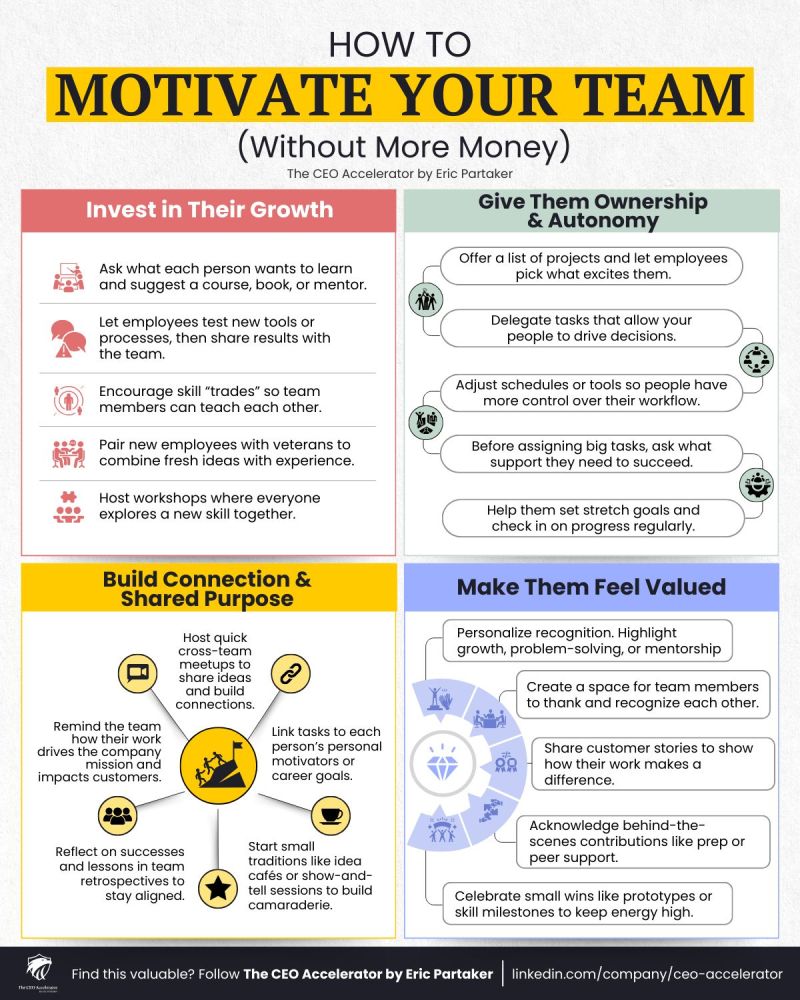
How To Motivate Your Team

94% of employees would stay for this…
(and it’s not a raise)

The secret to an unstoppable team doesn’t
involve the size of your budget.

Of course money matters.
People want to be compensated fairly.

But even more important?

How you lead, connect, and empower
your people every single day.

Here are the proven ways to ignite motivation
(that don’t require opening your wallet):

📚 Invest in Their Growth
↳ Ask each person what they want to learn,
then connect them with courses
↳ Pair newcomers with veterans who can
share their experiences
↳ Host workshops where everyone learns
something new

🎯 Give Them Ownership & Autonomy
↳ Let them pick projects that excite them
↳ Delegate decisions that impact their work
↳ Give them control over their workflow and
provide support when needed.

🤝 Build Connection & Shared Purpose
↳ Host quick cross-team meetups to share ideas
↳ Link tasks to personal motivators and career goals
↳ Remind them how their work drives company mission

⭐ Make Them Feel Valued
↳ Personalize recognition by highlighting specific
growth and problem-solving
↳ Create space for team members to appreciate
each other
↳ Acknowledge behind-the-scenes support

The critical thing to understand:

People don’t quit jobs.

They quit when they feel stuck.
They quit when they feel invisible.
They quit when they feel mistreated.
They quit when they feel disconnected.

The good news?

You can change that today.

Your team’s potential is already there.
Your job is to unlock it.

And the key isn’t more money.
It’s better leadership.

What motivational approaches have transformed your team?

The Version of You They Carry

One of the most freeing truths in life is also one of the hardest to accept: no matter how honest, kind, clear, or consistent you are, people will still create their own version of you in their minds.

And that version may have very little to do with who you actually are.

Some people will see you through the lens of their own wounds. Some through jealousy. Some through admiration. Some through old stories they tell themselves about people like you. Some will misunderstand your silence as pride. Others will mistake your boundaries for distance. A few might even take your growth personally because it reminds them of what they haven’t faced in themselves.

That’s just how people work.

We don’t see others as they are all the time. We often see them through memory, emotion, assumption, fear, and projection. We take one moment, one conversation, one mistake, one season of someone’s life and turn it into a full identity in our heads. It’s human. Imperfect, but human.

And if you’re not careful, you’ll spend years trying to correct every false impression, explain every misunderstood intention, and soften every opinion someone formed about you without really knowing you.

That is exhausting.

Worse, it can quietly steal your peace.

There’s a deep kind of fatigue that comes from trying to manage other people’s perception of you. It makes you overexplain. It makes you replay conversations. It makes you wonder if you should’ve said less, smiled more, defended yourself harder, stayed quieter, been softer, been stronger. It traps you in a cycle where your energy goes not into becoming who you are, but into trying to control how you’re received.

And the truth is, you can’t.

You can be genuine and still be misunderstood. You can have a good heart and still be misread. You can show up with love and still be talked about like you had bad intentions. You can grow, apologize, mature, and change, and there will still be people committed to an outdated version of you because it’s more convenient for them than acknowledging who you are now.

That doesn’t mean you’ve failed.

It means you’re human, and so are they.

Not everyone will know the full story. Not everyone will care to. Not everyone has the emotional maturity to separate who you are from how they feel. And not everyone is meant to understand you deeply. That can feel unfair, especially if you’re someone who values sincerity and wants to be seen accurately. But peace begins when you stop making it your job to enter every mind and fix every narrative.

You are not responsible for editing the character you play in someone else’s imagination.

That line alone can change a life.

Because so much of our anxiety comes from carrying emotional responsibilities that were never ours to begin with. We try to hold together how we’re interpreted. We try to prevent disappointment, suspicion, gossip, rejection, or distance. We want to be known correctly. We want to be judged fairly. We want people to understand what we meant, not just what they heard.

That desire is natural. But it becomes dangerous when it starts running your life.

There’s a difference between being accountable and being available for endless misinterpretation.

Yes, own your actions. If you’ve hurt someone, apologize. If you’ve been unclear, communicate better. If you’ve made mistakes, grow from them. Maturity matters. Character matters. Integrity matters.

But after that, there has to come a point where you release what isn’t yours.

You cannot force clarity into a mind that prefers confusion.

You cannot force honesty into a heart committed to suspicion.

You cannot force fairness from someone who already decided who you are.

And you shouldn’t have to.

Real peace comes when you become more committed to being authentic than to being universally understood.

That doesn’t mean becoming careless. It doesn’t mean saying, “I don’t care what anyone thinks,” in a performative way. Most of us do care, at least a little. We all want connection. We all want to feel seen. But emotional freedom comes when that need no longer controls your choices.

You stop bending yourself into a shape that feels easier for others to accept.

You stop panicking every time someone gets you wrong.

You stop chasing people down with explanations they never asked for and probably wouldn’t receive anyway.

You stop shrinking to avoid being misread.

And something beautiful happens when you do.

You get lighter.

You start protecting your peace instead of defending your image.

You start valuing alignment over approval.

You start realizing that the people who truly matter will pay attention long enough to know your heart, not just react to their assumptions.

The right people don’t just hear your words. They notice your pattern. They feel your consistency. They see how you show up when there’s nothing to gain. They don’t build an identity for you out of one isolated moment. They allow room for complexity, context, and growth.

That’s the kind of understanding worth holding onto.

Everyone else? Let them have their version.

Not because it doesn’t hurt sometimes. It might.

Not because lies and misunderstandings are harmless. They aren’t always.

But because your life becomes smaller when it revolves around correcting every shadow version of yourself that exists in other people’s minds.

There will always be people who reduce you.

There will always be people who romanticize you.

There will always be people who misjudge you.

There will always be people who remember who you were and ignore who you’ve become.

Let them.

Your job is not to perform for perception.

Your job is to live with integrity.

To be honest.

To be kind.

To be clear.

To keep growing.

To stay rooted in what’s true, even when someone else chooses a story that isn’t.

At the end of the day, peace is not found in being perfectly understood by everyone.

Peace is found in knowing yourself well enough that misunderstanding no longer shakes your foundation.

So if someone has created a version of you that you don’t recognize, don’t lose yourself trying to chase it down.

Be respectful. Be accountable. Be real.

And then be free.

Because the people who are meant to know you will.

And the ones who don’t were never yours to convince in the first place!

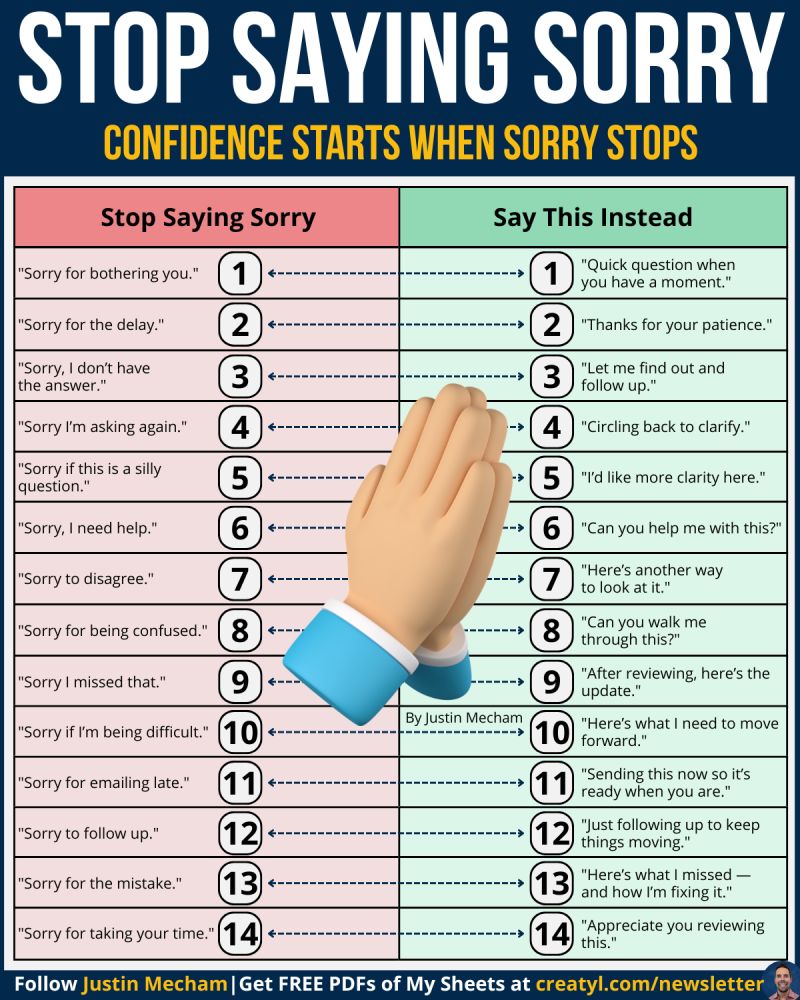
Stop Saying Sorry

If you say “sorry” a lot,

It’s costing you respect:

I used to think I was being polite.

I wasn’t.

I was slowly teaching people
not to take me seriously.

Most “sorry” moments are not mistakes.

They are habits.

We say it to sound nice.
We say it to soften the moment.
We say it without thinking.

But over time, it sends a signal.

I’m unsure.
I’m smaller.
I don’t fully stand here.

Here’s what finally clicked for me.

You don’t need less kindness.

You need fewer apologies
for things that are not wrong.

Clarity beats apology.

Here’s how to swap it in real life:

🔹Stop apologizing for asking
🔸Ask clearly

🔹Stop apologizing for timing
🔸Thank them for waiting

🔹Stop apologizing for not knowing
🔸Say you’ll find out

🔹Stop apologizing for clarity
🔸Ask for it directly

🔹Stop apologizing for help
🔸Request it

🔹Stop apologizing for disagreement
🔸Offer another view

🔹Stop apologizing for follow ups
🔸Keep things moving

🔹Stop apologizing for mistakes
🔸Explain the fix

🔹Stop apologizing for space
🔸Respect the exchange

‼️Try this simple reset today:
• Notice when you type or say “sorry”
• Pause before sending/saying
• Swap it for clarity
• Keep your tone calm and direct

Confidence isn’t louder words.

It’s clearer ones.