Doing the Right Thing When It’s Inconvenient

There’s a strange comfort in numbers. When everyone around us is doing the same thing, it starts to feel safe. Normal. Almost justified. We tell ourselves, This is just how things work. We stop questioning it. We stop listening to that quiet voice that nudges us when something feels off.

That’s how “wrong” slowly gets normalized.

It rarely shows up as something dramatic. It’s usually subtle. Cutting a small corner. Staying silent when a line is crossed. Shipping something half-baked because timelines matter more than truth. Laughing along when a joke doesn’t sit right. Signing off on a decision because everyone else already did.

And the dangerous part? It doesn’t feel wrong in the moment. It feels efficient. Practical. Low-risk.

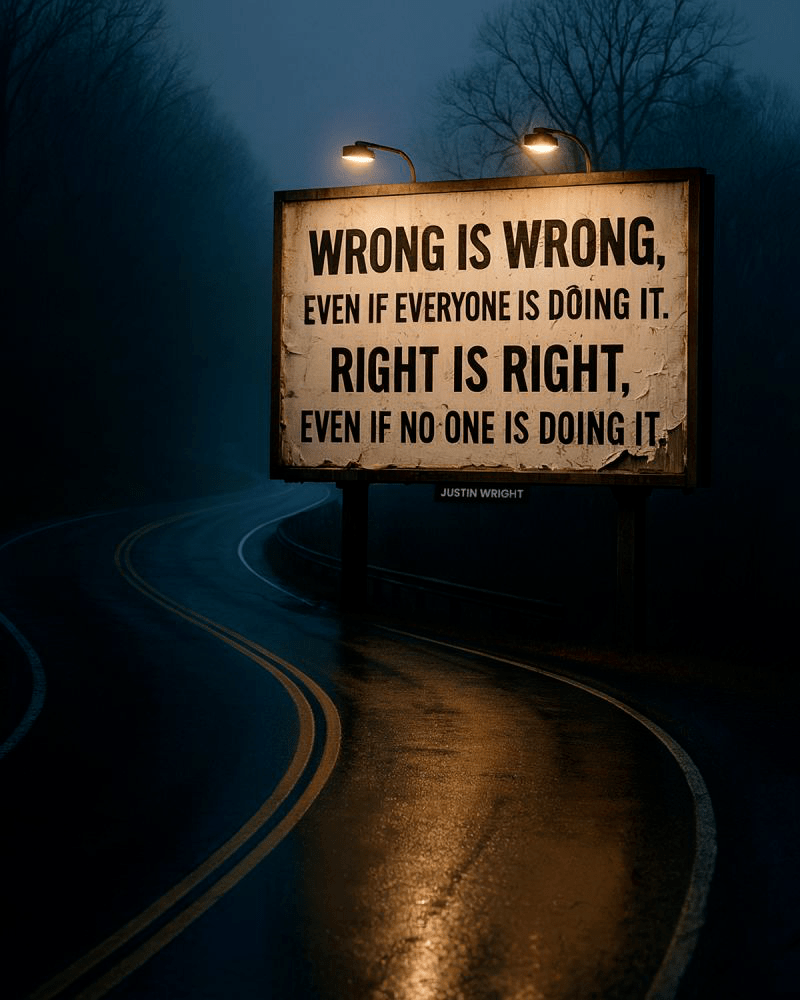
But wrong doesn’t stop being wrong just because it’s popular.

Doing the right thing, on the other hand, often feels lonely. It can make you look difficult. Idealistic. Out of sync with the room. It may cost you speed, approval, or short-term wins. Sometimes it even costs relationships or opportunities.

That’s why it’s hard.

We like to believe that courage shows up in big, cinematic moments. In reality, it shows up in ordinary decisions that no one is applauding. In moments where the only reward is being able to sleep at night. In choosing integrity when cutting corners would be easier and quieter.

What makes this especially tricky is that “everyone” doesn’t have to be a lot of people. Sometimes it’s just your team. Your industry. Your peer group. When the local norm is off, going against it can feel like swimming upstream with no clear destination.

But here’s the thing: right and wrong don’t need consensus. They never did.

History is full of moments where the majority was comfortable—and deeply mistaken. And it’s also full of individuals who stood alone, not because they wanted to, but because they couldn’t unsee what was wrong anymore. They didn’t always win immediately. Sometimes they didn’t win at all. But they shifted the line for everyone who came after.

On a smaller, everyday scale, the same principle applies. Cultures don’t change because everyone wakes up enlightened on the same morning. They change because a few people consistently refuse to compromise on what matters. They ask uncomfortable questions. They slow things down. They choose clarity over convenience.

And yes, that can be exhausting.

But the alternative is more costly than we like to admit. When we repeatedly choose convenience over conviction, we don’t just bend the rules—we bend ourselves. Over time, it becomes harder to tell where the line even was. That’s when cynicism creeps in. That’s when “this is just how it is” replaces “this could be better.”

Doing the right thing won’t always make you popular. It won’t always make you successful in obvious ways. But it does something quieter and more important: it builds self-trust. It reinforces the idea that your values aren’t situational. That they don’t disappear under pressure.

And sometimes, without you realizing it, your choice gives someone else permission to make the same one. What felt like standing alone turns out to be standing first.

Wrong doesn’t become right by repetition.

Right doesn’t stop being right because it’s inconvenient.

The question isn’t whether others are doing it.

The question is whether you can stand by it when no one else is.
The Smartest Update You’ll Ever Install

Somewhere along the way, we turned “changing your mind” into a weakness.

Like it means you didn’t know enough.

Like you got “caught.”

Like you lost.

But the older I get, the more I’m convinced it’s the exact opposite.

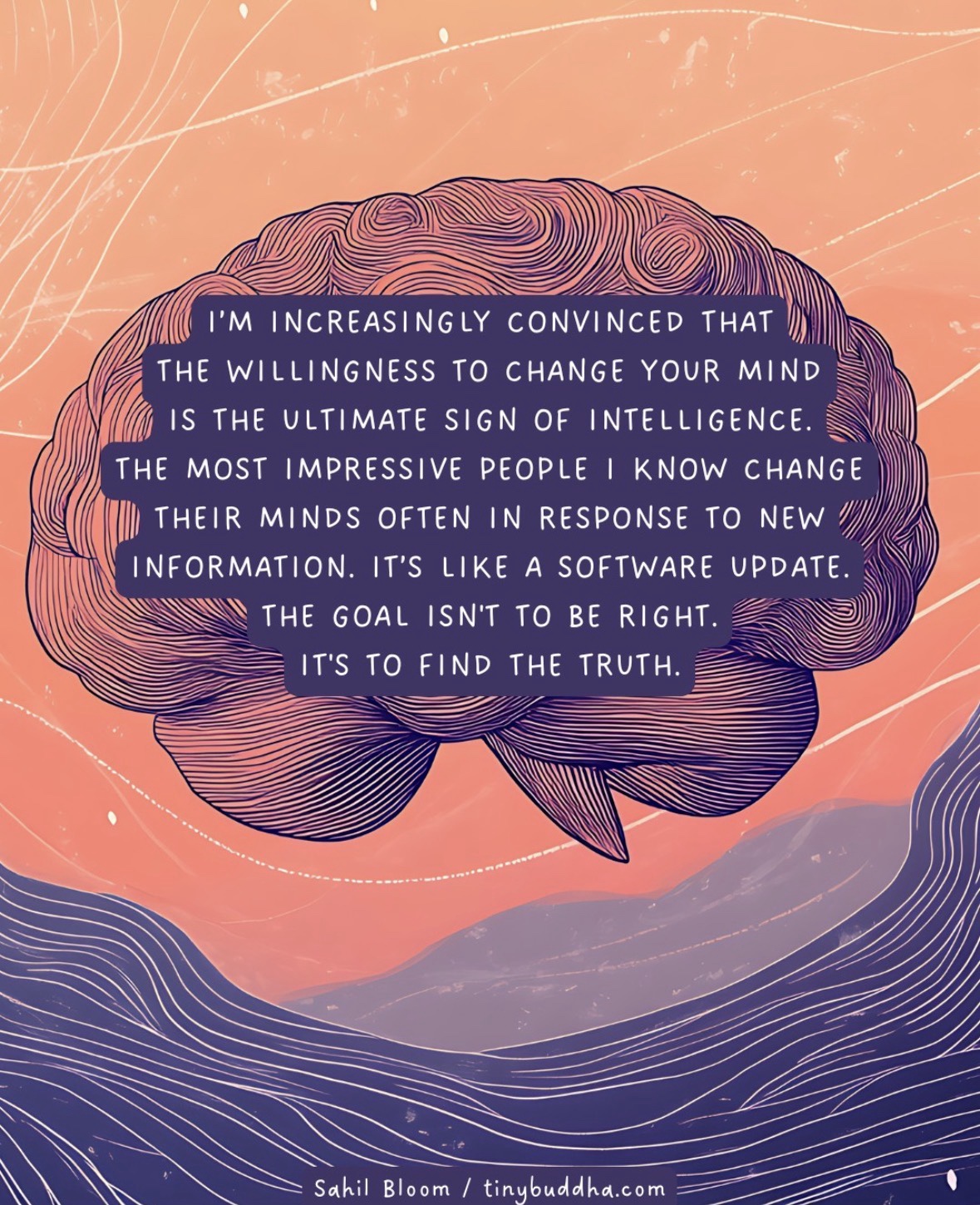
The willingness to change your mind might be one of the clearest signs of intelligence there is.

Not the loud kind of intelligence that wins arguments.

Not the performative kind that drops facts like mic drops.

But the quiet, sturdy kind that can hold a belief with open hands instead of clenched fists.

Because here’s the truth: the smartest people I know don’t treat their opinions like permanent tattoos. They treat them like software.

They update.

And they don’t update because they’re confused.

They update because they’re paying attention.

They listen.

They learn.

They notice when reality is trying to teach them something new.

And instead of fighting it, they adjust.

That’s rare. And it’s impressive.

Most of us don’t struggle with information. We struggle with identity.

We don’t just believe something…

We become someone who believes it.

So when new information shows up, it doesn’t feel like a new data point.

It feels like a threat.

To our ego.

To our reputation.

To the version of ourselves we’ve been defending.

And that’s where people get stuck.

Not because they don’t have access to the truth…

But because the cost of changing their mind feels too high.

It takes humility to say, “I didn’t see it that way before.”

It takes courage to admit, “I might have been wrong.”

It takes maturity to say, “I’m learning.”

And let’s be honest… those sentences don’t always come naturally.

Because we live in a world that rewards certainty.

The person who speaks the fastest sounds the smartest.

The person who sounds the most confident gets the most attention.

The person who never hesitates looks like they have it all figured out.

But certainty isn’t always wisdom.

Sometimes certainty is just fear dressed up as confidence.

Fear of being judged.

Fear of looking inconsistent.

Fear of losing credibility.

But what if credibility isn’t built by never changing your mind?

What if credibility is built by changing it for the right reasons?

Because there’s a big difference between being easily influenced and being genuinely open-minded.

One is drifting.

The other is evolving.

And the difference is the filter: new information.

The best minds don’t change their minds because someone shouted louder.

They change their minds because the evidence got clearer.

They don’t treat life like a courtroom where they have to win every case.

They treat it like a lab where they’re trying to get the results right.

That’s a completely different posture.

It’s not about defending a position.

It’s about discovering what’s true.

And that’s the part I love: the goal isn’t to be right.

The goal is to find the truth.

Even if the truth is inconvenient.

Even if it bruises your ego.

Even if it forces you to rebuild your opinion from scratch.

That’s not weakness.

That’s strength.

It’s the strength to detach your worth from your correctness.

To separate “I was wrong” from “I am wrong.”

To realize that changing your mind doesn’t mean you failed…

It means you grew.

And honestly, the people who never change their minds aren’t “strong-minded.”

They’re often just stuck.

They’ve confused consistency with character.

But character isn’t stubbornness.

Character is integrity.

And integrity means you follow what’s true, even when it’s uncomfortable.

That’s why I love the idea of a “software update.”

Because a good update doesn’t erase everything.

It improves what’s already there.

It patches what’s broken.

It strengthens security.

It removes bugs you didn’t know existed.

It makes the system run better.

And yes, sometimes it changes the interface.

Sometimes it forces you to learn a new way.

Sometimes it’s inconvenient for a day.

But long-term, it’s better.

That’s how growth works too.

You don’t wake up one day with perfect beliefs and flawless opinions.

You build them.

You refine them.

You replace what no longer fits.

You let life teach you.

And if you’re honest, some of your best breakthroughs came right after a mindset shift you didn’t want to make.

Maybe you had to change your mind about a person you misjudged.

Or a habit you thought you needed.

Or a goal you chased for the wrong reasons.

Or a version of success that looked good on the outside but felt empty on the inside.

Those moments can feel like losing something.

But you’re not losing.

You’re upgrading.

And the upgrade is rarely instant.

It’s usually a process.

You hear something new.

You resist it.

You think about it.

You wrestle with it.

You revisit it.

And slowly, your mind starts to make room for what’s true.

That’s not being indecisive.

That’s being alive.

That’s being teachable.

And teachable people are dangerous in the best way.

Because they keep getting better.

They keep expanding.

They keep sharpening their understanding.

They don’t cling to yesterday’s version of themselves just to look consistent.

They’d rather be accurate than impressive.

They’d rather be wise than loud.

They’d rather get closer to the truth than win a debate.

And in a world that’s obsessed with being right, that kind of person stands out.

So here’s the question I’ve been asking myself lately:

When was the last time I changed my mind… and thanked life for it?

Not because I was embarrassed.

Not because I had to.

But because I realized something important.

Because maybe the real flex isn’t having all the answers.

Maybe the real flex is being the kind of person who can say:

“I used to think that… but now I see it differently.”

That sentence is a sign of intelligence.

It’s also a sign of peace.

Because it means you’re not trapped inside your own pride.

You’re free to grow.

Free to learn.

Free to update.

And if that’s the direction you’re moving in, you’re doing something right.

Not because you’re always correct…

But because you’re committed to the truth.

And that, to me, is the smartest upgrade anyone can make.

Stand for Something (and You’ll Never Blend In Again)

There’s a lot of pressure these days to “stand out.”

Be louder. Be faster. Be more visible. Post more. Network more. Learn more. Achieve more. Prove more.

And honestly… it can get exhausting.

Because when standing out becomes the goal, you start chasing everything that looks impressive from the outside—without always knowing whether it actually feels right on the inside.

But here’s what I’ve learned (sometimes the hard way):

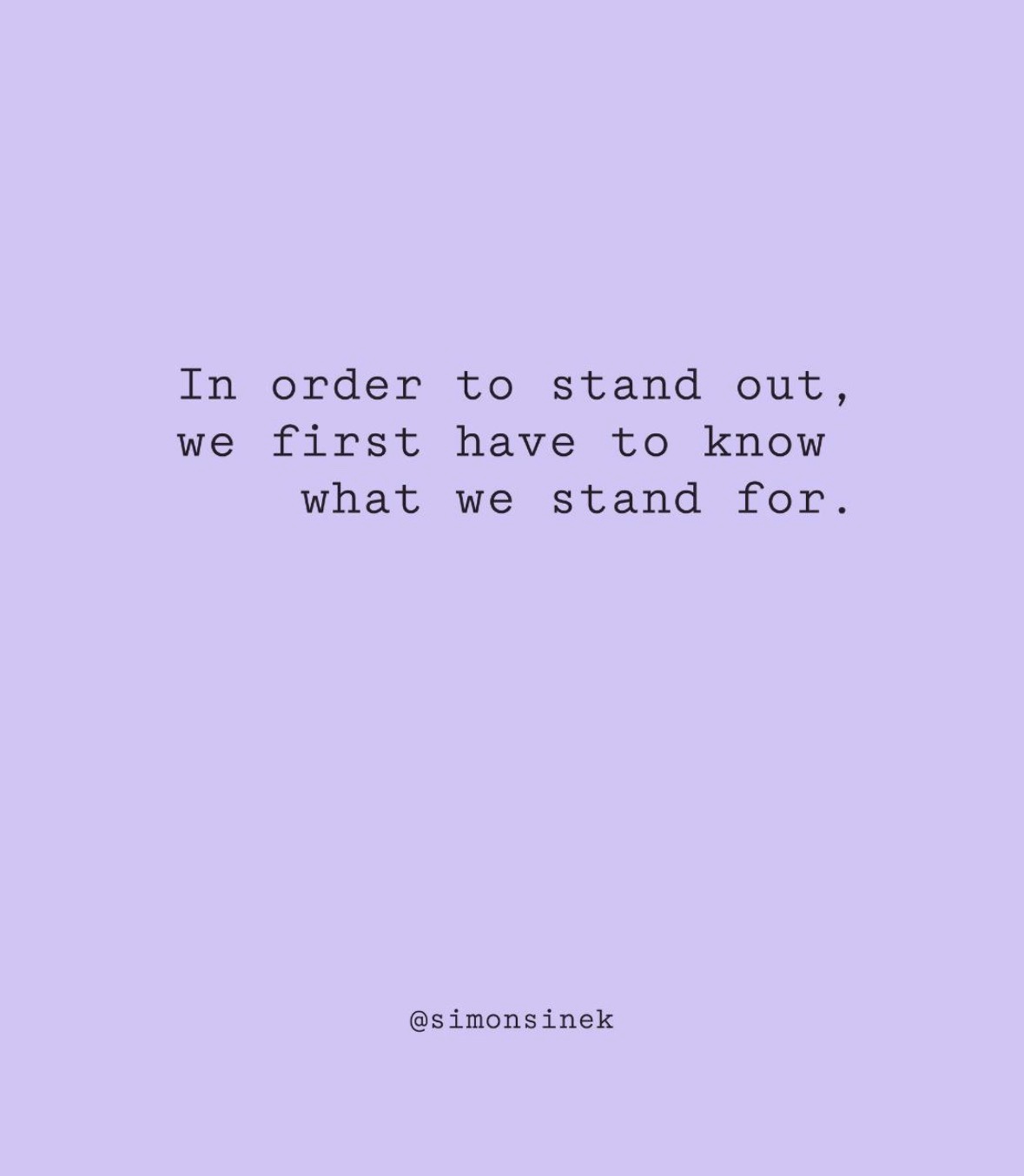
In order to stand out, we first have to know what we stand for.

Not what we say we stand for when it sounds good.

Not what we wish we stood for when we’re feeling motivated.

Not what we stand for only when it’s convenient.

I mean the real thing.

The values you return to when nobody is clapping.

The standards you hold even when no one is watching.

The choices you make when you could’ve taken the easy shortcut.

Because the truth is, you can’t build a life that feels meaningful if you don’t know what you’re anchored to.

And without that anchor, it’s easy to drift.

You drift into other people’s expectations.

Other people’s timelines.

Other people’s definition of success.

Other people’s opinions about what your life should look like.

And you might still “achieve” a lot…

…but you won’t feel like you.

That’s the strange part about chasing approval.

Even when you get it, it doesn’t always satisfy you.

Because deep down, your soul knows the difference between being celebrated for who you are… and being celebrated for who you pretended to be.

Knowing what you stand for changes everything.

It changes how you show up in relationships.

You stop trying to be everything for everyone.

You stop shrinking yourself to keep the peace.

You stop over-explaining your boundaries like they need permission.

You become clearer.

Not cold. Not rigid. Just clear.

And clarity is attractive.

People may not always agree with you, but they’ll respect you.

They’ll know where you stand.

They’ll know what you mean when you say yes.

They’ll know what you mean when you say no.

It changes how you work too.

When you know what you stand for, you don’t just chase titles.

You chase purpose.

You chase impact.

You chase growth that actually stretches you into a better version of yourself—not just a busier one.

You stop trying to win at everything.

You start trying to win at what matters.

And that’s when you begin to stand out naturally.

Not because you’re trying to be different…

…but because you’re being real.

And real is rare.

A lot of people are performing.

A lot of people are copying.

A lot of people are blending in because they’re scared of being misunderstood.

But when you know what you stand for, you don’t need to perform.

You don’t need to chase validation.

You don’t need to shape-shift depending on the room you’re in.

You can walk into any space and still feel grounded.

That’s a quiet kind of confidence.

The kind that doesn’t need to announce itself.

The kind that doesn’t need to compete.

The kind that doesn’t need to “prove” anything.

Because it’s built on identity, not applause.

And here’s the part that really matters:

Standing for something will cost you.

It will cost you comfort.

It will cost you convenience.

It might even cost you certain friendships, opportunities, or relationships that only worked when you were easy to control or easy to predict.

But it will also save you.

It will save you from living a life that looks good but feels empty.

It will save you from constantly second-guessing yourself.

It will save you from becoming someone you don’t recognize just to fit into places you’ve outgrown.

Because when you stand for something, you don’t just stand out…

You stand firm.

And that’s what people feel.

They may not remember every word you say.

They may not remember every achievement you’ve earned.

But they’ll remember your consistency.

Your integrity.

Your energy.

Your presence.

They’ll remember how you made them feel safe.

Or inspired.

Or challenged.

Or seen.

That’s what leaves a mark.

So if you’ve been feeling stuck lately…

If you’ve been trying harder but feeling less fulfilled…

If you’ve been wondering why you’re doing “all the right things” but still feel unsure…

Maybe the answer isn’t to do more.

Maybe the answer is to get honest.

What do you stand for?

Not in a perfect way.

Not in a polished way.

In a real way.

Do you stand for peace?

For faith?

For growth?

For excellence?

For kindness?

For courage?

For truth?

For family?

For service?

For humility?

For discipline?

For freedom?

Whatever it is, name it.

Because the moment you name it, you start noticing something powerful:

You don’t have to chase being unforgettable.

You just have to live in alignment.

And when you live in alignment, you’ll stand out without even trying.

Because the world doesn’t need more people trying to be impressive.

It needs more people who are rooted.

People who know who they are.

People who know what they stand for.

People who live like it matters.

So if you’re looking for your edge, your voice, your “thing”…

Start here:

Stand for something.

The rest will follow.

Healed, But Not Home

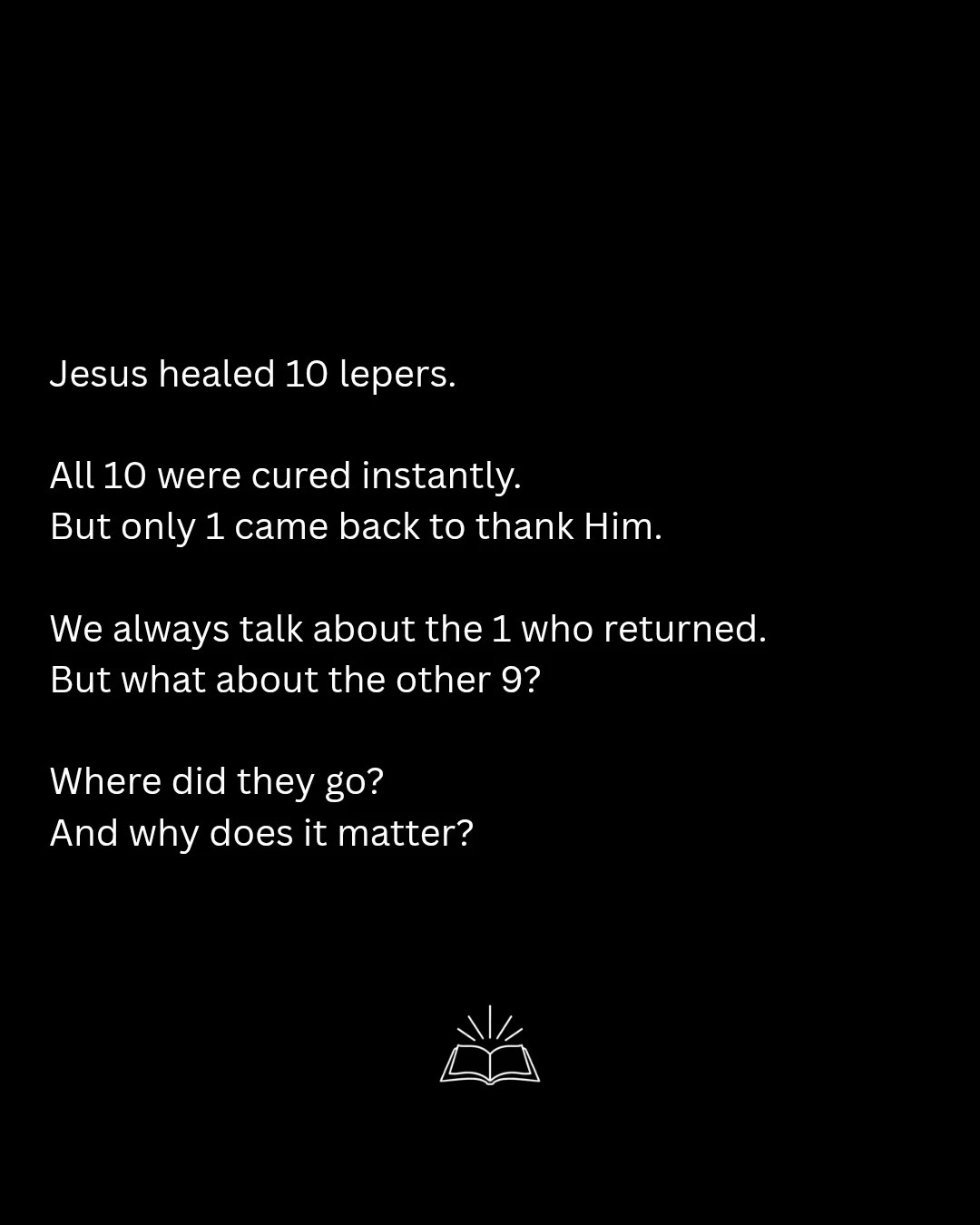
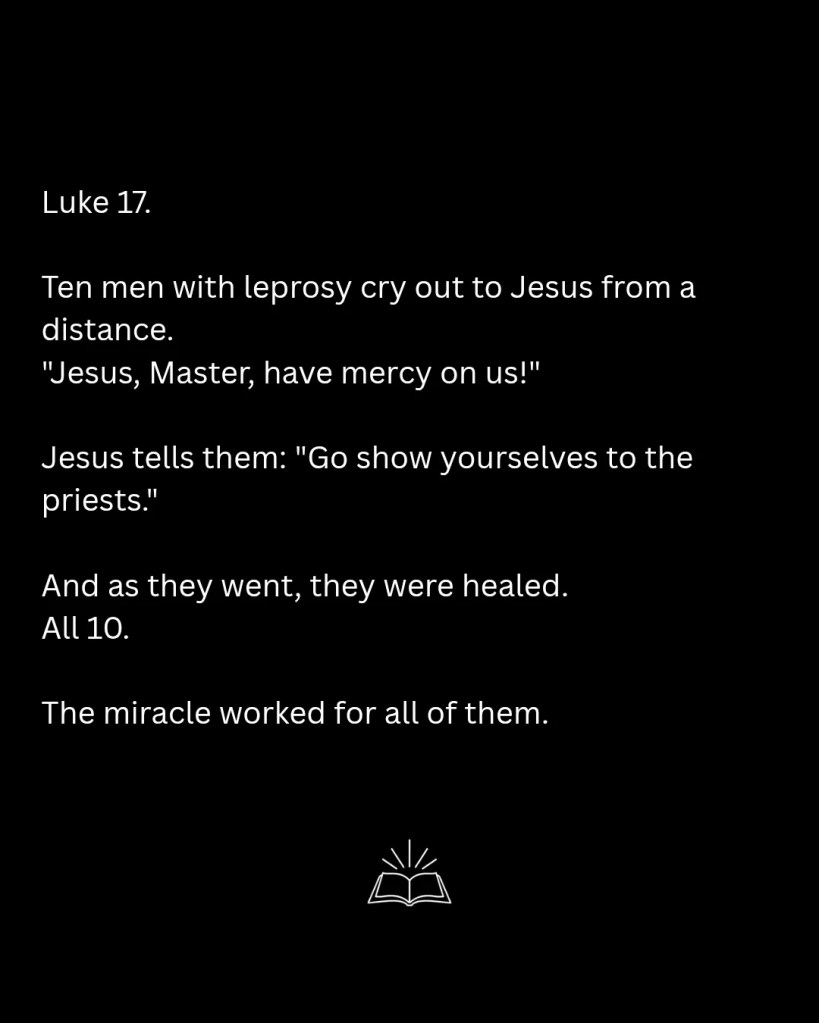
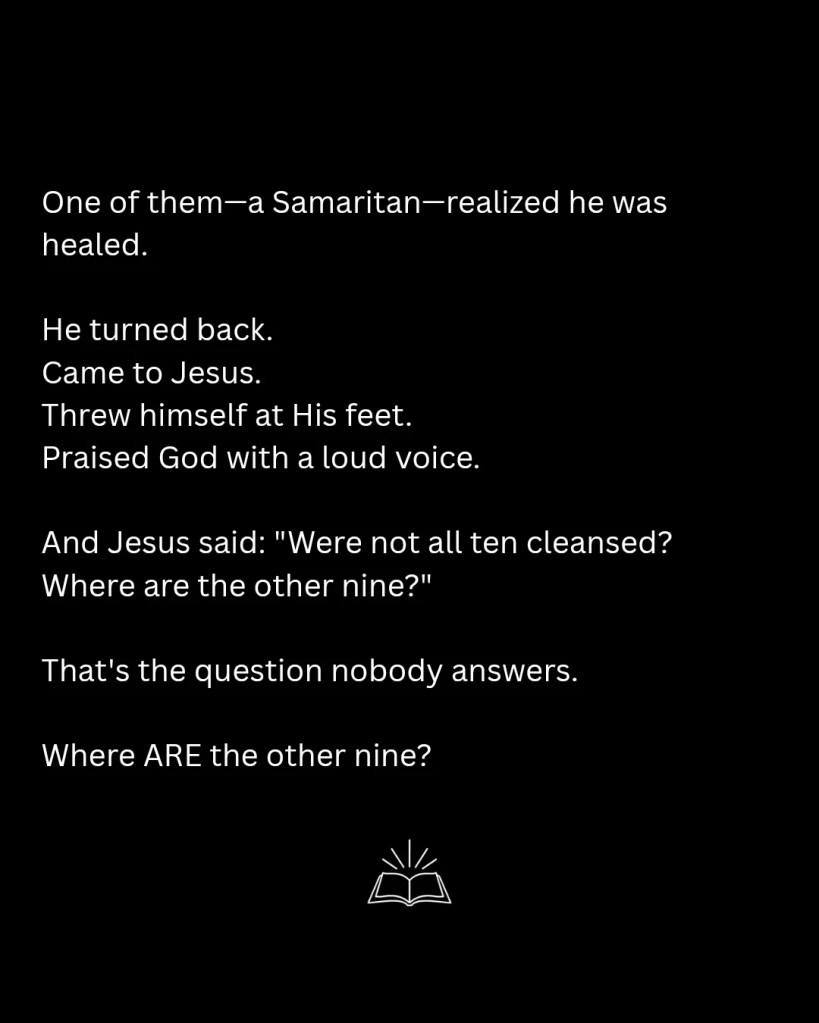
Ten voices cried out in desperation. Ten bodies were restored in an instant. Yet only one turned back. The miracle reached them all, but gratitude transformed just one. The others received healing and kept moving, eager to reclaim life as it was before pain interrupted it. One paused long enough to recognize the source of mercy—and that pause changed everything.

Healing fixes what is broken on the outside. Gratitude reorders what is broken within. In returning, the one who came back discovered something deeper than restored skin or renewed strength: a restored relationship. The miracle was a gift, but coming back to His feet was the moment wholeness truly began.

Link to Insta Post

Stop Watering What Won’t Grow

There’s a moment we all hit where something in us just gets tired.

Not tired in a dramatic way. Not angry. Not bitter.

Just… done.

Done sending the first text.

Done checking in.

Done over-explaining.

Done making excuses for silence.

Done pretending effort is optional for some people but mandatory for us.

And honestly, that’s not a “cold heart” phase.

That’s a self-respect phase.

Because there’s a difference between being patient and being taken for granted. There’s a difference between nurturing something and draining yourself trying to keep it alive.

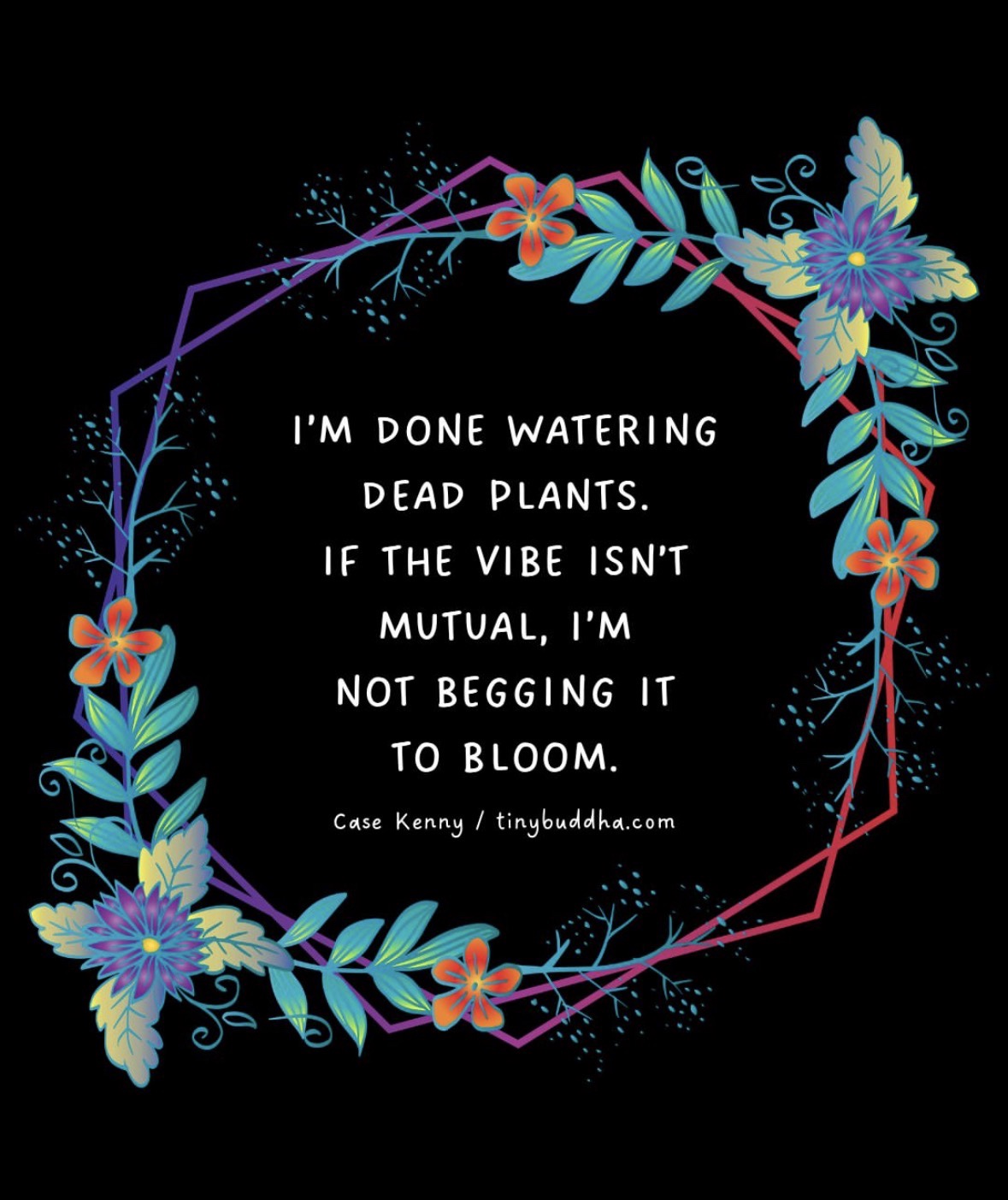
That quote hit hard for a reason:

“I’m done watering dead plants.”

That’s exactly what it feels like when you’ve been pouring energy into something that stopped growing a long time ago.

A friendship that only calls when they need something.

A relationship where you’re the only one trying.

A workplace dynamic where you’re always proving your worth to people who already decided not to value it.

A connection where you keep showing up, but you’re always met with half-effort and half-interest.

And the part that hurts isn’t even the ending.

It’s realizing how long you stayed, hoping your effort would be enough to make the other side care.

But here’s the truth we don’t say out loud enough:

If the vibe isn’t mutual, you can’t force it to bloom.

You can’t love someone into maturity.

You can’t “support” someone into consideration.

You can’t keep giving and giving and call it loyalty when it’s actually you abandoning yourself.

A dead plant doesn’t need more water.

It needs roots.

It needs sunlight.

It needs soil that isn’t poisoned.

And sometimes, no matter what you do, it’s already gone.

We don’t like admitting that, because we’re wired to believe effort fixes everything. That if we just try harder, communicate better, be kinder, be more patient… it’ll change.

But mutual energy doesn’t require begging.

It doesn’t require chasing.

It doesn’t require constant reminders.

It doesn’t require you shrinking your needs to keep the peace.

Mutual energy feels simple.

Not effortless, but balanced.

You give.

They give.

You reach out.

They reach back.

You show up.

They show up too.

It’s not always equal every single day—but it’s never one-sided for months.

And when it becomes one-sided, something in your spirit starts to feel it first.

You start feeling heavy after conversations.

You start feeling anxious before you reach out.

You start rehearsing what to say so you don’t “ask for too much.”

You start questioning your worth based on someone else’s inconsistency.

That’s when you know you’re not in a healthy connection anymore.

You’re in a situation where your effort is being used as a substitute for their commitment.

And I know… it’s hard to walk away from something you’ve invested in.

You think about the memories.

The potential.

The “maybe they’re just going through something.”

The version of them you met at the beginning.

But you can’t keep living in the beginning of something that refuses to grow into the next season.

Sometimes, the most mature thing you can do is stop fighting for a place where you have to beg to be seen.

Not because you don’t care.

But because you finally care about yourself too.

And here’s the thing: walking away doesn’t always mean burning bridges or making a speech.

Sometimes it’s quiet.

It’s choosing not to send that message.

Not to explain your pain to someone who keeps repeating the same behavior.

Not to force closeness with someone who keeps you at arm’s length.

It’s letting the distance speak the truth.

Because if someone truly values you, distance doesn’t feel like relief to them.

It feels like loss.

And they’ll do something about it.

But if they don’t?

That’s your answer.

A lot of us confuse consistency with love.

We think “I’m still here” means it’s real.

But staying isn’t always love.

Sometimes staying is fear.

Sometimes it’s habit.

Sometimes it’s pride.

Sometimes it’s hoping.

Sometimes it’s because we don’t want to accept that we outgrew something.

And outgrowing isn’t cruel.

It’s natural.

You’re allowed to evolve.

You’re allowed to raise your standards.

You’re allowed to stop being the one who holds everything together.

Because you were never meant to be the only one holding it.

If you’re the only one watering it, it’s not a relationship.

It’s a responsibility.

And love was never supposed to feel like a burden you carry alone.

So if you’re in that season right now—where you’re choosing peace over chasing—let me say this clearly:

You’re not giving up.

You’re waking up.

You’re learning that the right people won’t make you beg for effort.

They won’t make you feel like an option.

They won’t make you question whether you matter.

And the best part?

When you stop pouring into what’s dead, you finally have energy for what’s alive.

For the people who check on you without being asked.

For the friendships that feel easy to maintain.

For the relationships where love isn’t confusing.

For the spaces where your presence is appreciated, not tolerated.

That’s where you bloom.

Not in places you have to fight to belong.

So yes…

Stop watering dead plants.

Not because you’re heartless.

But because you’re finally ready to grow something real.

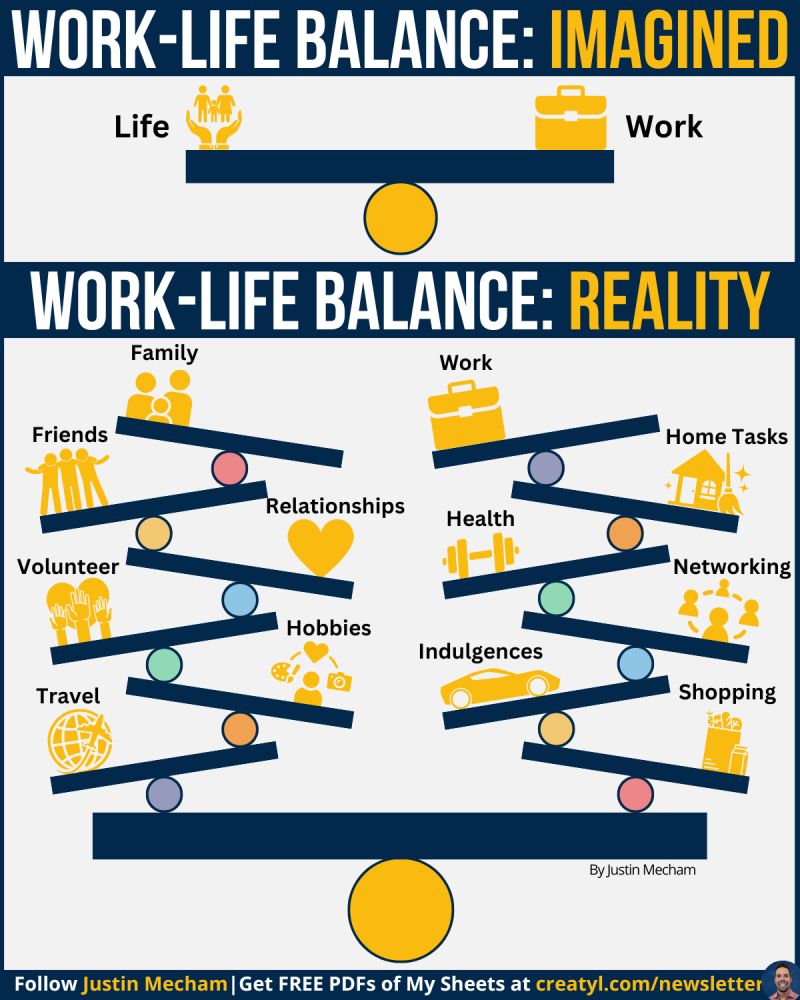
Work Life Balance

Most people chase balance—

Few learn how to adjust it:

We’re taught that work-life
balance is even and steady.

Work on one side.
Life on the other.

But real life isn’t that neat.

You’re always shifting:
work, family, health, friends.

Nothing stays equal for long.

One area always needs more time—

And that’s okay.

The problem isn’t being off balance.

It’s expecting everything
to feel equal at the same time.

What actually works is
paying attention and adjusting:

• Some weeks work needs more focus.
• Some weeks health or family comes first.
• Some seasons are for pushing.
• Others are for resting.

Balance isn’t a goal you reach.

It’s a choice you make each day.

Want a better way to handle it?

• Pick what matters most this week.
• Reduce one thing draining you.
• Add rest before you’re exhausted.

What great balance is for someone else,
may not be a great balance for you.

And that’s okay.

You decide what balance works for you.

What’s been off balance for you lately?

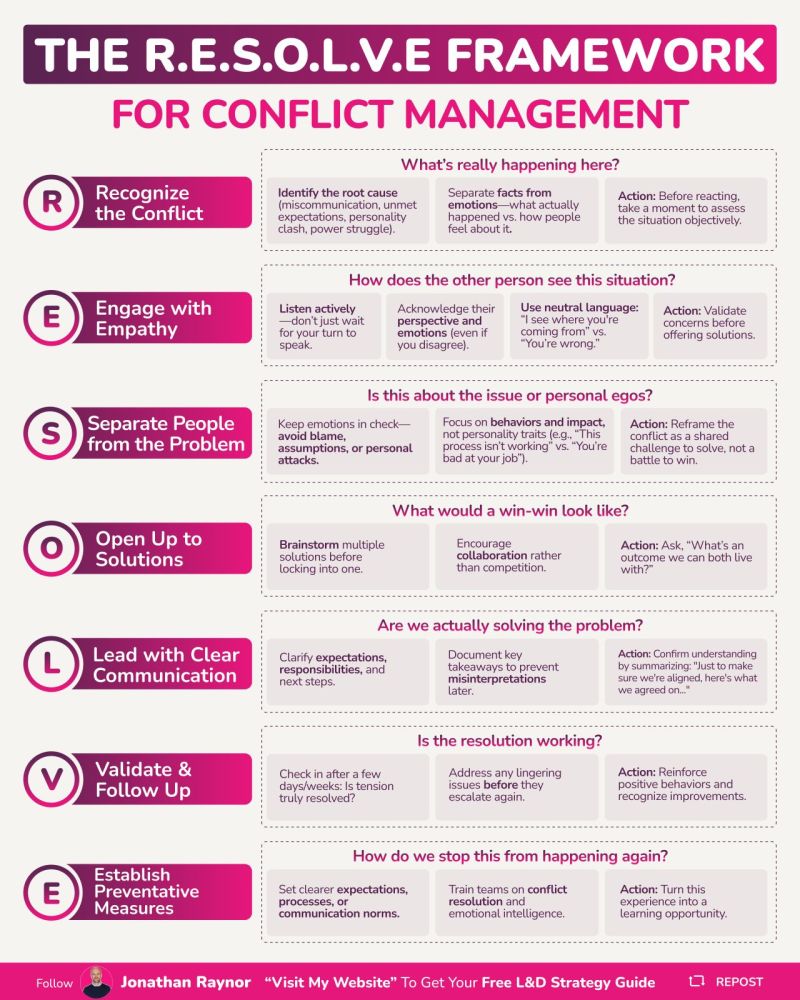
The R.E.S.O.L.V.E Framework for Conflict Management

Most conflict at work isn’t about the issue.

It’s about how we handle it.

– Unspoken tension.
– Misread emails.
– Meetings that go sideways.

Left unchecked, conflict spreads fast.

It damages trust, slows progress, and kills morale.

But it doesn’t have to.

Here’s how to lead through conflict with clarity:

R – Recognize the Conflict
Get clear on the root cause.
Separate facts from feelings before reacting.

E – Engage with Empathy
Listen to understand, not just to reply.
Validate concerns—even if you disagree.

S – Separate People from the Problem
Avoid blame and assumptions.
Focus on behaviors, not personalities.

O – Open Up to Solutions
Look for shared outcomes.
Collaboration always beats competition.

L – Lead with Clear Communication
Clarify expectations and next steps.
Alignment prevents misinterpretation.

V – Validate and Follow Up
Revisit the issue.
Make sure the resolution sticks.

E – Establish Preventative Measures
Don’t just resolve – learn.
Set better norms, build team EQ, and train for next time.

Great leaders don’t avoid conflict.

They resolve it – and grow trust in the process.

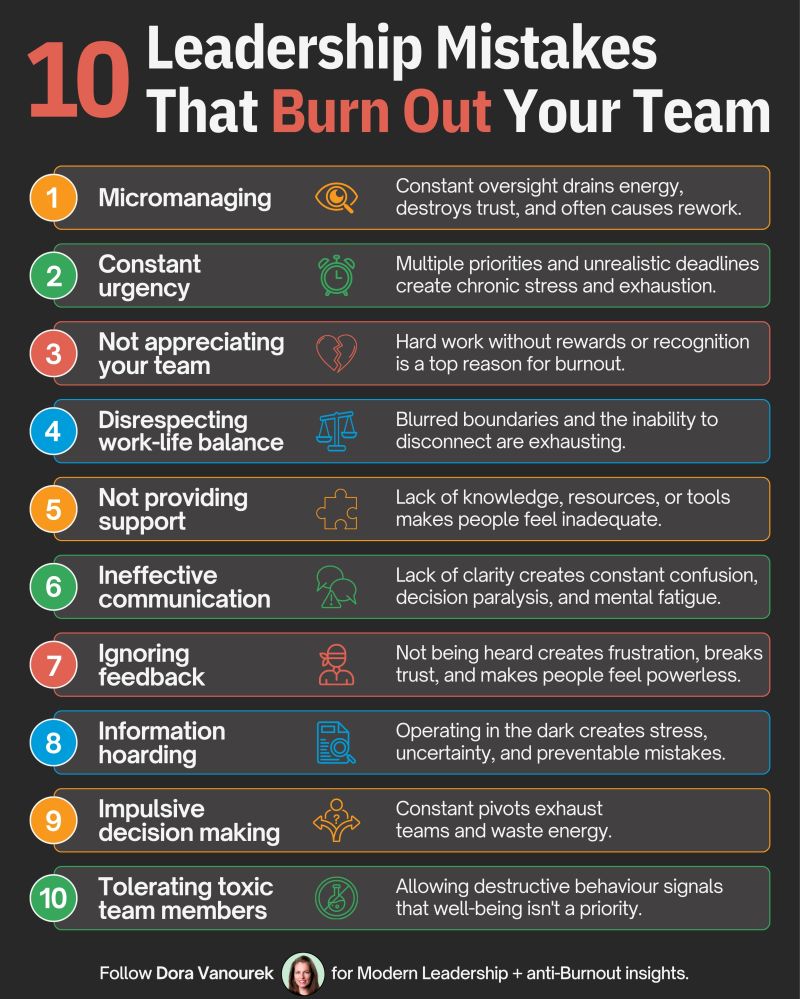
10 Leadership Mistakes That Lead To Burnout

Hard work doesn’t burn people out.

Poor leadership does.

The solution isn’t meditation apps or productivity hacks.

It’s fixing the leadership habits destroying your people:

1. Micromanaging:
↳ Constant oversight drains energy and destroys trust

2. Constant urgency:
↳ Making everything urgent creates chronic stress

3. Lack of appreciation:
↳ Hard work without rewards is a top reason for burnout

4. Not respecting work-life balance:
↳ Always-on culture leads to always-burned-out teams

5. Ineffective communication:
↳ Unclear direction creates confusion and decision paralysis

6. Not providing support:
↳ Setting people up to fail, then wondering why

7. Ignoring feedback:
↳ Not being heard destroys trust and makes people feel powerless

8. Information hoarding:
↳ Operating in the dark causes constant stress and preventable mistakes

9. Impulsive decision making:
↳ Constant pivots exhaust everyone

10. Tolerating toxic team members:
↳ One bad apple really does spoil the bunch

Your team doesn’t need more yoga sessions or mental health apps.

They need leaders who make them feel valued, supported, and heard.

Lead with empathy, not just with metrics.

The Chapters That Didn’t End You

Some seasons in life leave marks.

Not the kind you can point to on your skin, but the kind you feel when a song comes on at the wrong time… when a familiar place suddenly feels heavy… when someone says something small and it hits something deep inside you that you didn’t even realize was still sore.

And if you’ve lived through enough of those moments, it’s easy to start believing that pain is the main character in your story.

That the hardest things you’ve faced are the headline.

That the hurt is the definition.

But here’s what I want to remind you today—gently, honestly, and without pretending it’s easy:

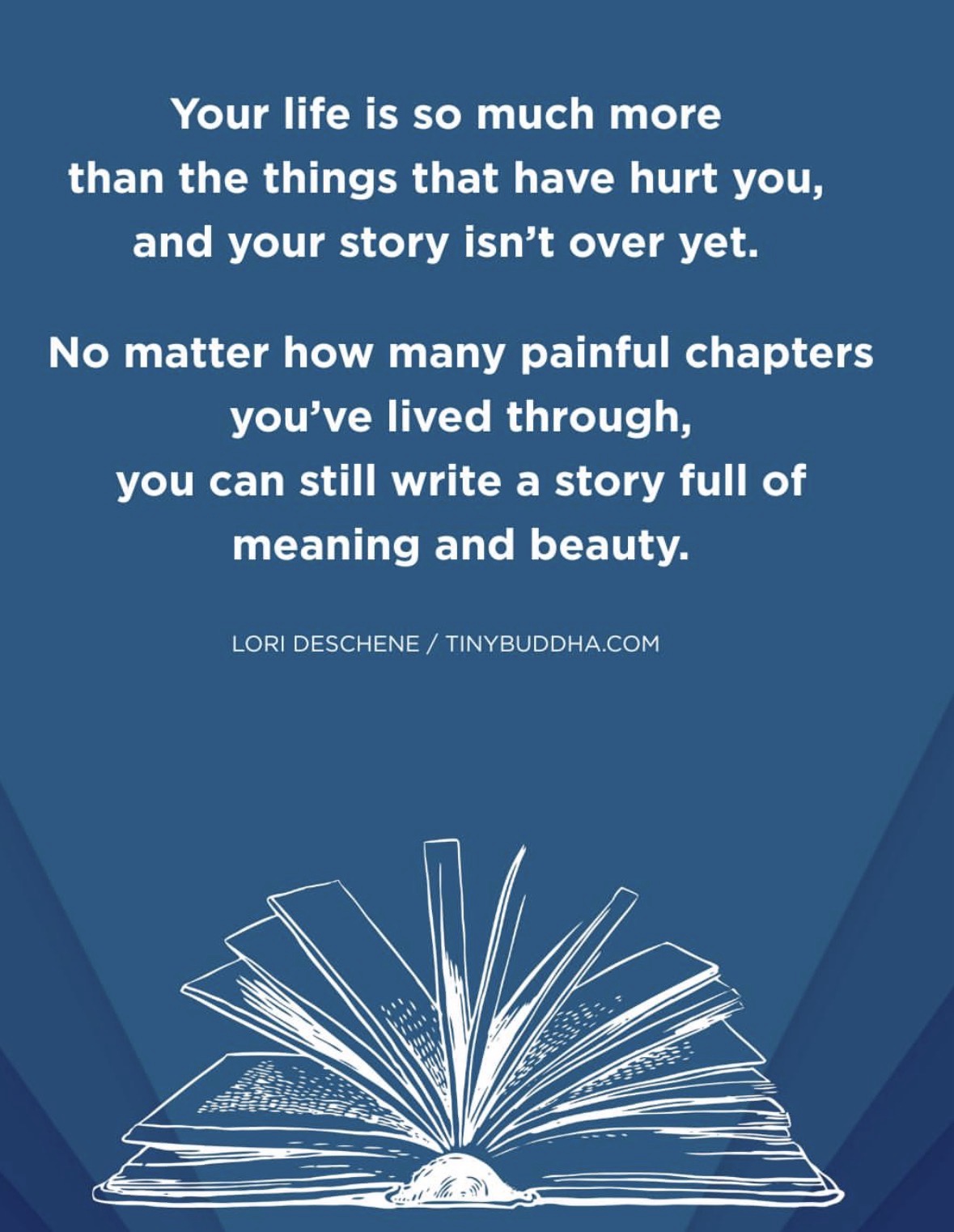
Your life is so much more than the things that have hurt you.

You are not just a collection of wounds.

You are not just what you survived.

You are not just the days you barely made it through.

And you are definitely not finished.

Sometimes we treat our pain like it’s a final verdict. Like it’s proof that something is permanently broken in us. Like the fact that we struggled means we’re destined to struggle forever.

But pain is not a prophecy.

Pain is a chapter. A real one. A heavy one. A chapter you didn’t ask for.

But it is not the whole book.

There are people who have walked through years of disappointment and still found joy again.

There are people who have been betrayed and still learned to trust the right ones.

There are people who have lost themselves and still found their way back.

Not because they “got over it” overnight.

Not because they stopped feeling it.

But because they decided their story was worth continuing.

And maybe that’s what you need today—not a big motivational speech, not a perfect plan, not a sudden burst of confidence.

Maybe you just need permission to keep going.

Because the truth is, healing doesn’t always look like feeling amazing.

Sometimes healing looks like getting out of bed when you don’t want to.

Sometimes it looks like laughing and then feeling guilty for laughing.

Sometimes it looks like being okay for a few hours, then breaking down again, and then coming back up.

Sometimes it looks like praying through tears.

Sometimes it looks like choosing not to give up, even when you’re tired of being strong.

And that still counts.

That is still progress.

That is still courage.

A lot of us don’t realize how brave we’ve been because we’ve been too busy trying to survive.

We forget that showing up after heartbreak is brave.

Trying again after failure is brave.

Letting yourself love after loss is brave.

Building a life after being shattered is brave.

And even if you don’t feel brave… if you’re still here, you’ve already proven something important:

You can make it through hard things.

Now, I’m not going to insult you by saying the painful chapters “happened for a reason” in a neat little bow. Some things shouldn’t have happened. Some things were unfair. Some things were deeply wrong.

But what I will say is this:

Your future can still hold meaning and beauty—even if your past held pain.

Even if you’ve made mistakes.

Even if you’ve been disappointed.

Even if you’ve been hurt by people you trusted.

Even if you’ve carried something silently for years.

You can still write a life that feels honest, grounded, and full.

And it won’t look like a perfect story.

It’ll look like a real one.

A story where you learn to breathe again.

A story where you stop apologizing for what you went through.

A story where you stop shrinking yourself to make your pain easier for others to understand.

A story where you learn that peace doesn’t mean “nothing ever hurts again.”

Peace can mean: I’ve been through pain, and it no longer controls me.

It can mean: I can remember without falling apart.

It can mean: I can carry the memory without carrying the weight.

And you know what’s beautiful? You don’t have to rush to the ending.

You don’t have to have it all figured out.

You don’t have to pretend you’re fine.

You just have to keep writing.

One small choice at a time.

One day at a time.

One page at a time.

Because meaning isn’t something you wait for. Meaning is something you build.

It’s built in the way you love people even when it’s risky.

It’s built in the way you choose kindness when you could choose bitterness.

It’s built in the way you keep learning, even after life humbled you.

It’s built in the way you show up, imperfect but present.

It’s built in the way you keep believing—maybe not loudly, maybe not confidently—but quietly… that better is still possible.

And if today is one of those days where you feel behind, or broken, or tired of being the one who always “gets through it,” I want you to hear this clearly:

You are allowed to be a work in progress and still be worthy of good things.

You are allowed to be healing and still be loved.

You are allowed to have scars and still be soft.

You are allowed to have a past and still have a future.

Your story isn’t over.

Not because everything will suddenly become easy.

But because there is still more life left in you.

More laughter waiting for you.

More moments of peace.

More friendships that feel safe.

More love that doesn’t require you to beg for it.

More confidence that comes from knowing what you can survive.

More beauty that doesn’t erase the pain—but rises beside it.

So if your life has had painful chapters, I’m sorry. Truly.

But I hope you don’t hand those chapters the pen.

You hold the pen now.

And even if your handwriting is shaky today…

Even if the ink feels heavy…

Even if all you can manage is one honest sentence:

“I’m still here.”

That’s enough to keep the story going.

And that story can still be full of meaning.

It can still be full of beauty.

And so can you.

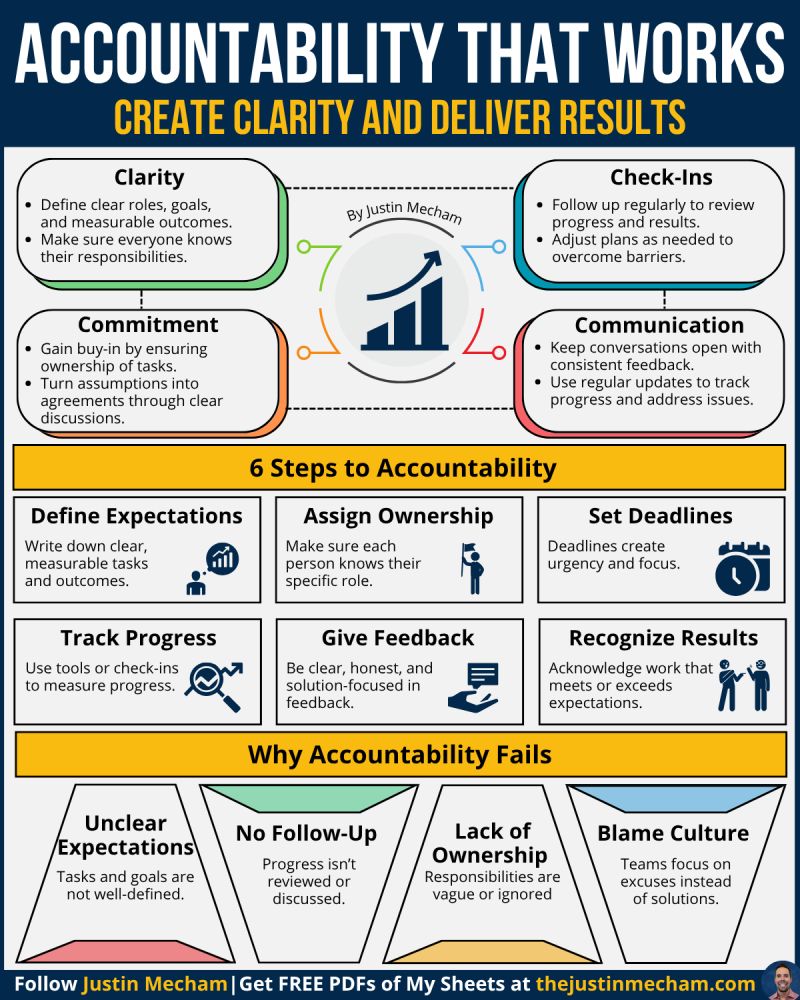
Accountability That Works

You can’t hold people accountable—

For what was never made clear:

If no one agrees on what to be accountable for,
things will fall apart and systems will fail.

Real accountability isn’t assumed,
it’s built through action.

And it depends on 3 things:

✅ Consistent follow-through
✅ Ownership without blame
✅ Clear expectations

If you lead people, these are
non-negotiable:

✔️Track what matters
✔️Give honest feedback
✔️Celebrate real outcomes
✔️Write it down (= no guessing)
✔️Assign clear ownership
✔️Set actual deadlines

But here’s what breaks it all:

🚫 Undefined roles
🚫 Vague expectations
🚫 No review of progress
🚫 Excuses replacing responsibility

Accountability isn’t about pressure.

It’s about clarity, consistency, and trust.

And it starts before the work begins.