

Have you ever solved a problem—only to have it resurface later in a slightly different form?
If this sounds familiar, you might be dealing with symptoms rather than root causes. The solution? Combine Systems Thinking with Strategic Foresight. Here’s how to use these powerful approaches together to drive sustainable business success:
1. Zooming In and Out
Great strategic thinkers master the art of perspective. Zooming in helps you address immediate details and urgent tasks, but zooming out allows you to see the larger system at play, ensuring your short-term actions align with long-term goals.
2. Consider Different Perspectives
Every stakeholder sees the business differently. By intentionally shifting perspectives—from customers to employees, from suppliers to competitors—you’ll uncover blind spots and identify innovative solutions. Effective strategy demands seeing your organization through multiple lenses.
3. Look for Patterns
Systems thinkers excel at pattern recognition. Patterns reveal deep-seated systemic issues rather than isolated events. Identifying patterns gives you insight into underlying forces that repeatedly impact your business, enabling proactive solutions instead of reactive fixes.
4. Use Foresight, Not Forecasting
Forecasting assumes a linear future—predictable and consistent. But the world today demands adaptability. Foresight equips leaders with the capability to envision multiple possible futures, preparing businesses for various scenarios and increasing resilience in the face of uncertainty.
5. Move Forward with Small, Iterative Actions
Grand plans are attractive but often fail when the unexpected happens. Adopting iterative, agile actions lets you test solutions, learn, adjust quickly, and evolve your strategy based on real-time feedback and emerging trends.
6. Causal Loop Diagrams (CLDs)
Use visual diagrams to map how different parts of your system interact, highlighting feedback loops and root causes. This clarity allows you to strategically identify where small shifts can lead to large, sustainable impacts.
7. Backcasting
Define your ideal future clearly (your North Star), then systematically work backward to determine necessary actions. Backcasting ensures every decision you make today aligns with—and brings you closer to—your desired future outcomes.
Bringing it All Together
By combining systems thinking with strategic foresight, businesses gain clarity, agility, and resilience. Instead of repeatedly tackling symptoms, leaders address root causes, anticipate shifts, and adapt proactively.
Overthinking
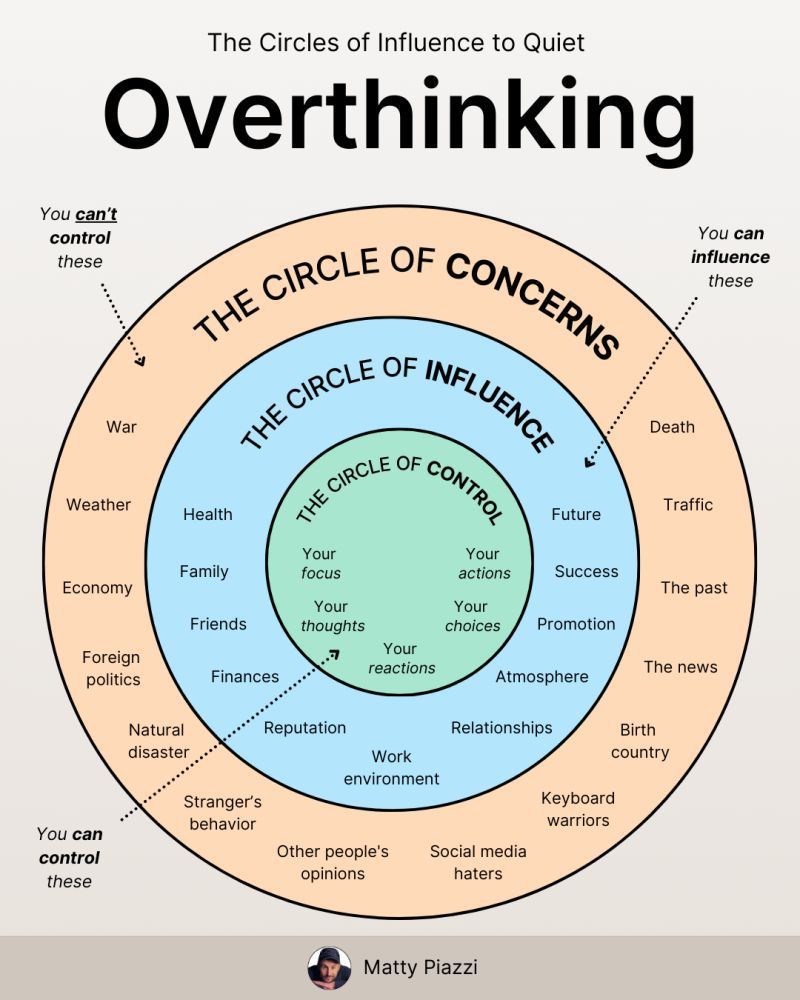
Feeling stuck in overthinking?
It’s normal — we’re human. But…
Instead of letting it paralyze you, try reframing your thoughts.
It’s a simple skill to help you regain control and self-regulate.
Here are 3 quick shifts to try:
1. Turn ‘Why’ into ‘What’
‘Why’ questions keep you stuck in the problem.
‘What’ questions focus on solutions.
And we want solutions, not just problems, right?
So, instead of ‘Why is this happening to me?’, ask:
→ ‘What is this trying to teach me?’
For example, imagine you’re not gonna like this LinkedIn post.
My question won’t be:
→ ‘Why didn’t people like it?’
But:
→ ‘What can I learn from this?’
But you like it, right? :)
2. Break free from ‘Always’ and ‘Never’
Absolute words box you in.
So, instead of ‘People always ignore me,’ try:
→ ‘Some people at work don’t seem to listen — how can I get their attention?’
3. Use ‘What if’ to your advantage
Worry and overthinking love to live in ‘what ifs.’
Here’s the good news:
→ You can flip them
How?
Instead of ‘What if I fail,’ ask:
→ ‘What if I learn and grow?’
A totally different story, right?
That’s it.
When your thoughts turn against you, shift the focus.
Just rewrite the story in your head.
We can do it, right?
So, which of these shifts will you try first?
Why Humility Builds Real Trust
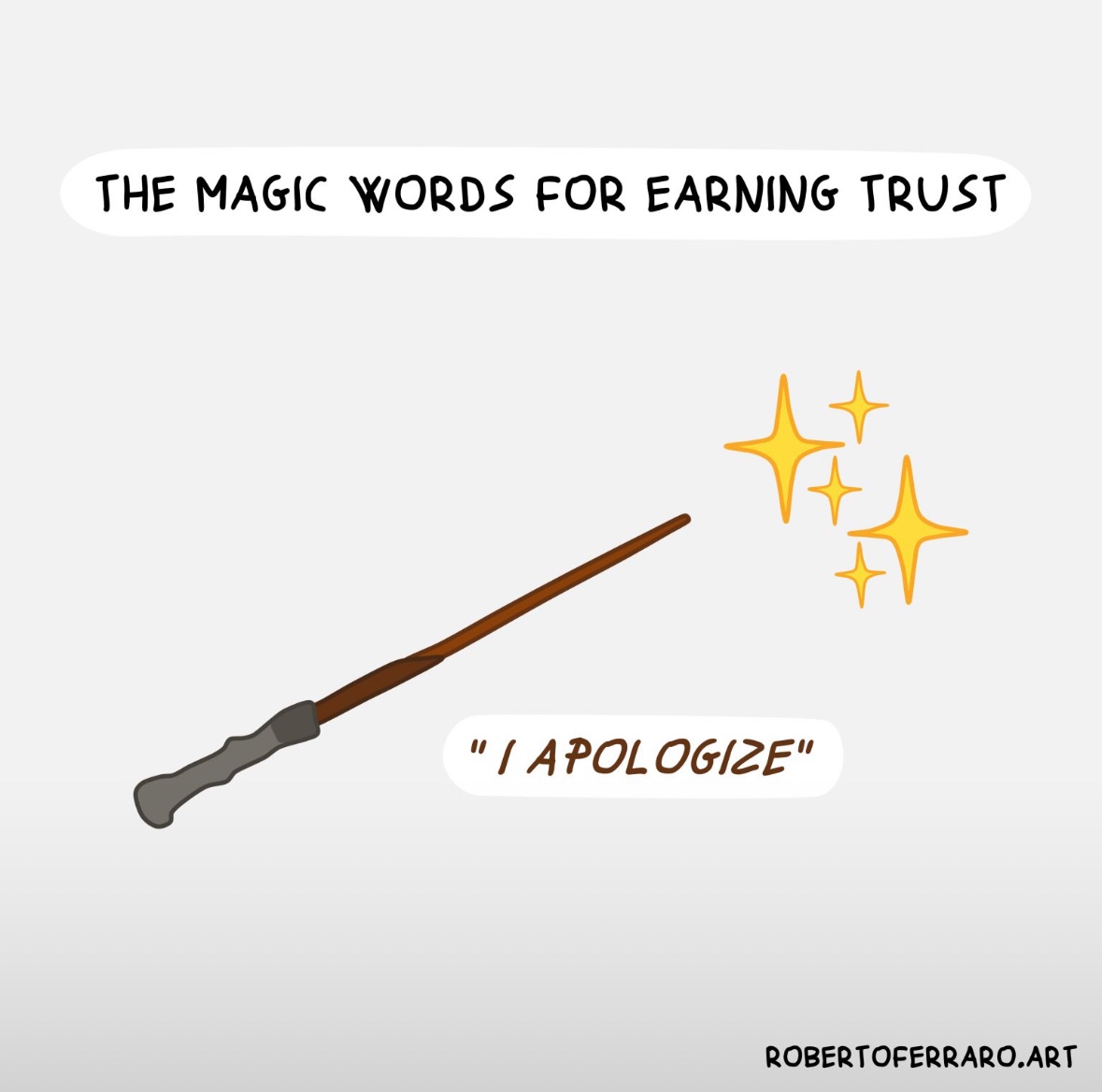
How many times do we say,
“I’m not sure.”
“I made a mistake.”
“I don’t know.”
Not nearly enough — especially in a world that rewards certainty, quick answers, and polished perfection.
Yet, as Rachel Botsman highlights in her timeless article for the Nordic Business Forum, humility is one of the most powerful ways to build trust in today’s rapidly changing world. In fact, being humble may just be the superpower we all need to thrive in the future.
The Trust Paradox
We often associate leadership or expertise with always having the answer. But real trust doesn’t come from perfection — it comes from authenticity. When someone admits they don’t know something or owns up to a mistake, it doesn’t make them seem weaker. It makes them human. Relatable. Trustworthy.
Think about the leaders or colleagues you admire most. Chances are, they don’t pretend to know everything. They ask good questions, listen deeply, and admit when they’re learning. That humility isn’t just refreshing — it’s magnetic.
Why Humility Matters More Than Ever
In a world driven by AI, rapid innovation, and constant change, nobody can know it all. What separates the successful from the stagnant isn’t who has all the answers — it’s who is willing to ask better questions, admit gaps, and learn fast.
Humility becomes a gateway to:
Collaboration – People want to help those who are open, not closed off by ego.
Adaptability – Admitting you don’t know something lets you grow into the person who does.
Trust – Teams feel safer when mistakes are acknowledged and explored, not hidden or denied.
How to Practice “Productive Humility”
This isn’t about downplaying your skills or constantly second-guessing yourself. It’s about practicing what Rachel Botsman calls confident humility — the ability to hold your ground while being open to change.
Try this:
Say “I don’t know… yet.” — Show curiosity, not defeat. Acknowledge mistakes and share what you learned. Ask for help. It shows strength, not weakness. Give credit freely and often.
Saying “I don’t know” isn’t a lack of leadership — it’s the beginning of it. In a noisy world full of certainty and spin, humility stands out. It creates space for others, builds real connection, and earns a kind of trust that no title or degree ever could.
So the next time you’re tempted to fake it or stay silent, remember:
Those simple words — “I don’t know” — might just be the smartest thing you say all day.
9 Brutal Job Red Flags
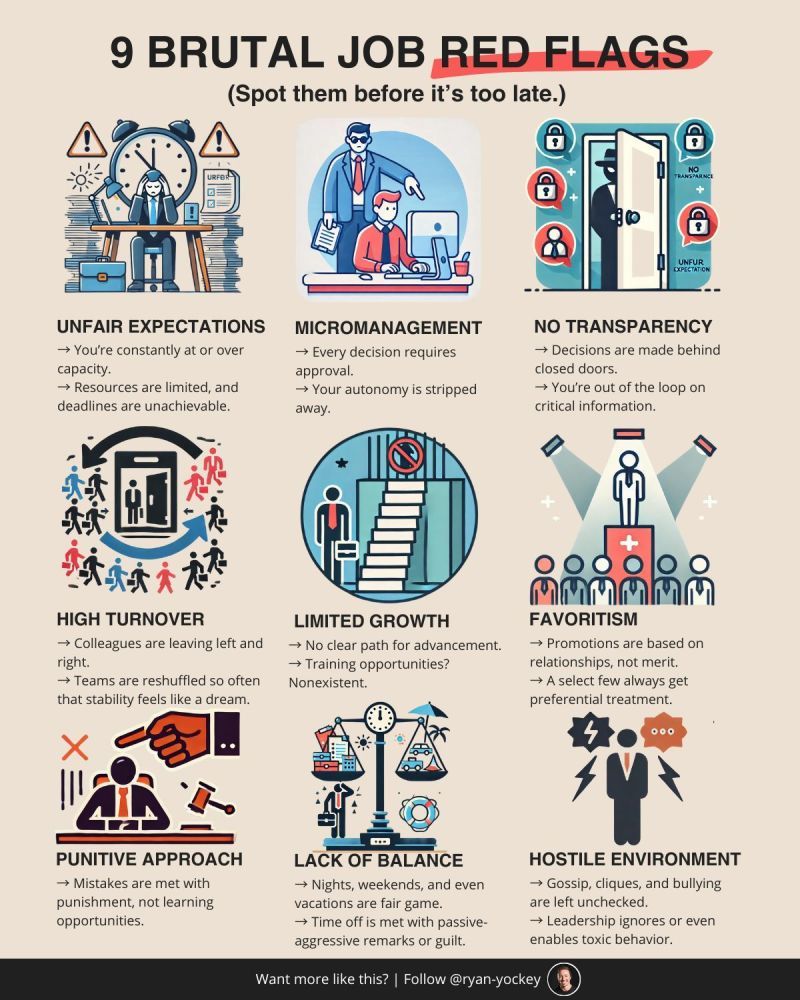
Toxic workplaces don’t always show their true colors upfront. The red flags might be subtle—but they’re there. Spot them early to save your sanity, your energy, and your career.
Here’s what to watch for:
1️⃣ Unfair Expectations
→ You’re constantly at or over capacity.
→ Resources are limited, and deadlines are unachievable.
Why it matters: Burnout happens when you’re set up to fail, no matter how hard you work.
2️⃣ Micromanagement
→ Every decision requires approval.
→ Your autonomy is stripped away, and your manager hovers like a shadow.
Why it matters: A lack of trust creates resentment and stifles growth.
3️⃣ No Transparency
→ Decisions are made behind closed doors.
→ You’re out of the loop on critical information.
Why it matters: If you’re kept in the dark, you can’t do your best work—or trust leadership.
4️⃣ High Turnover
→ Colleagues are leaving left and right.
→ Teams are reshuffled so often that stability feels like a dream.
Why it matters: High turnover means systemic issues—don’t ignore the exits happening around you.
5️⃣ Limited Growth
→ No clear path for advancement.
→ Training opportunities? Nonexistent.
Why it matters: If they’re not investing in you, it’s not the right place for your future.
6️⃣ Favoritism
→ Promotions are based on relationships, not merit.
→ A select few always get preferential treatment.
Why it matters: Favoritism kills morale and creates a toxic divide in the workplace.
7️⃣ Punitive Approach
→ Mistakes are met with punishment, not learning opportunities.
→ Leaders create a culture of fear, limiting creativity and innovation.
Why it matters: Fear-driven environments lead to stagnation, not progress.
8️⃣ Lack of Balance
→ Nights, weekends, and even vacations are fair game.
→ Time off is met with passive-aggressive remarks or guilt.
Why it matters: Work without boundaries isn’t work—it’s exploitation.
9️⃣ Hostile Environment
→ Gossip, cliques, and bullying are left unchecked.
→ Leadership ignores or even enables toxic behavior.
Why it matters: A hostile environment isn’t just unproductive—it’s harmful to your mental health.
The Takeaway:
Toxic jobs drain more than your time—they drain your energy, creativity, and passion. Life’s too short to waste on a workplace that doesn’t value you.
6 FBI Negotiation Techniques

Negotiation isn’t only a boardroom skill.
It’s a daily survival skill.
You are negotiating more than you realise.
With your boss about deadlines.
With your team about priorities.
With your kids to do their chores.
With your spouse on everything….
But if you don’t know how to do it well,
You’ll keep saying “yes” when you mean “no.”
You’ll leave conversations feeling frustrated, unheard, or walked over.
Here are 6 tactics from the book”𝘕𝘦𝘷𝘦𝘳 𝘚𝘱𝘭𝘪𝘵 𝘵𝘩𝘦 𝘋𝘪𝘧𝘧𝘦𝘳𝘦𝘯𝘤𝘦” that you can use in everyday life:
1️⃣ Mirroring
Repeat the last 1–3 words they say. Sounds weird, but it works.People will open up, give more info, and feel heard.
-> Example:
Them: “This timeline is too tight.”
You: “Too tight?”
Them: “Yes, my plate is full at the moment.”
You: “Full at the moment?”
2️⃣ Label Emotions
Call out what they are feeling.
It builds trust and makes them feel seen.
Try this:
“It seems like you are frustrated.”
“It sounds like you are unsure about the timeline.”
3️⃣ Tactical Empathy
Show you understand their point, even if you disagree.
This lowers resistance and opens the door to real solutions.
Say:
“I get why that would feel unfair.”
“I understand why that’s frustrating.”
4️⃣ Make them say “No”
People feel safe saying “No.”
Use that to your advantage.
Instead of: “Are you going to do this project?”
Say: “Have you given up on this project?”
5️⃣ Aim for “That’s Right”
Summarise their perspective so clearly they say, “That’s right.”
That’s when you know they trust you.
Example:
“So you’ve been trying to fix this alone, and no one’s been supporting you.”
6️⃣ Call Out the Negatives
Say all the bad things they might be thinking about you, before they do.
It diffuses tension and wins respect.
Example:
“You probably think I’m being difficult.”
“You might think I’m not respecting your time.”
=====
Be Teachable

We live in a world that celebrates confidence, decisiveness, and expertise. We reward people for knowing the answers, for having the last word, for being right. But here’s the thing no one tells you: real growth often begins when you admit that you don’t have it all figured out.
“Be teachable. You don’t know everything. You’re not always right.”
That’s not just a gentle reminder—it’s a mindset shift. A quiet rebellion against ego. A daily invitation to stay curious, humble, and open. And in a world where knowledge is constantly evolving, it may just be the most essential trait for anyone trying to grow.
Why Being Teachable Matters
- The world is faster than your certainty.
Technologies change. Truths evolve. What worked last year might already be obsolete. Being teachable keeps you adaptable. - You can’t see your own blind spots.
Feedback isn’t criticism—it’s perspective. Staying teachable means welcoming that perspective even when it’s uncomfortable. - Humility builds trust.
Nobody wants to work with a “know-it-all.” Leaders, colleagues, friends—they gravitate toward those who listen, learn, and grow.
How to Practice a Teachable Mindset
- Ask more questions than you answer.
Be curious. Instead of proving your point, explore others’. - Embrace feedback, not just praise.
Growth comes when someone helps you see what you couldn’t. - Be okay with “I don’t know.”
It’s not weakness. It’s the starting point of wisdom. - Surround yourself with teachers.
Everyone you meet knows something you don’t.
The Power in the Illustration
That little phrase—”Be teachable, you don’t know everything, you’re not always right”—is more than a quote. It’s a check-in. A prompt. A mirror. Maybe even a mantra.
Put it on your wall. Your screensaver. Your notebook. Let it interrupt your pride just enough to let growth in.
So the next time you feel the need to be “right,” pause. Choose to be curious instead.
Because teachability isn’t just about learning more. It’s about becoming more.
10 Tips to Retain Top Performers

You can’t retain top talent with perks and pizza days.
You retain them by building a culture where they feel:
– valued.
– trusted.
– challenged.
– and seen as more than just “resources.”
Here are 10 things that actually make your top performers stay:
1/ Value from Day One
Show appreciation not just at performance reviews — but every day.
2/ Give Autonomy
Trust them to own projects and make real decisions.
3/ Personalized Growth Plans
Align their career path with their dreams — not just company goals.
4/ Provide Learning
Top talent wants to grow. Give them access to new skills and ideas.
5/ Create a Safe Space
Let them speak up, take risks, and be human — without fear.
6/ Give Influence
Let them lead, not just manage tasks.
7/ Flexibility = Loyalty
Remote options, async work, flexible hours — it all matters.
8/ Be Their Advocate
Speak their names in rooms they’re not in. Defend their value.
9/ Fair Salary Reviews
Respect is reflected in pay. Be transparent. Be fair.
10/ Build Real Relationships
Check in. Celebrate wins. Remember the human behind the output.
When people feel respected, challenged, and safe —
they don’t look elsewhere.
They stop job hunting.
They bring their best ideas forward.
They grow with you — not away from you.
Because top performers don’t just want a paycheck.
They want purpose, autonomy, and trust!
5 Famous Laws

Your life isn’t naturally chaotic.
You just never learned these 5 work-life rules.
Most people have convinced themselves that life is inherently messy.
They move through their days without questioning their purpose,
Or wondering how they can improve things.
It doesn’t have to be this way.
Use these 5 laws to bring some order to the chaos:
1️⃣ Murphy’s Law
↳ Anything that can go wrong, will go wrong.
↳ Start building systems that expect problems.
2️⃣ Kidlin’s Law
↳ If you write a problem down, you have solved half of it.
↳ Externalise confusion, create distance, and clarify.
3️⃣ Gilbert’s Law
↳ When you take on a task, it is your responsibility to complete it.
↳ Take ownership over your work and leave the excuses behind.
4️⃣ Wilson’s Law
↳ If you prioritise knowledge, the money will continue to come.
↳ Invest in learning before you need the result.
5️⃣ Falkland’s Law
↳ If you don’t have to make a decision, then don’t.
↳ Avoid overthinking and forcing decisions.
These 5 laws won’t solve every aspect of your life.
But they will help you:
✅ Stay calm in chaos,
✅ Move fast with clarity,
✅ And build better over time.
The Lighthouse Theory: Shine So Bright They Can’t Miss You

In a world obsessed with hustle, visibility, and constant validation, we often fall into the trap of thinking we need to shout the loudest to be seen. We chase people, opportunities, and recognition—forgetting that some of the brightest lights don’t run after attention. They simply shine.
Enter: The Lighthouse Theory.
A quiet, powerful reminder that you don’t need to chase people to be seen. Just like a lighthouse, you simply need to stand where you are and shine.
Be the Lighthouse, Not the Lifeboat
Think about what a lighthouse does:
It doesn’t patrol the sea. It doesn’t shout for attention. It doesn’t run after lost ships, begging them to come closer.
It just stands still, steady and glowing—reliable and radiant through every storm. And guess what? The right ships always find it.
This is the core of the Lighthouse Theory:
You don’t attract the right people by effort or noise. You attract them by authenticity, consistency, and presence.
Your Light Is Your Truth
Shining isn’t about being perfect, polished, or loud.
It’s about living your truth so clearly and confidently that the people who are meant for you—whether in friendship, work, or love—are drawn in naturally.
Just like a lighthouse’s beam, your inner light comes from alignment:
With your values With your purpose With your passion
You don’t have to market your soul.
You just have to be who you are, where you are, fully.
Let the Wrong Ships Drift Away
Not every ship is meant to anchor at your shore. And that’s okay.
Some will pass by. Some will ignore your light. Some won’t see it at all because they’re looking for fireworks, not foundations.
The Lighthouse Theory isn’t about attracting everyone.
It’s about attracting the right ones—the ones who navigate by integrity, not impulse.
Quiet Strength Over Loud Noise
We often mistake volume for value. But the strongest forces in nature—gravity, magnetism, time—work silently.
The same goes for inner strength.
People who shine from within don’t need to shout. Their light speaks louder than their words.
“Drawn not by noise or effort, but by the quiet strength of your light.”
Final Beam of Light
So if you’ve been feeling unseen or overlooked, take a breath.
Don’t dim your light to fit in. Don’t exhaust yourself chasing what was never meant to dock.
Just be the lighthouse.
Shine in your truth. Stand in your strength. And let the right ones find you.
Because they will.
They always do!
Steal These 6 Goal Setting Frameworks
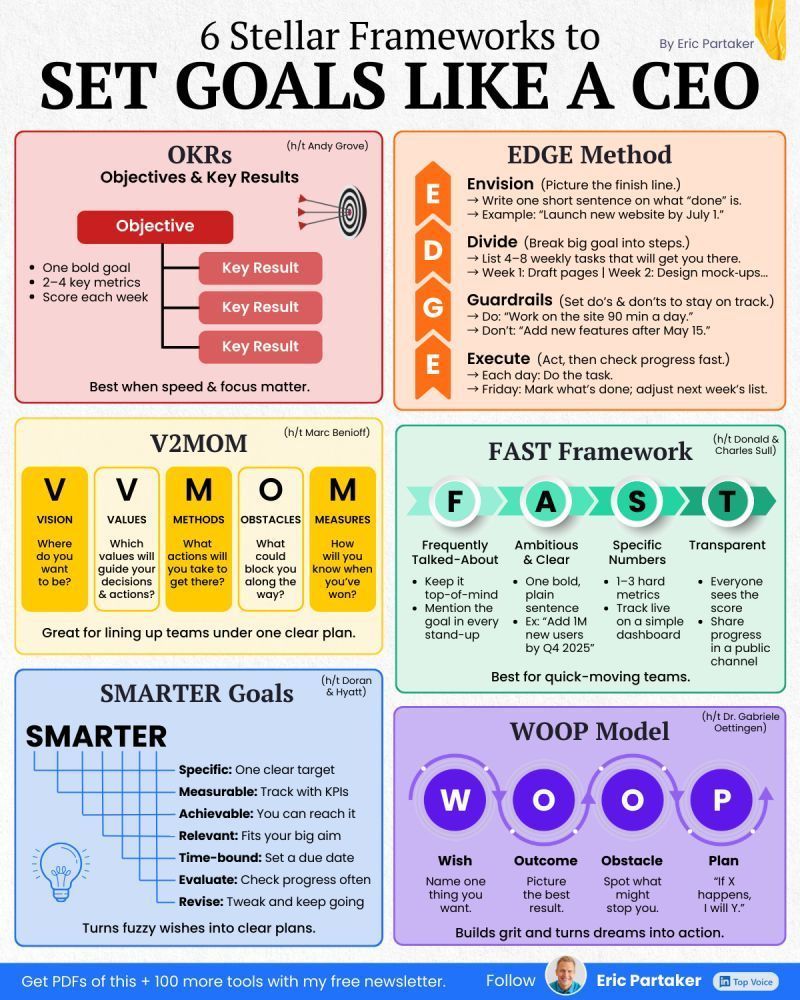
Most goal-setting frameworks are overcomplicated.
That’s why teams ignore them.
Leaders give up halfway through.
Or worse—everyone works hard… on the wrong things.
The fix?
Start with a clear framework.
Then make it stupid simple to follow.
These 6 do exactly that:
🧠 1. OKRs (Objectives & Key Results)
→ One bold goal
→ 2–4 key metrics
→ Score it weekly
✅ Best when speed and focus matter
⚙️ 2. EDGE Method
→ Envision the finish line
→ Divide the big goal into weekly tasks
→ Set guardrails to stay on track
→ Execute daily, review Friday
🚀 Built for solo founders & fast-moving teams
🔎 3. V2MOM (Vision, Values, Methods, Obstacles, Measures)
→ Where are we going?
→ What could block us?
→ How will we know we’ve won?
🧭 Aligns big teams under one clear plan
⚡️ 4. FAST Goals
→ Frequently talked-about
→ Ambitious & clear
→ Specific numbers
→ Transparent tracking
📊 Perfect for high-growth, high-accountability teams
📐 5. SMARTER Goals
→ Specific
→ Measurable
→ Achievable
→ Relevant
→ Time-bound
→ Evaluate & Revise
🔁 Turns fuzzy wishes into real plans
🔥 6. WOOP Model
→ Wish
→ Outcome
→ Obstacle
→ Plan
💪 Builds grit and makes dreams actionable
You don’t need more motivation.
You need a system that makes action inevitable.
Pick one method.
Use it for 30 days.
Watch what happens to your clarity—and your results.
 Kenrick Vaz