
Your business is underperforming for 7 reasons.
(Most CEOs only see 3 of them.)
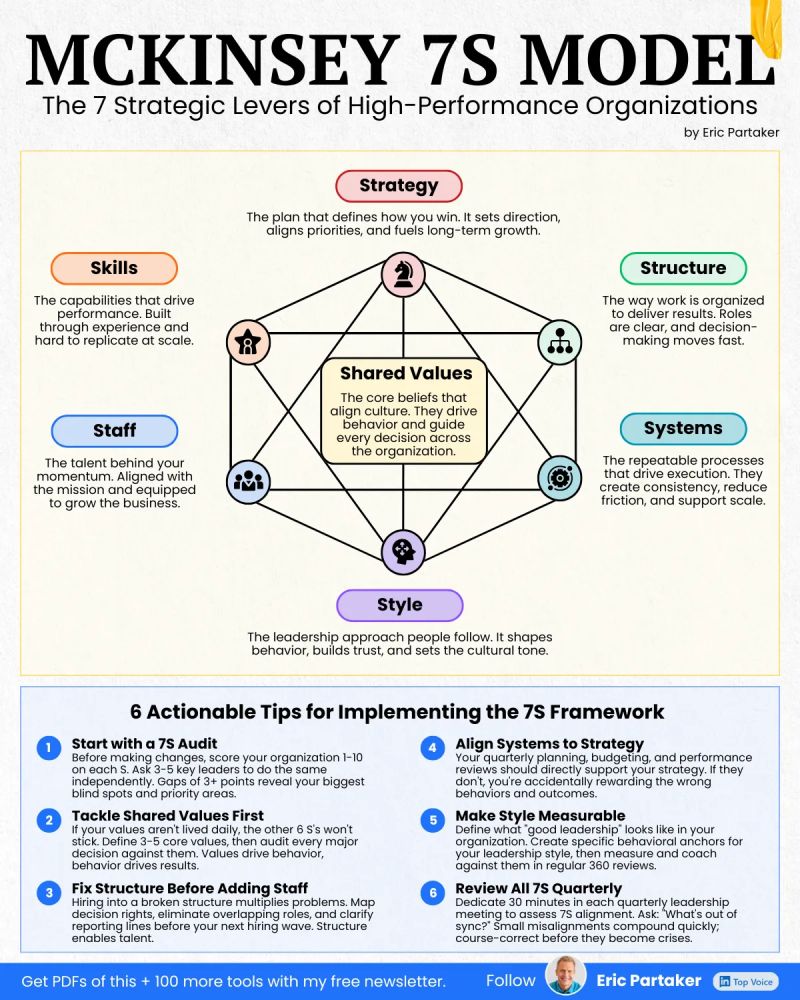
Every high-performance organization runs on 7 engines:
SHARED VALUES – The Mission Engine
↳ The core beliefs everyone shares
↳ Guides choices without asking
↳ Skip this? Teams pull apart
STRATEGY – The Direction Engine
↳ Your plan to beat the competition
↳ Shows what matters most
↳ Get it wrong? Everyone’s confused
STRUCTURE – The Organization Engine
↳ Clear roles and decision rights
↳ Makes things fast or slow
↳ Mess up? Everything stalls
SYSTEMS – The Process Engine
↳ Your step-by-step playbooks
↳ Makes success repeatable
↳ Skip this? Start from zero daily
STYLE – The Leadership Engine
↳ What leaders do, not what they say
↳ Creates the real culture
↳ Fake it? Teams know
STAFF – The Talent Engine
↳ Right people in right seats
↳ All rowing the same way
↳ Wrong fit? Nothing works
SKILLS – The Capability Engine
↳ The abilities that matter
↳ Built by doing, not reading
↳ Don’t have them? You lose
The pattern never changes:
🟢 Great companies align all 7
🟡 Stuck companies fix only 3-4
🔴 Failing companies ignore 5+
Key truths:
✓ Fix one, affect all others
✓ Small gaps become big problems
✓ Most leaders can’t see the whole picture
✓ The “soft” stuff breaks you
Big mistakes leaders make:
❌ Think new org charts fix culture
❌ Believe good strategy beats bad execution
❌ Hope computer systems replace leadership
❌ Assume people learn skills alone
When all 7 parts work together:
✅ Decisions happen 10x faster.
✅ Teams stop fighting each other.
✅ Growth becomes automatic.
And best of all?
Your business stops feeling like separate pieces
and starts working like one machine.
So, stop fixing only what you like.
Start fixing the whole system.
The Nightmare of Every Leader
Spotting toxic culture only when everyone quits.
A toxic culture doesn’t appear overnight.
It develops through harmful stages that,
if not addressed early, lead to a breaking point.
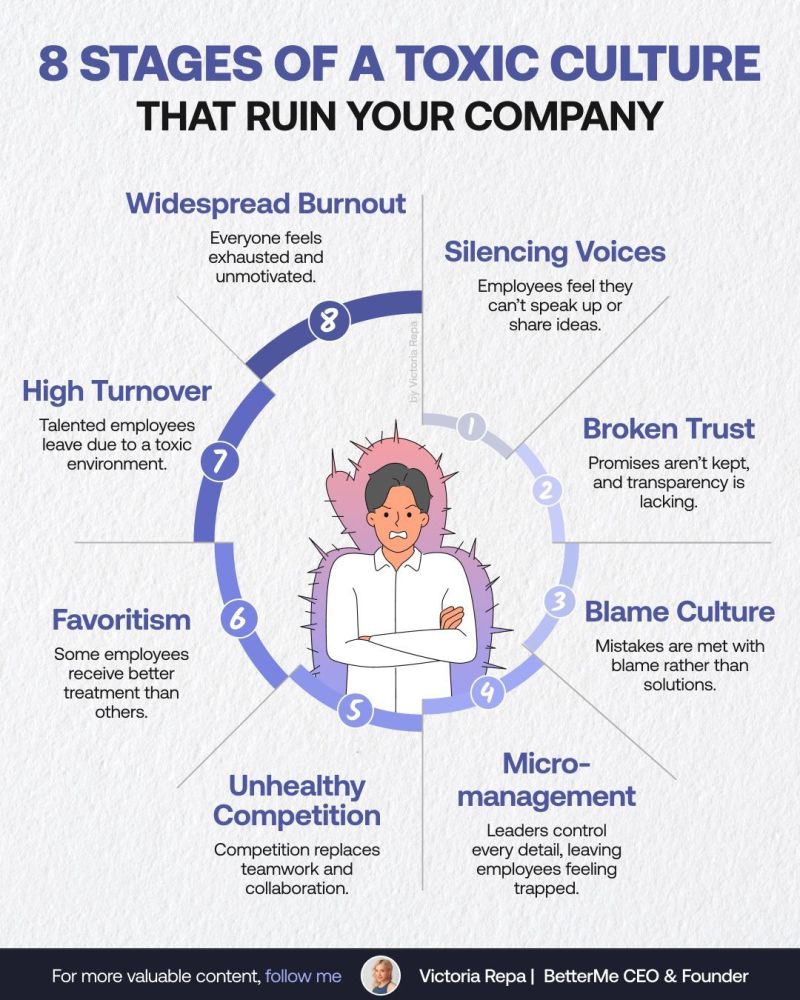
Here are 8 stages of a toxic culture that can destroy your company:
1/ Silencing Voices:
Employees feel they can’t speak up or share their ideas.
2/ Broken Trust:
Promises aren’t kept, and transparency is lacking.
3/ Blame Culture:
Mistakes are met with blame rather than solutions.
4/ Micromanagement:
Leaders control every detail, leaving employees feeling stifled.
5/ Unhealthy Competition:
Competition replaces teamwork and collaboration.
6/ Favoritism:
Some employees receive better treatment than others.
7/ High Turnover:
Talented employees leave due to the toxic environment.
8/ Widespread Burnout:
Everyone feels exhausted and unmotivated.
Ignoring these signs until it’s too late
can cost you your best talent.
The Kind of Smart That Truly Matters
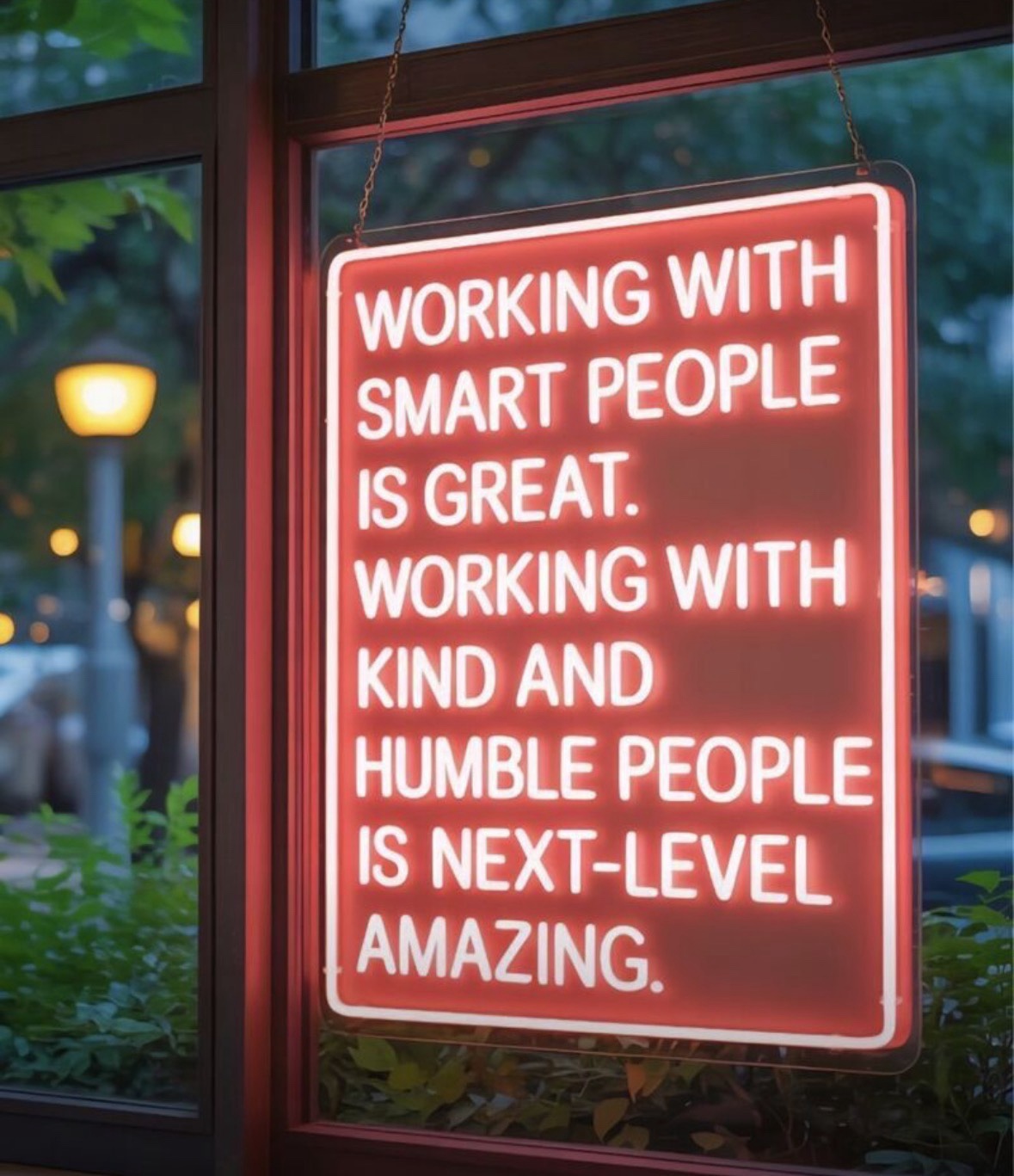
We’ve all heard the saying, “If you’re the smartest person in the room, you’re in the wrong room.” And it’s true—working with smart people pushes you to think sharper, move faster, and elevate your game. But after years of working with brilliant minds, I’ve realized something even more powerful: intelligence alone doesn’t create magic. It’s kindness and humility that turn great teams into extraordinary ones.
Because smart people can solve problems. But kind and humble people? They make you want to solve them together. They create an environment where you’re not afraid to ask questions, admit mistakes, or say, “I don’t know.” There’s no ego, no one-upmanship—just genuine curiosity and respect. You grow because you feel safe enough to stretch yourself. You thrive because you know you’re supported, not judged.
I’ve been in rooms where intellect filled the air like static—brilliant, but heavy. Then I’ve been in rooms where humility lit up the space—warm, open, alive. The difference? In the second room, people listened as much as they spoke. They celebrated small wins. They checked their egos at the door. And in that kind of atmosphere, even the quietest ideas had a chance to become game-changers.
Kindness doesn’t mean being soft. Humility doesn’t mean shrinking yourself. It means recognizing that everyone brings something valuable to the table—and that learning never stops, no matter your title. It means knowing that the smartest solution often comes from the most unexpected corner.
So yes, working with smart people is great. But when you get to work with those who are both brilliant and humble—who lift others while they climb—that’s when the real magic happens. That’s when work feels less like a grind and more like a shared mission.
At the end of the day, intelligence can impress you. But kindness? That changes you.
8 Surprising Learnings from Harvard’s Happiness Study

1) Combat loneliness 🤝
↳ Chronic isolation is as harmful as smoking.
↳ Join a club, volunteer, or plan family dinners.
2) Invest in quality relationships ❤️
↳ A few deep ties beat many shallow ones.
↳ Call a friend, plan a 1:1, or write a letter to someone.
3) Embrace introversion 🌱
↳ Small circles, big impact.
↳ Host a book club, game night, or join an online group.
4) Use social media with intention 📱
↳ Don’t just scroll. Connect.
↳ Set limits, comment with care, and use video calls.
5) Find purpose in your day 🎯
↳ Meaning beats mood.
↳ Set goals, mentor someone, or start a purpose project.
6) Rethink money 💸
↳ After the basics, more ≠ better.
↳ Be grateful, buy experiences, and give back.
7) Prioritize your health 🏃♀️
↳ Health fuels everything.
↳ Sleep, eat clean, and walk 20 minutes a day.
8) Know it’s never too late ⏳
↳ Growth doesn’t expire.
↳ Learn, reconnect, or plan that dream trip.
– – – –
The message from Harvard’s 85-year study is clear.
Happiness comes from:
✅ purpose,
✅ connection, and
✅ taking care of yourself.
Happiness starts with you.
Build the life you love.
You’ve got this.
What’s your best tip for a happier life?
Email Like A CEO
Begging for a reply isn’t part of your job.
Writing clearly is.
You spend 30+ minutes drafting an email.
Then ghosted.
Your colleagues need you to:
– Say less, but say it clearly
– Sound like a peer, not a ping
– Ask a question, they can answer
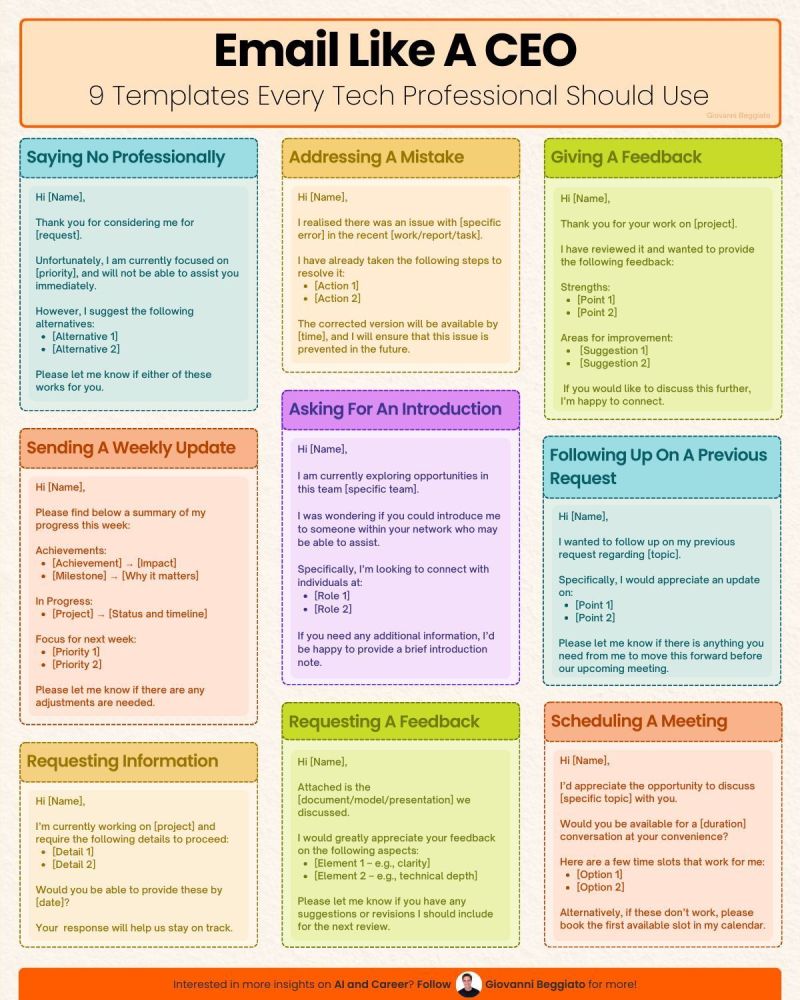
Here are 9 plug-and-send templates you can use
(because your email shouldn’t need a debugger)
1️⃣ Saying no respectfully
❌ Don’t write:
“Sorry, I can’t help.”
✅ Instead write:
“Hi [Name],
Thank you for considering me for [request].
Unfortunately, I am currently focused on [priority], and will not be able to assist you immediately.
However, I suggest the following alternatives:
• [Alternative 1]
• [Alternative 2]
Please let me know if either of these works for you.”
2️⃣ Addressing A Mistake:
❌ Don’t write:
“I made a mess! It’s my bad”
✅ Instead write:
“Hi [Name],
I realised there was an issue with [specific error] in the recent [work/report/task].
I have already taken the following steps to resolve it:
• [Action 1]
• [Action 2]
The corrected version will be available by [time], and I will ensure that this issue is prevented in the future.
3️⃣ Giving A Feedback:
❌ Don’t write:
“This is so bad, do it from again from scratch”
✅ Instead write:
“Hi [Name],
Thank you for your work on [project].
I have reviewed it and wanted to provide the following feedback:
Strengths:
• [Point 1]
• [Point 2]
Areas for improvement:
• [Suggestion 1]
• [Suggestion 2]
If you would like to discuss this further, I’m happy to connect.
4️⃣ Sending A Weekly Update:
❌ Don’t write:
“This is all that happened over the week”
✅ Instead write:
Hi [Name],
Please find below a summary of my progress this week:
Achievements:
• [Achievement] → [Impact]
• [Milestone] → [Why it matters]
In Progress:
• [Project] → [Status and timeline]
Focus for next week:
• [Priority 1]
• [Priority 2]
Please let me know if there are any adjustments are needed.
5️⃣ Asking For An Introduction:
❌ Don’t write:
“Do you know anyone hiring on that team?”
✅ Instead write:
Hi [Name],
I am currently exploring opportunities in this team [specific team].
I was wondering if you could introduce me to someone within your network who may be able to assist.
Specifically, I’m looking to connect with individuals at:
• [Role 1]
• [Role 2]
If you need any additional information, I’d be happy to provide a brief introduction note.
(remaining 4, in the cheat sheet!)
–
I don’t write emails from scratch anymore.
I turned them into templates I can access when needed.
No more digging through threads.
No more “where’s that link again?”
Just fast, clear, grown-up communication.
Progress
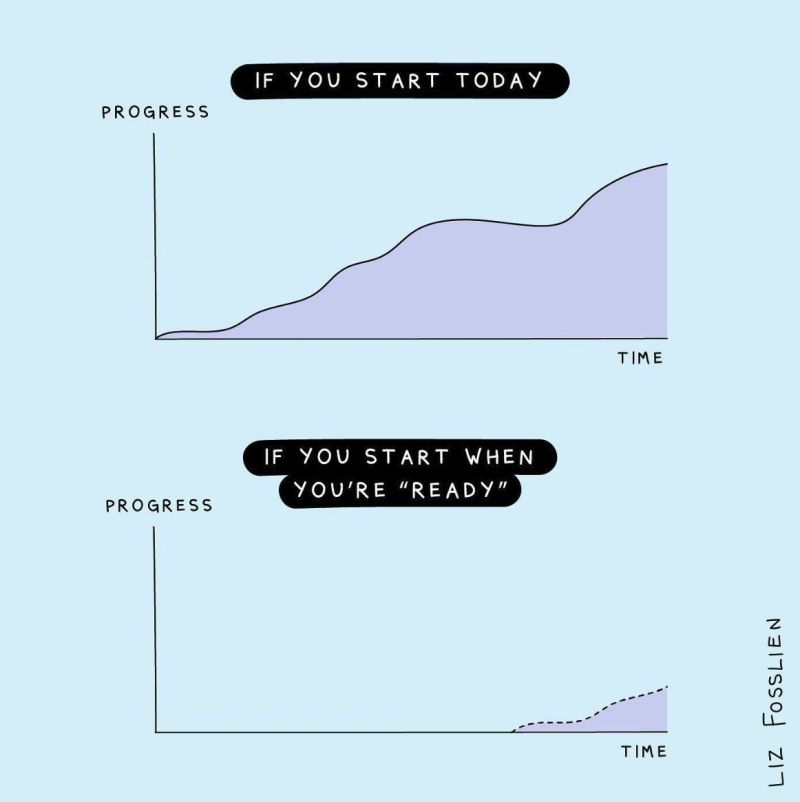
1. When you start matters more than where you start.
2. Your story is your ceiling…
Change the story you tell yourself about yourself to change your life.
3. The cost of inaction is almost always greater than the cost of wrong action
Truth is…
Most dreams die of inaction, not wrong action.
4. Risks through the windshield become opportunities in the rear view mirror.
This is why most people miss’em.
5. Failure is the most information rich dataset in the world.
The most successful people know how to rapidly collect as much of this data as possible.
They fail fast and forward, always.
6. The universe doesn’t care how you feel…
It only cares what you do.
7. It’s not about what you know…
It’s about what you DO with what you know.
You don’t lack information…
You lack implementation.
8. Never take advice (or criticism) from someone you wouldn’t trade places with.
Boos come from the people sitting in the stands…
Not from the ones standing on the court.
9. To develop patience, first learn how to be present.
Presence is the input.
Patience is the result.
Bonus:
Delusional self-belief beats realistic self-criticism
Life is hard and nobody is going to cheer for you until after you’ve already started winning.
In the beginning, you’re gonna have to do all the cheering yourself.
Society tells us it’s okay to be your own biggest critic, but judges us harshly for being our own biggest cheerleader.
This is completely backwards.
You are amazing and capable of achieving extraordinary things…
Never forget that.
When Healing Demands Distance
It’s hard to admit that sometimes, the places and people we once called home — the ones that once made us feel safe — can slowly become the very reasons we start to shrink. It starts quietly. You tell yourself you’re just tired, just stressed, just having a rough week. But deep down, your body and heart are trying to say something louder — that the environment you’re in is no longer nourishing you.
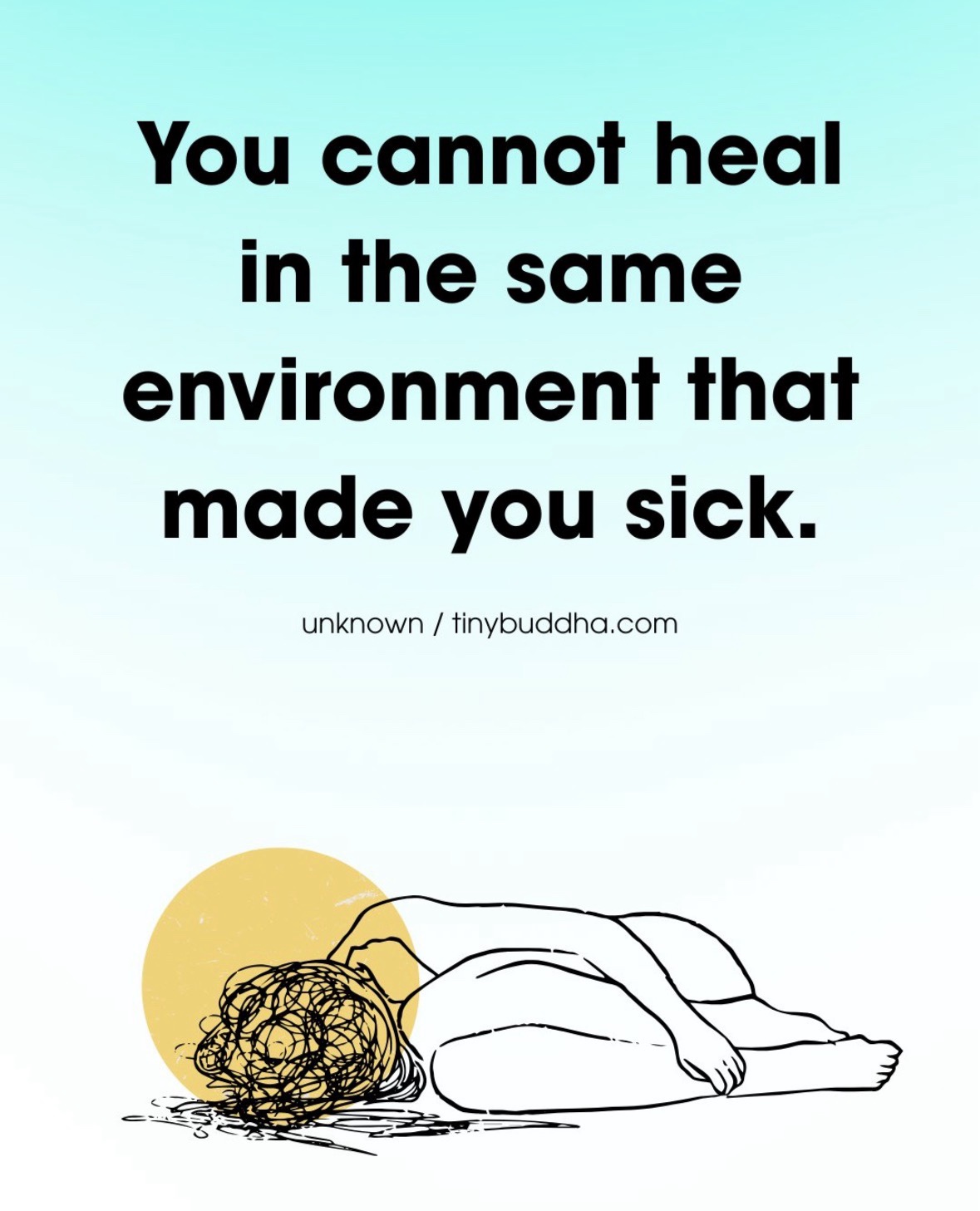
Healing is not just about fixing what’s broken inside; it’s also about changing what surrounds you. You can’t grow roots in toxic soil, no matter how much sunlight you pour on it. You can’t find peace in a room that keeps echoing your pain. And you can’t truly move forward while standing in the same place that kept pulling you backward.
Walking away isn’t weakness — it’s wisdom. Sometimes the bravest thing you can do is to remove yourself from where you’re constantly hurt, doubted, or drained. Healing doesn’t always mean confrontation. It can mean quiet exits, gentle boundaries, or simply choosing silence where chaos once lived.
Of course, it’s not easy. We cling to familiarity because it’s what we know, even when it hurts. There’s comfort in patterns, even the painful ones. But if you stay too long in an environment that feeds your wounds, you start to mistake survival for living.
Real healing often begins in spaces where you finally feel safe enough to breathe again — where you don’t have to explain your worth or justify your feelings. It’s in the calm after the storm, in rooms filled with people who want to see you grow, not keep you small.
So if something inside you has been whispering that it’s time to go, listen. You don’t owe loyalty to a version of your life that’s making you sick. Sometimes, healing starts not with medicine or meditation, but with a single, quiet decision: I deserve better than this.
Because you do. And once you give yourself permission to step away, you’ll realize — you were never broken beyond repair. You were just planted in the wrong place.
Facing a Potential Reorg?

The team was striding tall.
Alignment. Focus. Flow.
Then…
Then came the test.
It wasn’t a project. It wasn’t a competitor.
It was a re-org.
Staying high-performing while the ground keeps shifting beneath you is one of the biggest challenges in today’s corporate reality.
Restructures. New leadership. Sudden pivots.
Just when a team hits its stride, it’s “day one” all over again.
New faces. New goals. New politics.
And that hard-earned trust? Reset.
For strong, performing teams, it’s a stress test.
For teams that are still forming (or re-forming), it’s a major obstacle to ever reaching that high-performing state.
And in the long run, it’s not just the team that feels it..
..the business pays the price.
How is your team preparing to face a potential re-org?
How is your company dealing with an ongoing re-org?
18 Phrases That Make You A Trusted Leader

18 phrases that instantly build trust.
Because your words matter more than your title.
I had to learn this the slow way.
Early on, I thought trust came from:
❌ Sounding certain.
❌ Looking in control.
❌ Having the answers.
But that never built the kind of connection
I had hoped for.
What actually changed everything?
I stopped just talking and started speaking
only to support my team.
Here are the 5 I use most often.
The ones that helped me build real trust:
✅ “I trust you to own this completely.”
✅ “I dropped the ball. Here’s my plan.”
✅ “This didn’t meet the mark. Let’s fix it.”
✅ “You’re carrying too much. Let’s shift the load.”
✅ “Let’s confirm: You do X, I do Y. Are we aligned?”
But just knowing what to say isn’t enough.
It’s also about knowing when to say it that builds
real trust:
✅ When you’re handing off work and want to show trust
✅ When a tough conversation needs a clear next step
✅ When someone’s overwhelmed but won’t say it
✅ When results fall short, but blaming won’t help
✅ When you’ve made a mistake
At the end of the day, trust isn’t built in big speeches.
It’s built in what you say when it matters most.
Say it clearly.
Say it consistently.
Say it compassionately.
That’s the kind of leadership your team will remember.
The 80/20 Rule

20% of your actions create 80% of your results.
Most people don’t know which 20% matter.
They work 12 hour days.
They say yes to everything.
They wonder why nothing changes.
The answer?
Busy doesn’t equal productive.
It’s not about doing more.
It’s about doing what moves the needle.
8 areas where the 80/20 rule changes everything:
1/ Priorities
↳ 20% of your tasks drive 80% of your success
↳ Find your 3 most important daily goals
↳ Ignore the rest until these are done
2/ Health
↳ 20% of health habits create 80% of results
↳ Sleep 7+ hours
↳ Move 30 minutes daily
↳ Eat real food
3/ Time Management
↳ 20% of your hours produce 80% of value
↳ Block 2 hours for deep work
↳ Turn off all notifications
↳ Protect this time like your life depends on it
4/ Decision Making
↳ 20% of decisions matter for 80% of outcomes
↳ Make fewer choices daily
↳ Create systems for small decisions
↳ Save mental energy for what counts
5/ Goals
↳ 20% of goals drive 80% of progress
↳ Pick 3 goals maximum per year
↳ Say no to everything else
↳ Focus creates results
6/ Relationships
↳ 20% of people provide 80% of your support
↳ Invest in your closest 5 relationships
↳ Limit time with energy drains
↳ Quality beats quantity always
7/ Learning
↳ 20% of what you learn drives 80% of your growth
↳ Focus on skills that solve real problems
↳ Study less, implement more
↳ Turn knowledge into action immediately
8/ Habits
↳ 20% of habits control 80% of your day
↳ Morning routine sets everything
↳ Evening routine recovers everything
↳ Pick habits that compound
Stop doing more.
Start doing what matters.
The 80/20 rule isn’t about being lazy.
It’s about being strategic.
Work on the 20% that change your life.
 Kenrick Vaz