

Assumptions seem small—
But they cause big problems:
Most damage doesn’t come from lies.
It comes from things we never checked.
You can’t fix what you never saw.
Assumptions hide what matters most.
Assumptions can cause:
❌ Lost trust fast
❌ Missed insight
❌ The wrong hire
❌ Wasted meetings
❌ Delayed progress
❌ Unclear next steps
❌ Bad product choices
❌ Poor feedback loops
❌ Conflict that lingers
❌ Dead-end projects
❌ Silent resentment
❌ Broken client ties
❌ Poor decisions
❌ A missed sale
❌ Team tension
To stop guessing, use my REAL steps:
✅ Recognize when you’re guessing.
✅ Explore to find the facts.
✅ Learn from your mistakes.
✅ Align your thoughts with what’s true.
Every assumption comes with a cost.
Sometimes it’s small.
Sometimes it’s your reputation.
Truth isn’t louder—it’s just buried.
Digging for it always pays off.
The Hidden Superpower of Great Leaders
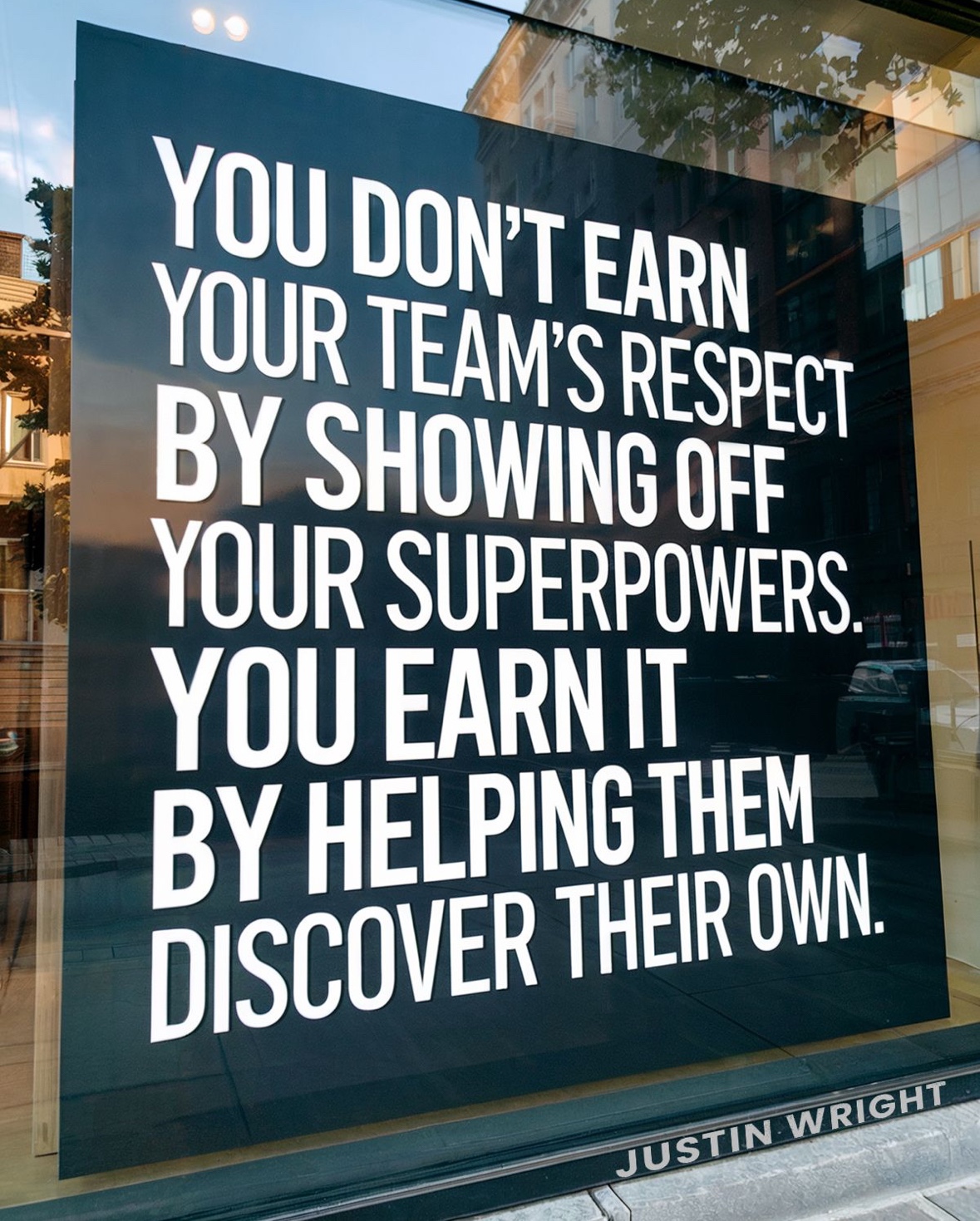
We often grow up believing that leadership is about standing in the spotlight, showcasing extraordinary skills, and proving that we are the strongest or the smartest in the room. But the truth is, real leadership isn’t about dazzling people with your own brilliance.
As Justin Wright puts it beautifully:
“You don’t earn your team’s respect by showing off your superpowers. You earn it by helping them discover their own.”
Leadership Beyond the Cape
Think of your favorite superhero stories. The ones that stay with us aren’t always about a lone hero saving the day—they’re often about someone inspiring others to rise to their potential. The same applies in our workplaces. Teams don’t thrive under leaders who only display their own capabilities. They flourish when they’re empowered, trusted, and supported to find their own strengths.
Great leaders understand that:
Respect is earned, not demanded. It comes when team members feel valued and seen. Empowerment creates ownership. When people discover their own abilities, they take responsibility for results. Collaboration outshines competition. A culture of lifting each other up always produces stronger outcomes than one fueled by ego.
Shifting the Mindset
So, how do you transition from being the “hero” to being the “guide”?
Ask more questions than you give answers. Questions spark curiosity and help team members think for themselves. Celebrate progress, not just perfection. Every small win builds confidence. Create space for mistakes. Psychological safety allows people to experiment, fail, and grow. Spot hidden talents. Sometimes, people don’t realize what they’re capable of until someone else points it out.
The Ripple Effect
When leaders focus on helping others discover their superpowers, something magical happens. Teams become more resilient, more creative, and more motivated. Respect grows naturally—not because of titles or authority, but because of trust and shared success.
At the end of the day, the greatest superpower a leader can have is the ability to unlock the potential in others.
So maybe the real question is: Are you busy showing your powers, or are you helping your team discover theirs?
7 Core Elements of Negotiation
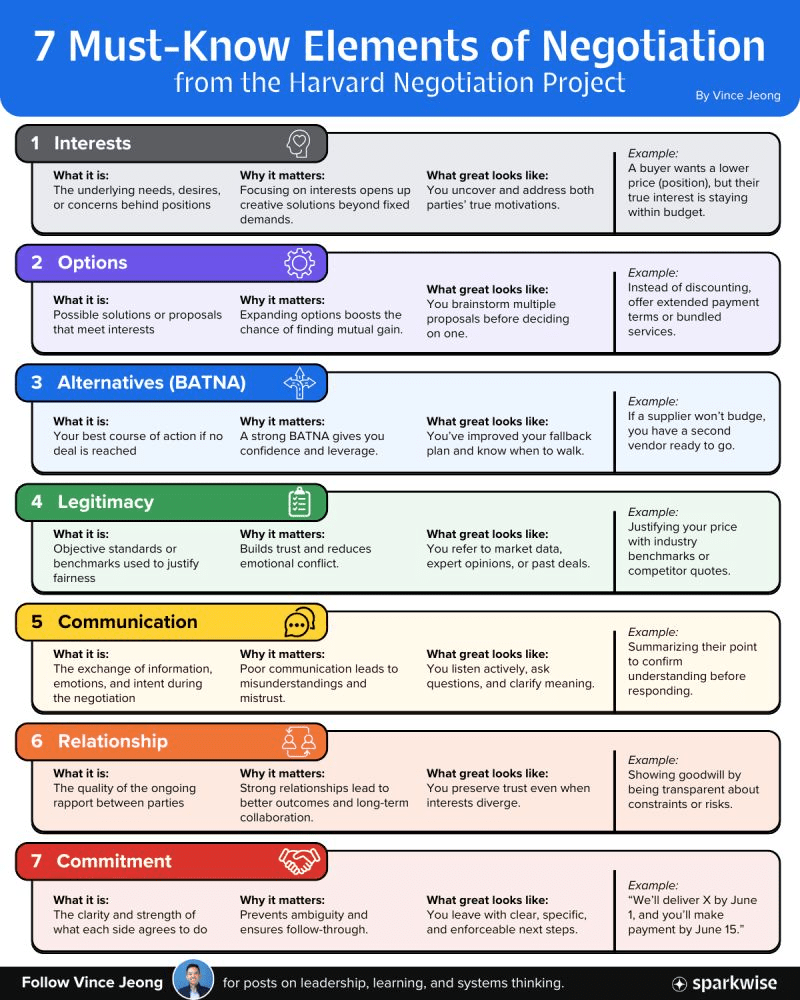
1️⃣ Interests
– See past positions
– Find needs behind demands
– “Need discount” → “Need to stay in budget”
2️⃣ Options
– Look beyond obvious offers
– Create multiple solutions
– Help both sides gain
3️⃣ Alternatives (BATNA)
– BATNA = Best Alternative to a Negotiated Agreement
– Have a Plan B to negotiate from strength
– Know when to walk
4️⃣ Legitimacy
– Use objective standards
– Respect fairness
– Data beats opinions
5️⃣ Communication
– Listen
– Ask questions to reveal info
– Create mutual clarity
6️⃣ Relationship
– Build trust — tap into humanity
– Maintain rapport in tension
– Know that today’s deal affects tomorrow’s
7️⃣ Commitment
– Have clear steps
– Prevent ambiguity
– Build in follow-through
Negotiation isn’t a battle. It’s a puzzle to solve together.
Accountability

If no one owns it—
It doesn’t get done:
When accountability is missing,
teams don’t just stall.
They start to break.
You begin to see:
❌ Low motivation
❌ Frustrated teams
❌ Confused priorities
❌ Poor communication
❌ Missed deadlines
❌ Wasted potential
❌ Shifting blame
It doesn’t just hurt performance—
It also breaks trust.
The answer isn’t more pressure.
It’s clear structure.
Use the top frameworks that hold
people accountable the right way:
🔹 The Ownership Framework
For high-stakes tasks with clear deliverables
(Define success early and clearly)
🔹 The Team Accountability Framework
For shared goals and collaboration
(Clarify roles so nothing falls through)
🔹 The Milestone Framework
For complex projects with many steps
(Break it down to stay on track)
🔹 The Feedback Loop Framework
For fast-moving, dynamic work
(Use quick check-ins to adjust fast)
Each one builds:
✅ Trust
✅ Clarity
✅ Results
✅ Progress
Use my sheet to build real accountability.
When everyone knows what they own—
They stop blaming.
They start delivering.
Leadership: 8 Soft Skills

No one is born an exceptional leader.
But you can become one by developing these 8 skills:
Many leaders tend to focus on strategy.
Exceptional leaders focus on people as well.
Because people don’t follow titles,
they follow leaders who understand them.
Want to grow in your leadership?
Start with these 8 soft skills:
1. Emotional Intelligence
↳ Leadership is about people, not just processes.
↳ Before reacting, pause and consider their perspective.
2. Clear Communication
↳ Say less, mean more.
↳ Summarize key takeaways after every meeting.
3. Decisiveness
↳ Confidence isn’t about having all the answers,
it’s about taking action.
↳ Focus on the next best step, not perfection.
4. Resilience
↳ Setbacks happen. Great leaders grow from them.
↳ Ask yourself: “What can I learn from this?”
4. Adaptability
↳ Change is constant. Leaders evolve with it.
↳ Challenge your own assumptions often.
6. Influence
↳ Inspire action through trust, not control.
↳ Connect decisions to a bigger purpose.
7. Conflict Resolution
↳ Turn disagreements into progress, not problems.
↳ Focus on shared goals, not personal opinions.
8. Self-Awareness
↳ Know your strengths. Own your weaknesses.
↳ Ask for feedback, and act on it.
But here’s what sets great leaders apart…
They never stop learning.
The more you practice these skills,
the more confident and connected your leadership becomes.
Because leadership isn’t about knowing everything.
It’s about growing every day.
Tables That Nourish the Soul

We’ve all sat at different kinds of tables in life. Some are filled with laughter, energy, and possibility. Others are cluttered with gossip, negativity, or small talk that leaves you feeling drained. The truth is simple: the tables you choose to sit at shape the person you become.
When you sit at tables where people speak about ideas, growth, dreams, and goals, something shifts inside you. Conversations turn into sparks of possibility. You leave those moments with a notebook full of inspiration or simply a fire in your belly to do more, be more, dream bigger.
But when you sit at tables where people speak only about other people, the energy is entirely different. Gossip, judgment, and comparison rarely lead to anything meaningful. They pull you away from your path and leave you with little to show for the time spent.
This isn’t about arrogance or thinking you’re above others—it’s about recognizing where your energy flows. Growth doesn’t happen in circles that recycle the same complaints or chatter. Growth happens where curiosity, ambition, and encouragement thrive.
The tables you choose are mirrors of your values. Do you want to walk away with insights that push you forward, or with noise that holds you back?
So, pause and reflect:
Who are you sitting with today? Are their words feeding your dreams, or draining them? Are you surrounded by builders, visionaries, and encouragers—or by critics and spectators?
Life is too short to sit at tables that stunt your growth. Find the spaces where your voice matters, where your ideas are welcomed, and where your dreams feel possible. Those are the tables that will nourish your soul.
Choose wisely. Because the conversations you consume are just as important as the food you eat.
Leading Across Generations
“They just don’t get it.”
Every leader I talk to feels this tension.
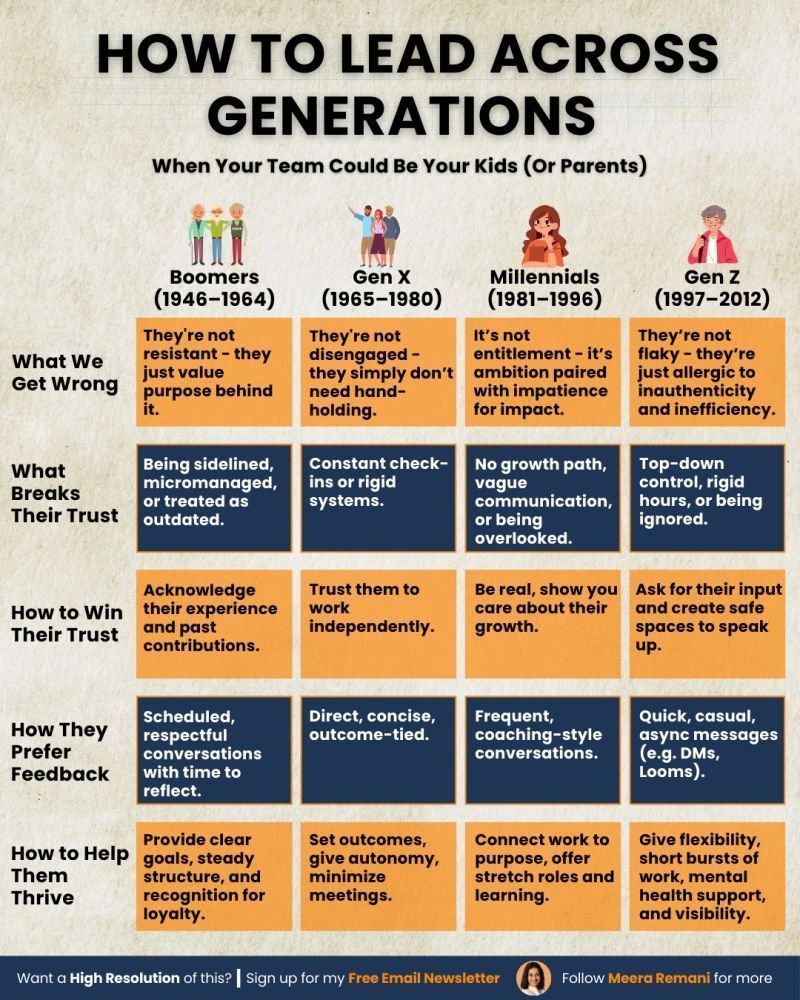
The modern workplace spans 4 generations, each bringing unique strengths. Here’s the real story behind the stereotypes:
1️⃣ Boomers (12% of workforce)
Everyone says: “They resist change”
→ Real priorities: Structure, legacy, dedication
→ Hidden strength: Your experience vault
→ Power move: Give them mentor status, tap into their stories
2️⃣ Gen X (27% of workforce)
Everyone says: “Too busy surviving to lead”
→ Real priorities: Autonomy, results, efficiency
→ Hidden strength: Your most self-reliant leaders
→ Power move: Set clear outcomes, then step back
3️⃣ Millennials (35% of workforce)
Everyone says: “Always wanting feedback”
→ Real priorities: Purpose, growth, innovation
→ Hidden strength: Your strategic innovators
→ Power move: Connect daily work to bigger impact
4️⃣ Gen Z (26% of workforce)
Everyone says: “Can’t focus, always online”
→ Real priorities: Wellbeing, diversity, impact
→ Hidden strength: Your cultural catalysts
→ Power move: Build psychological safety into every interaction
The real skill?
Stop managing generations. Start leading humans.
Wheel of Team Engagement
Most teams don’t fail because of a lack of talent.
They fail from what’s missing around the talent:
🛑 A clear mission
🛑 Regular feedback
🛑 Trust
🛑 Challenge
🛑 Real recognition
🛑 A sense of belonging
When even one of these is off…
Performance drops.
Morale dips.
Great people leave.
High-performing teams aren’t a mystery.
They’re the result of intentional design.
CEOs:
Want to build teams that crush goals and stick around?
Start here:
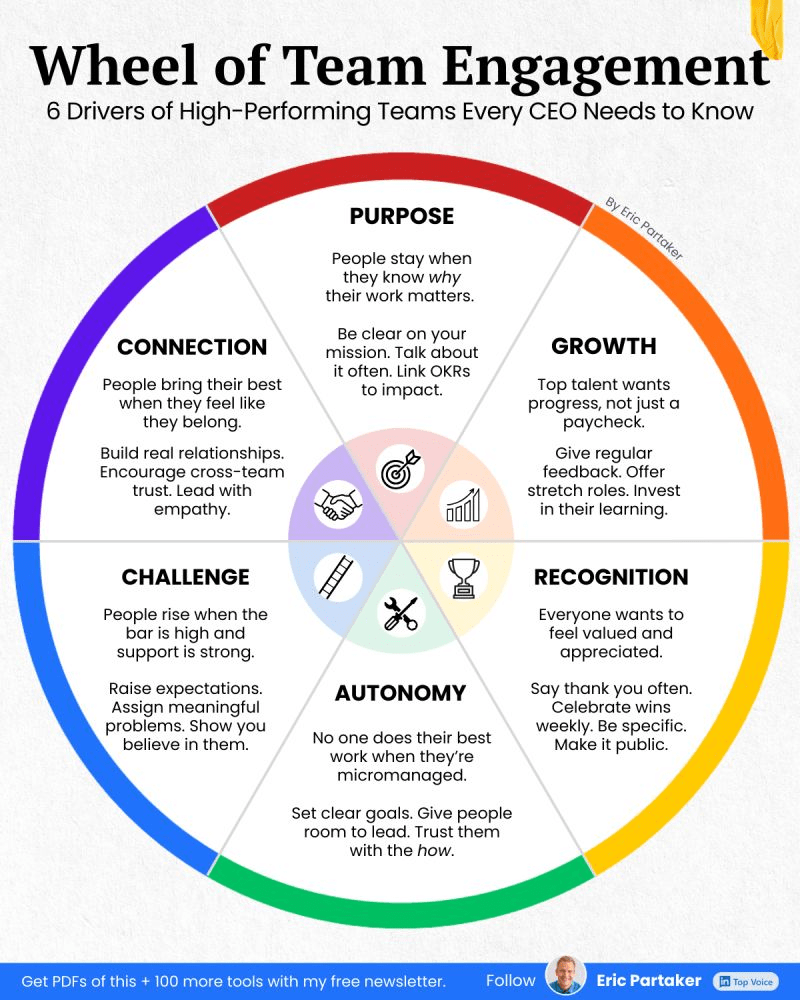
✅ Purpose → Why does the work matter?
✅ Growth → How are you helping them grow?
✅ Recognition → Are you celebrating wins often enough?
✅ Autonomy → Are you giving ownership of the how?
✅ Challenge → Are you setting the bar high and showing you believe in them?
✅ Connection → Do they feel seen, safe, and supported?
Don’t wait for the next all-hands to “inspire.”
Build systems that do it daily.
Because engagement doesn’t come from pizza parties
or foosball tables.
It comes when your team feels:
Trusted
Valued
Challenged
And the best leaders?
They build it into the culture—
on purpose.
Every. Single. Day.
The Power of the Pause

We live in a world that glorifies motion. The faster you move, the more boxes you tick, the more you achieve—the better. At least, that’s what we’re told. But here’s the quiet truth most of us overlook: sometimes, the best progress you’ll ever make comes not from pushing harder, but from stepping back.
Think about it. A runner doesn’t grow stronger during the sprint—they grow during rest, when muscles rebuild. A mind doesn’t spark fresh ideas when it’s drowning in tasks—it sparks them when silence enters the room. Even nature herself embraces cycles of pause: winter looks like stillness, but underground, roots are strengthening for spring’s bloom.
Taking a break isn’t about laziness or giving up. It’s about allowing space for renewal. It’s where clarity sneaks in, where creativity finds oxygen, where your body and spirit realign. When we grind endlessly without stopping, our progress eventually plateaus. But when we pause—even briefly—we return with more energy, sharper focus, and deeper resilience.
So the next time you feel guilty for slowing down, remember: rest isn’t the opposite of progress. It’s a vital part of it. A pause doesn’t erase your journey—it fuels the next step.
Take that walk. Close your laptop for an hour. Breathe. You might be surprised how much further you’ll go by simply… stopping for a while.
10 Ways Your Team Will Remember You

A title doesn’t make you a leader. Impact does.
Here are 10 ways your team will always remember you:
1️⃣ Listen with intent
↠ People want to feel understood. Not just heard
↠ Ask questions, and focus on what’s behind the words
2️⃣ Celebrate progress, not just results
↠ Big wins don’t happen without small steps
↠ Recognize the journey, not just the destination
3️⃣ Model the behavior you expect
↠ Your team watches you. What you tolerate, they will too
↠ What you prioritize, they will follow
4️⃣ Create psychological safety
↠ When mistakes aren’t punished but treated as..
↠ Opportunities to learn, you unlock creativity and trust
5️⃣ Invest in your people
↠ Support their growth, not just for their role today
↠ But for the leader they’ll become tomorrow
6️⃣ Communicate the ‘why.’
↠ People can follow orders, but they’ll give their best..
↠ When they see the bigger picture and their role in it
7️⃣ Lead with empathy
↠ Behind every employee is a person with their own story
↠ Meet them where they are
8️⃣ Take ownership
↠ Leadership isn’t about being perfect
↠ It’s about owning your mistakes. Not blaming others
9️⃣ Show appreciation
↠ A genuine ‘thank you’ can mean more than a pay raise
↠ People remember how you made them feel
🔟 Build trust through actions, not words
↠ Trust is fragile. It’s earned over time and lost in seconds
↠ Do what you say you’ll do, every time
Remember…
Leadership isn’t about power, status, or control.
It’s about lifting others and leaving them better than you found them.
Which of these is often missing in leaders today?
 Kenrick Vaz