Want to be a better communicator? 

Start with these 8 micro-habits ⬇️

Communication isn’t just about talking;

it’s about being understood.

Here are 8 micro-habits that can instantly 

improve the way you communicate:

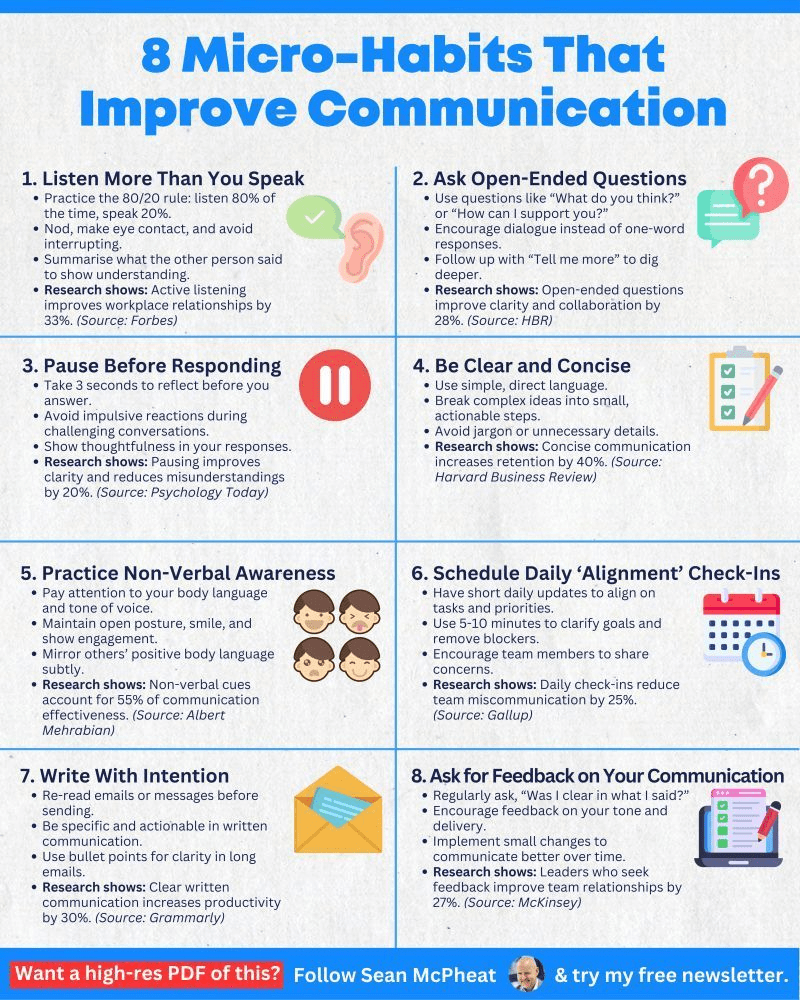
1. Listen More Than You Speak

Follow the 80/20 rule: listen 80%, speak 20%.

Summarise what the other person said to show understanding.

Research: Active listening improves workplace relationships by 33%.

2. Ask Open-Ended Questions

Use questions like “What do you think?” to encourage deeper dialogue.

Follow up with “Tell me more” to dig deeper.

Research: Open-ended questions improve clarity and collaboration by 28%.

3. Pause Before Responding

Take 3 seconds to reflect before answering.

Avoid impulsive reactions in tough conversations.

Research: Pausing improves clarity and reduces misunderstandings by 20%.

4. Be Clear and Concise

Use simple, direct language.

Break complex ideas into small, actionable steps.

Research: Concise communication increases retention by 40%.

5. Practice Non-Verbal Awareness

Pay attention to body language and tone.

Mirror positive body language subtly to build rapport.

Research: Non-verbal cues account for 55% of communication effectiveness.

6. Schedule Daily ‘Alignment’ Check-Ins

Have short daily updates to align on tasks.

Use 5-10 minutes to clarify goals and remove blockers.

Research: Daily check-ins reduce team miscommunication by 25%.

7. Write With Intention

Re-read emails before sending.

Use bullet points for clarity in long messages.

Research: Clear written communication increases productivity by 30%.

8. Ask for Feedback on Your Communication

Regularly ask, “Was I clear in what I said?”

Implement small changes to improve over time.

Research: Leaders who seek feedback improve team relationships by 27%.

🧠 Remember:

The way you communicate shapes the way 

people perceive you. Small changes = big impact.

Why People Quit

It took me 5 years to realize…

When an employee quits, the reason lies within the company culture.

Not the job position.

People don’t quit jobs.
They actually quit because of:

1. Toxic feedback that is harsh and unhelpful.
2. Toxic workload that prevents breaks or vacations.
3. Toxic career growth that favors certain individuals.
4. Toxic boss who micromanages and blames others.
5. Toxic meetings that waste time and accomplish little.
6. Toxic pay that undervalues employees’ contributions.
7. Toxic expectations that lead to burnout and overwork.
8. Toxic job roles that are unclear or constantly changing.
9. Toxic team that values personal gain over collaboration.
10. Toxic control that demands office presence and fixed hours.

Company culture is the foundation of a productive and successful team.

12 Things Emotionally Intelligent People Understand

I used to think emotional intelligence

was about being nice.

(I was wrong.)

It’s about being real.

And calm under pressure.

And brave enough to hold two things at once.

You can feel angry

and still control your response.

You can show empathy

and keep healthy boundaries.

You can name your feelings

and still be surprised by them.

You can be confident

and admit you don’t know.

You can stay calm

and still feel stress inside.

You can expect respect

and still lead with it.

You can listen without judgment

and still challenge harmful ideas.

You can share your struggles

and still lift others up.

You can hold people accountable

and still believe in them.

You can trust your gut

and still check the facts.

You can have strong opinions

and still stay open to change.

You can lead with kindness

and still make hard decisions.

The truth is, emotional intelligence lives in the tension.

Not in choosing one side.

But in learning how to hold both.

That’s not weakness.

That’s leadership.

That’s power.

The Inheritance You Can’t Afford to Leave Behind

There’s a haunting truth buried in the quote:

“You either face your demons, or they raise your children.”

At first glance, it feels poetic—powerful even. But read it again. It’s not just metaphor. It’s a warning.

We all carry things: anger, trauma, fear, resentment, insecurities. Things we’ve buried, ignored, minimized. But here’s the catch—what we don’t deal with doesn’t disappear. It waits. And it leaks. Into our choices, our relationships, our homes. And worst of all, into our parenting.

Children are the most sensitive barometers of unspoken pain. They watch how we fight, how we apologize (or don’t), how we cope, how we escape. They internalize what we never verbalize. And slowly, quietly, they inherit battles that were never theirs to begin with.

Your anxiety becomes their self-doubt.

Your unprocessed grief becomes their emotional shutdown.

Your short temper becomes their fear of conflict.

Your silence becomes their shame.

This isn’t about blaming yourself. It’s about waking up.

Because the demons we refuse to face don’t vanish—they evolve. And if we don’t confront them, they’ll whisper into our children’s ears, shaping their beliefs, behavior, and boundaries.

So what do we do?

We do the work.

We go to therapy.

We apologize with humility.

We model vulnerability.

We admit we’re still learning.

We choose healing, even when it’s hard, especially when it’s hard.

Because healing isn’t just for you. It’s for the generations after you. It’s how we stop the cycle. It’s how we rewrite the story.

You either face your demons—or they become bedtime stories.

Let’s not pass them down like heirlooms.

Let’s bury them with intention, not neglect.

Let’s choose healing over hiding.

For ourselves.

For our children.

For the future.

What demons are asking to be faced today?

Psychological Safety

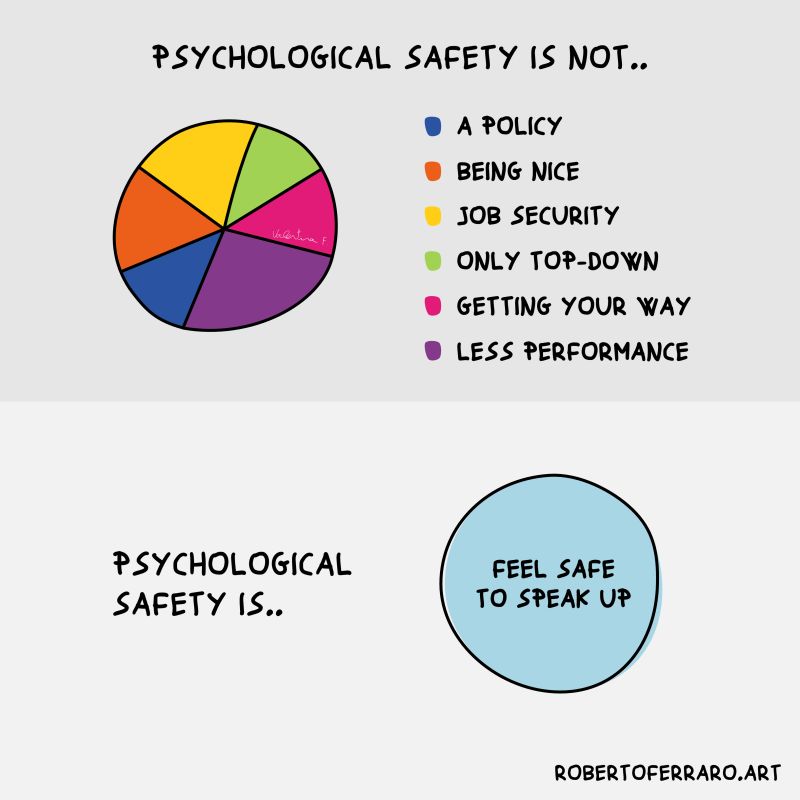
Psychological safety means having an environment where people feel safe to speak up.

It was once an obscure term in psychology and management research

Now is a popular concept, and misconceptions about psychological safety are impeding organizations’ performance.

These misunderstandings have even led some to dismiss psychological safety as a passing “management fad”.

According to Amy Edmondson and Michaela Kerrissey’s recent article:

❌ It’s not a policy

❌ It’s not about being nice

❌ It does not mean “job security”

❌ It’s not about getting your way

❌ It does not require a top-down approach

❌ It does not require a trade-off with performance

✅ Instead, it’s more about the quality of the conversations, the goals of the organization, and why everyone’s input matters, so we can create a place where we get timely input, candid feedback, and have robust debates.

The Japanese Way of Coding

I’ve been diving into Japanese software development practices, and honestly, it’s totally changed the way I look at writing code.

While a lot of developers in the West are caught up in chasing the latest JavaScript framework or debating tabs vs. spaces, Japanese teams are quietly cranking out some of the most reliable, maintainable code out there—using methods that might seem almost boring to the average Silicon Valley engineer.

Their secret? They treat code more like a Toyota Camry than a Tesla.


The Philosophy That Changes Everything

Monozukuri: The Art of Making Things
In Japan, there’s a concept called monozukuri (ものづくり) — literally “the art of making things.” It’s not just about manufacturing physical products; it’s a philosophy that emphasizes craftsmanship, continuous improvement, and taking pride in the creation process itself.

Japanese developers don’t just write code. They craft it.

When interviewed, Hiroshi Nakamura, a senior engineer at a major Japanese tech company, he put it this way: “In the West, you write code to ship features. In Japan, we write code to last decades. The feature is just the beginning.”

This mindset shift is profound. Instead of “move fast and break things,” Japanese developers follow “build slowly and fix nothing.”

Kaizen: The 1% Better Principle
You’ve probably heard of kaizen (改善) in the context of business improvement, but Japanese developers apply it directly to code.

Instead of massive refactoring sprints or complete rewrites, they make tiny, continuous improvements. Every day. Every commit.

Here’s what that looks like in practice:

// Western approach: "Let's refactor this entire module next sprint"
function processUserData(users) {
  // 200 lines of increasingly complex code
  return results;
}

// Japanese approach: "Let's improve this function by 1% today"
function processUserData(users) {
  // Today: extract one small helper function
  const validUsers = filterValidUsers(users);
  // Tomorrow: maybe extract another small piece
  // Next week: optimize one specific case
  return processValidUsers(validUsers);
}

The Japanese developer doesn’t wait for permission to improve code. They don’t schedule “tech debt sprints.” They just make things a little bit better, every single day.


The Toyota Production System for Code

Just-In-Time Development
Japanese software teams have adapted the famous Toyota Production System for software development. One of the most powerful concepts is Just-In-Time development.

Instead of building features speculatively (“we might need this later”), they build exactly what’s needed, when it’s needed, in the quantity required.

// Western approach: Build a generic, flexible solution upfront
class DataProcessor {
  constructor(options = {}) {
    this.enableCaching = options.enableCaching || false;
    this.enableValidation = options.enableValidation || false;
    this.enableLogging = options.enableLogging || false;
    this.maxRetries = options.maxRetries || 3;
    this.timeout = options.timeout || 5000;
    // 15 more configuration options "just in case"
  }
}

// Japanese approach: Build exactly what you need today
class DataProcessor {
  process(data) {
    // Solve today's specific problem well
    return this.validateAndTransform(data);
  }
  
  // Add complexity only when actually needed
}

Jidoka: Stop the Line Mentality
In Toyota factories, any worker can stop the entire production line if they spot a defect. Japanese development teams apply this same principle: if something’s wrong, everything stops until it’s fixed.

No “we’ll fix it in the next sprint.” No “let’s ship it and patch it later.”

I know of a Japanese team spend two days debugging a edge case that affected 0.1% of users. When asked why they didn’t just log it and move on, the team lead said: “If we allow one small defect, we normalize defects. Soon we have many defects.”

This seems extreme until you realize that their production bugs are virtually nonexistent.

The Language Advantage (That’s Actually a Disadvantage)

The Humble Variable Names
Here’s something fascinating: Japanese developers often write code with a mix of English and Japanese, but not how you’d expect.

// What you might expect
const ユーザー = getUsers();
const データ = processData(ユーザー);

// What they actually do
const userList = getUsers();
const processedData = transformData(userList);
// Comments in Japanese explaining the business logic
// 業務ロジック: ユーザーの権限を確認してからデータを変換する

Because many Japanese developers aren’t native English speakers, they tend to use simpler, more descriptive variable names. No fancy abstractions or clever abbreviations.

This “limitation” actually produces more readable code. When was the last time you saw a variable called user instead of usr or u?

The Comment Culture
Japanese developers comment their code extensively. Not because the code is bad, but because they view comments as documentation for future maintainers (which might be themselves in 5 years).

// Western style: Let the code speak for itself
const result = users.filter(u => u.age >= 18 && u.status === 'active')
                   .map(u => ({ id: u.id, name: u.name }));

// Japanese style: Explain the business context
// ビジネスルール: 18歳以上のアクティブユーザーのみを対象とする
// Business rule: Only target users 18 years and older who are active
const eligibleUsers = users.filter(user => {
  const isAdult = user.age >= 18;
  const isActive = user.status === 'active';
  return isAdult && isActive;
});

// 画面表示用のデータ形式に変換
// Convert to format needed for UI display
const displayData = eligibleUsers.map(user => ({
  id: user.id,
  name: user.name
}));

The result? Codebases that are still maintainable after 10+ years.

The Seven Wastes of Software Development
Japanese developers have identified seven types of waste in software development, borrowed from the Toyota Production System:

  1. Partially Done Work
    Code that’s written but not tested, reviewed, or deployed. Japanese teams minimize work-in-progress and focus on completing small pieces entirely.
  2. Extra Features
    Building functionality that users don’t need. Japanese developers are masters of saying “no” to feature creep.
  3. Relearning
    Wasting time figuring out how code works because it’s poorly documented or structured. This is why they prioritize clear naming and extensive comments.
  4. Handoffs
    Throwing code “over the wall” to another team. Japanese developers prefer cross-functional teams that own features end-to-end.
  5. Delays
    Waiting for approvals, reviews, or dependencies. They optimize for fast feedback loops and autonomous teams.
  6. Task Switching
    Constantly switching between different projects or features. Japanese developers prefer working on one thing at a time, doing it well.
  7. Defects
    Bugs that require rework and create customer dissatisfaction. This is the biggest waste, which is why they prioritize prevention over detection.

The Wabi-Sabi Approach to Code
Accepting Imperfection
There’s a beautiful Japanese concept called wabi-sabi (侘寂) — finding beauty in imperfection and impermanence. Japanese developers apply this to code in surprising ways.

They don’t try to write “perfect” code. Instead, they write code that can evolve gracefully over time.

// Western approach: Try to anticipate every future need
class DataValidator {
  validate(data, rules, options, context, metadata) {
    // 50 parameters to handle every possible case
  }
}

// Japanese approach: Simple today, extensible tomorrow
class DataValidator {
  validate(data) {
    // Handle today's case well
    if (!data) return false;
    if (!data.email) return false;
    return true;
  }
  
  // When new requirements come, we'll improve this step by step
}

They embrace the fact that requirements will change, so they build for change rather than trying to predict the future.

The Hansei Ritual

Learning from Mistakes
After every project, Japanese teams practice hansei (反省) — a ritual of collective self-reflection. Not to assign blame, but to identify improvements for next time.

I came across one team’s hansei session where they spent 30 minutes discussing a single function that had caused confusion during code review. Not because it was broken, but because it could be clearer.

They identified three tiny improvements:

  • Rename a variable for clarity
  • Add one comment explaining the business rule
  • Extract a small helper function

These seem trivial, but after 100 hansei sessions, their codebase becomes extraordinarily maintainable.

The Results Speak for Themselves

Nintendo: 30-Year-Old Code Still Running
Nintendo still runs code written in the 1990s in their modern systems. Not because they’re cheap or lazy, but because the code was written with such care and foresight that it doesn’t need to be rewritten.

Efficiency Metrics
A study of Japanese vs. Western software teams found:

  • 60% fewer production bugs
  • 40% less time spent on maintenance
  • 25% faster feature delivery (despite appearing to move slowly)
  • 80% higher developer satisfaction scores

Why This Works Better

The Compound Effect
Small, daily improvements compound exponentially. Western teams often rewrite entire systems every 3–5 years. Japanese teams evolve systems continuously for decades.

Sustainable Pace
Japanese developers work at a sustainable pace. No death marches, no “crunch time.” This leads to better decisions, fewer bugs, and longer-lasting code.

Long-term Thinking
When you’re planning for your code to last 20 years instead of 2 years, you make different choices. You prioritize clarity over cleverness. You choose boring, reliable solutions over exciting new technologies.

How to Apply Japanese Principles to Your Code

Start with Kaizen
Pick one tiny thing to improve in your codebase today. Not a major refactor — just one small improvement. Do this every day for a month.

Practice Jidoka
Next time you encounter a bug, don’t just fix it. Stop and ask: “How can we prevent this type of bug from happening again?” Then implement that prevention.

Embrace Wabi-Sabi
Stop trying to write perfect code. Write code that can evolve gracefully. Focus on clarity and maintainability over cleverness.

Do Hansei
After every project or sprint, spend 30 minutes with your team reflecting on what could be improved. Not what went wrong — what could be better.

The Cultural Shift
The hardest part isn’t learning the techniques — it’s shifting from a “ship fast” mentality to a “build to last” mentality.

Japanese developers understand something that Western developers are just starting to learn: the fastest way to go fast is to never slow down.

And the only way to never slow down is to never accumulate the debt that forces you to slow down.

Your code should be like a well-maintained garden, not a rapidly growing startup that crashes and burns.

Top 4 Goal-setting Frameworks

The ultimate cheat sheet for goal-setting that saves me every day.

[ Save this if you’re planning your goals for 2025 ]

I believe that half the battle is properly written goals:

↳ with specifics,

↳ with timing and deadlines,

↳ with a clear reason to achieve them.

Here are 4 goal-setting frameworks I use to plan for the year ahead:

1. SMART Goals

Specific: Answer who, what, where, when, and why.

Measurable: Track progress and know when you’ve succeeded.

Achievable: Realistic based on your resources.

Relevant: Align with your values and bigger goals.

Time-bound: Set a clear deadline.

2. HARD Goals

Heartfelt: Goals that resonate with your passions.

Accountable: Share them to stay on track.

Required: Essential for your growth or success.

Difficult: Push yourself beyond your comfort zone.

3. DUMB Goals

Dream-driven: Inspired by your biggest dreams.

Uplifting: Excite and inspire you to act.

Method-friendly: Have a clear path to achieve them.

Behavior-triggered: Build habits that fuel growth.

4. WOOP Goals

Wish: Define what you want.

Outcome: Picture the result.

Obstacles: Anticipate challenges.

Plan: Map steps to overcome them.

No matter which framework you choose, the key is clarity. ☝️

The future you want won’t happen by accident.

Build it intentionally.

You are what you repeatedly do


Every part of who you are today
began with a single thought.

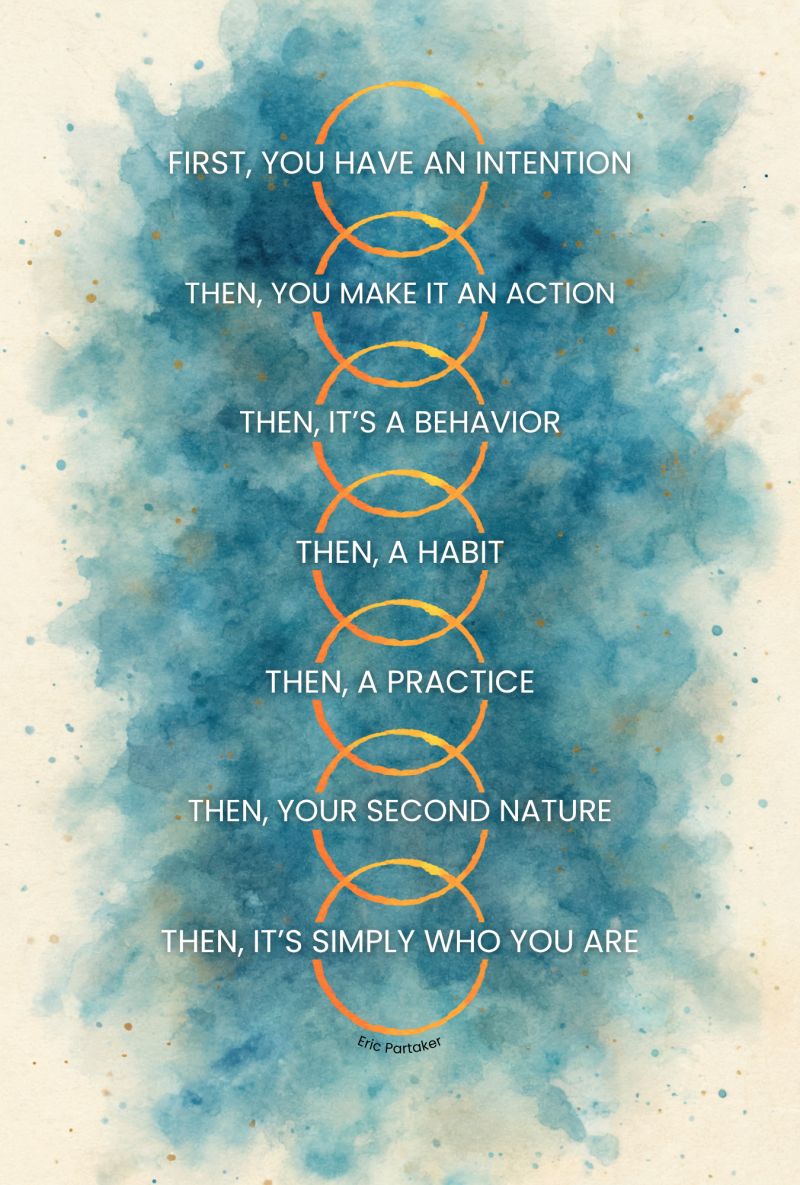
➡️ First, you have an intention.
↳ A spark. A vision. A “what if.”

➡️ Then, you make it an action.
↳ One small step. One brave moment.

➡️ Then, it’s a behavior.
↳ You do it again. And again.

➡️ Then, a habit.
↳ It becomes automatic. Natural.

➡️ Then, a practice.
↳ You refine it. Master it.

➡️ Then, your second nature.
↳ You don’t think about it anymore.

➡️ Then, it’s simply who you are.
↳ Identity achieved.

This is how leaders are built.
This is how excellence happens.
This is how transformation works.

Not through massive leaps.
But through tiny, consistent choices.

That workout you’re putting off?
That difficult conversation you’re avoiding?
That bold idea you’re not pursuing?

Start with intention.
Take one action today.

Because six months from now,
it won’t be something you do.

It’ll be who you are.

Dreams Don’t Work Unless You Do: The Chase That Changes Everything

You’ve felt it before.

That spark of a great idea.
The kind that makes your heart race a little faster.
The kind you scribble down on a napkin, or whisper to a friend like it’s a secret too good to keep.
The kind that could change everything.

But here’s the truth most people won’t tell you:

Even the best ideas are worthless if you don’t chase them into reality.

Ideas are easy. Execution is rare.

Every billion-dollar company?
Every bestselling book?
Every world-changing invention?

They all started as fragile, unproven, vulnerable ideas.
But someone had the guts to chase them.
To face the unknown.
To fail, adapt, and try again.

Ideas are like seeds.
But unless you plant them, water them, and give them time to grow, they’ll remain exactly what they are—potential.

Unrealized.
Unfulfilled.
Forgotten.

The difference between someone who dreams and someone who builds isn’t brilliance—it’s movement. It’s the chase.

So, ask yourself:

  • What idea have you been sitting on for too long?
  • What passion keeps tapping on your shoulder?
  • What vision lives rent-free in your mind?

Stop waiting for perfect conditions.
Stop waiting for permission.
Start chasing.

Start small. Start messy. Start scared. But start.

Because at the end of the day, you won’t be remembered for the ideas you had.
You’ll be remembered for the ones you ran after—and made real.

Ideas don’t change the world. Actions do.
Now go chase yours!

12 Daily Habits That Will Change Your Life

I was drowning in stress until I found the power of

tiny habits.

These 12 daily practices take minimal time but

deliver exponential returns:

1️⃣ Exercise Session

Even 20 minutes move the needle. It’s not about getting

ripped—it’s about showing up for yourself first thing.

2️⃣ 2-Minute Rule

Procrastinating the tiny tasks keeps them in your head.

If it takes 2 minutes, do it now.

3️⃣ Gratitude Practice

List 3 things you’re grateful for each morning. It rewires

your brain to spot opportunities instead of obstacles.

4️⃣ 4-7-8 Breathing

Breathe in for 4, hold for 7, exhale for 8. Use it before

big meetings or whenever tension hits.

5️⃣ Meeting Breaks

Back-to-back meetings kill productivity. Those 5-minute

gaps aren’t wasted time. They’re essential recovery periods.

6️⃣ 6-Second Pause

The space between stimulus and response is your power

zone. That tiny pause prevents reactive decisions.

7️⃣ Water Intake

Your brain is 73% water. Even mild dehydration tanks your decision-making.

8️⃣ Sleep Commitment

Sleep deprivation isn’t a badge of honor. Prioritize quality

sleep to be at your best for yourself and others.

9️⃣ Daily Meditation

9 minutes to reset your mental operating system. It’s not

about emptying your mind—it’s about observing it.

🔟 Movement Goal

10,000 steps seem daunting? Walk while you take calls.

Use a standing desk. Small movement adds up.

1️⃣1️⃣ Skill-Building

11 minutes learning something new—a language, a skill,

a concept. Compound interest works for knowledge too.

1️⃣2️⃣ Reading Practice

12 pages daily is 24 books a year. Leaders are readers.

Make it non-negotiable.

Small changes, massive impact.

You don’t need to overhaul your entire life to see results.

Start with just one habit. Be consistent.

Watch what happens.

Remember:

The most successful people aren’t superhuman.

They’ve simply built better daily habits than everyone else.