A New Dawn: Pope Leo XIV

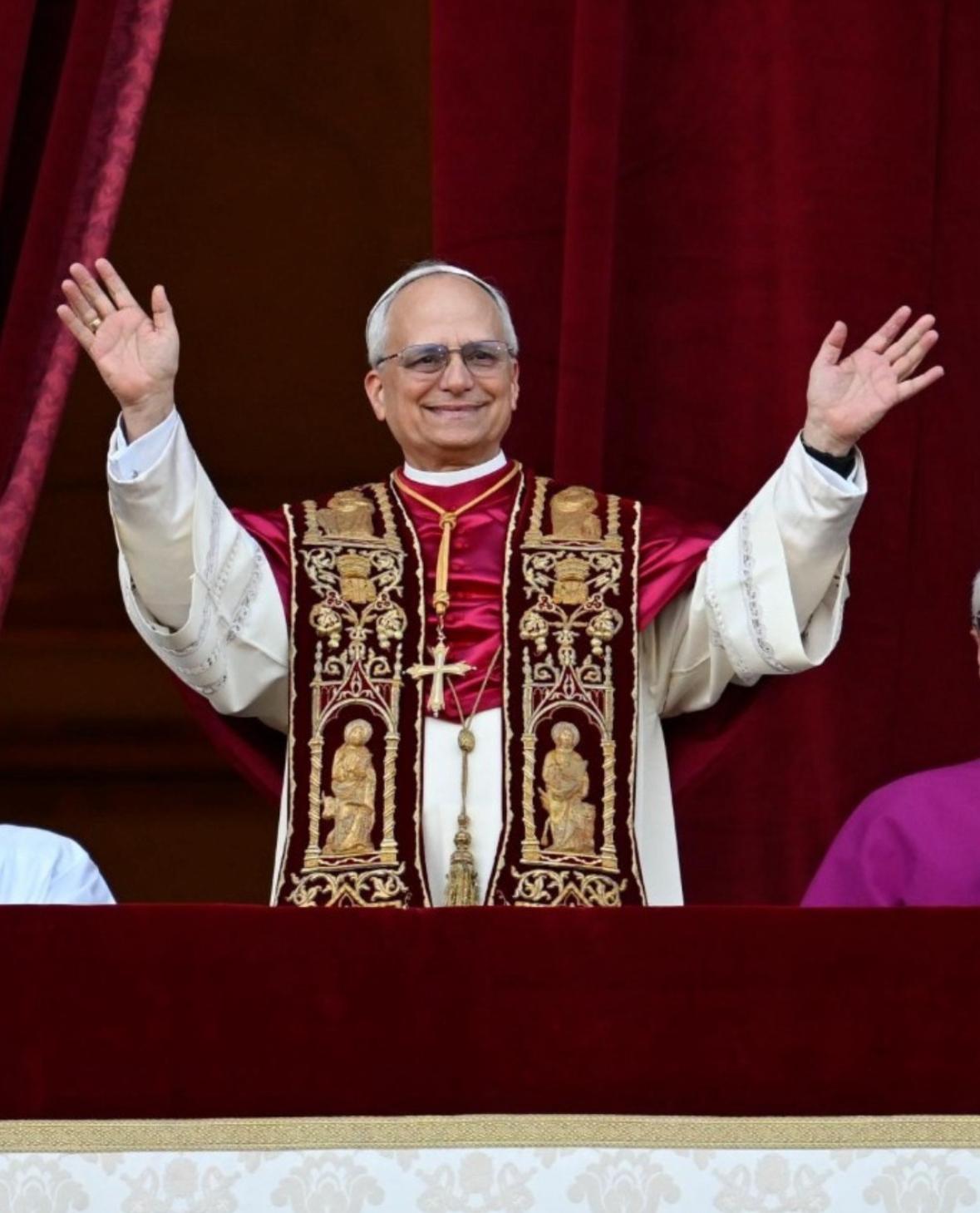
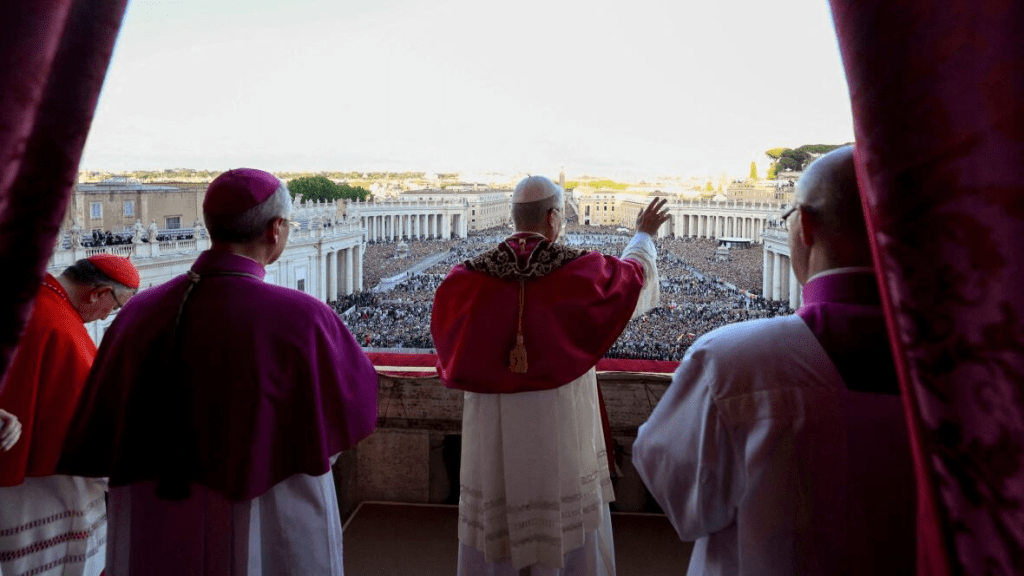
The world held its breath. Whispers echoed through St. Peter’s Square. Then, the white smoke billowed, and the bells of St. Peter’s Basilica began their joyous peal. But the name on everyone’s lips was not one many had predicted: Cardinal Robert Provost.

In a stunning turn of events, the College of Cardinals has elected the first-ever American Pope. Just as the last conclave surprised the world, this one has delivered a seismic shock, challenging our expectations and reminding us that the Holy Spirit moves in mysterious ways.
A Shepherd from Louisiana

Cardinal Provost, until recently the Archbishop of New Orleans, is known for his deep humility, pastoral heart, and unwavering commitment to social justice. His background is a far cry from the halls of Vatican power, a testament to the Spirit’s ability to choose the unexpected. This is a man who has spent his life walking with the people, listening to their struggles, and advocating for the marginalized.

The Spirit’s Unpredictable Path

For weeks, the pundits had offered their predictions, their lists of papabili carefully curated and analyzed. Yet, as so often happens, the Spirit has defied human calculations. This election reminds us that the Church is not a political machine, and the papacy is not a prize to be won through earthly maneuvering. It is a sacred office, and the Spirit guides the Church in ways that transcend our limited understanding.

A Church for All

What does this election mean for the future of the Catholic Church? It’s too early to say for certain, but Cardinal Provost’s background suggests a papacy marked by:

  • A focus on the peripheries: A deep concern for the poor, the immigrant, and those on the margins of society.
  • A commitment to dialogue: An openness to listening to all voices, both within and outside the Church.
  • A call to unity: An emphasis on healing divisions and building bridges between different communities.

Bishop William McGrattan, the president of the Canadian Conference of Catholic Bishops, said he’d met Prevost many times as the new Pope used to head the dicastery for bishops.

“I found him to be very sensitive. I would say, a person who listens first before speaking,” McGrattan said at a news conference.

The bishop said he believes Prevost’s experience working in missions will bring the perspective “that the Church is universal and the Church needs to speak to all peoples of all countries.”

McGrattan added that Prevost had a kind of depth to him and a clear “sense of justice.”

“A very quiet man but very somewhat humble in his demeanor,” he said. “I hope that the world will begin to see this as he begins his pontificate.”

The Canadian bishop called it “extraordinary” that the new Pope’s first address was on handwritten notes.

“But he did talk about the issues that are pressing: peace in the world, the issue of many injustices. And I think that is setting the tone for what he wants to continue in terms of the papacy, that we need to be reconciling, we need to be bridges in which the voice of peace,” McGrattan said.

A Time of Hope

This is a moment of profound hope for the Catholic Church. A new chapter is beginning, and the Spirit has once again shown that the Church is alive, vibrant, and capable of renewal.

As we welcome Pope Leo XIV, let us pray for him, that he may be a faithful shepherd, a courageous leader, and a true servant of the servants of God. And let us open our hearts to the surprising ways in which the Holy Spirit continues to guide us all.

Figma Config 2025: Key Takeaways for Tech Teams

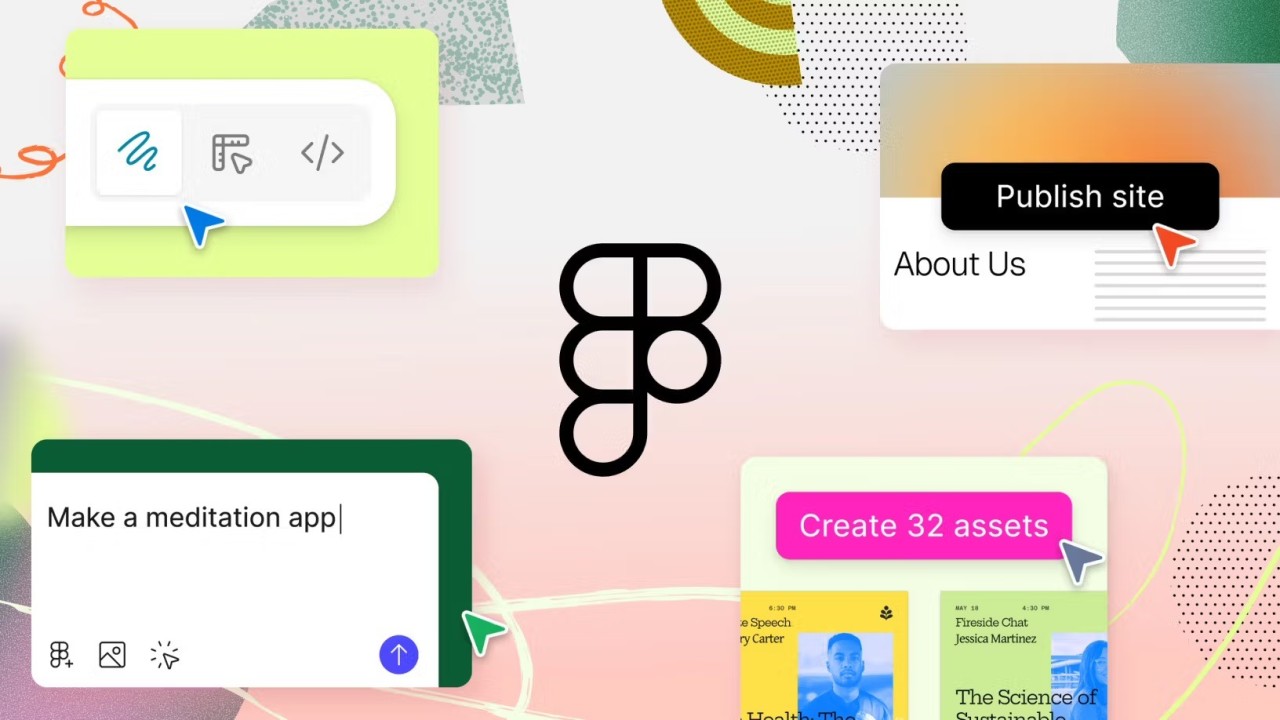
Figma Config 2025 just dropped a whole bunch of shiny new toys, and you know I had to dig in and see what’s actually going to matter for us in the web and mobile world. Forget incremental updates; this Config felt like a strategic leap, blurring the lines between design and code in exciting new ways.

Here’s the lowdown on the cool stuff that truly matters to us:

The “Wow” Moments & What They Mean for Us:

Figma Make: AI That Actually Writes (Some) Code?! Okay, this one’s wild. Imagine just telling Figma what kind of button or widget you want, and BAM! It spits out actual code. No more pixel-perfect handoffs that still need a dev PhD to implement.

  • For Architects: Think super-fast prototyping. Want to see if that crazy UI idea is even doable without spending days on a proof of concept? Figma Make could be your new best friend for quick tech checks.
  • For Developers: Look, it’s not going to write your whole React app (yet!), but it could seriously speed up the grunt work of basic UI components. Plus, it gives you a much clearer starting point from the design, which is always a win.

Figma Sites: Designers Building Websites?! So, Figma’s letting designers go full-on web builder. Drag, drop, boom – a website. Responsive and (apparently) all that jazz.

  • For Architects: How does this fit into our grand plans? Probably for simpler stuff – marketing pages, landing sites. But we gotta keep an eye on how these “no-code” sites play with our complex backend systems.
  • For Developers: Could this free us up from building every single little marketing site? Maybe! Less basic HTML/CSS/JS could mean more time for the complicated stuff we actually enjoy.

Figma Draw Got Swole: They seriously leveled up the drawing tools. Think easier ways to make cool graphics and illustrations right in Figma.

  • For Architects & Developers: Okay, we’re probably not becoming digital artists overnight. But better design tools mean our design teams can create even slicker UIs. We just need to make sure we can actually build those awesome visuals without melting our users’ phones.

Figma Buzz: AI for Marketing Content – Less “Lorem Ipsum” Drama: Figma’s throwing AI into the mix for generating marketing content. Think on-brand images and text, whipped up pretty quickly.

  • For Architects & Developers: This means more and more diverse assets flowing into our web and mobile apps. We need to make sure our systems can handle all the different content types and integrate smoothly with marketing tools.

So, What does it mean for us?

  • Designers and Developers: Officially Besties (More Than Before): These new tools are pushing us closer together. We’ll be talking the same language earlier in the process.
  • Faster Experimentation is the Name of the Game: Quick prototypes and even basic working sites mean we can test ideas faster and fail cheaper (hopefully!).
  • New Integrations on the Horizon: Expect Figma to want to play nice with even more of our dev tools and platforms.
  • Focus on Extensibility & Maintainability: While no-code solutions might handle simpler use cases, our expertise in building robust and maintainable systems will remain crucial for complex applications. We need to ensure that the outputs from tools like Figma Make and Figma Sites can be effectively integrated and extended.
  • The Rise of the “Design Engineer”: The concept of a hybrid role – someone fluent in both design principles and code – is becoming more relevant. We should consider how these evolving tools might impact our team structures and skillsets.

Figma Config 2025 wasn’t just about UI design; it signaled a significant evolution towards a unified digital creation platform. As architects and developers, we need to embrace these changes, explore the potential of these new tools, and strategically adapt our workflows to leverage the increased collaboration and rapid prototyping opportunities they offer.

The future of building web and mobile experiences is becoming more integrated, and understanding these advancements is crucial for staying ahead of the curve.

Cold Now or Cold Later: Why You Should Jump In Scared

You’re standing at the edge. The water below is icy, your heart races, and your mind is spinning with reasons to delay. Maybe if you wait a few minutes, the water will somehow feel warmer. Maybe you’ll feel braver. Maybe you’ll be ready.

But here’s the truth: the cold water doesn’t get warmer if you wait to jump. It stays cold. And the longer you hesitate, the stronger the fear feels.

That fear—that resistance—isn’t a sign to stop. It’s a signal that you’re standing on the brink of growth. Whether it’s a tough conversation, a new role, a creative leap, or a life-changing decision, you’ll never feel ready to do something that truly scares you. So stop waiting for the perfect moment. Jump in scared.

Do it afraid. Do it unsure. Do it imperfectly.

Because confidence isn’t something you find before you act. It’s something you build through action. The first step is shaky. The second might still feel wrong. But with each step, your courage compounds. You gain proof that you can do hard things—not in theory, but in lived experience.

Too many of us wait to feel ready. We think courage is the absence of fear. It’s not. Courage is action in the presence of fear.

So whatever it is you’re hesitating on—launching that idea, applying for that job, speaking up in that meeting, starting over—ask yourself: Cold now or cold later? Because waiting doesn’t warm the water. But jumping in? That changes everything.

Feel the fear. And do it anyway.

The Quiet Plea From Your Future Self

We don’t hear it often, but it’s there—a quiet, hopeful voice echoing from the future. It’s not asking us to achieve more, hustle harder, or fix everything. Instead, it’s offering a simple, profound plea: Enjoy where you are. Right now.


The Illusion of “When”

We live in a culture that thrives on forward motion. We’re constantly reaching for the next goal, the next milestone, the next version of ourselves. “I’ll be happy when…” becomes a silent mantra. When the job stabilizes. When the kids are older. When the house is finally bought. When the body is fitter. When the bank account is fuller.

But what if, in 10 years, the version of you with the job, the house, the stability, and even the gray hairs could speak to you now?

What if they didn’t ask you to move faster, but slower?

What if they reminded you that the in-between—the messy, uncertain, trying-but-hopeful moments—are the moments you’ll miss the most?


This Version of You is Worth Loving

Yes, you’re figuring things out. Maybe you’re healing. Maybe you’re building. Maybe you’re just holding it together. But this version of you is not a draft. It’s not a waiting room. It’s not a stepping stone.

It’s a full chapter.

Your future self might envy the laughter you have now, even if it’s rare. They might miss the tiny chaos of your current home, the way your child mispronounces a word, or the way you once looked in the mirror unsure but growing. They might long for the friendships you haven’t realized are golden yet, or the freedom you have to dream without the weight of what you later learn.


Practicing Present Joy

So how do we honor this unknown quote in our daily lives?

Pause and name the good. It might be small—a cup of coffee that hits right, a morning without rush, a text from someone you love. These are life’s secret jewels. Talk kindly to yourself. Your future self would likely speak to you with more grace than you allow. Learn to echo that tone. Mark moments, not just milestones. Don’t wait for a promotion or vacation to celebrate life. Celebrate quiet Tuesdays. Let “enough” be enough. For today, your efforts, your love, your presence—they are enough.


A Letter to Yourself

If you could sit with your future self—10 years older, wiser, and perhaps more sentimental—what would they say? Likely not: “Why didn’t you achieve more by now?” But more like: “I wish you smiled more. I wish you danced more. I wish you realized you were in a good part of the story.”

Let’s not wait 10 years to see it.

Your life today, with all its imperfections and waiting, is the dream of a former you—and the nostalgia of a future you. Don’t rush through it. Savor it. Live it fully.

When You’re at Rock Bottom, God Is Already There

There’s a quote I came across recently that stopped me in my tracks:

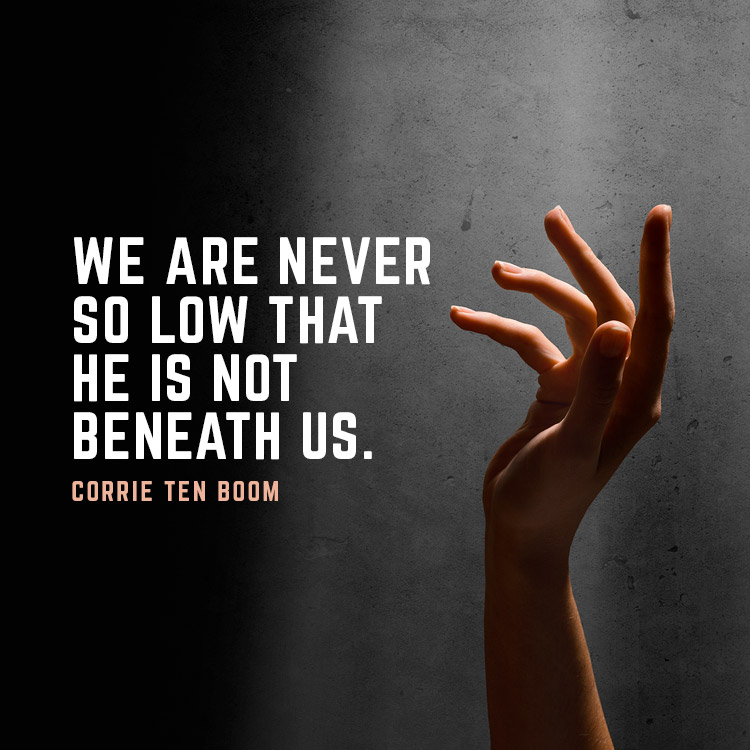
“We are never so low that He is not beneath us.”

It’s one of those lines that doesn’t shout, but instead whispers something so powerful you can feel it settle in your bones. And if you’ve ever felt broken, unseen, or hopeless — you know exactly what it means.

I think back to a time in my own life when everything felt like it was falling apart. The plans I’d laid out so neatly unraveled. Prayers seemed to go unanswered. I kept showing up — at work, at home, at church — but inside, I was just… tired. And in that tiredness, I felt a quiet shame. A feeling like, “God must be disappointed in me.” Like I had somehow drifted too far.

But this quote — this quiet truth — reminds us of something the world doesn’t always say:
There is no depth too deep, no failure too far, no sorrow too heavy where God cannot reach.

It’s easy to believe in God when life is tidy. When prayers are answered the way we want them to be. When you can say “God is good” and everything around you agrees.

But the real miracle?
It’s knowing that when you’re lying face down in the dirt, God isn’t waiting for you to climb your way back up. He’s already right there beside you.

The Catholic faith is rich with stories of this kind of God — one who stoops, who kneels, who gets His hands dirty for the sake of love. Think of Jesus washing the feet of His disciples. Think of Him weeping at Lazarus’ tomb. Think of Him, arms stretched on a cross, lowering Himself to our human suffering in the most radical way imaginable.

That’s not a distant God.
That’s a God who gets under our pain to carry it.
Who goes lower than our lowest so He can lift us up.

So if you’re in a place right now where things feel heavy or hollow — know this:
You’re not beneath God’s love.
You’re not too lost.
You’re not too broken.

He’s already beneath you, holding you up, waiting patiently not for perfection, but simply for you to reach back.

And if that’s not Good News, I don’t know what is!

A Shepherd of Simplicity: My Journey with Pope Francis

The day the white smoke billowed from the Sistine Chapel, the world held its breath. I remember the shock, the sheer disbelief, when “Jorge Mario Bergoglio” was announced as our new Pope. A Jesuit? It was a moment that defied all expectations, a gentle earthquake that rattled the foundations of what I thought I knew about the papacy. I hadn’t even dreamt that a member of the Society of Jesus, with their intellectual rigor and focus on education and service, would ever ascend to the Chair of Saint Peter. It was, in hindsight, a powerful reminder of the Holy Spirit’s unpredictable and transformative power, a force that continues to surprise and guide us, both in the grand events of the Church and in the quiet moments of our daily lives.

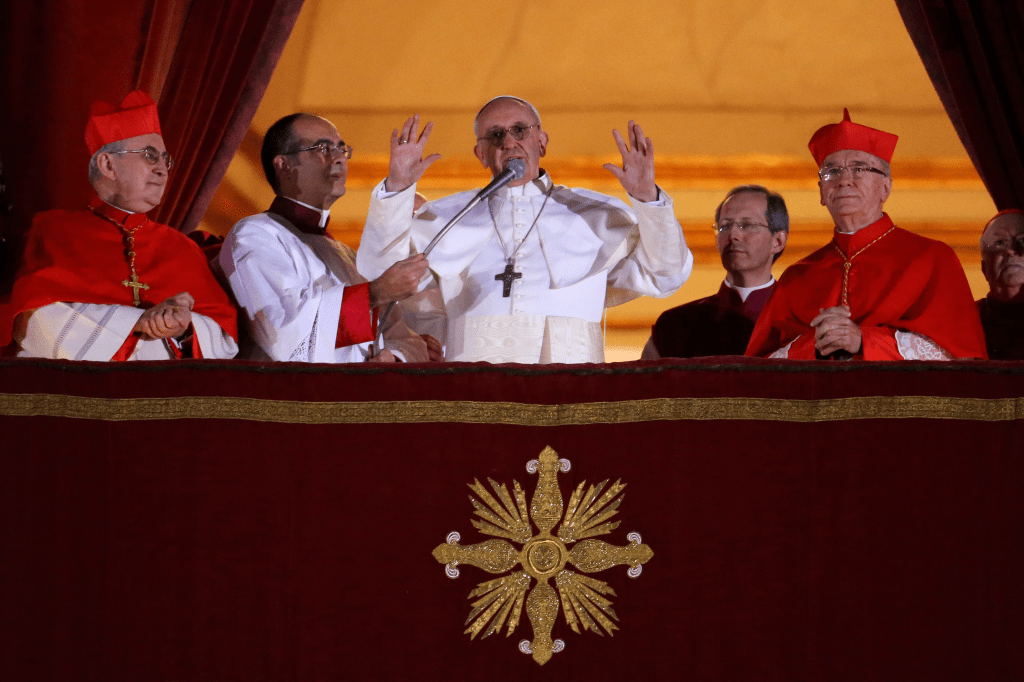
Pope Francis makes his first appearance

That initial surprise quickly gave way to a profound sense of hope, fueled by the new Pope’s immediate and striking humility. The very first images were telling: a simple white cassock, a refusal of the traditional mozzetta, a warm, almost shy, greeting of “Buona sera” to the crowd. This wasn’t the regal figure I had expected. This was a pastor.

The early days of his papacy were a masterclass in simplicity. He chose to live not in the papal apartments, but in the Vatican guesthouse, sharing meals with other residents. He carried his own luggage. He made a point of personally calling his predecessor, Pope Benedict XVI. Each gesture, seemingly small, spoke volumes about his character and his priorities. He was showing us, not telling us, what it meant to be a servant-leader.

Inside the Pope’s small and humble bedroom with just a few pieces of furniture and a wooden crucifix

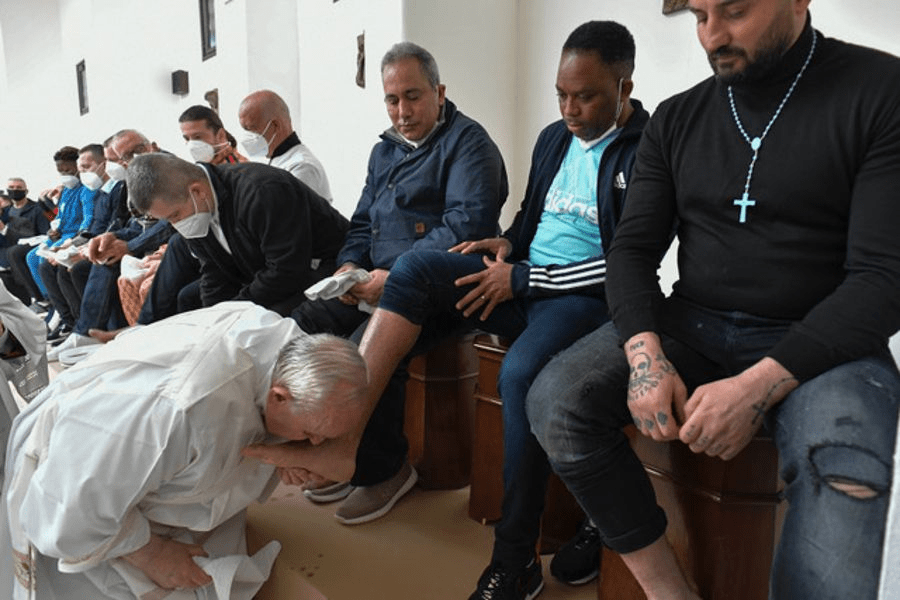
I recall being particularly struck by his visit to the prison for Holy Thursday, washing the feet of inmates, including those of different faiths. It was a radical act of humility, a powerful echo of Jesus’ own actions, and a clear message that the Church was, and should always be, a place for the marginalized, the forgotten, the outcast. It wasn’t just a photo opportunity; it was a reflection of a deep-seated conviction.

Pope Francis washing prisoner’s feet

Pope Francis, from those very first days, embodied a simplicity that was both disarming and deeply compelling. He reminded me that true power lies not in grand displays, but in quiet acts of love and service. He challenged me to re-examine my own faith, to look beyond the pomp and circumstance, and to focus on the heart of the Gospel: compassion, mercy, and a radical commitment to the poor.

Looking back, I see the hand of the Holy Spirit not only in the surprising choice of Pope Francis, but also in the way he has, through his words and actions, touched the lives of so many, including my own. He has shown us a different way, a way of humility, a way of simplicity, a way of love. He has reminded us that the Church is not a museum, but a field hospital, a place of healing and hope for a broken world. And for that, I am profoundly grateful.

Your Boss, Your Bodyguard? Leaders Who’ve Got Your Back

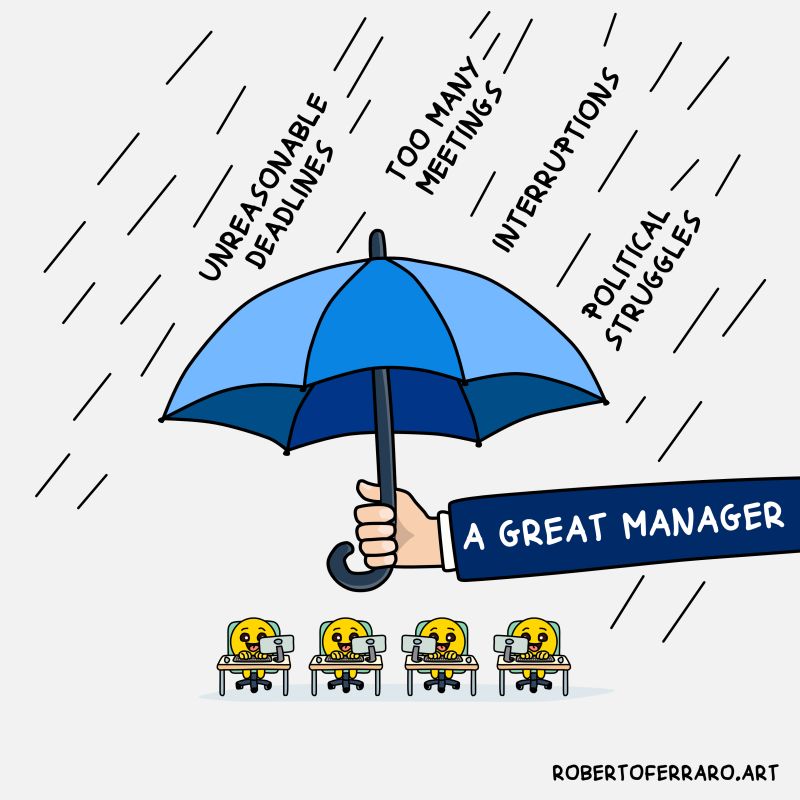
Okay, so you know how sometimes work feels like dodging bullets? Bob Sutton wrote this cool piece, “Managing Yourself: The Boss as Human Shield,” that totally nails how awesome it is when your boss is like, your personal bodyguard against all that office craziness. And of course the illustration by Robert Ferraro summarises it so well!

Basically, Sutton says the best leaders aren’t just telling you what to do. They’re the ones out there taking the hits for the team, so you can actually, you know, do the work. Think of them as the human shield – sounds intense, right? But it’s really about them making sure all the BS doesn’t rain down on you and your crew.

So, what does this “human shield” boss actually do? Sutton breaks it down:

  • They’re the Noise Canceler: All that random stuff flying around – pointless meetings, confusing emails, last-minute “urgent” things that aren’t really urgent? This boss tries to soak it up so it doesn’t drown you. They’re like, “Nah, team doesn’t need to worry about that.”
  • They Pick the Fights: Not every little thing is worth stressing over. This leader knows what’s important to push back on – like crazy deadlines or dumb rules that make your job harder. They’re the ones saying, “Hold up, this isn’t right for the team.”
  • They’ve Got Your Back When Things Go South: Mess-ups happen, right? Instead of pointing fingers, this boss is more about figuring out what went wrong and how to learn from it. They create a safe space where you don’t feel like you’re gonna get thrown under the bus for every little oops.
  • They Trust You to Do Your Thing: Being a shield doesn’t mean breathing down your neck. It’s the opposite! By keeping the distractions away, they give you the room to actually own your work, grow, and be good at what you do. They’re like, “You got this, I’ll handle the outside noise.”
  • They Make It Okay to Speak Up: When you know your boss has your back, you’re way more likely to share ideas or say when something isn’t working. That kind of safe vibe leads to way better stuff happening.

Honestly, it makes so much sense. When you’re not constantly fighting off all the extra junk, you can actually focus on the stuff that matters. Sutton’s article is a good reminder that being a leader isn’t about being the loudest or the one calling all the shots. Sometimes, it’s about being the quiet force that protects and empowers everyone else to shine.

So, next time you think about what makes a good boss, maybe think about the “human shield.” It’s a pretty cool way to look at leading – putting your people first so they can do their best. And who wouldn’t want a boss like that?

Finding Peace in the Midst of Life’s Storms

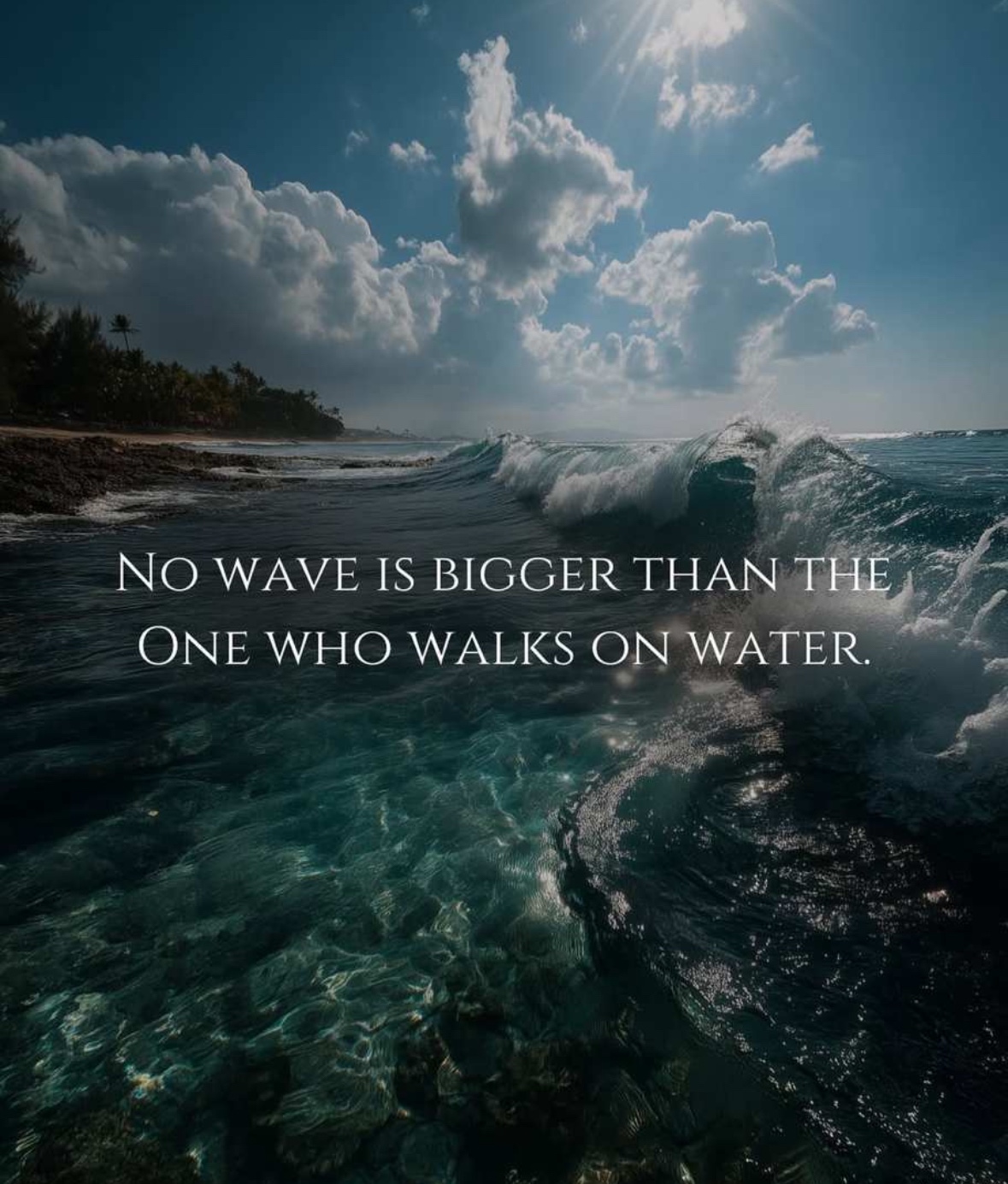
There’s something arresting about the image of a stormy sea—waves crashing, winds howling, and uncertainty swirling. In such moments, fear can feel all-consuming, and the world around us seems too vast, too powerful to conquer. Yet, in the midst of that chaos, one truth remains:

No wave is bigger than the One who walks on water.

This quote, rooted in the biblical account of Jesus walking on the Sea of Galilee, is more than a poetic phrase. It’s a reminder of divine authority over chaos. In Matthew 14, the disciples are caught in a storm, struggling to keep their boat afloat. Then Jesus appears—not in a boat, not from the sky—but walking on the very thing that threatened to drown them.


Walking on water.

It’s an image that flips fear on its head. Waves that overwhelm us are under His feet. The winds that shake our resolve are calmed by His word. It’s not that the storms cease to exist, but that they never define the outcome when He is near.


Waves We Face Today

The “waves” we encounter aren’t always literal. They may look like:

A sudden job loss A health crisis Struggles with anxiety or depression Family tensions Doubts that whisper, “You won’t make it this time”

And yet, for every crashing wave, we’re invited to shift our gaze from the storm to the Savior.

Faith doesn’t always calm the storm immediately. Sometimes, it calms the soul first. When Peter stepped out of the boat to meet Jesus, he too walked on water—until fear took over. His sinking didn’t signify failure; it became a lesson: when we focus on the wave, we sink. When we fix our eyes on the One who walks on water, we rise.


What This Means for You

When life feels out of control, remember:

You are not alone in the boat—God is watching, walking, and reaching. You were never meant to master the storm by yourself—but to trust the One who already has. No circumstance, no fear, no failure is bigger than His grace and power.

This isn’t just theology—it’s hope with legs. It’s courage in motion. It’s your invitation to step out, even if the sea isn’t calm yet.

So, whatever wave you’re facing today, don’t shrink back. Look up. Step forward. And remember—no wave is bigger than the One who walks on water.

When the Donkey Kicks: Rising Above Pettiness

There’s an old Gambian proverb that goes:

“If a donkey kicks you and you kick back, you are both donkeys.”

At first glance, it might sound humorous, even a little absurd. But dig deeper, and this saying reveals a powerful truth about human behavior, ego, and emotional intelligence.


The Deeper Meaning

This proverb teaches a lesson that is both timeless and timely: when someone behaves badly toward you—be it through insult, anger, manipulation, or petty provocation—responding in kind doesn’t elevate you. It simply pulls you into the same pit. The moment you retaliate with the same negativity, you’ve allowed someone else’s poor choices to influence your own.

In essence, you become what you despise.


A Mirror, Not a Measure

People often serve as mirrors. How you respond to someone else’s behavior is often a reflection of your own self-control and awareness. When someone wrongs you and you maintain your composure, you’re no longer reacting—you’re choosing. You’re showing that your actions are not dictated by others, but are grounded in your own values.

That’s strength. That’s leadership.


The Cost of Kicking Back

Responding to negativity with more negativity doesn’t just make you feel worse—it often escalates the conflict, spreads the negativity, and chips away at your integrity. Whether in personal relationships, the workplace, or online spaces, it’s easy to get dragged into battles that aren’t worth fighting. And in fighting them, you risk losing something far more valuable than the argument: your peace of mind.


Choosing a Higher Road

Walking away doesn’t mean weakness—it takes far more strength to be calm in the face of provocation than to lash out. Whether it’s a snide comment from a colleague or a passive-aggressive jab on social media, remember the donkey. You don’t have to kick back. You don’t have to respond at all.

Instead, respond with grace. Or better yet, don’t respond at all. Not every kick deserves your attention.


The Gambian proverb is a call to self-awareness and restraint. It’s a gentle yet firm reminder that we are not obligated to match energy—especially when that energy is toxic. In choosing not to kick back, we’re not letting someone “get away with it.” We’re choosing not to become them.

So the next time a “donkey” kicks you, smile. Breathe. Walk away. And remember: you are not a donkey.

Where the Magic Happens: Stepping Beyond Your Comfort Zone

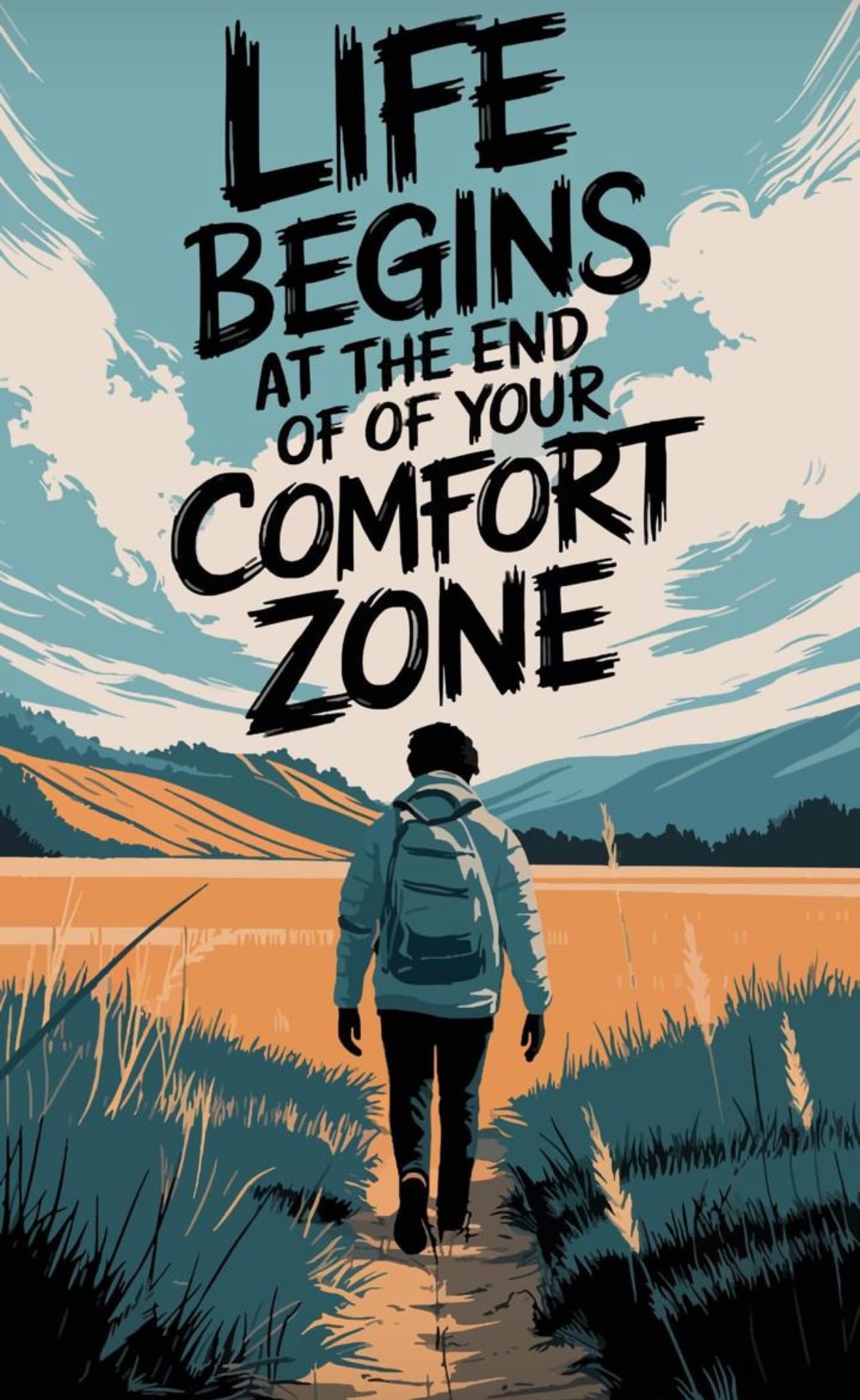
“Life begins at the end of your comfort zone.”

It’s a quote you’ve probably seen on Instagram posts, stuck to laptops, or painted on coffee shop walls. But beyond the Pinterest-worthy aesthetic, this simple sentence holds a truth that can change your life.

We’re creatures of habit. Our comfort zones are those safe, predictable routines we build around ourselves—where things are familiar, risks are minimal, and outcomes are mostly guaranteed. But here’s the paradox: the very space that makes us feel secure can also be the one that quietly stifles our growth.


Why the Comfort Zone Feels So Good (But Isn’t Always Great)

Inside your comfort zone, there’s no fear of failure. No awkward learning curves. No rejection. But there’s also no adventure, no new skills, no meaningful victories.

Think about it: every significant achievement in your life—learning to ride a bike, giving your first presentation, applying for a dream job—probably came with a dose of discomfort. But it was worth it, right?

Growth doesn’t happen when we play it safe. It happens when we stretch, stumble, and surprise ourselves.


The Science of Discomfort and Growth

Research in psychology backs this up. The concept of “optimal anxiety” suggests that a bit of discomfort actually enhances performance. Too much stress, and we freeze. Too little, and we stagnate. But just enough? That’s the sweet spot where we grow.

It’s like going to the gym. If you never increase the weight, your muscles won’t develop. The same goes for mental and emotional resilience.


What’s Waiting Outside the Comfort Zone?

New opportunities: A new role, a new city, a new idea you never thought you could pull off. Confidence: Proving to yourself that you can do hard things builds unshakable self-belief. Creativity: Unfamiliar situations challenge your brain to think differently. Perspective: When you stretch your limits, you start seeing the world—and yourself—in new ways.


So How Do You Actually Step Out?

You don’t have to make a giant leap. Start with small acts of bravery:

Say yes to something you’d normally decline. Start a conversation with someone you admire. Take a class in something you know nothing about. Share your story, even if your voice shakes.

And when it feels uncomfortable, remind yourself: that’s the point. That discomfort means you’re growing. You’re evolving. You’re living.


Chase the Edge

Life begins where comfort ends—not because discomfort is inherently good, but because it’s the gateway to becoming more than we were yesterday.

So the next time you feel nervous, uncertain, or even a little scared, smile. You’re probably on the verge of something incredible.

Because outside your comfort zone? That’s where the magic happens.