Replaceable at Work, Irreplaceable at Home

In today’s fast-paced work environment, where technology evolves at lightning speed and companies adapt just as quickly, it’s easy to get caught up in the belief that our professional roles define us. We hustle, we innovate, and we strive to be indispensable. Yet, there’s a stark truth that often goes unacknowledged: you are totally replaceable at work, but you’re not replaceable at home.

At work, no matter how skilled or essential you may seem, there will always be someone who can step into your shoes. New hires are trained, teams adapt, and the corporate machine keeps turning. This isn’t to diminish your hard work or accomplishments; it’s simply a reality of the professional world. Businesses are built to function with or without any one individual.

But at home, the story is entirely different. Your presence, your love, your influence on your family and close friends—these are irreplaceable. No one can be the parent to your child, the partner to your spouse, or the friend to those who count on you in the same way that you can. Your role in the lives of those you care about is unique, filled with emotional connections, shared memories, and irreplaceable moments.

This quote serves as a powerful reminder to balance the scales. While career success is important, it should never come at the expense of the relationships that truly define our lives. At the end of the day, the time spent with loved ones, the laughter shared, and the support given to one another are what leave a lasting impact.

So, while you navigate your career with ambition and drive, remember to invest just as much—if not more—into the relationships that matter most. Because in the grand scheme of things, it’s those irreplaceable moments at home that will resonate long after the emails stop and the projects end.

Mind Real Estate: Choose Your Tenants Wisely

Your mind is like valuable real estate, and the thoughts and people you allow to occupy it can greatly impact your well-being and happiness. The quote “Don’t let anyone rent a space in your head unless they are a good tenant” serves as a powerful reminder to be mindful of who and what you give your mental energy to.

In life, it’s easy to let negative thoughts or difficult people take up residence in your mind. These “bad tenants” can cause stress, self-doubt, and anxiety, draining your energy and diminishing your sense of peace. Just like you wouldn’t want a bad tenant in a physical property, you shouldn’t allow negativity to live rent-free in your mind.

Instead, fill your mental space with “good tenants”—positive thoughts, supportive relationships, and constructive ideas that contribute to your growth and happiness. By being selective about what you focus on and who you allow to influence your mindset, you can create a mental environment that fosters success, creativity, and joy.

Remember, your mind is your most valuable asset. Treat it with care, and don’t let just anyone take up space in it. Be a wise landlord of your mental real estate, and only welcome tenants that uplift and inspire you.

Reflect and Rise

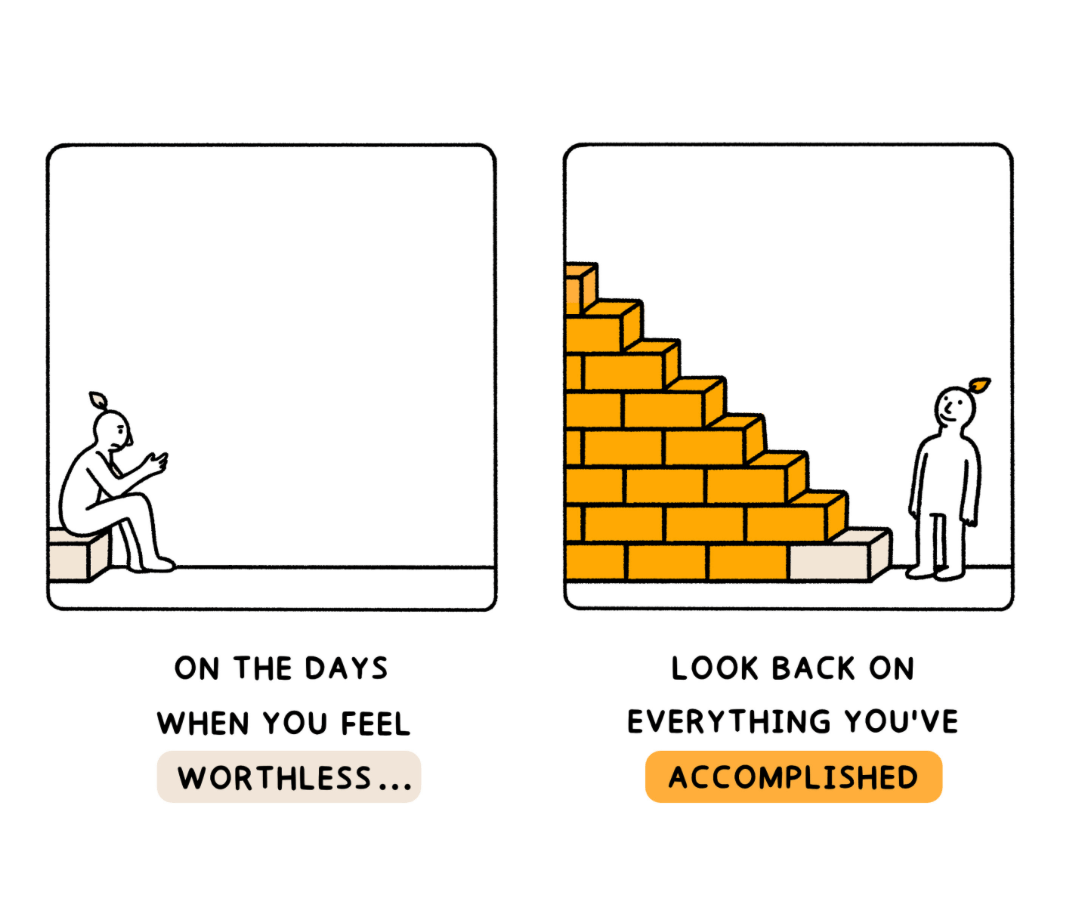
In the fast-paced world we live in, it’s easy to feel overwhelmed and, at times, even worthless. On those challenging days, when self-doubt creeps in and your achievements seem insignificant, it’s crucial to take a moment to reflect on how far you’ve come.

This image by Ash Lamb, “On the days you feel worthless, look back on everything you’ve accomplished,” serves as a powerful reminder that your journey is filled with milestones—some small, others monumental. These achievements, whether personal or professional, are testaments to your resilience, dedication, and growth.

Every step you’ve taken, every challenge you’ve overcome, has shaped you into who you are today. Your past accomplishments are not just memories; they are evidence of your ability to succeed, even when the odds were against you. They are the proof that you are capable of more than you often give yourself credit for.

So, the next time you feel weighed down by self-doubt, pause and take a trip down memory lane. Reflect on your victories, both big and small. Allow yourself to feel proud of your progress, and let that pride fuel your confidence. Remember, you’ve accomplished so much already—there’s no reason why you can’t continue to achieve even more.

Reflect and rise, because you are worth it.

The Winning Edge – How Failure Fuels Success

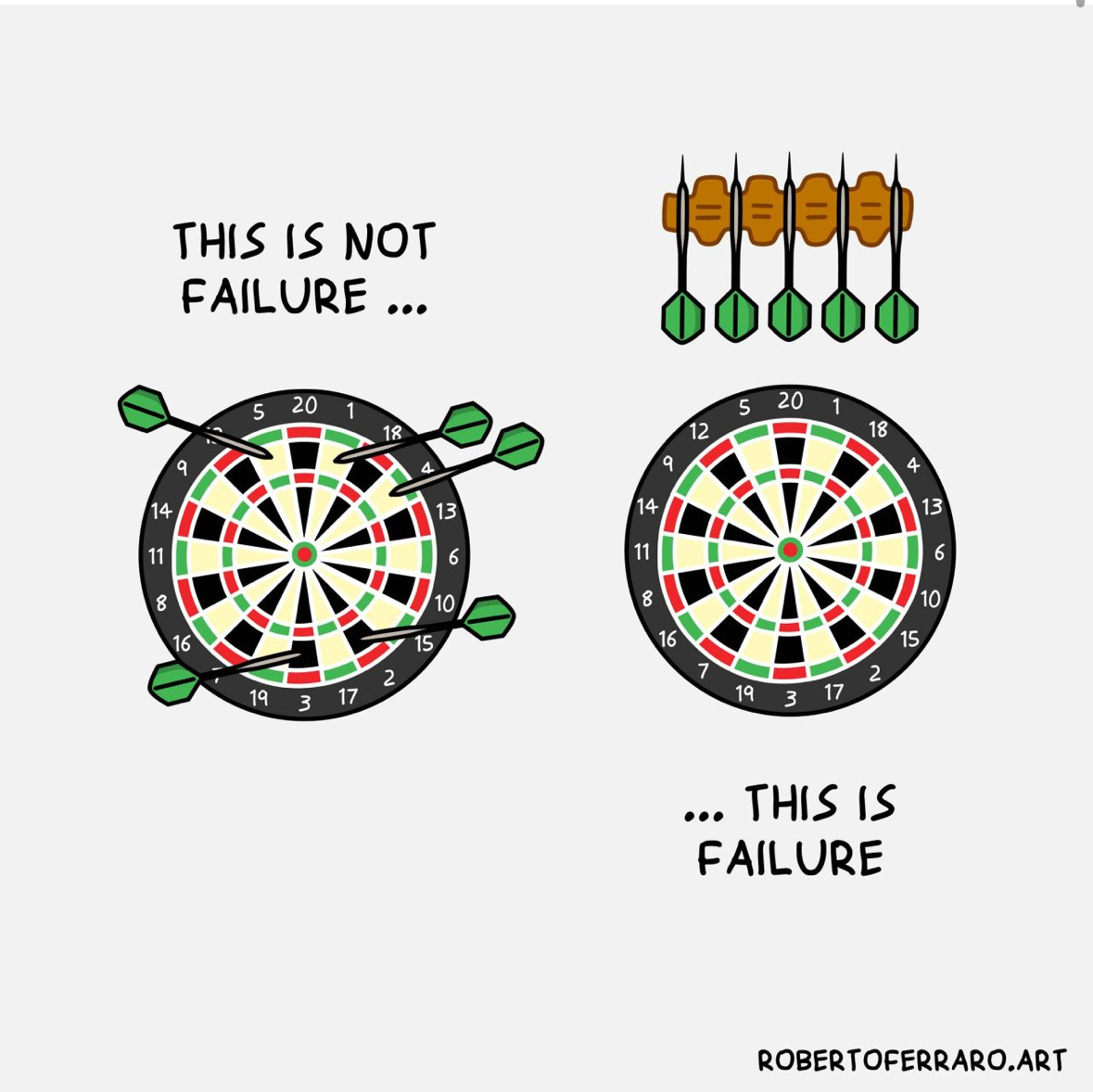
“Failure is not the end. It’s an opportunity to learn, grow, and come back stronger”. I came across this thought-provoking image by Roberto Ferraro today, and it really resonated with me. It’s a simple yet powerful reminder that our definition of failure can be skewed.

We often equate failure with missing the bullseye. We strive for perfection, and anything less is seen as a misstep. But what if we reframed failure as a natural part of the learning process? What if those darts scattered around the board represented valuable attempts, each one teaching us something new?

With the Olympics going on, we see how failure is a constant companion. Yet, it is this very failure that often propels athletes to greatness. The stories of legendary sports figures illustrate how every setback can bring one closer to success, transforming failure into a stepping stone for victory.

Michael Jordan: Missing the Shot, Making the Legend

Michael Jordan, widely regarded as the greatest basketball player of all time, faced numerous failures throughout his career. He famously said, “I’ve missed more than 9,000 shots in my career. I’ve lost almost 300 games. Twenty-six times, I’ve been trusted to take the game-winning shot and missed. I’ve failed over and over and over again in my life. And that is why I succeed.” These failures didn’t deter him; instead, they fueled his drive to improve, eventually leading him to six NBA championships and five MVP awards.


Serena Williams: Overcoming Setbacks

Serena Williams, one of the greatest tennis players in history, has faced her share of defeats and setbacks. Early in her career, she lost several key matches, and injuries frequently interrupted her momentum. However, each loss and every injury served as motivation for her to come back stronger. Williams has won 23 Grand Slam singles titles, the most in the Open Era, demonstrating that resilience in the face of failure is crucial for long-term success.

Lionel Messi: From Rejection to Stardom

Lionel Messi, often hailed as one of the greatest footballers of all time, had a challenging start. Diagnosed with a growth hormone deficiency as a child, Messi faced numerous rejections from football clubs unwilling to bear the cost of his treatment. Eventually, FC Barcelona took a chance on him, and the rest is history. Despite early failures and health challenges, Messi’s perseverance led him to multiple Ballon d’Or awards and a record-breaking career.


Usain Bolt: False Starts to Fastest Man

Usain Bolt, the fastest man in the world, didn’t always have a smooth run. In the 2008 Olympics, he faced criticism for his lack of discipline and poor starts. However, Bolt used these criticisms as motivation to refine his technique and focus on his training. By the 2012 Olympics, Bolt had honed his skills to perfection, winning gold in the 100m, 200m, and 4x100m relay, and setting world records. His journey shows how early failures can be turned into lessons for future success.


The stories of these sports legends offer valuable insights into the relationship between failure and success:

  1. Persistence Pays Off: Consistent effort and dedication, even in the face of repeated failures, eventually lead to success.
  2. Learning from Losses: Each failure provides a lesson, a chance to analyze what went wrong and how to improve.
  3. Building Resilience: Facing and overcoming failures builds mental toughness, which is essential for enduring the highs and lows of a sports career.
  4. Staying Motivated: Using failures as fuel to stay motivated and push harder is a common trait among successful athletes.

In sports, as in life, every failure brings you one step closer to success. It is the ability to learn from setbacks, maintain perseverance, and continually strive for improvement that ultimately leads to greatness.

Going back to the image: every throw that didn’t hit the bullseye provided feedback. It helped us adjust our aim, our grip, our stance. Those “failures” brought us closer to our ultimate goal. So, the next time you find yourself feeling discouraged by a setback, remember this image. Instead of dwelling on the miss, focus on the lessons learned. It’s often better to have tried, failed and learned than not try at all.


To Break Out of a Pattern, One Must First Understand the Pattern

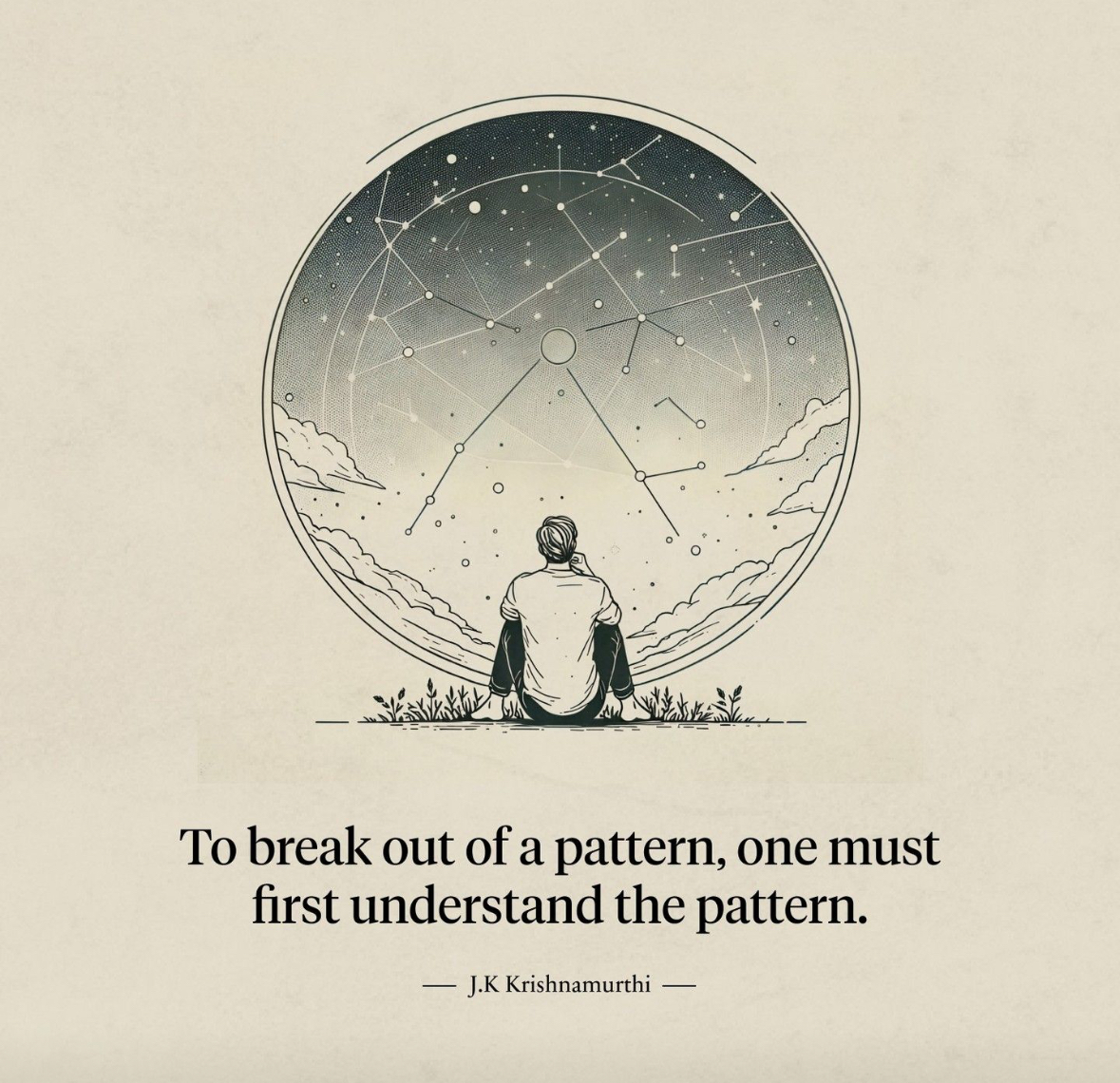
Patterns shape much of our lives, from the habits we form to the decisions we make. These recurring sequences, whether in behavior, thought, or emotion, can be both beneficial and detrimental. When a pattern starts to hinder our progress or happiness, the desire to break free from it becomes paramount. However, to successfully break out of a pattern, one must first understand it.

Understanding the Pattern

Awareness is the first step toward change. Recognizing a pattern requires introspection and honesty with oneself. It’s about identifying the triggers, the sequence of actions, and the outcomes. For instance, if someone has a pattern of procrastination, understanding the underlying reasons—fear of failure, perfectionism, or lack of motivation—can illuminate the path to change.

The Root Causes

Patterns often stem from deep-seated beliefs and past experiences. To understand them, one must delve into the root causes. This process may involve reflecting on past events, exploring emotional responses, and acknowledging any ingrained habits. By uncovering these origins, we can better comprehend why the pattern exists and how it serves or disserves us.

The Role of Self-Awareness

Self-awareness plays a crucial role in breaking patterns. It allows us to observe our thoughts and actions without judgment. Through this observation, we can pinpoint moments when we fall into old habits and consciously choose different responses. Journaling, meditation, and mindfulness practices are effective tools for enhancing self-awareness.


The Power of Small Changes

Understanding a pattern provides the clarity needed to implement change. Instead of attempting to overhaul our behavior overnight, small, incremental changes can be more effective. These gradual adjustments help to rewire our brains and establish new, healthier patterns. For example, if the goal is to break a pattern of negative self-talk, starting with one positive affirmation a day can set the foundation for a more positive mindset.


Seeking Support

Sometimes, understanding and breaking a pattern requires external support. Therapists, coaches, or trusted friends can offer valuable insights and accountability. They can help us see blind spots and provide encouragement as we navigate the process of change.


Breaking out of a pattern is a journey that begins with understanding. By recognizing the pattern, uncovering its roots, and becoming more self-aware, we can pave the way for meaningful change. It’s a process that demands patience, but with persistence, new and healthier patterns can emerge, leading to a more fulfilling and empowered life.

The Power of Perseverance: Never Give Up

In the journey of life, challenges and obstacles are inevitable. However, what truly defines us is how we respond to these trials. The mantra “never give up” is not just a cliché but a powerful principle that can lead to extraordinary achievements and personal growth.

The Importance of Perseverance

Perseverance is the steadfastness in doing something despite difficulty or delay in achieving success. It is the fuel that drives individuals to keep moving forward, even when the path is fraught with hurdles. History is replete with examples of individuals who achieved greatness not because of their innate talent, but because of their relentless determination to keep trying.

Inspirational Examples

Thomas Edison, one of the greatest inventors of all time, is a prime example of perseverance. He failed thousands of times before successfully inventing the light bulb. When asked about his failures, Edison famously replied, “I have not failed. I’ve just found 10,000 ways that won’t work.” His unwavering resolve is a testament to the power of not giving up.

Similarly, J.K. Rowling faced numerous rejections from publishers before “Harry Potter and the Philosopher’s Stone” was accepted. Today, the Harry Potter series is one of the best-selling book series in history, and Rowling’s story continues to inspire aspiring writers worldwide.

Noah Lyles at the 100m final at the 2024 Paris Olympics is another great example. This spectacular eight-frame composite photo by Hector Vivas illustrates this perfectly

As you can see he is last at 40 metres.

Still only 7th at halfway.

Reached 2nd place at the 90m mark.

Noah Lyles didn’t lead at any point in the 100m final.

Until the final steps of the race.


The Benefits of Not Giving Up

  1. Personal Growth: Every challenge you overcome makes you stronger and more resilient. It teaches you valuable lessons that contribute to your personal and professional development.
  2. Increased Confidence: Successfully navigating through difficulties builds self-confidence. Each victory, no matter how small, reinforces the belief in your abilities.
  3. Achievement of Goals: Perseverance is often the difference between success and failure. By refusing to give up, you increase your chances of achieving your goals and realizing your dreams.
  4. Inspiration to Others: Your determination can inspire those around you. By never giving up, you set a powerful example for others to follow, fostering a culture of resilience and perseverance.

Strategies to Cultivate Perseverance

  1. Set Clear Goals: Having a clear vision of what you want to achieve helps you stay focused and motivated.
  2. Break it Down: Large goals can be overwhelming. Break them into smaller, manageable tasks to maintain momentum.
  3. Stay Positive: Maintain a positive mindset. Focus on what you can control and learn from setbacks rather than being discouraged by them.
  4. Seek Support: Surround yourself with supportive people who encourage and believe in you. Their support can provide the motivation you need during tough times.
  5. Celebrate Progress: Acknowledge and celebrate your progress, no matter how small. Recognizing your achievements along the way keeps you motivated and driven.

The journey to success is rarely smooth. It is the bumps and setbacks that test our resolve and determine our ultimate success. Embracing the principle of “never give up” empowers you to overcome challenges, achieve your goals, and inspire others to do the same. Remember, perseverance is not about how many times you fall, but about how many times you get back up. Keep pushing forward, and you will eventually turn your dreams into reality.

Be Like Duplantis & Kendricks: Striving for Excellence and Supporting Each Other

Yesterday Sweden’s Armand Duplantis set a new world record of 6.25m after winning gold in the men’s pole vault. He improved his world best of 6.24m, that he set in April, by one centimetre at his third and final attempt, to the delight of the crowd in the Stade de France. The two-time world champion has now broken the record on nine occasions in a span of four years straight. Duplantis, the first athlete to retain the pole vault title since American Bob Richards in 1952 and 1956, raced to his friends and family after breaking the world record.

The young pole vaulting prodigy, has been consistently pushing the limits of human capability, breaking his own records and setting new benchmarks in the sport. His relentless pursuit of excellence is a testament to his dedication, hard work, and unyielding spirit.

Duplantis’s journey to the top has been nothing short of extraordinary. With each vault, he aims higher, constantly challenging himself to achieve what seems impossible. His record-breaking jump of 6.25 meters is a pinnacle of his career, showcasing not just his physical prowess but also his mental tenacity. Every time he steps onto the field, he brings a sense of anticipation and excitement, reminding us of the power of human potential when matched with perseverance.

What touched me the most while watching the highlights was Sam Kendricks (who won silver!) clapping along with the crowd as Duplantis tried to break the world record! Kendricks embodies the spirit of camaraderie and support, cheering Duplantis on as he soars to new heights. His unwavering encouragement is a beautiful reminder of the importance of having cheerleaders in our lives—those who believe in us, stand by us, and celebrate our successes as if they were their own.

In a world that often pits individuals against each other, his genuine support for Duplantis is refreshing and inspiring. It highlights the value of community and the positive impact we can have on one another. Just as Kendricks supports Duplantis, we too can be cheerleaders for those around us, fostering an environment where everyone strives for greatness and feels uplifted.

Strive for Excellence and Lift Others

I think Duplantis and Kendricks teach us two vital lessons. First, we should continually strive to break our own records, pushing beyond our limits to achieve our dreams. Whether in sports, academics, or any other field, the pursuit of excellence requires dedication, resilience, and a willingness to challenge oneself.

Second, and equally important, is the role we play in the lives of others. By being like Kendricks—offering support, encouragement, and genuine cheer—we can help those around us reach their highest potential. Our words and actions can lift others, making their journeys less lonely and more joyous.

Being like Duplantis & Kendricks is more than just a call to action; it’s a way of life. Strive for excellence in all that you do, and be the cheerleader who helps others soar. Together, we can create a world where everyone feels supported and motivated to achieve their best. Just as Duplantis continues to break records with Kendricks cheering him on, we too can reach new heights with the right support by our side.

Don’t Take Criticism from People You’d Never Go to for Advice

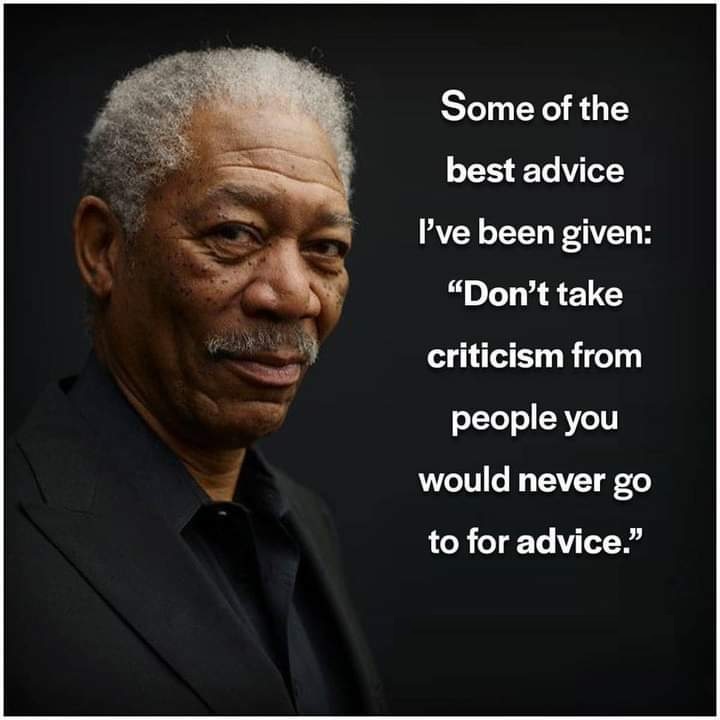
In the journey of personal and professional growth, criticism is inevitable. It’s an integral part of improvement, offering perspectives we might not have considered. However, not all criticism is created equal. The source of the critique is just as important as the content of the critique. A fundamental rule to live by is: Don’t take criticism from people you’d never go to for advice.

The Source Matters

Imagine you’re working on a creative project, pouring your heart and soul into it. Someone you barely know, who has no expertise in your field, harshly criticizes your work. How much weight should their opinion hold? Very little, if any. They lack the context, knowledge, and understanding necessary to provide meaningful feedback. On the other hand, feedback from a trusted mentor or an experienced peer can be invaluable. These are the people who understand your goals, have the expertise to offer constructive criticism, and genuinely want to see you succeed.


Constructive vs. Destructive Criticism

Constructive criticism is aimed at helping you improve. It’s specific, actionable, and delivered with the intention of fostering growth. Destructive criticism, often unsolicited and vague, serves no purpose other than to tear you down. It’s crucial to differentiate between the two and to give credence only to feedback that is meant to help you evolve.


Guard Your Self-Esteem

Taking to heart every piece of criticism can be detrimental to your self-esteem. Not all feedback is worth your emotional energy. By filtering out irrelevant criticism, you protect your mental health and maintain focus on what truly matters. Seek feedback from those who inspire you, who have walked the path you’re on, and whose opinions you value. These are the voices that can help you grow and thrive.


Building a Supportive Network

Surround yourself with people who believe in you and your vision. Cultivate relationships with mentors, colleagues, and friends who provide constructive feedback and support. This network will not only offer valuable advice but also help you navigate through negativity with confidence.


Criticism can be a powerful tool for growth, but only when it comes from the right sources. Be selective about whose opinions you let influence you. Trust the feedback from those you respect and seek advice from. In doing so, you’ll protect your self-esteem, stay focused on your goals, and continue to grow in a meaningful way. Remember, not every voice deserves your attention—especially those you’d never turn to for advice.

7 Things You Can Do For Your Priests

Vianney Sunday, observed in honor of St. John Vianney, the patron saint of parish priests, offers a unique opportunity for parish communities to show their appreciation for the dedication and hard work of their priests. Priests play a vital role in the spiritual guidance and well-being of their congregations, often going above and beyond their duties to support and nurture their flock. Vianney Sunday is a perfect time to consider the various ways you can express your gratitude and support for these selfless leaders. From simple gestures of kindness to more organized efforts, there are countless ways to make your priests feel valued and appreciated. Here are some meaningful ways to celebrate your priests on Vianney Sunday shared by the Archdiocese of Bombay on their Instagram page


Tolerance: A measure of our Humanity

Tolerance is often misunderstood as a lack of beliefs or a passive acceptance of all viewpoints. However, true tolerance is about maintaining your beliefs while respecting others who disagree with you. It’s a measure of how your convictions influence your behavior toward those with differing perspectives.

Having strong beliefs is natural and important. They guide our actions and shape our identities. However, when we encounter conflicting views, our response defines our character. Tolerance calls for empathy, understanding, and a willingness to engage respectfully with others, even when we don’t see eye to eye.

A powerful example of tolerance in action is the friendship between U.S. Supreme Court Justices Ruth Bader Ginsburg and Antonin Scalia. Despite their starkly different judicial philosophies and frequent disagreements on the bench, Ginsburg and Scalia shared a deep respect and fondness for each other.

A delightful opera on the notorious Ruth Bader Ginsburg, and her fierce judicial opponent Antonin Scalia, through the lens of their great friendship, setting forth the case…”We are different. We are one.”

Ginsburg, a champion of liberal causes, and Scalia, a staunch conservative, often found themselves on opposite sides of court rulings. Yet, their differences never overshadowed their mutual respect and personal friendship. They bonded over their love for opera, shared family vacations, and often spoke of each other with great admiration.

Ginsburg once said of Scalia, “We are different, yes, but I have a great respect for him and his intellect.” Scalia, in turn, praised Ginsburg’s legal acumen and kindness. Their friendship was a testament to the idea that it’s possible to hold firm beliefs while treating those who disagree with you with respect and kindness.

Here’s an interview “the odd couple” sat for in 2015


In a diverse world, tolerance is essential for harmony. It allows us to coexist peacefully, learn from each other, and grow. By treating those who disagree with us with kindness and respect, we demonstrate the true strength of our convictions. Tolerance isn’t about diluting our beliefs; it’s about showing the humanity within them.