The Right Place, The Right Time

A mother and a baby camel were lying around under a tree.

Then the baby camel asked, “Why do camels have humps?”

The mother camel considered this and said, “We are desert animals so we have the humps to store water so we can survive with very little water.”

The baby camel thought for a moment then said, “Ok…why are our legs long and our feet rounded?”

The mama replied, “They are meant for walking in the desert.”

The baby paused. After a beat, the camel asked, “Why are our eyelashes long? Sometimes they get in my way.”

The mama responded, “Those long thick eyelashes protect your eyes from the desert sand when it blows in the wind.

The baby thought and thought. Then he said, “I see. So the hump is to store water when we are in the desert, the legs are for walking through the desert and these eye lashes protect my eyes from the desert then why in the Zoo?”

Skills and abilities are only useful if you are in the right place at the right time. Otherwise they go to waste.

The Elephant Rope

As a man was passing the elephants, he suddenly stopped, confused by the fact that these huge creatures were being held by only a small rope tied to their front leg. No chains, no cages. It was obvious that the elephants could, at anytime, break away from their bonds but for some reason, they did not.

He saw a trainer nearby and asked why these animals just stood there and made no attempt to get away. “Well,” trainer said, “when they are very young and much smaller we use the same size rope to tie them and, at that age, it’s enough to hold them. As they grow up, they are conditioned to believe they cannot break away. They believe the rope can still hold them, so they never try to break free.”

The man was amazed. These animals could at any time break free from their bonds but because they believed they couldn’t, they were stuck right where they were.

Like the elephants, how many of us go through life hanging onto a belief that we cannot do something, simply because we failed at it once before?

Failure is part of learning; we should never give up the struggle in life.

Everyone has a Story

A 24 year old boy seeing out from the train’s window shouted…

“Dad, look the trees are going behind!”

Dad smiled and a young couple sitting nearby, looked at the 24 year old’s childish behavior with pity, suddenly he again exclaimed…

“Dad, look the clouds are running with us!”

The couple couldn’t resist and said to the old man…

“Why don’t you take your son to a good doctor?” The old man smiled and said…“I did and we are just coming from the hospital, my son was blind from birth, he just got his eyes today.”

Every single person on the planet has a story. Don’t judge people before you truly know them. The truth might surprise you.

Puppies for Sale

A shop owner placed a sign above his door that said: “Puppies For Sale.”

Signs like this always have a way of attracting young children, and to no surprise, a boy saw the sign and approached the owner. “How much are you going to sell the puppies for?” he asked.

The store owner replied, “Anywhere from $30 to $50.”

The little boy pulled out some change from his pocket. “I have $2.37,” he said. “Can I please look at them?”

The shop owner smiled and whistled. Out of the kennel came Lady, who ran down the aisle of his shop followed by five teeny, tiny balls of fur.

One puppy was lagging considerably behind. Immediately the little boy singled out the lagging, limping puppy and said, “What’s wrong with that little dog?”

The shop owner explained that the veterinarian had examined the little puppy and had discovered it didn’t have a hip socket. It would always limp. It would always be lame.

The little boy became excited. “That is the puppy that I want to buy.”

The shop owner said, “No, you don’t want to buy that little dog. If you really want him, I’ll just give him to you.”

The little boy got quite upset. He looked straight into the store owner’s eyes, pointing his finger, and said “I don’t want you to give him to me. That little dog is worth every bit as much as all the other dogs and I’ll pay full price. In fact, I’ll give you $2.37 now, and 50 cents a month until I have him paid for.”

The shop owner countered, “You really don’t want to buy this little dog. He is never going to be able to run and jump and play with you like the other puppies.”

To his surprise, the little boy reached down and rolled up his pant leg to reveal a badly twisted, crippled left leg supported by a big metal brace. He looked up at the shop owner and softly replied, “Well, I don’t run so well myself, and the little puppy will need someone who understands!”

Surviving the Dark

We’ve all had tough times of profound darkness. It could be when a relationship that you cared about ended or nothing going right with your job. It is a turbulent time with days filled with uncertainty, pain and loneliness. There have been 2 such dark phases in my life and today, I can honestly say that I’m grateful for having experienced this period of darkness.

I realized that my grueling and painful journey brought me to a place of clarity and happiness. In my darkest hour, I found myself and my purpose.

And most importantly, this place of confusion and darkness helped me understand and appreciate the light.

Hope is being able to see that there is light despite all of the darkness.

Desmond Tutu

How do we navigate these dark phases? Here are some ways that helped me.

1. Get to know yourself better and be open to internal work.
Until we confront a real life-crushing event, we tend to preoccupy ourselves with external circumstances and changes. Difficult life circumstances give us opportunities to explore our inner lives and do the internal work necessary for us to rise above our challenges. Now is the time for self-understanding and self-awareness.

2. Become aware of what doesn’t work.
When you hit a dark place, you receive a gift: you realize what doesn’t work. You have more insight into yourself than you did before.

What went wrong in your relationship? What was your part in its breakup? What kind of partner is wrong for you? How do you break the cycle of seeking the wrong person as your partner?

What did you hate about the career you left? Which parts of the job were toxic? Which skills did you master and which skills did you want to continue working on? What kind of work do you find fulfilling?

Understanding what doesn’t work is as insightful as knowing what does work. Knowing the dark is critical to appreciating the light

When you see the futility and hopelessness of a particular path or situation, your mind can create a new path and life.

3. One step at a time.
Every day of a personal crisis, breakup or serious life change will be a tough one. If you think about the enormity of the situation, you’ll feel paralyzed and want to stay in bed.

What is one small step you can take today?

How can you move your life in a positive direction in the smallest of ways?

4. Never give up on yourself.
You’re in a tough spot but you’ve been in similar places before. You’ve gotten through rough patches and you can do it again.

Sure, your current circumstance may be more challenging than those you faced in the past, but you’ve built up your adversity muscle to deal with changes and setbacks. And you’ve done it again and again. You’re a known and proven problem-solver, solution-finder and fighter.

You made it this far, even with the scars and bruises that past troubles inflicted on you. You yourself are the best proof that you’ve done it before and can do it again.

5. Appreciate the dark.
During your most difficult hour, it’s hard to sit back and exercise any amount of gratefulness. Your heart’s throbbing, your head’s crammed with worries and you don’t know yourself anymore. Why would you ever be grateful for this?

You can learn to appreciate the situation because you are discovering the tools you’ll need to navigate in the dark. If you can keep walking toward the light, you’ll develop qualities that will help you resist life’s challenges.

When you walk in the dark, you develop the qualities of persistence, patience, discovery and navigation. Sure, you won’t know where you are, but you’ll start getting a better sense of the darkness and will eventually navigate your way around.

Your greatest gift in the dark is your newfound abilities to embrace change, persist and keep going. These skills you’ll have with you for the rest of your life.

6. The dawn is near
Yes, the current situation is icky but it can’t stay this way for long. I’ve found that when a person is at rock bottom, things can’t get worse. They can only improve. If you’re having the worst week or month of your life, be prepared for a positive change.

Life is like the seasons, after all. You can’t remain stuck in winter forever. Your situation will change, just like the seasons change.

You’ll find a way to move on, discover the solution or get the break you’ve been waiting for.

Don’t bask in life’s lows and dark places when light is just around the corner.

Stay hopeful for a brighter tomorrow. Stay patient if things take a little longer than expected.

Control your Temper

There once was a little boy who had a very bad temper. His father decided to hand him a bag of nails and said that every time the boy lost his temper, he had to hammer a nail into the fence.

On the first day, the boy hammered 37 nails into that fence.

The boy gradually began to control his temper over the next few weeks, and the number of nails he was hammering into the fence slowly decreased.

He discovered it was easier to control his temper than to hammer those nails into the fence.

Finally, the day came when the boy didn’t lose his temper at all. He told his father the news and the father suggested that the boy should now pull out a nail every day he kept his temper under control.

The days passed and the young boy was finally able to tell his father that all the nails were gone. The father took his son by the hand and led him to the fence.

“You have done well, my son, but look at the holes in the fence. The fence will never be the same. When you say things in anger, they leave a scar just like this one. You can put a knife in a man and draw it out. It won’t matter how many times you say I’m sorry, the wound is still there.”

Moral of the story:

Control your anger, and don’t say things to people in the heat of the moment, that you may later regret. Some things in life, you are unable to take back.

There is no ‘I’ in Team

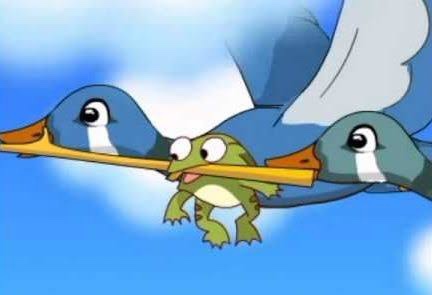
A frog asked two geese to take him south with them. At first they resisted; they didn’t see how it could be done. Finally, the frog suggested that the two geese hold a stick in their beaks and that he would hold on to it with his mouth.

So off the unlikely threesome went, flying south over the countryside. It was quite a sight. People looked up and expressed great admiration at this demonstration of creative teamwork.

Someone said, “It’s wonderful! Who was so clever to discover such a fine way to travel?” Whereupon the frog opened his mouth and said, “It was I,” as he plummeted to the earth.

Moral: There is no “I” in team.

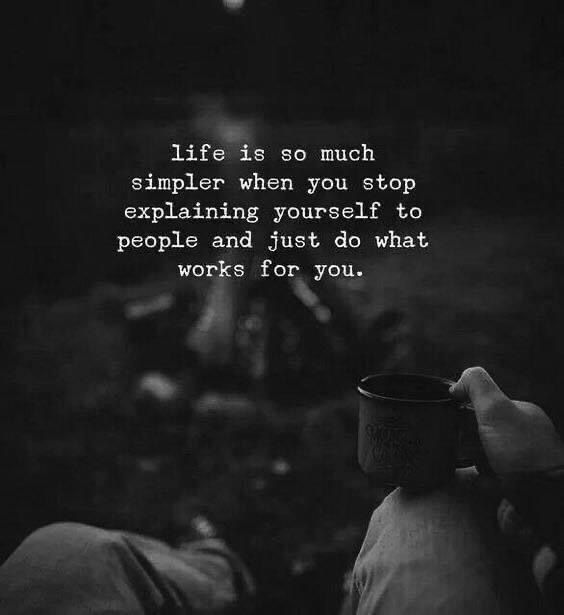
Do What Works For You

Have you ever been asked a question, found yourself gushing out an awkward explanation for an answer, and then felt pretty silly afterwards? Yeah, me too. It’s called over-explaining. We all do it sometimes, and we’ve got to stop.

This habit of over-explaining ourselves can be a major problem. I’m not talking about meaningful back and forth dialogue where you’re sharing ideas and learning from each other. 

No, I’m talking about those moments when you feel uncomfortable and put on the spot, and you start spewing a load of unprovoked justification.

What other people think of me is none of my business

Wayne Dyer

Unless you’ve committed a crime, or have a set of duties you are paid to do, there is no reason you need to be explaining yourself to anyone. And yet, many of us do this all the time. We do it almost unconsciously. We want others to like our ideas, validate our accomplishments, and assure us that we are on the right path. Sadly, many of us also base our self-worth on measurements as futile as how many friends like our posts on Facebook. And what does it lead to? Probably not a lot of happiness, and even worse, we probably like ourselves a little less too.

You are basing your self-worth on others’ evaluations. Trying to convince others that what you are doing is worthy is like trying to recruit a cheering squad. Your actions don’t need a pep rally. What they need is YOU. Your conviction that what you are doing has merit to you. You have to be your own cheering squad, advocate, coach, and even slave driver. And yes, when you think you are not good enough, or that you didn’t do a good job, you have to look within to find reasons as to why you should keep going, why what you do matters, and why you matter. Because you may never convince others that what you are doing or even who you are is good enough. But you don’t need to. You only need to convince yourself.

You are losing trust in yourself. When you explain to someone why you are doing something and you don’t get the reaction you are hoping for, you are going to start questioning it yourself. You are going to wonder if perhaps their objections and criticism have merit. And just like the air being let out of a balloon, you are going to feel deflated. Why? Because you forgot that undertaking anything worthwhile requires confidence in yourself. Ultimately you — and only you — have to believe it’s possible. What is doesn’t require is others’ confidence in you.

You are losing focus. Every time you spend energy trying to convince someone that what you are doing is a good idea, you are focusing one on thing only: convincing them. Who you are not convincing is yourself. Because instead of searching within yourself for the reasons for what you are doing, you are searching others’ faces for a hoped for reaction. What matters is why you are doing what you do. The real purpose behind your actions, and just what you are hoping to accomplish by doing the things you do. What doesn’t matter, is whether or not others think what you do is right or good. After all, you are the one doing the things you do, and you are the one living your life.

Sometimes it makes sense to explain yourself—when someone misunderstands, or when you hurt someone accidentally. But most often the only person who needs an explanation is you so you can ascertain, accept, and work through whatever is on your mind.

Today if you’re tempted to justify your emotions, remember: You can’t control what other people think. But if you can accept yourself in this moment, you may discover what you need to do to feel better–instead of just trying to look better.

Are you a potato, egg or coffee beans?

Once upon a time a daughter complained to her father that her life was miserable and that she didn’t know how she was going to make it.

She was tired of fighting and struggling all the time. It seemed just as one problem was solved, another one soon followed.

Her father, a chef, took her to the kitchen. He filled three pots with water and placed each on a high fire.

Once the three pots began to boil, he placed potatoes in one pot, eggs in the second pot and ground coffee beans in the third pot. He then let them sit and boil, without saying a word to his daughter.

The daughter, moaned and impatiently waited, wondering what he was doing. After twenty minutes he turned off the burners.

He took the potatoes out of the pot and placed them in a bowl. He pulled the eggs out and placed them in a bowl. He then ladled the coffee out and placed it in a cup.

Turning to her, he asked. “Daughter, what do you see?”

“Potatoes, eggs and coffee,” she hastily replied.

“Look closer” he said, “and touch the potatoes.” She did and noted that they were soft.

He then asked her to take an egg and break it. After pulling off the shell, she observed the hard-boiled egg.

Finally, he asked her to sip the coffee. Its rich aroma brought a smile to her face.

“Father, what does this mean?” she asked.

He then explained that the potatoes, the eggs and coffee beans had each faced the same adversity-the boiling water. However, each one reacted differently. The potato went in strong, hard and unrelenting, but in boiling water, it became soft and weak.

The egg was fragile, with the thin outer shell protecting its liquid interior until it was put in the boiling water. Then the inside of the egg became hard.

However, the ground coffee beans were unique. After they were exposed to the boiling water, they changed the water and created something new.

“Which one are you?” he asked his daughter.

“When adversity knocks on your door, how do you respond? Are you a potato, an egg, or a coffee bean?”

Are You Open-Minded or Close-Minded?

What if I told you someone took a hundred bucks from the cash register at the supermarket. How would you feel/think? Would you look down on them? Would you be mad that they just took the money while you go to work and earn your money? Would you feel sorry for them? Now what if I told you that person owns the store and was going to give the money to a family who was homeless? Would your opinion change about that person? Obviously yes!

When people are closed minded, they jump to conclusions. They only believe that there is only one answer or solutions. I used to be pretty close-minded when I was younger. I thought I was right when I wasn’t. Things changed as I grew older especially during my days at Xaviers college and with the Jesuits.

So the question we ask ourselves today is am I open-minded or close-minded?

According to the billionaire Ray Dalio’s book, Principles, a close minded person:

  • blocks others from speaking.
  • lacks a deep sense of humility.
  • doesn’t like their ideas challenged.
  • rarely asks questions, prefers statements.
  • has a focus on being understood rather than to understand.
  • holds closely to what he believes and isn’t willing to change.
  • has more interest in being proven right than hearing other perspectives.
  • has trouble having two conflicting thoughts in their head at the same time.
  • starts off by saying, “I could be wrong, but…” to convince himself and others he’s open-minded when he isn’t.

Whereas, an open -minded person:

  • genuinely believes he could be wrong.
  • is compelled to see through others’ eyes.
  • is more interested in listening than speaking.
  • approaches everything with the belief he may be wrong.
  • is curious and isn’t angry when there’s disagreement.
  • knows when to make statements and when to ask questions.
  • is capable of holding two conflicting thoughts in his head and assessing relative merits.

The key difference between open minded and close minded people is in their willingness to adopt new ideas and beliefs, ways of life, or practices. It can be as small as trying a new cuisine to as big as living in a new country.

One of Ray Dalio’s main principles is radical open mindedness and transparency. He explains that in order to achieve your goals, you need to set aside your ego and find the truth of how to get there. To do this, you have to get the perspective of different people with knowledge and ways of seeing the world that are different from you. That way, you can account for factors you didn’t even consider.

Being more open-minded is tough. When you’re in the moment, and swept up with emotion, you don’t want to even consider someone else’s perspective.

When the storms appear…
raining down on your parade
Be Open-minded

When hate fills the air
Snatching love’s sweet melody
Be Open-minded

When called a manqué
By life’s hurt and feckless souls
Be Open-minded

As you gain mastery
Untainted by flawed precepts
Stay Open-minded