
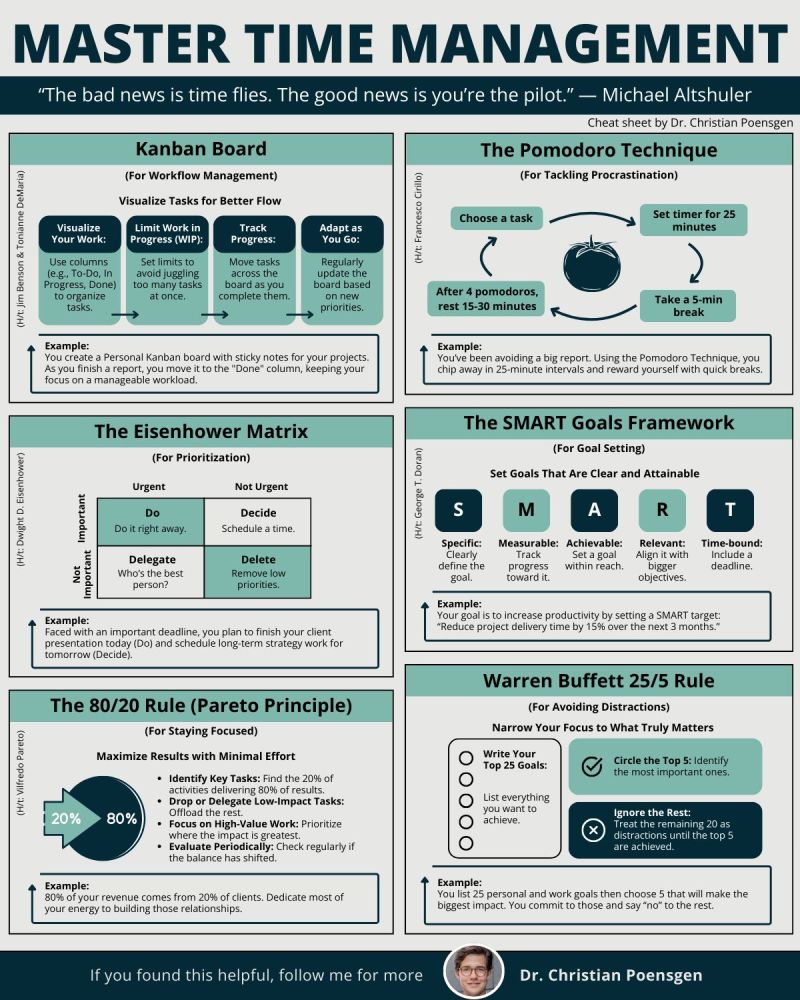
The bad news: time flies. The good news: you’re the pilot.
6 proven methods to regain control:
1) Kanban Board 📃
↳ Visualize tasks on a board by workflow stage.
↳ Limit work in progress to stay focused.
2) Eisenhower Matrix 🔬
↳ Sort tasks by urgency and importance.
↳ Do, schedule, delegate, or drop tasks accordingly.
3) 80/20 Rule 📊
↳ In work and life, 20% of work creates 80% of results.
↳ Focus on what truly moves the needle.
4) Pomodoro Technique 🍅
↳ Work 25 minutes, then take a 5-minute break.
↳ Repeat 4 times, then rest longer.
5) SMART Goals 🎯
↳ Make goals specific, measurable, and achievable.
↳ Also, keep them relevant and time-bound.
6) 25/5 Rule ✅
↳ List your top 25 goals and circle the top 5.
↳ Ignore the rest until your top 5 are done.
– – – –
Choose one method.
Start today. Master it.
Your future self will thank you.
Spin Cycle of Strength
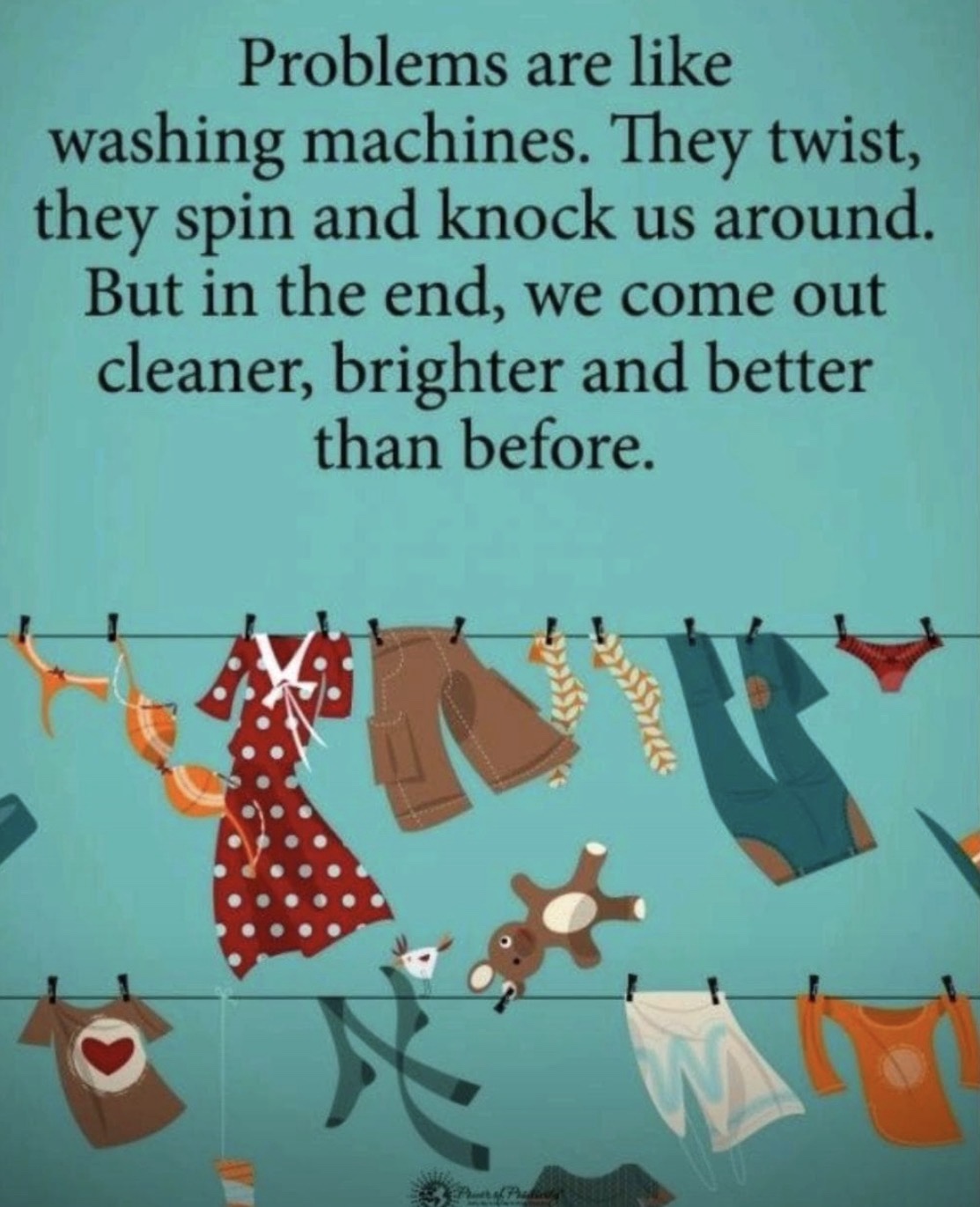
Life has this funny way of throwing us into situations that feel like we’re being tossed around in a washing machine. You know that feeling — everything spinning out of control, no sense of direction, and you’re just hoping it all stops soon. Problems have a way of doing that. They twist us up, shake our confidence, and sometimes leave us feeling like we’re stuck on an endless spin cycle.
But here’s the thing — just like that washing machine, all that spinning isn’t meant to break us. It’s meant to clean us up. To strip away the dirt of ego, pride, impatience, and fear. Every challenge, every tough season, is rinsing something off us that we probably don’t need anymore.
When life spins us around, we discover who we really are. We find strength we didn’t know existed, patience we thought we’d lost, and clarity that only comes after chaos. The twist and turns shape us. The agitation — yes, even the painful kind — softens the rough edges. And when the cycle’s done, we step out a little cleaner, a little brighter, a little more like who we were always meant to be.
So the next time you feel life knocking you around, remember the purpose behind it. You’re not being destroyed; you’re being renewed. The spin isn’t there to make you dizzy — it’s there to make you shine.
And when you finally come out of it, standing tall, refreshed, and stronger than before — you’ll look back and realize it wasn’t the problem that defined you. It was how you handled the spin.
Can Your Team Lead Without You?
You’re good at your job, so you become a leader.
But can your team lead without you?
Here’s how you can tell if you’re falling behind:
➟ You’re the bottleneck
➟ You’re scared of delegating
➟ You’re constantly correcting your team
➟ You can’t rely on anyone other than yourself
➟ You’re always putting out fires and burning out yourself
The good news? You can change this.
Here’s exactly how:
1. Build thinkers, not just executors
↳ Ask them “how would you approach it?” more
↳ Ownership grows when answers come from within
2. Make delegation non-negotiable, not optional
↳ Retention grows when people feel empowered
↳ Micromanagement signals mistrust, not standards
3. Model behaviour, don’t just preach it
↳ Your example teaches more than you think
↳ Be the leader you wish you had
4. Give bitesized, weekly feedback
↳ Don’t avoid it until the problem goes out of hand
↳ Bite-sized tips build success snowballs
5. Encourage them to teach others
↳ Teaching reinforces their own learning
↳ It helps spread winning behaviour
6. Recognise when they’re stepping up
↳ Praise brave moves
↳ Show you value initiative
Here’s the simplified truth:
➟ Okay leaders tell
➟ Good leaders do
➟ Great leaders create
Which one are you?
12 Secrets Your Manager Won’t Tell You
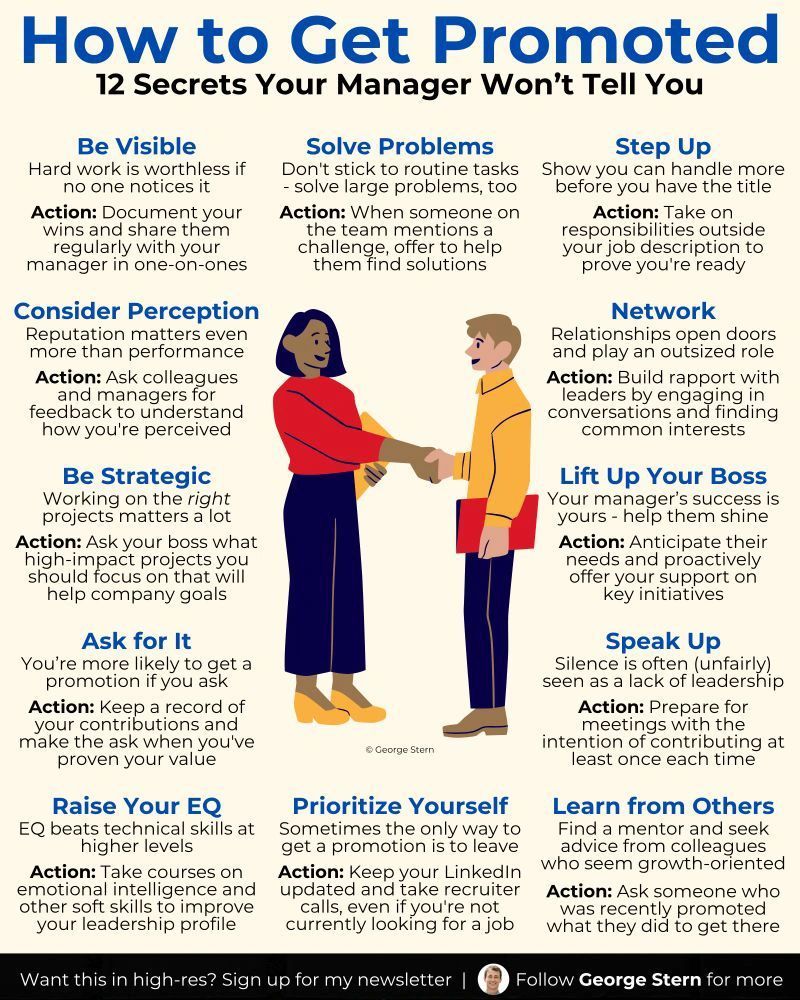
1. Get Noticed
↳ Hard work is invisible if no one sees it
↳ Action: Keep track of your achievements and regularly share them with your manager during one-on-ones
2. Tackle Problems
↳ Go beyond your daily tasks and help solve big challenges
↳ Action: When a teammate mentions an issue, volunteer to help find a solution
3. Lead Without the Title
↳ Show you’re capable of more before it becomes official
↳ Action: Take on responsibilities outside your current role to demonstrate readiness for the next step
4. Manage Your Reputation
↳ How you’re perceived can matter as much as what you accomplish
↳ Action: Ask for feedback from peers and managers to understand how others view you
5. Build Relationships
↳ Promotions often come through relationships, not just results
↳ Action: Connect with leaders by initiating conversations and building rapport
6. Be Selective
↳ Working on the right projects with the right people accelerates growth
↳ Action: Ask your manager which high-priority projects would best support the company’s goals
7. Support Your Manager
↳ When your manager succeeds, so do you
↳ Action: Anticipate their needs and offer help on key initiatives
8. Ask Directly
↳ People who ask for raises or promotions are more likely to get them
↳ Action: Document your impact and request a promotion once you’ve demonstrated your value
9. Speak Up in Meetings
↳ Staying silent can be mistaken for lack of leadership potential
↳ Action: Prepare for meetings with the goal of contributing at least once every time
10. Develop Emotional Intelligence
↳ EQ often trumps technical skills as you move up
↳ Action: Invest in training to strengthen your emotional intelligence and leadership skills
11. Stay Open to Opportunities
↳ Sometimes moving on is the best way to move up
↳ Action: Keep your LinkedIn updated and take recruiter calls, even if you’re not actively job hunting
12. Learn from Those Ahead of You
↳ Study the paths of those who’ve been promoted
↳ Action: Ask colleagues or mentors what actions helped them advance
You might not like it,
But the truth is:
Just keeping your head down and doing good work usually isn’t enough to land a promotion.
Use this checklist to make sure you’re positioning yourself for the role you deserve.
Any other tips you would add?
The Things You Need to Let Go Of to Truly Live Free

There’s a strange kind of peace that comes when you finally stop gripping life so tightly. We spend so much time trying to hold it all together—trying to control what happens next, to fix what’s already happened, and to make sure everyone approves of how we’re doing it. But maybe freedom isn’t found in control. Maybe it’s found in letting go.
Let’s start with the fear of the future. It’s easy to get caught up worrying about what’s next—our careers, our relationships, our finances, our health. But Jesus reminds us in Matthew 6:34 not to worry about tomorrow, because tomorrow will worry about itself. When we live in fear of what’s coming, we miss the beauty of what’s here. The truth is, we were never meant to carry the weight of the future. Faith doesn’t eliminate uncertainty—it just makes it less scary.
Then there’s that desire to control. We plan, we predict, we manipulate outcomes in the name of being “prepared.” But Jeremiah 29:11 reminds us that God already has a plan—one meant for our good, not harm. Control is an illusion that exhausts us. When we let go, we make room for something better: trust.
And oh, the approval of others. That one can quietly rule your life without you even noticing. Galatians 1:10 asks, “Am I now trying to win the approval of human beings, or of God?” The need to please everyone keeps you from becoming who you were created to be. Letting go doesn’t mean you stop caring—it means you stop needing permission to be yourself.
The pain of regret is another heavy one. We replay mistakes like broken records, hoping somehow the past will change if we feel bad enough. But 1 John 1:9 reminds us that if we confess, we’re forgiven—completely. You don’t have to keep living as if your failures define you. God’s grace does.
And finally, the shame from your past. This one cuts deep because it lingers long after the moment is over. But 2 Corinthians 5:17 says, “If anyone is in Christ, the new creation has come: the old has gone, the new is here!” You are not who you were. The moment you accept that truth, shame loses its grip.
Here’s the thing: letting go isn’t about pretending you don’t care. It’s about choosing peace over pressure, trust over control, and grace over guilt. Life becomes lighter when you stop carrying what was never yours to hold in the first place.
So breathe. Surrender the future. Stop chasing approval. Forgive the past. And let God write the story He’s already begun in you. Because sometimes, the greatest act of faith isn’t holding on—it’s letting go.
Live Like You Mean It
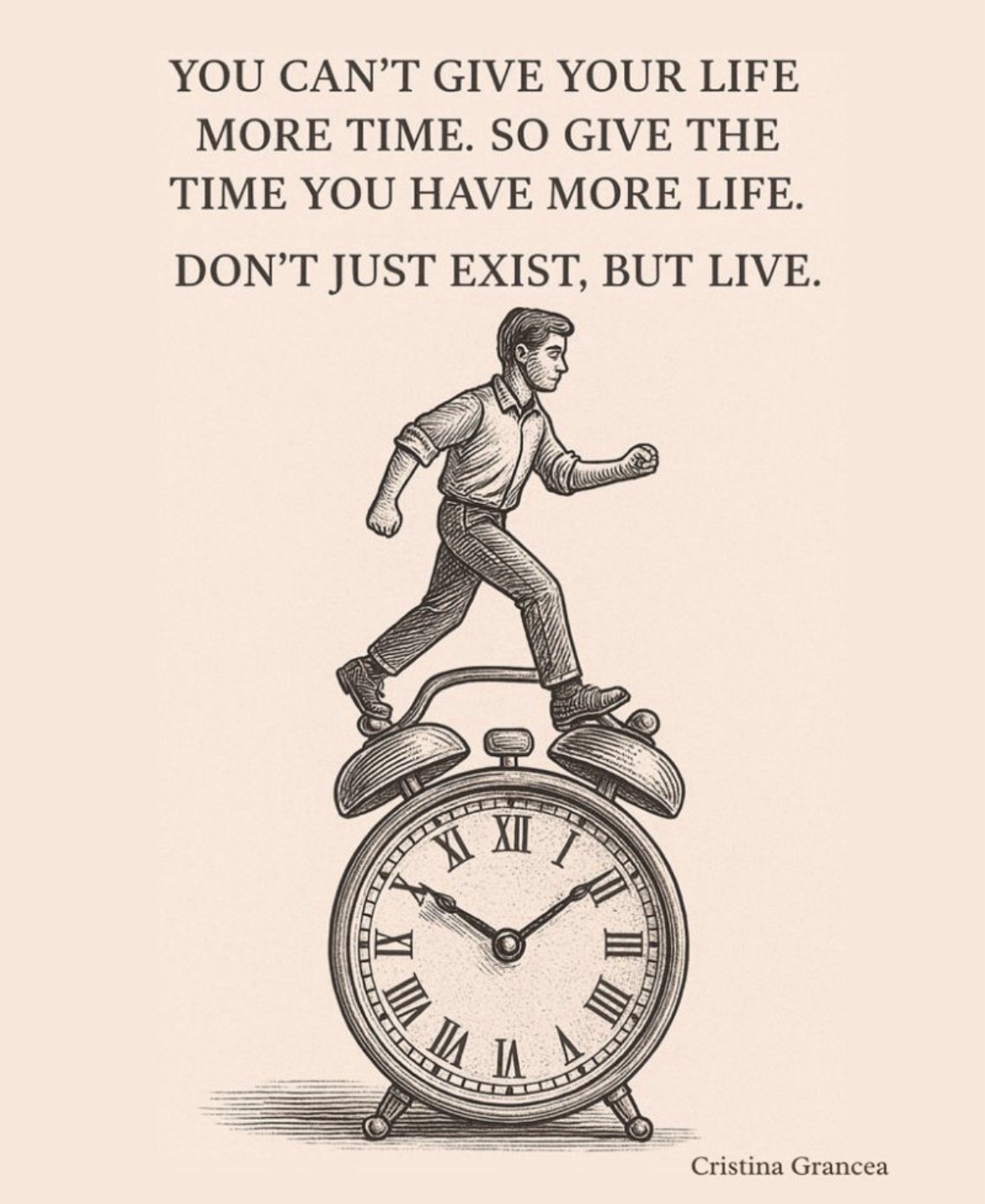
We spend so much time thinking about time—counting it, chasing it, regretting how fast it’s running out. We set alarms, reminders, and calendars, hoping to squeeze more out of each day. But here’s the truth we often overlook: you can’t give your life more time. No matter how organized or disciplined you are, the clock doesn’t pause for anyone. The only thing you can do is give the time you have more life.
Most of us get caught in the cycle of existing. Wake up, work, eat, scroll, sleep, repeat. Days blur into weeks, and weeks into years. We tell ourselves we’ll start living “after” — after the next deadline, after the kids are older, after we save enough, after life slows down. But the thing about life is… it never really slows down. There’s always something demanding your attention. Living can’t be postponed until things are perfect, because “perfect” never comes.
Living doesn’t mean doing something grand or dramatic. It’s not about quitting your job and traveling the world—though if that’s your calling, go for it. Sometimes, giving life to your time is as simple as being present. It’s sitting on the porch watching the sunset instead of checking emails. It’s laughing a little louder. Calling someone just to say hi. Cooking your favorite meal, even if it’s just for yourself. It’s saying yes to the small moments that make you feel alive.
We often underestimate how much joy can fit into ordinary minutes. You can turn a morning coffee into a ritual, a commute into a reflection, a walk into gratitude. The magic isn’t in how long you have—it’s in how alive you are during the time you do.
So stop existing on autopilot. Look around. Take it all in. The laughter, the colors, the mess, the love, the noise—all of it. Because this—right now—is life. And it’s happening with or without your attention.
You can’t give your life more time. But you can make the time you have mean something. So go on—breathe deeper, smile wider, love harder, and live like you mean it.
9 Leadership Lies Holding You Back

I wish someone had warned me…
When I first stepped into leadership,
I believed all the misguiding myths:
I thought I needed to be the smartest in the room.
I believed showing vulnerability would
undermine my authority.
I was convinced that being constantly busy meant
I was being a “good” leader.
I was wrong.
Here are 9 leadership lies that might be
holding you back:
🚫 “Leaders need to have all the answers.”
Truth is, the best leaders ask better questions.
They build teams smarter than themselves
and know when to say “I don’t know,
what do you think?”
🚫 “A full calendar means you’re productive.”
Activity isn’t an achievement.
Real leaders focus on impact, not inbox zero.
They measure progress by results, not hours logged.
🚫 “Leadership is about authority and control.”
Leadership is influence, not power.
Great leaders create more leaders, not more followers.
They empower decisions at every level.
🚫 “Vulnerability makes you weak.”
The strongest leaders I know
share their struggles openly.
Perfect facades build walls.
Real stories build trust.
🚫 “Good leaders never fail.”
The best leaders fail faster and learn quicker.
They turn every setback into a setup
for their next breakthrough.
🚫 “Micromanaging prevents mistakes.”
It actually kills innovation, crushes spirits,
and breeds mediocrity.
Set clear expectations, then get out of the way.
🚫 “Charisma makes a great leader.”
Flashy speeches might win applause,
but consistent actions win respect.
Impact over image, every time.
🚫 “Leadership is a solo journey.”
Lone wolves burn out fast.
The strongest leaders build strong support
systems and know when to lean on them.
🚫 “Hard skills matter more than soft skills.”
Technical expertise gets you in the room.
Emotional intelligence keeps you there.
People follow hearts, not just minds.
Here’s the truth about great leadership:
It’s not about being perfect.
It’s not about having all the answers.
And it’s definitely not about playing the role of “boss.”
Real leadership is about being authentic,
staying curious, and truly caring about your
people’s growth and success.
The moment I understood this, everything changed.
My team became more engaged, innovation
flourished, and our results soared.
Which of these lies resonated most with you?
SOAR Analysis

90% of businesses fail to execute their strategy:
This one concept can help you succeed:
The SOAR Model.
Developed by Stavros & Hinrichs, this approach flips traditional planning on its head.
Instead of fixing weaknesses, SOAR focuses on strengths, aspirations, and collaboration to create a future worth chasing.
1. Strengths: What Can We Build On?
Start with what’s working.
Identify your proudest achievements.
Leverage unique differentiators.
Audit strengths regularly – double down on what’s world-class.
2. Opportunities: What Are Stakeholders Asking For?
Listen to the whispers before they become screams.
Spot trends (e.g., AI, sustainability) before competitors do.
Explore new markets, products, or processes.
Host stakeholder roundtables to uncover hidden opportunities.
3. Aspirations: What Do We Care Deeply About?
Dream big, but stay grounded.
Define your North Star (e.g., “Be the #1 employer in our industry”).
Align initiatives with core values (e.g., innovation, community impact).
Run “Future Vision” workshops to align teams.
4. Results: How Do We Know We’re Winning?
What gets measured gets done.
Track triple-bottom-line metrics (profit, people, planet).
Celebrate wins (e.g., “We reduced carbon emissions by 20%!”).
Build a dynamic scorecard – update it regularly.
Why SOAR Works:
1. It’s strengths-based (no more deficit thinking).
2. It’s collaborative (every voice matters).
3. It’s action-oriented (no more dusty plans on shelves).
P.S. Which pillar does your team need to focus on?
10 Rare EQ Qualities

Your technical skills get you hired.
10 rare EQ qualities that get you promoted:
Most people spend years getting more certifications while missing what actually drives success.
The truth is, your EQ affects your career growth more than technical skills alone.
10 rare EQ traits valuable employees master ✨
1) Staying calm during chaos
↳ Take a breath when everyone else reacts. This quiet confidence instantly stands out.
2) Welcoming feedback gracefully
↳ Say “thank you” instead of defending. This maturity gets noticed immediately.
3) Noticing your impact on others
↳ Recognize when you’re draining or energizing a room and adjust your approach.
4) Speaking necessary truths
↳ Bring up difficult topics others avoid, but with care and respect.
5) Not taking things personally
↳ Separate work challenges from your self-worth for natural resilience.
6) Recognizing others’ small wins
↳ Acknowledge the details others miss. People remember feeling seen.
7) Pausing before responding
↳ Take a breath in tense moments. This small pause transforms conversations.
8) Setting clear boundaries
↳ Protect your time without explanations or guilt. Clarity builds respect.
9) Understanding different perspectives
↳ See issues from multiple angles, even when you disagree.
10) Staying engaged when things get tough
↳ Remain present when conversations become uncomfortable instead of checking out.
Your certifications might get you in the door.
But these traits determine how far you’ll go ✨
Which of these would make the biggest difference in your work life?
Dead Horse Theory

Ever stayed in a job that drained you?
Held onto a strategy that used to work?
Poured time, money, and energy into something… hoping it would magically turn around?
That’s the Dead Horse Theory in action. 🐴
“When you realize you’re riding a dead horse, the best strategy is to dismount.”
But here’s what actually happens in teams and companies:
🚩 “Let’s try a different rider.”
🚩 “Maybe if we whip it harder.”
🚩 “Let’s rebrand the horse.”
🚩 “Let’s compare with other dead horses.”
🚩 “Let’s form a task force to study why it’s not moving.”
We laugh—but many of us do this in real life:
– Holding onto toxic clients because of sunk costs
– Sticking with outdated tools because “we’ve always done it this way”
– Refusing to pivot a project, even if the data screams otherwise
It’s not a leadership problem. It’s a human one.
We confuse letting go with giving up.
We fear being seen as wrong, so we hold on longer.
But strong leadership isn’t about never being wrong.
It’s about recognizing what’s no longer serving the mission—and making the call to move on.
✅ Not everything that starts well ends well.
✅ Not everything worth building is worth keeping.
✅ And not every horse is meant to be revived.
Real leaders know when to ride. And when to walk away.
Is there a dead horse you’re still riding?
 Kenrick Vaz