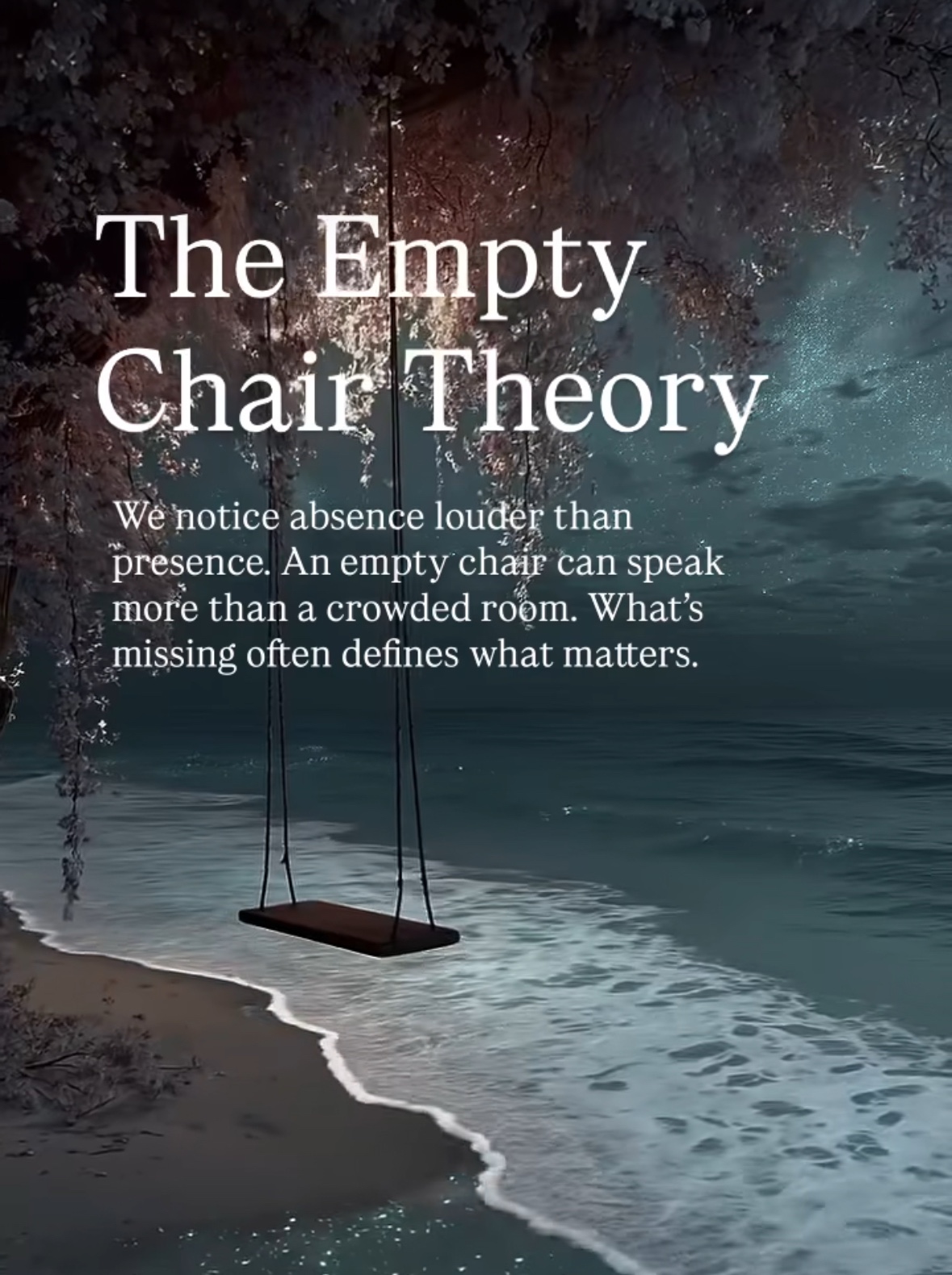
The Empty Chair Theory: How Absence Shapes Our Perception

We tend to think presence is what matters most — the words said in a meeting, the people at a party, the full seats in a hall. But often, it’s not what’s present that carries the deepest weight. It’s what’s missing. The empty chair at a dinner table. The unreturned call. The quiet in a once-noisy space.

Absence has a strange way of shouting. An empty chair draws the eye more than the occupied ones. A missing person can dominate a room in a way their presence never did. We are wired to notice gaps because gaps demand meaning. We try to fill them with stories, memories, or projections.

This is The Empty Chair Theory — the idea that what’s missing defines what matters. It isn’t just about loss. It’s about attention. The empty chair forces us to ask: who isn’t here? Why does it matter? What have we overlooked?

Think about meetings at work. A person skipping a key discussion sends a stronger signal than a dozen people showing up. Think about relationships. The friend who doesn’t call back can dominate your thoughts far more than the ones who do. Even in art, a blank space on a canvas or a pause in a song can be more powerful than a crowded composition.

This theory also challenges how we show up in our lives. We often assume our presence is enough — that simply being there ticks the box. But the real impact may come from the moments when our absence is felt. Will people notice the empty chair we leave behind? Will they miss the energy we brought?

And on the flip side, it’s a reminder to appreciate presence before it becomes absence. To notice the filled chairs, the voices in the room, the everyday constants we take for granted. Because one day, the empty chair might be the loudest thing we hear.

In the end, The Empty Chair Theory teaches us two things:

  • Pay attention to what’s missing — it’s often more revealing than what’s present.
  • Be intentional with your presence — it leaves a trace that lingers even in your absence.

Sometimes silence is louder than speech. Sometimes emptiness speaks the truth fullness hides. And sometimes, a single empty chair can tell the whole story.

Bezos Approved Rules For Better Meetings

71% of meetings waste time.

(Jeff Bezos built Amazon by doing the opposite.)

At its peak, Amazon ran with over 1.5 million employees.

Yet, Bezos was known for obsessively protecting his time.

So how did he make meetings work?

He didn’t just show up.
He rewrote the rules.

6 powerful principles Bezos used to keep meetings
productive, focused, and fast-moving:

1. The Two-Pizza Rule
↳ If two pizzas can’t feed the room, it’s too big.
Fewer people = faster decisions.

2. No Slide Decks
↳ Slides distract. Bezos required a written memo.
Writing reveals flaws and forces clarity.

3. Silent Start
↳ Begin with 20 minutes of quiet reading.
No grandstanding. Just shared understanding.

4. The Empty Chair
↳ One seat stays open to represent the customer.
Every decision must serve them.

5. Invite Conflict
↳ Assign a devil’s advocate.
Pressure-test every plan. Good ideas survive the heat.

6. End with Action
↳ No meeting ends without clear owners and deadlines.
Accountability is the only thing that moves the needle.

If your meetings feel bloated or aimless…

Save this sheet.
Steal these rules.
Apply them fast.

Then get out of the way.

Less talk. More traction.

The T.R.U.S.T Model

2 in 3 employees are ready to quit.

Here’s the leadership secret that’s changing their minds.

Servant Leadership is an “employee-focused” style that’s been studied for over 30 years.

Companies like Starbucks and Southwest Airlines have recently adopted its principles.

The reason?

Straightforward, ethical guidelines that transform work at all levels.

Here’s a framework based on years of research
(To catch you up in 2 minutes):

The TRUST Model of Servant Leadership:

1. Train
• Develop leaders who prioritize team growth
• Instill a mindset of service and support

2. Reflect
• Encourage self-assessment and personal growth
• Promote transparency and accountability at all levels

3. Uplift
• Identify and nurture each team member’s unique strengths
• Create opportunities for employees to lead

4. Support
• Foster an inclusive environment
• Provide resources and remove obstacles

5. Transform
• Align company culture with servant leadership principles
• Reward servant leader behaviors

5 Practical Tips to Practice Servant Leadership:

• Listen closely
• Lead by example
• Invest in leadership growth
• Foster open, honest feedback
• Celebrate servant leadership acts

Top companies are recognizing the power of this “person-first” approach.

And it’s saving teams and organizations worldwide.

Now’s the time to embrace the “new school” of leadership!

The Longest Line

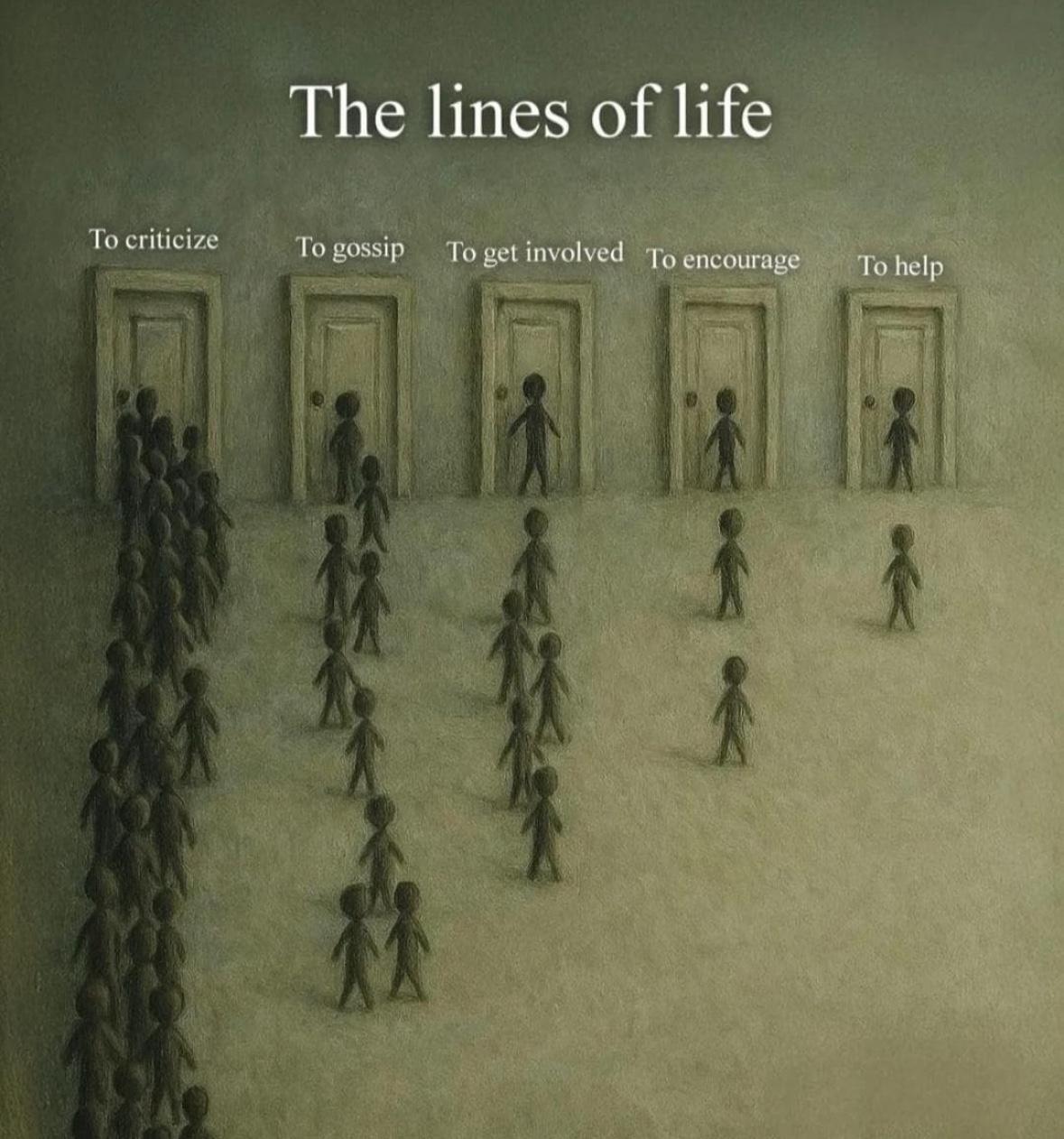
When I first saw this illustration, it stopped me in my tracks.

Five simple lines, five simple words — yet it hit a nerve.

To gossip. To get involved. To encourage. To help.

And the people? The longest line stretched toward gossip, while the shortest barely existed for help.

Something about that image made me uncomfortable — because it’s true. It’s a mirror to how we, as a society and as individuals, tend to behave. Gossip draws crowds. Encouragement gets a trickle. Help — the most costly, the most needed — is left almost empty.

But here’s the paradox: the shortest line is where the deepest meaning is found.


Why Gossip Gets the Crowd

Gossip gives us a fleeting sense of power. It feels like being “in the know,” and it binds us to others — at least temporarily. But gossip is also corrosive: it can distort truth, harm reputations, and reduce complex people to bite-sized rumors. And because it costs us little, it’s easy to step in and even harder to step out.


Encouraging and Helping Take More of Us — But Give More Back

Encouraging someone isn’t complicated, but it does take intentionality. A text, a pat on the back, an honest compliment — small things that can alter the course of someone’s day. Helping goes even further. It means giving of ourselves without expectation, stepping into someone’s burden, showing up when it’s inconvenient.

And here’s the twist: encouragement and help actually nourish the giver as much as the receiver. They build trust, deepen relationships, and leave you with the kind of peace gossip never can.


Choosing the Shorter Line

Imagine if more of us lined up to help rather than gossip. Communities would shift. Workplaces would heal. Families would feel safer. Schools would flourish. In a culture addicted to outrage and whispers, simply choosing to help or encourage becomes a quiet act of rebellion — and of leadership.

The lines of life aren’t just about where people stand; they’re about what we value. Every time we choose which line to join, we’re also shaping the world around us.


A Personal Challenge

Next time you’re tempted to join the gossip line, pause. Ask yourself: Could I instead join the line to encourage or to help? Could I say something uplifting? Could I offer practical support?

The shortest line may feel inconvenient, but it’s also the line where the real work of kindness and change happens. And in the end, it’s the line worth standing in.

Closing thought:

Be the person who makes the shortest line a little longer.

Clap For Others

Sometimes the waiting feels endless, doesn’t it?

I see you.

The one who celebrates others
while your inbox stays quiet.

The one who shows up
even when no one notices.

I’ve been there too.

Watching everyone else win.

Wondering when my turn would come.

But here’s what I learned:

The waiting room is where
leaders are made.

Every time you choose:

→ Grace over jealousy
→ Support over silence
→ Growth over bitterness

You become someone different.

Someone ready.

So if you’re waiting right now,
remember this:

Your character is being built.
Your strength is growing.
Your time is coming.

Keep showing up.
Keep celebrating others.
Keep becoming who you’re meant to be.

Because one day soon,
the people you cheered for
will be cheering for you.

And you’ll be ready.

Not just for the success.

But for who you’ve become
along the way.

The Fastest Way To Get Promoted

Start acting like you already have been.

Most people wait for someone to tell them they’re ready.

Top performers?

They show it every day through:

☑ How they work.
☑ How they lead, title or not.
☑ What they choose to focus on.

Ready for the next level?

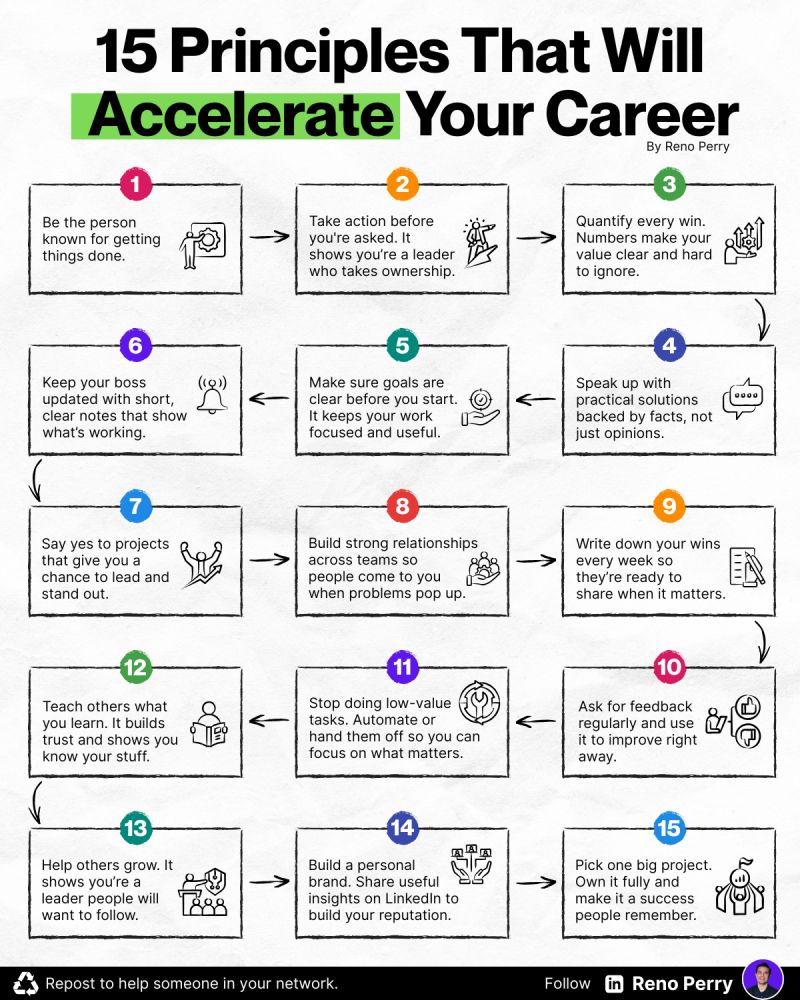
Here are 15 principles that will move your career
forward, fast:

1. Be the person who gets things done.
↳ Results build trust.

2. Take action before you’re asked.
↳ It signals ownership.

3. Quantify your wins.
↳ Numbers make your value clear.

4. Offer solutions, not just opinions.
↳ Facts speak loudest, and they move decisions.

5. Clarify goals before you start.
↳ Keeps your work useful.

6. Keep your boss updated.
↳ Short updates show what’s working.

7. Say yes to stretch projects.
↳ Growth doesn’t wait.

8. Build cross-team relationships.
↳ Influence starts there.

9. Track your wins weekly.
↳ So when the moment comes, you’re ready.

10. Ask for feedback.
↳ Then act on it fast.

11. Stop doing low-value work.
↳ Automate or hand it off.

12. Teach what you learn.
↳ It builds trust and credibility.

13. Help others grow.
↳ That’s what real leaders do.

14. Build your brand.
↳ Share what you know.

15. Own one big project.
↳ Make it unforgettable.

Promotions don’t go to the most talented person
in the room.

They go to the one who makes their impact visible,
valuable, and impossible to ignore.

So, how are you going to show your value today?

Why We All Owe Each Other More Than We Think

Scroll through social media long enough and you’ll see the mantra: “You don’t owe anyone anything.” It’s packaged as self-care, empowerment, and boundaries — and sometimes it’s necessary advice. But lately, it’s been taken to an extreme. We’ve started confusing “I’m not obligated to be mistreated” with “I don’t have to show up with basic humanity.”

Hazel Satija’s words hit a nerve: “Actually, no. I think as a bare minimum we owe each other basic human kindness and respect.” That simple statement cuts through the noise and reminds us of something fundamental — we’re still part of a shared social fabric, and our actions ripple out far beyond ourselves.

This idea resonates because many of us have been burned — by unhealthy relationships, toxic workplaces, or unreasonable expectations. Setting boundaries is healthy. Saying no is healthy. Refusing mistreatment is healthy.

But boundaries are not blank checks to disregard others’ dignity. When we confuse autonomy with indifference, we lose something vital: our humanity.

The Quiet Power of Everyday Decency

Every day, you owe someone small but profound things:

A thank you to the barista who made your coffee. A nod to the stranger holding open a door. Listening instead of interrupting. Responding to someone’s pain with empathy instead of judgment.

These aren’t grand gestures. They’re the baseline acts that keep society functioning and make life less harsh for everyone. In a culture obsessed with “me first,” choosing kindness is an act of quiet rebellion.

Respect Is Not Submission

Respect doesn’t mean agreeing with everyone, or tolerating bad behavior. It’s about recognizing someone’s inherent worth even when you disagree. You can say “no” with dignity. You can draw firm boundaries without cruelty.

When we hold onto that standard, our interactions become less transactional and more human. We start to see people not as obstacles or extras in our story but as fellow travelers.

A Better Motto

Instead of “You don’t owe anyone anything,” what if we embraced:

“You don’t owe anyone your self-destruction — but you do owe everyone your humanity.”

That shift changes everything. It reframes self-care from self-protection alone to self-awareness plus mutual responsibility.

The Bottom Line

We can’t build healthy communities, workplaces, or relationships without mutual care. Yes, draw your boundaries. Yes, prioritize your well-being. But don’t forget the bare minimum we all owe each other: kindness, empathy, and respect.

Hazel’s reminder isn’t about guilt or obligation; it’s about remembering that our small acts of decency — especially when nobody’s watching — are what keep the world from becoming colder.


Practical takeaway:

The next time you feel tempted to dismiss someone with “I don’t owe them anything,” pause. Ask yourself: What would basic kindness look like here? Sometimes it’s a smile, a text back, a thank-you note, or simply refraining from unnecessary harshness. Those little things add up — and they’re worth far more than we think.

10 Leadership Blind Spots

Every CEO has blind spots.

Toxic bosses ignore them.

Great leaders seek them out.

Because they know great leadership isn’t about
protecting their ego.

It’s about protecting their people.

10 blind spots that drive away your best talent:

1. Avoiding Conflict
↳ Every “not now” conversation becomes
tomorrow’s crisis.
↳ Build trust by addressing issues head-on,
not hoping they’ll fade away.

2. No Growth Path
↳ Top performers need challenges like plants
need sunlight.
↳ Without room to grow, they’ll find somewhere
else to bloom.

3. Micromanagement
↳ Micromanagement is fear wearing a productivity
mask.
↳ Trust your people to deliver.
They’ll usually exceed your expectations.

4. Ignoring Feedback
↳ If you’re not listening to input, you’re broadcasting
“your ideas don’t matter.”
↳ Great ideas can come from anywhere.
Create space for voices to be heard.

5. Overloading Top Performers
↳ Rewarding excellence with overload is a
fast track to burnout.
↳ Don’t let your best people become victims
of their own success.

6. Favoritism
↳ Favorites might get short-term results,
but they kill long-term culture.
↳ Equal opportunity to succeed.
Equal accountability to deliver.

7. No Clear Vision
↳ Tasks without meaning create jobs without fulfillment.
↳ Connect daily work to bigger impact.
Make purpose visible.

8. Inconsistent Leadership
↳ When everything’s important, nothing is.
↳ Stay focused on what truly matters.

9. Work-Life Neglect
↳ “Always on” culture creates “always looking”
employees.
↳ Respect boundaries like they’re part of your P&L.
Because they are.

10. No Recognition
↳ When exceptional becomes expected,
motivation dies.
↳ Your stars shine bright because they care.
Show them you notice their impact.

Here’s the hard truth:

Most leaders don’t see these blind spots
until exit interviews.

But you can be different.

Ask yourself:

“Do I make my team feel truly seen?”
“Am I actively helping them grow?”
“Do I listen to understand, not just respond?”

Because awareness isn’t just the first step.
It’s the most important one.

Be the leader who creates an environment
where great results naturally happen.

9 Leadership Styles

You’ve been told there’s one “best” way to lead.
That’s a lie.

The greatest CEOs and founders know a secret:
Leadership isn’t one-size-fits-all.

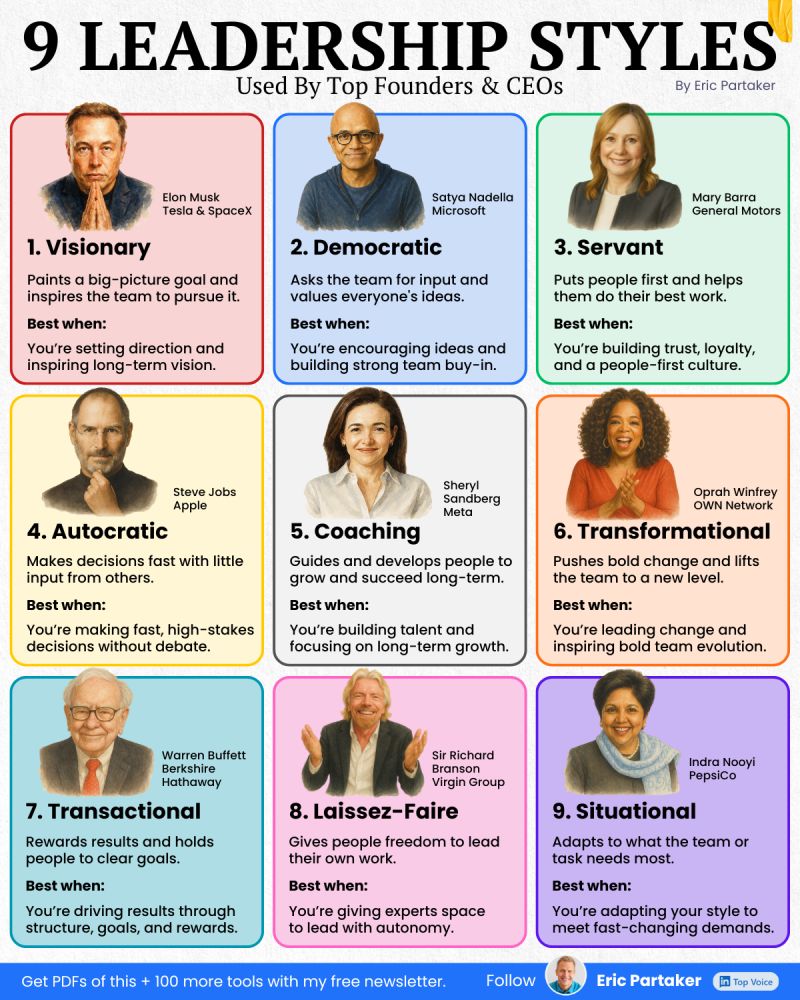
Here are the 9 leadership styles they actually use:

1. Visionary
→ Paints the big picture
→ Inspires long-term thinking

2. Democratic
→ Values everyone’s input
→ Builds team buy-in

3. Servant
→ Puts people first
→ Creates loyalty through service

4. Autocratic
→ Makes fast decisions
→ Drives rapid execution

5. Coaching
→ Develops people’s potential
→ Focuses on growth

6. Transformational
→ Pushes bold change
→ Lifts teams to new heights

7. Transactional
→ Rewards results
→ Sets clear expectations

8. Laissez-Faire
→ Gives freedom to experts
→ Trusts people to deliver

9. Situational
→ Adapts to what’s needed
→ Reads the room perfectly

The truth?

Your team doesn’t need the “perfect” leader.
They need the RIGHT leader for RIGHT NOW.

• New team? More coaching.
• Crisis mode? Perhaps autocratic.
• Creative experts? Try laissez-faire.
• Building culture? Consider servant leadership.

Great leaders don’t stick to one style.
They have a toolkit and know when to use each tool.

Save this guide.
Study these styles.
Practice switching between them.

Your effectiveness will skyrocket.
Your team will thank you.

Because the best leaders aren’t rigid.
They’re responsive.

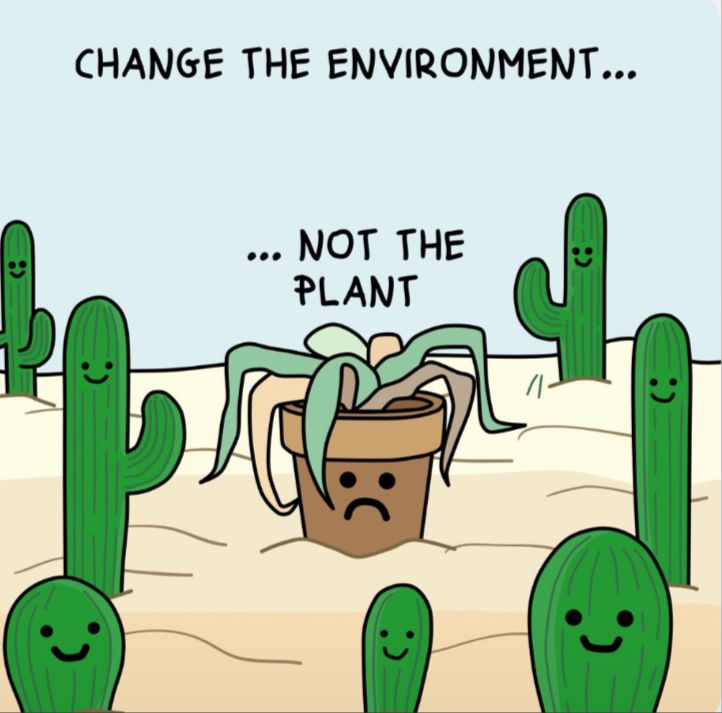
Change The Environment, Not The Plant

I recently had the pleasure of working with a leader who truly cared about their team’s success. They were not only kind and steady, but they also focused on nurturing strong relationships. However, the team seemed to be stuck in a bit of a challenging spot—things weren’t flowing smoothly, accountability was lacking, and some unhelpful micro-behaviors were being quietly accepted.

Initially, this leader couldn’t see their role in it. Not because they were disengaged or harmful—far from it. But because they were so focused on managing relationships that they avoided anything that might disrupt those connections.

They believed that keeping the peace was a sign of effective leadership. But in reality, they were preserving dysfunction. Relationship management had become the goal, not the means to move the team forward.

It reminded me of something I recently read from Charles Sull’s research on toxic culture:

“Fishes do not care if stuff is wet.”
In his research, he states that toxic leaders often fail to recognize the problem. So, poisonous cultures rarely get addressed because the people leading them don’t perceive an issue.

And when they do get feedback?
Sometimes, they can react a bit defensively, which makes it challenging to foster meaningful change. The reality is that culture truly needs nurturing from non-toxic leadership to flourish. Embracing change often hinges on strong commitment from the top, alongside leaders who genuinely embody the behaviors they wish to promote.

The wonderful news? Toxic cultures are fixable! With the right approach that includes coaching, accountability, identifying enabling factors, and, most importantly, leadership that’s eager to examine the culture they’ve helped create, positive change is possible!

That’s exactly what this leader did! They began to notice those moments when silence allowed the behaviors they wanted to change. Instead of casting blame, they stepped in with clarity and understanding. Over time, the culture began to shift positively!

It’s not necessary to be a “bad” leader to play a part in dysfunction. The essential part is being open to recognizing it, and making changes to improve it.

A truly stunning example of this dynamic that I’ve encountered is this beautiful piece of art by Roberto Ferraro

Source: Anna Datskiv