Beautifully Woven

Have you ever paused to think about how intentionally you were made? Not by accident, not by chance—but by design.

The words, “For You created my inmost being; You knit me together in my mother’s womb,” (Psalm 139:13) hold a profound truth: you are a masterpiece, handcrafted with love.

Knitting is an intimate process. Each loop, each thread, requires time, care, and attention. In the same way, every detail of your life—your personality, your quirks, your gifts—was carefully woven by the Creator.

In a world that often measures worth by appearance, achievement, or comparison, this reminder is freeing: your value isn’t earned; it was embedded into you before you took your first breath.

The next time you doubt your worth, remember this—You are not random. You are not ordinary. You are wonderfully made with purpose.

Take a moment today to celebrate that truth. Because when you embrace how deeply you are loved and how intentionally you were created, you begin to live boldly, fearlessly, and fully.

The Ripple Effect of Feeling Good

Have you ever met someone who just radiates positivity? They walk into a room, and suddenly everything feels lighter. Conversations flow, smiles spread, and you leave feeling better than before. It’s not magic—it’s energy. And that energy often comes from one simple truth: people who feel good about themselves help others feel good too.

Why It Starts With You

Feeling good about yourself isn’t about arrogance or ego. It’s about self-acceptance and inner peace. When you feel confident, grounded, and worthy, you stop competing for validation. You stop operating from a place of insecurity. And when that happens, something powerful shifts—you have the emotional capacity to lift others.

Think about it. When you’re stressed, anxious, or doubting yourself, it’s hard to encourage someone else genuinely. But when you’re in a good place internally, compliments come naturally, empathy flows easily, and kindness doesn’t feel like an effort—it feels like an extension of who you are.

The Science Behind the Vibe

Psychologists call this emotional contagion: the phenomenon where emotions spread from one person to another like ripples on water. A positive, self-assured person becomes a source of calm and optimism. Others feel it and respond in kind. It’s not just about what you say—it’s how you make people feel.

Small Acts, Big Ripples

Here’s the beauty of it: you don’t need grand gestures to make a difference. A simple smile, a genuine compliment, or taking a moment to listen can completely change someone’s day. And when you help someone else feel good, they often pass it on. The ripple continues—sometimes further than you’ll ever know.


So, Where Do You Begin?

It starts with self-care. Prioritize what makes you feel good inside. That might mean setting boundaries, practicing gratitude, exercising, or doing something creative. When you nurture your own well-being, you’re not just helping yourself—you’re strengthening your ability to impact others positively.

Remember: you can’t pour from an empty cup. But when your cup is full, you can overflow into the lives around you.

So the next time you feel good about yourself, smile a little wider, share a kind word, and let that ripple flow. Because in a world where negativity spreads fast, being someone who spreads light is a superpower

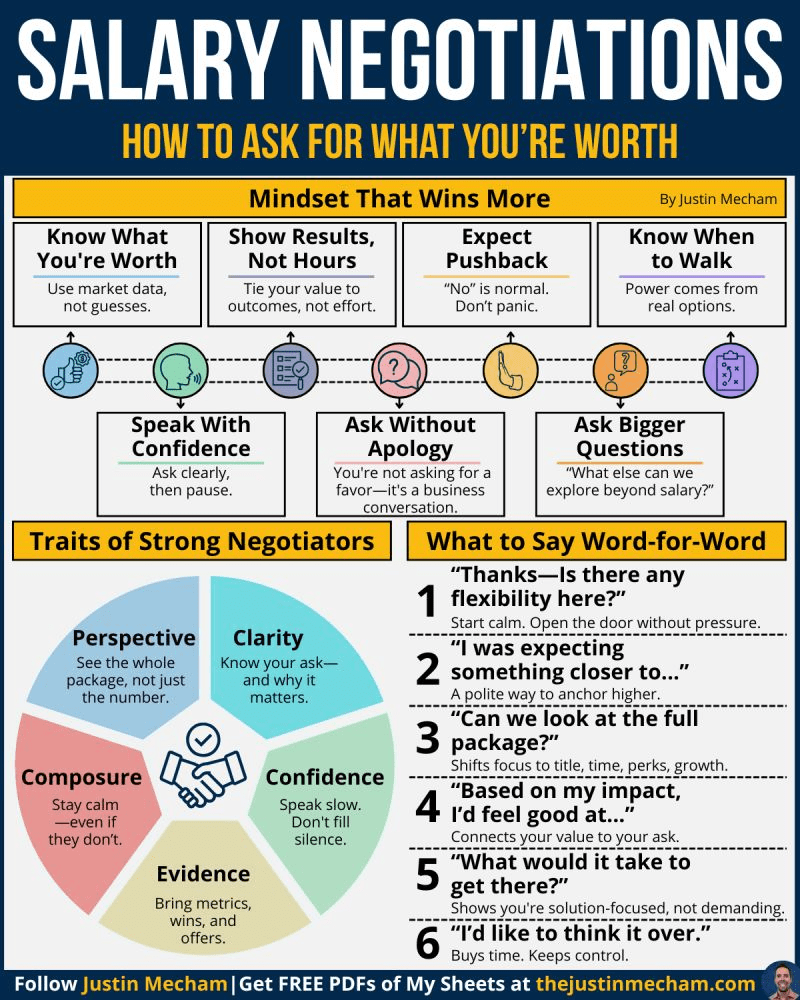
Salary Negotiations

If you don’t ask—

You’ve already got your answer:

Asking for more doesn’t make you greedy.

It makes you clear.

Strong negotiators don’t just know numbers—

They know values.

Here’s the mindset that wins more:

🟦 Expect pushback — it’s normal

🟦 Know what you’re worth

🟦 Show results, not hours

🟦 Speak with confidence

🟦 Ask bigger questions

🟦 Ask without apology

🟦 Know when to walk

The strongest negotiators show:

🟩 Evidence — bring data, wins, offers

🟩 Confidence — speak slow, don’t fill silence

🟩 Composure — stay calm, even if they don’t

🟩 Clarity — know what you’re asking for

🟩 Perspective — see the full package

Here’s what to say:

🟪 “I’d like to think it over.”

🟪 “What would it take to get there?”

🟪 “Can we look at the full package?”

🟪 “Thanks—Is there any flexibility here?”

🟪 “I was expecting something closer to…”

🟪 “Based on my impact, I’d feel good at…”

Use my sheet to ask for what you’re worth.

Negotiation isn’t a risk—

It’s a responsibility.

And the way you advocate for yourself,

Sets the tone for how others will value you.

Want to spot potential A-Players for your team?

It’s not just about their CV or experience.
It’s about recognizing the traits that truly set them apart.

A-players don’t just show up for a paycheck.
They bring:

✅ Passion
✅ Drive
✅ A desire to make an impact

They shine in environments where they can:

➡ Take ownership and push for excellence
➡ Adapt quickly and embrace change
➡ Seek growth and development

But here’s the truth:

Finding an A-player isn’t always easy.
You have to know what to look for.

Here are my 8 favorite ways to spot an A-Player:

1️⃣ They Take Ownership
↳ They act on their work and results.

2️⃣ They Adapt Quickly
↳ They embrace change and stay focused.

3️⃣ They Set High Standards
↳ Mediocrity never satisfies them.

4️⃣ They Solve Problems
↳ They find solutions, not complaints.

5️⃣ They Stay Positive Under Pressure
↳ They stay calm and solution-focused.

6️⃣ They Communicate Clearly
↳ They keep everyone aligned and informed.

7️⃣ They Hold Themselves Accountable
↳ They deliver and learn from mistakes.

8️⃣ They Make Others Better
↳ They mentor and celebrate teammates.

It sounds obvious, but it’s worth repeating:
Spotting A-players is only the first step.

The real work?
Creating conditions where they can thrive.

Leadership isn’t just about hiring well.
It’s about seeing potential and helping it grow.

What’s the one trait that stands out most
to you in an A-player?

7 Signs Your Manager Is One In A Million

Great managers are rare.

7 signs yours is one in a million

1️⃣ They see your growth before you do
↳ You don’t have to lobby for a promotion.
↳ They’re already building the case behind closed doors.

2️⃣ They take responsibility when things go wrong
↳ Not to protect their ego, but to protect their team.
↳ They give the credit away without hesitation.

3️⃣ They treat 1:1s like non-negotiables
↳ Tough schedule or not, they show up for you.
↳ Because helping you grow isn’t an “extra,” it’s the job.

4️⃣ They fight for your salary
↳ They push for what you’ve earned, even unasked.
↳ They do the quiet work that gets you what you deserve.

5️⃣ They shield you from the noise
↳ They keep distractions out of your way.
↳ They clear the path so you can do your job well.

6️⃣ Their feedback isn’t comfortable, but it’s kind
↳ It challenges you. It stretches you.
↳ And it’s always shared in private, for your growth.

7️⃣They advocate for you when it matters most
↳ Your work gets seen, and shared.
↳ They know your value and help others recognize it.


Great managers make it easier for others to thrive.

If you’ve worked for one, take the time to thank them.

If you’re becoming one, keep going.

We need more leaders like you.

Through the Two-Way Mirror of Life

Life has a funny way of showing us who we are. Every interaction, every word exchanged, every reaction—it’s like standing in front of a two-way mirror. On one side, you see how others treat you. That’s their reflection, shaped by their experiences, values, and choices. On the other side, you see how you respond—and that’s all you.

We often forget this simple truth: what others do is about them, but what we do in return is about us. If someone speaks harshly, that speaks volumes about their state of mind, not your worth. If someone shows kindness, it tells you something about their heart, not your obligation.

The real question is—when the world sends you its reflection, what image do you send back? Anger for anger? Hurt for hurt? Or something better, something stronger?

Pause and look closely. Every reaction is a chance to define yourself. Not by their reflection—but by your own.

Next time you’re tempted to snap, judge, or mirror someone else’s negativity, remember: the mirror works both ways. Make sure what it reflects back is something you’re proud of.

Three Circles of Influence

Are you focusing on what truly matters?

Circle of Influence model can help you refocus:

It can transform the way you tackle problems and live your life.

Here’s how it works:

1. Circle of CONTROL → What can I control?

These are the factors you personally have full control over.

Examples: Your mindset, actions, skills, behaviors, and mistakes.

Response: Focus most of your time and energy here. It minimizes overwhelm and boosts your confidence.

2. Circle of INFLUENCE → What can I influence?

These involve other people or situations where your input matters, but you don’t have full control.

Examples: Relationships, job roles, commitments, and projects.

Response: Prioritize what you can influence the most and let go of what you can’t fully change.

3. Circle of CONCERN → What must I accept?

These are factors completely outside your control. They may affect you, but you can’t change them.

Examples: The weather, the economy, legislation, or global events.

Response: Accept them. Let go. Focus on what you can control or influence instead.

Why it’s powerful:

Everyone’s circles look different.

A politician’s “economy” is in their Circle of Influence, while it’s in the Circle of Concern for most people.

Categorizing your worries into these circles helps you focus on areas where you can actually make a difference.

How to apply it:

1. List all the issues or worries on your mind.

2. Sort them into Control, Influence, and Concern.

3. Act, influence, or accept based on the category.

The result?

More clarity, more control, and less wasted energy.

Impactful Leadership

Your title doesn’t make you a leader.

Your impact on people does.

Managers are everywhere.
But true leaders leave a lasting emotional imprint.

10 traits that genuine leaders embody:

1. Presence
↳ Be fully there. Focus. Don’t multitask.

2. Trust
↳ Let go of control. Empower others to own their work.

3. Listening
↳ Listen to understand. Hear what’s said—and what isn’t.

4. Clarity
↳ Clear the fog. Share purpose with precision.

5. Kindness
↳ Treat people as people, not roles.

6. Curiosity
↳ Learn before leading. Ask before assuming.

7. Patience
↳ Growth needs time. Don’t rush the process.

8. Humility
↳ Own mistakes. Lift others when they win.

9. Consistency
↳ Do what you say. Every time matters.

10. Gratitude
↳ Say thank you. Often. It multiplies effort.

Leadership isn’t about rank—it’s about responsibility.

Be the kind of leader you once wished for.

The Hidden Gift in Every Change

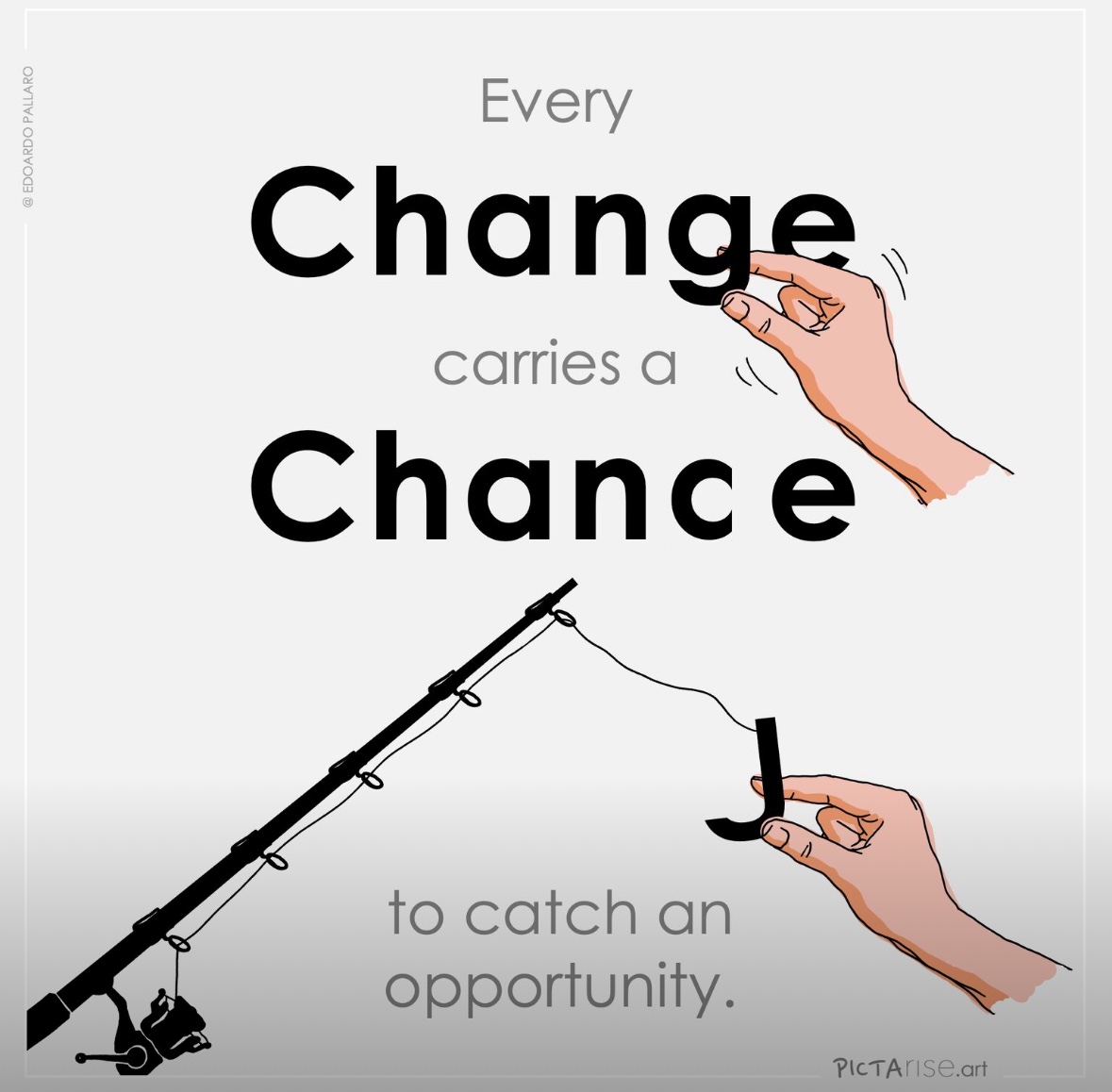
Change.

It’s a word that often stirs mixed feelings—excitement for some, anxiety for others. But behind every change lies something powerful: a chance. A chance to learn, to grow, to become more than what we were yesterday.

When life shifts—whether by choice or circumstance—it opens doors we didn’t even know existed. Sometimes they’re small cracks of light; other times they’re wide-open gates. The challenge? We need to be willing to see them.

Every change carries a chance to catch an opportunity. It might not look like what you expected. It might feel uncomfortable, even inconvenient. But change is the universe’s way of nudging us toward possibilities that routine could never offer.

So next time you’re faced with change, instead of asking, “Why me?” try asking, “What opportunity is waiting for me here?” Because the truth is—opportunities rarely come wrapped in comfort; they come disguised as change.

Embrace it. Your next big break might just be hidden inside it.

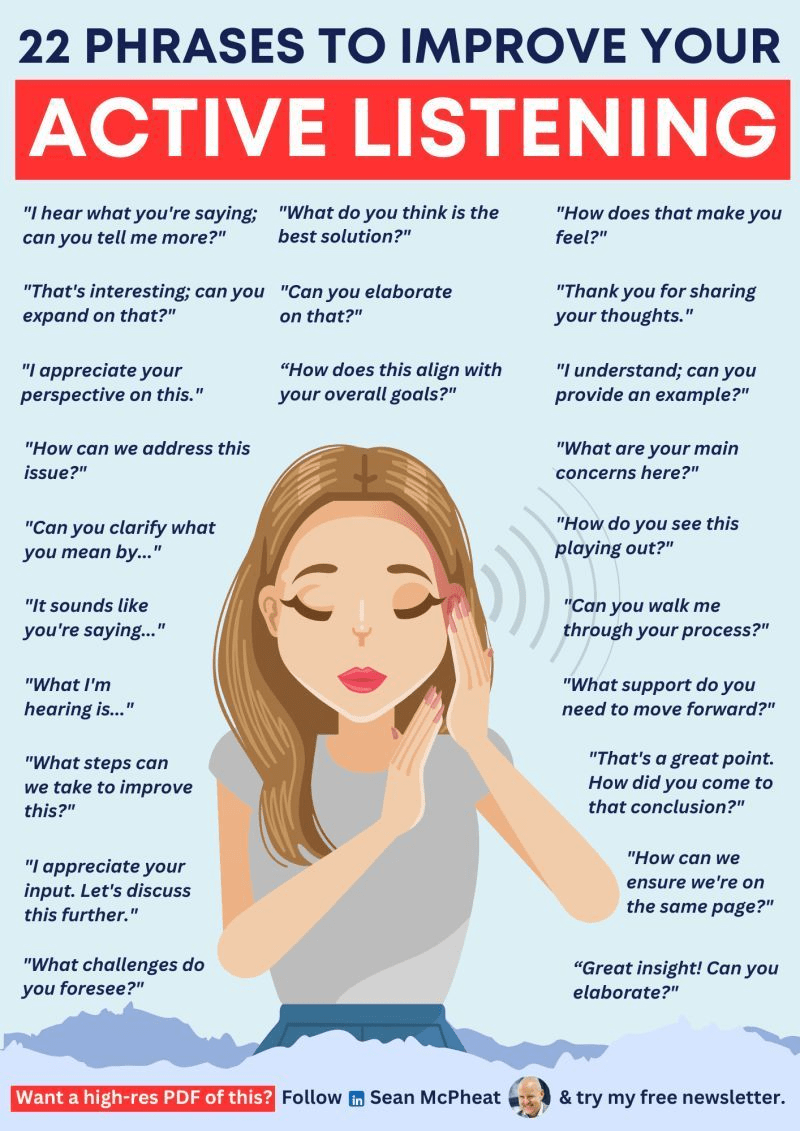
Improve Your Active Listening

A lot of people take it in turns to talk.

These phrases change that ⬇️

Most people hear. Few people listen.

And that’s why communication breaks down.

Active listening solves this.

Here’s how to show people you’re truly engaged in the conversation:

Clarify & Expand

↳ “Can you elaborate on that?”

↳ “What do you mean by…?”

↳ “How does this align with your overall goals?”

Acknowledge & Validate

↳ “I hear what you’re saying; can you tell me more?”

↳ “That’s a great point. How did you come to that conclusion?”

↳ “I appreciate your perspective on this.”

Encourage Problem-Solving

↳ “What steps can we take to improve this?”

↳ “What challenges do you foresee?”

↳ “What support do you need to move forward?”

Check for Understanding

↳ “What I’m hearing is…”

↳ “It sounds like you’re saying…”

↳ “How can we ensure we’re on the same page?”

Most conflicts, misunderstandings, and disengagement

come from one simple issue – people don’t feel heard.

🧠 Remember; great listeners don’t just wait for

their turn to talk. They make others feel valued.