
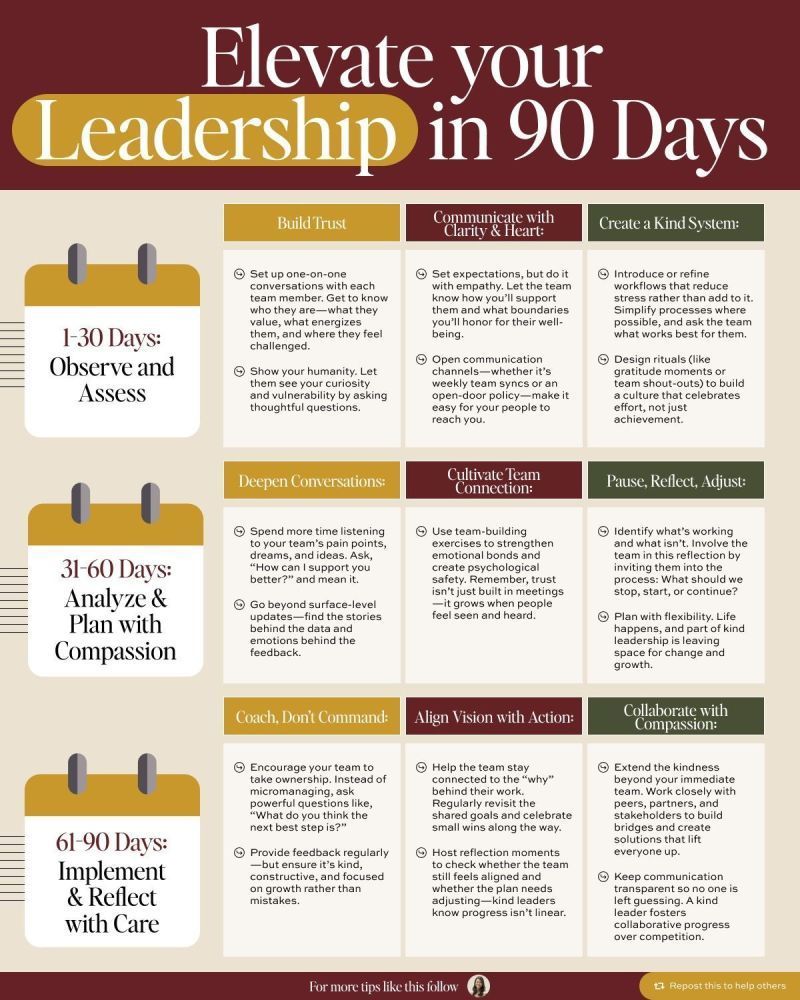
Did you know that leaders who build trust and create safe environments see higher team performance and loyalty?
In fact, when leaders communicate with empathy and clarity, their teams are more engaged and committed to shared goals.
This explains why fostering trust, connection, and clear communication are essential to elevating your leadership and your team’s success.
When leaders fail to prioritise these emotional intelligence skills, their teams may feel disconnected, leading to burnout or disengagement.
THE RESULT?
Missed opportunities for growth and a lack of collaboration that hinders progress.
So, how do we resolve this?
Start leading with compassion, clarity, and connection. Shift from command-and-control leadership to one based on empathy, trust, and shared vision.
Here are 4 actionable steps to help you elevate your leadership in 90 days:
1. Build trust
↳ Set up one-on-one conversations with your team members
↳ Demonstrate curiosity and vulnerability
2. Communicate with clarity and heart
↳ Set expectations with empathy
↳ Maintain open communication channels
3. Cultivate team connection
↳ Use team-building exercises to foster psychological safety and build bonds
4. Pause, reflect, adjust
↳ Regularly assess what’s working & what’s not
↳ Adapt with flexibility for growth and reflection.
Take the next 90 days to implement these actions, and you’ll unlock a more engaged, high-performing, and connected team that thrives under your leadership.
Leadership is not just a title

It’s not.
It’s a responsibility.
“If you’re a leader, you’re the last to eat, the first to sacrifice, and the easiest to blame.”
Read that again.
Because leadership isn’t about perks or power.
It’s about service.
Real leaders:
→ Protect the team when things go south
→ Own the hard calls
→ Show up when no one else will
They take the hits.
They set the tone.
They make sure everyone else eats before they do.
Leadership isn’t for the ego.
It’s for the ones willing to carry the weight.
If you’re not ready to go last, You’re not ready to lead.
What’s the hardest part of leadership no one talks about?
The Lost Art of Amazement

When was the last time you said, “Wow!”—not because of a promotion, a big win, or a once-in-a-lifetime experience, but because of something small and quietly beautiful?
Maybe it was the way sunlight hit your coffee cup just right.
Maybe it was your child’s laugh echoing in the hallway.
Maybe it was the smell of rain on warm pavement.
Or maybe… it’s been a while.
Somewhere along the way, adulthood trained us to raise the bar for joy. We replaced wonder with productivity, awe with efficiency. We stopped clapping for the ordinary.
As kids, everything was magic—bubbles, bugs, the moon.
Now, we scroll past sunsets and silence our curiosity with deadlines. We only cheer when something is “worth it.” But what if we’ve been missing what’s most worth it?
Here’s a quiet truth:
Happiness doesn’t always arrive with fireworks.
Sometimes, it tiptoes in through the cracks of a normal day.
What if we started celebrating the small stuff again?
What if we slowed down just enough to be impressed by the ordinary?
So here’s your challenge:
What moment this week made you want to clap your hands?
And if you can’t think of one… maybe that’s the real question.
Let’s start noticing again.
Let’s bring “Wow” back into our vocabulary.
Let’s rediscover the joy in what’s already here.
Because maybe wonder isn’t something we grow out of.
Maybe it’s something we grow back into!
Empathy at Work
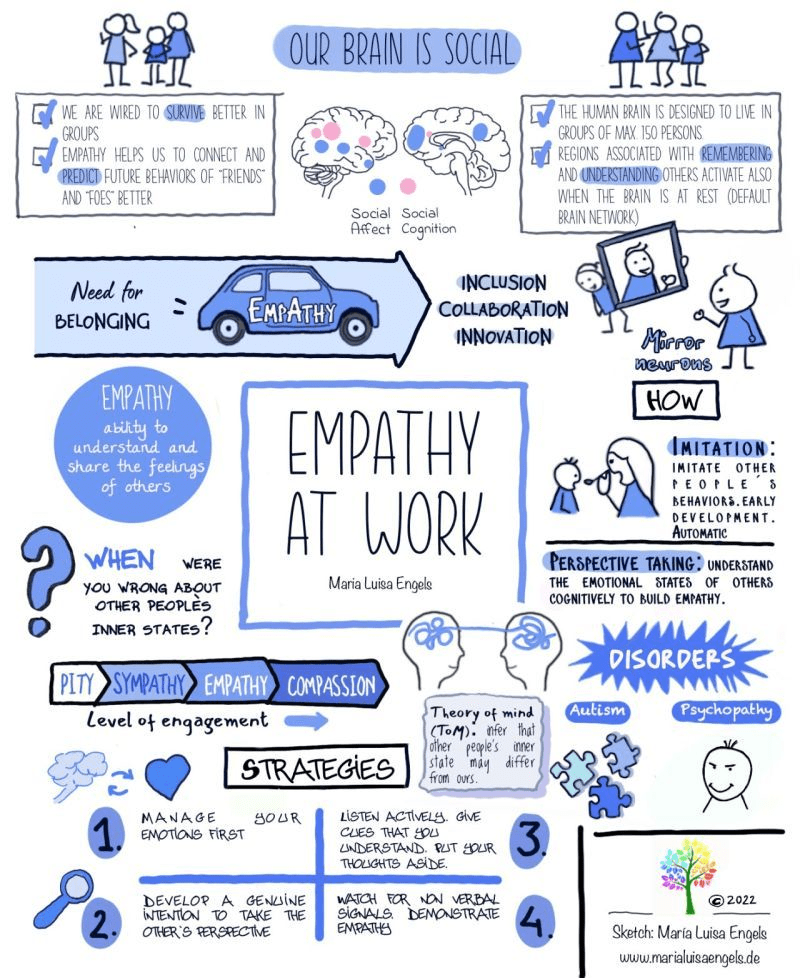
𝗗𝗼 𝗬𝗼𝘂 𝗯𝗲𝗹𝗶𝗲𝘃𝗲 𝘁𝗵𝗮𝘁 𝘄𝗼𝗿𝗸𝗽𝗹𝗮𝗰𝗲 𝗲𝗺𝗽𝗮𝘁𝗵𝘆 𝗶𝘀 𝗷𝘂𝘀𝘁 𝗮 𝗻𝗶𝗰𝗲 𝘁𝗼 𝗵𝗮𝘃𝗲? A 2016 study of 170 companies conducted by Harvard Business School showed that empathy correlates directly with growth, earnings and productivity, suggesting that hashtag#empathy , is a cornerstone for commercial success.
𝘍𝘰𝘳 𝘦𝘹𝘢𝘮𝘱𝘭𝘦 𝘈𝘪𝘳𝘣𝘯𝘣 𝘩𝘢𝘴 𝘪𝘮𝘱𝘭𝘦𝘮𝘦𝘯𝘵𝘦𝘥 𝘦𝘮𝘱𝘢𝘵𝘩𝘺 𝘵𝘳𝘢𝘪𝘯𝘪𝘯𝘨 𝘧𝘰𝘳 𝘢𝘭𝘭 𝘦𝘮𝘱𝘭𝘰𝘺𝘦𝘦𝘴, 𝘢𝘯𝘥 𝘦𝘷𝘦𝘯 𝘤𝘳𝘦𝘢𝘵𝘦𝘥 𝘢 “𝘎𝘭𝘰𝘣𝘢𝘭 𝘏𝘰𝘴𝘱𝘪𝘵𝘢𝘭𝘪𝘵𝘺 𝘚𝘵𝘢𝘯𝘥𝘢𝘳𝘥𝘴” 𝘱𝘳𝘰𝘨𝘳𝘢𝘮 𝘵𝘩𝘢𝘵 𝘩𝘦𝘭𝘱𝘴 𝘩𝘰𝘴𝘵𝘴 𝘤𝘳𝘦𝘢𝘵𝘦 𝘢 𝘸𝘦𝘭𝘤𝘰𝘮𝘪𝘯𝘨 𝘦𝘯𝘷𝘪𝘳𝘰𝘯𝘮𝘦𝘯𝘵 𝘧𝘰𝘳 𝘨𝘶𝘦𝘴𝘵𝘴. 𝘛𝘩𝘦 𝘳𝘦𝘴𝘶𝘭𝘵𝘴? :𝘪𝘯𝘤𝘳𝘦𝘢𝘴𝘦𝘥 𝘦𝘮𝘱𝘭𝘰𝘺𝘦𝘦 𝘴𝘢𝘵𝘪𝘴𝘧𝘢𝘤𝘵𝘪𝘰𝘯 𝘢𝘯𝘥 𝘣𝘦𝘵𝘵𝘦𝘳 𝘤𝘶𝘴𝘵𝘰𝘮𝘦𝘳 𝘦𝘹𝘱𝘦𝘳𝘪𝘦𝘯𝘤𝘦𝘴.
🧠 Neuroscience has shown that 𝗵𝘂𝗺𝗮𝗻𝘀 𝗵𝗮𝘃𝗲 𝗮 𝗱𝗲𝗲𝗽𝗹𝘆 𝗶𝗻𝗴𝗿𝗮𝗶𝗻𝗲𝗱 𝗻𝗲𝗲𝗱 𝘁𝗼 𝗯𝗲𝗹𝗼𝗻𝗴 𝘁𝗼 𝘀𝗼𝗰𝗶𝗮𝗹 𝗴𝗿𝗼𝘂𝗽𝘀 𝗮𝗻𝗱 𝘁𝗼 𝗽𝗿𝗼𝘁𝗲𝗰𝘁 𝘁𝗵𝗲𝗶𝗿 𝗶𝗻-𝗴𝗿𝗼𝘂𝗽.
🧠 Empathy developed in the course of evolution in order to improve our predictions about the behavior of friends and enemies and thus increase the probability of survival.
𝗘𝗺𝗽𝗮𝘁𝗵𝘆 𝗶𝘀 𝗮 𝗻𝗮𝘁𝘂𝗿𝗮𝗹 𝘄𝗮𝘆 (THE VEHICLE) 𝘁𝗼 𝗰𝗿𝗲𝗮𝘁𝗲 𝗯𝗼𝗻𝗱𝗶𝗻𝗴 𝘄𝗶𝘁𝗵𝗶𝗻 𝗮 𝗴𝗿𝗼𝘂𝗽 and to enhance cooperation and collaboration, as well as to protect from potential threats from outside the group.
📈 An empathetic hashtag#leadership is more effective at driving performance and innovation.
💣 However 𝗼𝘃𝗲𝗿𝗲𝗺𝗽𝗵𝗮𝘀𝗶𝘇𝗶𝗻𝗴 𝗲𝗺𝗽𝗮𝘁𝗵𝘆 𝗰𝗮𝗻 𝗵𝗮𝘃𝗲 𝗻𝗲𝗴𝗮𝘁𝗶𝘃𝗲 𝗰𝗼𝗻𝘀𝗲𝗾𝘂𝗲𝗻𝗰𝗲𝘀 , such as avoiding difficult conversations or making decisions based solely on emotions.
𝗗𝗢
✔️ Practice 𝙖𝙘𝙩𝙞𝙫𝙚 𝙡𝙞𝙨𝙩𝙚𝙣𝙞𝙣𝙜, 𝙖𝙣𝙙 𝙥𝙚𝙧𝙨𝙥𝙚𝙘𝙩𝙞𝙫𝙚 𝙩𝙖𝙠𝙞𝙣𝙜 (or perspective asking)
✔️ Show 𝙜𝙚𝙣𝙪𝙞𝙣𝙚 𝙞𝙣𝙩𝙚𝙧𝙚𝙨𝙩,
✔️ 𝙋𝙧𝙤𝙫𝙞𝙙𝙚 𝙚𝙢𝙤𝙩𝙞𝙤𝙣𝙖𝙡 𝙨𝙪𝙥𝙥𝙤𝙧𝙩 .
✔️ 𝙋𝙧𝙞𝙤𝙧𝙞𝙩𝙞𝙯𝙚 𝙚𝙢𝙥𝙖𝙩𝙝𝙮 𝙞𝙣 𝙧𝙚𝙢𝙤𝙩𝙚 𝙞𝙣𝙩𝙚𝙧𝙖𝙘𝙘𝙞𝙤𝙣𝙨 to counteract the absence of face to face interactions.
𝗗𝗢𝗡´𝗧
❌ 𝙊𝙫𝙚𝙧𝙙𝙤 𝙚𝙢𝙥𝙖𝙩𝙝𝙮 as it can enable poor performance or neglecting important business decisions. Strike a balance between empathy and practicality.
❌ 𝗜𝗴𝗻𝗼𝗿𝗲 “𝙚𝙢𝙥𝙖𝙩𝙝𝙮 𝙤𝙫𝙚𝙧𝙚𝙨𝙩𝙞𝙢𝙖𝙩𝙞𝙤𝙣” 𝙗𝙞𝙖𝙨 (leaders tend to overestimate their own and their team’s level of empathy).
❓ 𝗗𝗶𝗱 𝘆𝗼𝘂 𝗺𝗮𝗸𝗲 𝗮 𝗺𝗶𝘀𝘁𝗮𝗸𝗲 𝗶𝗻 𝗲𝘀𝘁𝗶𝗺𝗮𝘁𝗶𝗻𝗴 𝘀𝗼𝗺𝗲𝗼𝗻𝗲 𝗲𝗹𝘀𝗲’𝘀 𝗺𝗼𝗼𝗱 𝗼𝗿 𝗯𝗲𝗵𝗮𝘃𝗶𝗼𝗿?
❓ 𝗛𝗼𝘄 𝗰𝗮𝗻 𝘆𝗼𝘂 𝗶𝗺𝗽𝗿𝗼𝘃𝗲 𝘆𝗼𝘂𝗿 𝗲𝗺𝗽𝗮𝘁𝗵𝗶𝗰 𝗮𝗰𝗰𝘂𝗿𝗮𝗰𝘆 𝗯𝗼𝘁𝗵 𝗶𝗻 𝘆𝗼𝘂𝗿 𝘁𝗲𝗮𝗺 𝗮𝗻𝗱 𝗶𝗻 𝘆𝗼𝘂𝗿 𝗼𝗿𝗴𝗮𝗻𝗶𝘇𝗮𝘁𝗶𝗼𝗻?
Impact of Managers
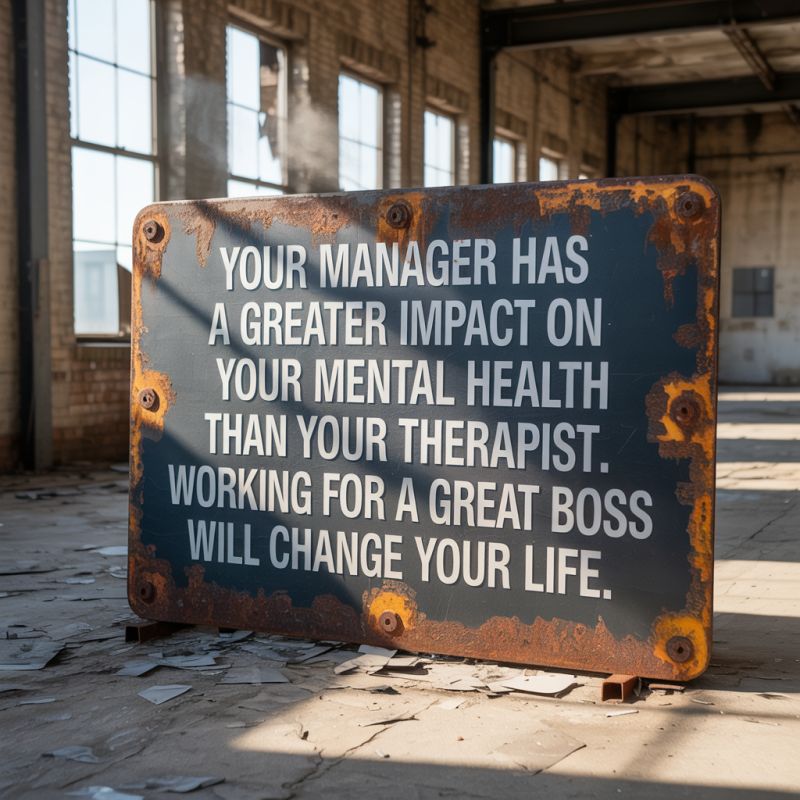
Choosing a bad leader will kill your career!
So, choose wisely!
Keep this in mind!!
When you work for someone who values your contribution to the organization…
…every day feels more fulfilling.
Here’s 10 signs you’re working with a great boss.
1. They Truly Listen to their People:
A great boss takes time to hear you out, making you feel valued and understood in every conversation.
2. They Respect Boundaries:
They know the importance of life work harmony and don’t expect you to be “always on.”
3. They Show Genuine Appreciation:
From a quick “thank you” to acknowledging your hard work in meetings, a great leader will often recognize your contributions.
4. They Invest in Your Growth:
Your career growth matters to them. They encourage training, provide resources, and open doors for new opportunities.
5. They’re Transparent and Honest:
Great leaders communicate openly, giving you a clear sense of the team’s goals and your role in achieving them.
6. They Encourage Your Strengths:
A great boss creates opportunities that align with your talents.
7. They Support You in Tough Times:
Life happens, and a great boss understands this intuitively. They support you through challenges and make adjustments when you need them most.
8. They Foster a Positive Environment:
The work culture feels safe, inclusive, and positive, making it easier to bring your full self to work each day.
9. They Prioritize Your Well-being:
A great boss checks in on your workload and stress levels with intention.
10. They Lead by Example:
They don’t just talk about values—they embody them. Integrity, respect, and empathy are qualities they model daily.
The Quiet Power of Improvement
In a world that constantly demands validation—likes, promotions, praise—it’s easy to fall into the trap of proving ourselves. We hustle to impress, to showcase, to be seen. But there’s a quiet, transformative truth many miss along the way:
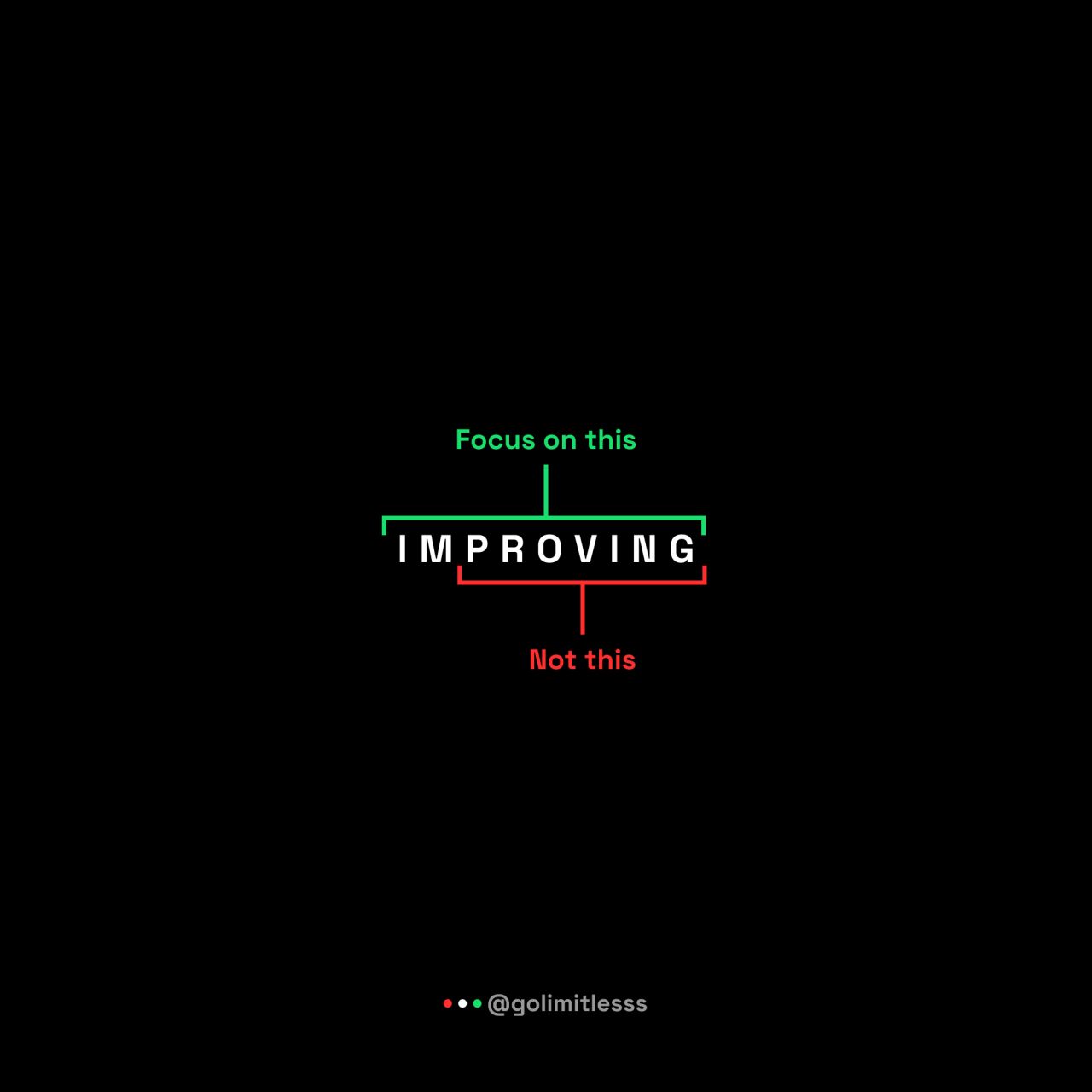
Focus on improving, not proving.
At first glance, the difference might seem subtle. But the mindset shift is radical.
Proving is about ego.
It’s defensive. It clings to achievements, seeks applause, and panics in the face of criticism. It’s the voice that says, “Look at me—I’m good enough!” Yet, ironically, this chase often leads to stagnation. Because when your identity is built around already being “enough,” there’s little room to grow.
Improving is about evolution.
It’s humble. Curious. Willing to get uncomfortable. It’s the voice that says, “I want to get better, no matter where I am today.” Improvement embraces mistakes as lessons, criticism as fuel, and setbacks as setups for growth.
And here’s the beautiful twist:
Those who focus on improving inevitably prove themselves—without trying.
Their growth becomes undeniable. Their work speaks volumes. Their resilience shines through challenges.
Meanwhile, those consumed with proving themselves rarely improve. Their fear of failure holds them back from taking the very risks that would lead to real transformation.
So today, ask yourself:
Are you working to prove something, or are you working to improve yourself?
The world doesn’t need more performers.
It needs more growers.
Let your growth do the talking.
Keep your head down, do the work, and let your evolution echo louder than any words ever could.
How To Lead When You’re Not In Charge

You don’t need a managerial role to be a leader.
Leadership is often linked to titles, management positions, or having a team under your direction.
But it goes far beyond that.
Here are 8 practical steps
To position yourself as someone with the mindset, skills, and ambition to lead.
1/ Empower and Encourage
↳ Recognize the strengths of those around you.
↳ Find ways to highlight and showcase their abilities.
→ This creates a supportive atmosphere and shows you’re committed to the team’s overall success.
2/ Lead with Integrity
↳ Consistently produce top-notch work.
↳ Always meet your deadlines.
↳ Put in the extra effort when needed.
→ This sets a standard and motivates others to improve their own performance, creating a positive ripple effect.
3/ Be a Continuous Learner
↳ Continuously work on improving your skills and knowledge.
↳ Stay up-to-date with industry trends and innovations.
→ This will make you a valuable resource within your company.
4./ Champion Change
↳ Suggest a new initiative.
↳ Improve existing workflows.
↳ Take on difficult tasks willingly.
→ This demonstrates that you embrace change and want to drive positive impact.
5/ Lift Others Up
↳ Be both a source of encouragement and support.
→ This builds a collaborative culture and shows your commitment to the team’s collective success.
6/ Show Accountability
↳ Own up to your actions and decisions.
→ This highlights your reliability and willingness to take responsibility.
7/ Tackle Tough Problems
↳ Take time to investigate and research the issue—others may have already solved it.
→ This shows your ability to navigate challenges and find solutions.
8/ Cultivate Relationships
↳ After meeting with a department like marketing, follow up to share what caught your attention.
→ This helps you develop strong, meaningful connections.
True leadership is about influence, not titles.
You can lead from wherever you are.
Now’s the time to showcase your leadership journey.
80-20 Principle
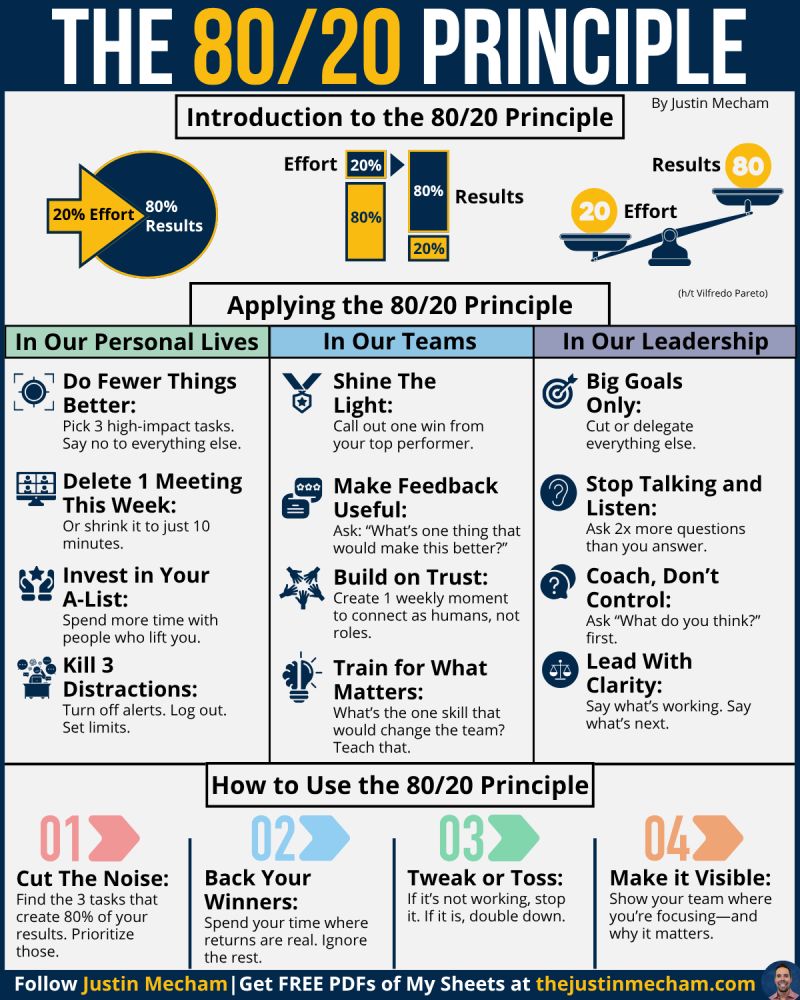
You’re not behind—
You’re working on the wrong things:
The 80/20 Principle shows this clearly:
20% of what you do
drives 80% of your results.
But most people spread effort everywhere—
And wonder why progress feels slow.
That creates:
❌ Burnout
❌ Missed goals
❌ Low-impact busywork
True focus unlocks:
✅ Faster wins
✅ Clearer direction
✅ More time for what matters
Use the 80/20 Principle to filter your day:
🛟 In your personal life:
• Do the tasks that actually move things forward
• Protect your time from small distractions
• Say no to low-value meetings
📈 In your team:
• Spend more time with top performers
• Build habits around what works best
• Give fewer but stronger pieces of feedback
🏆 In your leadership:
• Ask questions that unlock clarity
• Work on the highest-impact goals
• Use praise and feedback with purpose
The 80/20 Principle isn’t about working harder—
It’s about working on the right things.
You don’t need more time.
You need better focus.
EQ will take you a lot farther than IQ.

16 ways to strengthen yours:
Emotional intelligence is sneakily powerful:
↳92% of top performers have high EQ
↳People with high EQ make $37,000 more / year
↳While IQ is relatively fixed, you can grow your EQ
I just finished Travis Bradberry’s excellent new book, The New Emotional Intelligence,
Which discusses these facts,
Lets you test your EQ to see where you fall,
And gives 60 strategies to strengthen your emotional intelligence.
I recommend reading it to make sure you’re not getting left behind.
But in the meantime,
This infographic covers many of the key points,
Along with 16 of my favorite strategies.
EQ is increasingly beating IQ and other credentials in hiring and promotions.
It’s anything but soft or a nice-to-have.
In fact, if you want to thrive in today’s workplaces,
And in the future,
It’s a skill you must master.
And the great news is: you can.
The Company You Keep: Designing a Life That Lifts You Up
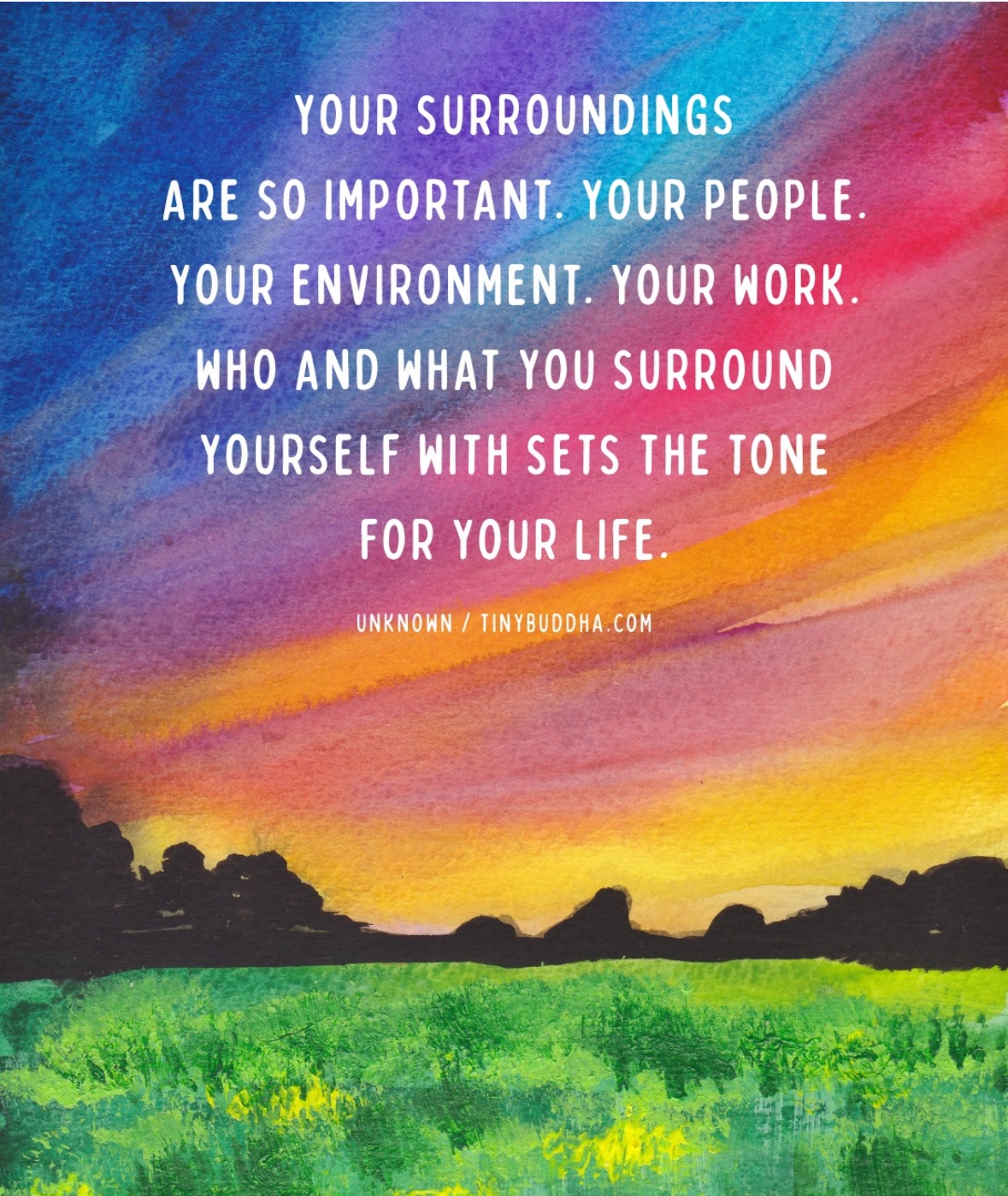
Ever walked into a room and felt instantly lighter—or heavier—without knowing why?
That’s the silent power of your surroundings.
The people you talk to.
The work you do.
The space you live in.
The energy you absorb.
They all act like background music for your life—subtle, but profoundly influential. And just like the wrong playlist can ruin a mood, the wrong environment can drain your joy, creativity, and growth.
Your People Are Your Mirror
Look around. Who are you spending the most time with? Are they dreamers or downers? Do they challenge you to be better—or silently celebrate your stagnation?
Surrounding yourself with people who are kind, ambitious, curious, and honest is like sunlight for the soul. They water your spirit when you’re dry and keep your ego in check when you’re flying too high.
Your Environment Sets the Mood
Whether it’s your cluttered desk, the neighborhood you live in, or the digital spaces you scroll through daily—your environment shapes your thinking. It’s hard to think clearly in chaos, or dream big in a space that feels small.
Design a space that reflects the life you’re trying to build—not the one you’re trying to escape.
Your Work Is Your Frequency
We spend a huge chunk of our lives working. So if your work constantly leaves you feeling empty, misaligned, or undervalued, it’s not just a job—it’s a slow erosion of self.
Do work that sparks something in you. It doesn’t have to be your life’s purpose, but it should never be your daily punishment.
Choose Deliberately
You don’t always get to control where you start. But you do get to choose who you let in. What you say yes to. What you walk away from.
Be intentional.
Audit your circle.
Curate your environment.
Protect your peace.
Because your surroundings don’t just influence your mood—they sculpt your future.
Remember:
The life you’re building tomorrow begins with the choices you make today—about who and what surrounds you. Choose wisely.
 Kenrick Vaz