Solitude: How & Why to Spend Time Alone

When was the last time you were alone? Not lonely, or isolated, or missing someone. But alone, happily, by choice?

If you’re still thinking, it’s been too long. 

Modern society has developed some negative associations with the idea of being alone. When kids misbehave, parents send them to their rooms to sit in silence as a punishment for their bad behavior. Staying at home alone on a Friday or Saturday night is frowned upon. You’d be considered a “loser” for doing so and your friends would ask if you’re okay.

We’ve been wired to believe that solitude is our enemy.

We’ve also confused “being alone” with “being lonely”. But that, of course, is not the case. Being alone doesn’t necessarily cause loneliness and many people can feel lonely despite being in the constant presence of other people.

Loneliness is about perceiving that no one is there for you. But solitude is about making a choice to be alone with your thoughts.

Amy Morin

The truth is, solitude is necessary for our well-being and potential success.

Research has come to prove that there are several long-term benefits to solitude.

  1. It allows you to learn more about yourself and find your own voice.
    In a world where information is available at your fingertips and everyone has an opinion to share, sometimes it’s incredibly rewarding to trust that you have the answers you seek. All it takes it to build the habit of looking within to converse with yourself. Solitude becomes a medium to learn more about who you are as a person. 
  2. It empowers you to become comfortable with who you are.
    The more you learn to shun out external influence, the more comfortable and confident you feel about your authenticity. This confidence, in turn, will project in the future decisions you will make. 
  3. It boosts your creativity. A recent study found that people who enjoy solitude tend to be more creative. I personally really appreciate my alone time. It allows me to rewind, to reflect and more so, allow my imagination to wander. Most often it’s when I roam in nature that I get my best ideas.
  4. It gives you an opportunity to plan your life.
    We plan our business meetings and our upcoming vacations. At work, there are quarterly business reviews and bi-annual performance reviews. We plan and reflect for work and fun — but why don’t we do the same for our dreams, aspirations and personal lives? Take a break from the rhythm of rush to reflect on whether you’re living a life true to you and your goals. 
  5. It improves your mental wellbeing.
    Studies have shown that people who learn to find comfort in solitude tend to be happier, experience lower levels of stress and are less likely to have depression.

How to Spend Your ‘Alone Time’

You don’t have to go to a cabin in the woods or fly all the way to a remote island to learn how to spend time alone. All it takes is to integrate 10 minutes per day to be alone with your thoughts — and if that’s too difficult to start with, I recommend you block out 10 minutes every Sunday evening for yourself.

Is that too difficult of a task to do? I highly doubt it.

But how do you actually spend time with yourself? Is there more to it than just sitting in silence with no distractions? You bet! Here are a few other recommendations that might inspire you.

1. Pick Up An Old Hobby Or Try A New One

What better way to pass the time than by doing something you love? Maybe it’s something that you did during your college days. Or maybe it’s something that you’ve always wanted to do. 

News flash: you don’t need anyone else! You can do it by yourself. Using your alone time to do something that makes you happy will never feel like a chore. 

2. Journal Through Your Thoughts

Grab your pen and paper and have a heart-to-heart with your journal. Journaling has so many benefits for mental health, which makes it an excellent way to spend your coveted alone time. 

3. Do Nothing

Sometimes it’s really powerful to just sit and do nothing. Let your mind wander and be reassured knowing there’s absolutely nothing you have to do except be there in the moment. 

4. Meditate

Meditation calms you down and sharpens your focus muscle. It’s hard at first, but with time, you will love it so much that it becomes a pillar in your daily routine. 

5. Set Goals

Take control of your life. If you don’t invest the time to be alone with your thoughts and ask yourself “what do I want to achieve this year” then you’ll end up living your life on autopilot. You need a goal — a destination to work towards. Take the time to plan where you want to go in life.

Give me six hours to chop down a tree and I will spend the first four sharpening the axe.

Abraham Lincoln

It’s not easy to be able to sit alone with your thoughts for extended periods of time, but at an age when social connectivity is the constant, it’s imperative for our mental health to frequently unplug.

You need to give yourself the time you deserve to be with your mind, to look within, and engage in a meditative experience. You can sit in silence. You can journal. You can plan your week ahead. You can go for a walk in nature.

It doesn’t matter what you use your time alone for.

The most important thing is that you build the habit of embracing solitude and inviting more of it into your life. You’ll learn more about yourself and you’ll become more aware of your emotions. In short, it’s the best form of self-care.

Own your Flaws

We see our physical imperfections every time we look at ourselves in a mirror. We sometimes reflect on our shortcomings or imperfections of character after we fail to respond to a situation in an emotionally-balanced way; When we realize we were untruthful to ourselves and to others, or when we harshly criticize ourselves for not having achieved something that is defined as successful or good by social convention.

All of this we come to see as our own imperfections. We see it as imperfect because it falls short of what we think, believe or expect to be perfect, a construct or idea we have in our head that we have built ourselves or that was handed down to us by society.

Better to do something imperfectly than to do nothing flawlessly.

Robert H. Schuller

Sometimes we make the mistake of assuming that we need to be perfect to be lovable, which sets us up for disaster. No one is perfect, and anyway, our imperfections are what make us unique. Here’s why owning your flaws makes you a lot more lovable than pretending to be perfect does:

1. IT MAKES OTHER PEOPLE MORE COMFORTABLE.
It’s not your job to make sure that other people aren’t intimidated by you, but when you pretend to be perfect, it can put up a wall and make you seem unapproachable and unrelatable.

2. PEOPLE CAN GET TO KNOW THE REAL YOU.
We want people to like us for who we really are, but for that to happen, we have to learn how to let people get to know who we really are. You can’t be guarded and known deeply at the same time.

3. PEOPLE AREN’T LOOKING FOR PERFECT.
We might want someone that is perfect for us, but that’s very different from wanting a perfect person. Imagine how hard it would be to really date a flawless person. S/He would probably be a total nightmare.

4. YOU COME OFF AS AUTHENTIC.
Nothing is more appealing than people who are totally authentic. That’s exactly why you might love certain people who you consider “weird” or “crazy,” because they’re comfortable with it and because of that, so are you.

5. YOU’VE ACCEPTED YOURSELF.
When you accept yourself for who you are, then other people can, as well. Knowing you’re flawed and moving forward shows people that you don’t need saving, because you’re doing it yourself.


So how do you start owning your flaws??? Here are ten tips for embracing your flaws and accepting yourself completely.

1 Acknowledge what’s bothering you
Without understanding the root of your concerns, it’s hard to come to terms with your flaws. Dig deep and see if there are issues beneath the flaws that you need to address.

2 Use your flaws to guide self-improvement
Embracing your flaws doesn’t mean you can’t improve yourself. In some cases, recognizing certain flaws gives you the opportunity to work on those imperfections. If your flaw is something you want to change, go for it!

3 Appreciate your individuality
Your flaws may make you different from everybody else, but that’s a good thing! Don’t make the mistake of trying to fit the mold.

4 Put things in perspective
Instead of focusing on everything that’s bothering you, grab a notepad and jot down three things you are grateful for. Wouldn’t you rather have your health and your beautiful family than be a stunning beauty without those precious gifts?

5 Flip your flaw
If you can find the strength in your flaw, you’re a lot more likely to own it. For example, if you’ve always considered yourself quiet and shy, that probably means you’re an amazing listener and observer.

6 Don’t compare yourself
Stop comparing yourself to others and love yourself for who you are — the good, the bad and the ugly. Everyone has their own idiosyncrasies. That’s what makes life interesting!

7 Be flawsome
Yes, flawsome is an actual term. I had shared a post Be Flawsome last June. This term was coined to describe brands that show humanity by being open about their flaws. In their words, “Human nature dictates that people have a hard time genuinely connecting with, being close to, or really trusting other humans who (pretend to) have no weaknesses, flaws, or mistakes.” Who wants that? Embrace your flaws — and be flawsome!

Benefits of Setting Boundaries

You can’t be all things — or do all things — for all people. A life without limits means rarely saying “no” and considering everyone else’s feelings before your own. Not only are these people-pleasing habits wholly exhausting, they put you on the direct road to burnout, a major health hazard in its own right. They disregard how much work or effort you can handle on a regular basis. That’s where boundaries come into play. In simple words, boundaries aren’t a way to keep people out. They make life as enjoyable as possible for you and for your loved ones as a result.

It’s not mean or wrong to set boundaries. Boundaries protect us from being hurt and taken advantage of. Boundaries create healthy relationships and clear expectations. And we can learn to set boundaries without feeling guilty or like we’re being mean!

Often, we assume that people will respect our boundaries because we were brought up and taught what is acceptable by our family and/or culture. Unfortunately, this is not always the case.  Although we can choose who we interact with in our personal life such as choosing close friends, this is not always the case in other environments such as work, family, community, etc. We can feel uncomfortable or even violated if we interact with those who have poor boundaries. But it is important to know how to establish healthy emotional, psychological, and physical boundaries in relationships so we can feel respected and safe.

Below are a few great things that happen when you learn to set your own limits:
Source: Boundaries expert Chad Buck, a clinical psychologist at Vanderbilt University’s Work/Life Employee Assistance Program

1. You’re more self-aware.
Creating your own limitations is an inherently self-aware act — and that can be incredibly beneficial for your own welfare.

2. You become a better friend and partner.
Boundaries make it possible to allow yourself to recharge. And when you’re not totally tapped out, you have more energy to devote to the ones you love. You’re also more respectful of their own needs as a result.

3. You take better care of yourself.
Boundaries help you prioritize your own well-being — plain and simple. It is not selfish to take care of yourself and your needs while also considering the needs of others. It makes you more effective and less burned out from helping if you set some limits.

4. You’re less stressed.
Without establishing your own limits, you open yourself up to the risk of taking on everyone’s problems in addition to your own. Or worse, you ignore your own happenings entirely. If you have a reasonable boundary, you don’t take on additional stress.

5. You’re a better communicator.
In order to really establish limits, you have to state what you can or cannot tolerate. That means being clear and concise. Expressing your own needs will also allow you to be more transparent. All of these characteristics are elements of good communication.

6. You start trusting people more.
Expressing your limitations to others means you’re trusting them to handle those emotions you’re conveying. And more trust means better relationships.

7. You’re less angry.
When you don’t have set boundaries you give other people the power over your own life — and that can lead to anger. We let people get away with things that are not okay. Then we just become more resentful and hateful.

8. You learn how to say “no.”
“No” may be a small word but it’s certainly powerful. The most basic way of establishing a boundary is declining anything you don’t have the capacity to handle.

9. You end up doing things you actually want to do.
Imagine your life without unnecessary obligations all because you started exercising your right to say “no.” Limits free you up for more opportunity to do the work and activities that you actually desire to do.

10. You become a more understanding person.
When you’re compassionate toward yourself about what you can tolerate, you’re better able to express that to other people who have their own boundaries they want to follow.


A more fulfilling life, a warm personality and better relationships all because you set up healthy limits for yourself? Doesn’t sound like a bad deal.

How Much Discipline Do You Really Need to Fulfill Your Dreams

The internet is full of contradictory success stories. On the one hand, you hear about a lot about college dropouts making it big only after they gave up on the rigorous college schedule. On the other, you have stories about successful businessmen and entrepreneurs working their way up from the bottom, working 20 hours a day to fulfill their goals.  So, which one is it? Do you need to free yourself from the chains of strict schedules and regulations, and just do what comes natural? Or should you reach Buddhist monk levels of self-discipline?

First, let’s start by making a distinction. Self-discipline might seem like a fancy way of saying “discipline,” but we’re actually talking about two slightly different things here. Discipline is following rules and schedules imposed by others. When you’re working in a team, it certainly helps to follow the same guidelines as everyone else. Otherwise any project would just descend into utter chaos.

Being a maverick only works if you get results. Otherwise, you’re just going to hinder everyone else from doing their job. Be aware of your strengths, but also your weak points. Before making any radical decision, run it by someone you trust first. Staying true to your vision doesn’t mean you can’t listen to constructive feedback.

What about self-discipline? This should be something you end up practicing it instinctively. It will be hard at first, nobody is going to deny that. But it’s better to start developing good habits early. The more you become comfortable with bad habits, that harder it’s going to be to get rid of them in the long run.  If you practice self-discipline on a daily basis, at some point it’s going to become second nature, and you’ll no longer feel like your pushing yourself to do something.

Do you need a lot of self-discipline to achieve your potential? That really depends on you. Some people are naturally inclined to complete tasks, no matter how tedious they may find them. Others need a little bit of a push to get the job done. That’s where self-discipline comes in to pick up the slack. When you’re working a job with managers, supervisors, and external deadlines looming over your head, you’re going to have to step up your game, whether you like it or not. But when it comes to personal goals, you can be just as lazy as you want to be. How many times have you decided to start working, or go on a diet, only to make up some excuse to postpone it? Since there’s nothing pushing you from the outside, you have to learn to push yourself from within.

Self-discipline isn’t just about making sets of rules. Ideally, through daily practice, you should reach a point in which these rules become habits. Good habits are essential if you want to successfully tap into your unexplored potential. And once you get comfortable applying your rules on a daily basis, you won’t even notice they’re there.

If you’re the kind of person who might need a little bit of help kick starting their self-discipline training, it might be useful to follow these tips.

Don’t jump in immediately

Start with little things, like making daily schedules and sticking to them, or forming some routines. If you go at it head on, without a clear plan in mind, you might end up tiring yourself before you’ve even started


Practice self-discipline daily, especially when you don’t feel like it

When something is fun, you don’t need to force yourself into doing it. The whole point of setting rules for yourself is to have something that pushes you to get the job done when you lack motivation.


Break down every complex process into stages

What are steps that lead up to your desired outcome? How long does each step take, realistically? What are you going to need to complete each stage? Dividing daunting tasks into manageable chunks will help you sketch out a plan before starting.  That’s going to make sticking to a schedule much easier, because, first of all, you’re going to have an actual schedule.


Always keep your end goals in sight

Visualizing the desired outcome can be a powerful motivator. Whenever you feel like quitting, just remind yourself why you’re doing this. Think about that wonderful feeling of seeing your task completed.


So, the question remains, how much discipline do you really need to achieve your goals? Well, that’s actually up to you.  Part of learning to discipline yourself is to know what your limits are, and how far your desire to succeed can push you. Learning these things takes plenty of practice, but, in the end, it’s all worth it. Once your internal schedules become an extension of who you are, you won’t even feel like you’re forcing yourself to do anything, it’s going to be part of your routine.

This is probably what’s so tricky about self-discipline, and why so many successful entrepreneurs seem to have a total disregard for rules. You rarely notice routines; that’s why they’re routines. You’ve probably heard of the more famous college drop-outs, like Bill Gates, or Steve Jobs, but there are plenty of others.

You might think that, as long as you have a good idea, you don’t really need anything else. But the truth is, what these people tend to have in common is the drive to achieve their goals. Their success stories might seem effortless, but that’s just because you rarely get to see all the boring work that went into reaching the top.

It was character that got us out of bed, commitment that moved us into action, and discipline that enabled us to follow through.

Zig Ziglar

Good or Bad, It Comes Back to You

Whatever we do, it comes back to us. Whatever deeds we perform in our daily life — good or bad — we have to bear the fruits of the same. Sooner or later, we will come back to us. This is the rule of life we should bear in mind when dealing with the people around us. We should treat people the way we would like them to treat us.

Some people say life is unfair. However, it’s not life, but people have not been fair to each other. It’s not life that should be blamed for what happens to us, but ourselves. It’s because we are being unjust and disrespectful to each other.

It is important for us to understand “we are the reason” behind what happens to us. Let us, for example, think of our work. Who decides the type and colour of clothes to wear, the route to take and what drink to have? It’s our decision of course. Similarly, every action we take is decided by us. Hence, the result too will be faced by us.

Likewise, the result of our deeds will be faced only by us. Nobody should say I’ve not done injustice to anyone, but why I am facing such an awful situation in my life. Our deeds are like a ball. Once thrown, it will hit the wall and then come back to us. It’s all a matter of time for this ball to travel and come back. Sometimes, it comes back immediately, but sometimes it takes hours, months or even years.

All you need to remember is that life is like an echo. What you send out comes back. What you sow, you reap; what you give, you get; what you see in others exists in you too. Hence, you should always give goodness and get back the same. Otherwise, it’s vice-versa.

This reminds me of an old story of a woman who used to bake bread and give one to a hunchback man who used to pass by her house every day. This went on day after day. This woman was irritated with the man who didn’t show any kind of gratitude to her. All he would say after receiving the bread was, “The evil you do remains with you. The good you do will come back to you.”

This statement infuriated her.

Therefore, she decided to get rid of him by poisoning the bread she had prepared for him. Luckily, she changed her mind and didn’t give him that bread. Instead, she burnt it.

The hunchback man passed by as usual, collecting the bread from her. Suddenly, he found a starving man asking for food. He handed him that bread. That man happened to be the woman’s son, who had disappeared for years.

He told his mother about the hunchback man saving his life with the bread that he gave him. She was shocked to hear that as she was planning to kill the hunchback man.

She realised what would have happened had she given him the poisoned bread.

Always remember, the evil you do remains with you, while the good you do, comes back to you. Thus, keep doing good deeds that bring back fruitful outcomes to you.

What Judging Others Reveals About You

For some reason, people love to judge other people. I know firsthand, because I’m definitely guilty of doing it too. I don’t do it nearly as much as I used to, but I still catch myself doing it more often than I should.

Whenever I slip up and start becoming judgmental of others, I take a step back, and remind myself of this truth:

We usually judge others in the areas where we feel the weakest.

Seriously, think about it.

If you’re being honest with yourself, I’m sure that you can relate to some of the common examples below:

“Ugh, why can’t that mother control her unruly kids?? They are running through the store like animals!” (Translation: “I don’t feel great about my abilities as a mother, and it makes me feel a little better to judge a woman who appears to be struggling in her duties more than I am.”)

“Why is this guy’s blog more popular than mine? His blog posts look like a third-grader wrote them.”(Translation: “I wish that my blog was as popular as his is, and I’m insecure about the fact that it isn’t.”)

“This woman thinks that she’s all that because she drives a fancy car and has so much money–it’s disgusting.” (Translation: “I wish that I had as much money as she did, and by judging her as a villain, it makes me feel a little better about being broke.”)

“Look at that dude smiling all of the time, he’s so fake and annoying.” (Translation: “I wish that I was happy enough to smile all of the time. But since I’m not, I’m going to judge this guy as a phony and a fraud.”)

“Look at that fat-ass whale on the treadmill, she’s such a mess.” (Translation: “I don’t feel great about how I look, and it makes me feel good to viciously judge someone who I believe looks worse than I do.”)

Let’s get real – do you know anyone who is completely secure with him/herself who also consistently and harshly judges other people in the ways described above?

Yeah, me neither.

That’s because our judgments reveals our soft-spots. Our insecurities. Our weaknesses.

And usually, we harshly judge others because we do the same to ourselves.

Here’s how we can change that.

REMAIN IN CURIOSITY

I’m not naïve about this judgment stuff. I don’t think that it’s possible to live a life where we never judge anyone, ever. That’s an admirable goal for sure, but my goal is to offer solutions that are realistic enough for people to be willing to give them a try.

And here’s a simple one to remember next time you’re feeling the urge to be a little “judgy” of others:

Remain in curiosity and stay out of judgment.

Judgment shuts us down and keeps us from understanding the full situation. If we’re being honest, most judgments about people are based on incomplete information.

Curiosity, on the other hand, keeps us open to the possibility that there is something about the situation that we don’t fully understand.

Whenever I see people acting in ways that I think are insane, stupid, or worse–this is the question that I ask myself:

“I wonder what’s going on with that person that I don’t know about?”

I’ll admit, this may sound simple, but it’s much easier said than done.

Judging people is easy, and it some cases, it can even feel good to do it. On the other hand, being curious requires maturity, emotional intelligence, and a healthy dose of self-control to do it consistently.

How To Stop Judging Yourself

As suggested above, the ultimate cause of being quick to judge others lies at least partly in how harshly you criticize yourself. So, to stop judging others, you need to work on learning how to stop judging yourself. As well as making life less enjoyable, judging yourself limits your ability to use the Law of Attraction to its full potential. Consequently, you may align yourself with a lower vibration; focusing on the negative and attracting more of the same in all areas of your life.

However, judging yourself and others is just one possible barrier that interferes with Law of Attraction work. Once you figure out what’s holding you back, you’ll be empowered to work on positive change.

Loves Me, Loves Me Not?

We all are pretty well aware that love isn’t always wonderful like we see in the movies. In real life, it’s often unpredictable, frustrating, even painful. While it certainly can offer plenty of rewards, these benefits don’t generally come without some dedicated effort and willingness to accept some challenges as part of the process. This is true for both relationships and friendships as well.

When you love someone, you choose to nurture the first stirrings of attraction, feeding those early feelings and strengthening them to weather stressors to come. The work involved may not always feel easy. Yet many people find the reward — mutual, lasting love — well worth the investment. 

People often say you’ll just know when someone loves you. There’s some truth to that, though it may not show up in the extravagant gestures you see in the media.

So how do you recognise real love? Here are a few signs

You feel safe with them

Safety is a cornerstone of friendships and loving relationships. A friend/partner who loves you won’t physically hurt you or damage your possessions. They also won’t threaten or pressure you into doing things you don’t want to do, make decisions for you, or cut you off from your social support.

Feeling safe also means feeling free to make your own decisions and express yourself without fearing their response. When you share opinions and goals, you receive encouragement, not putdowns or criticism. 

Everyone experiences annoyance and anger on occasion, but it’s possible to express anger in safe, healthy ways. A partner who loves you won’t threaten you or use anger to punish you or make you afraid.


They listen

A partner who loves you will take an active interest in the details of your life.

They’ll listen actively by asking questions and waiting their turn to share instead of immediately diverting the conversation toward their own experiences. You get the sense they really care, instead of feeling brushed off with a distracted “Uh huh” or “Wow, that sucks.” 

While they may not hear or remember every word you say, they’ll generally have a pretty solid awareness of the things that matter most: your likes and dislikes, hopes and fears, friendships and family relationships, and so on.


They acknowledge your differences instead of trying to change you

No matter how much you and your partner share, you’re different people, so you won’t feel the same way about everything. 

Someone who loves you will accept your individual ideas and feelings as part of who you are. They might engage in some respectful debate, but they’ll show interest in your perspective instead of insisting you take their side.


You can communicate easily

Love requires open, honest communication. This doesn’t mean sharing every thought you have. Everyone has some private feelings, and there’s nothing wrong with keeping these to yourself.

Good communication might involve: 

  • discussing emotions
  • identifying and addressing areas of conflict
  • connecting through physical or emotional intimacy
  • checking in about relationship boundaries
  • tuning in to signals in body language

Communication doesn’t come easily to everyone. Instead of assuming a partner who has a hard time expressing thoughts and emotions doesn’t love you, look at their willingness to learn and practice better communication skills.


They encourage you to do your own thing

Certainly, partners should enjoy each other’s company. A loving partner, however, will also recognize you have a separate identity outside the relationship and support you when you want to spend time seeing friends or pursuing your own hobbies. 

They’ll also maintain their own friendships and interests instead of looking to you to entertain them or fulfill all their social needs.


You trust each other

Trust often develops along with love, and you typically won’t find one without the other.

A partner who loves you will likely trust you, unless you betray them. They won’t question you when you see friends, follow you, or go through your phone or computer.

If they have no reason to believe you’ve been dishonest, they won’t accuse you of lying or cheating, or insist you go everywhere together.

Trust also means they feel safe enough to share opinions and emotions, open up about challenges they face, and ask for help.


They make an effort

Attraction might happen in an instant, but lasting love requires more time and commitment. 

It might seem romantic when someone immediately decides you’re “meant to be” or says “I think I love you” after just one day. But this sometimes suggests a controlling or manipulative personality, not true romance. 

With so many people in the world, the idea of one-and-only instant love can seem pretty flimsy. Sure, soul mates could exist, but it’s important to recognize that love typically doesn’t happen in a flash.

Someone who truly cares will want to build your love from the ground and shore it up at the seams by: 

  • prioritizing time together
  • expressing an interest in getting to know you
  • being prepared to talk through disagreements or conflict
  • agreeing to try new things together
  • expressing their commitment to mutual growth as partners

The bottom line

A loving partner and friend will share your desire to strengthen your bonds and grow together. 

Relationship skills don’t come easily to everyone, though, and some people need a little extra support with learning how to express feelings in healthy ways. In doing so, you can practice good communication, explore goals for the future, and identify any areas of tension, so you can address them before they create problems down the line.

Popular React Lazy-Loading Libraries

With images making up 65% of all web content, page load time on websites can easily become an issue.

Images can weight quite a bit. This can have a negative impact on the time visitors have to wait before they can access content on your website. they will get navigate somewhere else, unless you come up with a solution to image loading.

What is lazy loading?
​​​​​​​Lazy loading images means loading images on websites asynchronously that is, after the content is fully loaded, or even conditionally, only when they appear in the browser’s viewport. This means that if users don’t scroll all the way down, images placed at the bottom of the page won’t be loaded.

Over the years, various packages were introduced to the React ecosystem to optimize applications through lazy loading. Let us take a look at five lazy-loading libraries popular in the React community:

1. react-lazyload: Flexible customization

react-lazyload can be used to lazy load any type of component in a React application. It is one of the most popular lazy-loading libraries in the React community, supporting decorators and server-side rendering.

react-lazyload has around 892 thousand monthly NPM downloads and 5.4 thousand GitHub stars.

Features of react-lazyload

  • Has a set of properties to enable users to customize the functionalities of the component.
  • Provides utilities such as forceCheck to display hidden content that becomes visible without a resize or scroll event.
  • Supports horizontal lazy load out of the box.
  • Implements only two event listeners for all lazily loaded components, optimizing the performance further.

Link to Demo 


2. react-lazy-load: Incredibly fast!

react-lazy-load is a React component that can be used to defer loading content in a predictable way. It is comparatively fast, with a minimal bundle size (6KB minified).

react-lazy-load has 676 thousand monthly NPM downloads and 869 GitHub stars.

Features of react-lazy-load

  • Automatically detects scrolling containers such as a <div> with a scrollbar and therefore can be used even inside a scrolling container.
  • Lets users set the threshold to begin content loading from any side of the viewport, using props such as offsetVertical, offsetHorizontal, offsetTop, offsetBottom, etc.
  • Works in IE8+.
  • Has built-in support for debouncing functions.

However, compared to the react-lazyload library, this component has a very limited number of props and therefore provides less flexibility. The main disadvantage is that it doesn’t allow users to apply a placeholder for the lazy-loaded component.


3. react-lazy-load-image-component: Compatible with TypeScript declarations

The react-lazy-load-image-component is an easy-to-use library for lazy loading any type of component. It supports the IntersectionObserver, and you can determine when an element leaves and enters the viewport.

react-lazy-load-image-component has around 324 thousand monthly NPM downloads and 884 GitHub stars.

Features of react-lazy-load-image-component

  • The most significant feature of this library is its HOC, trackWindowScroll, which allows components to track window scroll positions without using scroll or resize event listeners for every element.
  • The lazy-loaded components will have an offset of 100 pixels by default.
  • Built-in, on-visible effects such as blur, black and white, and opacity transitions help to improve the user experience.
  • Server-side rendering compatible.
  • Support for TypeScript declarations.
  • A placeholder is provided by default with the same size as the image or component, though it can be customized.

Link to Demo


4. react-lazy-images: Fallback strategies for SEO- or JS-disabled environments

react-lazy-images is a flexible library that provides components and utilities to lazy load images in React. It gives full presentational control for the caller using render props.

react-lazy-images has around 51,000 monthly NPM downloads and 263 GitHub stars.

Features of react-lazy-images

  • Uses IntersectionObserver with polyfill to improve performance.
  • Provides fallback strategies for SEO- and JavaScript-disabled environments.
  • Supports server-side rendering.
  • Supports background images and works with horizontal scrolling.

5. react-lazy-blur-image: Provides a lightweight gray placeholder

react-lazy-blur-image is the ideal library to lazy load images into a low-resolution placeholder. By default, this component displays a lightweight, gray placeholder and is replaced with an actual placeholder when the component is about to reach the viewport. This placeholder will be replaced only when the actual image is lazily loaded completely.

react-lazy-blur-image has around 1,000 monthly NPM downloads.

Features of react-lazy-blur-image

  • It provides a minimalistic approach to lazy load images, providing the perfect UX and performance balance.
  • The component accepts only two props for customization: src and style.
  • Component can use styled-components to transition an image from the placeholder.

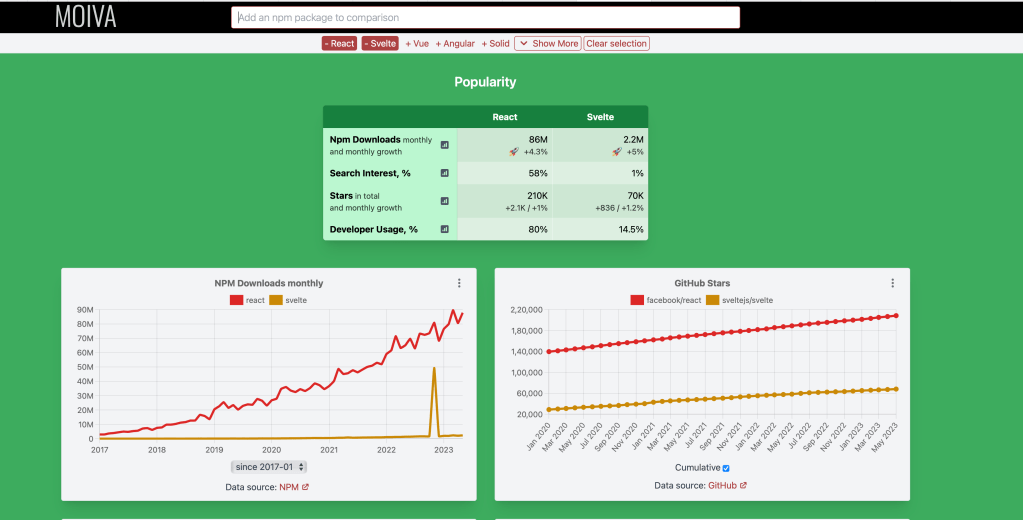
Here is a summary of the statistics of these 5 lazy loading libraries

Source npmtrends.com

Any libraries/packages you’ve used and recommend for lazy loading of images in React? Let me know in the comments section below. 

Are you ready to ride the bus?

When you are in the best of times, it seems like everybody loves you, even your enemies become your friends. It is though when you need them the most that everyone you know backs off.

It is at your worst that you understand who is your real friend and who truly cares. This is the kind of person we all need to stand by our side, hold our hand, and help us stand when we are down on our knees.

As an adult it is often harder to find the time to form those deep friendships outside your immediate family members because we are all trying to juggle a million balls in the air with work and home and community all while trying to give our greatest attention to our own children and spouses where it rightfully belongs.

But even during these challenging years there are individuals who come into our life that we consider our truest of friends. They are individuals who see us through tough times and who always see the best in us despite any of our shortcomings.

I have been blest with such true friends. They picked me up at times I was down. They stood by me when I felt alone. They taught me things about life and about myself with patience and understanding.They lifted my spirits and made them laugh when I was going through tough times. They forgave at times when I was grumpy or obstinate. They loved me without judgment and without expectations.

They gave me hugs, even at times that I may not have deserved one.  These true friends were individuals who were there for me…maybe not always in person or in word every time, but always in heart…and knowing that helped me through incredible challenges throughout the years.

True friends just do that – they help us grow and change for the better.  They support us in good times and bad. They can make us laugh when all we want to do is cry.

And no matter how far apart time and distance may cause us to grow from one another, and even if death takes one of them from this world to the next, we always have the comfort of knowing that these true friends are still there for us, even if only in spirit, cheering us on and wishing us the best, because that is what true friends do for each other.

Here are two lovely songs that come to mind when I think of who will ride the bus with me!

Why Fit In When You Were Born To Stand Out?

Some people go on their entire lives thinking that being different is something bad. They think that by not being themselves and by desperately trying to fit into society’s norms, they are doing themselves and the world a favor.

But they are not.

As long as you feel content with yourself and you are open to the idea of improving and growing, it really doesn’t matter whether you fit somewhere or not. Stop trying to prove to others and yourself that you are less than what you are.

If you want to explore your potential and see just how capable you are, you have to stop limiting yourself.

You have to allow yourself to become who you want to be.

We are all born to stand out, so where did we go wrong?

Why is it so much easier for the world to keep imposing boundaries after boundaries, instead of accepting people for who they are with their flaws and their will to explore their potential?

When did different become bad?

I believe that being different should not be feared, but accepted.

After all, there would be no progress in the world without individuals who allow themselves to explore their endless potential. And certainly, there would be no progress without people who are not afraid to use their imagination.

Eventually, we all want to find out happiness as the ultimate purpose in life, and we should not stop until we do. Even if it means not fitting into the picture-perfect.

My overall opinion is that everyone needs to be themselves, as long as they are not hurting other people with their ways.

You are who you are.

You are different them me, and you are much different than any other person that you know or the people you are going to meet in your lifetime.

You might have some similar traits with some people. Your taste of music, the world views, some opinions. But we are a super-complex mixture of emotions, experiences, and opinions. I don’t believe that you will ever meet two people who are exactly the same.

We all experience the world differently. We feel the same emotions but differently. Some people are more passionate, others are observant, and some are quite the talkers. You can be neither of these people or one that has all of these traits and more.

It really doesn’t matter.

What does matter, however, is that you recognize the type of person you are, and allow yourself to grow in that direction.

If you aspire to become something more, something better, you can and you should.

There should be no limitations, and nothing stopping you from achieving your full potential.

So to give you your answer. Is it good to fit the norms or not?

I believe that some people are meant to fit the norms, not because they must, but because these norms are well aligned with their personalities.

There isn’t a straight answer that says whether fitting the norms is good or bad. It’s what you make of it. But remember, pursue your goals, dreams, aspiration, as long as they are not hurtful to anyone else. Not following the norms does not mean that you can do anything you want without any repercussions whatsoever.

It means that you should find what makes you happy and fulfilled, but be respectful to the people around you. It doesn’t matter whether you fit into the norms or you don’t, as long as you are not limiting yourself in any way.

Remind yourself constantly that limitations are your own creation.

You set the limits of who you are, and you can push these boundaries for as much as you want. Society does not do that, someone else won’t do that. Only you can do that.

But before you are able to push your boundaries, you need to realize your potential, wake up your imagination, and lose the fear.

Don’t let fear take over your dreams and aspirations. You are still that aspiring child that had a vision.

You are destined to become the person you decide to be.

So who is that person, and what’s your decision?

You are not doing anyone a favor by not being who you truly are.

You are your own person, and you need to own it.

Stop hiding behind a mask just because someone else thinks that you should.

Stop hiding behind the truth, just because someone else got to dictate the norms.

We are all different, and some of us are just not made to fit the norms.

But all of us are born to stand out.