Our Children, Our Future

One of my favourite songs from the eighties is “The Greatest Love of All,” the mega hit by Whitney Houston. When I consider why I like this song so much, it’s the first line of the lyrics that just grabs me right away, “I believe the children are our future.” 

At about 35, most adults are set in their ways. You heard the saying, “you can’t teach an old dog new tricks.” I recently learned some new tricks, but it took some openness and serious self-discipline.

Not everybody is willing to put in the work to change. 

So, is it worth the energy trying to change the mind of someone that has been programmed for over 35 years?

Children are the future, and they are still learning their way. Teaching them love and respect while they are young, can mould them into becoming better adults.

Kids’ views of the world are shaped by what we they see. So adults, give your kids the correct building blocks to take them on life’s journey.

I came across this very touching video on YouTube “Dear Parent”

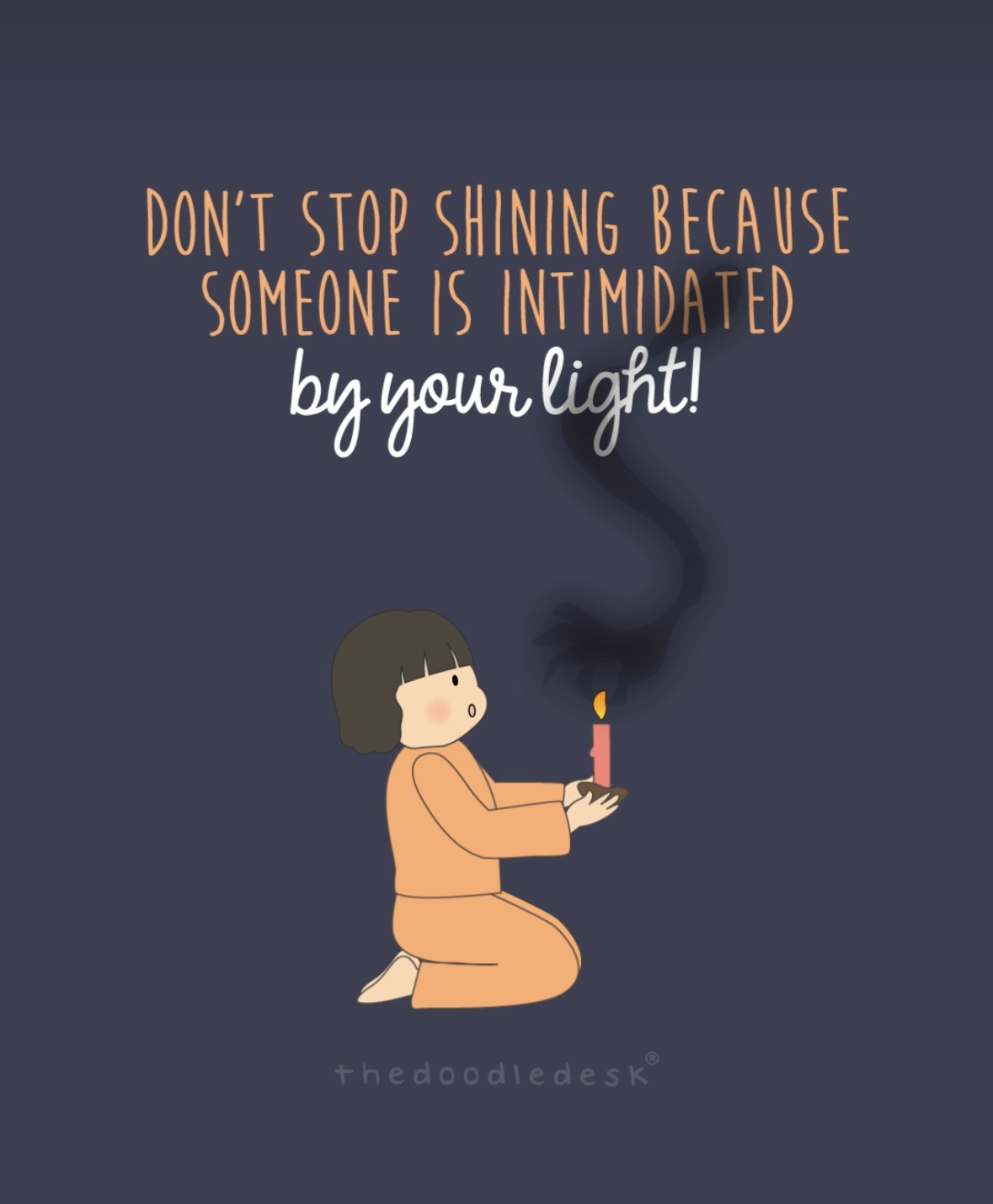
Children start off with a light and innocence that comes natural to them. Over time we see life experiences can dim that light and taint their innocence.

As parents and being part of the community, it is our job to protect our children but sometimes due to our trauma and or life experiences we can cause unintended brokenness in our children we are trying to protect them from.

The beautiful thing is we can always make adjustments and improve as parents and community leaders.

The goal is to equip and empower our young people while they’re young so when they become adults they’re in better emotional, mental, spiritual, financial, and or physical positions than we are in.


Here is the song “The Greatest Love of All” by Whitney Houston (lyrics below)

I believe the children are our future
Teach them well and let them lead the way
Show them all the beauty they possess inside
Give them a sense of pride to make it easier
Let the children’s laughter remind us how we used to be

Everybody’s searching for a hero
People need someone to look up to
I never found anyone who fulfill my needs
A lonely place to be
And so I learned to depend on me

I decided long ago
Never to walk in anyone’s shadows
If I fail, if I succeed
At least I’ll live as I believe
No matter what they take from me
They can’t take away my dignity

Because the greatest love of all
Is happening to me
I found the greatest love of all
Inside of me
The greatest love of all
Is easy to achieve
Learning to love yourself
It is the greatest love of all

I believe the children are our future
Teach them well and let them lead the way
Show them all the beauty they possess inside
Give them a sense of pride to make it easier
Let the children’s laughter remind us how we used to be

I decided long ago
Never to walk in anyone’s shadows
If I fail, if I succeed
At least I’ll live as I believe
No matter what they take from me
They can’t take away my dignity

Because the greatest love of all
Is happening to me
I found the greatest love of all
Inside of me

The greatest love of all
Is easy to achieve
Learning to love yourself
Is the greatest love of all

And if, by chance, that special place
That you’ve been dreaming of
Leads you to a lonely place
Find your strength in love

Who Supports Your Dreams?

All of us have dreams and passions. Many of us are too scared to even take a step towards making our dreams a reality. And the road isn’t easy for the few brave souls who pursue their passions. There will be some who encourage you, some who pull you down, some who mock you and others who will give you the “I told you so” look every single time you hit a roadblock on the way.

In his book “The Front Row Factor“, Jon Vroman writes about “getting close to what makes us come alive“. He describes an exercise each year which I think is pretty awesome. He chooses the people he wants in the front row of his life.

He says

“I want people in my front row who make me come alive. I want those who energy inspires me to be the best version of myself.”

He asks himself a series of questions to figure out his eight people in the front row of his life:

  1. Who am I with when I laugh the most?
  2. Who am I with when I learn the most?
  3. Who am I with when I feel most alive?
  4. Who shows up in my darkest hours?
  5. Who do I call when I’m proud and want to celebrate?
  6. Who do I think of when I say ‘amazing friend’?
  7. Who asks me about my dreams and goals?
  8. Who brings out the best in me?

The one question that hit me was number 7 – Who asks me about my dreams and goals?

There are people in my life who I could tell you their plans and projects, their children’s interests, their partners’ interests, but who know nothing of mine. They never ask.

One of the strongest beliefs I have is that there is always someone out there who believes in you. There’s a great, big world out there filled with people who will support you, who love what you’re doing, and who want to be a part of it. You just have to find them.

But like everything else in life, this is a two way street.

You can get everything in life you want if you will just help enough other people get what they want.

Zig Ziglar

Who’s dreams are YOU supporting?

In Jon’s book, he says, “When you make your list of top eight front row people, next to their names, write their dream that makes them come alive.”

I asked myself, How many people in your life do you not even KNOW their dreams? If I listed my eight people, could I also list their dreams? The sad answer was, no.

I’m trying to have better friends, but I’m also trying to be a better friend.

Good friends ask great questions. They pose questions that, just in the asking, show how much they know and care about you. They ask questions that make you pause, that make you think, that provoke honesty, and that invite a deeper connection.

When you’re picking your eight people, choose ones who support and encourage your dreams, who actually know your dreams. Remember, too, that you may be in somebody else’s eight. Support the dreams of those around you. Know the dreams of those around you — really know them, and then, help them achieve them.

I’m not sure how to be the best friend a person could have, but I would think knowing my friends’ dreams and helping them achieve them is a good place to start.

So, what’s your dream?

Everything Happens for a Reason

Throughout my life, I have consistently heard the phrase “everything happens for a reason”. Sometimes, it’s said because something bad happened, and it’s supposed to be comforting. Sometimes, it’s said because something good happened, as a way to affirm something more than blind luck. 

Here is another phrase:

“People come into your life for a reason, a season, or a lifetime.”

It is the idea that no matter how good, or how painful a role they played, they taught us something, something that will reveal itself to us at some point. This goes hand in hand with the concept of everything happening for a reason. While there may be unpleasant lessons that happen through break-ups, they are lessons nonetheless. We have to be open to the pain and difficulty, to be truly open to what it is we are supposed to gain from an experience. It can be difficult at times, to think in terms of everything happening for a reason, but it can also be helpful. At times when we are going through a particularly difficult time, such as after a split, it can be very comforting to think that there is a purpose to this, and there will be a use for what I am going through this very moment. 

A Thought Experiment

Let’s say that I’m on my way to work to give a big presentation to a huge prospective client. It’s a big deal. On the way , I get a flat tyre. It’s now clear that I’m going to be late. It’s now clear that the presentation that I need to be there for — to hopefully close the deal with a huge client — is in danger.

This client means a huge commission boost for me, which my family is really depending on. It also means gaining a lot of respect at work, for being able to bring on big clients and add value to the company. And this flat tyre endangers all of that.

What reason could there be for this flat tire? If you believe that there is a plan here — attributable to a divine intelligence — how good a plan could that be? I had a much better plan, where I made it in time to the office so I could be calm, cool, and collected for the big presentation, land the client, and ride off into the sunset.

The 2 Kinds of Reasons

One way of interpreting the statement is that every effect has a cause. The cause is the reason — the explanation of what made that effect happen. So yes, everything does happen for a reason. But of course, that’s not what the phrase is intended to mean. A cause of an effect is a backward-looking reason. The phrase is talking about a forward-looking reason — a way that the effect fits into a story — your story.

In the flat tyre case, there was a cause for the tyre going flat. Something punctured the tire, causing the air to escape. But, of course, that’s a backward-looking reason. It just explains the local chain of events that made the tyre go flat.

You could go further and say that the tyre was punctured because a truck dropped a shard of metal on the road, and I was too distracted to see the shard and avoid it. But again, those are just backward-looking reasons.

The forward-looking reason, though, is what you could call the purpose for what happened. Some call it the meaning. It’s the bigger why, and it’s what has preoccupied many a thinker throughout the centuries. It’s the question that science tends to avoid — either because scientists don’t have the tools to figure it out, or because they regard it as unscientific to begin with.

Are There Forward-Looking Reasons?

In our lives, for any given situation in which we find ourselves, there are plenty of backward-looking reasons — explanations as to how we got where we are. But are there forward-looking reasons? Is there meaning and purpose? If so, where do we find it?

To go back to my thought experiment: I know how I ended up with a flat tyre, and will be late for my big presentation. But why? What purpose does it serve?

Some say that forward-looking reasons come from an intelligence at work. They say that where we end up is part of a plan hatched by that divine intelligence. As resistant as scientifically-minded folks are to this idea, you have to give it some credit. It’s coherent and understandable — even if it asks us to believe in an intelligent planner we can’t see.

After all, if there is a forward-looking reason — a plan — the only place it could come from is an intelligence. Tyres and shards of metal on the road don’t make plans. Science may someday reveal that they do, but it’s improbable given what we already know about them.

But just because it makes some sense to say that forward-looking reasons, and thus meaning, come from an intelligence doesn’t mean that it’s separate from our own intelligence. Just because forward-looking reasons involve a plan doesn’t mean that the plan had to be hatched in advanceby someone else.

This may read as convoluted, so let’s go back to my example to illustrate how this works.

How To Create Meaning

So there I am, on the side of the road, stranded and coming to grips with the fact that I’ll miss this big presentation. In a fit of despair, I ask what the purpose of this misfortune is.

But what if, rather than thinking that a plan and a purpose needs to be figured out in advance, I realize my power to create the purpose in real time?

Thinking quickly, I call the office. I tell them what’s happened, and I make some arrangements. Then I call the prospective client and tell her that I just ran over something and got a flat tyre, but it’s not my disposition — nor is it my company’s — to let adversity dictate when we get results. So I ask that we proceed as normal, but I’ll be video conferencing in from the road. As soon as the presentation is done, I’ll quickly repair the tyre, head in, and we’ll all head out to lunch.

Somewhere in there, I inserted the purpose, the plan, the meaning. I provided the forward-looking reason for the flat tyre. The reason for my getting the flat tyre at that time was so that I could illustrate in real time to a prospective client just how well our team can overcome unforeseen obstacles and still deliver for them.

An actual lived experience like that goes way further than a bullet point on a slide, explaining how dedicated a team is.


In case you missed it, there is a divine intelligence at work, providing the forward-looking reasons for why things happen. It’s yours. You provide the reason why things happen — you just do it in real time — rather than before-hand.

When bad things happen to you, you have the option to answer the question of why by using them for positive action in the present. It takes creativity and openness, but there are ways — you need only look for them.

So the next time someone says to you “well, everything happens for a reason,” you can nod knowingly — understanding what they mean, even if they don’t.

April Fools Day: Origins

Where do we get the strange custom of playing pranks on April 1? The short answer is that nobody knows for sure. All we know is that the custom was known in Renaissance Europe, and probably has roots older than that.

Some people think the idea of April Fools’ Day goes back to classical Roman times, when a joyful festival called Hilaria, originally probably an equinox celebration, came to be celebrated on March 25. In Roman terms, March 25 was called “the eighth of the Calends of April,” which associates the festival strongly with April 1, the Calends of April. However, there’s no hard evidence to connect Hilaria with April Fools’ Day, so this is just one of many guesses advanced by curious people.

Another common theory placing the origin of April Fools’ Day in the Roman Empire dates it to the reign of Emperor Constantine. According to this story, a group of fools or jesters convinced Constantine to make one of them “king for a day.” Constantine obliged, and one of the jesters, named “Kugel,” was appointed to the position. He decreed that it would be a day of jollity, and thus created what came to be called April Fools’ Day.

The only problem with that story is that it’s a hoax.  It was itself an April Fools’ Day prank, pulled by Boston University professor Joseph Boskin on Associated Press reporter Fred Bayles in 1983. Bayles reported the story, and the AP ran it, only to retract it some days later. This is a good object lesson: do not take as fact everything you read about April Fools’ Day. (But don’t worry–you can totally trust me!)

In France, “poisson d’avril,” or “April fish,” is the name for a person duped on April Fools’ Day. The first reference to “poisson d’avril” is from a 1508 poem by Eloy D’Amerval called Le Livre de la Deablerie, or The Book of Deviltry. However, from the context we can’t be sure if the author was referring to April 1 or to fools in general. The idea of the “April fish” seems to be the fact that fish were plentiful and hungry in the spring, and thus easy to catch—an “April fish” was more gullible than a fish at other times of the year. Thus, a mere reference to an “April fish” does not itself prove there was a holiday on April 1.

The first certain reference to April Fools’ Day comes from a 1561 Flemish poem by Eduard De Dene. In the poem, a nobleman sends his servant on crazy, fruitless errands. The servant recognizes that he is being sent on “fool’s errands” because it’s April 1. Eduard de Dene’s trick, in which someone is assigned an errand to find a nonexistent object or person, is still a popular April Fools’ joke over 450 years later!

April Fools’ Day brings out shenanigans from a variety of brands looking to cash-in on the buzz of the day. Here are some of the best hoaxes and pranks!

Volkswagen claimed to be changing its name to “Voltswagen” to promote its new electric car. The April Fools stunt was to meant promote the company’s new electric vehicle for the American market. However the story was issued two days before April 1, and the company refused to deny it so many ran it as ‘fact’ and VW pissed of every media organisation in on the planet from the BBC to Reuters. What a mess!


The iconic grass at Wimbledon has been turned purple ahead of the event this summer. Transformed from its perfectly pruned green, to bright purple, the makeover of Centre Court is in support of Robinsons new Blackcurrant squash.

An official partner of the tennis championships for over 85 years, Robinsons ensured that every 8mm blade of grass on the world-famous Centre Court got a pitch perfect purple finish.


McDonald’s have launched a three fries portion to put an end to chip thievery.


Google Nose! What’s that smell? According to Google, “smelling is believing,” which is why they were excited to introduce Google Nose, the newest scentsation in search, on April 1st. Positioned as an “internet sommelier,” Google Nose uses expertly curated Knowledge Graphs to pair images, descriptions, and aromas. Talk about a fragrant – and potentially pungent experience, depending on what you’re sniffing! File this one under, another innovation that would actually generate a huge business for Google!


Ah, ha! Gotcha!”
People say, whenever April
Rolls around. A ritual of trickery.
It’s always the same. We say,
Look!” when nothing’s there. Everyone

Forgets for a second that today is not like Other days. It seems that no
One tells the truth today. Do you
Like to play tricks?
So do I.

Don’t look now. There’s
A hairy spider on your head. Ah, ha! Made
You look!

Please, don’t get mad. I’m
Only kidding around. Nothing serious.
Eek! Why did you say there was a spider on
Me?

Minze, a Minimalistic JS Library for Creating Web Components

There are a number of new frameworks introduced to the JavaScript ecosystem. This has led to an issue for teams that are exploring all these latest and greatest frameworks. How to do they develop and maintain components for these different framework syntaxes?

Minze was invented in order to reduce this stress. With Minze, you can write a component that is native anywhere. If your team is using React and Vue and HTML, Minze allows your component to behave natively in all of them.

Minze is a modern JavaScript library that abstracts many of the difficulties of writing Web Components with a minimal overhead (2kb minified and compressed) and good developer ergonomics.

Web Components enable developers to create reusable custom HTML elements that encapsulate their design (CSS) and functionality (JavaScript) from the rest of the application.

According to their website, Minze is a “dead-simple framework for native web components.” It is a modern tool to build cross-framework component libraries or design systems. The main goal is to improve code reusability without framework barriers, which have been a great problem for JavaScript developers in the past.

Let’s take, for example, Ant Design, which is a design system for React. If a team wants to use Ant Design with Vue, then the developers will have to write the codebase again to support Vue syntax. This is why a lot of component libraries or design systems decide to stick with just one framework, unless they have a large number of developers to work on the project, or it is open source with a robust community of contributors.

Minze gives us the ability to create a shareable component that can be defined once and used everywhere. The components are compressed into tiny file sizes for easy use.

How are components structured in Minze?​​​​​​​

Every JavaScript framework has a specific component structure to follow, and Minze is no exception.

You can see how Minze structures components with the following code:

import { MinzeElement } from 'minze'
export class ComponentName extends MinzeElement {
  //attribute and method declaration section
​
  //html section
  html = () => `
​
  `
​
  css = () => `
​
  `
}

The Minz component structure is divided into three parts: the declaration section, HTML section, and CSS section. The declaration section is where data is managed. It may come in the form of variable declaration or a declaration of methods. The HTML section shows the structure of how the component visuals, while the CSS section adds style to make it more presentable.

Properties

Properties are nonreactive data, or a property added to a component. They serve as a component variable that does not accept dynamic changes.

The code below demonstrates how properties work:

import Minze, { MinzeElement } from 'minze'
​
class Element extends MinzeElement {
  greet = 'Hello World!'
​
  onReady() {
    console.log(this.greet) // Hello World!
  }
}
​
Minze.defineAll([Element])

The syntax above shows how a property can be declared and used with the this method to classify it with its parent element.

Getting started with Minze

To get started, open your terminal and run the following command:

npm i -g minze

Running the command above will show you a template to use either JavaScript or TypeScript. Select the one you would like to work with.

After the selection, it will set up the whole project like this:

Now, follow the command as listed in the response:

cd minze-testing

This will take you to the project directory. Note that minze-testing is just the name I am using for this example, but you can name it whatever you’d like.

Next, run:

npm install

And finally:

npm run dev

After a successful compilation, you will see a response telling you to go to localhost:3000 (or the port that is being used to run the project). The port should show the following:

Head to Minze Docs: Guide for more detailed examples and walkthroughs.

I tried doing a few button components:

You should be able to use this component in all frameworks including React, Vue, Svelte, regular HTML, and many more.

This solution will help in relieving the stress developers will have to go through in converting components from one framework syntax to the other. You can checkout the code in my GitHub here

Character: How You Treat Others?

Growing up, I was taught you treated everyone the same. It didn’t matter if they were the bank president or the peon —they all were treated with the same level of respect.  Not everyone was raised that way, however, and there’s enough rude people in the world as evidence to that fact. 

I read once that you could tell a lot about a person by a few things — how they treated animals and how they treated people that were serving them in some way. 

Character, according to Goethe, is how you treat someone who can do absolutely nothing for you.

Your character is central to your very being.  It is the set of rules by which you live your life.  It is how you make important decisions.  It is how you are known by other people.  Do you want to be known as a mean person or a kindly person?

Are you known as Mr. Generous or as Mr. Miser?  You will be known as something.  How you treat others, especially those who can do nothing for you, will help form your reputation. Relationships function like a mirror–eventually that change will reflect back onto how you are treated.

Here are nine important principles to remember about how to treat others:

1. Instead of judging people by their past, stand by them and help them build their future. Everyone has a past. Some are a source of pride, and others are best left behind. But whatever their past, people do change and grow, so instead of judging, stand by and support them as they move toward their future. Treat them with respect and make their journey your own.

2. Listen with curiosity, speak with candor, and act with integrity. Listening and curiosity allow relationships to thrive. Speaking your truth allows people to be honest with themselves and with you, and acting with integrity keeps relationships on a high standard. Relationships need curiosity to grow, candor to deepen, and integrity to continue.

3. Treat everyone with kindness–not because they are kindhearted, but because you are. One of the greatest gifts we can give another is kindness. If someone is in need, lend a helping hand. Don’t do it only for the people you like and respect–that’s easy–but also for the ones who drive you crazy and those you don’t even know. True kindness lies in the act of giving without the expectation of getting something in return.

4. Don’t try to make yourself great by making someone else look small. The moment you think you have the right to belittle others because you are better than they are is the moment you prove you have no power. People tend to make others feel how they themselves feel, whether it’s great or small. If you can’t offer help, support, or love, at least do everything in your power not to hurt them or make them feel small. Treat everyone you meet with honor.

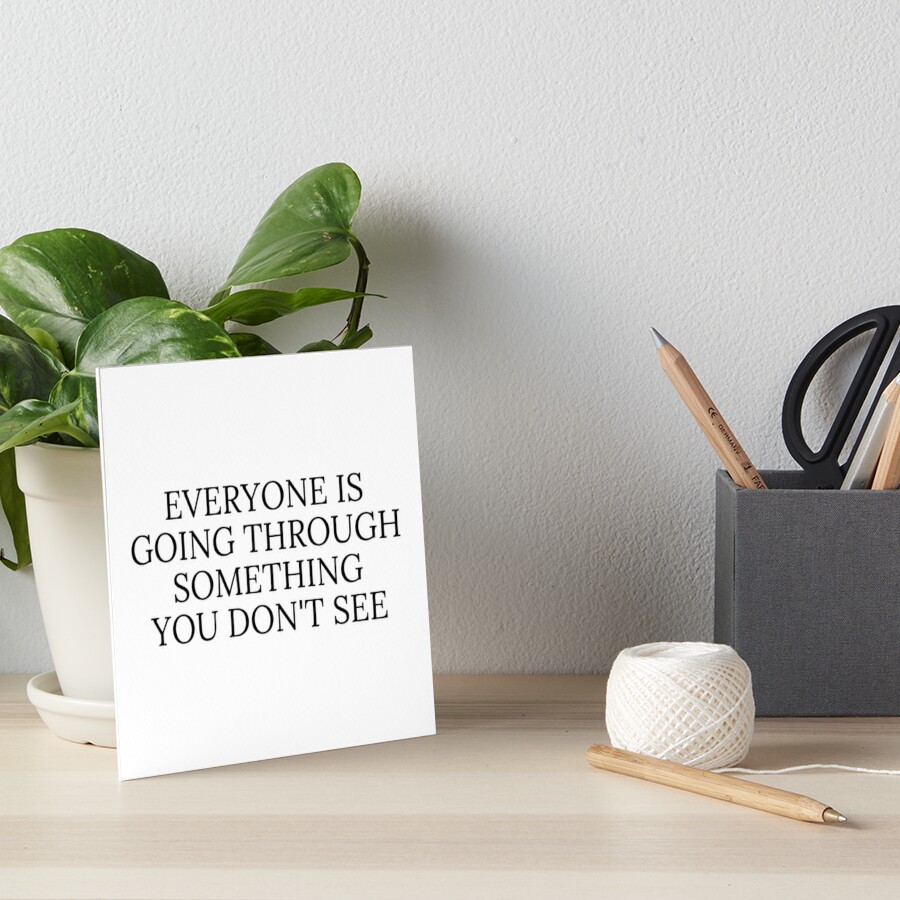
5. Remember, everyone has a story. It may be something they’ve gone through in the past or something they’re still dealing with, but remember that behavior doesn’t happen in a vacuum. Everyone has inner battles and issues. Withhold judgment and instead offer the consideration you’d like to receive.

6. We don’t meet people by accident. Every person you meet will have a role in your life, be it big or small. Some will help you grow, some will hurt you, some will inspire you to do better. At the same time, you are playing some role in their lives as well. Know that paths cross for a reason and treat people with significance.

7. The best teachers are those who don’t tell you how to get there but show the way. There is no better joy then helping people see a vision for themselves, seeing them go to levels higher than they ever would have imagined on their own. But that doesn’t mean you have to fix them or enable them; instead, guide them to the source of their own power. Offer them support and motivation as they find their own way and show you what they’re capable of. All you have to do is believe in them.

8. Never look down on someone unless you are helping them up. We like to think of life as a meritocracy, so it’s easy to look down on someone who isn’t as successful or accomplished or well educated as you are. But you have no idea how far that person has already climbed or where they will end up. Time could easily reverse your positions, so be sure you treat everyone with dignity.

9. Appreciate those who have supported you, forgive those who have hurt you, help those who need you. Business is complicated, life is complex, and leadership is difficult. Treat all people–including yourself–with love and compassion, and you can’t go wrong.


Treat people the way you want to be treated and life will instantly get better. 

I Don’t Need to Impress Anyone

I’m at a point in my life where I don’t need to impress anyone anymore. 
I am who I am without caring what others think of me.

I don’t need costumes, I don’t need to trick anyone or pretend.
Because I can be who I really am.

I don’t need to laugh and make people believe I never cry. 
I don’t always need to be strong or always be pleasant.

I don’t need to be the same as anyone, and, above all, I accept myself as I am.
With my virtues, but also with my shortcomings.

Because I cannot be perfect, but I’m always me.

I accept and love who I am and who I can be.

-Anonymous-


We do not exist to impress the world, but to be happy and to fulfill ourselves.

There are times when we want to grab all of the attention and be the life of the party. However, what really becomes important is for us to live our lives without always having to stand out to others.

Someone once said it’s nice to have money to buy things we want, but it’s nicer to have things that money can’t buy.

Some people spend life doing things they hate, to get money they don’t need, to buy things they don’t want, to impress people they don’t like.

Unknown

We have already been disappointed many times, we have placed our trust in hundreds of situations and, well, the truth is that we have not always obtained is the result we expected. Thus, in the same way you stop expecting something from others, you begin to realize that you should stop worrying about what others expect of you.

Why don’t we need to impress anyone but ourselves?

The most unhappy people in this world are the people who care too much about what others think. We do not need to please anyone but ourselves. And this follows a simple rule that everyone can understand: if we try to impress at any cost, we are disguising ourselves. And if we disguise ourselves, our essence dies.

Each person is unique and exceptional. Nothing and no one deserves to hide their true self, emotions or thoughts. Now, it is true that everything has a limit, you cannot say or do whatever comes to mind and you have to be careful not to hurt others.

Be yourself and love yourself.

We were taught to be selfless, to put others’ needs before our own. Being selfish is a crime, a sin.

It is not wrong. But it is not entirely right either.

Here is a simple analogy. Your family shares a television. Everyone would watch it at the same time. Therefore, to be fair, one person gets to decide what the family watches for the day, and the next person will decide the next day. Would you give up your right to decide what to watch to make your family happier? 

There is no right or wrong answer. But remember: it’s okay to say no. It’s okay to root for yourself sometimes. Because how are you going to love someone if you don’t love yourself?

There is no one as important as yourself.

Yes, humans are social creatures. There is no denying that. But don’t get sucked into the never-ending loop of satisfying and impressing others and ignoring yourself. Gently, gradually, let yourself remind you that there is no one as important as yourself. You don’t need to impress anyone!

Nothing is Impossible

I think there is nothing impossible in this world, and you would never find it in the dictionary of a successful person. Impossible is the word mostly said by unsuccessful people, who don’t have the courage to do something remarkable in their life.

The more you think about “Impossible”, the stronger and larger it becomes.

Here are some stories that inspire me and which demonstrate that impossible is just a myth and only exists in our mind.


Heavier-than-air flying machines are impossible – Lord Kelvin – 1895

Lord Kelvin, also known as William Thomson, was a great mathematical physicist and engineer. He is known for the Planck statement (or the Heat Engine Statement) of the second law of thermodynamics which states that it is impossible to devise a cyclically operating heat engine, the effect of which is to absorb energy in the form of heat from a single thermal reservoir and to deliver an equivalent amount of work.

He once stated that “Heavier-than-air flying machines are impossible” but Wright brothers proved him wrong with their first controlled, sustained flight of a powered, heavier-than-air aircraft with the Wright Flyer on 17 December 1903. In 1904–05, the brothers developed their flying machine to make longer-running and more aerodynamic flights with the Wright Flyer II.

Again, someone proved a myth wrong.

To be successful at something you don’t have to be unique, you have to be what most people aren’t: CONSISTENT.


You Will Never Walk Again – Wilma Rudolph

Wilma Rudolph was a sickly child who had to wear a brace on her left leg. She was suffering from a disease called “poliomyelitis”, and the doctor told her that you will never walk again, she was disappointed. But, her mother told her otherwise.

In 1960, Wilma Rudolph became the first American woman to win three gold medals in track and field at a single Olympics.

Just look at the determination and the courage of these people, like they only knew what needs to be done, no matter what other people, science, circumstances tell them to do. Still, they have done precisely the opposite and turned an impossible task into a possible one.


A Deaf Music Composer – Ludwig van Beethoven

Beethoven was a German composer and pianist; his music is amongst the most performed of the classical repertoire, and he is one of the most admired composers in the history of Western music. His works span the transition from the classical period to the romantic era in classical music.

Yes, Ludwig van Beethoven was a music composer with hearing disabilities, can you imagine how impossible it looks like.

The sense of hearing is one of the most and essential aspects if you are a music composer, how someone could produce music when he is not able to listen to it?


Arunima Sinha – World’s first woman to scale Mount Everest

Aruna Sinha is an Indian mountain climber and sportswoman.

Once she boarded the Padmavati Express train at Lucknow for Delhi on 12 April 2011, to take an examination to join the CISF. She was pushed out of a general coach of the train by robbers wanting to snatch her bag and gold chain.

During her interview, she said: I resisted, and they pushed me out of the train. I could not move. I remember seeing a train coming towards me. I tried getting up. By then, the train had run over my leg. I don’t know anything after that.

Later, she was rushed to the hospital with severe leg and pelvic injuries and lost her leg after doctors amputated it to save her life.

But I’d say that she is a woman with lots of guts, being a disabled person she decided to climb the Mount Everest and she reached the summit of Mount Everest at 10:55 am on 21 May 2013. 

More than 200 dead bodies are still there on Mount Everest, and most of the finest athletes couldn’t achieve what she has performed with her one leg. Sounds Amazing!


The world is full of such real success stories, where things look impossible, but some of the real warriors and heroes made it. You just need to think “I can”, “I have to”, “I will”, and then I don’t think there is anything that can stop you to achieve what you want.

Self-Care is NOT being Selfish

Do you find yourself striving to have it all, do it all and be everything to everyone? If so, you know that it comes at a cost: It’s easy to lose sight of yourself in the process. Worse yet, somewhere along the way, you were led to believe that taking care of yourself translated into being selfish.

Actually, the line between self-care and selfish isn’t as fine as it may seem. Whereas selfish implies that the world revolves around you, self-care acknowledges that it includes you. It means giving yourself the attention, compassion, time and energy that you deserve.

Self-care might be the last thing on your mind right now with the busyness of your life and the world, but it’s still essential to our health and well-being. Especially now that the news seems overwhelming at times, we need to take care of ourselves so we can continue caring for our families and friends.

The struggle to achieve and maintain work-life balance is an ongoing one for most people, especially with the lines between work and home increasingly blurred. But self-care is about more than juggling time and responsibilities. It’s also about being nicer, kinder and more compassionate to yourself.

Following are seven strategies to step up your self-care game:

1. Watch your language — Language can have a profound effect on your thoughts, moods and perspective. It’s not just what comes out of your mouth in conversations with others; the messages you tell yourself play an essential role in how you feel. Do you tend to beat yourself up for your perceived failures or shortcomings, or do you treat yourself with compassion? Even when you feel disheartened, try to focus on effort and progress more than results. Resist the urge to negatively label yourself as “incompetent,” “weak” — or worse. Instead, encourage yourself in the same way that you would a child or good friend. If you tell yourself “You’ve got this!” often enough, you will get it!

2. Slow down — There never seems to be enough time to do everything you want or need to do. Yet rushing through your daily activities often robs you of the experience. Do you gulp down your morning coffee while battling traffic on your way to work, or take quick swigs between clients? If so, you probably don’t even notice the taste or appreciate its warmth the way you would if you sat down and leisurely enjoyed it — even for 10 minutes. Slowing down offers physical benefits as well; people who eat slower tend to gain less weight (or lose weight faster), maintain lower blood pressure and experience less stress and anxiety.

3. Be wary of social media—Sure, it’s fun to catch up with old friends and stay in touch with new ones, but research conducted at the University of Michigan shows that social media — namely Facebook — can undermine your happiness. The study found that Facebook use had a negative impact not only on users’ moods, but on their overall reported satisfaction with their lives. By contrast, face-to-face social interactions did not have the same effect; in fact, personal interactions helped people feel better over time.

4. Make yourself a priority — Too often, we schedule things that promote our well-being after everything else is in place. Instead of squeezing in a yoga class, manicure or time to read, proactively schedule it. The people-pleasing habit is tough to break, but can ultimately provide you with the freedom to make more prudent choices that align with your own dreams, goals and values.

5. Don’t skimp on sleep — The benefits of a good night’s sleep extend far beyond feeling rested the next day. While the experts recommend that adults get between 7 and 8 hours of shut-eye per night, they also emphasize the importance of quality sleep.

Sleep services all aspects of our body in one way or another: molecular, energy balance, as well as intellectual function, alertness and mood.

Dr. Merrill Mitler, Sleep Expert, Neuroscientist (National Institutes of Health, USA)

6. Treat yourself — You know the nice little gifts you so easily give others? Fresh flowers brighten up any room; why not treat yourself to a bouquet? Small indulgences, like a new cell phone case, can provide a welcome boost and serve as a reminder that you’re worth it. If you’re trying to curb impulse spending, create a wish list and reward yourself when the time is right.

7. Discover the authentic “you” — It’s easy to create identities around our roles and/or the other people in our lives, but what happens when parents become empty nesters — or executives retire? Who are you? If you strip away the external definitions of yourself, what do you come up with? Exploring your own identity and values will help you nurture the best version of yourself.


Being overextended, overscheduled and overtired probably means that all the things you know would be good for you are the very things that get pushed to the back burner. The problem is, if they stay on the back burner, the black hole into which ‘your best self’ disappears gets deeper.

There is a point of diminishing return when the amount of physical and emotional energy you expend surpasses your reserves. As your coping mechanisms weaken, the ripple effect becomes apparent; you feel even more stressed, further reducing your productivity and efficiency.

Tending to your own physical and psychological needs is one of the best gifts you can give — not only to yourself, but to everyone around you.

Unfortunately, in our fast-paced culture, relaxing can be viewed as laziness or underachievement. Silence your inner critic and anyone else whose opinion you don’t need. Taking a break is not only nice, it’s necessary.

Enjoy your “Me” Time

“Me time” does not mean spend the whole day in some café, salon, or spa. “Me time” means taking out some time from your highly busy schedule to get relaxation. When I say taking out some time it can be a few minutes or hours, totally depends on you.

We generally take out my time from our busy schedules to get recharge again. You can and should find a little time every day to relax and recharge, so whether it’s 20 minutes or a couple of hours. Having time to yourself can help in so many ways, and it doesn’t have to take loads of time either.

From personal experience I know how dangerous it can be to not balance your time. It’s not a good place to be as I am sure you can appreciate. Trying to do everything all the time can really take its toll.

EVERYONE deserves a little time to themselves each day – it’s not whether you deserve it – it’s whether you can afford NOT to!

Here are some ways to enjoy your “ME” time

1. Digital Detox
While you look for some “me time” say no to digital devices. “Me time” should be calming and relaxing and do not put a strain on your eyes in the time. So, put aside all your digital devices and enjoy the calm and peace by just closing your eyes for some time

2. Creative Side
If you are working in the office continuously and bored with digital devices, take out your diary and pen. Draw something and let your creativity come along. If you are not interested in sketching, you can cook or dance! Do whatever makes you feel happy.

Drawing on my iPad is my way of having “me time”.

3. Treat Yourself
When you see yourself trapped in work, work, and work, it’s high time to give a small treat to yourself. Go shopping or cook something good for you. Or just simply, sit in a calm and serene place and appreciate yourself for making this far with a smile. When I say treat yourself, it does not go monetary always, you can just simply have an appreciation session for yourself.

4. Take a Nap
This is the best way to find some “me time”. Nap is the only word that makes most of us happy. A 30-minute nap in the afternoon is something we always look for during sunny days or winter days. A powerful nap refreshed the mood and the body. Enjoy your “me time” with naps.

5. Chit Chat With an Old Friend
Having a conversation with an old friend is like opening an old book with lots of memories and funny moments. Everyone needs this type of “me time” wherein we get to talk to an old friend.

6. Binge-Watching
For effective and happy “me-time”, we suggest you say no to digital devices. Still, if you wish to enjoy time with devices, you can binge-watch some good series and movies on TV. Just a small reminder, do not put a strain on your eyes or your mind as it may ruin the whole mood of “me time”.

7. Grown-Up Play Date
You can meet your friends to play board games or cards. Additionally, you can also gather for a game night. If you don’t want it with your friends, you can ask your partner to be with you. In case, you are not in a mood to play or do something, you can just simply ask your partner for quality time and convert “me time” into “us time”.

8. Indulge in Hobbies
For a perfect “me time”, you can learn something new like jazz, salsa or swimming. Basically anything you wanted to do for a long time.


Do you also struggle to find uninterrupted ‘me time’ in today’s non-stop world? What more can we add to this list? Let me know in the comments section below! :)