The Art of Being Tactful

At Xavier’s, I was member of a group called AICUF (All India Catholic University Federation) that organises various activities, keeping three objectives: Social Outreach, Personality Development, and Spiritual Growth. And as part of the core organising team, we had a session on feedback to help us improve and grow. I smiled when I saw “I like that you are brutally honest” in the positives on my sheet.

That got me thinking, not everyone will appreciate my straightforward nature and I realised at times I may come across as brash and harsh. Yes, being honest will always be better than sugar-coating your messages, especially if that honesty is crucial to making the other person better at what they’re doing. But even honesty needs to be tempered with tact.

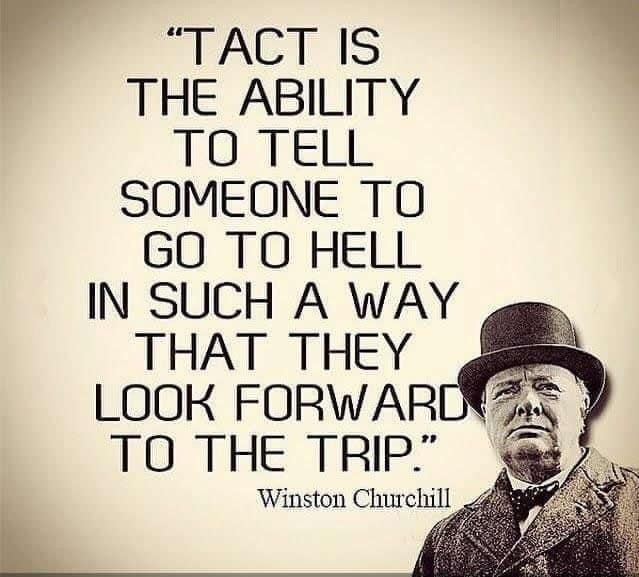
Tact and diplomacy are skills centred around an understanding of other people and being sensitive to their opinions, beliefs, ideas and feelings.

Tact is the art of making a point without making an enemy

Isaac Newton

Diplomacy is the art of letting somebody else have your way

David Frost

When I think of tact and diplomacy, I am reminded of this lovely anecdote

A King called three great artists and asked them to make his portrait. There was a big prize for making the best portrait. The King had only one eye. One artist thought that the King may get angry if he showed him with only one eye. So he made a beautiful portrait with two eyes. The second artist thought that the portrait should be completely real and so he sketched the picture with only one eye. The third artist acted intelligently and showed the king with a bow and arrow. An eye was hidden in the posture as the king was aiming to hit the target. 

All the portraits were beautiful but the prize for the best portrait went to the third artist as he had succeeded in artfully making the truth of the King having one eye more appreciable.
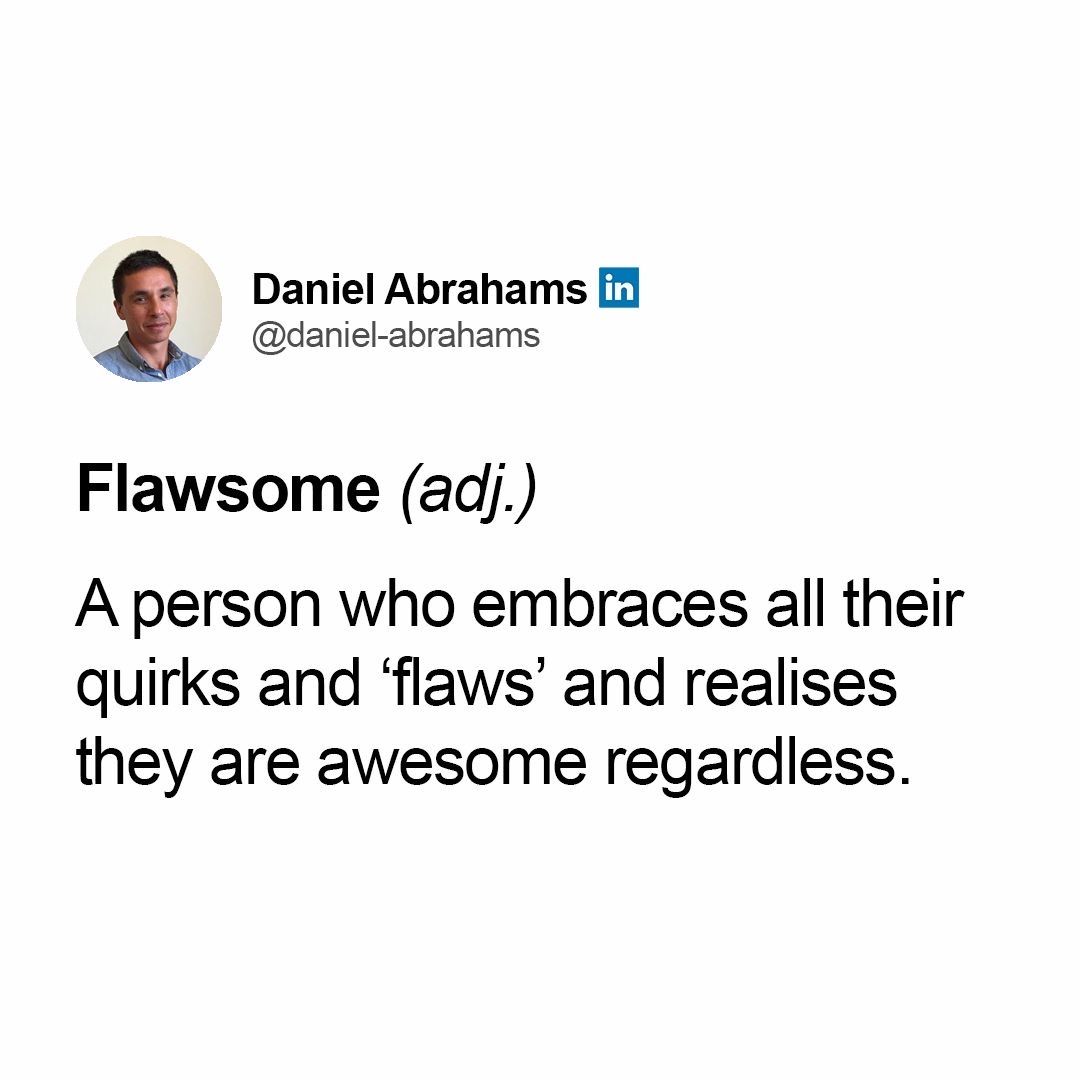

Be Flawsome!

I came across this post on LinkedIn a few days back and it just brought a big smile to my face. We are all fallible human beings and we live in a world of flaws. And yet ironically, most of us (including myself!) place a high value on perfection.

Why chase a facade of unattainable perfection? When you learn to accept your flaws, you’re not vulnerable to people’s judgements or opinions towards you. You embrace the fact that you’re a human, you’re still learning and you’ve got a long way to go. When you accept your flaws, you learn how to be happy with who you are.

Embracing flaws, kintsugi is the Japanese art of repairing broken pottery with lacquer dusted or mixed with powdered gold, silver or platinum. By highlighting cracks and holes instead of hiding them or throwing away the object, a damaged ceramic vessel becomes useful again and even an expression of luxury with its illuminated seams.

Kintsugi Sarkis collection for Bernardaud
 
PHOTO LILY ROSE. COURTESY OF BERNARDAUD

The kintsugi approach instead makes the most of what already is, highlights the beauty of what we do have, flaws and all, rather than leaving us eternally grasping for more, different, other, better.

Another lovely Japanese concept Wabi Sabi, is about celebrating imperfections and living simply. In Japanese, wabi means alone and sabi is the passage of time. Together, they teach us how to embrace the good and bad parts of ourselves and the asymmetry of life.

Let’s be Flawsome, the new awesome, with Wabi Sabi and Kintsugi! :)

Competition

I’ve never liked competition. Do I need to see someone else lose to feel better about myself? Do I need a bigger house or a fancier car to be happy? Do I need to put others down to get that promotion at work?

Here in India, right from the time we’re in school, we are surrounded by voices and behaviour that encourages fierce competition to come first in the class, to top the school. Teachers always making comparisons between students, parents often compare their children to their friends’ or neighbours’ kids.

Similarly at work, we’re so afraid to share what we know, afraid to help others, thinking that we will become redundant.

We have situations where we are forced to compete, for example when interviewing for a job. But most of the time we are in control and have a choice. We can choose to compete with others over who’s more attractive, wealthier, happier, or more successful.

Here’s what I’ve learned: Everyone is on their own path, and we all do what’s right for ourselves, in our own time. I believe we live in a supportive Universe where everything unfolds perfectly—at the right time, in the right place. Comparing ourselves to others is an infinite source of stress and frustration, and it doesn’t serve us well.

Doing your best is more important than being the best.

Zig Ziglar

When it comes to ourselves as well, what’s the use of constantly fighting with ourselves to be the best? We set ourselves goals, most often based on what others are doing around us. For what? Doing your best is definitely the key. As long as I know I’ve done my best, nothing else matters. When I know I’ve done the best I could, there’s no room for regrets. 

I choose to see myself as perfectly beautiful and beautifully imperfect. I celebrate my mistakes as much-needed opportunities for growth. I celebrate both success and failure because this is what makes me wiser. I treat every life experience as an opportunity to learn new things about myself and other people. I am enough and worthy, so I don’t need to prove myself to anyone. Not even to myself.

The world doesn’t need fiercely competitive people. It needs more compassionate and loving people, people who celebrate others’ success and comfort them during the rough times!

Here’s a lovely story that touched me.

A professor gave a balloon to every student, who had to inflate it, write their name on it and throw it in the hallway. The professor then mixed all the balloons. The students were then given 5 minutes to find their own balloon. Despite a hectic search, no one found their balloon.


At that point, the professor told the students to take the first balloon that they found and hand it to the person whose name was written on it. Within 5 minutes, everyone had their own balloon.


The professor said to the students: “These balloons are like happiness. We will never find it if everyone is looking for their own. But if we care about other people’s happiness, we’ll find ours too.”

Challenge the Status Quo

I recently joined Brillio and as part of the onboarding journey, we were taken through the company culture and values. One of the four values is an Entrepreneurial Spirit, to always challenge the status quo with a ‘can do’ attitude.

Smart people, by their very design and nature, will not automatically be “yes” men.  They will question, analyze and reason with any requests that are made of them and, if they disagree with your position, they are going to tell you so and they will not do what you ask them to do if they know it is wrong or is going to bring harm to you in the long run. Professionals are not going to tell you what you WANT to hear…they are going to tell you what you NEED to hear.

Whether at work or in our personal lives, when we make up our minds, many of us are reluctant change it and we are more likely to stick with the decisions we made. However leaders like Jeff Bezos, Obama and Steve Jobs are famous for changing their minds frequently, often within days. Once in an interview Tim Cook said, “Steve would flip on something so fast that you would forget that he was the one taking the 180 degree polar opposite position the day before.”

Being open to the views of others, factoring in aspects you may have missed or not realised earlier are all signs of someone who is open minded and humble enough to admit he/she may be wrong. There is always a chance I may be wrong and it’s perfectly okay to admit it.

Only if we listen with an open heart and mind, only if we are open to constructive feedback and opinions will we be surrounded by people who will challenge the status quo and help us become better individuals.

Have you ever challenged the status quo? How did you approach it? What was the outcome? Would you do anything differently next time? Share your experiences, below.

Mistakes = Learning Lessons

If we look around at people we consider successes, we will see that their success is a result of a lot of mistakes. Like Albert Einstein said, failure really is just success in progress. Thomas Edison famously developed thousands of prototypes of the light bulb before finding the one that worked. If you’d rather not to fail, you will probably never succeed.

I love the example of Sir Richard Branson. Most of us know him as the iconic, daring entrepreneur. Branson dealt with dyslexia as a child and performed poorly in school. Apart from dealing with that, he also refused to let failure keep him from getting back up and moving forward. Here’s a list of some of his failed ventures: Virgin Cola, Virgin Clothes, Virgin Money, Virgin Vie, Virgin Vision, Virgin Vodka, Virgin Wine, Virgin Jeans, Virgin Brides, Virgin Cosmetics and Virgin Cars.


The first step in learning and growing from mistakes and failures is admitting you made a mistake. We all tend to demonize our mistakes. Rather, embrace them, accept them, make the necessary change after introspection and move on!

It may be terrifying to admit “Yeah I messed up, I am sorry” especially if you are in a position of power and authority. However I have learned the hard way that denying our wrongdoings only ends up isolating yourself and stifling growth.

Admitting we are wrong shows others that we are compassionate, empathetic, sympathetic, and good listeners. It also shows that we are capable of being objective about ourselves and that we not ‘perfect’ or always right

Dr. Sanam Hafeez, Neuropsychologist

Admitting flaws allows others to see our vulnerability and can even endear them to us. It also opens the door to meaningful conversations and, therefore, personal and relationship growth.

Life is a constant process of learning. In order to learn, we must become vulnerable and make mistakes. Mistakes are inevitable so we might as well change our perspective on what they mean to us and how they can help us get to where we want to go.

Related post: Mistakes do not define you, they refine you

Fr. Stan Swamy SJ

The first person that came to my mind when I saw this quote is Fr. Stan Swamy, an 84 year old Jesuit priest. I was pretty shocked when I read the news of his arrest last year. His crime? He defended the rights of adivasis being exploited in their homeland Jharkhand.

Here’s what he said before his arrest by NIA

It’s heartbreaking to see all that Fr. Stan has gone through after his arrest, denied bail, even denied a sipper and a straw initially to drink water and now down with covid. Though he is in prison, Fr. Stan continues to reach out to fellow prisoners in whatever way he can.

Fr. Stan Swamy is one of the gentlest and kindest men I have ever met. So the entire premise – for anyone who knows him – is entirely ludicrous. Funny even, if it were not so tragic. He has Parkinson’s disease. His hand shakes when he raises a cup of tea to his lips. He speaks so softly, you have to strain to hear him.

He assures his interrogators that he has no connection with the Maoists. He believes in peaceful, non-violent protest. I believe him. Because I know that his integrity is above reproach.

Mari Marcel Thekaekara, The Wire

“You have not allowed the brutal and inhuman system to break you!” says Fr. Cedric Prakash, another Jesuit activist. “Instead, you tell us with such positivity and hope, that even a caged bird sings.”

That last line was echoed by the Bombay Jesuits, who released a rap video in tribute to Fr. Stan entitled “A Caged Bird Can Still Sing”.

Fr. Stan is one of the thousands of Jesuits advocating on behalf of marginalized communities, committed and determined to defend the rights of the indigenous people.

I always wonder if I am strong enough to stand up for the poor, the marginalised, the oppressed. May we have the strength to stand up for ourselves and others.

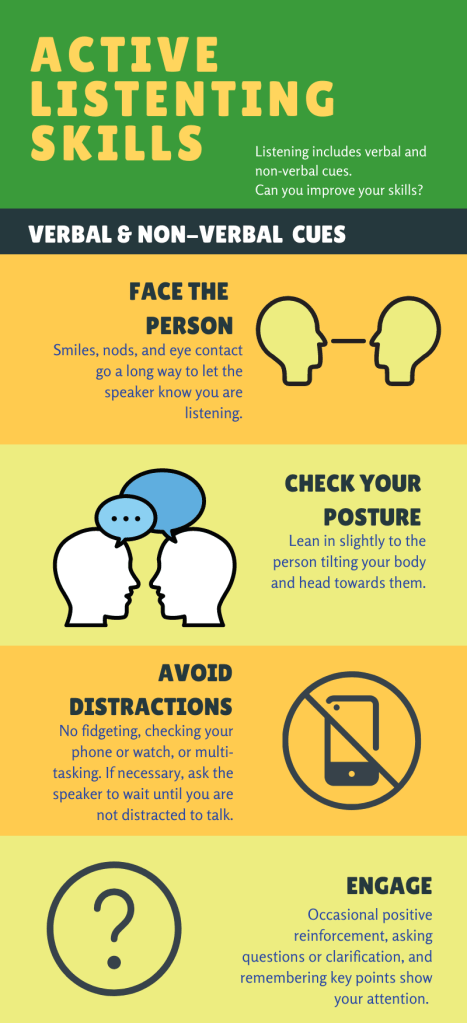
Listen to Understand

Listening to reply is the standard way that most people communicate. What that means is that instead of really paying attention to what the other person is saying, you are already thinking about what you want to say in response.

Of course it’s great to have a well-thought-out reply, but if you’re thinking about what you want to say instead of hearing what the other person is saying, you aren’t really listening, are you?

The biggest communication problem is we do not listen to understand. We listen to reply

Stephen Covey

In order to be a good listener, we first need to learn how to be silent. Think about it, the word listen and the word silent are spelled with the same letters.

Here are a few other tips to help you become a better listener!

IFAS Extension, University of Florida

The Raven and The Eagle

The only bird that dares to peck and irritate an eagle is the raven. It will sit on the eagle’s back and start to continually bite its neck. However, the eagle does not respond, nor does it fight with the raven. It does not spend its time and energy on the raven…it just opens its wings and begins to fly and rise higher and higher into the heavens. The higher the eagle flies, the harder it is for the raven to breathe and soon, the raven falls off due to the lack of oxygen.

Stop wasting your time with the “ravens.” Just take them to your heights and they will fade away.

Ride the Wave

The ocean has so much to teach us! I grew up in Goa and we used to visit the beach often for a swim. We’ve had waves that are big, sometimes they are small, and sometimes they are almost imperceptible. The water’s waves are churned up by the winds, which come and go and vary in direction and intensity. Some of you, like me, have had huge waves crashing right over you and you know what comes next! Nothing you do will stop the wave from going over you. You’d agree with me that it’s sheer stupidity to fight off a wave!

And yet, this is something we all do in our daily lives!

Instead of accepting what is here at the moment, we constantly try to fight reality. We wish things could be different or better or easier or more secure. And foolishly, we remain stubborn and attempt to fight off the waves.

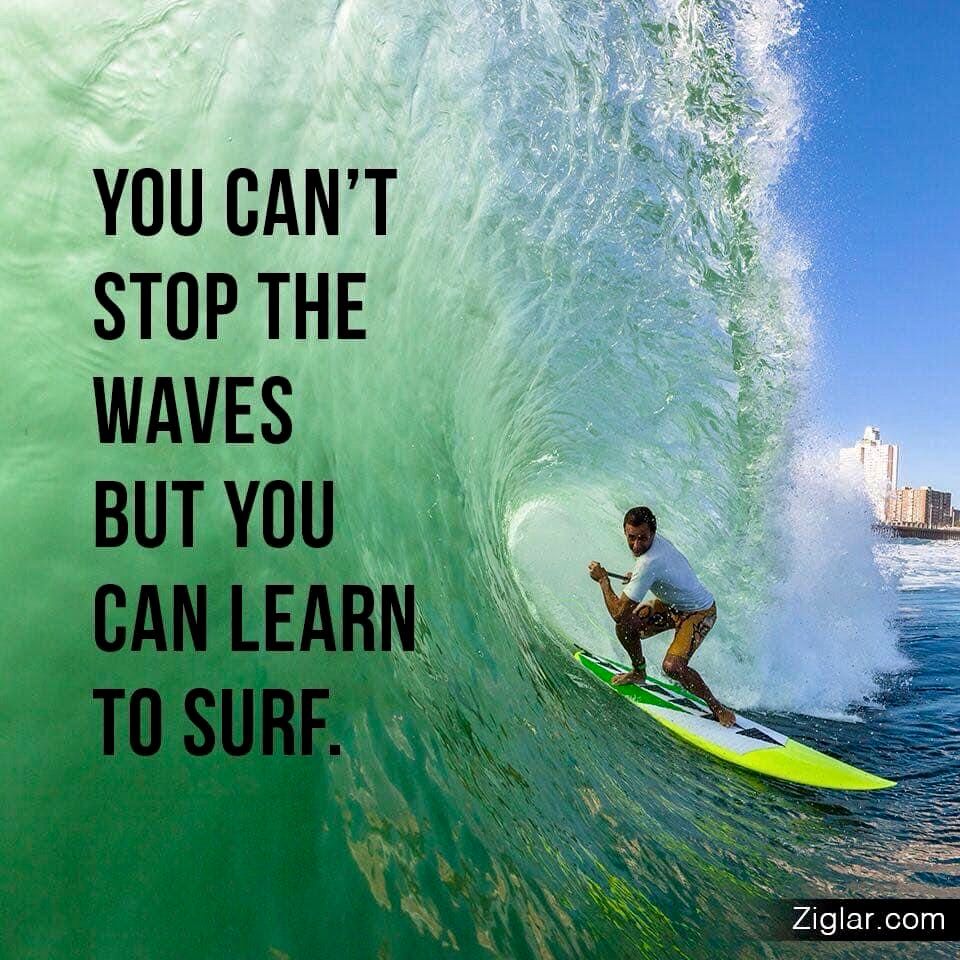
We can’t stop the waves of life from crashing down, but we CAN learn to surf. We can learn to ride the highs and the lows knowing that with each new wave comes a deeper understanding of ourselves.

We can’t stop problems from coming – they will come. Even the most detailed and thorough ten-year plan can be waylaid. There are so many things you can’t fully control: health and relationships being two big ones, but also things like redundancies or unexpected job changes. 

You can choose to stop, and breathe, and go with it. It doesn’t lessen the pain of the wave when it hits, but it might just lead you into something better in the end. 

Try to be patient and see where a situation might take you – life is full of surprises, and the thing that seems terrible right now might bring you some kind of joy or peace in the end.

Here is a lovely song Ride the Wave by Boyce Avenue

The tides will rise and fall, some days you will feel small
But ride the wave, I’ll ride it in with you
If we should wash ashore, I’ll fight for you once more
Just ride the wave, I’ll ride it in with you
I’ll ride it in with you, I’ll ride the wave with you

The Lens Problem

A few days back I got a funny forward which went something like this

Before you criticize someone, walk a mile in their shoes. That way, you’ll be a mile from them, and you’ll have their shoes!

It becomes much easier to criticize or advise someone else if we see them going through a similar experience ourselves. And most of the times, we land up getting frustrated when we see them not listening to us.

Social psychologist Nick Epley has devoted his career trying to figure out why we misunderstand others. You can read his book entitled Mindwise: How We Understand What Others Think, Believe, Feel, and Want.

All of us gaze out at the world through our own personal perspective — a filter so fixed and all-pervasive that we hardly realize it exists. We thus have a tendency to assume that other people perceive and process the world the same way that we do. Epley calls this “the lens problem.” This gets in the way of our ability to communicate; you may think that someone should naturally understand something, because you can understand it quite well in your own mind. Instead of seeking to understand how someone else is seeing things, we try to solve their unique issues by applying our own framework to them.

Stephen Covey, in his book The 7 Habits of Highly Effective People gives a metaphor for this lens problem, by using the example of literal lenses.

Suppose you’ve been having trouble with your eyes and you decide to go to an optometrist for help. After briefly listening to your complaint, he takes off his glasses and hands them to you.

‘Put these on,’ he says. ‘I’ve worn this pair of glasses for ten years now, and they’ve really helped me.’

‘This is terrible! I can’t see a thing!’ you exclaim.

‘Well, what’s wrong?’ he asks. ‘They work great for me. Try harder.’

‘I am trying,’ you insist. ‘Everything is a blur.’

‘Well, what’s the matter with you? Think positively.’

‘Okay. I positively can’t see a thing.’

‘Boy, are you ungrateful!’ he chides. ‘And after all I’ve done to help you!’

Would you go back to such a doctor? Certainly not. He didn’t even try to understand how you saw the world and just assumed what worked for him would work for you; as Covey puts it, he prescribed before he diagnosed.

You wouldn’t want that kind of guy for a doctor, and people don’t want that kind of person as a friend, co-worker, or husband either. If you really want to understand people, you can’t assume they see things through the same lens you do, and you can’t solve their problem by trying to make them look through it too; you need to see things from their perspective!