Work Life Balance

Most people chase balance—

Few learn how to adjust it:

We’re taught that work-life
balance is even and steady.

Work on one side.
Life on the other.

But real life isn’t that neat.

You’re always shifting:
work, family, health, friends.

Nothing stays equal for long.

One area always needs more time—

And that’s okay.

The problem isn’t being off balance.

It’s expecting everything
to feel equal at the same time.

What actually works is
paying attention and adjusting:

• Some weeks work needs more focus.
• Some weeks health or family comes first.
• Some seasons are for pushing.
• Others are for resting.

Balance isn’t a goal you reach.

It’s a choice you make each day.

Want a better way to handle it?

• Pick what matters most this week.
• Reduce one thing draining you.
• Add rest before you’re exhausted.

What great balance is for someone else,
may not be a great balance for you.

And that’s okay.

You decide what balance works for you.

What’s been off balance for you lately?

The R.E.S.O.L.V.E Framework for Conflict Management

Most conflict at work isn’t about the issue.

It’s about how we handle it.

– Unspoken tension.
– Misread emails.
– Meetings that go sideways.

Left unchecked, conflict spreads fast.

It damages trust, slows progress, and kills morale.

But it doesn’t have to.

Here’s how to lead through conflict with clarity:

R – Recognize the Conflict
Get clear on the root cause.
Separate facts from feelings before reacting.

E – Engage with Empathy
Listen to understand, not just to reply.
Validate concerns—even if you disagree.

S – Separate People from the Problem
Avoid blame and assumptions.
Focus on behaviors, not personalities.

O – Open Up to Solutions
Look for shared outcomes.
Collaboration always beats competition.

L – Lead with Clear Communication
Clarify expectations and next steps.
Alignment prevents misinterpretation.

V – Validate and Follow Up
Revisit the issue.
Make sure the resolution sticks.

E – Establish Preventative Measures
Don’t just resolve – learn.
Set better norms, build team EQ, and train for next time.

Great leaders don’t avoid conflict.

They resolve it – and grow trust in the process.

10 Leadership Mistakes That Lead To Burnout

Hard work doesn’t burn people out.

Poor leadership does.

The solution isn’t meditation apps or productivity hacks.

It’s fixing the leadership habits destroying your people:

1. Micromanaging:
↳ Constant oversight drains energy and destroys trust

2. Constant urgency:
↳ Making everything urgent creates chronic stress

3. Lack of appreciation:
↳ Hard work without rewards is a top reason for burnout

4. Not respecting work-life balance:
↳ Always-on culture leads to always-burned-out teams

5. Ineffective communication:
↳ Unclear direction creates confusion and decision paralysis

6. Not providing support:
↳ Setting people up to fail, then wondering why

7. Ignoring feedback:
↳ Not being heard destroys trust and makes people feel powerless

8. Information hoarding:
↳ Operating in the dark causes constant stress and preventable mistakes

9. Impulsive decision making:
↳ Constant pivots exhaust everyone

10. Tolerating toxic team members:
↳ One bad apple really does spoil the bunch

Your team doesn’t need more yoga sessions or mental health apps.

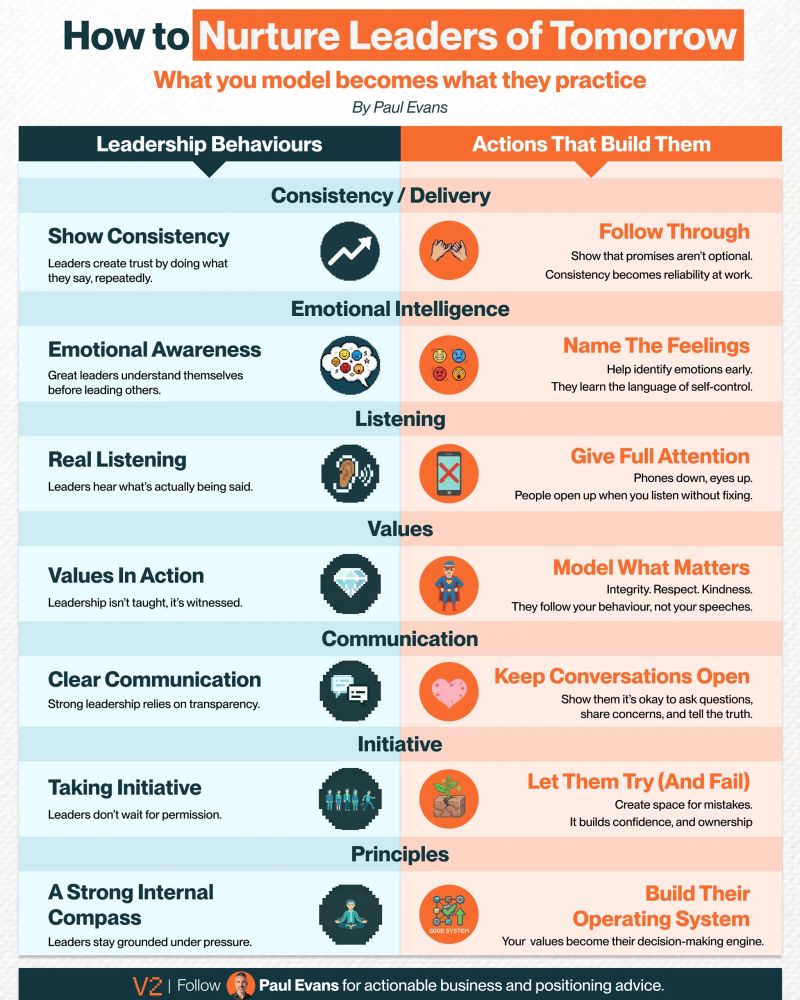
They need leaders who make them feel valued, supported, and heard.

Lead with empathy, not just with metrics.

The Chapters That Didn’t End You

Some seasons in life leave marks.

Not the kind you can point to on your skin, but the kind you feel when a song comes on at the wrong time… when a familiar place suddenly feels heavy… when someone says something small and it hits something deep inside you that you didn’t even realize was still sore.

And if you’ve lived through enough of those moments, it’s easy to start believing that pain is the main character in your story.

That the hardest things you’ve faced are the headline.

That the hurt is the definition.

But here’s what I want to remind you today—gently, honestly, and without pretending it’s easy:

Your life is so much more than the things that have hurt you.

You are not just a collection of wounds.

You are not just what you survived.

You are not just the days you barely made it through.

And you are definitely not finished.

Sometimes we treat our pain like it’s a final verdict. Like it’s proof that something is permanently broken in us. Like the fact that we struggled means we’re destined to struggle forever.

But pain is not a prophecy.

Pain is a chapter. A real one. A heavy one. A chapter you didn’t ask for.

But it is not the whole book.

There are people who have walked through years of disappointment and still found joy again.

There are people who have been betrayed and still learned to trust the right ones.

There are people who have lost themselves and still found their way back.

Not because they “got over it” overnight.

Not because they stopped feeling it.

But because they decided their story was worth continuing.

And maybe that’s what you need today—not a big motivational speech, not a perfect plan, not a sudden burst of confidence.

Maybe you just need permission to keep going.

Because the truth is, healing doesn’t always look like feeling amazing.

Sometimes healing looks like getting out of bed when you don’t want to.

Sometimes it looks like laughing and then feeling guilty for laughing.

Sometimes it looks like being okay for a few hours, then breaking down again, and then coming back up.

Sometimes it looks like praying through tears.

Sometimes it looks like choosing not to give up, even when you’re tired of being strong.

And that still counts.

That is still progress.

That is still courage.

A lot of us don’t realize how brave we’ve been because we’ve been too busy trying to survive.

We forget that showing up after heartbreak is brave.

Trying again after failure is brave.

Letting yourself love after loss is brave.

Building a life after being shattered is brave.

And even if you don’t feel brave… if you’re still here, you’ve already proven something important:

You can make it through hard things.

Now, I’m not going to insult you by saying the painful chapters “happened for a reason” in a neat little bow. Some things shouldn’t have happened. Some things were unfair. Some things were deeply wrong.

But what I will say is this:

Your future can still hold meaning and beauty—even if your past held pain.

Even if you’ve made mistakes.

Even if you’ve been disappointed.

Even if you’ve been hurt by people you trusted.

Even if you’ve carried something silently for years.

You can still write a life that feels honest, grounded, and full.

And it won’t look like a perfect story.

It’ll look like a real one.

A story where you learn to breathe again.

A story where you stop apologizing for what you went through.

A story where you stop shrinking yourself to make your pain easier for others to understand.

A story where you learn that peace doesn’t mean “nothing ever hurts again.”

Peace can mean: I’ve been through pain, and it no longer controls me.

It can mean: I can remember without falling apart.

It can mean: I can carry the memory without carrying the weight.

And you know what’s beautiful? You don’t have to rush to the ending.

You don’t have to have it all figured out.

You don’t have to pretend you’re fine.

You just have to keep writing.

One small choice at a time.

One day at a time.

One page at a time.

Because meaning isn’t something you wait for. Meaning is something you build.

It’s built in the way you love people even when it’s risky.

It’s built in the way you choose kindness when you could choose bitterness.

It’s built in the way you keep learning, even after life humbled you.

It’s built in the way you show up, imperfect but present.

It’s built in the way you keep believing—maybe not loudly, maybe not confidently—but quietly… that better is still possible.

And if today is one of those days where you feel behind, or broken, or tired of being the one who always “gets through it,” I want you to hear this clearly:

You are allowed to be a work in progress and still be worthy of good things.

You are allowed to be healing and still be loved.

You are allowed to have scars and still be soft.

You are allowed to have a past and still have a future.

Your story isn’t over.

Not because everything will suddenly become easy.

But because there is still more life left in you.

More laughter waiting for you.

More moments of peace.

More friendships that feel safe.

More love that doesn’t require you to beg for it.

More confidence that comes from knowing what you can survive.

More beauty that doesn’t erase the pain—but rises beside it.

So if your life has had painful chapters, I’m sorry. Truly.

But I hope you don’t hand those chapters the pen.

You hold the pen now.

And even if your handwriting is shaky today…

Even if the ink feels heavy…

Even if all you can manage is one honest sentence:

“I’m still here.”

That’s enough to keep the story going.

And that story can still be full of meaning.

It can still be full of beauty.

And so can you.

Accountability That Works

You can’t hold people accountable—

For what was never made clear:

If no one agrees on what to be accountable for,
things will fall apart and systems will fail.

Real accountability isn’t assumed,
it’s built through action.

And it depends on 3 things:

✅ Consistent follow-through
✅ Ownership without blame
✅ Clear expectations

If you lead people, these are
non-negotiable:

✔️Track what matters
✔️Give honest feedback
✔️Celebrate real outcomes
✔️Write it down (= no guessing)
✔️Assign clear ownership
✔️Set actual deadlines

But here’s what breaks it all:

🚫 Undefined roles
🚫 Vague expectations
🚫 No review of progress
🚫 Excuses replacing responsibility

Accountability isn’t about pressure.

It’s about clarity, consistency, and trust.

And it starts before the work begins.

9 Leadership Styles

Think you’re a “Coaching Leader”?
That might be the exact thing holding your team back.
Most managers proudly say: “I follow the coaching style.”
But real leaders?
They adapt—because one style can’t solve every problem.
When you shift your style, you improve:
✅ Team performance
✅ Engagement
✅ Ownership
✅ Results
Here’s a BD team–focused cheat sheet on when each leadership style works—and how to use it smartly:
🔥 1. Visionary Leadership
Use when: energy drops, targets slow down
Do this:
• Reconnect the team to the “bigger mission”
• Show how their work creates impact
🤝 2. Democratic Leadership
Use when: cross-functional alignment is needed
Do this:
• Ask for input before decisions
• Build plans together to drive buy-in
🧭 3. Servant Leadership
Use when: the team feels blocked or overloaded
Do this:
• Ask what’s slowing them
• Remove roadblocks so they can execute
⚡ 4. Autocratic Leadership
Use when: time is limited + decisions are stuck
Do this:
• Make the call—clear, calm, confident
• Bring back momentum
🎯 5. Coaching Leadership
Use when: someone is still building BD confidence
Do this:
• Give frequent feedback
• Celebrate small wins to build competency
🚀 6. Transformational Leadership
Use when: the team is ready for the next level
Do this:
• Set a bold vision
• Model the growth mindset you expect
📌 7. Transactional Leadership
Use when: follow-through begins slipping
Do this:
• Set crystal-clear goals & timelines
• Reinforce accountability
🧘‍♂️ 8. Laissez-Faire Leadership
Use when: top performers are in flow
Do this:
• Give autonomy
• Stay available—don’t micromanage
🔄 9. Situational Leadership
Use when: no one style fits
Do this:
• Read the room
• Lead with intention, not ego
The truth:
You don’t need to master all styles.
But you MUST be:
🔹 Self-aware
🔹 Flexible
🔹 Tuned into your team’s reality
💬 What’s your default leadership style?
And which one do you need to lean into more this year?

The Mind Map

The reason you feel behind?

You’re overloaded:

Feeling stuck isn’t failure—
it’s your mind saying
something needs
to shift.

When you
know what is draining
you and what is fueling you,
your momentum comes back fast.

That’s what the MIND Map is for—
a clear way to see why you stalled.

And how to get moving again, try this:

🟨 M — Motivators
Do more of what lifts your energy

🟩 I — Interference
Clear what drains you

🟪 N — Next Steps
Move with tiny actions

🟦 D — Do This Now
Write a strong promise, build a simple offer

Start with three small steps:
• Add one motivator today.
• Remove one interference.
• Finish one tiny task to restart momentum.

Momentum doesn’t return all at once—
it returns the moment something finally clicks.

And that moment can be today.

More Than We Ask For

There’s a quiet truth about people that we don’t always want to admit.

Most of us can tell when we’re being “handled.”

Not in a dramatic, movie-villain way. But in the everyday way—when someone is trying to steer us with pressure, guilt, fear, flattery, or incentives that feel transactional. When the message is less about us and more about what they want from us.

And here’s the thing… manipulation works.

It works in workplaces.

It works in relationships.

It works in parenting.

It works in marketing.

It works in leadership.

At least for a while.

Because when you manipulate people, you can often get the result you’re aiming for. You can get compliance. You can get the task done. You can get the “yes.” You can get the output. You can get the performance.

But it comes with a limit.

People will give you exactly what you pay for.

They’ll do what’s required. Nothing more.

They’ll follow the instructions. Nothing extra.

They’ll hit the target. Then stop.

They’ll show up physically, but mentally they’ll be elsewhere.

They’ll deliver the bare minimum and quietly protect the rest of their energy for something that actually feels meaningful.

And honestly, you can’t even blame them.

Because manipulation turns human effort into a transaction. It reduces trust into a strategy. It makes people feel like they’re being used, not valued. And once someone feels like a tool, they stop acting like a teammate.

You’ll still get results—but you’ll lose the best part of what people can offer: their heart.

Inspiration is different.

Inspiration doesn’t push.

It pulls.

It doesn’t rely on control.

It relies on connection.

When you inspire people, you’re not trying to extract something from them. You’re trying to awaken something inside them.

You’re saying, “This matters.”

You’re saying, “You matter.”

You’re saying, “What we’re building is worth your best effort.”

And that changes everything.

Because inspired people don’t just do what they’re told.

They think.

They care.

They notice things others ignore.

They bring ideas.

They solve problems before they become escalations.

They protect the quality even when no one is watching.

They take ownership like it’s personal.

Not because they have to.

Because they want to.

That’s the part of the quote that hits the hardest:

If we inspire people, they will give us more than we ask for.

More than the job description.

More than the timeline.

More than the expectation.

More than the minimum.

And you’ve seen it, haven’t you?

You’ve seen the person who stays late—not because they’re afraid, but because they genuinely want the team to win.

You’ve seen someone advocate for a customer when it would’ve been easier to just close the ticket.

You’ve seen someone teach a teammate patiently, even when they’re busy, because they remember what it felt like to be new.

You’ve seen someone raise their hand and say, “This isn’t right,” even though it’s risky to speak up.

That doesn’t come from manipulation.

That comes from meaning.

And meaning is a powerful fuel.

But inspiration isn’t a speech.

It’s not a slogan on a wall.

It’s not a “motivational quote of the day” in a meeting invite.

Inspiration is built in small moments.

It’s built when leaders tell the truth instead of spinning the story.

It’s built when someone gives credit publicly and feedback privately.

It’s built when you keep your word—even on the small stuff.

It’s built when you listen without waiting for your turn to talk.

It’s built when you treat people like adults, not resources.

It’s built when you don’t just ask, “What did you deliver?”

…but also ask, “How are you doing?”

Because people don’t go above and beyond for a system.

They go above and beyond for people who make them feel safe, seen, and significant.

Now, let’s be real—there will always be pressure.

Deadlines will exist.

Metrics will exist.

Targets will exist.

Budgets will exist.

And not every day will feel inspiring. Some days are just grind days. Some days are just “get it done” days.

But even then, manipulation isn’t the answer.

Because manipulation always has a cost.

It costs trust.

It costs creativity.

It costs loyalty.

It costs psychological safety.

It costs the invisible effort that separates a good team from a great one.

And eventually, it costs retention too.

People might stay on payroll, but they mentally check out.

Or worse—they leave, and you’re left wondering why “no one is hungry anymore.”

They were hungry.

They just didn’t want to be used.

Inspiration, on the other hand, compounds.

When you inspire people, they don’t just work harder.

They work freer.

They bring their best selves.

They bring courage.

They bring pride.

They bring energy you didn’t have to beg for.

And yes, they’ll still want to be paid fairly.

Inspiration doesn’t replace compensation.

But it does something compensation can’t do.

It turns work into contribution.

So here’s a simple question worth asking—whether you’re leading a team, building a product, raising kids, or just trying to be a better friend:

Am I trying to control people…

or am I trying to connect with them?

Because control can get you compliance.

But connection gets you commitment.

And commitment is where the real magic lives.

That’s where people give you more than you ask for.

Not because they’re manipulated.

Because they’re inspired.

7 Styles of Thinking

92% of people get stuck because they rely on just one or two thinking styles.

And so they keep running into the same walls… over and over again.

I used to be like that too.
My weapon of choice was always analysis: charts, data, processes.
It worked — until it didn’t.

One day I hit a problem that numbers simply couldn’t solve.
I remember staring at my screen for hours, adding more data, more models… nothing moved.

Then a friend said: “What if you don’t think about it logically at all?”

It sounded stupid. But I tried.
And to my surprise — the whole thing clicked.

That’s when it hit me:
The real power isn’t in sticking to one way of thinking.
It’s in switching between them.

Here are the 7 styles worth mastering:

1. Critical Thinking
2. Analytical Thinking
3. Abstract Thinking
4. Creative Thinking
5. Concrete Thinking
6. Convergent Thinking
7. Divergent Thinking

Each one does something different.

One makes you doubt, another helps you connect the dots, another forces you to act.

Together? They turn thinking into a superpower.

📊 I put the details into my infographic below, with simple ways to practice each style.

💬 Which 2 thinking styles would you keep if you had to choose?

Types of Intelligence

Schools tested one intelligence—

But real life runs on many:

Most people spend years feeling “not smart
enough” only because they were
measured by the wrong ruler.

In real work, real teams, and real life—
very different strengths rise to the top.

Here are nine forms of intelligence
that shape real success:

🟡 IQ — Problem solver
Breaks problems down fast.

🔴 TQ — Tech mastery
Learns tools quickly.

🟣 EQ — Emotional clarity
Understands feelings — yours and others’.

🟢 AQ — Adaptability strength
Stays steady under pressure.

🔵 CQ — Cultural skill
Adapts to people and spaces easily.

🟠 SQ — Social radar
Reads people and group energy fast.

⚫ FQ — Money control
Makes smart money choices.

🟤 XQ — Execution strength
Turns ideas into action.

⚪ PQ — Purpose sense
Knows your “why” and follows it.

Now here’s the part most people miss:

You don’t need to grow all nine.
You only need to grow the one
that moves your life
forward right now.

Start simple:
• Pick one intelligence to grow this week.
• Do one tiny action from its list today.
• Notice what changes after seven days.

Because you’re not defined by
one type of intelligence.

You’re shaped by the strengths
you choose to use.

And the moment you stop grading yourself
by the wrong measure—

You finally start seeing the
strengths you already have.