The Kind of Conversation That Brings You Back

Sometimes, healing doesn’t look dramatic.

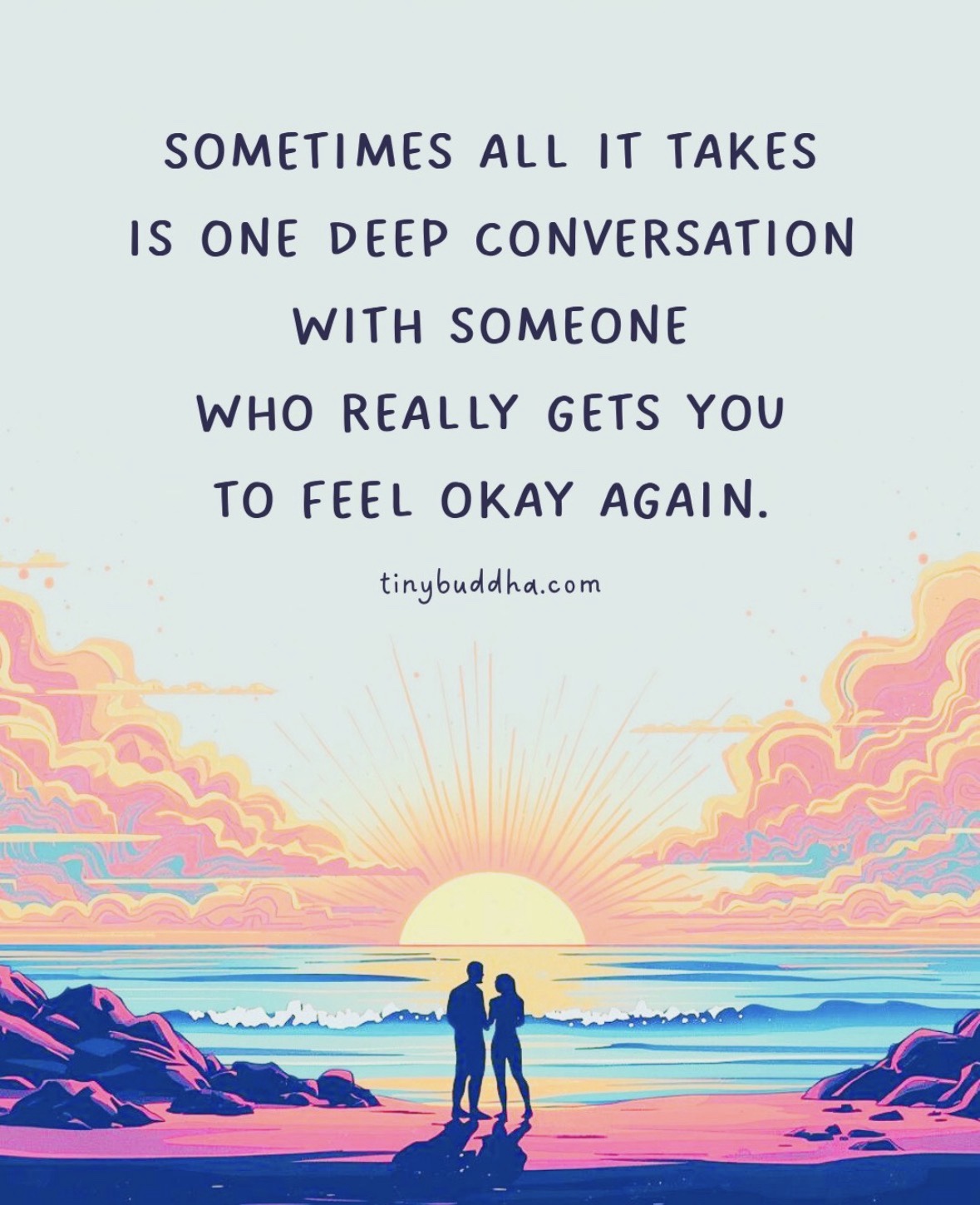
It’s not always a breakthrough moment. Not a grand gesture. Not a life-changing event. Sometimes, it’s just one conversation.

One real, honest, deep conversation with someone who truly gets you.

The kind where you don’t have to explain yourself ten different ways. The kind where you can finally stop pretending you’re “fine.” The kind where you say what’s actually sitting heavy on your chest, and instead of being met with advice or judgment or awkward silence, you’re met with understanding.

And somehow, after that, the world feels a little lighter.

It’s wild how much can shift when you feel seen.

There are days when life can feel loud in all the wrong ways. Your thoughts spiral. Your stress builds. Little things pile up until they don’t feel little anymore. You carry conversations in your head that never happened. You replay moments that hurt. You question yourself. You overthink what you said, what they meant, what’s next, what if.

And then, out of nowhere, you end up talking to the right person.

Not the person who tries to fix you.

Not the person who makes it about themselves.

But the one who listens in a way that makes you feel safe enough to exhale.

That kind of connection is rare, and when it happens, it can feel like emotional oxygen.

Because sometimes what we need most isn’t a solution. It’s not a five-step plan. It’s not “look on the bright side.” It’s not someone rushing to tie a bow around our pain and make it neat.

Sometimes what we need is someone to sit in the mess with us and say, “Yeah. I get it.”

That simple moment can be more powerful than people realize.

There’s something deeply comforting about not having to perform your pain. About not needing to translate your feelings into something easier for someone else to digest. About being able to say the messy version, the tired version, the angry version, the scared version, and still be met with softness.

That kind of conversation reminds you that you’re not too much.

You’re not irrational for feeling deeply.

You’re not weak for needing support.

You’re human.

And sometimes being reminded of that is enough to pull you out of the emotional fog, even if only for a little while.

We underestimate the power of being understood because we live in a world that often rewards speed over depth.

Quick replies. Surface-level check-ins. “How are you?” followed by answers no one really waits to hear. We’ve gotten so used to brushing past each other that a genuine conversation can feel almost sacred.

The kind where time disappears.

The kind where you say, “I didn’t even realize how much I needed this.”

The kind where you hang up the phone or leave the room and feel more like yourself than you did an hour ago.

Not because everything is magically fixed.

But because you’re not carrying it alone anymore.

That matters.

It matters more than we give it credit for.

A lot of people are walking around holding way more than they show. They’re functioning. Smiling. Getting things done. Showing up. But inside, they’re stretched thin. Quietly overwhelmed. Quietly lonely. Quietly hoping someone notices that they’re not okay without making them say it first.

And when someone does notice, when someone asks the real question instead of the polite one, when someone stays long enough to hear the honest answer, it can feel like a lifeline.

That’s the beautiful thing about emotional safety.

It doesn’t always come from years of history. It doesn’t always come from the loudest people in your life. Sometimes it comes from the one person who knows how to hold space without trying to control it. The one who knows when to speak and when to just let silence do its work. The one who can hear what you’re saying and what you’re not saying.

Those people are gifts.

And if you have even one person like that, someone you can call when life feels too heavy, someone who can bring you back to yourself with just a few honest words, that is something to treasure.

Not because they save you.

But because they remind you that you are worth showing up for.

They remind you that your feelings make sense. That your exhaustion is valid. That your confusion is real. That your heart isn’t ridiculous for caring so much. That your struggles don’t make you hard to love.

Sometimes we don’t need someone to tell us what to do next.

We just need someone to remind us we’re still okay in the middle of not being okay.

That’s a different kind of healing.

Quiet healing.

Gentle healing.

The kind that doesn’t announce itself, but changes something in you anyway.

And maybe that’s your reminder today.

If you’ve been carrying too much in silence, reach out.

Text the person who feels safe.

Call the friend who listens well.

Sit down with the one who knows how to hear you without turning your pain into a project.

Let yourself be known.

Let yourself be comforted.

Let yourself be held by a conversation that asks nothing from you except honesty.

And if you are that person for someone else, the one people call when they need a soft place to land, never underestimate the gift you are.

You may think you’re “just listening.”

But to someone who feels overwhelmed, unseen, or emotionally exhausted, your presence might be the exact thing that helps them feel okay again.

Sometimes all it really takes is one deep conversation.

One person.

One moment of being fully understood.

And suddenly, your heart doesn’t feel so alone anymore!
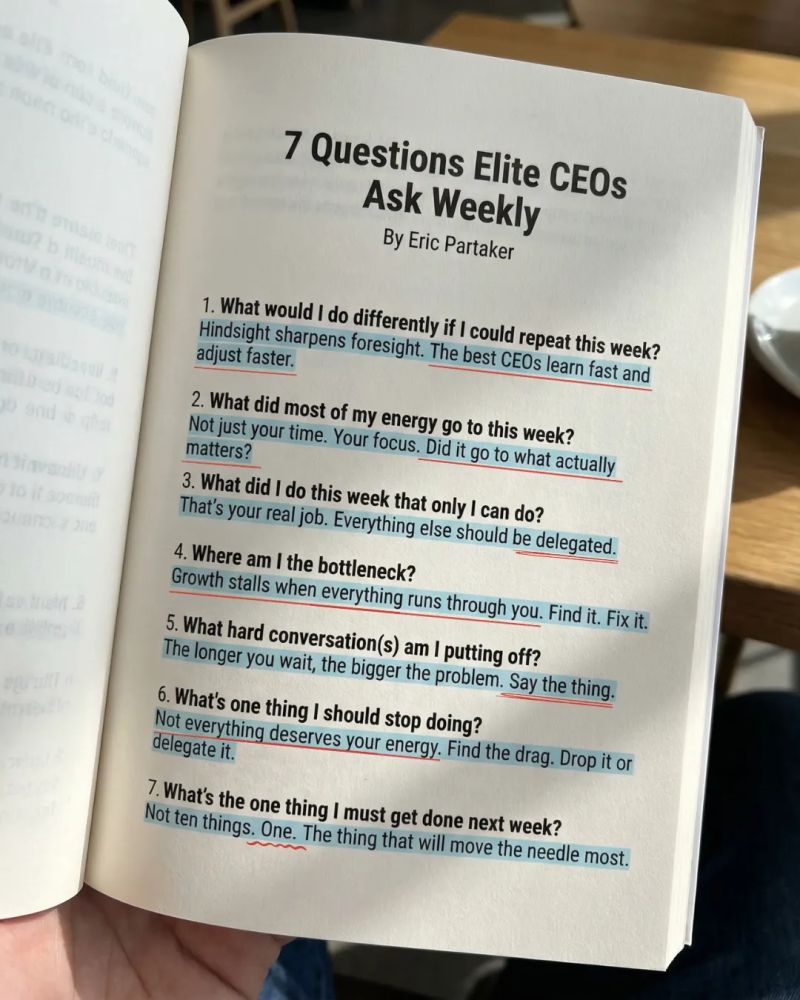
7 Questions Elite CEOs Ask Weekly

Old way: Plan your week on Monday.
New way: Review your week on Friday.
One builds hope…
The other builds wisdom.

Most CEOs plan their weeks.
Few ever review them.


That’s the gap between busy and effective.

I used to rush from week to week.

No pause.
No reflection.
Just momentum.

I felt productive.
But I was just in motion.

Same mistakes on repeat.
Same bottlenecks never fixed.
Same hard conversations avoided.

Then I started doing a simple weekly review.
30 minutes every Friday.

Just me and 7 honest questions.

Everything changed.

Not because the questions were complicated.

But because I finally stopped long enough to ask them.

7 questions to ask yourself weekly:


1️⃣ What would I do differently if I could repeat this week?
This is where growth hides. Not in your wins. In your misses.

2️⃣ What did most of my energy go to this week?
Was it focused on what (actually) matters?

3️⃣ What did I do this week that only I can do?
If someone else could have done it, why didn’t they?

4️⃣ Where am I the bottleneck?
Your company can’t grow faster than you let it.

5️⃣ What hard conversation am I putting off?
The longer you wait, the heavier it gets.

6️⃣ What’s one thing I should stop doing?
Not everything deserves a place on your calendar next week.

7️⃣ What’s the one thing I must get done next week?
Not ten things. One. The one that moves the needle most.

Most leaders wait until something breaks to reflect.
By then, it’s too late.

The best CEOs treat reflection like a discipline.

Not something you do when there’s time.

Something you protect because there’s never time.

The week will teach you everything you need.

But only if you stop long enough to listen.

30 minutes of honest review
will do more for your leadership
than another 30 hours of grinding.

Will you try it today?

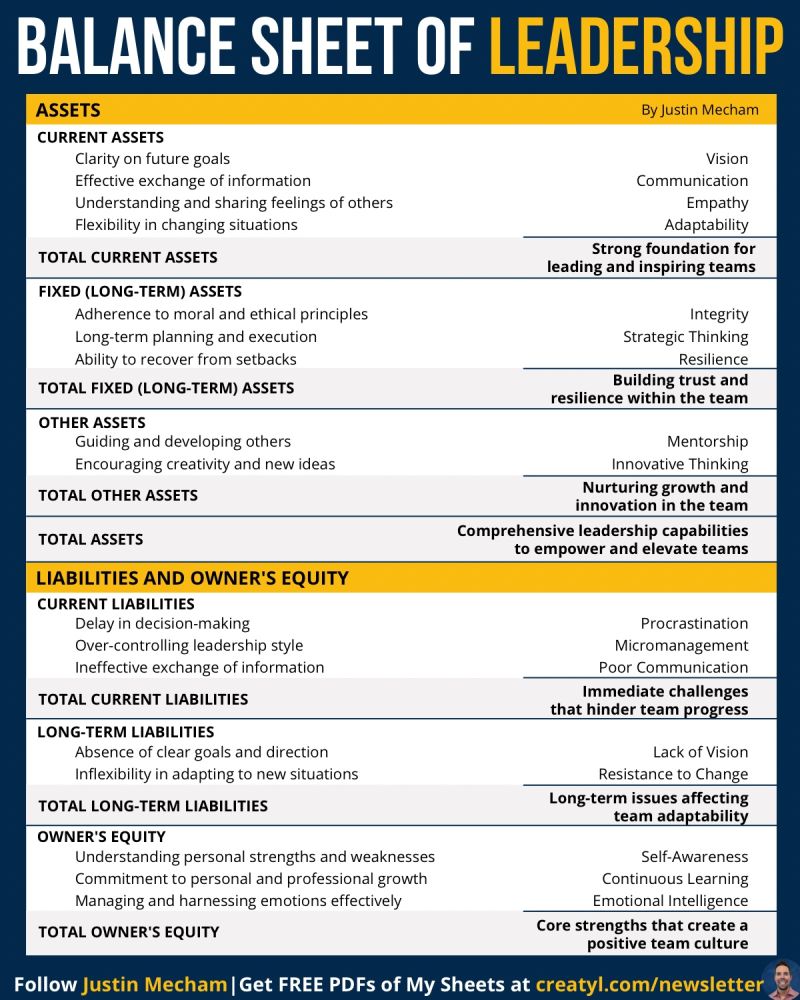
Balance Sheet of Leadership

Great leaders know what they’re good at,

but they also know what gets in the way:

It’s all about evaluating what can
help you lead, and what will hold you back:

🟩 Strengths like:
• Clear goals
• Thinking ahead
• Caring about others
• Talking and listening well
• Being honest and steady

🟥 Weak spots like:
• Controlling too much
• Not open to change
• Not sharing clearly
• No clear direction
• Slow to decide

And at the center:

Knowing yourself, growing,
and handling emotions well.

Use my sheet to check your balance
and lead in a way people trust.

Leadership isn’t a title,
it’s how well you understand your own impact.

The more you own it, the more trust you earn.

A Life That Still Counts

We’ve been sold a very specific version of what a meaningful life is supposed to look like.

It’s usually loud. Ambitious. Impressive. It comes with a five-year plan, a bold mission statement, maybe a dream so big it makes other people say wow. We’re taught to think purpose has to be massive to matter. That if we’re not building something world-changing, chasing a passion that consumes us, or becoming the best at something, then maybe we’re somehow falling behind.

But I don’t think that’s true.

I think a lot of us are exhausted from trying to make our lives look significant in ways that are easy to explain, easy to post about, easy to measure.

And meanwhile, the real meaning of our lives is often happening in much quieter places.

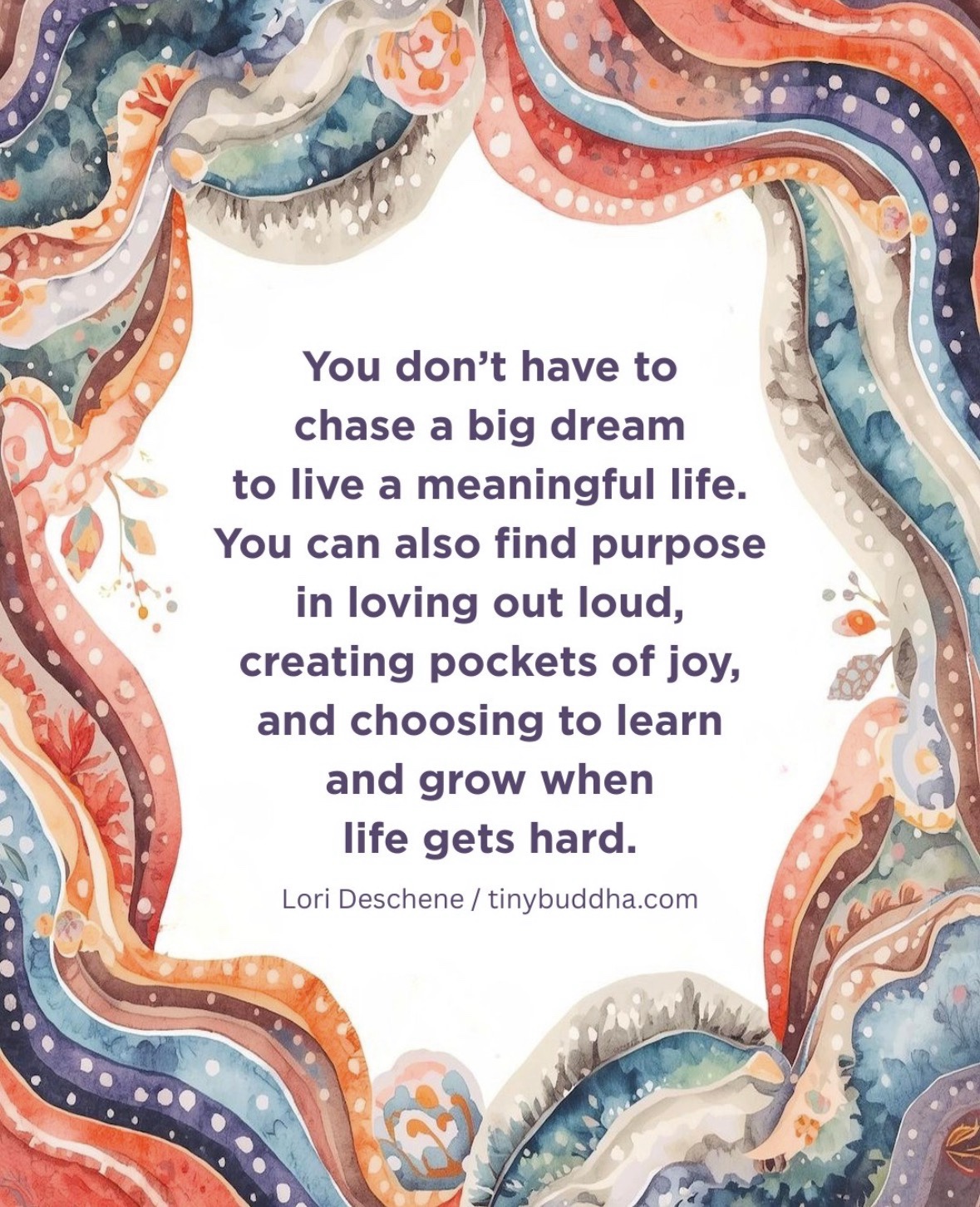
Sometimes purpose is not a giant dream you chase across the country.

Sometimes it’s the way you love people.

The way you show up.

The way you keep choosing tenderness in a world that rewards detachment.

There’s this strange pressure to always be aiming for something bigger, something more. More success. More recognition. More clarity. More momentum. As if stillness means you’re stuck. As if a simple life is a wasted one.

But what if the life you’re building doesn’t need to be extraordinary to be deeply worthwhile?

What if purpose can look like being the safe person in someone’s life?

What if it looks like making your child laugh so hard they snort juice out of their nose?

What if it looks like texting a friend back when you know they’re spiraling?

What if it looks like learning how to be softer after life made you hard?

That counts too.

Actually, that counts a lot.

We underestimate the impact of the small things because they don’t come with applause. Nobody hands out awards for being emotionally available. No one throws confetti because you chose patience over anger in a moment when you could’ve easily snapped. There’s no headline for the person who keeps showing up, keeps growing, keeps trying to be a little better than they were before.

But those things shape lives.

They shape your life.

And they shape the lives of the people around you in ways you may never fully see.

Not everyone is meant to have one giant, glittering dream. And honestly? Not everyone wants one.

Some people want peace.

Some people want connection.

Some people want a home that feels warm when the world feels cold.

Some people want to create tiny beautiful things in the middle of ordinary days—meals that comfort, playlists that heal, traditions that make people feel held, jokes that make a hard day lighter.

That is not small.

That is sacred.

We’ve confused visibility with value for way too long.

Just because something isn’t flashy doesn’t mean it isn’t important.

A meaningful life isn’t always built in the spotlight. Sometimes it’s built in the kitchen. In the carpool line. In the waiting room. In the long conversation after midnight. In the quiet decision to go to therapy. In the apology you finally give. In the boundaries you finally set. In the courage it takes to start over when life doesn’t go the way you thought it would.

Sometimes purpose is simply refusing to let pain make you cruel.

Sometimes it’s deciding that even after heartbreak, disappointment, burnout, grief, or failure… you are still going to become someone kind.

That’s not nothing.

That’s everything.

And maybe that’s the part we need to hear more often: growth is purpose too.

Not just achievement.

Not just arrival.

Growth.

The willingness to learn. To unlearn. To become more honest. More grounded. More compassionate. More whole.

Life gets hard. It just does. Plans fall apart. People leave. Doors close. Versions of you that you loved stop fitting. There are seasons where you’re not chasing anything except the strength to make it through the week.

And even there, meaning still exists.

In the way you keep going.

In the way you let yourself be changed instead of destroyed.

In the way you find little pockets of joy anyway.

A good cup of coffee.

A song that hits exactly right.

Sunlight on the floor.

A shared look across the room with someone who knows you well.

A laugh in the middle of a hard season.

A version of yourself that’s still willing to hope.

Those moments matter more than we admit.

They’re not distractions from life.

They are life.

You do not need a dramatic calling to justify your existence.

You do not need to be constantly producing, proving, or pushing toward something bigger to be worthy of the space you take up.

A life can be meaningful because it is loving.

Because it is honest.

Because it is healing.

Because it is brave in ordinary ways.

Because it leaves people softer than it found them.

Maybe your purpose isn’t one big thing.

Maybe it’s a hundred small things done with heart.

Maybe it’s how you make people feel safe.

Maybe it’s how you keep learning after being humbled.

Maybe it’s how you make room for joy, even when life is heavy.

Maybe it’s how you choose to love out loud in a world that often tells us to stay guarded.

That kind of life may never look impressive from far away.

But up close?

It’s beautiful.

It’s real.

And it absolutely counts.

So if you’ve been feeling behind because your life doesn’t look loud enough, big enough, or impressive enough… maybe you don’t need a bigger dream.

Maybe you just need to recognize that meaning has been here the whole time.

In the way you care.

In the way you create.

In the way you keep becoming.

And that is more than enough!

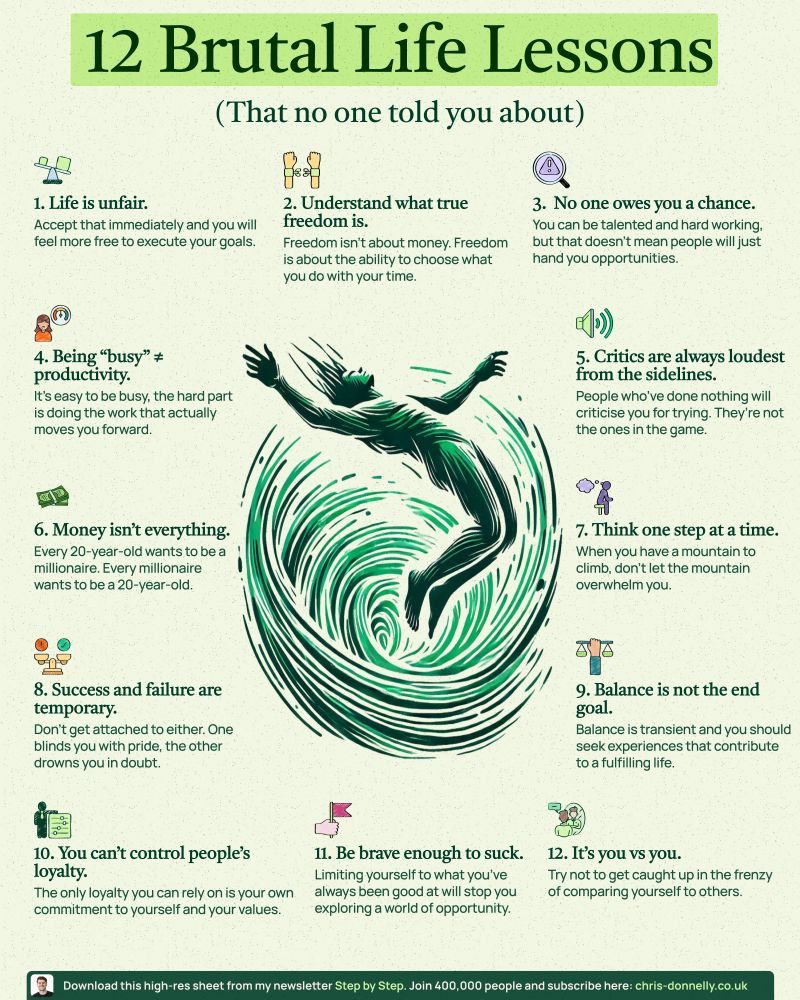
12 Brutal Life Lessons

Life is hard. Especially without the right guidance.

Early on in my career, I had to figure everything out myself.

Lessons from:

📈 Boostrapping my first business.
☄️ Growing the UK’s number 1 startup.
👤 Building a personal brand following of 3M+.

When I hired a mentor, my growth accelerated.
In order to be the best, you must learn from the best.

Sometimes, that advice might sound harsh, but it’s essential for growth.

🚨🚨 Get lifetime access to the full professional template library with one single payment — 90% OFF today: https://payhip.com/b/I5oaj

Most people don’t waste money on templates because they buy “too many.”
They waste money because they buy them one by one… every time a new need appears.

This pass removes that cycle.

✅ Instant access to the full current library
✅ Every future template we add — included forever
✅ Excel + Google Sheets versions for many templates
✅ Use on any device. Download anytime. No renewals.

🔗https://payhip.com/b/I5oaj

With that in mind, here are 12 brutal life lessons:
(That I wish I knew sooner)

1. Life is unfair. 😔
↳ Accept that hard lesson today…
↳ You will feel more free to execute your goals.

2. Understand what true freedom is. 🙌
↳ Freedom isn’t about money.
↳ It’s the ability to choose what you do with your time.

3. No one owes you a chance. ❌
↳ Being talented and hard-working matters.
↳ However, that alone doesn’t land you opportunities.

4. Being busy ≠ productivity. ⏰
↳ It’s easy to pretend to be busy.
↳ The hard part is doing the work that moves you forward.

5. Critics are always loudest from the sidelines. 🗣️
↳ People who’ve done nothing will criticise you for trying.
↳ They’re not the ones in the game.

6. Money isn’t everything. 💰
↳ Every 20-year-old wants to be a millionaire.
↳ Every millionaire wants to be a 20-year-old.

7. Think one step at a time. 👣
↳ When you have a mountain to climb…
↳ Don’t let the mountain overwhelm you.

8. Success and failure are temporary. ✅
↳ Don’t get attached to either.
↳ One blinds you with pride, the other drowns you in doubt.

9. Balance is not the end goal. ⚖️
↳ Balance is transient.
↳ You should seek experiences that contribute to a fulfilling life.

10. You can’t control people’s loyalty. 🤲
↳ You can decide to be loyal to yourself.
↳ Be loyal and commit to yourself and your values.

11. Be brave enough to suck. 💪
↳ Don’t limit yourself to what you already know.
↳ Explore the world for all it has to offer.

12. It’s you vs you. 👤
↳ Comparison is the thief of joy.
↳ Try not to get caught up in the frenzy of comparing yourself to others.

Internalise these lessons today…
To head into the week with a brighter attitude.

Which life lesson is your favourite?

When the Light Still Finds You

Some seasons don’t ask for your permission before they arrive. They just show up heavy.

Not dramatic-heavy. Not movie-scene heavy. Just the kind that settles quietly into your chest and makes ordinary things feel harder than they should. The kind where getting through the day feels like its own accomplishment. The kind where even the smallest tasks ask more of you than you feel like you have.

And one of the strangest things about hard seasons is how often people expect you to make them easier to look at.

To smile through them.

To stay positive.

To tie them up neatly with a lesson or a silver lining.

To act like if you just “shift your mindset,” the ache will somehow become lighter.

But some things are simply hard.

Some losses don’t need to be explained away.

Some exhaustion doesn’t need to be romanticized.

Some grief deserves honesty more than it deserves optimism.

You do not have to pretend something isn’t painful just because other people are uncomfortable with pain.

If it feels heavy, let it be heavy.

That doesn’t mean you’re giving up.

It doesn’t mean you’re weak.

It doesn’t mean you’re stuck.

It just means you’re telling the truth.

And there is something deeply healing about telling the truth to yourself.

Not the polished version. Not the version that sounds resilient enough to post. The real version. The one that says, This hurts. The one that says, I’m tired. The one that says, I’m trying, but today I don’t have much left.

There’s courage in that.

Real courage isn’t always loud or inspiring. Sometimes it looks like letting yourself feel the full weight of what’s here without shaming yourself for it. Sometimes it looks like not rushing your own healing just because you’re tired of being in it.

But here’s the part I keep coming back to: honesty about the hard doesn’t mean closing the door on joy.

In fact, sometimes it’s the only way you can actually see it.

Not the big, cinematic kind of joy. Not the kind that asks you to suddenly feel better. Just the quiet kind. The ordinary kind. The kind that slips in through the cracks.

A warm mug in your hands when the morning feels colder than usual.

A text that arrives at exactly the moment you needed to feel remembered.

A song that catches you off guard and softens something in you.

The sky turning pink at the end of a day you weren’t sure you’d make it through.

A child laughing in the next room.

A familiar voice.

A moment of stillness.

A deep breath that lands a little easier than the one before it.

None of these things erase what hurts.

That’s what makes them so sacred.

They don’t demand that your pain disappear before they arrive. They just sit down beside it.

And maybe that’s what joy really is in difficult seasons—not the absence of pain, but the refusal to let pain be the only thing speaking.

We’ve been taught to think in opposites.

If you’re grieving, how can you be grateful?

If you’re exhausted, how can you still be hopeful?

If you’re struggling, how can you laugh?

If your heart is carrying something real, how dare you enjoy anything at all?

But human beings are more layered than that.

You can miss someone deeply and still smile at a memory.

You can be overwhelmed and still notice beauty.

You can be heartbroken and still laugh at dinner.

You can be carrying more than you want to carry and still feel a flicker of hope that tomorrow might be kinder.

That isn’t denial.

That’s wholeness.

It’s the quiet understanding that life rarely arrives in clean emotional categories. Most of the time, it’s all mixed together. The ache and the gratitude. The fear and the faith. The sorrow and the sweetness. The tears and the tiny moments that somehow keep you going.

And maybe the goal isn’t to choose one over the other.

Maybe the goal is to stop believing that one cancels out the other.

Because joy does not betray your pain.

Letting yourself laugh in the middle of a hard season doesn’t mean you didn’t care.

Feeling grateful while grieving doesn’t mean your grief isn’t real.

Resting in a beautiful moment doesn’t mean the struggle has ended.

It just means your heart is still alive enough to receive what’s good, even while it’s carrying what’s hard.

That matters more than people realize.

There are days when the light won’t feel dramatic. It won’t break through like a movie ending. It might not change your circumstances at all. It may not solve the problem, heal the wound, or answer the question that’s been keeping you up at night.

But it might remind you of something just as important:

This pain is real.

And it is not the whole story.

Sometimes that reminder is enough to get you through the next hour.

Sometimes it’s enough to help you unclench your jaw, loosen your shoulders, and breathe a little deeper.

Sometimes it’s enough to keep despair from becoming your permanent narrator.

And honestly, in some seasons, enough is beautiful.

You don’t need to force yourself into joy.

You don’t need to manufacture gratitude.

You don’t need to turn your struggle into a lesson before it’s ready.

Just stay open.

Open to the small comforts.

Open to the ordinary mercies.

Open to the possibility that something tender can still find you here.

Because it can.

Even now.

Even like this.

Even when you’re tired.

Even when you’re grieving.

Even when the weight hasn’t lifted yet.

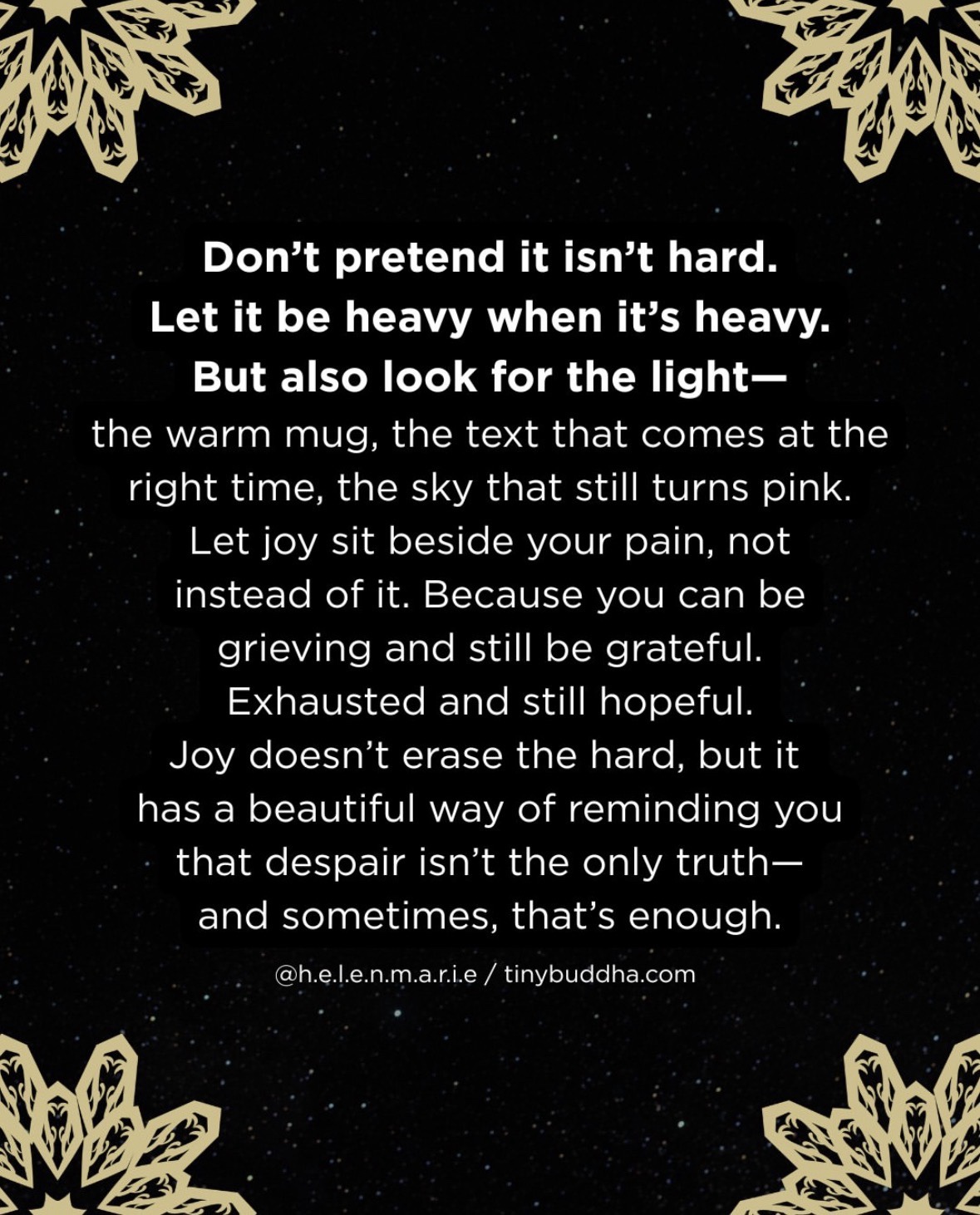
Let it be hard when it’s hard.

And when the light shows up—soft, quiet, almost easy to miss—let that be real too.

Not instead of the pain.

Beside it.

Because sometimes the bravest thing you can do is hold both.

And sometimes the pink sky, the warm mug, the kind message, the unexpected laugh—sometimes those tiny things don’t come to fix you.

They come to remind you that despair is not the only truth.

And some days, that’s more than enough.

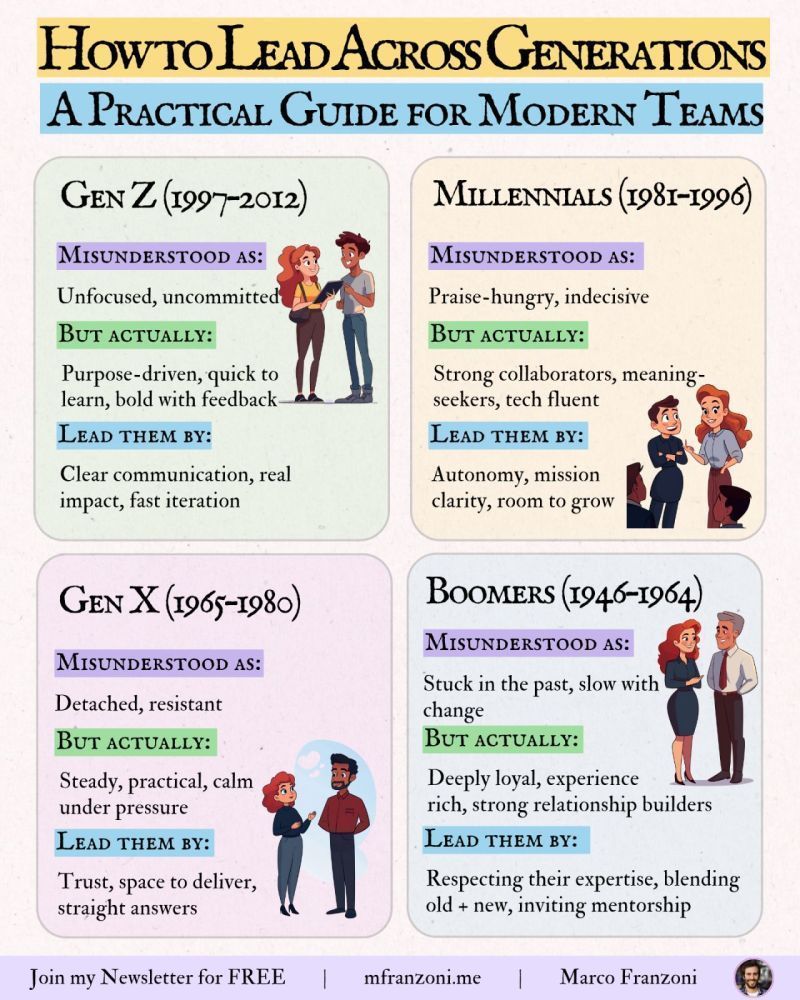
How To Lead Across Generations

“Gen Z doesn’t want to work.”
“Boomers can’t adapt.”
“Millennials overthink everything.”
“Gen X doesn’t care.”

We keep repeating these labels.
But they don’t tell the truth.

What’s true is this:
Each generation learned to survive in a different world.
So they show up differently at work.

If you treat them all the same, you’ll miss what they’re capable of.

Every generation wants to succeed.
Every generation wants to feel valued.
They just express those needs differently.

This guide covers:
↳Where friction tends to appear
↳Common myths about each generation
↳What’s actually true beneath them
↳How to lead each group with intention

🟩 Millennials (1981–1996) 🟩
Seen as: Needy, restless, over-caffeinated dreamers
In reality: They’re bridge-builders between analog and AI.
They want meaning and momentum.
Lead them with trust, not micromanagement.

🟦 Gen Z (1997–2012) 🟦
Seen as: Lazy, distracted, uncommitted
In reality: They crave 𝘪𝘮𝘱𝘢𝘤𝘵, not just income.
They speak up faster, experiment sooner, and walk when purpose fades.
Lead them with transparency and speed.

🟫 Boomers (1946–1964) 🟫
Seen as: Outdated or stubborn
In reality: They hold the institutional memory every team needs.
They’ve seen cycles rise and crash—and still show up.
Lead them by honoring their wisdom, not dismissing it.

🟥 Gen X (1965–1980) 🟥
Seen as: Cynical or detached
In reality: They’re the quiet stabilizers.
They balance chaos with calm and loyalty with logic.
Lead them with autonomy and honest feedback.

Here’s the truth:
Generational tension isn’t a problem, it’s potential.

When curiosity replaces judgment,
differences turn into shared strength.

The best leaders?
↳They listen longer.
↳They translate across decades.
↳And they build cultures where everyone feels seen.

When the Fantasy Finally Breaks

There’s a strange kind of heartbreak that doesn’t happen when something ends. It happens when you finally see it clearly.

Not when it changes.

Not when it gets worse.

Not when someone confesses the truth.

But when you stop filtering it through hope.

That’s the part nobody really talks about.

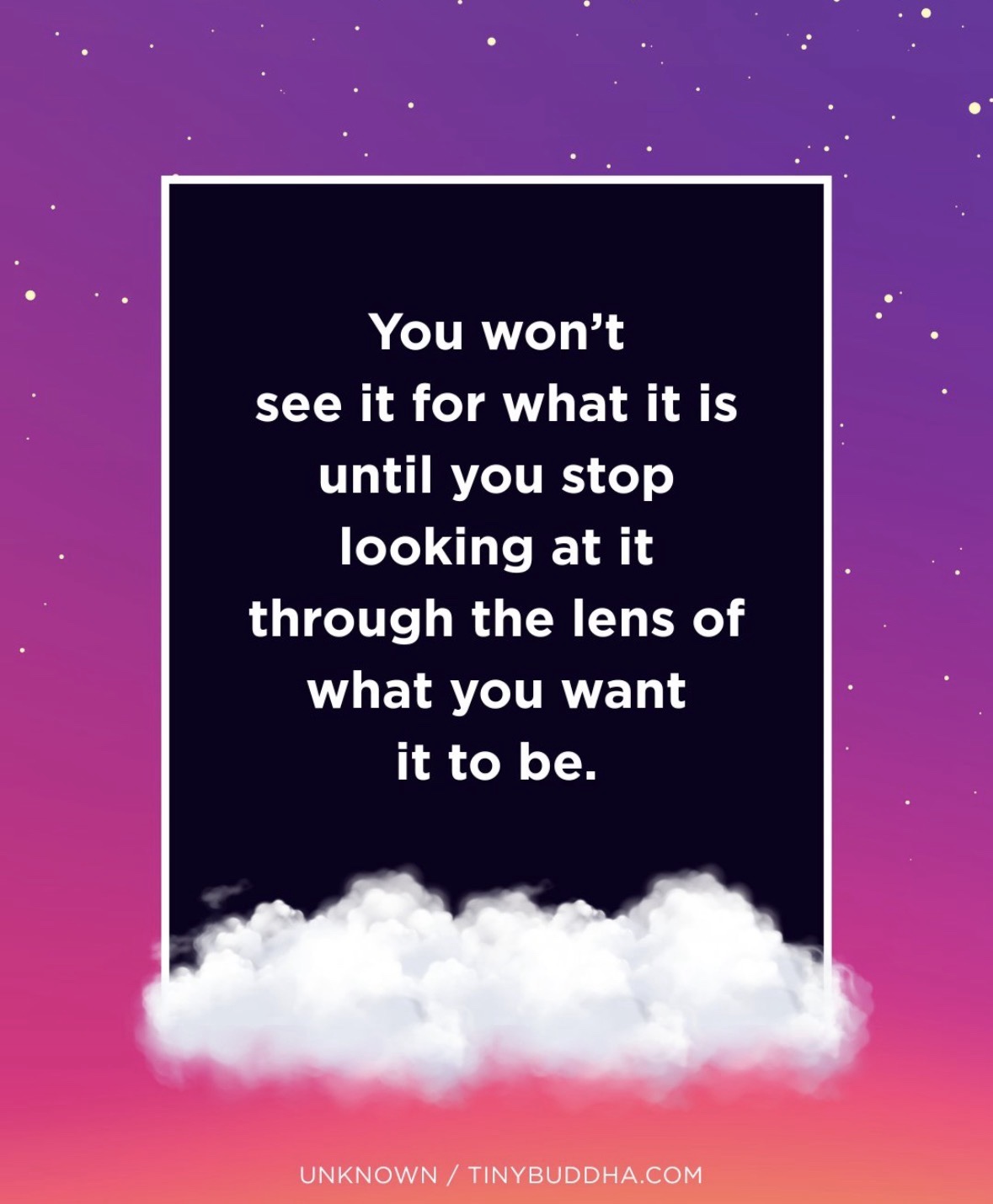
Sometimes the hardest thing to admit is that the thing hurting you isn’t confusing at all. It’s actually been obvious for a while. You just kept looking at it through the lens of your own desire. Your own potential. Your own wish for what it could be.

And when we want something badly enough, we become excellent editors.

We crop out the red flags.

We soften the patterns.

We rename inconsistency as “bad timing.”

We call distance “stress.”

We call mixed signals “complexity.”

We call bare minimum effort “they’re trying.”

Not because we’re naive.

Because we’re invested.

That’s what makes this kind of clarity so brutal. It’s not just that someone disappointed you, or a situation wasn’t what you thought. It’s that you realize how much of the story you were writing yourself.

You weren’t seeing what was.

You were seeing what you hoped it would become.

And hope can be beautiful. But unchecked hope? It can keep you attached to things that are no longer nourishing you—or maybe never were.

A lot of us stay too long in situations that are already answering us.

A relationship that keeps giving excuses instead of consistency.

A friendship that only shows up when it’s convenient.

A job that drains more than it develops.

A version of yourself that keeps pretending something is okay when deep down, you already know it isn’t.

But we hold on because the imagined version feels safer than the real one.

Because if we can just wait a little longer…

communicate a little better…

be a little more patient…

love a little harder…

Maybe it’ll become what we believed it was.

Sometimes it does.

A lot of times, it doesn’t.

And the truth is, reality usually isn’t hidden from us. It’s just uncomfortable.

The signs are often there. The pattern is there. The effort gap is there. The emotional imbalance is there. The silence is there. The avoidance is there.

But wanting can be loud. It can drown out what’s obvious.

That’s why clarity often feels like loss.

Because when you finally stop romanticizing something, you don’t just lose the illusion—you lose the future you imagined with it. The conversations you thought you’d have. The version of them you believed existed underneath it all. The ending you were waiting for.

That grief is real.

You can miss what never fully existed.

You can mourn potential.

You can ache over a version of the story that only lived in your mind.

That doesn’t make you foolish. It makes you human.

We all do this in some form.

We fall in love with potential.

We attach to promises that were never truly made.

We confuse chemistry with compatibility.

We confuse familiarity with safety.

We confuse wanting with knowing.

And then one day, something shifts.

Maybe it’s a sentence they say.

Maybe it’s what they don’t say.

Maybe it’s the tenth repeated pattern.

Maybe it’s the exhaustion of carrying the whole thing alone.

And suddenly, you see it.

Not as your dream.

Not as your project.

Not as your “maybe.”

Just as it is.

That moment can feel cruel, but it’s also freedom.

Because once you see something clearly, you can finally stop negotiating with reality.

You can stop begging for evidence that isn’t there.

You can stop performing optimism.

You can stop shrinking your standards to make the situation feel less painful.

You can stop calling confusion “normal.”

You can choose truth over attachment.

That choice is rarely dramatic. It’s usually quiet.

It sounds like:

“This isn’t healthy for me.”

“This keeps hurting in the same way.”

“I’m not asking for too much.”

“I don’t need more time to understand this.”

“I already understand.”

And maybe that’s the real lesson here.

Clarity doesn’t always arrive with fireworks. Sometimes it arrives with fatigue. Sometimes it arrives when your heart gets too tired to keep translating disappointment into hope.

That’s not bitterness.

That’s wisdom.

There comes a point where protecting your peace matters more than protecting your fantasy.

And that’s powerful.

Because once you stop looking through the lens of what you want something to be, you stop abandoning yourself in the process.

You start trusting patterns.

You start honoring what’s actually happening.

You stop forcing meaning where there is none.

You stop chasing versions of people, places, or situations that only exist in your imagination.

You return to what’s real.

And real may not always be what you wanted.

But real is what can finally set you free.

If you want, I can also give you 3-5 alternate cool title options for this one in the same vibe.

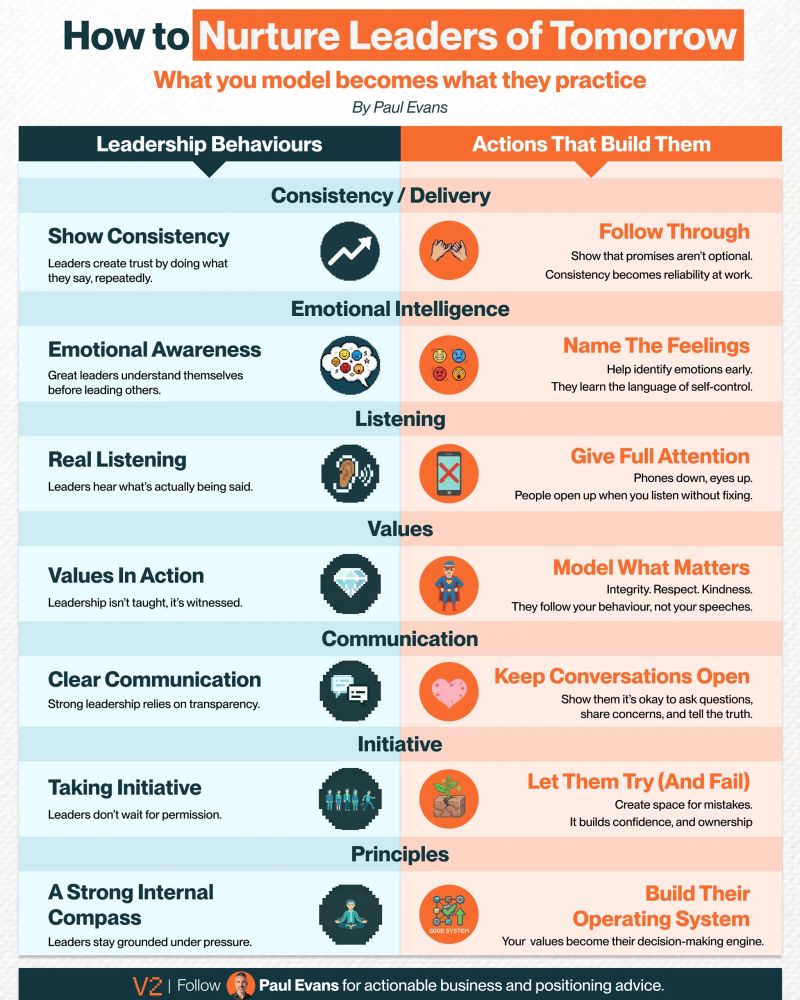
How to Nurture Leaders of Tomorrow

Leadership starts long before the first job title.

Every strong leader you’ve worked with picked up their habits early.

Long before they had a team, or anyone who reported into them.

Most of it came from what they observed daily.

Their managers, mentors, senior colleagues,
leaders who didn’t even realise they were teaching.

Through experience, this has become much clearer:

We nurture leadership without meaning to.

Here’s what it looks like:

1️⃣ Consistency builds credibility
↳ When leaders follow through, others learn that words carry weight.

2️⃣ Emotional awareness creates stability
↳ Leaders who acknowledge pressure help others learn how to manage it.

3️⃣ Listening builds trust
↳ Being fully present teaches respect and psychological safety.

4️⃣ Values shape culture
↳ What leaders tolerate or reward gets repeated down the line.

5️⃣ Clear communication builds confidence
↳ Open conversations create leaders who don’t dodge hard truths.

6️⃣ Freedom fuels initiative
↳ Space to try (and fail) builds ownership and judgement.

7️⃣ Principles create resilience
↳ Strong role models become an internal compass when things get tough.

We talk a lot about “developing leaders” through frameworks and programmes.

But some of the most powerful leadership development happens informally.

If you’re a leader, someone is already learning how to lead from you.

The real question isn’t whether or not you’re shaping future leaders…

It’s what kind you’re shaping.

What’s one behaviour you want to model more intentionally this year?

The People Who Love All of You

There’s a version of connection a lot of us quietly chase without always knowing how to name it.

Not just people who celebrate us when we’re funny, successful, confident, easy to be around, or “on.” Not just people who love the bright parts. The polished parts. The parts of us that photograph well and sound good in conversation.

But the people who can also sit beside us when life gets messy.

The ones who don’t flinch when we’re quiet.

The ones who don’t disappear when we’re overwhelmed.

The ones who don’t make us feel like our harder days are somehow a betrayal of our better ones.

Because the truth is, being human has always meant carrying both.

Light and shadow.

Joy and heaviness.

Confidence and doubt.

Strength and softness.

Hope and hurt.

And yet so many of us have learned, somewhere along the way, to present only half of ourselves.

We become experts at being “easy.”

Easy to love.

Easy to work with.

Easy to be around.

Easy to understand.

We share the good news.

We show up smiling.

We keep the conversation light.

We package our pain in humor, or productivity, or silence.

Not because we’re fake.

But because most of us have been conditioned to believe that being fully seen is risky.

Maybe we’ve had people who loved us when we were useful, but got uncomfortable when we were vulnerable.

Maybe we’ve had friendships that made room for our wins, but not our wounds.

Maybe we’ve been around people who enjoyed our energy, but judged our exhaustion.

So we adapt.

We learn to dim what feels inconvenient.

We hide the parts that feel too heavy.

We become careful with our shadows, as if they make us less worthy of love.

But real love—deep love, mature love, safe love—doesn’t require that kind of editing.

The right people don’t need you to be bright all the time to believe you’re beautiful.

They understand that your light is not invalidated by your darkness.

That your joy is not less real because you also carry pain.

That your kindness is not fake because you sometimes struggle.

That your strength is not weakened by the moments you fall apart.

In fact, the right people usually trust you more when they see both.

Because wholeness is believable.

Perfection isn’t.

There’s something incredibly healing about being with people who don’t treat your shadows like a problem to solve.

They don’t rush to fix you.

They don’t shame you for feeling deeply.

They don’t weaponize your vulnerability later.

They don’t pull away the second you stop being convenient.

They sit with you.

And that sounds simple, but it’s rare.

To sit with someone in their shadow means being present without needing them to perform.

It means not demanding that they “cheer up” so you can feel comfortable again.

It means not turning their pain into an inconvenience.

It means understanding that someone can be deeply lovable and deeply struggling at the same time.

That kind of presence changes people.

It teaches them they don’t have to earn belonging through constant brightness.

It reminds them that they are not “too much” just because they have depth.

It gives them permission to stop apologizing for being layered.

And honestly, that’s what healthy relationships feel like.

Not relationships where one person is always the sunshine and the other is always the support system.

Not relationships built only around good vibes and good times.

Not relationships that collapse the second life becomes real.

Healthy relationships have room.

Room for laughter.

Room for grief.

Room for growth.

Room for silence.

Room for mood shifts.

Room for honesty.

Room for contradictions.

Because people are not one-note beings.

The most compassionate people you know probably became that way because they’ve known pain.

The strongest people you know probably have private battles.

The warmest people you know probably have shadows they’ve learned to carry with grace.

And if you only love people for their light, you’re not really loving them.

You’re loving the version of them that makes you feel good.

That’s not the same thing.

Real connection asks for more maturity than that.

It asks us to stop romanticizing only the shiny parts of people.

It asks us to stop expecting emotional neatness.

It asks us to recognize that someone can be incredible and still be in a hard season.

It asks us to understand that tenderness matters most when life isn’t easy.

Sometimes the biggest sign that someone belongs in your life isn’t how loudly they cheer for your wins.

It’s how gently they hold your hard days.

It’s whether they can sit in the discomfort without making you feel guilty for it.

It’s whether they let you be honest without punishing you for honesty.

It’s whether they make you feel safe enough to be a full person instead of a curated version.

That kind of love is rare.

And when you find it, you feel it almost immediately.

You exhale more around them.

You explain less.

You don’t feel pressure to always be “fine.”

You don’t feel like your sadness makes you ungrateful.

You don’t feel like your fears make you weak.

You don’t feel like your depth is a burden.

You just feel… safe.

And safety is underrated.

We talk a lot about chemistry.

We talk about attraction, compatibility, shared interests, timing, excitement.

All of that matters.

But emotional safety?

That’s the thing that determines whether love can actually last.

Because eventually, everyone reveals their shadows.

Life makes sure of that.

Stress.

Loss.

Burnout.

Grief.

Fear.

Failure.

Change.

Disappointment.

Uncertainty.

No one gets through life staying bright all the time.

No one remains untouched.

No one avoids the darker corners forever.

So the real question isn’t whether someone has shadows.

The real question is:

Who makes them feel ashamed of having them?

And who reminds them they’re still worthy, even there?

That’s the difference between people who admire you and people who truly love you.

And maybe that’s the reminder someone needs today:

You do not have to be in your “best energy” to deserve care.

You do not have to be endlessly positive to be deeply loved.

You do not have to hide your complexity to keep the right people close.

The right people won’t be scared by your depth.

They won’t be threatened by your honesty.

They won’t ask you to amputate the harder parts of yourself just to make the relationship easier for them.

They’ll love your light.

They’ll respect your shadows.

And they’ll understand that both are part of what makes you you.

So if you’ve been shrinking the heavier parts of yourself…

If you’ve been apologizing for your hard days…

If you’ve been wondering whether being fully known will make people leave…

Let this be your reminder:

Anyone can enjoy the sunshine.

Not everyone knows how to stay when the clouds roll in.

The right ones do.

And when they do, don’t just appreciate how they celebrate you.

Appreciate how they sit with you, too.

Because the people who can honor both your brightness and your darkness?

Those are the ones who are loving the real you.

Not the edited version.

Not the easy version.

Not the always-smiling version.

The whole sky.