
Your manager affects your health more than your doctor or therapist.
While therapists provide tools and healing in a safe space,
your manager shapes the environment you live in every day.
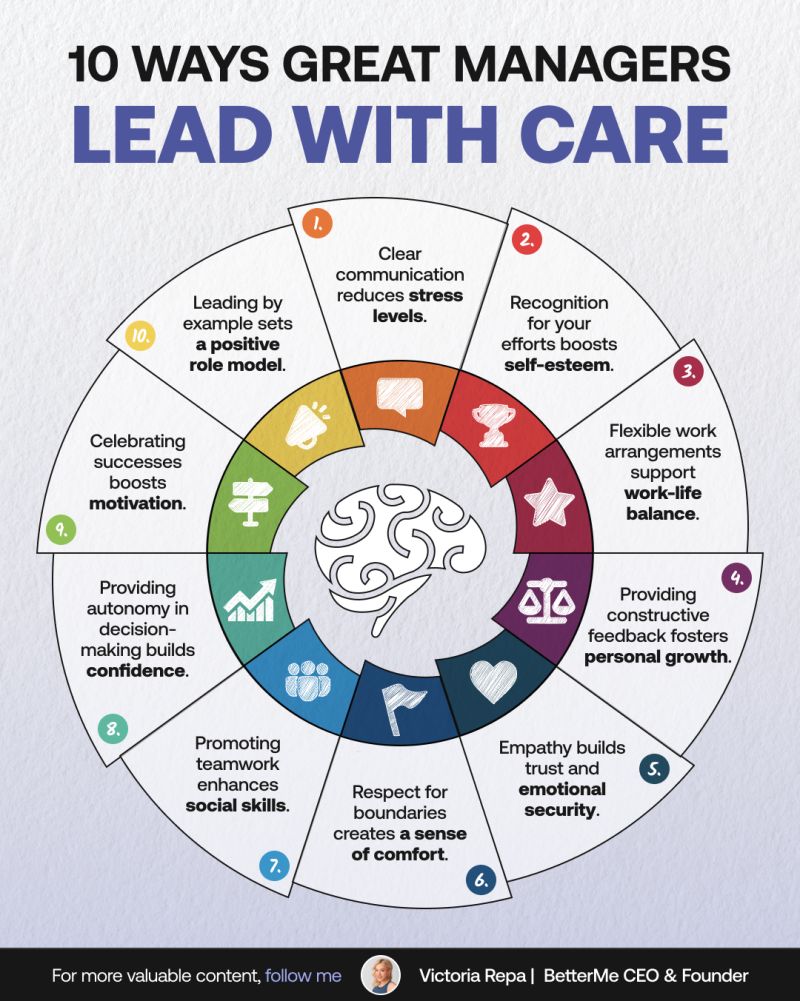
👇 Here are 10 ways they can make an impact:
1/ Clear communication reduces stress levels.
2/ Recognition for your efforts boosts self-esteem.
3/ Providing constructive feedback fosters personal growth.
4/ Flexible work arrangements support work-life balance.
5/ Empathy builds trust and emotional security.
6/ Respect for boundaries creates a sense of comfort.
7/ Promoting teamwork enhances social skills.
8/ Celebrating successes boosts motivation.
9/ Providing autonomy in decision-making builds confidence.
10/ Leading by example sets a positive role model.
Your manager can shape how you feel:
about yourself, your work, and your future.
So don’t just choose a job to do.
Choose a leader to follow.
And if you’re a leader, take this seriously.
You hold power not just over productivity, but over people.
Because in the end:
Great managers are the reason people stay — and thrive.
Finding Light on the Hard Days

You can’t always have a good day. That’s just life. No matter how much we plan, prepare, or hope, there will always be days that test us—days when nothing seems to go our way, when every little thing feels heavier than it should. And that’s okay. A bad day doesn’t mean a bad life.
The truth is, we don’t get to control every twist life throws at us. We don’t get to stop the unexpected delays, the disappointing news, the moments of friction or frustration. But we do get to choose how we meet them. And sometimes, the choice to show up with a good attitude is the most powerful tool we have.
A good attitude doesn’t magically erase the difficulty, but it changes how we carry it. It’s the difference between letting a bad moment define your entire day and simply letting it pass through. It’s choosing to pause, breathe, and remind yourself: “This is tough, but I’m tougher.” It’s refusing to let negativity take root in your thoughts.
Think about it—when you meet frustration with patience, or sadness with kindness, or chaos with calm, you shift the entire energy of the moment. You create a space for resilience to grow. You give yourself the chance to recover faster, and maybe even find something small to be grateful for amid the mess.
It’s not about faking positivity or pretending that pain doesn’t exist. It’s about acceptance. It’s about realizing that you can feel disappointed and still not give in to despair. You can be tired and still choose to keep moving forward. You can be tested and still decide to hold on to hope.
A good attitude is like carrying your own little lantern. The day may still be dark, but that light is yours—it follows you everywhere you go, no matter how stormy it gets. And sometimes, that light is enough not only for you but for the people around you who are struggling too.
So, the next time you hit one of those rough days—and you will—remember: you don’t need to force it into being good. You just need to face it with the best of yourself. And that, in its own quiet way, makes all the difference.
What do People Quit?
Some employers won’t like this, but it’s the truth:
There’s no such thing as a bad job — only bad leadership.
People don’t leave job descriptions.
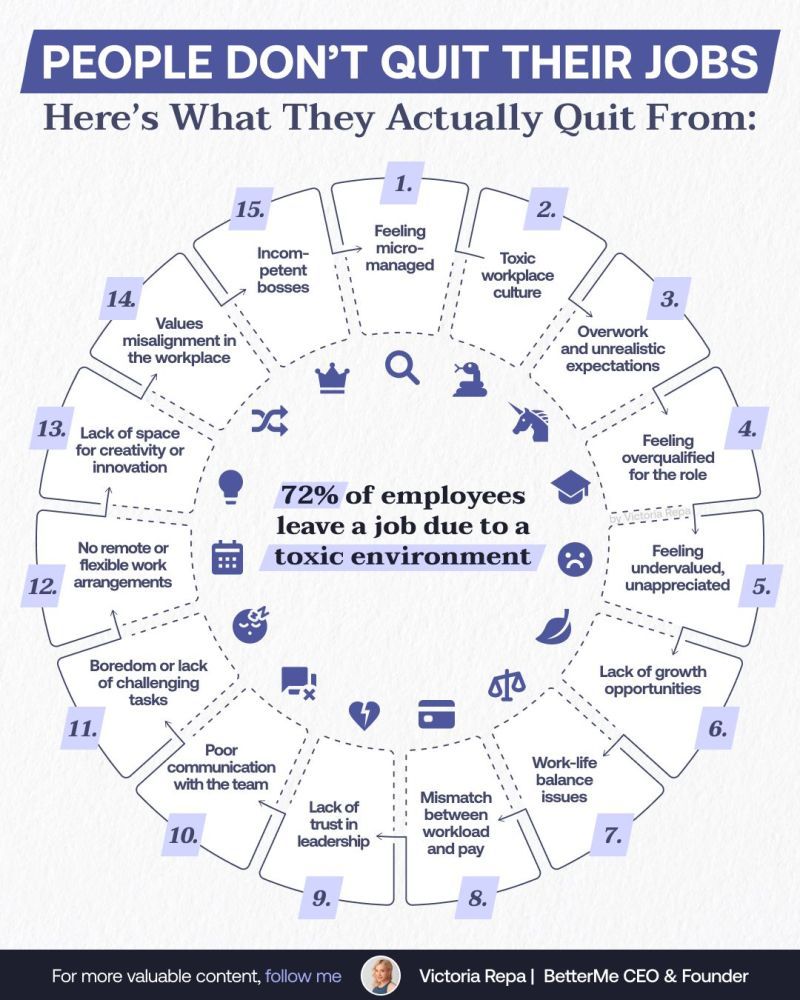
They leave because of:
1/ Incompetent bosses.
2/ Feeling micromanaged.
3/ Toxic workplace culture.
4/ Work-life balance issues.
5/ Lack of trust in leadership.
6/ Lack of growth opportunities.
7/ Feeling overqualified for the role.
8/ Poor communication within the team.
9/ Boredom or lack of challenging tasks.
10/ Mismatch between workload and pay.
11/ Overwork and unrealistic expectations.
12/ Feeling undervalued and unappreciated.
13/ Lack of space for creativity or innovation.
14/ Misalignment between personal and company values.
15/ No opportunities for remote or flexible work arrangements.
The numbers don’t lie:
👉 72% of employees leave due to a toxic work environment.
And it’s a leader’s responsibility to create a workplace where employees don’t just stay — but thrive.
The more we talk about it,
the better work environments we can build.
Great Managers

When your manager says this,
you’ve got a keeper:
I believe in you.
I’m proud of you.
I value your input.
I learn from you too.
I trust your judgment.
You make a difference.
I admire your work ethic.
Your perspective matters.
I trust you to take the lead.
It’s ok to not be “always on.”
Your personal life is a priority.
You’ve outdone yourself again.
We’re stronger because of you.
What do you think we should do?
How can I make your work easier?
Your growth is part of our success.
You’re more than just your job to us.
What do you need to be successful?
Let’s tackle these challenges together.
How do you envision your future here?
Be sure to take time off when you need it.
How can we better balance your workload?
How can I help you reach your career goals?
Your well-being is as important as your work.
Thank you for your hard work and dedication.
Mistakes happen. Let’s learn and move forward.
A few kind words can brighten a day.
And a little thanks goes a long way.
Managers, be that kind.
Be a keeper.
Which words would you add?
6 Steps to Break Free – The PLEASE Method

Stop teaching people to undervalue you and your time.
6 steps to break the cycle 👇🏼
People-pleasing isn’t just exhausting (speaking from MANY years of hard-won experience here 😉).
It’s sabotaging your success, draining your energy, and teaching others to undervalue your time.
Here’s what actually works:
👉🏼 PAUSE before answering requests
↳ “Let me check my calendar” buys you 24 hrs to decide what YOU actually want
👉🏼 LISTEN to your body’s signals
↳ That instant heaviness in your chest is your internal wisdom saying no
👉🏼 EXPLORE your real motivation
↳ Ask “Am I doing this to be helpful or to be liked?” The *honest* answer may surprise you.
👉🏼 ASSERT simple boundary statements
↳ “That doesn’t work for me” is a complete sentence that requires no justification
👉🏼 START with low-risk practice
↳ Say no to the shop keeper’s upsell before tackling your boss’s request
👉🏼 EXPECT discomfort as victory
↳ The 90 sec flush of anxiety when setting boundaries is growth happening
Boundaries aren’t barriers.
They’re bridges to the life you’re actually meant to live.✨
Which step will you implement first today?
Yesterday’s You vs. Today’s You
We live in a world that’s obsessed with comparison. Social media feeds, career milestones, lifestyle upgrades—it’s like a constant scoreboard flashing in front of us. The problem is, most of the time, we’re comparing our behind-the-scenes to someone else’s highlight reel. No wonder it feels discouraging.
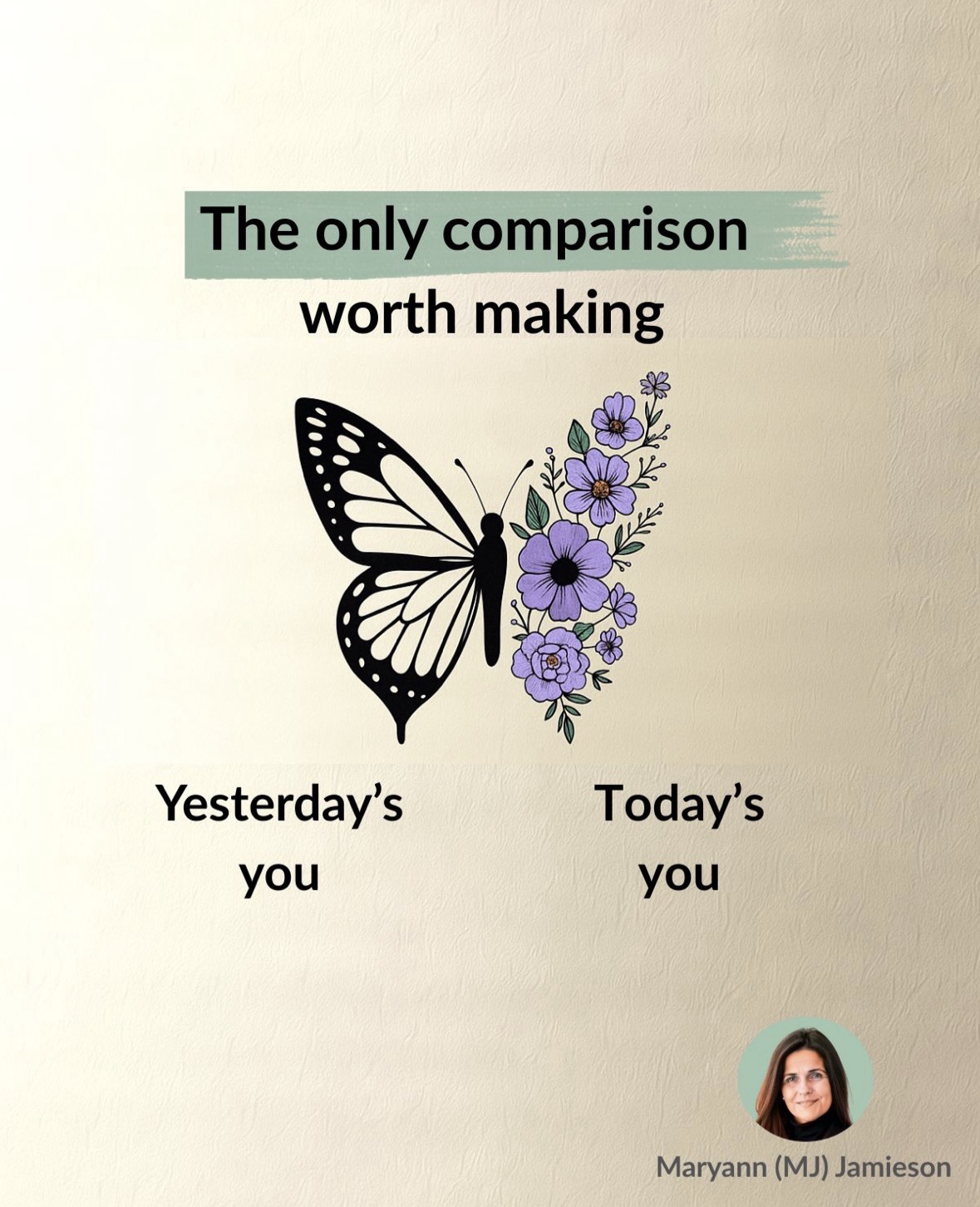
But here’s the truth: the only comparison that really matters is the one between yesterday’s you and today’s you. Did you show up with a little more courage than you did yesterday? Did you handle a tough situation with more patience, more kindness, or more clarity? Did you move even a tiny step closer to the version of yourself you’re working toward? That’s progress, and that’s what counts.
The beauty of this kind of comparison is that it’s honest. You know the battles you’re fighting. You know the weight of your struggles and the effort behind your small wins. No one else sees that. And because of that, no one else’s journey can really be measured against yours.
Growth doesn’t have to be dramatic. Sometimes it’s simply waking up and trying again. Sometimes it’s letting go of something you used to hold on to tightly. Sometimes it’s just making it through the day with a little more grace than you had before.
When you stop chasing the pace of others and focus on the pace of your own evolution, life feels lighter. You begin to celebrate progress in its truest form—the kind that’s personal, meaningful, and lasting. Yesterday’s you gave today’s you a starting point. Tomorrow’s you will thank you for the effort you’re putting in right now.
So, the next time you feel the urge to measure your life against someone else’s, pause. Look back instead. Compare today’s you to yesterday’s you. That’s where the real story of growth lives. That’s the only scoreboard worth keeping.
4 Emotional Regulation Strategies
“Stay professional”, the most useless advice for handling workplace conflict.
Ever received this feedback when dealing with a difficult situation?
Sounds good, but what does it actually mean?
𝗡𝗼𝗯𝗼𝗱𝘆 𝘁𝗲𝗮𝗰𝗵𝗲𝘀 𝘆𝗼𝘂 𝗛𝗢𝗪 𝘁𝗼 𝗯𝗲 𝗽𝗿𝗼𝗳𝗲𝘀𝘀𝗶𝗼𝗻𝗮𝗹 𝘄𝗵𝗲𝗻:
➡️Your project gets sabotaged
➡️A colleague takes credit for your work
➡️Your proposal gets dismissed without discussion
Research shows 76% of employees struggle with workplace conflict management.
We’re expected to handle it well, but never taught how.
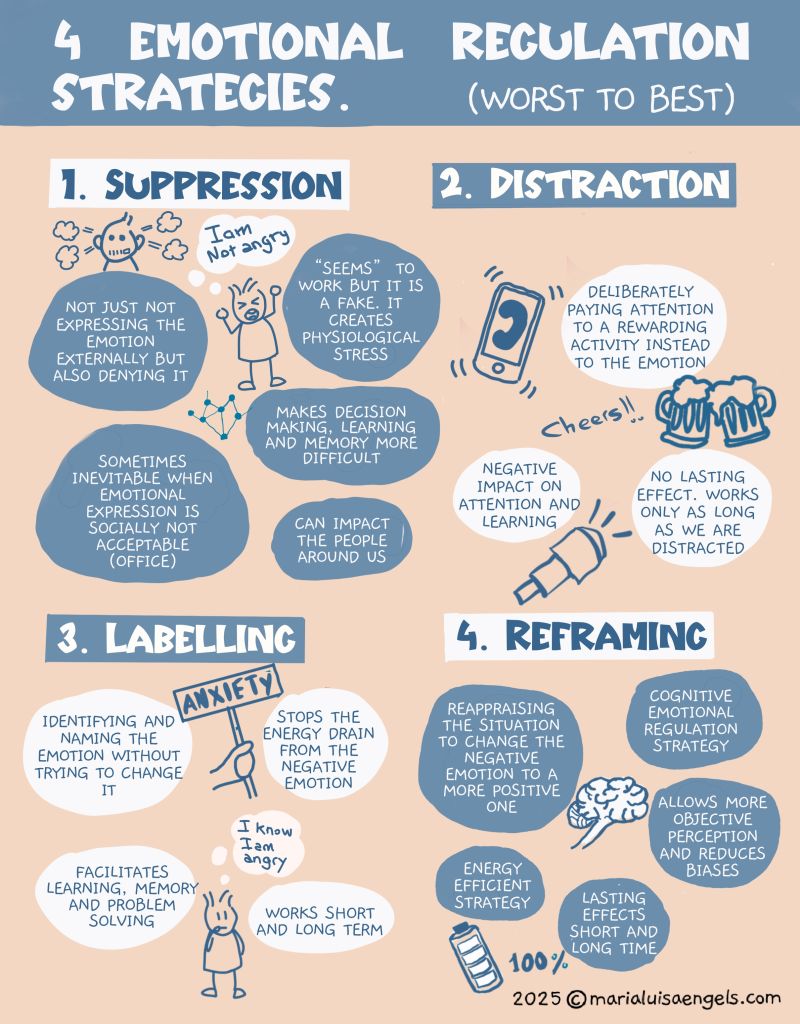
What people normally do is one of these 4 options:
1) Choosing to avoid triggering situations
2) Changing the situation to reduce impact
3) Distracting and doing something else
4) Reappraisal: Changing how we think and feel about the situation
Research shows cognitive reappraisal is most effective long-term.
Yet 65% of professionals default to suppression – the least effective strategy.
𝗛𝗲𝗿𝗲’𝘀 𝘄𝗵𝗮𝘁 𝗮𝗰𝘁𝘂𝗮𝗹𝗹𝘆 𝘄𝗼𝗿𝗸𝘀 – 𝗯𝗮𝗰𝗸𝗲𝗱 𝗯𝘆 𝗯𝗲𝗵𝗮𝘃𝗶𝗼𝗿𝗮𝗹 𝘀𝗰𝗶𝗲𝗻𝗰𝗲:
𝗧𝗵𝗲 𝟮𝟰-𝗛𝗼𝘂𝗿 𝗥𝘂𝗹𝗲 (𝗙𝗼𝗿 𝗛𝗼𝘁 𝗠𝗼𝗺𝗲𝗻𝘁𝘀)
➡️Document everything while it’s fresh
➡️Draft your response, but don’t send
➡️Review after a day with a clear mind
𝗧𝗵𝗲 𝗙𝗮𝗰𝘁𝘀-𝗙𝗶𝗿𝘀𝘁 𝗔𝗽𝗽𝗿𝗼𝗮𝗰𝗵
➡️Focus on observable events
➡️Use specific dates and numbers
➡️Remove emotional language entirely
𝗧𝗵𝗲 𝗦𝗼𝗹𝘂𝘁𝗶𝗼𝗻 𝗙𝗿𝗮𝗺𝗲𝘄𝗼𝗿𝗸
➡️Present 2-3 concrete options
➡️Highlight business impact
➡️Request specific feedback
𝘌𝘹𝘢𝘮𝘱𝘭𝘦:
Instead of: “You never include me in important meetings”
Try: “I noticed I wasn’t invited to the last 3 project planning sessions. This impacts my ability to deliver on time. Could we discuss how to improve communication?”
𝗧𝗵𝗲 𝗜𝗺𝗽𝗮𝗰𝘁:
Faster conflict resolution
Better stakeholder relationships
Increased visibility with leadership
Protected reputation
👉Tip: Being professional isn’t about hiding frustration. It’s about channeling it into constructive action.
Types of Professionals

What Shape Are Your Skills?
Forget fuzzy personality quizzes.
This one can shape your entire career trajectory.
After coaching 100s of professionals into their
dream roles, here’s what I’ve learned:
The way your skills are shaped…
➟ Your depth in some areas
➟ Your range in others
➟ How you focus and lead
…offers powerful insight.
Not into what you should do.
But into what’s already working.
And where you might want to grow next.
Here’s a framework that helps you see it more clearly:
T-Shaped
✅ Broad knowledge
✅ Deep expertise in one area
➡️ Great collaborator, but may hit a ceiling
without leadership depth
M-Shaped
✅ Multiple deep specialties
✅ Spans several disciplines
➡️ Built for systems thinking and leading in complexity
V-Shaped
✅ Deep core strength
✅ Adjacent versatility
➡️ Ideal for pivots and stepping into new challenges
E-Shaped
✅ Creativity + collaboration + communication
✅ Grounded in execution
➡️ Perfect in client-facing and creative roles,
but can plateau without strategic growth
I-Shaped
✅ Deep focus in one area
✅ Specialist status
➡️ Highly trusted (often overlooked for leadership)
X-Shaped
✅ Strategic range
✅ Deep domain + leadership strength
➡️ Think executive-level impact. Rare. In demand.
No shape is better.
But some shapes move faster,
depending on where you want to go.
The key?
Grow into your next shape with purpose. Not by accident.
So…
What shape are you today?
What shape are you stretching into?
Untangling Yourself from Other People’s Opinions

One of the hardest but healthiest things you can ever learn is to take nothing personally. It sounds simple, but it’s a lifelong practice. Every time someone criticizes you, ignores you, compliments you, misunderstands you, or even celebrates you, your mind wants to turn it into a statement about your worth. It’s human. We’re wired to read meaning into everything. But not everything is about you—and the sooner you can make peace with that, the lighter life feels.
Most of the time, people’s reactions are a mirror of their own inner world. Their stress, their beliefs, their habits, their fears, their experiences—those are the things shaping their words and actions. You just happen to be the closest canvas. When someone lashes out, it’s usually not a deep analysis of who you are. It’s a burst of their own frustration. When someone praises you, it’s still about their own values, hopes, and preferences. Recognizing this isn’t cold or detached; it’s freeing.
Taking nothing personally doesn’t mean you don’t care or that you stop showing up with heart. It means you stop letting your self-worth get hijacked by someone else’s mood or opinion. It’s the difference between walking through life as a sponge—soaking up everyone else’s energy—and walking as yourself, steady and self-contained. Imagine how much energy you’d reclaim if you stopped replaying every comment in your head, stopped rewriting every interaction, stopped reading between the lines of every text. That’s the gift of this habit.
This shift creates space for compassion. When you stop making everything about you, you can see others more clearly. You can recognize pain beneath anger, insecurity beneath arrogance, confusion beneath coldness. Instead of taking offense, you start to understand. Instead of closing off, you stay open. And when you do need to respond, you respond from clarity, not ego.
Learning to take nothing personally is like building an invisible boundary that protects your peace. It doesn’t make you untouchable, it just makes you more anchored. You still listen, still learn, still grow. But you’re no longer at the mercy of every gust of someone else’s weather. You begin to trust your own inner climate instead.
8 Ways To Get Things Done

The science of how to get yourself unstuck.
Motivation is a myth…
❌ It doesn’t build long-term habits
❌ It tricks you into waiting
❌ It comes and goes
The truth? Progress is built on habits.
✅ Show up daily
✅ Build momentum
✅ Create lasting change
We’ve all had moments when we need to
get things done but we just don’t feel like it.
That’s when neuroscience and psychology help.
Use these 8 science-backed ways to get
yourself going again:
1. Break tasks into tiny steps.
↳ Break your work into pieces that take less time.
2. Visualize the end result.
↳ Close your eyes and picture the task completed.
3. Change your environment.
↳ A change of scenery can reset your mind.
4. Focus on just starting.
↳ Tell yourself to begin for just 5 minutes.
5. Use visual reminders.
↳ Use progress bars to track small wins.
6. Reward yourself after small wins.
↳ Reward yourself after finishing a small task.
7. Try the 5-4-3-2-1 technique.
↳ Count down from 5 and then take action.
8. Reframe your thinking.
↳ Shift your mindset from “I have to” to “I get to.”
It’s not about grand gestures or heroic efforts.
It’s about showing up even when motivation fades.
That’s how real change happens.
That’s how you get things done.
Start small. Build momentum as you go.
You can do it 💪
 Kenrick Vaz