Happiness is a Choice

Henry David Thoreau said: “Happiness is like a butterfly: the more you chase it, the more it will elude you, but if you turn your attention to other things, it will come and sit softly on your shoulder.”

Here are two stories on happiness.


Once, a shah was riding in his palanquin through the town, looking through the window at the scurrying people. Suddenly, he saw a lonely dervish sitting in the middle of the crowd, who was smiling and looking happy about something. The dervish was dressed poorly, and except the saucer for hand-outs and a road script he had nothing else besides him. The shah road past him and soon forgot what he saw.

After a few days, the shah had to go the same way again, where he saw the same dervish again, completely happy, dozing with blissfully closed eyes.

The next day, shah chose the same way on purpose, to see if the dervish will be in his place and again the image was the same. Intrigued, shah was going the same way almost every day and every time he found the dervish in the same spirit.

Finally, unable to stand it anymore, shah came out from the palanquin and addressed the imperturbable dervish with these words, “Why are you always smiling? Almost every day I see you here and it seems that you are absolutely happy.”

“Exactly, my master.” – said the dervish with a smile.

Shah was surprised and asked: “Why are you happy? Do you have any money?”

“I don’t have anything, my master. Maybe during the day a little bit will fall in for food.”

“Do you have a home or a family?”

“Neither this and nor that. I wander the world as the wind.”

“Maybe then, you have good heath?”

“Absolutely not, my master, from the cold of the night my bones ace often and almost all of my teeth have fallen out.”

“What makes you so happy then? Tell me. Maybe your recipe for happiness will be useful to me. I have everything, but I’m unhappy.”

“God never sends more challenges for one person that he can’t handle. And burdens a person only with those circumstances, which at that moment, are most useful for his development. The circumstances in which the person is – is the place for spiritualization. I accept that the best thing for me now is what I am, where I am and what is happening with me. I accept it with gratitude and a smile, if necessary with resistance and patience, and if possible, I try to understand what God is trying to say to me with it and in which direction should I move with my development. The realization of it doesn’t make me absolutely happy, but I have a clear horizon opening in front of me, free from the rainy curtains and filled with the sunny light of awareness.”

You are Whole

I came across this lovely quote on my Insta feed from thedoodledesk‘s account. And this made me reflect on how things are constantly changing in my life. We all have our ups and downs, days when we are super-motivated and days when we feel low and lost. We are constantly trying to keep up with the idea of being complete, of making it in this world.

It is not uncommon for people to spend their whole life waiting to start living.

Eckhart Tolle

One of the things that always affects us is the idea that we are damaged, that we are flawed. In a way it is good that we are aware of our shortcomings, patterns that cause us more harm than good. Who among us has not felt damaged? If we look at our lives closely, we will discover pockets of conditioning that make us feel needy or have led us to act in ways that are less than admirable. We may have even hurt others or ourselves. It’s easy to feel flawed.

But here is the truth: You and I did not come into the world damaged. Our original source, who we are, is whole, fulfilled, creative, completely at peace, loved and loving.

We are born innocent, filled with so much potential, virtually free of psychological scars. Then life brings us challenges. Our needs are not adequately met. Our feelings are rejected or minimized. We may have been criticized, pressured, demeaned, or even abused.

We don’t have the skills and support to manage our emotional reactions, so our feelings go underground, out of conscious awareness. We develop belief systems and strategies to make our way in the world. And we take on identities – as unworthy, entitled, bitter, or afraid.

But regardless of our experiences, our upbringing, our choices so far, we are not damaged (so you can stop telling yourself that you are). Take away what you have learned from your experiences, and what is revealed is the unconditioned you. You are whole, clear, undisturbed, open.

Discover that love is closer than close. Restore yourself to your natural state, and you will see that damage is a figment of your imagination.

Do you recognize yourself as whole? Can you see that the ways you have learned to protect yourself, the facade you put on, is not who you are?

All the things you’ve done and the things you’ve seen, the people you’ve known, the heartbreaks you’ve stitched back together, the plans you’ve made, and the plans you’ve had to let go, the celebrations and growing pains are part of your wholeness.

At the end of the day, you need to learn to look at all of yourself from the most loving perspective. You are the exact right combination of experiences, insights, strengths, and imperfections that make a person whole.

You always were and always will be wholly beyond compare.

Bitter or Better? Your Choice

No one on this planet is spared from getting affected by the actions of others. People impact us, sometimes in a good way and sometimes in a bad way. We get hurt by the words and behaviour of others. Some of us may pretend that no one can get under their skin. But at some level we get affected! We all have had experiences where it’s really easy to feel resentment and anger towards someone. In fact, it’s hard not to.

The bitterness inside can easily consume us, swallow us whole, and take over our life. Sometimes for a very long time.

But the key thing about bitterness is that it can’t change the past, but it absolutely changes the future for us. Instead of thoroughly enjoying the present moment, we choose to allow our bitterness to take over and ruin our peace of mind.

Yet, it’s so hard not to be bitter when the world has been unkind to us, and honestly, we feel like we deserve to be bitter.

Maybe you do deserve it. I know some really awful things happen to people.

But I also know that when we choose bitterness, we are giving power over to the person or thing that hurt us.

Each time we choose bitterness we are saying, “here’s my joy”.

We have a choice to make- be bitter, or be better.

Being better, meaning, choosing a life of freedom for yourself.

Getting to take the weight of the past off of you so you can live a lighter life.

One where you are present. But the choice needs to be made.

Usually the choice needs to be made daily.

In fact, it might need to be made many, many times a day.

Am I going to let whoever hurt me steal more from me?

Or am I going to release it, knowing God will take care of it Himself, and move forward from this pain?

I know it’s a process. I know it can take awhile to get to a place where you really feel free from the past.

But I pray that you’ll at least start the process.

Bitter or better- you choose.

Choose with your future joy and peace in mind.

And when bitterness sneaks up again, which it probably will, make the choice again.

And again.

Because life without the weight of bitterness is better.

One Word Can Make A Difference

Every single word or sentence has the power to move people toward you or away from you. Using the right words can inspire, embrace, acknowledge, intrigue, validate, and include others in a positive way. Words are powerful things. They can uplift and they can burn. They can cause confusion and they can create clarity. 

Words have power – power to create energy blocks in your life and also to dissolve them. If we just observe the way most of us speak, our choice of words, our sentence construction, we will realise how much this simple act contributes towards creating stress for ourselves. In this context, the Hindi saying “”Shubh shubh bolo”” (speak positive) makes a lot of sense.

If we were to just change our vocabulary a bit, substitute positive words for the negative ones and make it a point to use these positive words on a continuous basis, much of our problems and negative patterns, which we have created for ourselves, will disappear.

For instance, take the sentence “”I hate Rajeev””. Here, the word ‘hate’ is so strong that it immediately creates a strong barrier in your relationship with Rajeev leaving little scope for any improvement. It does not help you or your cause in any way. It just creates acids in your stomach when you say it. It causes an energy imbalance that results in stress.

Suppose you substitute the words ‘I hate’ with the words ‘I prefer’, it not only retains the positive tenor in your emotion, it also does not create energy blocks. So instead of saying, “I hate him”, you could say, “I prefer not to deal with him”. So it is very important to choose the right words while speaking. If you were to practice substituting “positive” words for the various negative ones you may be uttering, it will add a sparkle to your life.

I still remember the lovely bookmark given to us on our SSC Passing out Parade at St. Britto’s High School.


One song can spark a moment,
One flower can wake the dream
One tree can start a forest,
One bird can herald spring.

One smile begins a friendship,
One handclasp lifts a soul.
One star can guide a ship at sea,
One word can frame the goal

One vote can change a nation,
One sunbeam lights a room
One candle wipes out darkness,
One laugh will conquer gloom.

One step must start each journey.
One word must start each prayer.
One hope will raise our spirits,
One touch can show you care.

One voice can speak with wisdom,
One heart can know what’s true,
One life can make a difference,
You see, it’s up to you!

Suggestive Women – The Story of the Car Radio

Seems like cars have always had radios, but they didn’t.

One evening, in 1929, two young men named William Lear and Elmer Wavering drove their girlfriends to a lookout point high above the Mississippi River town of Quincy, Illinois, to watch the sunset. It was a romantic night to be sure, but one of the women observed that it would be even nicer if they could listen to music in the car.

Lear and Wavering liked the idea. Both men had tinkered with radios. Lear had served as a radio operator in the U.S. Navy during World War I, and it wasn’t long before they were taking apart a home radio and trying to get it to work in a car.

But it wasn’t as easy as it sounds:

Automobiles have ignition switches, generators, spark plugs, and other electrical equipment that generate noisy static interference, making it nearly impossible to listen to the radio when the engine was running.

One by one, Lear and Wavering identified and eliminated each source of electrical interference. When they finally got their radio to work, they took it to a radio convention in Chicago.

There they met Paul Galvin, owner of Galvin Manufacturing Corporation.

He made a product called a “battery eliminator” a device that allowed battery-powered radios to run on household AC current.

But as more homes were wired for electricity more radio manufacturers made AC-powered radios. Galvin needed a new product to manufacture. When he met Lear and Wavering at the radio convention, he found it.

He believed that mass-produced, affordable car radios had the potential to become a huge business.

Lear and Wavering set up shop in Galvin’s factory, and when they perfected their first radio, they installed it in his Studebaker.

Then Galvin went to a local banker to apply for a loan. Thinking it might sweeten the deal, he had his men install a radio in the banker’s Packard.

Good idea, but it didn’t work. Half an hour after the installation, the banker’s Packard caught on fire – they didn’t get the loan.

Galvin didn’t give up. He drove his Studebaker nearly 800 miles to Atlantic City to show off the radio at the 1930 Radio Manufacturers Association convention.

Too broke to afford a booth, he parked the car outside the convention hall and cranked up the radio so that passing conventioneers could hear it.

That idea worked – He got enough orders to put the radio into production.

That first production model was called the 5T71.

Galvin decided he needed to come up with something a little catchier. In those days many companies in the phonograph and radio businesses used the suffix “ola” for their names – Radiola, Columbiola, and Victrola were three of the biggest.

Galvin decided to do the same thing, and since his radio was intended for use in a motor vehicle, he decided to call it the Motorola. The name of the company would be officially changed from Galvin Manufacturing to “Motorola” in 1947. But even with the name change, the radio still had problems.

When Motorola went on sale in 1930, it cost about $110 uninstalled, at a time when you could buy a brand-new car for $650, and the country was into the Great Depression.

In 1930 it took two men several days to put in a car radio. The dashboard had to be taken apart so that the receiver and a single speaker could be installed, and the ceiling had to be cut open to install the antenna.

These early radios ran on their own batteries, not on the car battery, so holes had to be cut into the floorboard to accommodate them. The installation manual had eight complete diagrams and 28 pages of instructions.

Selling complicated car radios that cost 20 percent of the price of a brand-new car wouldn’t have been easy in the best of times, let alone during the Great Depression. Galvin lost money in 1930 and struggled for couple of years after that. But things picked up in 1933 when Ford began offering Motorola’s pre-installed at the factory. In 1934 they got another boost when Galvin struck a deal with B.F. Goodrich tyre company to sell and install them in its chain of tire stores.

By then the price of the radio, installation included, had dropped to $55. The Motorola car radio was off and running.

In the meantime, Galvin continued to develop new uses for car radios.

In 1936, the same year that Motorola introduced push-button tuning, it also introduced the Motorola Police Cruiser, a standard car radio that was factory preset to a single frequency to pick up police broadcasts. In 1940 he developed with the first handheld two-way radio – The Handie-Talkie – for the U. S. Army.

A lot of the communications technologies that we take for granted today were born in Motorola labs in the years that followed World War II.

In 1947 they came out with the first television to sell under $200.

In 1956 the company introduced the world’s first pager; in 1969 it supplied the radio and television equipment that was used to televise Neil Armstrong’s first steps on the Moon.

In 1973 it invented the world’s first handheld cellular phone.

The two men who installed the first radio in Paul Galvin’s car, Elmer Wavering and William Lear, ended up taking very different paths in life.

Wavering stayed with Motorola. In the 1950’s he helped change the automobile experience again when he developed the first automotive alternator, replacing inefficient and unreliable generators.

The invention lead to such luxuries as power windows, power seats, and, eventually, air-conditioning.

Lear also continued inventing. He holds more than 150 patents. Remember eight-track tape players? Lear invented that.

But what he’s really famous for are his contributions to the field of aviation.

He invented radio direction finders for planes, aided in the invention of the autopilot, designed the first fully automatic aircraft landing system, and in 1963 introduced his most famous invention of all, the Lear Jet, the world’s first mass-produced, affordable business jet (Not bad for a guy who dropped out of school after the eighth grade).

Sometimes it is fun to find out how some of the many things that we take for granted actually came into being!

And remember – It all started with a woman’s suggestion!…

Power of Prayer

Once a ship was wrecked at sea due to storm and only out of all crew two men were bale to swim themselves to a small deserted island. After both reached the island, they didn’t know what to do and both talked and they reached on conclusion that there is nothing they can do except to pray to God and wait for rescue.

However, they both decided to divide the territory between both of them and stay at opposite sides. They did this to determine whose prayers would be more effective.

First thing they needed was food. So the first man prayed for food and next day he saw fruits bearing trees on his side and saw that other man’s side was still barren.

After two weeks, the first man felt lonely and prayed for a wife and next day a woman survivor from the ship wreck swam to his side of the island. On the other side there was still nothing.

Next, the first man prayed for home and clothes and more food. Like magic he got all those things. Still the other man was same as before, nothing had changed.

Finally the first man prayed for a ship so that he and his wife could leave that island. Next morning a ship docked at his side of the island.

He boarded the ship with his wife. Then the first man thought, “Since none of that man’s prayers have been answered, he is unworthy of leaving that island.” So the first man decided to leave the other man on island.

As the ship was about to leave, the first man heard a voice from sky saying, “Why are you leaving your companion on the island??”

The first man replied, “Since I got everything I prayed for that means my blessings are a result of my faith and prayers. His prayers were unanswered that’s why he has nothing on his side and so I figured he does not deserve to leave the island with me.”

The voice from the sky responded, “You are sorely mistaken. You are in great debt to that man.”

“How is that?”, asked the first man.

“It was that person’s faith and prayers that invoked your blessings as he was the one who prayed that all your prayers might be answered.” replied the voice from sky.

Introspection

We’ve all gone through that phase when people, friends or family, have a change of attitude towards you. Most often we tend to say “it is not my problem!”. S/he has a problem and hence the change in behaviour. When it is the other way around, we may tend to withdraw, switch off, keep telling ourselves if only they would be more like this or less like that, we would be happy. 

The saying, ‘a leopard doesn’t change its spots,’ springs to mind, and we aren’t sure if we should let go or hang onto the relationship in the hope things will get better with time.

It’s worth recognizing we often put off telling people we find their behavior damaging until we are desperate for them to change. By then, they have acted in ways we find hard to cope with many times.

We may not speak up until the relationship is at breaking-point because we feel helpless and want circumstances to get better by themselves. Maybe, we fear the repercussions of requesting change too. Might the individual get angry? Reject us? Confirm our deepest fear that we aren’t valuable?

People might refuse to change because they don’t want to look at their behavior. They’ve spent years, perhaps a lifetime, avoiding unearthing difficult personality traits, and facing up to them is hard. And getting through to them is even harder.

So what do we do?

First, we must look at the evidence to see whether the change we want is likely. Next, we can consider if we really want to stay in the relationship as it is rather than rely on it getting better.

Remaining with someone when it hurts suggests we don’t have healthy boundaries, and we might be repeating an old habit where we wait for someone to treat us well, but they never do.

Although people sometimes change, they do so in their own good time, when they are ready. Most notably, you can’t force anyone to change or hurry the process. The best you can do is look at circumstances realistically, and base your decision whether to stay on the evidence in front of you.


Here is a story about a king who wants answers to three of his questions and therefore sends out his messengers throughout his kingdom, promising a large sum of money to anyone who would answer them. Many wise men come and answer differently. But their answers are not up to the standards. So, he decides to pay a visit to a hermit in his kingdom. Dressed up as an ordinary man, the king goes to the hermit’s hut, greets him and asks him those three questions-

Everyone thinks of changing the world, but no one thinks of changing himself.

  1. How can I learn to do the right thing at the right time?
  2. Who are the people I need the most?
  3. And what affairs are the most important?

Then, a series of things happen and finally when the king is about to leave, the hermit demonstrates his answers to those three questions in reference to the events that happen at his place.  The hermit’s reply to the three questions are:
“Remember, there is only one time that is important and that time is ‘Now’. It is the most important time because it is the only time we have any power to act.
The most necessary person is the person you are with at a particular moment, for no one knows what will happen in the future and whether we will meet anyone else.

The most important business is to do that person good, because we
were sent into this world for that purpose alone.”


When I recall the hermit’s answers, they leave me musing! I was overwhelmed, thinking about how since childhood we have been taught the way of living, still throughout our lives we keep wandering in search of those answers!

Clap for Yourself and Others!

Jealousy is a normal emotion that everyone experiences. If you’re not careful, however, jealousy and envy can grow into resentment and bitterness. And those destructive emotions could lead to a vicious downward spiral. Social media seems to amplify resentment. Spend two minutes scrolling through Facebook or Instagram and it’s easy to become convinced your friends are happier, healthier, and wealthier as they post their latest vacation photos and announce their good fortune!

So how do you stop resenting others’ success? Here are a few ways that help

1. Stop comparing yourself to other people.
Life isn’t meant to be a competition. Drawing comparisons between yourself and other people is like comparing apples and oranges. Your journey is unique and it’s important to honor your individuality.

Whenever you catch yourself comparing your life to someone else’s life, remind yourself you’re not in a race. Your job is to do your best with what you’ve been given, regardless of what those around you are doing.

2. Reframe your scarcity mindset.
Just because your neighbor is wealthy doesn’t mean s/he’s taking money away from you. And a co-worker’s promotion doesn’t mean you can’t have a good job too. You may need to look at other companies or other departments, but there’s more than one perfect job out there.

It’s easy to get caught up into thinking that everything is a once in a lifetime opportunity or that other people’s success means you can’t succeed too. But in reality, very few things in life have a limited supply.

One thing that is limited, however, is time. And every minute you waste resenting someone else’s success is 60 seconds you give away.

3. Look at the big picture.
No one has a perfect life. But, the small snapshot you’re seeing may look more glamorous than it really is—especially if you’re looking at someone’s life on social media. Just because your co-worker earns more money or your neighbor is more attractive, doesn’t mean that person has a charmed life.

Rather than staying focused on someone’s good fortune, zoom out and keep things in proper perspective. You don’t know what hardships someone else may be experiencing. Even if an individual doesn’t appear to be struggling on the outside, you have no idea what sort of mental battles that person may be fighting.

4. Count your blessings
As the saying goes, envy is counting the other fellow’s blessings instead of your own. Counting our blessings isn’t the same as boosting our ego by reminding ourselves how we’re better than others… It’s more about refocusing on what is really important in life.

Choosing Hope

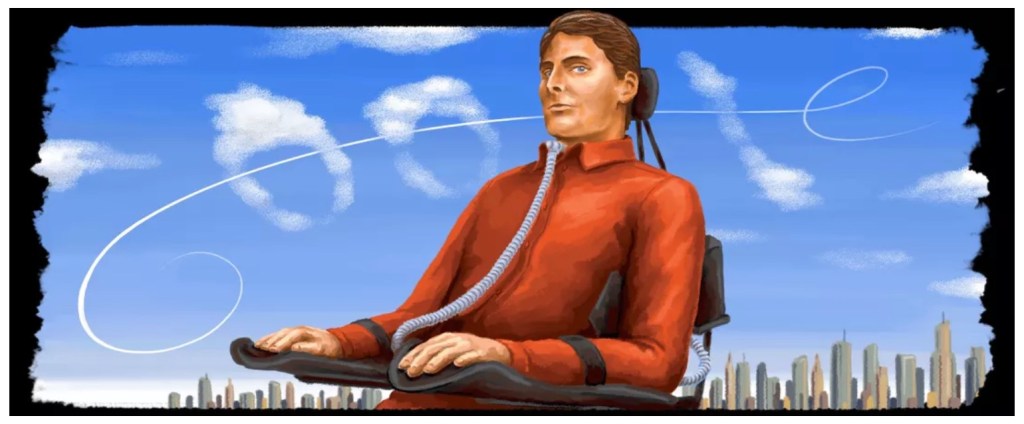
This quote by Christopher Reeve is a perfect example of choosing hope rather than giving it up. He didn’t let his accident end his life, he chose to hope that one day he would walk again and he made great strides towards that goal. While he may not have achieved it he still goes down as a man that didn’t give up and achieved things that others would have deemed impossible. Hope can start small as long as you hold onto it, it grows like a snowball going down a hill. Hope builds confidence that things will turn out fine, which only makes it easier to hope some more.

Christopher Reeve is largely remembered for his flights across the screen while wearing a red cape and sporting a giant S across his chest. But it’s for his later off-screen work, while hoping to walk again, that solidified him as a hero. 

Source: Google Doodle honoring Christopher Reeve

His sensitive portrayal of Superman helped make the 1978 movie a blockbuster that set the stage for a wave of superhero movies. A 1995 horseback riding accident left Reeve paralyzed from the neck down. Even though doctors called the injury one of the worst possible, Reeve showed fortitude, resetting the expectations of what a quadriplegic could do, and he pledged he’d walk again one day.

When a tabloid reported that Reeve had begged his wife to let him die, Reeve responded with an angry denial. “I have not given up,” he wrote. “I will never give up.”

Reeve returned to Hollywood after his accident and made his directorial debut in 1997 with the critically acclaimed TV movie In the Gloaming, starring Glenn Close. During a 2017 fundraising appearance for Reeve’s foundation, a tearful Close shared her remembrance of his character.

“I miss Chris. He was a great man. He had more … he had more moral and mental fortitude than anyone I will ever know. It moved me to the core, and there were times when it even took my breath away. And he was courageous. Against the odds, he had the courage to hope for his dream, which is now our dream — a world of empty wheelchairs.”


Being the Sunshine

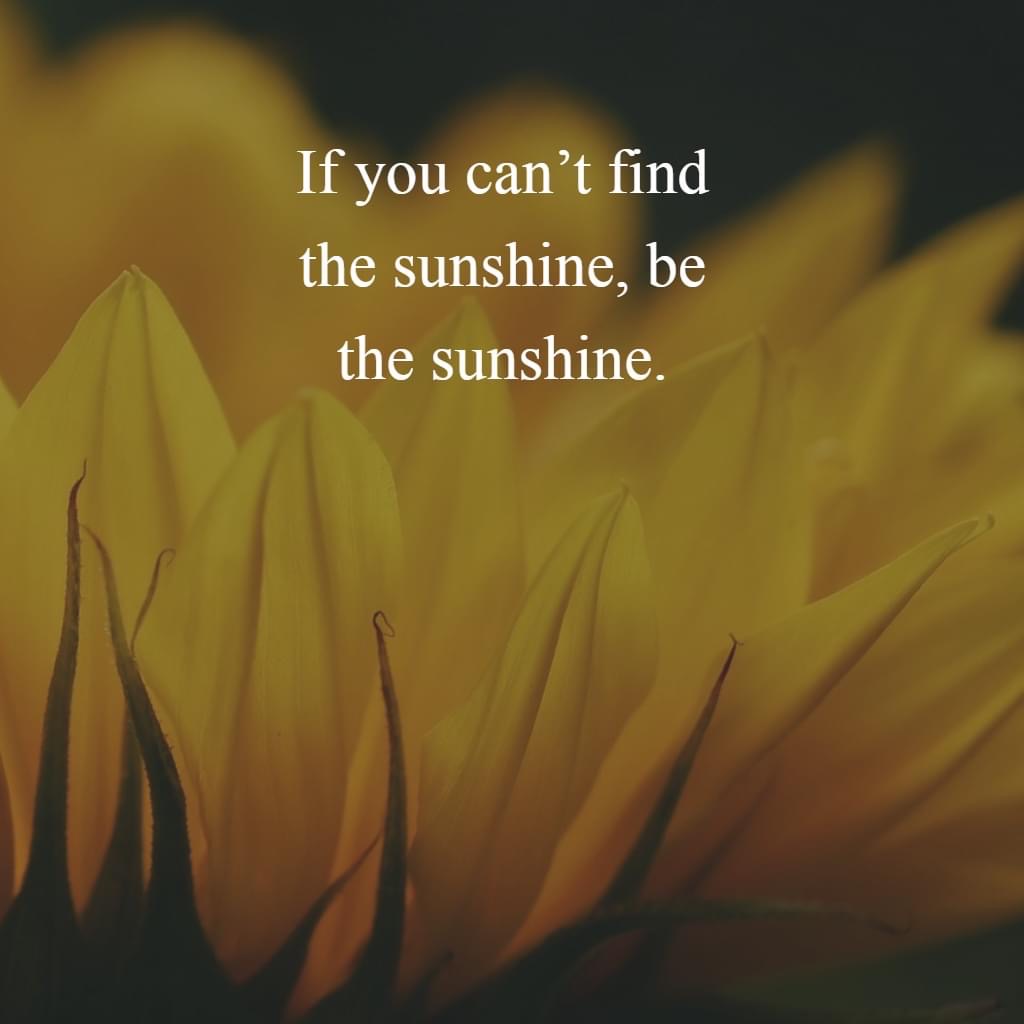
One of my favorite quotes is, “Stay close to the people who feel like sunlight.” I don’t remember when I first read it, but over the past few years, it has taken on a significant importance in my life. I’ve always tried to value quality over quantity. I have a tendency to swiftly and infinitely remove people who no longer bring “sunlight.” I guess it happens as you grow older (and maybe wiser! 😉). Resources become limited and I physically don’t have the capacity for anything less than sunlight. One of the things I’ve found most valuable from this mindset shift, is I become a better person along the way.

It’s truly remarkable how we can adapt and grow when we’re soaking up sunshine rather than spending too much time in the shade. Have you found your sunlight people? They are far and few between, but I promise they’re out there.

How to know if you’ve found your sunlight people:

  • They nurture and respect your vulnerability.
  • Your deepest and most treasured core values are aligned.
  • They are supportive of you in your good times.
  • They are supportive of you in your bad times.
  • Your time with them feels intentional and leaves your cup full.
  • They are consistent and steadfast, yet adaptable to life’s ebbs and flows.
  • You don’t worry about the state of your house when they drop by for a visit. They love you and will never judge the tornado your 2-year-old or your dog or you yourself have created.
  • You want to share your biggest triumphs and your lowest lows with them. And most importantly, you feel safe sharing these with them.
  • They always respect your time and your personal growth. Healthy boundaries are important on both sides.
  • They have gratitude. They truly appreciate everything they have in life, which makes them happier and satisfied.
  • They choose every opportunity to experience joy.

You’ll know your sunshine people when you find them. The warmth is undeniable. Fill your cup with their light and you’ll fill theirs right back.

Here’s a lovely story on being the sunshine!

Once, a teacher and his young assistant arrived at a village where the people were angry and quarrelsome. At their request, he gave them his blessings, and asked them to remain together in the village forever. 

In the next village they met joyful people who were cooperating with one another and caring for each other. The teacher blessed them too, but asked them to leave the village, and spread out across the country.

The puzzled assistant asked the teacher why he had given such different advice. The teacher smiled, “Those angry, argumentative people will only spread their unhappiness wherever they go. So I asked them to stay where they were. But it is better for the caring people to spread out, taking their happiness with them. Then others will also learn to be joyful.”