A Sky Full of Stars

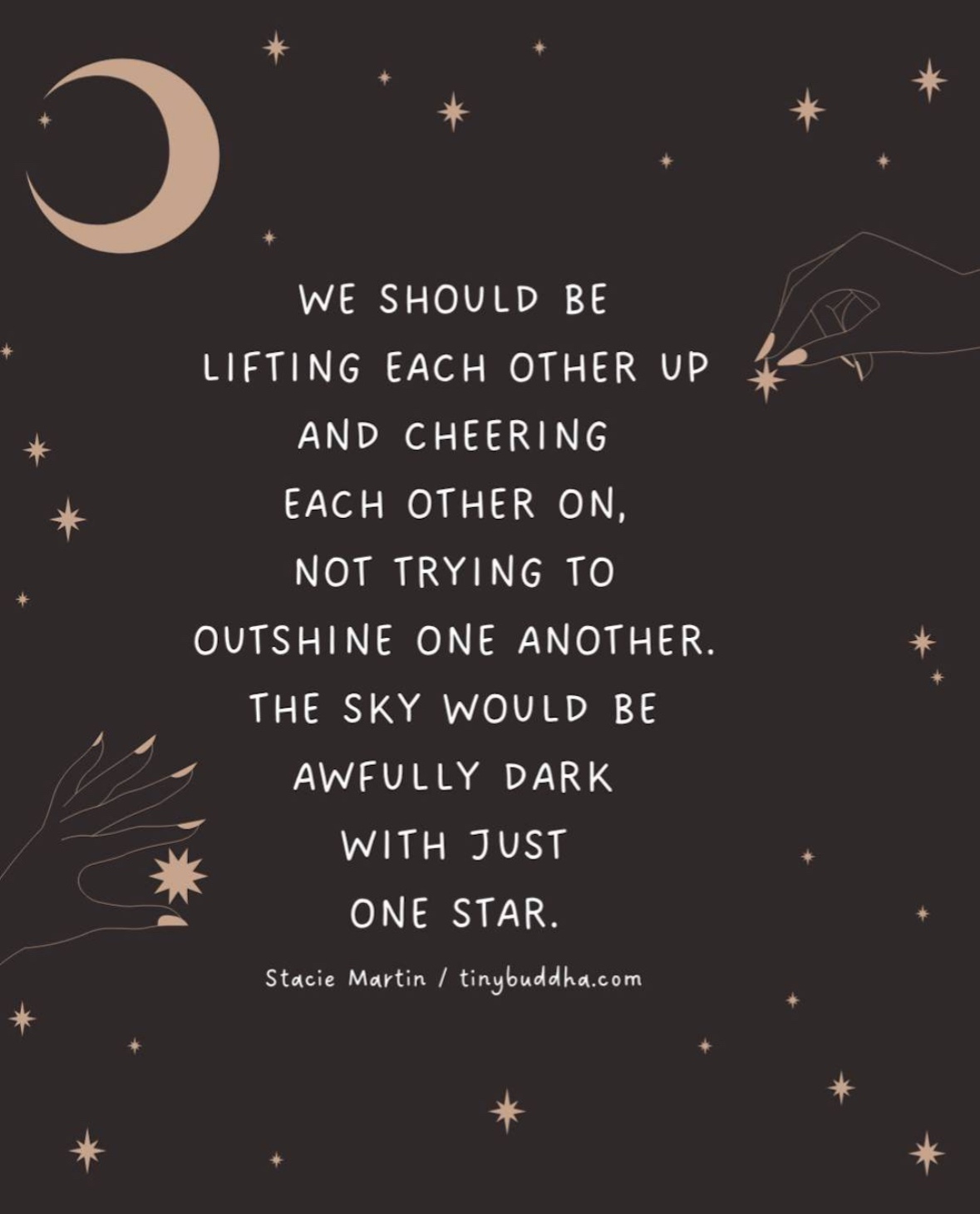
This quote says a lot. We all want to shine, but somewhere along the way we forget that the real magic happens when we shine together. Our workplaces, communities, and even friendships get stronger when we’re rooting for each other, not competing.

We’re taught from a young age to compete — for grades, jobs, recognition, likes. It’s easy to slip into a mindset of “I need to win.” But trying to outshine someone else rarely feels like a win. It’s draining. And it doesn’t create the kind of life we actually want.

Imagine what would happen if we flipped that script. What if instead of asking, “How do I stand out?” we asked, “How can I help someone else rise?” That tiny change — from ego to empathy — makes all the difference. It builds trust, connection, and a culture where everyone feels like they belong.

Think about the night sky. One star is nice. But a sky full of stars is breathtaking. When we cheer for each other, celebrate someone’s win, or share our knowledge freely, we’re adding light to that sky. We’re creating constellations, not just single points of light.

And it doesn’t take much. A public compliment. Sharing your know-how. Giving credit instead of hoarding it. Reframing envy into inspiration. Little actions like these make a huge difference.

The truth is, we don’t lose anything by lifting someone else up — we gain. The world becomes brighter. Our work feels richer. Our relationships deepen. The sky needs more stars, and we each have the power to add to it.

Leadership = No Fear

🛡️The best leaders do more than remove fear.
They create space for others to feel bold.

You’ve seen it before…
One leader walks in the room—
and suddenly, the team sits taller.

They ask harder questions.
They offer braver ideas.
They speak with more certainty.

Not because the leader demanded courage…
But because the leader modeled it.

Confidence is contagious.
So is calm.
So is care.

When people feel safe, they show up strong.
That’s what great leadership unlocks.

Emotional intelligence isn’t soft.
It’s what makes others feel strong in your presence.

Have you seen this kind of leader before?

Servant Leadership

The most powerful CEOs don’t demand respect.
They earn it by serving others first.

Stop trying to control your team.
Start investing in their success.

I spent years believing leadership meant:

• Having all the answers
• Making all the decisions
• Being the smartest in the room

I was dead wrong.

Real leadership power comes from flipping the pyramid.

OLD WAY (Top-Down Control):
❌ Prioritizes power
❌ Demands obedience
❌ Values profit over people

NEW WAY (Servant Leadership):
✅ Builds trust and ownership
✅ Puts people’s growth first
✅ Empowers the team

Here’s how to make the shift:

𝟭. 𝗣𝗿𝗮𝗰𝘁𝗶𝗰𝗲 𝗗𝗲𝗲𝗽 𝗘𝗺𝗽𝗮𝘁𝗵𝘆
→ Connect with their challenges
→ Understand what drives them
→ Show you genuinely care

𝟮. 𝗟𝗶𝘀𝘁𝗲𝗻 𝗟𝗶𝗸𝗲 𝗬𝗼𝘂 𝗠𝗲𝗮𝗻 𝗜𝘁
→ Put down your phone
→ Ask “What else?”
→ Listen to understand, not respond

𝟯. 𝗥𝗲𝗰𝗼𝗴𝗻𝗶𝘇𝗲 𝗧𝗵𝗲𝗶𝗿 𝗦𝘁𝗿𝗲𝗻𝗴𝘁𝗵𝘀
→ Catch people doing things right
→ Call out their unique talents
→ Help them see their own potential

𝟰. 𝗧𝗵𝗶𝗻𝗸 𝗟𝗼𝗻𝗴-𝗧𝗲𝗿𝗺
→ Anticipate future obstacles
→ Guide, don’t dictate
→ Plant seeds for tomorrow’s success

𝟱. 𝗟𝗲𝗮𝗱 𝘄𝗶𝘁𝗵 𝗜𝗻𝘁𝗲𝗴𝗿𝗶𝘁𝘆
→ Do what you say
→ Admit your mistakes
→ Choose the hard right over the easy wrong

𝟲. 𝗨𝗻𝗹𝗼𝗰𝗸 𝗧𝗵𝗲𝗶𝗿 𝗚𝗿𝗼𝘄𝘁𝗵
→ Teach them your job
→ Give stretch assignments
→ Celebrate when they surpass you

𝟳. 𝗕𝘂𝗶𝗹𝗱 𝗥𝗲𝗮𝗹 𝗖𝗼𝗺𝗺𝘂𝗻𝗶𝘁𝘆
→ Create psychological safety
→ Encourage collaboration
→ Make the team stronger than any individual

What happens when you lead this way?

• Engagement skyrockets
• Innovation explodes
• Turnover plummets
• Culture transforms
• Performance soars

This isn’t soft leadership.
This is smart leadership.

Ready to try it?

Tomorrow, walk into work and ask yourself:
“How can I serve my team today?”

Then watch what happens.

The best leaders aren’t at the top of the pyramid.
They’re at the bottom, lifting everyone else up.

Managing Your Boss

Your boss holds the keys to your next promotion.

But managing up isn’t about playing politics.
It’s about being smart.

Most people think managing up means brown-nosing.
Being fake. Manipulating. Playing games.

They’re dead wrong.

Managing up is about serving your boss
the same way you serve your team.

Because when your boss succeeds,
your whole team rises.
Including you.

Think about it.

You spend hours helping your team grow.
Supporting their development.
Clearing their roadblocks.

Why wouldn’t you do the same for the person who
has a big impact on your career trajectory?

You see, the truth is…

Your boss is drowning in priorities.
Fighting battles you’ll never see.
Making decisions with half the information.

When you make their life easier,
it comes back to help you too.

Success is a byproduct of helping others.

It’s not politics.
It’s partnership.

Send that weekly update.
Bring solutions, not problems.
Flag issues before they blow up.

Because your boss can be either
your biggest champion
or your biggest barrier.

In most cases, you get to choose which one.

Managing up is leadership in action.
Master it.

When the Match Steps Away

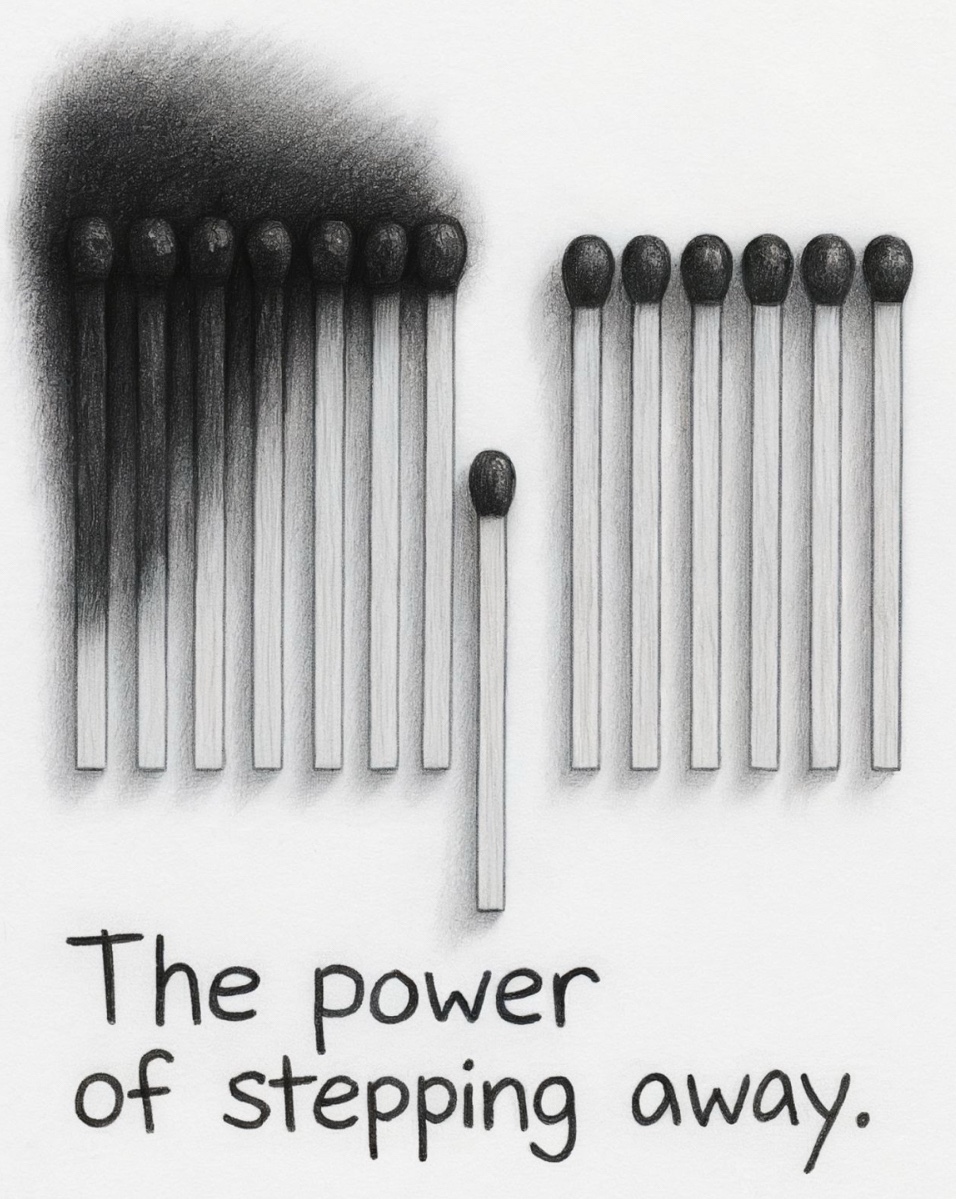
In the illustration, one matchstick stands apart from a line of others, slightly removed. The rest are close together, flames creeping toward the next in line. At first glance, it’s a simple image. But look again — it’s a quiet manifesto on self-preservation, boundaries, and courage.

We often glorify staying in the fire. We call it commitment, hustle, or “giving it our all.” We stand shoulder to shoulder, ready to light up, ready to burn out. Yet, the simple act of stepping back — of creating distance — can save not just you but also the people around you.

When a match separates itself from the line, the fire stops spreading. The others may burn, but the isolated one remains intact. It’s a small, silent rebellion against inevitability.

Why Stepping Away Matters

Stepping away doesn’t mean quitting. It means creating space for reflection, healing, and recalibration. It’s an intentional pause before you’re consumed by the demands of others, by expectations, or by cycles of negativity.

Like the match in the illustration, distance helps you break patterns. In workplaces, it could mean declining a meeting that adds no value. In relationships, it could mean saying no to a dynamic that drains you. In your inner life, it could mean taking a walk, meditating, or simply doing nothing for a while.

Breaking the Chain Reaction

Burnout, conflict, and overcommitment spread like fire — fast, destructive, and indiscriminate. But unlike fire, you can choose to disrupt the chain reaction. You can step away before the spark reaches you. That small act of self-awareness has a ripple effect. Others may see you and realize they can step back too.

Choosing Distance as Strength

The cultural narrative often treats “stepping back” as weakness. But it’s a form of strength. It’s choosing sustainability over spectacle, long-term impact over short-term exhaustion. It’s also about regaining perspective — when you’re too close to the flames, everything looks like an emergency.


A Call to Action

The next time you feel overwhelmed, picture that lone matchstick. Ask yourself: “What would it look like to step back now?” Maybe it’s a boundary you need to set, a conversation you need to delay, or a weekend you need to protect.

Your power lies not just in igniting but in preserving. Sometimes the bravest, smartest thing you can do is to step away — before you burn out.

10 Quiet Ways to Be More Assertive At Work

Assertiveness is about expressing one’s opinions, feelings, and needs in an open, honest, and respectful manner.

Being assertive is like having a superpower in the workplace. It helps you communicate your thoughts clearly and confidently – whether it’s pitching new ideas, asking for what you need, or setting boundaries.

Assertiveness at work is an important skill that can boost your professional journey. It allows you to advocate for yourself, ensures mutual respect among colleagues, and leads to more effective communication.

People respect those who stand up for themselves while respecting others.

Great Culture

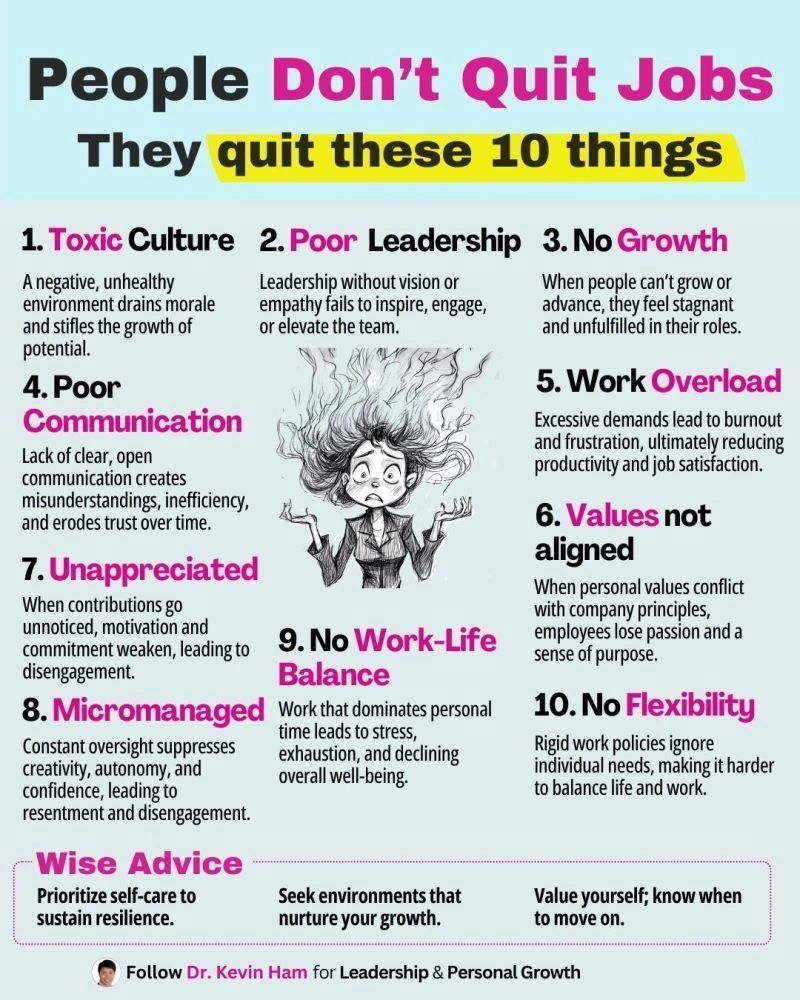
People don’t quit jobs.

They quit these 10 things:

Have you ever wondered why talented people leave their roles?
It’s rarely just about the job—
it’s the environment, the leadership, the values, and more.

In today’s workplace, people crave more than just a paycheck.
They seek purpose, trust, and growth.

Here are the top 10 reasons why people walk away from jobs, even when it means stepping into the unknown:

1. Toxic Culture
An unhealthy environment drains morale and stifles potential.

2. Poor Leadership
Leadership without vision or empathy fails to inspire and elevate.

3. No Growth
People feel unfulfilled when they can’t learn or advance.

4. Poor Communication
Misunderstandings and inefficiency stem from a lack of clear communication.

5. Work Overload
Excessive demands lead to burnout, not productivity.

6. Values Not Aligned
When company values clash with personal beliefs, passion fades.

7. Unappreciated
Unnoticed contributions weaken motivation and engagement.

8. Micromanaged
Constant oversight kills creativity and autonomy.

9. No Work-Life Balance
Work that dominates life erodes well-being and happiness.

10. No Flexibility
Rigid policies make it hard for employees to balance life and work.

Wise Advice:
– Prioritize self-care to sustain resilience.
– Seek environments that nurture your growth.
– Value yourself; know when to move on.

For leaders, this is a call to action.
People leave jobs where they don’t feel seen, supported, or valued.
Take a moment to assess—
Are you creating an environment that nurtures potential or one that drains it?

Remember: Culture isn’t what you say; it’s what you practice daily.
Retain great people by building a place they want to stay.

Honoring Without Holding On

There’s a quiet power in remembering without clinging.

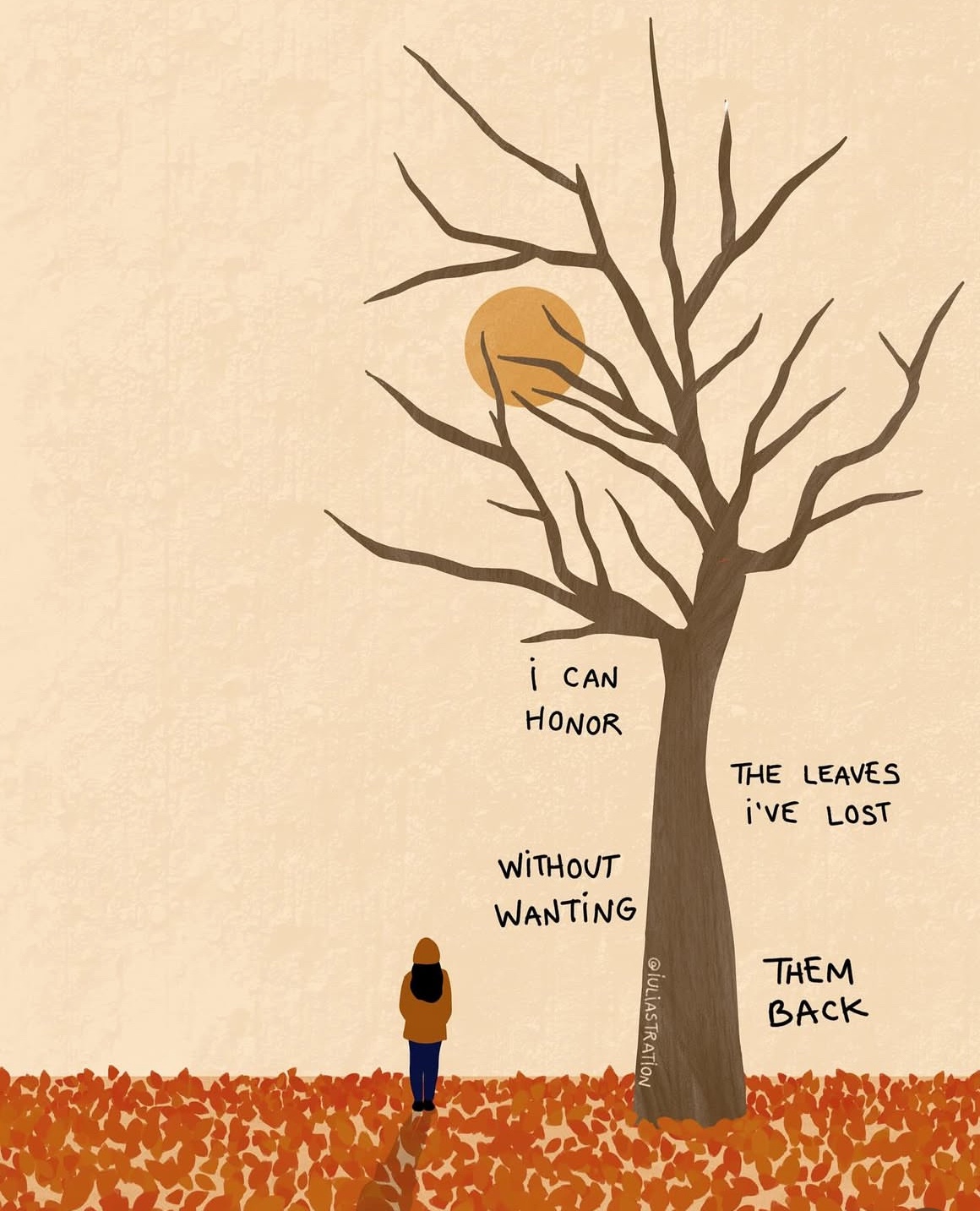
The image of leaves falling, drifting, and being carried away by the wind mirrors our own lives. We all lose things — people, moments, identities, dreams — pieces of ourselves we once thought were permanent. And yet, just as trees let go of their leaves every autumn, we too must learn the grace of release.

To honor without wanting is not to erase. It’s to acknowledge the beauty of what was, to give it space, and to allow it to live in memory without gripping it so tightly that it stifles our growth. We can cherish the leaves we’ve lost, the seasons we’ve outgrown, and the selves we’ve left behind.

There’s a freedom in this. When we stop trying to reclaim what’s gone, we create space for what is yet to come. Just as bare branches prepare for new buds, we too prepare for new experiences, new relationships, new versions of ourselves.

Honoring is an act of gratitude. Wanting is an act of attachment. When we honor without wanting, we allow the past to rest peacefully and the future to unfold without fear.

The leaves you’ve lost are not mistakes. They are the proof that you have lived, grown, and evolved. You carry their essence in your rings, your roots, your quiet strength.

Let the wind take what it must.

Let memory hold what it can.

And let your heart stay open for the seasons ahead.

Communicate Like A Leader

10 phrases great leaders use instead:

❌ “Sorry for not following up sooner.“
✅ “I appreciate your patience.“

❌ “Sorry for the inconvenience.“
✅ “Thanks for your flexibility.“

❌ “Sorry for any misunderstanding.“
✅ “Let’s make sure we’re on the same page.“

❌ “Sorry for the mix-up.“
✅ “Thanks for helping us sort this out.“

❌ “Sorry if this is confusing.“
✅ “I’m glad we’re aligning now.“

❌ “Sorry for the short notice.“
✅ “I appreciate your quick response.“

❌ “Sorry I wasn’t clear.“
✅ “Let me clarify that for you.“

❌ “Sorry if I’m interrupting your flow.“
✅ “I’d like to add something here.“

❌ “Sorry for not catching that earlier.“
✅ “Thanks for pointing that out.“

❌ “Sorry for the miscommunication.“
✅ “I’m glad we’re on the same page now.”

– – – –

Your words shape how others see you,

and how you see yourself.

Over-apologizing signals self-doubt.

And it weakens your words when an apology is needed.

12 Objection Handling Red Flags

You’re losing deals and don’t know why.

Here’s what’s really killing them ⬇️

Objection handling isn’t about winning.
It’s about connecting.

Most sellers get this wrong.

They see objections as a barrier.
Something to fight.
Something to overcome.

But poor objection handling doesn’t just stall deals.
It ends them.

Here are 12 red flags that stop deals in their tracks:

→ Getting defensive fast
You argue instead of staying calm.

→ Talking over them
You interrupt instead of listening fully.

→ Skipping clarification
You don’t ask, “What do you mean by that?”

→ Overloading with info
Drowning them in facts rarely changes minds.

→ Ignoring emotions
You treat objections like logic-only.

→ Assuming you’re right
You push your angle without validating theirs.

→ Avoiding tough topics
You sidestep objections instead of tackling them.

→ Weak reframes
You spin it—but it doesn’t stick.

→ Pushing too soon
You rush the close before resolving the concern.

→ Repeating the pitch
You just repeat benefits—not what they need.

→ Blaming the prospect
Making them feel wrong kills the deal.

→ No follow-up plan
You handle the objection… then go silent.

These mistakes aren’t just tactical.
They damage trust.
They break rapport.
And they shut down conversations that could have led to a yes.

Strong sellers know better.

→ They listen without interrupting.
→ They clarify without assuming.
→ They validate emotions before offering logic.
→ And they always have a follow-up plan.

🧠 Remember: An objection isn’t rejection.
It’s a request for better understanding.