Be like a Turtle

There’s something fascinating about the sea turtle. It doesn’t cling to one shore, nor does it need a fixed address. Its home is with it—always. No matter how vast the ocean or how unpredictable the tides, the turtle belongs wherever it goes.

What if we lived like that?

In life, we often tie our sense of security to places, people, or circumstances. When those change—as they inevitably do—we feel lost. But what if our home wasn’t a physical space? What if it was something deeper—our values, our resilience, our faith, our sense of self? When you carry those within you, you’re never truly adrift.

And then there’s the second lesson: progress. Each stroke of a sea turtle’s flipper seems insignificant against the expanse of the ocean. Yet, stroke by stroke, it journeys across thousands of miles. The same applies to our lives. Big leaps are rare. What really takes us far are the small, consistent actions we take every day.

So, wherever the tides of life take you, carry your home within—and never underestimate the power of your small, steady strokes. They might just take you across an ocean!
The Iceberg of Micromanagement

A micromanager is someone you pay to make your best people quit.

Not because they’re evil.
But because they don’t trust.

They kill initiative without even realizing it.

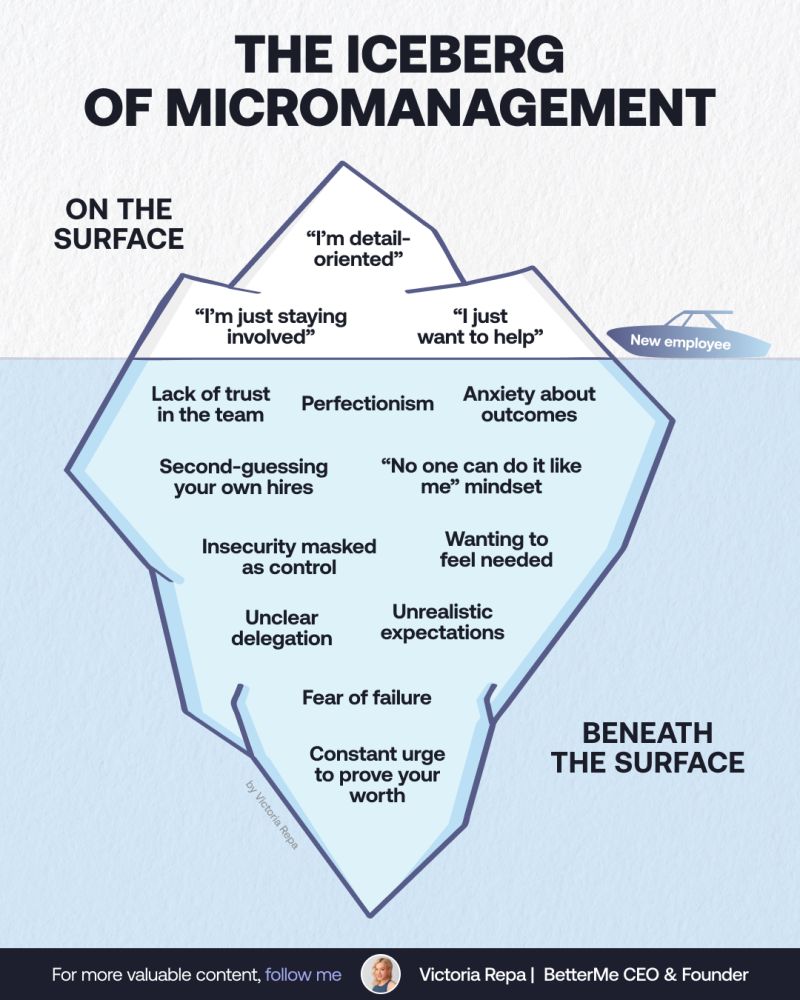
On the surface, it sounds harmless:

💬 “I just want to help.”
💬 “I’m detail-oriented.”
💬 “I’m just staying involved.”

But beneath the surface lies a different story:

— Fear of failure.
— Perfectionism.
— Unclear delegation.
— Wanting to feel needed.
— Unrealistic expectations.
— Lack of trust in the team.
— Anxiety about outcomes.
— Insecurity masked as control.
— Second-guessing your own hires.
— Constant urge to prove your worth.
— “No one can do it like me” mindset.

Micromanagement rarely starts with bad intentions.
it starts with fear, doubt, and pressure.

But left unchecked —
it kills creativity, ownership, and trust.

Great leaders don’t control.
They build trust, create clarity, and let go.

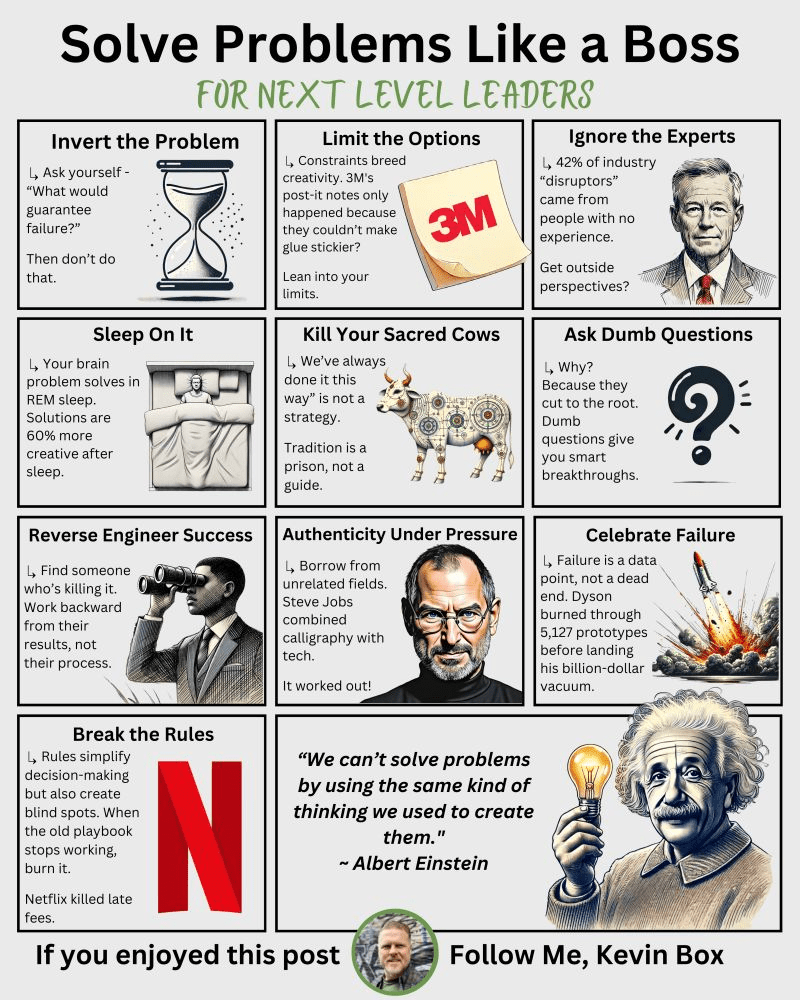
Solve Problems Like a Boss

“You can’t solve a problem with the same mindset that caused it.” 

-Albert Einstein 

Most will try to logic their way out of a challenge using the same thinking that led them there in the first place.

Top-tier problem-solvers shift their thinking. 

According to McKinsey, companies focused on creative problem-solving grow revenue 2.2x faster than their peers. (McKinsey & Co., 2022)

Here’s how next-level leaders think differently:

1/ Flip the Problem

↳ Ask: “What would make this fail instantly?”

↳ Then avoid exactly that.

2/ Shrink the Choices

↳ Fewer options = more innovation.

↳ 3M’s sticky note only happened because they were stuck with weak glue.

3/ Tune Out the “Experts”

↳ 42% of market disruptors had zero experience in the field.

↳ Outsiders drive paradigm shifts.

4/ Let It Marinate

↳ REM sleep unlocks breakthroughs.

↳ Well-rested brains produce 60% more creative ideas.

5/ Challenge Legacy Thinking

↳ “We’ve always done it this way” isn’t a strategy—it’s a trap.

↳ Sacred cows make the best burgers.

6/ Ask Basic Questions

↳ Like “Why?”

↳ Simplicity slices through complexity.

7/ Deconstruct the Win

↳ Study the outcome, not the method.

↳ Start with what worked—and reverse it.

8/ Mix Fields, Not Just Ideas

↳ Cross-pollinate from unexpected places.

↳ Jobs fused calligraphy + tech = Apple’s design legacy.

9/ Redefine Failure

↳ It’s feedback, not final.

↳ Dyson went through 5,127 iterations to get it right.

10/ Break the Mold

↳ Rules often protect old models.

↳ When the playbook stalls—rewrite it.

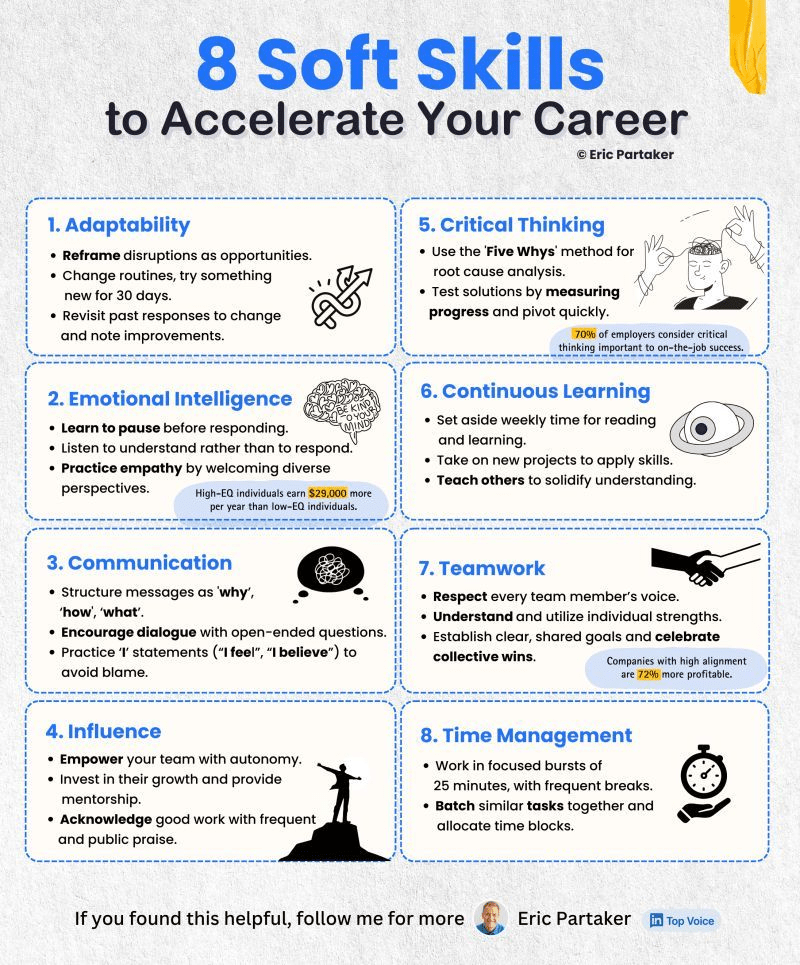
Soft Skills To Accelerate Your Career

Harvard research shows that 85% of job success

comes from soft skills.

Not technical skills. Not certifications.

But your ability to lead, communicate, and adapt.

Here’s what top performers do differently:

✅ They roll with change, not resist it.

✅ They influence through action, not ego.

✅ They listen to understand, not just to reply.

✅ They solve problems, not just complete tasks.

✅ They keep learning, even when it’s not required.

✅ They communicate clearly, even under pressure.

✅ They collaborate, instead of competing internally.

✅ They protect their time like it’s money (because it is).

Master these and you won’t just get ahead.

You’ll stay ahead.

Keep Moving, Keep Becoming

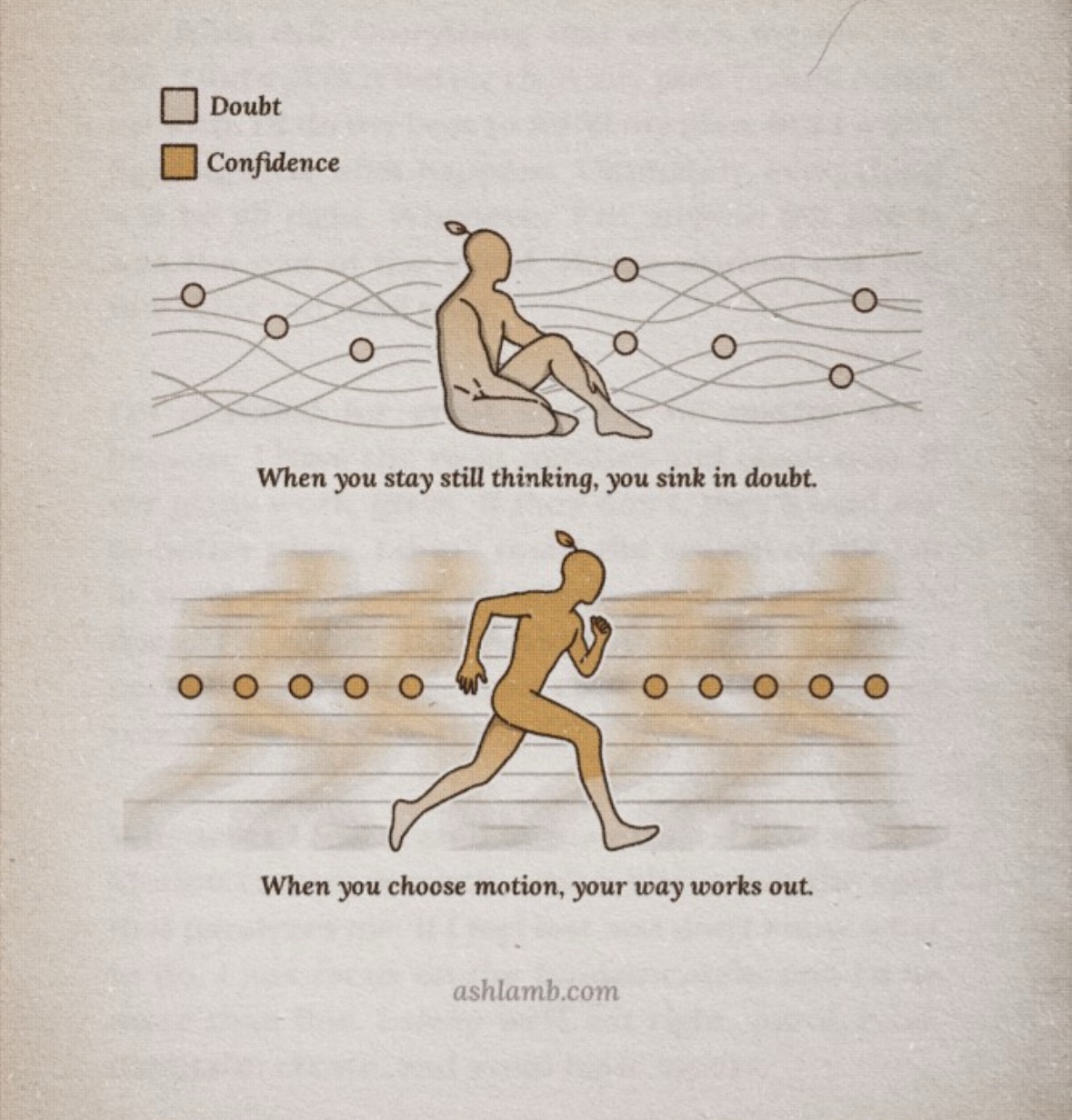
When you stay still thinking, you sink in doubt.

When you choose motion, your way works out.

We’ve all been there—paralyzed by overthinking, running through every possible “what if” until the weight of uncertainty holds us back. Standing still can feel safe, but in truth, it often traps us in doubt.

Motion, on the other hand, doesn’t always guarantee clarity right away, but it does guarantee progress. The act of moving—whether that’s taking a small step toward your dream, having a difficult conversation, or simply deciding to try—creates momentum. And momentum has a funny way of clearing paths we couldn’t see when we were stuck in place.

Think about water. A stagnant pool grows murky. But a flowing river? It carves valleys, shapes landscapes, and finds its way to the sea. We are no different. Staying still lets fear fester; moving forward creates growth.

The beauty is, your steps don’t have to be perfect. They don’t have to be fast. They just have to be taken. Because in motion, you learn. In motion, you adapt. In motion, you uncover answers that sitting still could never give you.

So when doubt tries to anchor you, remember: the way out is not in thinking harder—it’s in moving forward, however small the step.

Keep moving, and life has a way of working itself out!

From Toxic To Kind

Leadership isn’t about forcing or controlling.
It’s about leading by example and inspiring your team.

I’ve changed, and so can any leader.

Here are 10 phrases of a Kind Leader:

↳ “Let’s try our best.”
↳ “How can I support you?”
↳ “What can we learn from this?”
↳ “What obstacles are you facing?”
↳ “I’m happy to hear your feedback.”
↳ “Feel free to ask questions to clarify.”
↳ “Let’s find the best way to approach this.”
↳ “I’m open to new ideas—what’s your suggestion?”
↳ “Let’s review your goals and how we can achieve them.”
↳ “Let’s discuss how we can meet both of our expectations.”

The key to these phrases:
Don’t just say them—truly mean them.

It’s the intention behind your words that builds trust and transforms your leadership.

How to help others thrive in the workplace

This isn’t taught in schools but it should be👇

10 Acts of Kindness at Work.

Creating a positive work environment:

– Increases productivity

– Increases job satisfaction

– Increases employee retention

Here are 10 ways to support your colleagues:

1. Offer assistance: See someone stuck? Lend a hand.

2. Share knowledge: Organise quick training sessions to teach valuable skills.

3. Be a good listener: Listen without judgment. Sometimes, that’s all someone needs.

4. Provide constructive feedback: Be specific and focus on actions, not people.

5. Respect time: Keep meetings brief and avoid interruptions.

6. Recognise efforts: Celebrate wins with a genuine “well done.”

7. Mentor others: Share your experiences and guidance with junior colleagues.

8. Be reliable: Keep your promises to build trust.

9. Foster positivity: Stay cheerful and focus on the positive.

10. Collaborate effectively: Share credit and support team ideas.

Small acts of kindness can make a big difference in someone’s workday.

We can create a more supportive and thriving workplace for all.

Depth Changes the Game

On the surface, things can seem flat, dull, or even a little lame. We scroll through headlines, glance at people, skim opportunities, and often decide too quickly what something is worth. But surfaces are deceiving. They’re meant to give us just enough to recognize what’s there, not nearly enough to understand it.

Go a little deeper, though, and the story changes. That “boring” subject reveals fascinating details once you scratch past the basics. That “ordinary” person carries experiences and dreams you’d never imagine until you listen. Even challenges that look like roadblocks often turn into growth opportunities when you lean in and explore instead of stepping away.

It’s easy to live in the shallow end where everything feels familiar, but depth is where life gets interesting. Just like in the ocean, the surface may look calm and unremarkable, but dive in and you’ll find an entire world teeming with color, movement, and hidden treasures.

So next time you’re tempted to judge something—or someone—too quickly, remember: the surface rarely tells the full story. Go deep enough, and it’s a whole new game!

7 Public Speaking Cheat Codes

To ace your next talk or presentation.

You don’t need to be born charismatic.

You just need the right cheat codes – proven shortcuts that make you sound more confident, clear, and compelling.

Having helped 300 CEOs become top 1% speakers, I often start with these 7 cheat codes.

It’s the 80/20 of public speaking and presenting.

💥 1. Open with a bang

Your first 5 seconds decide whether people listen or check out.

Cheat code: Start with a bold claim, question, or story – never a thank-you.

🎯 2. Use the Rule of One

One big idea per talk. One key message per slide.

Cheat code: Ask yourself: If they remember just one thing – what should it be?

⏸️ 3. Pause like a pro

Silence adds drama and gives your message space to land.

Cheat code: Pause before and after your key points.

❤️‍🔥 4. Speak to the heart, then the head

Facts don’t stick. Emotions do.

Cheat code: Start with a story. Back it up with logic. Win both hearts and minds.

👐 5. Let your hands tell your story

Your body speaks before your mouth does.

Cheat code: Open palms = open mind. Use gestures to emphasize, not distract.

🧹 6. Kill the filler

“Uhmm”, “like”, “you know”… drain your presence.

Cheat code: Replace fillers with a pause. It makes you sound confident and in control.

📱 7. Record > Review > Refine

Want fast feedback? Hit record.

Cheat code: Watch your body language, tone, and filler words. One tweak = big impact.

💡Great speakers aren’t born. They’re built – one cheat code at a time.

Which one are you going to try next?

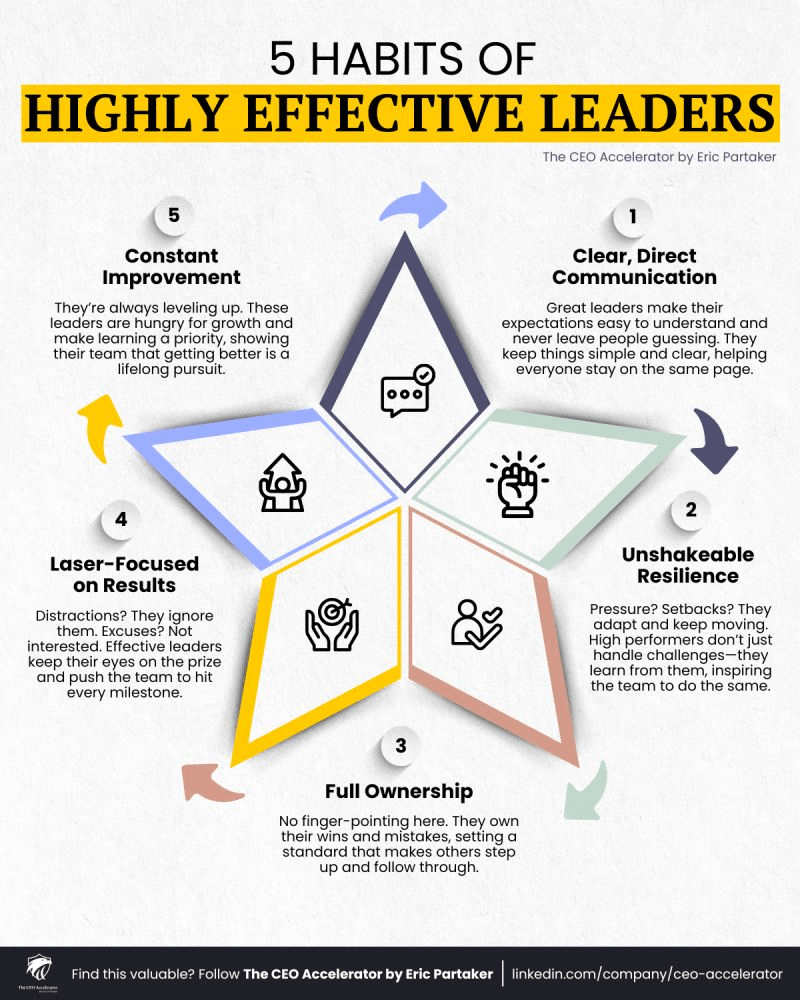
Great leaders aren’t born exceptional.

They master these 5 habits that set them apart.

Look closely at any highly effective leader

and you’ll spot these patterns in action:

1. Clear, Direct Communication

↳ They strip away the confusion

↳ They keep their message focused

↳ They make expectations clear

2. Unshakeable Resilience

↳ They face storms head-on

↳ They guide others through challenges

↳ They learn from each setback

3. Full Ownership

↳ No blame games here

↳ They own both wins and failures

↳ They follow through on commitments

4. Laser-Focus on Results

↳ They stay on target

↳ They drive steady progress

↳ They don’t accept excuses

5. Constant Improvement

↳ They raise their standards regularly

↳ They push themselves to grow

↳ They inspire others to level up

The secret nobody tells you:

These aren’t natural gifts.

They’re skills you can build.

Starting today.

One habit at a time.

One decision at a time.

Because great leadership isn’t about being perfect.

It’s about getting better every single day.