Same Storm, Different Boats: Why Kindness Is Our True Compass

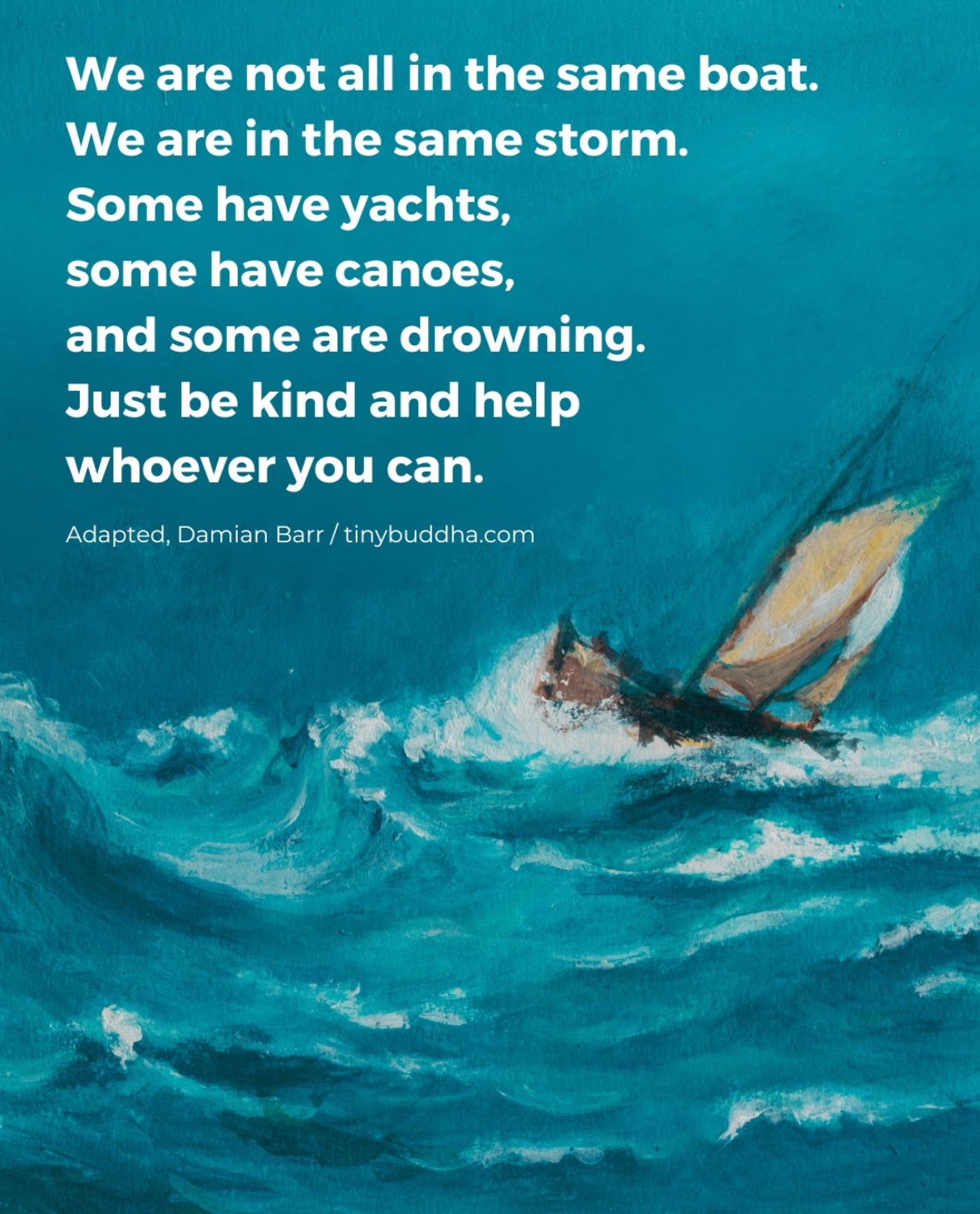
Came across this quote on social media and it made me realise that while we may all face the same challenges, our capacity to endure, adapt, or escape them isn’t equal. The storm is shared, but the boats? They vary wildly.

Some are riding it out in luxury, protected and well-stocked. Others are paddling desperately in canoes with leaks they can barely patch. And some are simply trying to stay afloat, treading water with every ounce of energy they have left.


The Illusion of the “Same Boat”

It’s tempting to say, “We’re all in this together,” but that sentiment often ignores the massive disparities in privilege, support, and opportunity. The pandemic, for example, didn’t hit everyone the same. Some transitioned to remote work with ease, while others lost jobs, homes, or loved ones. Some had savings; others had debts. Some had networks to fall back on; others faced isolation.

Recognizing this disparity isn’t about guilt—it’s about awareness. It’s about seeing beyond our own boat to understand the storm through someone else’s eyes.


Kindness Isn’t a Luxury—It’s a Lifeline

When we realize not everyone has the same resources or stability, kindness becomes more than a virtue. It becomes essential. A smile, a listening ear, an offer of help—these aren’t small gestures. They’re lifelines.

Kindness doesn’t have to be grand. It can be as simple as checking in on a colleague, being patient with someone having a rough day, or using your platform to amplify voices that often go unheard.


Helping Doesn’t Mean You Have to Be the Lifeguard for Everyone

You’re not expected to save the entire world. But maybe you can toss a rope to someone drowning. Maybe you can let someone into your canoe. Maybe your yacht has enough room to offer temporary shelter.

Whatever your situation, look around. See who’s struggling, and extend your hand in whatever way you can. That’s what makes communities stronger, storms survivable, and hope possible.


The Moral of the Storm

We can’t always calm the storm. But we can make it a little easier for someone else to weather it.

So next time you find yourself wishing someone would just “get over it” or “try harder,” pause. Ask yourself: What kind of boat are they in? And more importantly: What kind of person do I want to be in this storm?

Let’s choose kindness. Let’s row together.

Mirror Over Microscope: Why Reading Yourself Beats Reading Others

We live in a world obsessed with reading people.

Body language hacks. Microexpression analysis. Countless articles on “how to know what someone is really thinking.”

But here’s a wild idea: What if the person you most need to understand… is you?

“Read yourself, not people.”

That quote hit me like a splash of cold water — simple, but piercing. Because let’s be honest: It’s way easier to analyze others than to face what’s going on inside our own minds.

The Illusion of Control

Trying to read others gives us the illusion of control.

“If I can predict their reaction, I’ll know what to say.”

“If I can read their mood, I can protect myself.”

But people are unpredictable. Their emotions shift. Their intentions aren’t always visible. And even when you think you’ve got someone figured out… you probably don’t.

On the flip side, reading yourself? That’s a superpower.

When you understand your own triggers, biases, fears, and patterns — you stop living on autopilot. You show up with more clarity. You react less and respond more. You live with intention, not assumption.

Questions > Assumptions

Instead of asking:

“Why did they say that?”

“What are they thinking?”

“Are they judging me?”

Ask yourself:

“Why did that comment bother me?”

“What am I feeling right now?”

“Where is this insecurity coming from?”

That inner awareness? It rewires how you show up in relationships, work, and life.

The Real Flex: Emotional Literacy

Forget mind reading. Emotional literacy — the ability to read your own thoughts and feelings with honesty — is where growth lives.

That’s where confidence builds. That’s where you stop needing approval, because you already know who you are and what matters to you.

So yeah, read the room. But read yourself first.

Because when you know your own story, you don’t get lost in someone else’s.

“The deepest journey you’ll ever take is the one inward.”

So the next time you find yourself trying to decode someone else, pause.

Ask yourself: What’s going on inside me right now?

You might be surprised how many answers you already hold.

What’s one thing you’ve learned about yourself lately that changed the way you see the world?

Drop it in the comments — let’s learn from each other’s reflections.

The Assumption Trap: Why People Don’t Think Like You

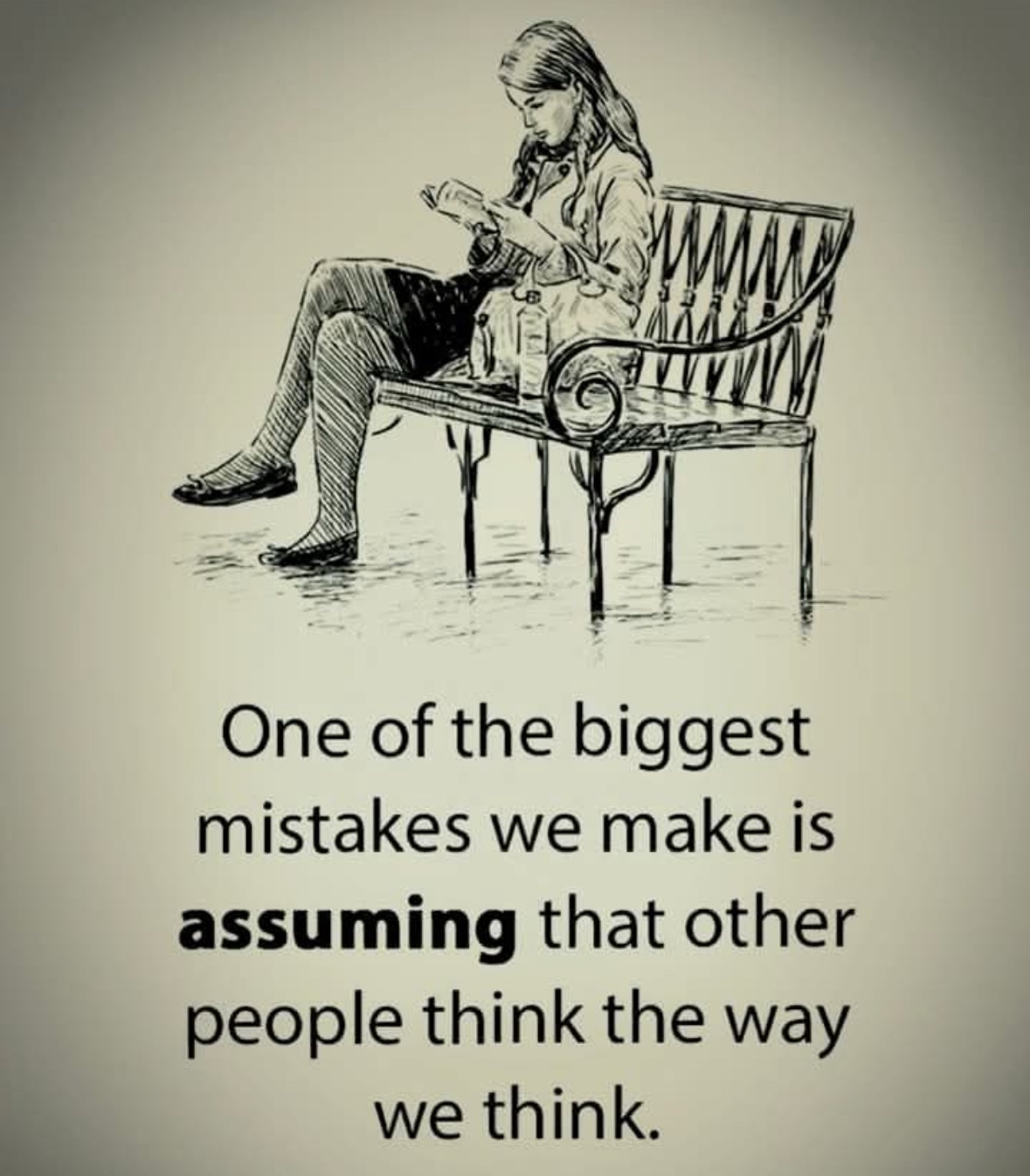
Have you ever been frustrated because someone didn’t “get” what you were saying? Or surprised when a colleague reacted differently than you expected? One of the biggest mistakes we make — in work, relationships, and everyday life — is assuming that other people think the way we think.

This assumption is subtle. It sneaks in when we expect others to share our values, interpret situations the same way, or make decisions using the same logic. But the truth is, every person brings a different lens to the world — shaped by their upbringing, experiences, personality, culture, and even mood in the moment.

Here’s why this matters.

1. It affects how we communicate.

When we assume someone understands our context or priorities, we might leave out critical details or misinterpret theirs. Clear communication means stepping into their shoes — not just explaining our thoughts, but considering how they might receive them.

2. It affects how we lead.

Great leaders don’t just give directions — they take time to understand what motivates their team, what worries them, and how they process feedback. Empathy isn’t just a soft skill; it’s the secret to influence and connection.

3. It affects our relationships.

Most arguments don’t come from malice — they come from mismatched assumptions. What seems obvious to you may not even be on someone else’s radar. The cure? Curiosity. Ask more questions. Listen more deeply. Clarify before you conclude.


The mindset shift

Instead of thinking, “Why would they do that? I would never…” try, “What might make sense from their perspective?” This small shift opens the door to better conversations, stronger teams, and less frustration.

So the next time you feel misunderstood, pause. Remember: others aren’t wrong — they’re just seeing the world differently.

And that’s not a flaw. It’s what makes human connection such a powerful and humbling adventure.

Pass the Flame: The Power of Lifting Others Without Losing Your Spark

Imagine a quiet room where a single candle glows gently in the dark. Now picture that candle reaching out and lighting another. Then another. And another. Soon, the entire room is filled with light—not because the first candle burned brighter, but because it shared its flame.

There’s something deeply powerful in the idea that a candle loses nothing by lighting another. In fact, it gains something: connection, warmth, and the shared glow of a brighter world.

The Candle as a Metaphor for Kindness

In our fast-paced, hypercompetitive world, it’s easy to forget that helping others doesn’t diminish us—it expands us. Whether it’s mentoring a colleague, lifting up a friend, sharing knowledge, or simply offering a word of encouragement, kindness is contagious. Like fire, it spreads rapidly and changes everything it touches.

Sharing your light doesn’t mean your flame flickers—it means you become a spark for something greater.


Why This Matters in Leadership, Community, and Life

True leadership is not about holding onto your light—it’s about multiplying it. The best leaders, teachers, and friends are those who help others shine. In the workplace, this could look like supporting a junior teammate. In your community, it might mean volunteering your time or mentoring someone who needs guidance.

Every time you share your light, you create a ripple effect of positivity, courage, and growth.

The Illustration: Lighting Up the World

When I saw this illustration, I was reminded that generosity, support, and love don’t cost us anything, but they mean everything to someone else. One candle. One moment. One act of kindness. That’s all it takes to brighten someone’s world.

“Thousands of candles can be lighted from a single candle, and the life of the candle will not be shortened. Happiness never decreases by being shared.” – Buddha


Pass the Flame

So, here’s your challenge: Be that candle. Light another. Whether it’s today, tomorrow, or sometime soon—be the reason someone else glows a little brighter.

Because in the end, we’re all candles waiting to be part of a greater light.

The IKEA Marriage Test: And a Toddler with an Allen Key

Before you marry someone, go to IKEA together, buy a piece of furniture, bring it home, and build it. If you can successfully navigate that process without wanting to kill each other, you’re ready to get married.

I recently saw this on LinkedIn and I would have laughed if I had read that a few months ago. After moving across the world and I now know it’s not a joke. It’s a rite of passage.

Recently, we relocated to the US—new beginnings, new weather patterns, new furniture. With wide-eyed enthusiasm, we ordered our first few pieces of furniture.

Our living room turned into a temporary construction zone. My wife and I laid out the pieces, consulted the diagram-only manual, and began the build. Somewhere between “Insert bolt A into slot B while holding up plank C”, it hit me: this was the ultimate communication test.

And right in the middle of it all was our two-year-old daughter, gleefully waving the Allen key like it was Thor’s hammer. She didn’t care about the instruction manual. She cared about being part of the process, turning imaginary screws into imaginary wood, and handing us tools with her signature grin.

I was amazed at how she was able to fit it into the screws and tighten them.

Watching her fascination reminded me how often we chase the destination—“let’s just get this table done”—and forget the delight in the process. We got the furniture assembled eventually, but the memory that lingers isn’t the bookshelf. It’s the laughter. The teamwork. The occasional “Why is this piece leftover?” panic. And of course, our daughter trying to “fix” everything with the Allen key.

Relationships are a lot like building furniture. There will be missing pieces, confusing steps, and moments where you wonder if you’re even doing it right. But if you can communicate through the chaos, laugh through the confusion, and find joy in the process—you’re on solid ground.

So yes, the IKEA marriage test is real. But here’s what no one tells you: it’s not just about surviving the build. It’s about building something together—and maybe handing the Allen key to the next curious little builder in the family.

Have you survived the IKEA test? Or had a little helper derail (or improve) the process? Drop a comment—I’d love to hear your stories.

Bridge or Lighthouse: Embracing Your Role in a World That Needs Both

We often measure our impact by how well we connect people, solve conflicts, or build relationships. But what if our role isn’t always about being the bridge? What if, instead, we’re meant to be the lighthouse?

Jefferson Fisher’s quote, “If you can’t be a bridge, be a lighthouse,” is a powerful reminder that there are different ways to serve and guide others. Some of us thrive in the role of a bridge—bringing people together, facilitating understanding, and closing gaps between perspectives. But for others, our greatest strength lies in being a lighthouse—standing firm, offering clarity, and shining a light so others can navigate their own path.

The Bridge: A Pathway for Connection

Bridges are essential in life. They connect people, resolve differences, and create opportunities for progress. Being a bridge means stepping into the role of a mediator, a facilitator, or an advocate—someone who helps others cross difficult divides, whether in relationships, workplaces, or communities.

Bridges require flexibility, patience, and a willingness to hold space for differing views. They are built on trust and strengthened by resilience. If you naturally bring people together and help them find common ground, your role as a bridge is invaluable.


The Lighthouse: A Beacon of Steadfast Guidance

Not everyone is meant to be a bridge, and that’s perfectly okay. Some of us are lighthouses. Instead of directly connecting people, lighthouses provide guidance from a distance. They don’t move to meet others where they are; they stand firm, offering light, clarity, and hope for those navigating rough waters.

Being a lighthouse means embodying consistency, leading by example, and illuminating a path through your wisdom, integrity, and purpose. It’s about inspiring others not by forcing a connection, but by showing them the way forward through your own clarity and conviction.


Which Role Are You Meant to Play?

The key is understanding which role aligns with your strengths. If you are a bridge, lean into your ability to build understanding and foster collaboration. If you are a lighthouse, embrace the power of standing firm and being a source of guidance.

Both roles are essential. Without bridges, we would remain disconnected. Without lighthouses, we would be lost in the storm. Recognizing and embracing your role—whether you connect or illuminate—is a powerful act of service to those around you.

So ask yourself: Are you a bridge, bringing people together? Or are you a lighthouse, shining your light so others can find their way? Whichever path you take, know that your presence makes a difference.

Look Down to Move Up: Lessons from My Baby’s First Climb

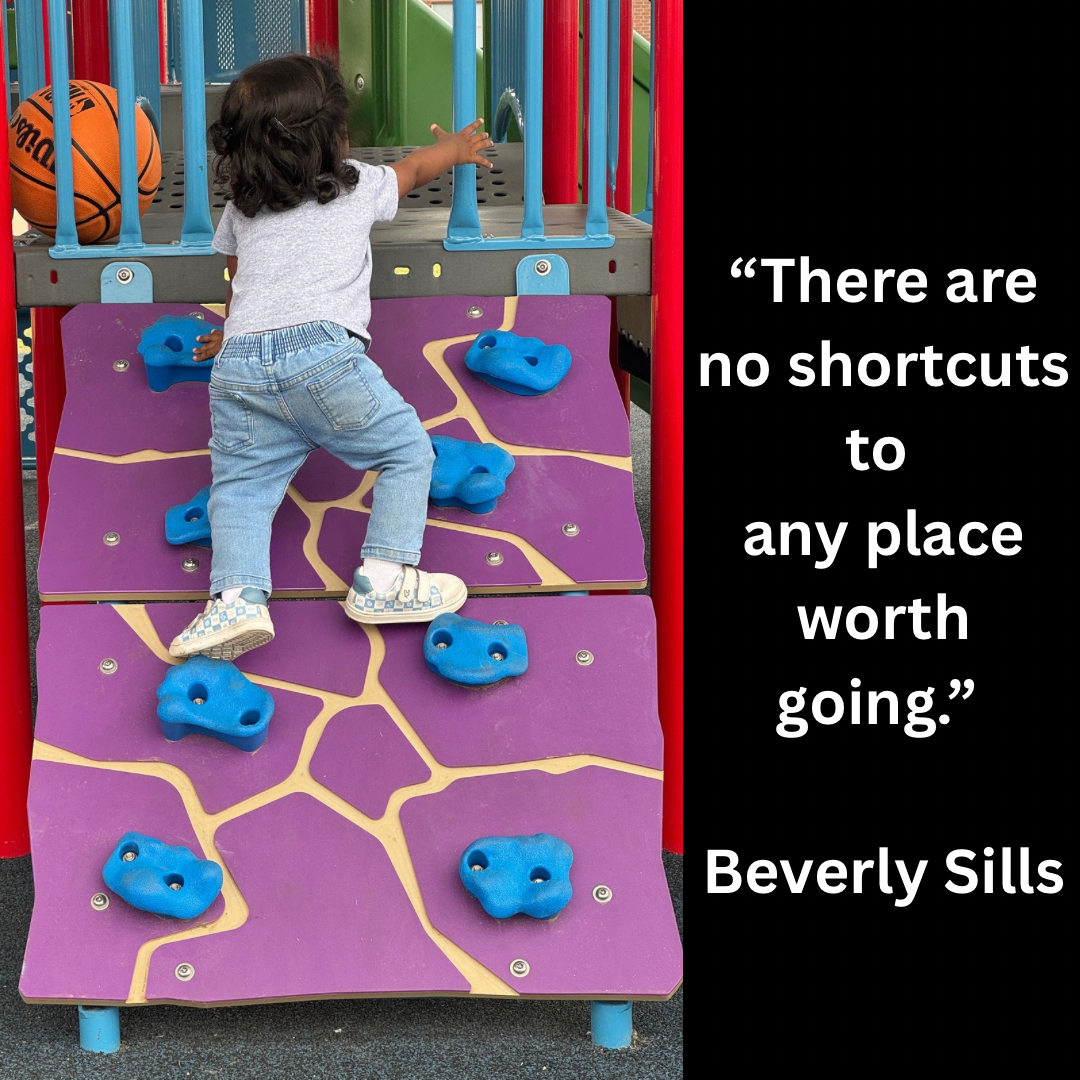
The other day, I was in the park, guiding my little one as she attempted to climb a small set of rocks. She was determined, her tiny hands gripping the edges, her feet feeling for the next step. But she kept slipping. Not because she wasn’t strong enough, but because she wasn’t looking down—she was so focused on reaching the top that she missed the steps right in front of her.

After a few tries, we taught her to pause, look down, and carefully place her feet on each step. The moment she did that, everything changed. She climbed with confidence, making it to the top without slipping.

The Temptation to Skip Steps

Watching her struggle and then succeed made me think about how often we do the same in life. We’re so eager to reach our goals—whether it’s a promotion, building a business, or mastering a skill—that we sometimes ignore the steps that got us there. We rush ahead, assuming momentum will carry us, only to stumble.

But success isn’t about speed. It’s about steady, intentional progress. Every step matters, and skipping them can cost us more time in the long run.


Looking Back to Move Forward

In our careers and personal lives, “looking down” means acknowledging our past—our experiences, our failures, our lessons. It means understanding where we are before we push ahead. Just like my daughter needed to focus on each foothold to climb successfully, we need to respect the process that leads to real growth.

Shortcuts might seem appealing, but they rarely lead to lasting success. Whether you’re learning a new skill, leading a team, or chasing a dream, the path forward is built on the steps behind you.


The Climb is Worth It

At the top of those rocks, my daughter turned around with the biggest smile on her face. She had done it—not by skipping steps, but by mastering each one. That’s how real success works. One step at a time, fully embraced.

So the next time you’re in a hurry to reach your goal, remember: Look down. Honor the journey. And climb with purpose.

How the Choices You Make Shape Your Reality

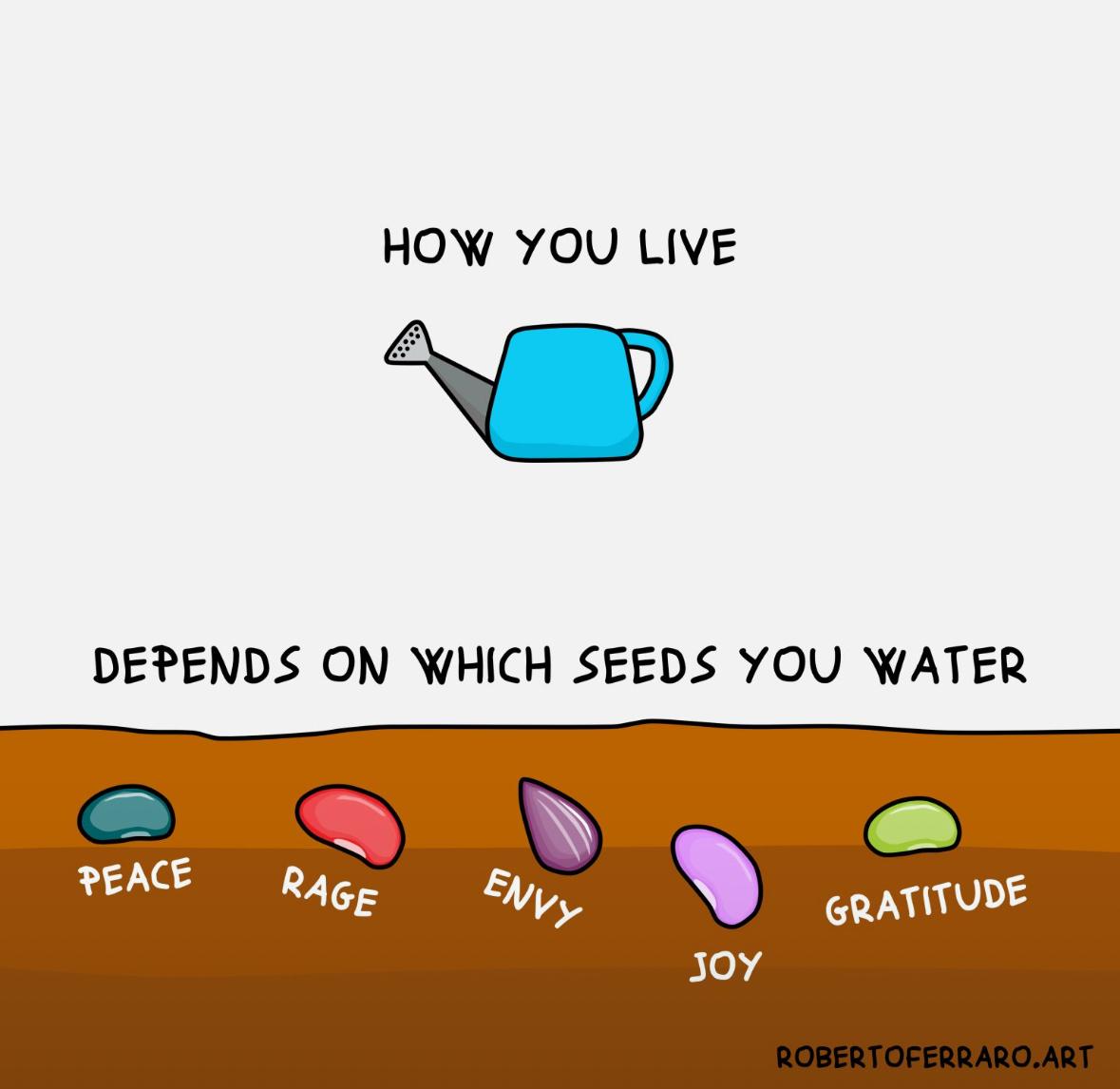
Every day, we’re presented with a choice—a choice of which seeds to water. The seeds we choose to nurture in our minds, hearts, and actions grow into the experiences that shape our lives. The quote “How you live depends on which seeds you water” perfectly captures the essence of this personal responsibility.

Like a garden that flourishes or withers based on the care it receives, our lives are deeply influenced by the thoughts, emotions, and actions we feed. The seeds we choose to nurture—whether they’re positive or negative—will determine the direction our lives take.

The Power of Our Choices

We often think of life as something that happens to us, as if we’re passive observers of the events that unfold. But in reality, we are active participants in shaping our reality. Every emotion, thought, and reaction we have is like a seed. If we consistently water seeds of peace, joy, and gratitude, we cultivate a life of contentment and fulfillment. On the other hand, if we water seeds of rage, envy, and negativity, we invite discord and dissatisfaction into our lives.

But here’s the key: You have the power to choose which seeds to water. While we can’t always control the external circumstances, we have full control over how we respond, what we focus on, and what we choose to nurture.


Watering Seeds of Peace

Peace is a powerful seed, and like any seed, it needs care to thrive. When we choose to prioritize peace in our lives, we cultivate calm, balance, and a sense of inner stability. Nurturing peace involves letting go of unnecessary stress and focusing on what we can control—our reactions, our mindset, and our ability to stay grounded.

Peace doesn’t mean avoiding conflict or pretending that everything is perfect. It’s about cultivating an inner state of calm that remains undisturbed, even in the face of challenges. When we water the seed of peace, we create a foundation of resilience that allows us to weather life’s storms with grace.


The Dangers of Watering Rage

Rage is a seed that can quickly take root if we’re not careful. Anger, frustration, and resentment are natural emotions, but when we constantly feed them, they grow into destructive forces that affect our well-being and relationships. When we water the seed of rage, we invite turmoil and conflict into our lives.

But like any destructive seed, rage can be uprooted. It’s about recognizing when we’re feeding it and making a conscious choice to shift our focus. This doesn’t mean suppressing anger but rather choosing to channel it into productive outlets—like speaking your truth calmly or taking action to solve the issue at hand—rather than letting it fester and grow.


The Shadow of Envy

Envy is another seed that, when watered, can lead to discontent and comparison. It’s natural to sometimes feel envious, but if we constantly nurture feelings of jealousy or inadequacy, they can overshadow our ability to appreciate what we have. Envy breeds dissatisfaction and clouds our vision, making it hard to see our own unique blessings and opportunities.

To combat envy, we can shift our focus to gratitude. Instead of looking at what others have, we can acknowledge and appreciate the good in our own lives. Watering the seed of self-contentment, recognizing your achievements, and celebrating your own progress is a powerful antidote to envy.


Nurturing Joy

Joy is one of the most life-affirming seeds we can choose to water. It’s not about waiting for happiness to come to us—it’s about actively seeking out and cultivating moments of joy, even in the simplest things. Whether it’s enjoying a cup of coffee, appreciating a beautiful sunset, or spending time with loved ones, choosing joy helps us find meaning and purpose in the everyday.

The more we focus on the things that bring us joy, the more they begin to multiply in our lives. Like any plant that thrives in sunlight, joy grows in an environment of positivity and gratitude. When we nurture joy, we create a life that is filled with light, even on the toughest days.


The Seed of Gratitude

Gratitude is one of the most powerful seeds we can water because it transforms our perspective on life. When we actively practice gratitude, we train our minds to focus on the abundance we have, rather than what we lack. This shift in focus not only improves our mental and emotional well-being but also enhances our relationships and sense of fulfillment.

Gratitude has a ripple effect. The more grateful we are, the more we attract positivity and abundance into our lives. By taking the time each day to reflect on the things we’re grateful for, we cultivate a mindset that welcomes joy, peace, and fulfillment.


Cultivating Your Garden of Life

The garden of your life is yours to tend. Every thought, action, and emotion you choose is a seed that will grow and shape the way you experience the world. If you want to live a life of peace, joy, and gratitude, you must consistently water those seeds. If you want to uproot the weeds of rage, envy, and negativity, it starts with making conscious choices about where you place your energy.

How you live truly depends on which seeds you water. By being mindful of the seeds you choose to nurture, you can create a life that reflects the values and experiences you want to invite into your world.


Choose Your Seeds Wisely

The beautiful part about this metaphor is that it gives us control over our lives. We are not at the mercy of external circumstances—we are the gardeners of our own lives. By intentionally watering the seeds of peace, joy, gratitude, and kindness, we can create a life that’s fulfilling and meaningful.

So, take a moment to reflect: Which seeds are you watering today? Choose wisely, because the seeds you nourish today will determine the life you live tomorrow.

Pause, Breathe, Recharge: Why You Don’t Need All the Answers Right Now

In today’s fast-paced world, there’s an overwhelming pressure to have everything figured out—to have all the answers and be constantly moving forward. Whether it’s our careers, relationships, or personal goals, we often feel like we need to have a clear path and a solution for every problem immediately. But what if, instead of pushing ourselves relentlessly, we took a step back and allowed ourselves to rest?

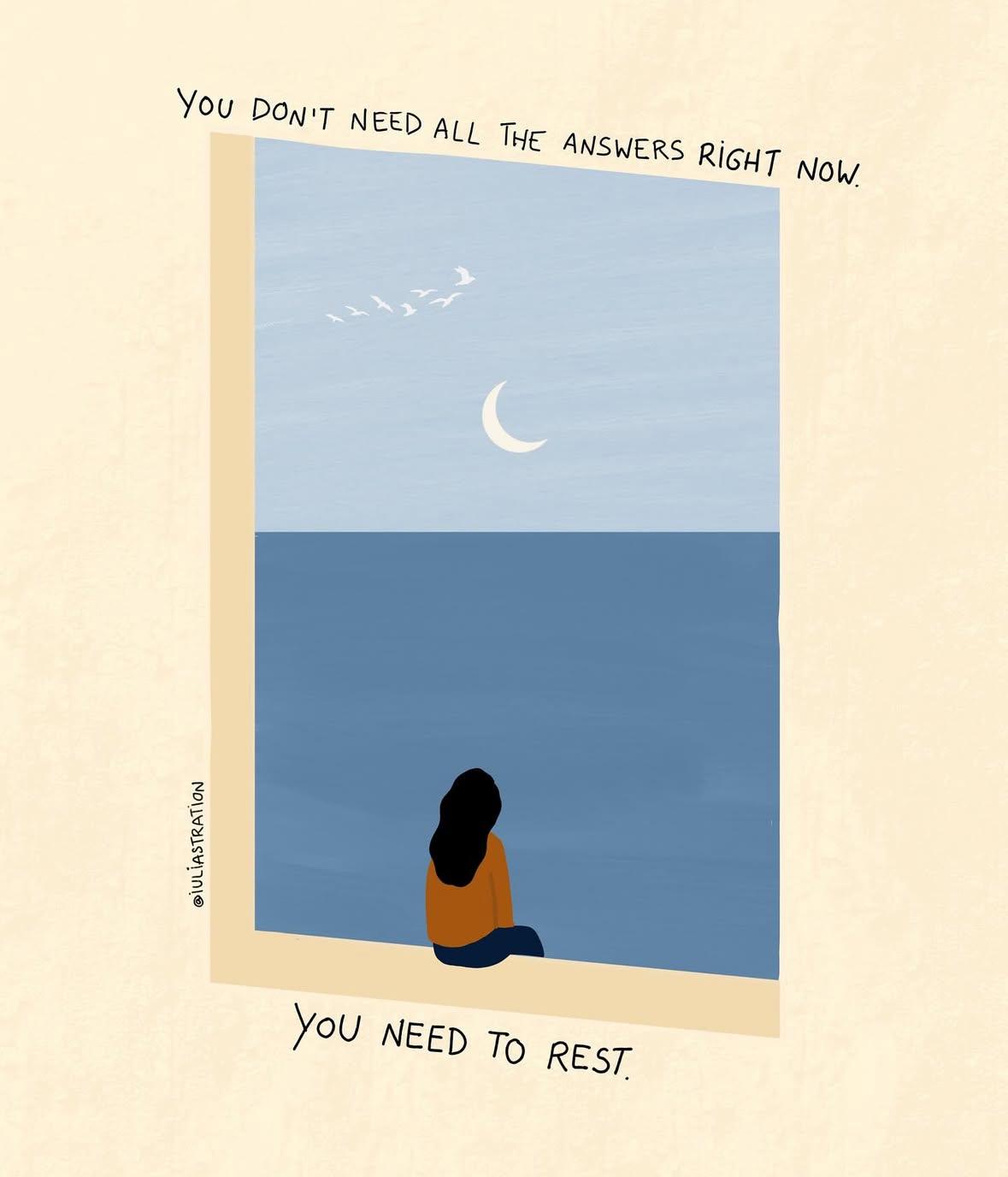
“You don’t need all the answers right now! You need to rest!”

This quote is a gentle reminder that life doesn’t always require immediate solutions, and sometimes the best thing you can do for yourself is to take a break and recharge. In a world that constantly encourages us to hustle, we need to remind ourselves that rest is just as important as action.

The Pressure of Having All the Answers

We’ve all been there—staring at a problem, feeling the weight of uncertainty, and worrying about what’s next. Whether it’s deciding on a career change, figuring out a life path, or solving a difficult issue at work, the need for answers can become consuming. Society often reinforces the idea that we need to be decisive, efficient, and constantly progressing. The pressure to know it all can make us feel inadequate, stressed, and overwhelmed.

However, this mentality of needing all the answers right now is not only unrealistic but also exhausting. The truth is, life is full of uncertainty, and no one has everything figured out. It’s okay to not have all the answers today. In fact, it’s perfectly natural. Sometimes, the answers come only after we’ve given ourselves the space to rest, reflect, and recharge.


The Power of Rest

Rest isn’t just about taking a nap or lying on the couch—it’s about giving your mind and body the time they need to process, recover, and reset. When we’re constantly pushing ourselves to find answers or solutions, we can burn out, making it even harder to think clearly. Rest allows us to step back from the noise and the pressure, and let our minds naturally process the challenges we face.

Here’s why rest is so powerful:

1. Clarity Emerges from Stillness

When you’re constantly on the go, your mind doesn’t have the chance to pause and reflect. Rest provides the space for clarity to emerge. When you step away from a problem, you often find that the answers come to you when you least expect it—during a quiet walk, while reading a book, or even in the shower. Rest creates the mental stillness needed for fresh insights to surface.

2. Energy and Creativity Recharge

Rest also replenishes our energy reserves. Without it, we burn out, leading to mental fatigue and a lack of creativity. When you allow yourself to rest, you give your brain a chance to reboot, bringing new ideas and solutions that you wouldn’t have thought of while stressed or overworked. Rest doesn’t just restore energy; it enhances your creativity, making it easier to tackle challenges with a fresh perspective.

3. Restored Emotional Resilience

The constant pressure to find answers can also take an emotional toll. When we’re exhausted, we’re more likely to become frustrated, anxious, or upset when things aren’t going our way. By taking a break, we allow ourselves to recover emotionally and regain the resilience needed to face challenges with a calmer mindset. A rested mind is far better equipped to deal with stress and uncertainty.


Trusting the Process

There’s a certain beauty in trusting that you don’t need to know everything right now. Sometimes, the journey is more important than the destination. The process of figuring things out unfolds over time, and often the best answers come after a period of reflection and growth.

Trusting the process means allowing yourself to be patient and gentle with yourself. It’s okay if you don’t have the answer right away—it’s okay to rest and trust that the right path will reveal itself when the time is right. The key is to stop forcing the process and instead allow it to flow naturally.


Rest as a Form of Self-Care

In a world that values productivity and constant achievement, resting is often seen as a luxury or a sign of weakness. But in reality, rest is an essential form of self-care. It’s an act of honoring your mind and body, recognizing that you can’t give your best if you’re constantly running on empty.

Rest doesn’t mean giving up on your goals or abandoning your responsibilities—it simply means giving yourself the time and space to recharge, reflect, and recalibrate. It’s a necessary part of the journey, not a detour.


The Importance of Pausing

The next time you feel the pressure to have all the answers, remember: You don’t need them right now. You need to rest. Take a step back, breathe, and allow yourself the time to recharge. Rest isn’t a sign of failure—it’s an act of self-preservation. By giving yourself permission to rest, you create the mental and emotional space needed for new ideas, fresh perspectives, and clarity to emerge.

Sometimes, the best thing you can do for your future is to slow down and trust that everything will fall into place. You’re on the right path, and the answers will come when you’re ready for them. Until then, take a break and let your mind catch up to your dreams.

Finding Calm: How to Quiet the Waves in Your Mind

Life is full of distractions, noise, and constant motion. It can feel as though our minds are endlessly tossed around like waves in a stormy ocean—thoughts crashing in, emotions rising and falling, leaving us feeling overwhelmed and scattered. But what if we could find a way to quiet those waves? What if, just for a moment, we could calm the storm inside?

The idea that “You can quiet the waves in your mind” is a powerful reminder that, while we can’t control every external force, we do have the ability to find peace within ourselves. It’s not about stopping the waves entirely but learning to navigate through them with a sense of calm.


The Storm Inside: Understanding the Waves in Your Mind

Imagine the waves in your mind are like a chaotic storm—thoughts, worries, and anxieties rising up like towering waves, one after another. Sometimes it feels like no matter how hard we try, we can’t stop the crash of these mental waves. Each thought, each emotion, seems to build upon the last, creating a perpetual cycle of inner turmoil.

These waves can come from different places: stress at work, worries about the future, past regrets, or the constant bombardment of information from our digital world. It’s easy to feel like we’re caught in a mental whirlpool, struggling to stay afloat amidst the waves of overthinking.


The Power of Quieting the Mind

But just as an experienced sailor can calm the storm with skillful navigation, you too can learn techniques to quiet the waves in your mind. The key is not to fight the waves but to develop tools that help you navigate them with grace and presence. Here are a few approaches to quiet the mental noise:

1. Mindfulness and Meditation

Mindfulness is the practice of being fully present in the moment, without judgment or distraction. Through meditation, you can create a space where you observe your thoughts without getting swept away by them. By focusing on your breath or a simple mantra, you can bring your attention back to the present and allow the waves to settle.

Just like a calm sea doesn’t eliminate the waves but allows them to pass through peacefully, mindfulness helps you recognize that your thoughts are temporary and ever-changing. This awareness alone can help reduce their impact.

2. Breathing Techniques

Breathing is a simple yet powerful tool to bring calm to a restless mind. Deep, slow breaths can help activate the body’s relaxation response, slowing your heart rate and reducing stress. With each inhale, focus on breathing in peace; with each exhale, release tension and anxiety.

Even just a few minutes of conscious breathing can create a sense of space between you and your thoughts, allowing the waves to become more manageable.

3. Journaling: Releasing the Thoughts

Sometimes, the best way to quiet the waves in your mind is to let them out. Journaling is a great way to process the thoughts swirling around in your head. By putting your feelings on paper, you can externalize your worries, fears, and ideas, creating a sense of clarity and control.

When your thoughts are swirling like a storm, writing them down can help you untangle them and see them more clearly. Once they’re on paper, they often lose their grip on your mind, making room for calm and reflection.

4. Visualizations

Visualization can be an incredibly effective tool in calming the mind. Picture a serene landscape—perhaps a calm beach or a peaceful forest. As you focus on the details of this mental image, your mind will start to mirror the stillness of the environment you’ve created. Visualizing a peaceful setting can help redirect your mind away from chaotic thoughts and create a sense of inner tranquility.

You might also visualize the waves of your mind slowing down. Imagine each thought as a wave that comes and goes, fading away more gently with each moment.


The Gentle Power of Stillness

It’s important to remember that quieting the waves in your mind doesn’t mean forcing them into silence. Life will continue to present us with challenges, and our thoughts and emotions will always rise and fall. What we can control, however, is how we respond to them. We have the power to find stillness within the storm, to navigate the waves with calm and intention.

Quieting your mind isn’t about avoiding or suppressing thoughts. Instead, it’s about learning to accept them as they are and allowing them to pass by without getting caught up in their pull. Just as the ocean is never truly still, your mind will always have thoughts and feelings. The goal is to find peace amidst the movement.


Embrace the Calm Within the Chaos

When you feel overwhelmed by the waves in your mind, remember: you don’t have to fight the storm. Instead, you can find ways to embrace the calm within it. Through mindfulness, breathing, journaling, and visualization, you can create a sense of stillness even in the most turbulent moments.

You can quiet the waves in your mind, not by stopping them, but by learning to navigate them with grace. By trusting in your ability to find peace within yourself, you allow the storm to pass, leaving you with a sense of calm that can carry you through life’s challenges.