The Power Of Visualization 

Where do you see yourself in five years? How do you imagine your future partner like? How much money will you make? Can you confidently reply to all these questions? How would you react if someone asked you these questions? In other words, have you figured everything out yet? Congratulations! Then there’s no need for you to read further. 

If you’re still unsure about how to answer all the questions, rest assured, you’re not alone, and the good news is that there’s a tool out there that can help you with it: visualization.

According to the Cambridge Dictionary, visualization is “the act of visualizing something or someone” or “forming a picture of it in your mind”. It’s almost like looking through a particular lens, your unconsciousness, your imagination, your deepest desires, and seeing your life unfold within your inner eye.

If my mind can conceive it and my heart can believe it – then I can achieve it

Muhammad Ali

Visualization has been used for a very long time in sports. The quote above my Muhammed Ali shows that he truly believed in the power of visualization. But he’s not the only one who used visualization in his successful sports career. Arnold Schwarzenegger  was also a big believer in visualizing how he wanted to look like and kept on imagining it. Later on, he used the same technique in politics and acting. A study found that imagining to move certain parts of your bodies almost trains the muscles as much as the actual movement. Our mind is literally very powerful!

Anything you can imagine, you can create.

Oprah Winfrey

You can’t really argue with Oprah, can you? And it’s not only her who believes in the power of affirmations and visualizations. Jim Carrey apparently wrote a check of over $ 10 million to himself every night during the time when he wasn’t famous yet. It so happened that three years later, he received exactly this amount for starring in Dumb and Dumber.

Visualization, also called imagery helps you reduce stress as well. It is used among healthcare professionals as an effective stress management tool. Studies have shown that novice surgeons who received imagery training demonstrated reduced self-reported stress and decreased objective stress. The same goes for police officers. You clearly see that visualization works for all groups of people and in all kinds of situations: it helps you to achieve your goals, to imagine your future, to deal with stress and much more.

But, how do you do it in real life? How can you tap into the power of visualization and enjoy all its benefits? Generally speaking, you need to imagine the specific situation in as many details as possible using all your senses – you can see it, smell it, hear it, feel it and taste it. For many people, it helps when they close their eyes, and then there are others who prefer to write it all down instead of doing it purely in their mind.

Writing affirmations helps your mind as well to get into the future mode. When you write affirmations, write in present tense, and be careful not to write too many. Start with “I” followed by something that you wish you had accomplished already or how you want to be in the future, e.g. “I am strong and face all adversities with grace.”, “I have a publishing empire with 100 employees and 5 offices worldwide.” Try to be as specific as possible. The trick behind it is that our brain cannot differentiate between what is already true and what is fiction. Hence, your brain will think that you already own that publishing empire and you’ll start acting accordingly, unconsciously. If you add a little bit of embodiment to it and think of a posture that incorporates a specific affirmation very well, your body will also “save” it and the more often you do it, the quicker you’ll be able to get into the mindset of your future self.

Another way of visualizing your future is to create a vision board. In short, you take a blank poster and fill it with snippets and pictures from magazines that represent what you want your life to look like in a certain amount of time; it could be 6 months, 3 years, or more. It’s important to put the finished vision board in a prominent place in your office or apartment so that you are regularly reminded of it. 

As you can see, it’s about visualizing in your mind, on paper, or a blank canvas. Approach it with a curious and open mind, and try out different options so that you find what works best for you. One of its biggest advantages is that you can literally do it everywhere – on the train, at home, at work. Your mind is truly powerful, so keep exploring and create the life you want with the help of visualization.

Why You Should Not Care What Others Think

We all want to be liked and appreciated for our many talents, our intelligence, our good nature, our sparkling personality. But when we start to rely on what other people think of us, and we make their opinion pivotal to our success, we get into trouble. We start tailoring our lives to fit the expectations of others, and from there it’s a vicious cycle.

When we give over our power to others and allow that their impressions to become how we perceived, we lose out on who we really are. The only reality we can see is  how we believe others see us.

Care about what other people think and you will always be their prisoner.

Lao Tzu

Here are ten reasons why you should not care about what others think:

1. It’s Not Their Life, So It’s None Of Their Business

People are entitled to think whatever they want, just as you are entitled to think what you want. What people think of you cannot change who you are or what you are worth, unless you allow them to.

This is your life to live. At the end of the day you are the only person who needs to approve of your own choices.

2. They Don’t Know What’s Best For You

Nobody will ever be as invested in your life as you. Only you know what is best for you, and that entails learning from your own choices. The only way you will ever truly learn is through making your own decisions, taking full responsibility for them, and that way if you do fail, at least you can learn from it wholeheartedly, as opposed to blaming somebody else.

3. What’s Right For Someone Else May Be Completely Wrong For You

It’s important to recognize that someone’s opinion is often based on what they would do. This alone is the problem. What is best for somebody else, can be the worst thing for you. One person’s food is another ones poison! We are all so unique. Only you know what is right for you. 

4. It Will Keep You From Your Dreams

If you are constantly worried about what other people think, you will never get to where you need to go in life. You are going to have to do things that don’t always meet people’s standards. You will come into situations where you have to put your pride, and your reputation on the line to get what you want. If you are constantly worried about what people are thinking, you will never have the will to do what’s right.

5. You’re The One Stuck With The End Result

In life, you are the one stuck with the consequences of your decisions. For example, if someone suggests you buy some stocks, but you just don’t feel like it’s the right choice, you are the only one who will live the consequences. If the stock falls and you lose a lot of money, you are the one that will have to live with the fact that you didn’t follow your inner call. When people give you their suggestions or even orders, there is no risk for them. They don’t have to live with your choices—but you do.

6. People’s Thoughts Change On A Regular Basis

We are constantly changing. Some philosophers and theorists suggest that we are in a constant state of flux, so much that we cannot even say we have one, specific ‘self’ (or a fixed personality). People’s thoughts, ideas and views change on a regular basis.

That means even if somebody does think badly of you at the moment, there is a good chance they will think differently in the near future.

7. Life Is Simply Too Short

You only have one life to live, so why would you spend it worrying about other people’s opinions? Do whatever you want, be whoever you want. You’re not going to see these people after you’re dead. You probably won’t even see them in a year from now. Live your life without worrying about other people’s thoughts and opinion, and you will live your life to the maximum.

8. You Reap What You Sow

Worrying too much about what other people think of you can become a self-fulfilling prophecy. Frequently, people indulge their need to be liked so much so that it actually dictates to the way they behave. Some become people-pleasers or so submissive that many people are turned off. The behavior you use as an attempt to ensure you are liked may actually cause you to be disliked.

9. Others Don’t Care As Much As You Think

People generally don’t think outside themselves a great deal of time. It is a sad but simple truth that the average person filters their world through their ego, meaning that they think about most things in terms of “me” or “my”.

This means that, unless who you are or what you have done directly affects another person or their life, they are unlikely to spend much time thinking about you at all.

10. The Hard Truth: It’s Impossible To Please Everybody

You can’t please all of the people all of the time. It is impossible to live up to everyone’s expectations so there is no point in burning yourself out trying to do so. Just make sure that one of the people you please is yourself!


The weight of other’s thought can become a burden for you. It can inhibit you from living your life, because your entire being (your personality, your thoughts, your actions) are controlled by an idealized standard of what people want to see. When you become so obsessed with other people’s opinion of you, you forget your own.

You can make a conscious effort to stop giving a damn; to let yourself free. It’s a skill that needs to be practiced. But once you truly understand how to let go, you will see the world as entirely different.

Once you give up catering to other people’s opinion and thoughts, you will find out who you truly are, and that freedom will be like taking a breath for the first time.

Give Yourself A Break

When people experience a setback at work—whether it’s a bad quarter, being overlooked for a promotion, or an interpersonal conflict with a colleague—it’s common to respond in one of two ways. Either we become defensive and blame others, or we berate ourselves. Unfortunately, neither response is especially helpful. Shirking responsibility by getting defensive may alleviate the sting of failure, but it comes at the expense of learning. Self-flagellation, on the other hand, may feel warranted in the moment, but it can lead to an inaccurately gloomy assessment of one’s potential, which undermines personal development.

What if instead we were to treat ourselves as we would a friend in a similar situation? More likely than not, we’d be kind, understanding, and encouraging. Directing that type of response internally, toward ourselves, is known as self-compassion, and it’s been the focus of a good deal of research in recent years. Psychologists are discovering that self-compassion is a useful tool for enhancing performance in a variety of settings, from healthy aging to athletics, including enhancing professional growth.

Self-compassion is a less familiar concept than self-esteem or self-confidence. Although it’s true that people who engage in self-compassion tend to have higher self-esteem, the two concepts are distinct. Self-esteem tends to involve evaluating oneself in comparison with others. Self-compassion, on the other hand, doesn’t involve judging the self or others. Instead, it creates a sense of self-worth because it leads people to genuinely care about their own well-being and recovery after a setback.

People with high levels of self-compassion demonstrate three behaviors: First, they are kind rather than judgmental about their own failures and mistakes; second, they recognize that failures are a shared human experience; and third, they take a balanced approach to negative emotions when they stumble or fall short—they allow themselves to feel bad, but they don’t let negative emotions take over.

Most people want to improve—and self-compassion is crucial for that. We tend to associate personal growth with determination, persistence, and hard work, but the process often starts with reflection. One of the key requirements for self-improvement is having a realistic assessment of where we stand—of our strengths and our limitations. Convincing ourselves that we are better than we are leads to complacency, and thinking we’re worse than we are leads to defeatism.

Apart from self-compassion, it is also important to know your limits. It’s common among overachiever types: We like to push ourselves.

All that pushing can feel so smart and productive—until you’re exhausted, overextended, overwhelmed, or otherwise ready to snap. I’ve felt all these things before. If you feel physically, mentally, emotionally, or even digitally exhausted, here are some tips that may help:

How to Give Yourself a Break Physically

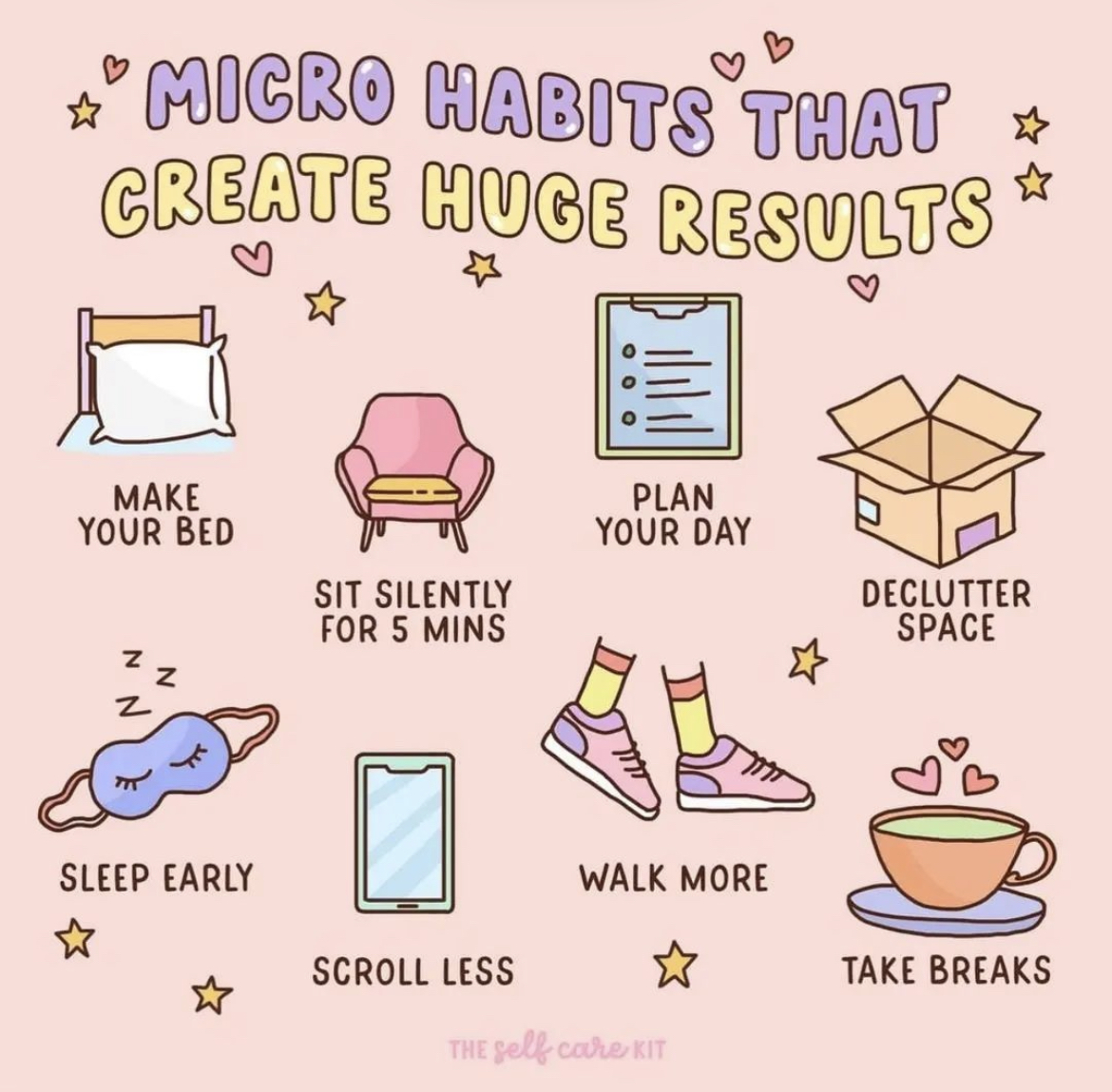
1. Allow yourself a little extra sleep, whether it’s by going to bed a half-hour earlier or by sleeping in an extra fifteen minutes and then skipping your usual morning coffee stop.

2. Take a day off from exercising if you usually run, go to the gym, or participate in some type of aerobic class.

3. Skip the stairs and take the elevator or escalator. Sometimes it’s perfectly okay to choose the easy path!

4. Replace strenuous exercise with something less intense, like restorative yoga.

5. Utilize a detoxifying cleanse to clear out toxins and give your digestive organs a break.

6. Take a long, hot bath to take weight off your weary muscles and joints.


How to Give Yourself a Break Mentally

1. Use a deep breathing technique to calm your nervous system and clear your thoughts.

2. Give yourself a complete day without any financial worries; put your statements and bills in a drawer and save all eBills for tomorrow. (Trust me, they won’t go anywhere. Just don’t make this one a consistent practice!)

3. Set aside some time to play and be childlike.

4. Sing, paint, dance, or otherwise express yourself creatively. It’s awfully hard to stress and over-think when you’re engaged in something fun and expressive.

5. Go outside and immerse yourself in nature. Feel the ground or grass underneath your feet and focus on being present on enjoying your environment and the scenery.

6. Close down the multiple tabs on your computer screen and instead single-task. If you’re writing, write. If you’re editing a video, edit. Give yourself permission to get into a state of flow and let all distractions slip away.

7. Take a day off from negative, draining people, even the ones you love. You can be an ear tomorrow.


How to Give Yourself a Break from Technology

1. Commute without technology. Instead of listening to voicemails or tweeting on your phone, read a physical book or write in your journal. Use this small window of time to connect with yourself.

2. Take a completely tech-free hour. Turn your cell phone off, shut down your computer, and put your all your gadgets in a drawer.

3. Plan unproductive downtime, by taking a walk, for example. Research shows this type of disconnected time is crucial to learning and forming memories.

4. Decide to check email only once today (outside of work) so that you spend less time checking messages and more time engaging in activities that feel fulfilling.

5. Identify what you’re really seeking from technology—whether it’s acceptance, acknowledgment, or stimulation—and then look for ways to get that without logging on.

6. Technology fast on a weekend day. This probably isn’t an option during the week—and I’ll admit this is challenging for me even on the weekend—but it’s worth trying: a day without any gadgets.

7. Give your technology a bed time. I know from experience how pre-bed web surfing can negatively impact sleep. Decide in advance at what point you’ll put all your gadgets away, and then choose other relaxing activities before you head to sleep.

8. Decide for a day that nothing is urgent. Emails, phone calls, text messages—unless it’s an actual life-or-death situation, it isn’t a catastrophe and it can wait until tomorrow.


Any more tips that help you? Let me know in the comments :)

Why You Need To Stand Up For What You Believe In And How To Do It

How many times have you sat back and kept your mouth shut even if you didn’t believe in what was being said or done? It’s so much easier to keep your own ideas to yourself. You don’t risk getting put down, feeling judged, or becoming an outcast. But what if that one idea you have can change everything for the better? You shouldn’t and wouldn’t wan to keep that to yourself, would you? Here’s why you need to start standing up for what you believe in and how to do it.

Let’s start with the why.

1.    It builds your respect.
This goes two ways. Sticking up for what you believe in builds your self- respect because you’re following through with your values. Going against what you believe in just because it’s more convenient is less than admirable. Standing your ground also gains respect from others, even if they view things differently than you. Just having the guts to stand up for yourself shows what kind of person you are. You aren’t a pushover. You are strong and independent.

2.    You will gain confidence.
At first, standing up for your beliefs isn’t the easiest task. You may be doubting yourself, you may be hesitant, and your words might not come out just right (like the perfectly prepared speech you have in your head). But the more you do it, the better you’ll get and the more confidence you’ll gain. You’ll be more willing to step out of your comfort zone in uncomfortable situations.

3.    It helps you discover who you are.
When you just go along with what others say, you’re letting them take control over a piece of your life. You’re allowing them to dictate how you should do or say something, even how you should think. This may sound drastic but every little thing that you sit back on impacts your life. By standing up for what you believe in, you’re expressing who you are and what you want out of life. Even if your ideas don’t change a thing, you are still putting your real, unique self out there. The more you do it, the more of YOU will come out.

Now let’s talk about how you can implement these things in your life.

1.    Figure out what you actually believe in.
Before you stand up for what you believe in, you have to know what it is that you believe in! It sounds simple enough but when we sit back and let others take over, we sometimes forget or lose sight of who we really are. When you have a quiet moment to yourself, think about the following questions.

•    What is important to me?
•    What am I passionate about?
•    What motivates me?
•    What are my core values?

2.    Let go of your fears about what people think of you.
When standing up for yourself, you have got to let go of your fears of what people think about you. It is not easy. Whatever you’re thinking is often way worse in your head. It always is. Remember that people are more concerned with things going on their own life than to sit there and judge yours. As we mentioned before, it takes practice but with time you will get better at it and you’ll feel better about doing it.

3.    Don’t doubt yourself.
Sometimes when you stand up for yourself, there will be people who try to change your mind or put you down. Always keep your beliefs in mind. Of course, it doesn’t hurt to hear others out and listen to their point of view. But that doesn’t mean you have to change what you believe in.

4.    Keep doing it.
There are so many ways in which you can stand up for what you believe in so don’t stop after one thing. Voice your opinion in a positive way when the timing feels right and you’ll get better every time you do it. By positive I mean don’t speak your opinion just to put someone else down. Hear them out and let them know your ideas as well.


We know that staying in your cozy little shell doing your own thing is comfortable but you have the power to change things for the better when you allow yourself to break out of your comfort zone and stand up for what you believe in. You’ll build respect for yourself, gain confidence, and discover who you really are. It may not be easy at first but it’s really quite simple to do. Start by finding out what your beliefs are, let go of your fears, quit doubting yourself, and keep practicing. You can do this!

Full Page Video in Background

If you want to engage first-time visitors on your website, you have about 10 to 20 seconds to do so. Life is short, and nobody wants to waste their time on a run-of-the-mill webpage. So, how can we inject some life into our page content in a way that captures visitors’ attention and keeps them scrolling?

One option is adding a video to your website in the background. Video backgrounds take up the entire width and height of the viewport (in other words, the visible page area) and add some visual flair to boost engagement. Over this video, you can place your featured page content — after all, it is just a background, and your content is most important.

I am on the fence for this design style. A full page video background may be a bit much even if done tastefully. That aside, I am more interested in HOW to get this done. Here you go!

HTML

HTML
  • The autoplay attribute starts the video automatically once the page loads.
  • The loop attribute plays the video in an infinite loop.
  • The muted attribute turns off sound for the video. Refrain from playing video sound on your page unless initiated by the user. Doing so presents an accessibility issue and a potentially unpleasant user experience.

CSS

  • height: 100vw (viewport width) make the video extend to the full width and height of the viewport.
  • object-fit: cover automatically sizes the background video to keep its original aspect ratio while filling the screen, clipping out edges of the video when necessary.
  • position: absolute and the following lefttop position the video relative to the viewport and separates it from the rest of the page content. This keeps the video in place when the user scrolls, and allows other content to sit on top of it.
  • z-index places the video background under accompanying content.

View source code here: Link

Think You’re a Wise Person?

The cliché “another year older, another year wiser” implies that the only way to attain the secret sauce of life is to live another year… and then another, and then another. Yes, it’s comforting to consider that logging more time here on planet Earth will naturally make you a wise person! According to Merriam-Webster, a wise person is one who possesses “deep understanding, keen discernment, and a capacity for sound judgment.” However, researchers say that the journey to becoming a “wise” person is more complex; it’s actually considered to be a modifiable trait that you can hone every single day. So if you’re wondering, “am I wise?” the answer isn’t clear-cut.

Researchers at University of California San Diego School of Medicine recently used the most up-to-date studies on life wisdom to develop a scale (called the “San Diego Wisdom Scale” or SD-WISE for short) to help you determine your life smarts—and fast. This abbreviated version of SD-WISE uses seven statements (SD-WISE-7) to size up an individual’s wisdom. A previous version of the test, the SD-WISE-28—which was used in national and international studies, as well as in biological research and clinical trials—contained 28 statements.

Wisdom measures are increasingly being used to study factors that impact mental health and optimal aging

Dilip V. Jeste, MD, senior associate dean for the Center of Healthy Aging and Distinguished Professor of Psychiatry and Neurosciences at UC San Diego School of Medicine

To determine how wise you are based on the SD-WISE-7, simply read seven statements—like “I avoid situations where I know my help will be needed,” and decide how much you agree with them on a scale of one to five. One reflects “strongly disagree” and five “strongly agree”—and negatively worded statements are reverse-scored. 

So go ahead: Read through the statements below and see what resonates and what doesn’t. 

  1. I tend to postpone making major decisions as long as I can.” (Decisiveness)
  2. “I avoid self-reflection.” (Self-reflection)
  3. “I avoid situations where I know my help will be needed.” (Prosocial behaviors)
  4. “I often don’t know what to tell people when they come to me for advice.” (Social advising)
  5. “I remain calm under pressure.” (Emotional regulation)
  6. “I enjoy being exposed to diverse viewpoints.” (Acceptance of divergent perspectives)
  7. “My spiritual belief gives me inner strength.” (Spirituality)

Regardless of your answers to the quiz, clinical social worker, Karen B. Walant, says one of the easiest ways for anyone to become wiser is to simply press pause.

“By gently giving ourselves permission to pause, we are able to slow down and listen to our inner thoughts, to our bodies, and to whom and what we are in contact with,” says Dr. Walant. “Pausing allows us to both receive and absorb the experience we are in. When we pause with the intent of allowing wisdom to arise, we become more able to take actions that best support our physical health and our emotional well-being and that of others.”

In addition, taking a beat before reacting to a given situation will help you cultivate qualities like kindness or compassion, which need to be exercised like a muscle in order to be maintained and grow.

To practice wisdom every day, Dr. Walant also recommends deciding which qualities you want to grow, and then actively working on them. For example, if you strongly agreed to number two of the SD-WISE-7 (“I avoid self-reflection.”), make self-reflection— via journaling, meditating, or another means—an everyday practice for you.

Between stimulus and response there is a space. In that space is our power to choose our response. In our response lies our growth and our freedom.’

Viktor Frankl

The permission to pause and be present to both what is occurring within and around us encourages a granularity of experience so that we can become the best version of ourselves.

Spend More Time Doing What You Love

It’s funny, despite the good intentions and resolutions, the reality is most new years we come back to the daily routine feeling nothing much has changed in the last year. They say the new year brings fresh motivation, and that returning to work after the proper break leaves you feeling ready to get going again which is true. But then are you truly excited and energized going back to your daily grind?

You’ve heard the cliche that life is too short. You don’t know what tomorrow brings or where you’ll end up. So why waste your time in a career that doesn’t make you happy?

Studies have shown that happy people tend to earn higher salaries, and it stands to reason that these high earners are content – at least in part – because they have jobs they love.

Enjoying your career should be a priority over earning a high salary or flashy title, but that may not have been the case when you first considered what you wanted to do for a career. Here are four reasons to change the job you’re unhappy with, along with four questions that can help you determine your next steps to finding a career you love.

1. You’ll feel more fulfilled.

Your job shouldn’t just be a source of income. If you don’t enjoy what you do, you’ll end up missing out on your life.

As the lines between working life and personal life blur, a job is as much about personal fulfillment and growth as it is about a paycheck

Philip Ryan

Your career should make you feel good emotionally, both in and out of the office.

“A job that you love … gives you extra motivation to meet your goals, and when you do, the sense of accomplishment is outstanding,” said Masanari Arai, co-founder and CEO of Kii Corporation.

You will carry and radiate that success wherever you go, helping yourself in other aspects of your life.


2. You’ll be more productive.

It’s important to feel motivated and inspired in your career. Without the drive to excel, your performance will lack passion and, in turn, your work may suffer. Productivity allows you to become more efficient, which makes room for downtime and encourages work-life balance.

If you are passionate about your job, you are likely to take an active interest in learning every aspect of the business. This not only sets you on the path toward success, it also helps you get through the daily grind.

Patrice Rice, CEO and founder of Patrice & Associates

3. You’ll inspire others.

Many people are too afraid to follow their dreams and do what they love. Think about what you would say to a friend or your loved one. Would you discourage them from doing what makes them happy simply because it’s risky? When you do take that leap yourself, you become an inspiration to others.

As a mom who works, it is so important to me to be a role model for my young daughters. While there might be busy weeks that require more time at the office, my girls know that I love my job, that it’s meaningful to me, and that I am proud of the work. It is my hope that, as my girls grow up, they are inspired to find a career that fulfills them and they are passionate about.

Keli Coughlin, executive director of The Tom Coughlin Jay Fund

4. You’ll succeed.

Michael Phillips, founder and CEO of Coconut’s Fish Cafe, said that when you enjoy your job, it doesn’t feel like work. “It makes it easier to get through the trials and tribulations of business ownership,” he added.

You won’t need someone to keep tabs on your work or motivate you to reach your full potential. You will do your best work because it’s natural and exciting.

When you love what you do, you are compelled to push against yourself. You want to be where you are challenging yourself, and you are competing with yourself in achieving your vision.

Amir Zonozi, president and co-founder of Zoomph

It’s one thing to know that you don’t love what you’re currently doing; it’s quite different to decide what you want to do next. To help you navigate your career path, consider exploring these methods to find a job you love.

1. What did you want to be as a child?

While it might seem strange to go back to your childhood dreams, they might not be far off from what you would be happy doing. Sure, not everyone can be an astronaut, but whatever that original goal might have been, the desire to pursue that career likely came from somewhere.

Think back to that dream job. Even if you no longer want it, the past goal could help you figure out what drives you. For example, those who wanted to work in law enforcement might be driven by justice or helping people. If you wanted to be a teacher, maybe you liked school or working with children. Tailor your motivators and your strengths to find that perfect position.

2. What would your friends or family say are your strengths?

Sometimes, talking to the people closest to you can help you make more informed decisions, as they see parts of you that you may overlook. Ask your loved ones what they think are your strengths, and consider what job would allow you to use those skills. You gain a different perspective when you ask others’ opinions. What you consider your strengths may differ from your family and friends’ perceptions.

3. Who was your biggest role model growing up?

Similar to talking about your dream job as a child, you might think about who you idolized while growing up. Did you love this person because they helped people? Did they have special skills that you desired? Did you find similarities between their and your abilities? By thinking about why you looked up to this person, you might find a job that would suit you. Even if you did not consider it as a child, meditating on it now might help uncover your true goals and desires.

4. What do you truly dislike doing?

It’s just as important to know your weaknesses as it is to recognize your strengths. Understanding what you dread doing can help shape your career path. If you don’t take this into account, you may find yourself back at square one and looking for another new career down the road. For example, if you hate working with long tables of data in spreadsheets, a career dealing with extensive amounts of data may not be the right move for you.


Hoping each of us discovers the things you want to spend more time doing because i’ve come to realise doing what you love really sparks my passion and just gives me a real sense of adrenaline. 

Rarely Used CSS Properties

The Column-Rule Property

CSS columns is a layout method which can divide an element into columns. A common usecase is to divide a paragraph text into two or more columns. The interesting bit is that we can add borders between the columns. The column-rule property name might not reflect it’s purpose, but you can imagine it as a border right!

Code

Background Repeat Round

This property repeats the background in both directions but it never crops the image unless a single image is too large to fit. If multiple tiles can fit, it squishes or stretches appropriately.


Styling List Markers

It’s a perfectly reasonable to want to style the marker of list items. You know: blue bullets with black text in an unordered list. Or red counters with knockout white numbers in an ordered list.


Display: inline-flex

Useful for displaying inline elements with flex functionality.

CSS
HTML

Object Fit

Object fit is used to specify how an img or video should be resized to fit it’s container.


Margin: Auto with Flexbox

Combined with flexbox, margin: auto can easily center a flex item horizontally and vertically

HTML
CSS

View source code for all above examples here: Link

Our Trip Is Short

A woman climbed up the bus and sat down beside a man, hitting him with her numerous bags.

When the man remained silent, the woman asked him why he did not complain when she hit him with her bags ?

The man replied with a Smile:
“There is no need to be upset about something so insignificant,
as our journey together is so short,
because I’m getting off at the next stop “🥰

This answer disturbed the woman so much , she asked the man to excuse her and thought the words needs to be written in✍ gold 💛

Each of us must understand that our time in this world is so short,
that darkening it with useless arguments, jealousy, not forgiving others, discontentment and bad attitudes are a ridiculous waste of time and energy.

Did someone break your heart? Stay calm.
The trip is too short.💛

Did someone betray you, intimidate, cheat or humiliate you?
Relax – Don’t be Stressed
The trip is too short.💛

Did someone insult you without reason?
Stay calm. Ignore it.
The trip is too short.💛

Did some one make a comment that you didn’t like?
Stay calm. Ignore. Forgive, keep them in your prayers & love them still for no reason.
The trip is too short.💛

Whatever the problems some bring to us,
it is a problem only if we think of it, remember
that our journey together is too short.💛

No one knows the length of our trip. No one has seen tomorrow. Nobody knows when it will arrive at its stop.

Our trip together is too short.💛

Let us appreciate friends and family. Keep them in good humor. Respect them. Let us be respectful, kind, loving & forgiving.

Because we will be filled with gratitude and joy, after all Our trip together is very short.💛

Share your smiles with everyone….choose your path to be as beautiful as you wish it to be 💛
Our trip is Very Short, 💛

Mistakes to Avoid when Chasing your Dreams

At the start of this year, many of us have made resolutions and most of these are usually centered around our dreams. Everyone always says, “Follow your dreams!” But not everyone does it. Life interjects, bills pile up, and sometimes we have to do jobs we don’t want to do just to make it through the day. So what do we do then? Go after our dreams, just daydream about it, or accept the fact that you will never achieve it?At the start of a new year many of us feel motivated to follow our dreams, to break the trend, and to live the life we’ve always wanted.

Your time is limited so don’t waste it living someone else’s life.

Steve Jobs

Pursuing our dreams isn’t an easy ride. The twists and curves you’ve encountered may have left you full of negative thoughts and doubting your ability to succeed. To keep your dreams alive, you must avoid making certain mistakes. You must realize that you’re the pilot, and you can take charge of your dreams and fly to places you’ve never been.

We dream to give ourselves hope. To stop dreaming—well, that’s like saying you can never change your fate.

Amy Tan

Here are some of the mistakes I’ve learned through experience which I’d like to share today

1. Letting discouragement overwhelm you.

Take the risk. Are you going to be scared? Oh, yes, you’ll be petrified. Remember, it’s not going to be a straight path. Take mini steps and be consistent with your work.

Even if you don’t reach the goal you’ve set, you’ll learn, grow, and perhaps even find new opportunities through the process of stretching yourself.

Believe in yourself and the possibility of your dreams coming true, without letting discouragement rob you of the faith you have in yourself.

2. Denying your current situation.

If your current situation is not ideal, don’t live in denial. If you do, you won’t be able to deal with the obstacles you’re currently facing. Doing nothing won’t change your situation or bring you any closer to your dreams. Before long, you will hit the wall and crash, and possibly fall into a depression.

Instead, accept the situation you’re in and then work toward changing it. You have more power than you realize. Trust and believe in yourself. However small the change happens, be grateful.

3. Dwelling on the past.

Holding on to a painful past will fill you with doubts when you’re trying to pursue your dreams. You won’t be able to handle obstacles that arise and you’ll spend your energy on worries and regrets.

You’ll be afraid to make decisions because of past experiences. You’ll hold yourself back from claiming opportunities when they arise.

So, let the past be gone but cling to the good memories, and when things are rocky look at the past and smile. Let the bad be a learning experience, let learning produce growth, and let growth bring you closer to your goal.

4. Procrastinating.

It can be deadly. Time wasted cannot be recovered. It’s just like a river; once you touch the water flowing past you, it will never flow back toward you again. Do what you’re supposed to do, when it’s supposed to be done.

5. Neglecting your body.

Don’t ever forget to take care of your body. Treat it like a temple. If you don’t, you will get sick, mentally and physically, and this will prevent you from working toward your goal.

However hard you’re working take time off to exercise, and don’t forget to eat healthy foods. Don’t starve yourself! :)

6. Waiting for help to chase you.

Knock on doors. Will doors be shut on you? Sure, more than you can count.

Sometimes we ask for help anticipating getting our way. Sorry, it doesn’t work that way. If doors close, go in through the window. If that means changing the course of your plan, please do so; change will not mean losing your dream.

7. Taking it personally when people judge you.

Everyone will judge you by how you look, what you eat, how you live, everything! When people judge, it has more to do with their own fears and insecurities than you

Turn a deaf ear to these judgments. Feel proud of the journey you’re taking.

8. Dwelling on the negative.

It’s impossible to only focus on the positive, but dwelling on the negative all the time is like a bomb waiting to explode. Your thoughts will hold you hostage from making progress and your mind will be filled with doubt.

Allow yourself to feel the negative. Cry if you have to, but don’t let it take over you.

Releasing your negative feelings will leave you at peace and you will be able to focus on the positive even in tough times.

A positive attitude will help you decide the best strategy for achieving your goals.

9. Comparing yourself to others.

Comparison leads to jealousy and envy. It can kill friendships if not tamed.

Celebrate the success of others instead of being jealous. Let them know you admire them. Turn the focus on what you have instead of what you don’t have and be grateful for it.

10. Trying to get approval for your dream.

Your dream is a vehicle, and you’re the driver. Don’t let the passengers map the road for you. Stop trying to win over the people who don’t believe in you and criticize you. Only seek help from those who support your mission and encourage you, because they will cheer you on along the way.

Hold fast to your dream.

Gear up to fight the storms.

Keep that banner shining.

Never give up, and never give in.

Stand up and face the fear!

Your dream is counting on you.

Do you believe you can pursue it?