The Healed Version Isn’t for Everyone

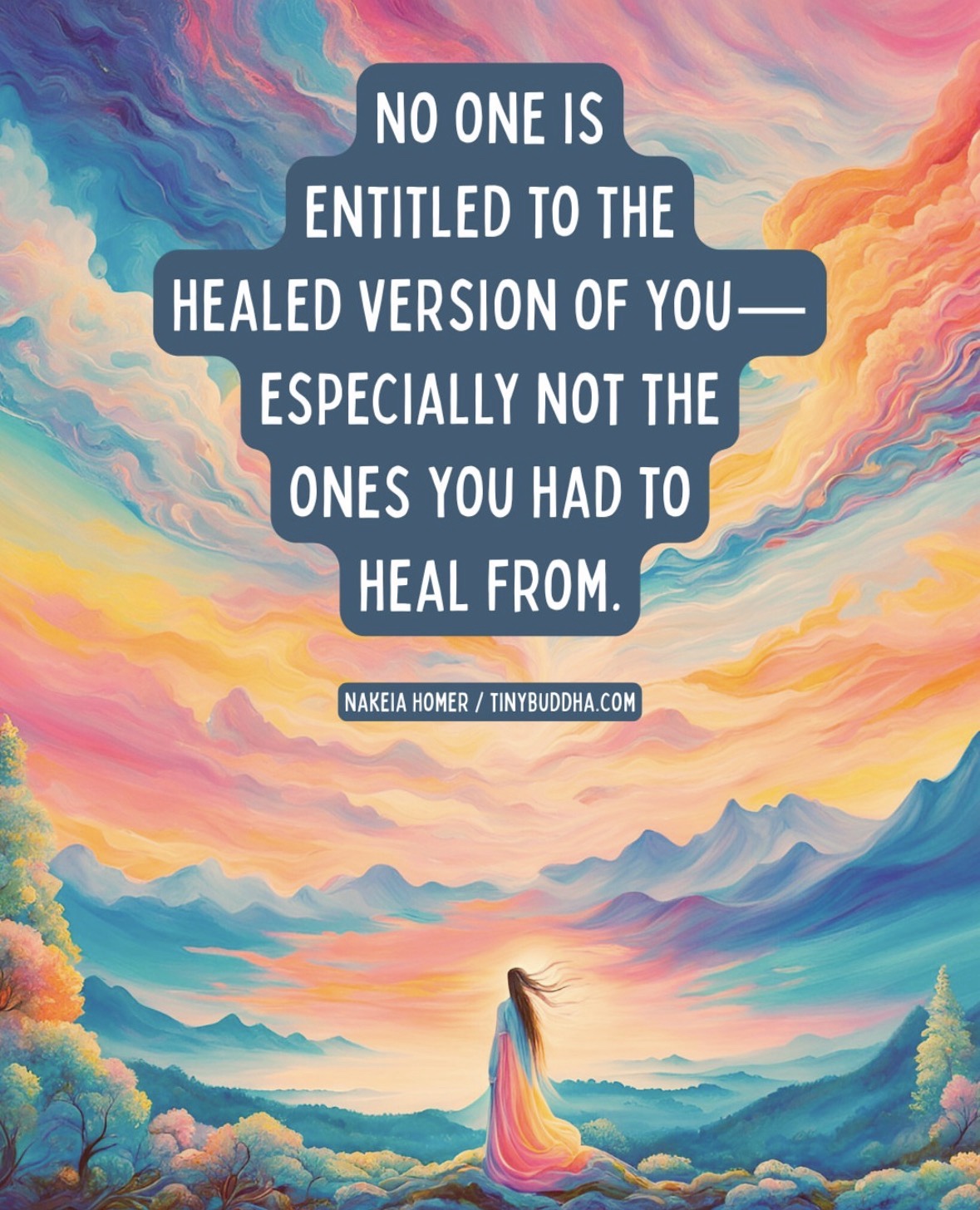
Healing changes you. It softens the edges that once cut too deep and strengthens the parts of you that used to break too easily. But the truth is, not everyone deserves to meet this new version of you—especially the ones who helped create the pain you had to heal from.

When you begin to heal, there’s this quiet temptation to prove your growth—to show that you’ve forgiven, moved on, and become better. You might even feel a sense of guilt for setting boundaries or walking away from people who once had front-row seats to your life. But healing isn’t about proving your evolution to those who hurt you. It’s about reclaiming your peace and protecting the energy that took you so long to rebuild.

The ones who broke you don’t get to enjoy the healed you. They don’t get access to your calm, your kindness, or your clarity. They had their version of you—the one who tolerated too much, gave endlessly, and still tried to understand them even when they didn’t deserve it. The healed version of you no longer carries that weight. The healed version has learned that forgiveness doesn’t mean access.

You owe no one a front-row seat to your recovery story. The closure you seek isn’t found in explaining your boundaries or revisiting old wounds; it’s in recognizing that some chapters must close without applause. Healing isn’t a performance—it’s a private revolution. It’s waking up one day realizing that the same things that once shattered you no longer hold power over your spirit.

So no, no one is entitled to the healed version of you. The people who loved you gently, who stayed when things were dark, who helped you rediscover your light—they’ll meet the new you naturally. But the ones who caused the storms? They don’t deserve to bask in your sunshine.

Your growth belongs to you. Your peace belongs to you. And your healed self—strong, whole, and radiant—isn’t a reward for those who once broke your heart. It’s a gift you gave yourself.

Ask The Right Questions

You get bad answers—

When you ask bad questions:

The best conversations don’t happen by luck.

They are built—

Question by question.

Better questions create:

✔️ Deeper trust
✔️ Faster clarity
✔️ Stronger leadership
✔️ Real emotional connection

It’s not about asking more,
it’s about asking better.

The right question is:

🟢 Open — not pressured
🟢 Simple — not convoluted
🟢 Curious — not judgmental
🟢 Focused — not stacked
🟢 Patient — not rushed

Most conversations fall apart because we:

🔴 Try to be right instead of real
🔴 Complicate the moment
🔴 Rush past silence
🔴 Judge too soon
🔴 Talk too much

The right question, asked at the right time,
can change a conversation.

Change a relationship.

Change a life.

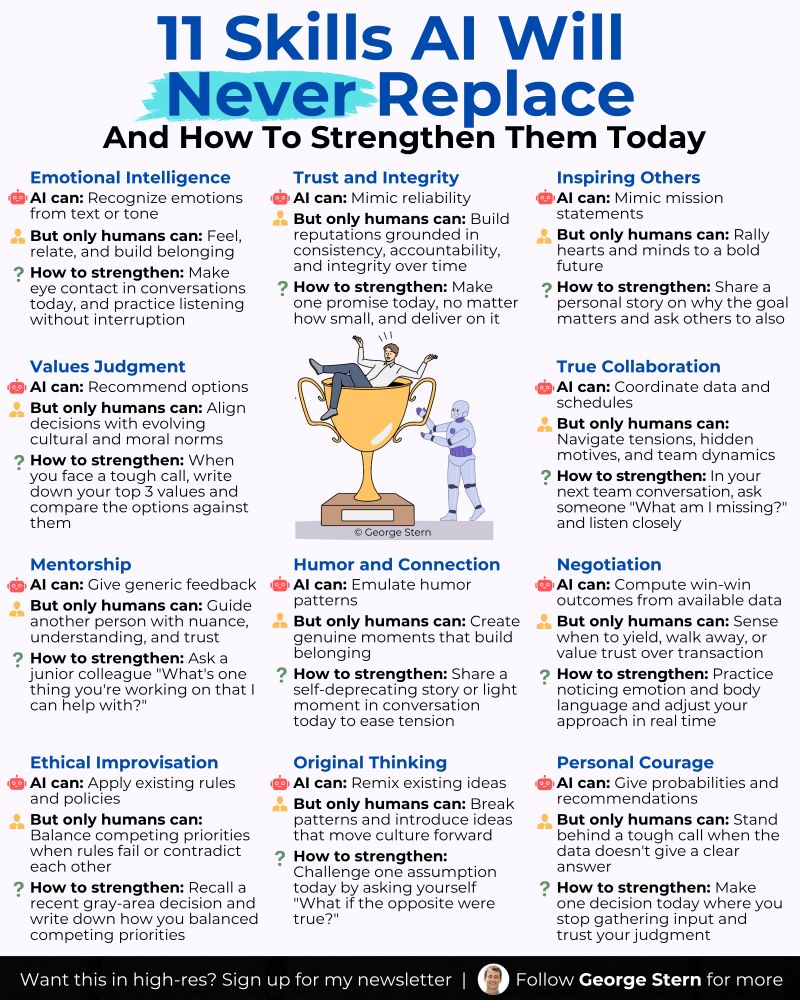
11 Skills AI Won’t Replace

11 skills AI will never replace –

And how to strengthen them:

The best way to stay relevant in an AI-driven world?

Double down on the things that make you human:

1) Emotional Intelligence
↳AI can: Recognize emotions from text or tone
↳But only humans can: Feel, relate, and build belonging
↳How to strengthen: Make eye contact in conversations today, and practice listening without interruption

2) Trust and Integrity
↳AI can: Mimic reliability
↳But only humans can: Build reputations grounded in consistency, accountability, and integrity over time
↳How to strengthen: Make one promise today, no matter how small, and deliver on it

3) Inspiring Others
↳AI can: Mimic mission statements
↳But only humans can: Rally hearts and minds toward a bold future
↳How to strengthen: Share a personal story about why the goal matters and invite others to do the same

4) Values Judgment
↳AI can: Recommend options
↳But only humans can: Align decisions with evolving cultural and moral norms
↳How to strengthen: When you face a tough call, write down your top 3 values and compare the options to them

5) True Collaboration
↳AI can: Coordinate data and schedules
↳But only humans can: Navigate tensions, hidden motives, and team dynamics
↳How to strengthen: In your next team conversation, ask someone “What am I missing?” and listen closely

6) Mentorship
↳AI can: Give generic feedback
↳But only humans can: Guide another person with nuance, understanding, and trust
↳How to strengthen: Ask a junior colleague “What’s one thing you’re working on that I can help with?”

7) Humor and Connection
↳AI can: Emulate humor patterns
↳But only humans can: Create genuine moments that build belonging
↳How to strengthen: Share a light moment or self‑deprecating story in conversation today to ease tension

8) Negotiation
↳AI can: Compute win‑win outcomes from available data
↳But only humans can: Sense when to yield, when to walk away, and when to deepen trust beyond the transaction
↳How to strengthen: Practice noticing emotion and body language and adjust your approach in real time

9) Ethical Improvisation
↳AI can: Apply existing rules and policies
↳But only humans can: Balance competing priorities when rules fail or contradict
↳How to strengthen: Recall a gray‑area decision and write down how you balanced competing priorities

10) Original Thinking
↳AI can: Remix existing ideas
↳But only humans can: Break patterns and introduce ideas that move culture forward
↳How to strengthen: Challenge one assumption today by asking yourself “What if the opposite were true?”

11) Personal Courage
↳AI can: Give probabilities and recommendations
↳But only humans can: Stand behind a tough call when the data doesn’t give a clear answer
↳How to strengthen: Make one decision today where you stop gathering input and trust your judgment

The more automation takes over routine tasks,

The more these traits become irreplaceable.

Magnetic Thoughts: The Pull of What You Believe

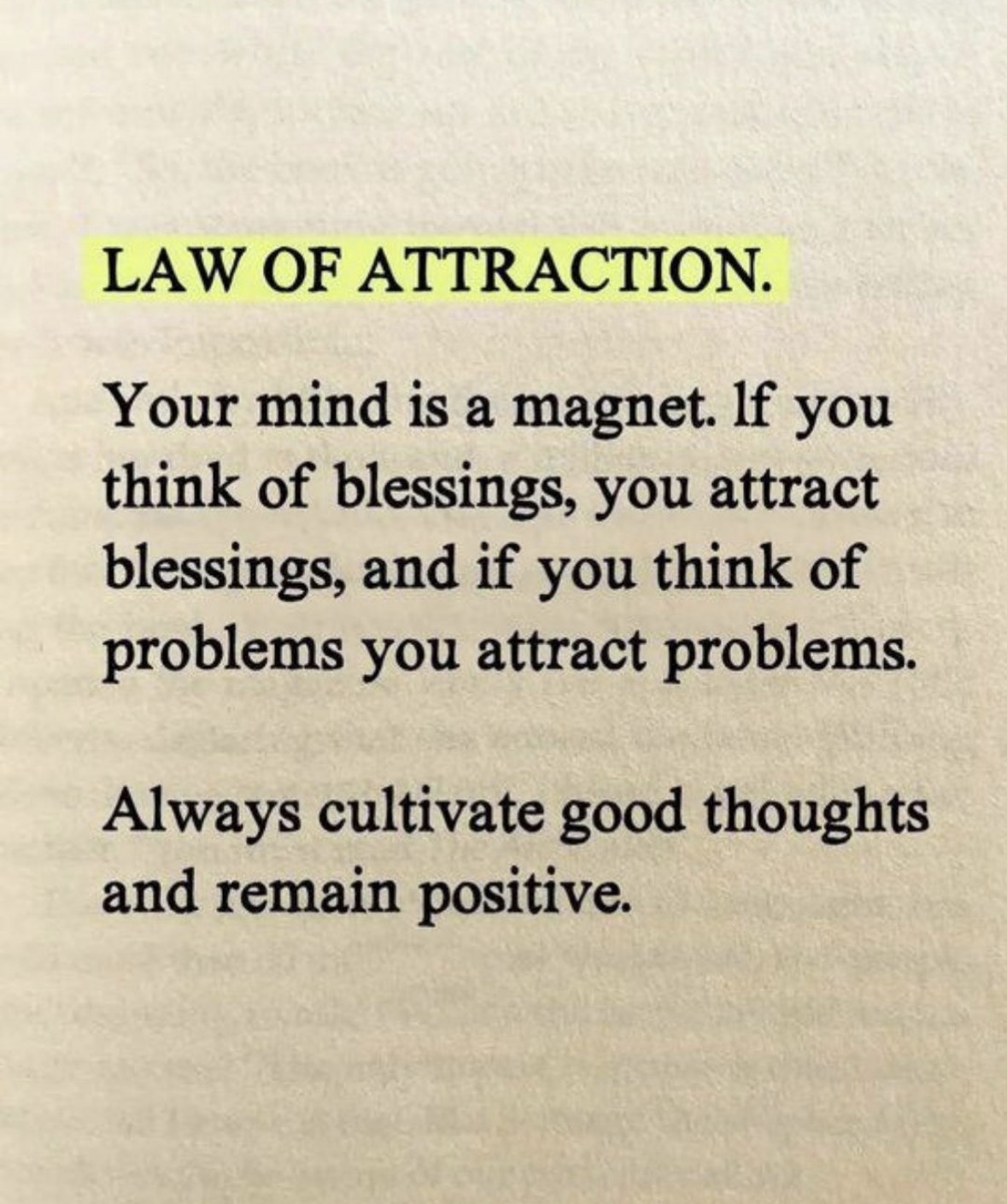
Ever noticed how some people seem to attract good things effortlessly? It’s not luck—it’s the quiet power of the mind doing its work behind the scenes. The law of attraction—beautifully described in Rhonda Byrne’s book The Secret—isn’t just a catchy self-help idea. It’s a simple but powerful truth: what you think, you attract.

Think of your mind as a magnet. Whatever you hold close to your thoughts—gratitude, worry, hope, fear—is what you start drawing into your life. When you focus on blessings, you begin to notice them more often. When you focus on problems, they seem to multiply. It’s not that challenges disappear when you think positively—it’s that your perspective changes. You begin to look for what’s right instead of what’s wrong. You start spotting possibilities where others see obstacles.

In The Secret, Byrne explains that our thoughts send out a frequency, and the universe responds by matching it. Whether or not you take that literally, the idea behind it holds true in everyday life. A grateful heart naturally finds more to be grateful for. A mind filled with worry finds more reasons to worry. So the question isn’t whether the law of attraction works—it’s what you’re attracting right now with the thoughts you entertain every day.

When you wake up, do you greet the morning with “Here we go again,” or “Here’s another chance to do better”? The energy behind that small thought sets the tone for your day. Over time, it shapes the story you live. Positive thinking isn’t about pretending life is perfect—it’s about training your mind to stay aligned with hope, kindness, and purpose.

Every thought is like a seed. Plant enough of the right ones, and your life begins to bloom in unexpected ways. As The Secret reminds us, the magnet in your mind doesn’t choose—it simply responds to what you focus on. So make your focus count. Think of blessings, and they’ll find their way to you. Because the world has a funny way of giving back what you send out.

Empathy

92% of employees would stay if leaders truly understood their needs. (That’s not a theory. That’s data.)

Imagine a workplace where leaders looked beneath the surface.

Here’s what you see:
✅ A polite smile in the hallway
✅ Someone quietly eating lunch alone
✅ A colleague arriving just in time for meetings

But what you don’t see is the weight below the surface:
❌ Grief that fogs their focus after losing someone they love
❌ Silent struggles tucked behind smiles and status meetings
❌ Old wounds that echo louder than today’s tasks

Empathy isn’t soft. It’s strategic. It helps you see the whole person, not just their job title.

Here’s how it changes everything:

1. Spot What’s Under the Surface Empathy helps leaders notice what’s behind silence, anger, or mistakes. ↳ It’s not about judgment. It’s about asking what caused the reaction.

2. Earn Real Trust When leaders show they care, trust begins to grow naturally. ↳ Not just about results, but the real lives of their people. ↳ People stay where they feel seen, not just used.

3. Make Space for Ideas Empathy opens the door to real, honest, and open conversations. ↳ When people feel safe, they speak up and share ideas. ↳ That’s when creativity and fresh thinking start to flow.

4. Turn Colleagues into Allies Empathy creates connection that goes beyond tasks and roles. ↳ It transforms basic teamwork into deep, mutual support. ↳ That’s what builds real strength in teams.

5. Lead a Team That Lasts Empathetic leaders earn loyalty without having to demand it. ↳ They build energy, purpose, and shared commitment to succeed. ↳ That’s how lasting results and strong cultures are built.

💡 People don’t quit jobs. They quit feeling invisible.

Empathy helps people feel human again.

Gemba Walk

Most managers lead from behind a desk.
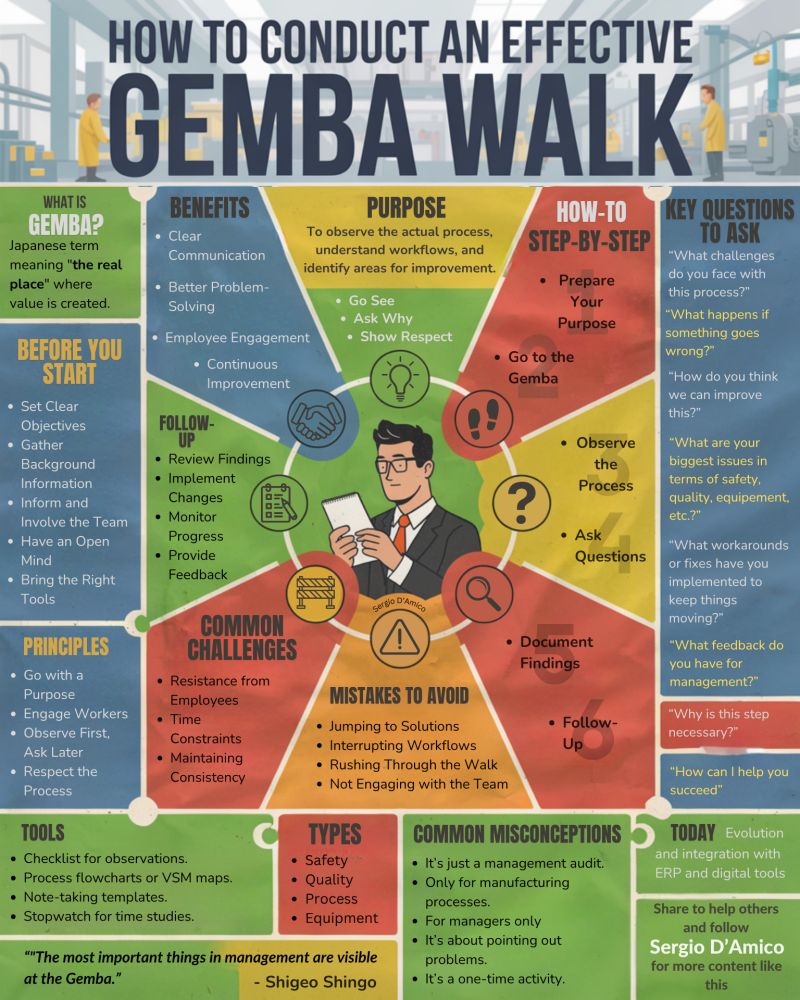
Great leaders walk the floor. Gemba is where real improvement begins.

A Gemba Walk Isn’t Just a Walk.
But most leaders treat it like a checklist.

Here’s how to make your Gemba Walks work for you:

1/ Don’t go in blind.
Know why you’re going.
Pick a goal.
Ask: “What do I want to see or fix?”

2/ Don’t sit. Go see.
Gemba means “the real place.”
That’s where the truth is.

3/ Watch before you talk.
Let the process show its flaws.
You’ll spot more when you speak less.

4/ Ask smart, not sharp.
“What slows this step?”
“How do you fix things?”
“Is this step even needed?”

5/ Don’t skip the doc.
Write what you saw.
Write what it means.
Write what to fix next.

6/ The walk is not the end.
Circle back.
Talk with the team.
Track what changed.

Avoid these mistakes:
→ Fixing too fast
→ Cutting in too much
→ Rushing it all
→ Ignoring your people

Truth: most Gemba Walks fail.

Why?

They’re seen as audits.
Not tools for change.

Use these to win more from each walk:
→ Ask, “What’s broken?”
→ Ask, “What helps you?”
→ Spot workarounds
→ Note safety and tool risks

Here’s your rule of thumb:

Go. See. Ask. Respect.

🔖 Save this post for later.
♻️ Share to help others lead from the floor, not the desk.
➕ Follow Sergio D’Amico for more on continuous improvement.

P.S. A good Gemba Walk isn’t loud.
It listens first… then leads.

The Quiet Strength Behind Every Sacrifice

“Listen, my son, to your father’s instruction and do not forsake your mother’s teaching.” — Proverbs 1:8

There’s something almost sacred about the quiet sacrifices a mother makes. They’re not always loud or seen or even acknowledged, but they shape everything — who we are, what we value, how we love. A mother’s love has this strange kind of strength that doesn’t demand attention yet carries the weight of an entire family.

Think about it — from the moment she wakes up, her day isn’t really about her. It’s about everyone else. It’s about making sure the little things happen — the meals, the reminders, the comforting words, the hugs that somehow make everything feel okay. She gives up sleep, comfort, and sometimes her own dreams so that others can chase theirs. And she rarely complains. That’s the thing about mothers — they don’t need applause to keep giving.

The sacrifice of a mother isn’t always in grand gestures. It’s in the daily choices — the last slice of cake she pretends she didn’t want, the opportunities she quietly lets go of, the tears she hides so you don’t worry. It’s in the way she teaches without lecturing, corrects without shaming, and loves without limits.

Over time, we begin to understand that every lesson she repeated, every boundary she set, every “no” we didn’t like — they weren’t just rules. They were her way of protecting us, shaping us, and preparing us for a world that wouldn’t always be kind. Mothers carry wisdom the way oceans carry tides — steady, deep, and constant.

And maybe that’s why Proverbs 1:8 feels so timeless. It’s a reminder not just to listen to our parents, but to remember. To remember the love that guided us, the hands that held us, and the heart that never stopped believing in us.

So if you’re reading this, take a moment today to think of her — your mother, grandmother, or the woman who stood in that place for you. Call her, thank her, pray for her. Because her sacrifices built more than a life for you — they built the foundation of who you are.

And while she may never ask for it, every mother deserves to hear that her love didn’t go unnoticed. That her sacrifices mattered. That her quiet strength changed everything.

12 Signs of Intelligence

Highly intelligent people:

• Ask lots of questions
• Think before they respond
• Make an effort to understand others
• Admit when they are wrong and learn from it.
• Welcome uncertainty and adapt accordingly

It’s easy to spot someone highly intelligent.

Just look for these 12 signs:

🔹 Insatiable Curiosity
Truly intelligent people always ask insightful questions.

🔹 Open Mindedness
Intelligent people make an effort to understand, not judge.

🔹 Being The Silent Type
An intelligent person prefers to think about their responses.

🔹 High Adaptability
Truly intelligent people aren’t afraid of uncertainty.

🔹 Strong Self-Control
Intelligent people avoid rash decisions and take their time.

🔹 Admitting Faults
Intelligent people don’t tie their self-worth to their ego.

🔹 Wittiness
Intelligent people can find an odd angle and time it perfectly.

🔹 High Creativity
Creativity is an everyday practice for highly intelligent people.

🔹 Strong Self Identity
Truly intelligent people have high self-awareness.

🔹 Variety of Interests
An intelligent person usually works on multiple projects.

🔹 Preference For Solitude
Truly intelligent people need space to reflect and brainstorm.

🔹 Empathy
Intelligent people have a high emotional intelligence.

Which of these traits do you identify with the most?

Rooted to Rise

There are seasons in life when everything feels like it’s falling apart. When the pieces don’t fit anymore, when the light you used to walk toward suddenly goes out. You try to hold yourself together, but no matter how tightly you grip, things slip through your fingers. And in those moments, it’s easy to believe you’re broken beyond repair.

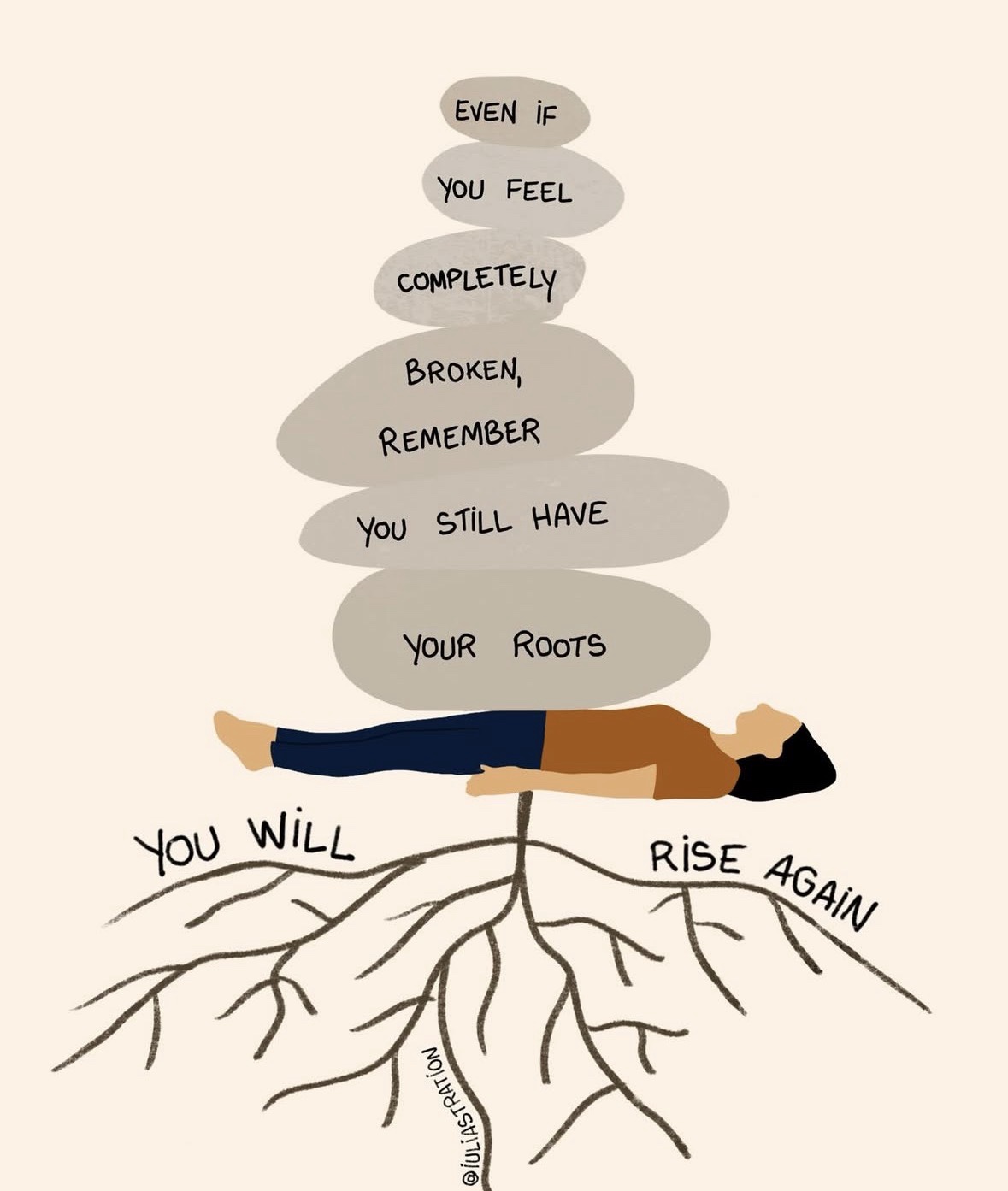
But here’s something worth remembering: even when you feel completely broken, you still have your roots. You still have the parts of you that storms couldn’t shake — your kindness, your resilience, your quiet strength, your ability to love even when it hurts.

Roots don’t disappear when the tree falls. They wait. They hold on. They gather the strength needed to grow again. The same goes for you. Beneath everything that feels lost or shattered, there’s still a foundation that’s alive — quietly pulsing, waiting for the right moment to rebuild.

Maybe this season isn’t about blooming. Maybe it’s about resting underground, trusting that even in the dark, something within you is preparing for light. Healing isn’t always dramatic. Sometimes it’s invisible. Sometimes it looks like simply showing up to another day.

But make no mistake — you will rise again. Slowly at first, then all at once. You’ll find yourself reaching toward life the way roots reach toward water, drawn by something deeper than logic — the simple will to keep growing.

So, if you’re in that space where everything feels heavy, hold on. You are not starting from zero. You’re starting from experience, from wisdom, from roots that have already weathered storms. And those roots — they’ll carry you through this one, too.

Because no matter how broken you feel, you were never truly lost. You were just gathering the strength to rise again.

Take Nothing Personally

Your trigger isn’t the other person—

That’s the story you told yourself:

Not everything needs your energy.

You can keep your peace,
even when things feel personal.

Here’s how high EQ leaders stay grounded
in the heat of the moment:

Start with control, not reaction—

Use the 5 R’s:
🔸 Recognize
🔸 Resist
🔸 Reframe
🔸 Reset
🔸 Respond

What helps most?

It’s not about being passive,
but choosing how and when to respond:

🔹 Regulate first
🔹 Examine the feeling
🔹 Step back mentally
🔹 Pause the reply
🔹 Own your triggers
🔹 Name your choices
🔹 Don’t make it a story

Shift your focus:

⛔ Stop:
Defending, overanalyzing, replaying

✅ Start:
Pausing, protecting peace, moving forward

🟡 Try:
“I don’t need to react to this.”
“Is this really about me?”
“Not every fight is mine.”

Still feel tense?

Use my sheet, find more lines to keep your peace –

Even when others don’t.

Peace comes from the choices you don’t explain.

Power comes from the reactions you don’t give.

The moment you stay calm –

You reclaim yourself.