Make yourself your TOP priority

I believe we should all be a bit more selfish. We should all prioritize our own needs. We should take care of ourselves before taking care of other people. In his book “12 Rules for Life”, Jordan Peterson has a full chapter about how most of us are actually better at taking care of other people than we are at taking care of ourselves.

Give someone a prescription and they might not always take it. Give that same person a prescription for their child/pet — they have more commitment to the habit.

Turns out, we’re actually very bad at prioritizing our own needs over the people around us. Think about it — most of us work for other people, stop at the drop of a dime for friends and family, and generally overextend ourselves trying to help the people around us.

And where does it leave you?

Tired, stressed, frustrated. Like you didn’t take enough time for YOU in all of your attempts to help everyone else.

That’s why am my number one priority.

Thats why I am the most important person in my life.

Thats why it’s always me first, everyone else 2nd.

Sound selfish? That’s because it is.

But I believe that being selfish is a good thing.

YOUR needs must be taken care of before you can help anyone else around you.

You’re of no service to anyone if you’re tired, stressed, anxious, frustrated, angry, etc. You can’t perform at your best with these emotions in the way.

However noble your cause is, if you don’t have your own self sorted out, you’re of little use to anyone.

If however you are in a mentally stable place, a place where you have free time, energy, and creativity to SPARE, then you can actually help others.

Why? Because you have EXCESS. You have properly taken care of YOU, which means that now you have space for someone else.

I help others when I’m my most authentic energetic self.

On the contrary I hurt others when I’m tired, stressed, anxious, or frustrated. I make good decisions when I’m well rested and operating with a calm mind.

On the contrary I make bad decisions when I’m not in a good frame of mind…Then these decisions affect the people around me.

Despite my best attempts to “help” all I’m doing is hurting the people around me.

Put on your own life vest and air supply before you help the people around you.

Everything must flow from a foundation of self love. If you love yourself, you won’t put up with a shitty job, toxic people, or unhealthy habits. If you love yourself, you won’t subject yourself to unnecessary stress. If you’re the top priority in your life, the only thing that matters is living an optimal life, because you know that is what is best for you.

The funniest part?

Most of us don’t know how to do this. We don’t know how to prioritize ourselves. We don’t know how to love ourselves.

We’ve gotten so good at prioritizing the needs of others that we forgot how to properly take care of ourselves.

Be your top priority in life. No one is more important than you, in your own life. No one should ever be put before your own needs. Your habits are a reflection of your priorities, and in order to prioritize yourself you need habits to support it.

Your job is YOU. Your work is YOU. Before anyone else, before anything.

The more you’re on top of your own game the better you can help others and the more you can lead by example.

Prioritizing yourself and getting results shows others that they can do it too.

Help others by helping yourself and being an example.

You only have one life. It’s yours and no one else’s. No ones needs are more important than your own.

You are your own top priority.

What Hard Times Teach Us

While difficult times can feel like a deep dark hole that we can’t escape and we often wonder “Why is this happening to me?”, there is a silver lining to tough times. It’s through difficult times in our life, that we are able to grow. It’s when we are tested that we are able to rise, push through and come out the other side stronger, braver and better.

No one wants to struggle. No one wants to even admit their struggling. We all want to have Photoshopped versions of our own lives that fit perfectly into an Instagram square. But life does not work like that. Every one of us will be faced with a variety of tough times in their life. It is one of the few things we can really count on.

The truth is, there are some important lessons in life that we are only taught through difficult times and they can become the silver lining to the darkness.

The COVID-19 pandemic we’re all living through is scary and life-changing. It’s one of those things we’ll tell our grandchildren about—on par with the way life changed during world wars or the Great Depression. It’s bigger than a lot of previous social shifts, not only because of its tragic outcomes, but also because it’s affected so many of us at once and changing every aspect of life from the most significant (work, income, health) to the mundane (the availability of basic products).

Hard times like this create an opportunity for new thinking. If the size of the crisis is associated with the amount of new learning it can generate, surely our brilliance will be magnified many-fold when we emerge in the new normal. 

New and expanded points of view are generally a good thing. In fact, the roots of the word “emergency” come from the Latin “emergere” meaning to rise up or out. Here are a handful of lessons we’ll surely learn—building our capabilities for the years to come:

Lessons in Finding Perspective

Patience. I read of someone who used to say, “Push your patience button,” when his toddler son was getting antsy. This is certainly an opportunity to learn to do the same for yourself. Whether you’re hoping for your work to return to normal, waiting for the quarantine to lift or just holding out until you can eat in your favorite restaurant again, patience is the name of the game. It’s true that patience is a virtue—and you’re developing it now. 

The Long View. With a narrow perspective, current reality can be even more challenging, but by taking a longer-term view, you can reassure yourself that current realities will shift, and good things will come—ultimately—from today’s experiences and lessons.

Someone is sitting in the shade today because someone else planted a tree a long time ago.

Warren Buffet

A study by Boston University School of Medicine found a sense of longer term purpose in the children of centenarians contributed to wellbeing. We are part of a cataclysmic time. When I was a little boy, I thought history was something that happened to other people. The lesson—that living in this period is part of a greater whole of history—and we will get through it.

Lessons in Resilience and Response 

Adaptability. This is a time when everything feels out of balance and uncertain. You are constantly having to reset and re-orient. Just when you’ve adapted to your company sending you home to work, you have to adjust to a pay cut. Or just when your partner has been furloughed from work, you have to adjust to your children’s school being cancelled for the remainder of the academic year. Constant change can be disorienting, and this is hard both mentally and emotionally. Research shows that resilience is enhanced by having a clear view of reality, a sense of meaning and an ability to improvise. In addition, according to professor de Weerd-Nederhof of the University of Twente, resilience is both a personality trait and a skill. Hard times may be easier if it’s part of your character, but it’s also a competence (a muscle, really), you can develop through today’s challenging times.

Creativity. A colleague says working from home is especially distracting because of all the chores she is reminded she must do. Her hack is to do micro-tasks while she’s on breaks from meetings. At the same time she’s grabbing another cup of coffee, she will wipe furniture, or during her lunch break she’ll fold a bit of laundry. Your hacks may be more sophisticated—perhaps you’re finding new ways to entertain the kids with creative activities, or you’ve found a breakthrough new solution to a problem you’ve been trying to solve at work. Regardless of whether it’s a simple hack or a significant innovation, challenging times which force you out of your typical routines can be a boon for creativity. Embrace your new ideas and leverage your expanded perspectives in the new days ahead.

Lessons About Community

Connections. Nothing is automatic anymore and you can’t just run into people at the coffee shop on your way to work or the work café over lunch. On the other hand, you’re learning just how important friends and coworkers are. According to Susan Pinker in The Village Effect, we are wired for human connection. When we have to put more effort into maintaining relationships, we learn just how important they are. You likely have the opportunity to find new ways to stay in touch whether through video conference, text chains or even shouting across the street to neighbors as you respect physical distances. New research published in the Journal of Consumer Psychology also reveals staying connected via social networks or microblogging can be good for your mental and emotional health. However you choose to link with others is up to you. The lesson is in the importance of strong relationships.   

Gratitude. Being grateful for everyday things and people is critical to happiness. This is a time when you can expand your gratitude many-fold. Whether you’re appreciating the companionship of a pet, extended time with family or the bond you’re building with coworkers through shared tough times, there are plenty of opportunities to be grateful. You can also be especially grateful for healthcare and other essential workers—not to mention the people whose roles you are trying to emulate—teachers, childcare providers or restaurant workers. When you have to do more for yourself, you realize how much you typically rely on those around you—and how meaningful their specialized skills and contributions are.


Going through difficult times happens. To find the light, we have to go through the darkness and while you’re in the midst of it, try to take a deep breath and remember that the lessons you are learning will shift your view of life. You will learn what matters, who matters, how strong you are and how lucky you are to exist.

That’s what going through difficult times teaches us and they are some of the most important lessons we can ever learn.

How to Stop Running and Start Living

It’s difficult to pin down the moment you joined the rat race. It just sort of…happened.

I remember when I just started working I didn’t have much money. I split the rent for your crappy apartment with roommates, got a second-hand old kinetic, and sustained myself on maggi noodles quite often. Yet, I, like most people, look back on those days fondly.

Few year later, when I started earning well, the things I accumulated didn’t do anything to improve my quality of life. And I guess its the same for most of us. In fact, the more money you made, the more stuff you needed. When you get a promotion, you still can’t get ahead because your burn rate keeps pace with what you make.

The problem with the rat race is that there’s no finish line. There’s nobody waiting at the end to give you a medal. The wheel just keeps spinning. And the longer you’re caught in this cycle of consumption, the more natural it becomes. You forget that it wasn’t always like that.

How to Get off the Wheel

The first step toward escaping the rat race is being able to see the rat race. When you’re just trying to keep up, it’s easy to saddle yourself with a hefty rent and an expensive car payment and then convince yourself that’s what will make you happy, but it’s important to realize that your stressors are entirely self-inflicted. The good news is that you got yourself onto the wheel, which means you can get yourself off of it.

  1. Change your workweek. The 9-to-5 grind is gospel in the rat race, but it’s not the best way to put money in the bank. Instead of focusing on putting out fires and generating immediate results, consider dedicating at least 15 percent of your time to activities that build on your quality of life and 40 percent of your time to developing new platforms (instead of maintaining existing ones). What if you spent Monday, Wednesday, and Friday knocking out your daily priorities and dedicated Tuesday and Thursday to working on a new long-term project? What if you took some days off? It’s crazy, I know, but shaking up your routine can help you get off the wheel.
  1. Pay yourself. If you talk to a rat who has been running the wheel for years, he’ll tell you that he earns 10 times what he used to, but his quality of life has not improved. The more he works, the more he spends, and the faster his income disappears. If you want to escape this vicious cycle, you must pay yourself first and sock some money away to accumulate for the future.
  2. Only buy things that add to your quality of life. Our culture of consumption is often what pulls us into the rat race in the first place. It’s drilled into us from a very young age that we need a big house etc. At some point, the stuff you own starts to own you. Whatever you spend your money on, make sure it adds to your quality of life.
  3. Lead by example.When you plant your feet on firm ground for the first time in years, you might look around and notice you don’t have much company. The rat race may have even consumed your business. To help your employees escape the rat race, you first need to demonstrate proof of the concept in your own life. Then try giving them some time during the week to work on their passion projects, and encourage them to invest in themselves. After all, you don’t want a bunch of people running on the wheel for you when you worked so hard to get off of it yourself!

Once you escape the rat race, you’ll be able to move freely and appreciate the world around you without getting dizzy. Remember: Life is a journey, not the destination, and you don’t want to spend that journey on a treadmill going nowhere.

Going Against the Flow

In life, we’re often told to “go with the flow.” Meaning, the flow of energy, the flow of events as they unfold. The implication here is that we shouldn’t struggle against forces beyond our control. To do so is to expend valuable energy that’s better exerted elsewhere.

It’s my feeling that people who are passive accepters will always go with the flow, no matter what. And that’s the majority of people. But then you have the other brand of personality – the movers and shakers. They’re fewer and farther between, sure. These people seem to have that killer gut instinct telling them when it’s right to go against the flow.

Why would you ever want to go against the flow? Why, when your whole life, everyone’s told you to roll with it, go with it, flow with it, and don’t rock the boat?

You’d want to go against the flow when it’s time to instigate change. Change is inevitable, yes. But don’t think for a minute that humans don’t have control over it, because we do. As the species in charge of this earth, we are artisans of change.

Change happens so gradually, we almost don’t notice it. It ripples outward in a series of connected events. One day we wake up, look around, and no longer recognize what we thought to be true. That’s change in effect.

Change will still happen, even if we sit in the passenger’s seat of life and let other people or events manipulate our outcomes for us. But it will happen more to our liking, if we become actively involved and responsible for what’s occurring. That may mean going against the flow and against the grain, in some areas of your life.

When is it time to go against the flow? 

  • When policies and procedures feel painful and onerous instead of pleasurable and effortless
  • When you realize that what worked five years ago isn’t working today
  • When “your people” seem to be drifting in a direction that you don’t want to go
  • When you look in the mirror and the person staring back at you is nearly a stranger
  • When something (or everything) is different, and not in a good way
  • When neglect begins to negatively impact people and situations
  • When “it’s time somebody did something” (why not you?)

Questions to ask yourself

  • What direction are things flowing in your life? Your work? How about with your family, neighborhood, or even your local government?
  • What can you do to shift the tides?
  • How do you think this will affect your life for the long term?
  • How will it impact those around you?
  • What ways can you go against the flow, in a good way?

Going against the flow can be draining. However, I realize that it is often fueled by great purpose and intent. It’s a sweet reminder that while complying with the majority may be easier, it doesn’t always serve in achieving goals nor is it the most creative way of getting things done. 

If we value making things easy and going along to get along then going with the flow works. If we value creativity, innovation, powerful and purposeful intention then sometimes it’s important to go against the flow. My experience is a reminder to not lose connection with those around you. If you assume you are alone, you are. If, however, you look to see if others might be willing to engage and even help, you’ll have more resources available.

Oshun – The Goddess of Love

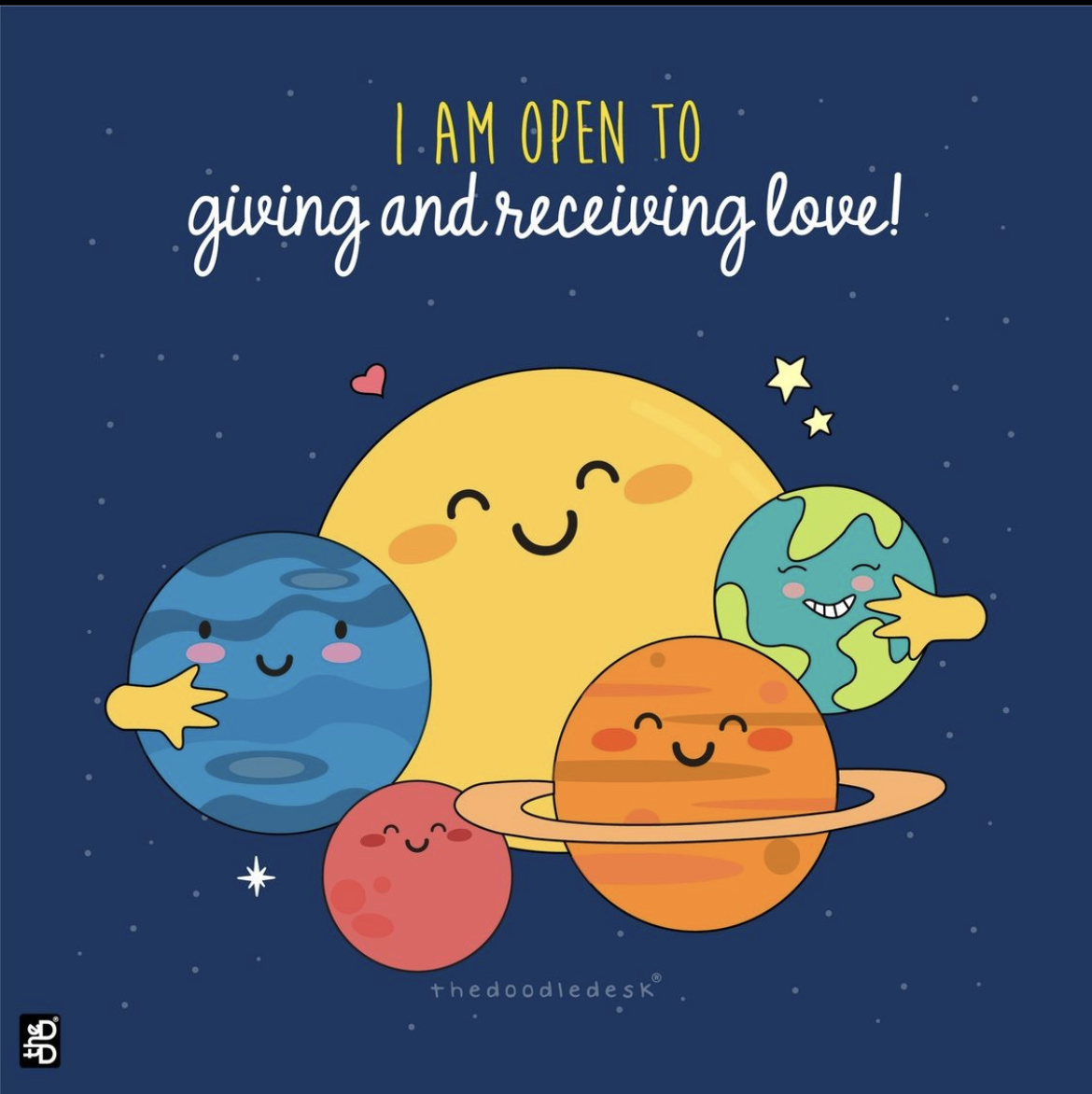
In an ideal world, relationships would be easy. We would give love freely and generously, and receive love with ease. We would be upfront with our wants and desires and rationally communicate with one another if our needs aren’t being met. We would not try to coerce someone to feel a certain way — including ourselves. And, if our needs couldn’t be fulfilled, we would respectfully move on without a lot of drama.

Unfortunately, relationships are rarely that easy. We enter relationships with our past baggage, trauma from childhood and previous experiences, we let our ego fixate on the things we’re lacking rather than what we are receiving, and we either withhold our affections to get what we want, or provide too much affection in an attempt to prove that we are worthy. We make it difficult.

The story of Oshun

Oshun is the Orisha goddess of love, healing, fertility, and fresh water. Orisha deities belong to the Yoruba religion. Originating in Western Africa, Yoruba is one of the 10 largest religions in the world, with about 100 million global practitioners. Oshun is both a creator and a healer. Followers call on Oshun for help with fertility and to cure ailments when medicine doesn’t work. Oshun’s energy can heal and create life, but she can also take it away if she feels that we are ungrateful for what she has given. She represents everything that is lush, fertile, and juicy in our world.

According to the Orisha legend, Olodumare, the god of all gods, sent the female deity Oshun down to earth to create a world with a group of male deities. Oshun wore a gold dress and jewelry. She was dark, beautiful, and quite flirtatious. While they admired her beauty, the male gods didn’t think that they needed Oshun’s help to create a world. Frustrated that she wasn’t getting the reverence she deserved, Oshun left this boy’s club and went to the moon, where she lounged and admired herself in the mirror. Oshun didn’t try to convince the male gods of her value or demand reassurance that she was worthy – she just left. She knew they wouldn’t get far without her.

Oshun’s departure caused the Earth to dry up. Without water, there weren’t any plants or animals. There was no life. The gods didn’t know what was going on; they didn’t connect their failed attempt of creation to the missing goddess. Confused by their lack of success, they went back and informed Olodumare that they couldn’t create the world he had requested. The gods explained that the world was barren. Olodumare looked at them quizzically, noticing that Oshun was no longer with the group. He explained to them that Oshun — her love, beauty, and energy — was essential to create the world and life on it. The chagrined gods apologized to Oshun and begged her to come back and provide her life-giving energy and love. She accepted their apology, but sternly told them not to treat her dismissively again. Upon her return, the world became fertile and beautiful.

When we feel we need another person to complete us, or we need reassurance that we are lovable, we are lacking essential Oshun energy.

When we feel we need another person to complete us, or we need reassurance that we are lovable, we are lacking essential Oshun energy. Oshun knows that she is sexy, generous, and lovable. She doesn’t need reassurance and validation to know that she is worthy. She doesn’t need another person to be whole. She gives her love and energy freely to create life and growth. When she is not appreciated, she simply moves on.

Women and men who possess a lot of Oshun energy are independent, confident, and generous. They love freely, but don’t feel victimized if a relationship doesn’t work out. They are kind and helpful, but they are not martyrs. They can communicate their needs effectively and listen to the needs of their partner. Oshun-like people are comfortable providing space in a relationship to ensure that there is room for both her and her partner to grow and evolve. They realize that everyone has their own path to walk and their own wounds that need to be healed. They provide the support and the love needed for healing but don’t take ownership of everything that ails.

May we be inspired by goddess Oshun to give love with ease, and to help us move on if our love is not being reciprocated. She reminds us that the only love we need is the love for ourselves. We can then act from a place of abundance, from which we can attract and sustain healthy relationships.

Fill up your cup

You can’t pour from an empty cup. Do you intentionally fill up your cup?

With careers, businesses, and families, we’re high-performing achievers that always try to give our best to everything – and this takes a lot out of us!

Many of us understand that we need to fill our cup, but we don’t. Some of that comes down to the guilt that surrounds self-care. There’s a pervasive idea that it feels selfish or indulgent, or that you’re ignoring your responsibilities. It’s not, by the way – you are important too and you need to give yourself permission to decompress and have fun!

Another reason is time. When trying to take care of your ever-mounting list of priorities, self-care often falls to the bottom.

Failing to take care of yourself hurts in the long run, for both health and productivity. Trying to deal with life’s challenges when your glass is empty runs you down physically and mentally, and makes you more vulnerable to illness.

You’re also not the only one who suffers. Ignoring your own self-care also hinders your ability to help the people you love in times of need, which can lead to strain in your relationships in the long term.

So how do you start filling your cup so that you can love others better? Here are three things you can do to begin your journey.

Positive Self-Talk

When negativity comes to play, it can make for a grumpy day – if you let it.

A lot of us don’t realize just how much negative chatter is going on in our brains, even right now! The problem is, a lot of us listen to this chatter and internalize it as truth.

Change that self-talk by first being aware of the chatter in the first place. What are you saying to yourself on a daily basis? What do you tell yourself when you succeed? When you make a mistake?

If you notice that you’re telling yourself some ugly things, it’s time for that to change. Start with your successes. At the end of each day, reflect on your accomplishments and the hard work it took to get there. Don’t forget to give yourself credit!

Practice Gratitude

There are bad things that can happen in the world and in your life, and there’s no getting around that. A big part of filling your cup is redirecting your energy towards constructive mindsets versus destructive mindsets. Instead of draining yourself by dwelling on the negative, you have the choice to reach a more energized and positive state of being that trickles down to the rest of your life.

It’s not that you’re ignoring the negative, either. With a grateful mindset, you become more quick to realize your true capabilities to deal with problems, and that those problems aren’t so bad when put into perspective.

Practicing gratitude doesn’t have to be difficult. You can take five minutes during your morning walk to go over everything in your life that you’re grateful for in that moment. If you meditate or journal, use a session to meditate on your gratitude, or write about something great that happened recently.

If you’re not sure what to be grateful for, start with something more general like “I have running water” or “I have a working car to get around”. Start simple and work your way up. Then you’ll find yourself booming with blessings!

Set Boundaries

Without clear boundaries in life, you are vulnerable to burnout simply because you’re less likely to realize that you are being overextended. By taking the time to solidify your boundaries and stick to them, you demonstrate to others that you respect your time and space and that they should too.

Boundary setting can include big-picture emotional boundaries, such as surrounding yourself with positive relationships and people that support your life mission, and distancing yourself from toxic individuals who do not want you to pursue happiness.

If you’re having difficulty determining your boundaries, journaling or seeking professional counsel can be a great way to start that process of self-discovery and put you on the right path for living your best life.

Self-care is also included here, whether that’s a mani/pedi, massage, me time, exercise, etc. Make it clear, to yourself and others, that those two hours are blocked out just for you! There is nothing wrong with taking that time to refresh yourself, especially when you come out the other end revitalized and ready to roll!


What other ways you find helpful when trying to fill up your cup? Let me know in the comments below

Wabi-Sabi – The Beauty of Imperfection

Centuries back, in the height of the Japanese autumn, in one of Kyoto’s majestic gardens, a tea master asked his disciple to prepare for tea ceremony. The young man trimmed the hedges, raked the gravel, picked the dried leaves from the stones, cleared the moss path of twigs. The garden looked immaculate: not a blade of grass out of place.

The master inspected the garden quietly. Then, he reached up at a branch of a maple tree and shook it, watching the auburn leaves fall with haphazard grace on tidied earth. There it was now, the magic of imperfection. There it was, the order of nature, never far from the hands of humans. There it was, wabi-sabi, thought master Rikyu — the father of Japanese tea ceremony.

700 years ago, to understand imperfection was to be on the path to enlightenment. Tea masters, Buddhist monks, and others from the Japanese nobility embraced wabi-sabi through tea ceremony, calligraphy, and other cultural traditions. Thanks to Rikyu’s teachings, tea ceremony became a place and time when people could step outside their daily cares and find solace in the simple things. The single flower in a bamboo vase, the minimalist scroll, the unassuming patina — all serving as reminders of the wisdom of rustic, flawed beauty. And that nothing was ever perfect. Nor permanent.

Yet, something that appears as distinctly traditional and archaic has its place in our modern lives. Despite the Greco-Roman odes to symmetry and perfection, the notion of beauty residing in flaws has also been a part of western philosophy, literature, and aesthetics. Poets have written about life’s inevitable orders to break us all and the resulting strengths that calcify at our broken places (Ernest Hemingway). How the light comes through our cracks (Leonard Cohen). How imperfection inspires the spark of creation and imagination (Jhumpa Lahiri). Even the imperfect physical objects surrounding us can become symbols of our diligence to find meaning. Thinkers such as Kant, for instance, spoke of virtue-centric qualities of objects (or even buildings) — how their beauty can be a reflection of the human virtues of those who made them or own them. Perhaps this is why the shabby vest knitted by grandma or the scribbled love letters from our children or the broken seashell from an old friend, can turn into our dearest treasures. Because despite their imperfections, these objects become beacons of our humanity: our ability to feel, to empathize, to connect, to love.

The relentless pursuit of perfection — in possessions, relationships, achievements – often fosters hasty judgments. This is where wabi-sabi invites a pause. It opens space. For acceptance and forgiveness. For mindfulness. For seeing the beauty of things flawed, including ourselves and our fellow human beings. For appreciating time’s passage. To acknowledge the impermanence of the world around us comes with tinges of melancholy. Most things of meaning do. Even happiness, at close inspection, has its wrinkles and rough edges. But there is also a relief. A release from the hostage of perfection. A resilience and a commitment to keep finding beauty in the most unexpected places.

Ultimately, wabi-sabi opens space for love. Love for others, and no less for ourselves. Love for our virtues and our scars, our strengths and our vulnerabilities. It is this love, according to Ryotaro Matsumura, that can lead to a deeper satisfaction with life. If we could feel it even once a day, it is this love, he notes, together with “humility and gratitude for the sun, for water, for nature, for humans — despite all our imperfections — that can infuse our days with more meaning and fulfillment.” After all, in a lifetime of fleeting moments, one after another, what bigger gift than to stare in the eyes of beauty — whatever form it may take — and to revel in its reflection of love.

Unfold your Infinite Potential

It really comes down to a question of why do we believe that we are here. Why do we wake up in the morning just to go to bed to then get up again? What is the purpose?

This is where the question of a spiritual life vs a simply physical life arises. Are we here to experience great things? Or are we just to be born, fulfill tasks, “get through the days” and then die?

The greatest human temptation is to settle for too little

Thomas Merton

The Solely Physical Path

When we believe that we are simply our physical lives, we end up doing what Thomas Merton says — we settle for too little.

Maybe we are in a relationship that is “okay” or “fine” or even really terrible — we believe that this is our lot. This is all we can have and that on some level, we have no choice in the matter.

If we are in a job that we aren’t excited about or that we even hate, on some level, we believe that we must stay there — there are bills to pay, mortgage to pay, car payments. We assume that all of these are unchangeable and therefore we are slaves to our work — and so nothing else is possible.

If we wake up every morning sad, depressed, or stressed out, we very likely are focusing on our circumstances, our past, and the belief that we have no choice in our life… all we can do is just survive.

Be humble for you are made of earth. Be noble for you are made of the stars.

Serbian proverb

Human beings have been described as having two aspects blended together — limited physicality and infinite energy. The ancient Chinese symbol for “human” is literally the two characters “heaven” and “earth” combined. Einstein’s famous equation: e=mc² shows us that ‘energy=matter times the speed of light squared’.

We are both infinite energy and physical matter — even according to Einstein.

The important thing to consider is that energy is infinite. The energetic aspect of who we are is part of an infinite field of energy that we are always drawing from and giving back to. This is the same unified field that both quantum physicists and ancient yogis have been fascinated by and playing with for centuries.

How Does This Change My Life?

Let’s imagine that our physical lives are like a car. It has a particular look, size, and capacity. It is limited as to what it can be and what it can do. This is the same as the incarnation that we are living out right now. We were born in a particular family, country, gender, time, and with particular purpose to play out, etc.

If we are to believe that we are truly limited beings in all senses, then we would believe that we can only drive our car down certain roads… that where it can go is predetermined which causes it to be practically self-driving most of the time.

But this isn’t true. We have infinite choice. This is what makes all of the difference.

Being spiritual doesn’t mean having some esoteric belief system that is “out there” and doesn’t apply to our lives. Being spiritual means that right here in our lives we believe in infinite possibilities and that we are here to make choices within that infinite space.

How Do You Choose in Infinity?

This is one of the challenges. Limitations give us a strange kind of comfort. This comfort doesn’t always even feel good or is good for us. But it is often easier to make a choice that we are familiar with than reach into infinity and choose from the vast unknown.

So, we must listen within for the one next choice. We explore our own consciousness to find the voice that speaks our deepest truth. Which choice fills me with hope and happiness? And which choice fills me with dread?

The limitation training that we have received will tell us that we cannot make the choice that fills us with light and love. It will tell us that we are bound to this one option… and we are meant to just survive it. But this is the training of a purely physical world perspective. There is no expansiveness here.

Instead, what if the point of being alive is stretching into that unknown? What if that little voice inside is truly our highest wisdom and is guiding us out of the forest? We know what it feels like to be lost in the forest… to be bound by the “only one choice” perspective. What would it feel like to stretch beyond that and trust the voice within and take a new path?

This is the excitement of our true spiritual journey. It is when we begin to trust something within more than we trust the training we receive from society that everything changes. Our navigation centre shifts from one that just avoids pain, shame, and our fears to listening within and trusting that we are finding our own true path.

This is where the idea of settling for too little becomes a very foreign idea. “Settling” only happens when we believe that have no choices — when we must make the best of what we have.

When we believe in infinite choice, we are always on an adventure. This adventure could show up in our lives by making radically different choices and seeing where we end up. Or the adventure can simply be making different choices as to how we respond to each experience that comes our way.

We are alive today. We are not robots. We are human beings. We have infinite possibilities. We are here to explore those infinite spaces.

What new adventures are possible today?

From Darkness to Growth

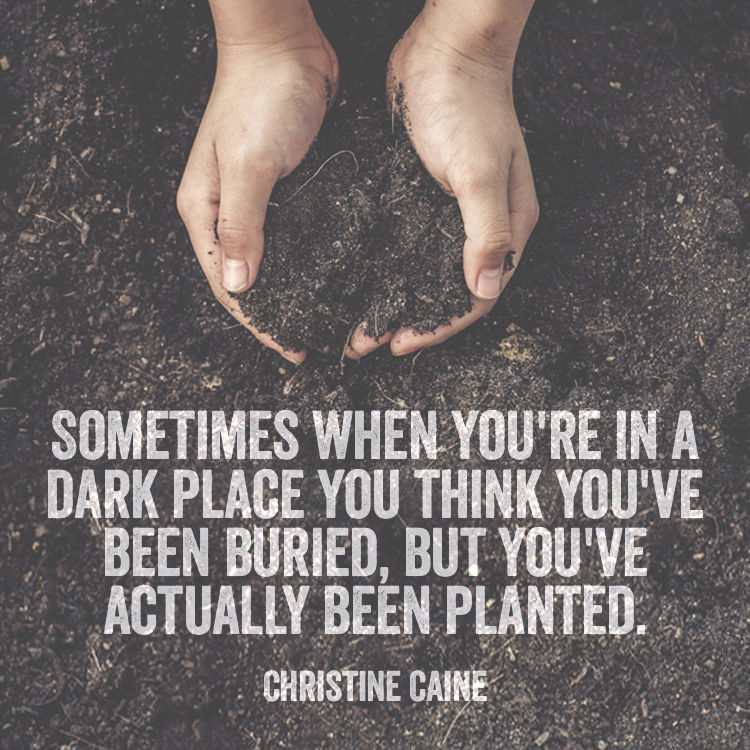
Anyone who has ever had to face a difficult, painful, and dark time in their life will identify with this quote. It will probably resonate with anyone who has struggled to regain their stability and balance during a challenging life experience.

When we find ourselves in that so-called dark place, it’s easy to despair. It’s easy to convince ourselves that things will not get better. Not soon. Not ever. The oppression can even feel like we’ve been buried. Not literally, but there’s enough similarity that the analogy works. It feels like a weight is bearing down on us. We can’t see much light above us. And just as when a person is buried, it may seem like the end of hope for this lifetime.

TAKE A DIFFERENT VIEWPOINT

But consider a different way of looking at the burial image. Picture a seed that’s placed in the ground. It’s covered with dirt. It’s dark down there. There’s pressure above. But this is where the similarity ends. For a seed has only to wait, and growth will come.

And the burial process becomes the gateway to a new life for the seed. A life of growth and production. A life of new possibilities and new adventures. For the seed, life is just beginning. There’s no burial here—there’s life and growth here.

NECESSARY ENDINGS

But life isn’t always a series of new adventures in the same direction. Sometimes life confronts us with the need to make a change in our journey. Sometimes the journey even brings necessary endings. Times when we know that all of the solutions that CAN be tried HAVE BEEN TRIED. When we realize that there’s no going back to where we were, and no remaining where we are. There’s a necessary ending that cannot be denied.

It may be the end of a job. The end of a career. The end of a relationship. The end of a long journey. You don’t want to be rearranging the deck furniture on a sinking ship. What matters is whether you go down with the ship or get to a lifeboat. You may grieve over the fact that the ship is going down. But you need to find a way off the ship and a way to get safely back to land.

YOU MAY NEED TO SAVE YOURSELF

We’ve all heard of the maritime tradition that the captain must go down with the ship. But this is not technically true. The captain is obligated to see that everything is done to save the vessel and her passengers. But if the captain has done everything possible to save the ship and passengers, he may then attempt to save himself. He’s not required to commit nautical suicide in fulfillment of some maritime pact. Even if the ship is sinking because of the captain’s own error—it is nonetheless not mandatory that the captain drown if it’s not necessary.

You can save yourself if you’re in peril. You don’t need to play the martyr. Do what you can to bring about a remedy or solution to the problem. Give it your best efforts. Give it long enough to know you’ve done all you can. Then you may board the lifeboat. It’s okay to save your own life. Your life is just as valuable as the other passengers.

God will often deliver us in a manner that seems, initially, to destroy us.

Daniel Defoe, Robinson Crusoe

What may at first seem to us like destruction, may actually be deliverance. What may at first seem to us like burial, may actually be planting. Not with death—but GROWTH.

CHOOSE THE APPROPRIATE ROUTE

The time may come when we need to determine which one of two routes should be taken.

One route is to stay the course we’re already on. To keep traveling the same direction we’ve been traveling. Though it may take a while before we arrive at the destination we seek. So we will need to steel ourselves for the journey ahead.

At other times the route will need to be altered. The route must be changed, as we’ll never arrive at the destination we seek by traveling the same route we’ve been traveling. This is one of those “necessary endings.” The ending may be painful. We may not want it. We may do everything in our power to stop it. It may cost us dearly. But we know it must be done. To deny it must be done will make it no less necessary. So we do it.

But be encouraged by the words of Christine Caine. Remember that though it may seem like we’ve been buried, we may actually have been planted. And that which is planted is destined for growth. So embrace the growth. In fact, it may be that the growth would have never been possible without the hardship that preceded it.

We can’t be certain that things aren’t going to change for the better very soon. So move forward with hope. Don’t give up on your future. After all, sometimes when you are in a dark place, you think you have been buried, but actually you have been planted.

How to Overcome Self-Doubt

Everyone grapples with self-doubt once in a while, even successful business owners. A little self-doubt is not only normal, it’s healthy. It prevents a leader from crossing the fine line between self-confidence and hubris. But highly successful people don’t let self-doubt derail them from what they set out to accomplish.

Allowing self-doubt to prevent you from grabbing opportunities that come your way is an act of self-sabotage. How can you deal with self-doubt in a constructive way?

1. Avoid Making Excuses

Self-doubt often makes us rationalize a situation to fit our emotional state. We may be afraid to fail, afraid to look bad, afraid to take on more than we think we can handle. We become adept at making a lot of excuses for why an opportunity that presents itself isn’t a good fit. Think back on opportunities you turned down. What reasons did you give yourself? Where these legitimate reasons or just excuses? Excuses are mental barriers we erect that hold us back.

The enemy is our chattering brain, which, if we give it so much as a nanosecond, will start producing excuses, alibis, transparent self-justifications, and a million reasons why we can’t/shouldn’t/won’t do what we know we need to do.

Steven Pressfield, author of Do The Work! Overcome Resistance And Get Out Of Your Own Way

2. Beware of Your Close Circle

There is a popular saying that we are the average of the five people we spend the most time with. While there is no scientific study to support this notion, there is a kernel of truth in the statement: Those we habitually spend time with can have a profound effect on us, whether we are aware of it or not. We know from brain plasticity research that experiences reorganize neural pathways in the brain. According to Dr. John Kounios, professor of psychology and brain science at Drexel University, our neural connections change even after a 20-minute conversation! Who do you spend the most time with? What effect do they have on you? When you spend time with them, do you walk away feeling better about yourself or worse?

3. Raise Your Self-Awareness

Self-awareness is one of the most powerful personal development tools in your arsenal. Make use of it by understanding the root causes of your self-doubt. What specific situations trigger bouts of self-doubt? If it’s a lack of skill in an area, resolve to do something about it. For example, it may be a fear of delivering presentations. Or it may be anxiety at having to make cold calls. Just about anything can be learned. Go out there and get the training you need, or get a coach to help you. 

4. Practice Self-Compassion

While it’s easy to extend compassion to others, very few people are able to temper their self-criticism with self-compassion. Self-compassion is simply being kind to oneself. Stud

Self-compassion develops emotional resilience. To become better at this, Dr. Kristen Neff of the University of Texas at Austin, advises a three-step process: Notice your own suffering, especially when it’s caused by your self-judgment or self-criticism; don’t be cold-hearted toward yourself, and remember that imperfection is a part of our shared human experiences show that there is a strong correlation between self-compassion and positive mental health, such as reduced anxiety and greater life satisfaction, as well as higher self-esteem.


What ideas are buried because you distrust yourself? Perhaps you want to start a healthy fast food truck business in your city, or you have an idea for developing a an innovative solution to a problem you face; perhaps you are mulling over starting a home business or starting a day-care business that ensures happy and healthy pets. Self-doubt is mental paralysis. The only cure for it is having the guts to get started.