9 Types of Silence

When you choose how to use your silence, you have the opportunity to align with, shift, and possibly transform the thinking of the person you are with. You must consciously choose how you are holding your stillness. Some of the 9 types of silence can hurt your connection with others more than help it.

When in a conversation, especially a difficult one, you want to be aware of the silence you are holding. Is your silence alert and full of curiosity? Or are you just waiting to end what you think is a dead-end discourse? Are you open to receiving what your partner is expressing so you can share what you see and hear for clarification? Or are you just waiting for the opportunity to state your opinion?

Novelist, poet, playwright, and psychotherapist Paul Goodman identified 9 kinds of silence in his classic book, Speaking and Language. Here is his list with an interpretation of how the silence might impact your conversations.

  1. Dumb silence of slumber or apathy. Do you have nothing to say because you don’t care? Their words are bouncing off you like a wall.
  2. Sober silence that goes with a solemn animal face. Have you given up being a part of the conversation and just listening because you feel you have to? You may feel like a prisoner until you are released.
  3. Noisy silence of resentment. The judgment you have for the speaker is so loud in your head you don’t hear what is being said.
  4. Baffled silence of confusion. You aren’t sure of the intention of the conversation, the meaning of the words, or the direction the story is going. You are reluctant to say anything because the speaker might not take your feedback well.
  5. Musical silence that accompanies absorbed activity. Whether you are alone or with others, you are so immersed in what you are doing that it feels as if the world is silent around you.
  6. The silence of peaceful accord with other persons or communion with the cosmos. The science of awe and wonder reveals a beautiful combination of peace and curiosity when we feel a sense of oneness with what we see. We quietly accept the unknown but want to know more.
  7. Fertile silence of awareness. What is being revealed has your head spinning. Are the thoughts arising from what you are curious about now or from what you think you now know? Observations and questions arising from your curiosity can further the conversation. Sharing what you think you now know might shut it down.
  8. Alive silence of alert perception. Are you noticing everything in your visual sphere? Acoustic ecologist Gordon Hempton said, “Silence is not the absence of something but the presence of everything.”
  9. The silence of listening to whole person you are with. When you are silent but focused on the other, you can catch the drift of their meaning from their words, their expressions, and the energy they radiate. This is how you cultivate non-reactive empathy. You not only understand their experience, you are then able to reflect what you hear and notice to help the other person assess their thinking. This is an alive silence but not intrusive. This is the silence most useful to effective coaching and leadership conversations, and probably parenting as well.
Can You WAIT?

There is an acronym I heard few year back, WAIT – Why Am I Talking? Whether you are speaking out loud or you are allowing your brain to fill your head with words, ask yourself if silence would be more useful and what type of silence you want to hold.

Kahlil Gibran wrote in his 1923 classic The Prophet, “There are those among you who seek the talkative through fear of being alone.” You can help people feel connected with your silence. They will come to feel safe with you, willing to reveal what is on their minds that they do not understand.  Your curiosity and care can help them come to a new understanding filled with possibility. Gibran called this way of being with people, “rhythmic silence.”

Alive, focused silence is a skill we can all develop!
Saying “No” to Create the Space to Say “Yes”

When you ask someone how they are, 95% of the time they will answer with some version of “busy”, “good, but busy” or even, sometimes, “crazy busy”.

Busy has become a badge of honour, a signifier of success – a humble brag that sometimes implies we are important and in demand. But if you really are “too busy”, chances are, you are not saying no enough.

Many of us struggle to say no, fearing rejection, anger or just the uncertainty of what the other person’s response will be. Our people-pleasing is often rooted in childhood. We might have been raised to be a good girl or boy, praised for being “mummy’s little helper”, or we might not have been given enough attention, and so sought it by pleasing others, even at the expense of ourselves.

We can get so used to saying yes and pleasing others that we don’t even know what we want, or what our needs are. But if your life is so tightly packed with other people’s requests that you don’t have time for what really matters to you – or worse, your mental health is at risk – it is time to make a change.

Out of guilt or fear of confrontation, we take on more projects, invest in someone else’s priorities . . . In the process, we dissipate our most valuable personal resources—time, energy, and money—on things that aren’t important to us. Each time we agree to something without enthusiasm for interest, we waste a little more of these precious resources.

Patti Breitman and Connie Hatch, How to Say No Without Feeling Guilty

Let’s see 3 of the common reasons many of us have a hard time saying “no” and ways we can work with these patterns.

  1. People-pleasing: Well-behaved and compliant children can sometimes grow up into people-pleasing adults. It sounds like a good thing; after all, ‘pleasing’ is a positive word. We grow to experience that saying ‘yes’ makes people happy. The problem with this is that we are often ignoring our own needs in the process. Your own needs matter just as much as anyone else, and if you factor your wants and needs into each decision with equal gravity, you’ll find ‘no’ gets a little easier to say.
  2. Filling the role of ‘rescuer’: Being reliable, jumping in when needed, and being a problem solver are positive traits. But again, loving and caring for those around us, and even helping them, shouldn’t always be at our own expense. Triage requests, along with managing your own needs. How is your self-care going? When was the last time you had fun or spent time doing something you loved? As above, you matter too. Make sure to put your own priorities into the mix as much are you are caring for others. 
  3. Being manipulated: Not everyone has your best interest at heart. Unfortunately, some people (even friends or relatives) are experts at laying on the guilt, telling their sob story, or steam-rolling over good-hearted people. Pay attention to how you feel when being asked (or pressured) into something. Are they holding their affection ransom? Are they threatening a negative consequence if you don’t agree? Did they imply you don’t care about them at all when you tried to say, no? Trust your gut. It really can be, and is, your decision. 

A ‘once-in-a-lifetime opportunity’ is irrelevant if it is the wrong opportunity.

Jim Collins, Good to Great

The issue I have found is that it is impossible to say “no” to opportunities if I don’t know what I truly want? Like most people, I’ll be seduced by the best thing that comes around or one of the modes of operation above. I’ll crumble under other people’s agendas and lose myself.

In order to know what is right for me, I need to make space to slow down and withdraw from the everything that is pulling at me to listen to my inner self.

Here are some helpful tips for saying NO:

  • Don’t lie. Lying will most likely lead to guilt—and remember, this is what you are trying to avoid feeling.
  • Don’t say “I’ll think about it” if you don’t want to do it. This will prolong the situation and make you feel even more stressed. Unburden and disentangle yourself from the situation as quickly as possible. 
  • Be direct, such as “no, I can’t” or “no, I don’t want to.”
  • Don’t apologize and give all sorts of reasons. Keep it simple. 
  • Remember that it is better to say no now than be resentful later. This will only damage the relationship in the long run. 
  • You can still be polite and say, “no.” You can say something like: “Thanks for asking.” or I appreciate you thinking of me for this opportunity.” 
  • Practice saying no. Imagine a scenario and then practice saying no either by yourself or with a friend. This will get you feeling a lot more comfortable with saying no.
  • Remember that your self-worth does not depend on how much you do for other people.

When we are over-committed in our life, we won’t be able to say yes to the important things.

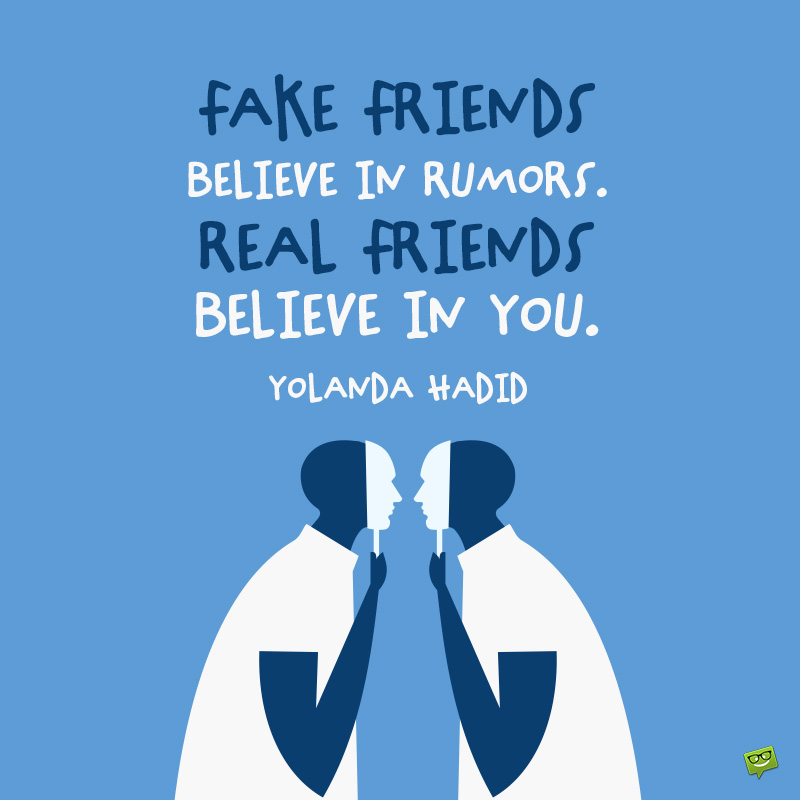
Fake Friends

We’ve all had that “friend” who makes you feel like the friendship is real but eventually you realise that it is more damaging than good for you. They do not have your interests at heart most of the time and often you will catch yourself faking it around them. If a fake friend finds out who you truly are, they probably won’t be friends with you anymore.

So how do you know you have a fake friend? Fake friends are the people you hang around with that drain your energy. You don’t feel comfortable, genuine, or emotionally secure around fake friends. Here are some other key points that may help

  1. Your interests have become more and more different.
  2. You no longer work together / play on the same sports team / attend the same organization.
  3. Over time, you grew apart.
  4. You are always walking on eggshells.
  5. You are less alike than you originally thought.
  6. You have become different people than when you were younger.
  7. You have nothing in common anymore.
  8. You only hear from them when they ask to use your lawnmower / want to borrow your car / need help with next month’s rent.
  9. “Jokes” are no longer funny anymore.
  10. It’s just too emotional.

Turning a fake friend into a real one often takes a lot more effort than it’s worth. The longer you spend time with a fake friend, the longer your fake friend boundaries are established, and the harder it becomes to turn a fake friend into a real friend.

So how can you get rid of the fake friends in your life?

This is Marie Kondo’s KonMarie Method for relationships

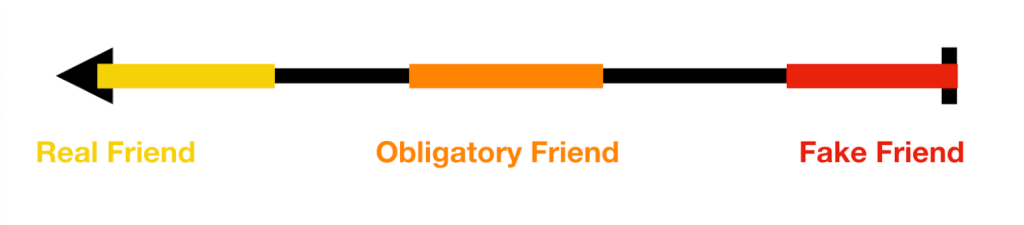
Step #1: Know Your True Friends
These are some signs that you have a genuine friendship, and not a fake one:

Real friends give us their attention and are present to our needs.
They support us when we are feeling down.
True friends are genuine and keep their promises.
They are there for you even if they can’t get something from you.
They accept your flaws.
They actively listen rather than focus on themselves.
True friends make us want to become better.

Step #2: Identify Your Obligatory Friends
Obligatory friend is someone you don’t enjoy spending time with, but end up spending time with because you feel guilty. It’s a habit you do not know how to stop.

This is what happens when a real friend becomes an obligatory friend, and then a fake friend.

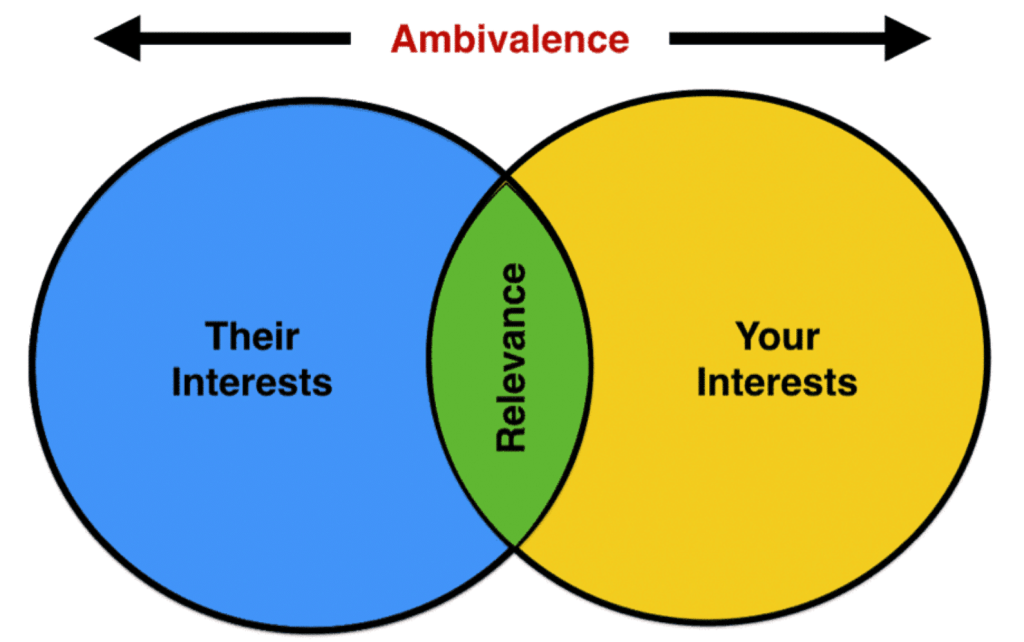
Step #3: Identify Your Spheres of Interest
When you first meet someone, you are not sure how many of your interests and their interests overlap. You both have spheres of interest, and you wonder how much overlaps.

Then as you get to know each other, you find more and more commonalities. The areas you have in common are called relevance. The closer your spheres of interest, the more you like someone.

Sometimes ‘interests’ can be points of relevance such as:

Working at the same company
Living in the same building
Going to the same school
Playing on the same team
Being a part of the same organization
Having gone on the same trip

The more commonalities you have, the more relevant someone is to you. In a great relationship, the circles move closer together:

Step #4: Avoid The Slow Creep
The slow creep is when your spheres of interest slowly creep farther and farther apart.

The problem with fake friends is we often do not realize a friendship is becoming obligatory until it’s already highly unfun to hang out with them—and then it’s hard to break up. You can know someone for years and not realize how much you have changed or that you no longer are enjoying each other’s company.

When your spheres of interest move farther and farther apart, you get closer and closer to becoming ambivalent about the person and your relationship.

And ambivalent relationships are dangerous.

Step #5: Beware of Ambivalent Friends
Our friends can become fake friends when we begin feeling ambivalent about them. 

Ambivalent relationships cause the most emotional strain, take the most energy, and are the most toxic. You might not realize it, but ambivalent relationships are more toxic than toxic ones. Wait! What? I know what you’re thinking, but it’s true!

Step #6: Safeguard Your Social Energy
We only have so much social energy. And ambivalence takes more energy.

With toxic relationships, we know we need to cut them out—and often do. Ambivalent relationships are much harder. Guessing, wondering, protecting—those all take a lot more energy. It takes so much physical energy to be on guard.

Fake friends give you guilt.

You know how this goes. Habit. Routine. Guilt.


Are there people who you are close with for the wrong reasons? Are there people who you are lying to yourself about? Are there people you dread hanging out with?

Letting them go helps you both.

Great Things Begin From The Inside


The message carries a beautiful lesson in it and if taken deeply, can have a great influence on our life. As the human force breaks the egg from outside and ends the life within the egg. Similarly the human being is greatly influenced from the outer forces comprising of the environment, society, friends and acquaintances and thus gets into the trap of all the negative thoughts of failure, jealousy, unhappiness and distress which lead to his downfall. Actually all these thoughts are the production of your own mind, which thinks that your life will get affected by some external event or an individual. You live in constant fear and feel that someone might affect you or become a hindrance to your success or happiness.

You are an egg that is constantly broken by external forces and elements, often having no control over them in any situation. Life seems almost worthless when these forces shatter your spirits to grow beyond yourself and quash your dreams to the floor. However, you fail to realize that you possess a greater inside force, that is far more powerful than any of these external forces combined.

Your Life Begins when you beckon this inside force and feed it with all your heart. It will drive you closer to that pleasurable wonderland you dream of with open eyes in your dark room before bedtime. And you know what’s the best part about this inside force?

It Never Listens to Excuses !

Your sole purpose coupled with unparalleled dedication that only arises from the inside, minus the external distractions that break you, will lead you to the life of your dreams. Reflect and embrace your deepest sources of joy and hop aside from the unwanted drama that will never cease to present itself to stop you from moving forward.

Bad vibes
Drama
Negative People
Fake Friends
That crazy herd-running to Keep up with the Joneses

The good thing — you have a choice!
You and you alone have the power to choose whether you wish for these negative external elements to ruin your goals and the rest of your life. Face them head on, ignore them or be completely indifferent, but do not feed these forces, because sooner of later they will break you.

The Stone Soup Effect

The 21st century leader must have the ability to make the most out of every situation. They are courageous and not afraid to challenge the status quo and push the boundaries to make things better. Because of these qualities and many others, the best leaders know how to get the most out of people; they enable the full potential in others.

An employee’s success, the lens they see through, the decisions they make and how they navigate their careers are all heavily influenced by the types of leaders they are able to observe and learn from. This is why you will find that many of today’s best leaders were mentored by great leaders themselves. Success as a leader is a by-product of the leaders and mentors we associate with throughout our careers.

You know that you found the right leader for your career when they are eager to take an active interest in your growth and success. If your leader doesn’t show interest, this may be an early warning sign that they are the wrong leader for you. So ask yourself, does your leader push you to see the full potential in yourself?

I am reminded of a lovely story named The Stone Soup Effect

There was a wise, old man who lives his life traveling and meeting lots of different people. In his lifetime he’d seen so much that it gave him the opportunity to learn valuable lessons from each situation; all experiences are wonderful as they enrich him with wisdom.

One day, while walking through an unfamiliar village near the center, he met some new folks. He introduced himself and said that he was looking for a hot meal and a safe place to stay. The villagers humbly offered him a place to sleep however, due to having poor crops that year, they have very little food to feed the whole village. The old man was sorry to hear their woes and assured the folks that they don’t need to worry about the food because he is thinking of serving them with some stone soup. All he needed were three things: a large soup pot, wood for the fire, and some water.

The villagers were all confused at the traveler’s request. They haven’t heard of stone soup and wondered if you can cook stone and get soup from it. The old man told them that it’s the best soup he had ever tasted. They just need to bring him a pot and some water and he’d make some for all the village. The villagers did what he requested, when they returned with the items, the old man began preparing for the soup. He took out a small silk pouch and did a great ceremony. After that, he reached in, pulled out a smooth, round stone, and dropped it into the boiling water. The villagers anxiously watched as the old man cooked stirred the pot.

The traveler then asked for some cabbage and salted beef to add to the soup which the villagers willingly gave. When the old man noticed the villagers’ anticipation to taste the soup, he requested more vegetables to add to the soup such as onions, potatoes, carrots, and mushrooms. When the pot was filled with vegetables and all kinds, the villagers realized that they have so much food to share with each other. Not only did they share vegetables and meat, but the baker also gave fresh bread and butter. When the old man finished the soup, he started giving it out to all the folks and shared a wonderful meal together. There was more than enough soup to feed the whole village and they said that it is the best soup they have ever tasted.

The mayor of the village then talked to the old man and offered to give him a great deal of money for the magic stone. The old man refused and told the mayor that it was his responsibility to make the soup without the stone but with just all the ingredients that they had earlier. He added that the mayor should find a way to get the villagers to work together just like what they did a while ago. If the mayor succeeds, he would give them the special stone.

The next morning, as the old man was preparing to leave the village, he passed by a group of children playing alongside the road. He called the youngest child and handed him a silk pouch with the stone. He then whispered to the child and told him that it was not the stone that did the magic, but all of them who helped each other.


Not all people born in a community become leaders. It’s not about the position you hold, but how you inspire and interact with people that make an impact on your community. A true leader will find ways to gain attention and trust from his or her followers so they will be willing to help out just as much when there is a need for support within their communities.

Reflections on our Marriage

Today Ana and myself celebrate our wedding anniversary! These years have been absolutely fantastic. We both have grown in so many ways. But this times hasn’t always been rosy, we’ve had our ups and downs, we’ve had our fair share of challenges. But as the quote on top says, we’ve been by each other’s side on good days and we’ve stood closer on bad days.

When I sit here and think about the years gone by, it feels simultaneously like an instant and an epic, long journey. I cannot believe it was way back in 2016 that we were walking & singing down the aisle at Mae de Deus church, dancing our faces off at our reception to the lively music by Alcatrazz surrounded by our family and most dearest friends.

But now here we are, still working our butts off every day at our jobs AND at our lives. Because a solid marriage really is work. And while I have always considered myself fortunate to have found someone so perfect for me in Ana, it’s more than good luck. Ana and I WORK at our marriage to make it be the insanely wonderful & truly magical relationship that it is. We are lucky to have found each other, but we are not lucky to still be together, because it is not luck that keeps us there.

It is the choices and decisions that we make every day, every week, that has kept our relationship going. We choose to help each other and offer to take more of the brunt of things when the other is tired or stressed. We choose to say “I love you” as often as we can and to follow up with “you know that right?”. We choose to compliment each other (even when I suck terribly at just accepting the compliment) and we choose to be honest with each other even when it might be really hard. We choose to communicate and we choose to compromise. We thank each other for things that probably don’t need a verbal “thanks” but we do it anyway to show our appreciation. We love each other, yes, but we also choose to find ways to express that love through words and actions.

Though we are happy and fortunate in our lives at this moment, our marriage is not perfect. We get angry at times with each other, we say things we don’t mean. We don’t do enough sometimes and other times we take things for granted. But at the end of the day we REALIZE this and I think that is what makes the difference for us.

I’m not sure how anyone defines a “healthy marriage.” But, I think we have at least a “healthier marriage” because of the people who have supported us through prayer, counsel, and friendship. Our immediate family have been absolute pillars of strength. And then our extended family and friends have always been there for us. Each of you know who you are and you mean the world to us!

I think there is something so special about someone – one person – who sees you day in and day out and sees the best and the worst and chooses to love you anyway. That is an amazing gift, and it is an amazing blessing! I can’t wait to see what the next 5 years have in store for us!


Here is a song by Clint Black that we recorded for our 5th wedding anniversary! :)

I remember well the day we wed
I can see that picture in my head
I still believe the words we said
Forever will ring true


Love is certain, love is kind
Love is yours and love is mine
But it isn’t something that we find
It’s something that we do


It’s holding tight, lettin’ go
It’s flying high and laying low
Let your strongest feelings show
And your weakness, too


It’s a little and a lot to ask
An endless and a welcome task
Love isn’t something that we have
It’s something that we do


We help to make each other all that we can be
Though we can find our strength and inspiration independently
The way we work together is what sets our love apart
So closely that you can’t tell where I end and where you start


It gives me heart remembering how
We started with a simple vow
There’s so much to look back on now
Still it feels brand-new


We’re on a road that has no end
And each day we begin again
Love’s not just something that we’re in
It’s something that we do


Love is wide, love is long
Love is deep and love is strong
Love is why I love this song
And I hope you love it too


I remember well the day we wed
I can see that picture in my head
Love isn’t just those words we said
It’s something that we do


There’s no request too big or small
We give ourselves, we give our all
Love isn’t someplace that we fall
It’s something that we do

Are you good at accepting both compliments and criticism?

If I had to ask if you are good at accepting criticism, what would your answer be? Most of us would answer no. Let’s face it, it’s human nature to not love criticism, even when it comes in the constructive variety. Fewer of us are good at accepting compliment as well because as much as we might dread criticism, many of us tend to be even more painfully uncomfortable with compliments. And if you ask me, this doesn’t make any sense.

Why do we lack grace when it comes to acceptance of both these forms of feedback? It’s utterly bizarre and wildly nonsensical. But it’s something I’ve seen among so many people, most especially myself.

I think the reason that many of us struggle with accepting compliments is the exact same reason why many of us struggle with accepting criticism. It comes down to a lack of assurance in our own individual worth, and the way both compliments and criticism make us increasingly aware of this reality.

I want to clarify that when I talk about a lack of assurance in our worth, I’m not necessarily talking about a complete lack of self-esteem here. I believe those are two different things. What I’m referring to is less about liking yourself, and more about knowing who you are. 

More specifically, it’s about knowing who you are in an unshakable, impermeable way. Self-worth is something I’ve worked on for many years now, and while I’ve grown exponentially in this area, that complete comfort in my own identity is something I am still trying to achieve.

I BELIEVE THAT WHEN A PERSON HAS AN INNATE SENSE OF SELF-WORTH, BOTH COMPLIMENTS AND CRITICISM BECOME EASY TO HEAR, ABSORB, AND ACCEPT.

One of the ways that has truly helped me is by being my own best friend. What does this mean?

It means that when I think or say something negative about myself, I put on my ‘best friend hat’and rewind. I ask myself how I would respond if someone were to say those very same words about one of my nearest and dearest? I’d no doubt defend them to the ends of the earth, and so I engage in that exact same inner dialogue on behalf of myself.

It means playing the ‘compliment’ game we tend to play with our besties when we see them for the first time. You know what I’m talking about … You compliment their hair, their skin, their new job, their cute dog … Every night before bed, I reflect on how I made myself proud that day. Through this habit, I pay myself an honest and true compliment every single night.

It means having the same level of honesty that we owe to our closest companions. This of course, is where the criticism comes in. Self-worth should not be about false confidence, but rather it should be about authenticity and truth. So at bedtime, after I’ve paid myself that daily compliment, I also ask myself how I could have done better. Is there somewhere I went wrong or a way that I could be doing more? I answer the question without holding back, and my inner best friend thanks me for it.

Lastly, it means taking care of myself in the way I’d take care of anyone else I loved. This means feeding myself healthy food and moving my body as often as possible. This means taking time to nourish my soul with quiet time, good books, and occasional Netflix marathons. This means pushing myself past my comfort zone, but also knowing when to slow down and just breathe. This means nourishing my soul in the best way I can, because I am now starting to believe that I am worth it.

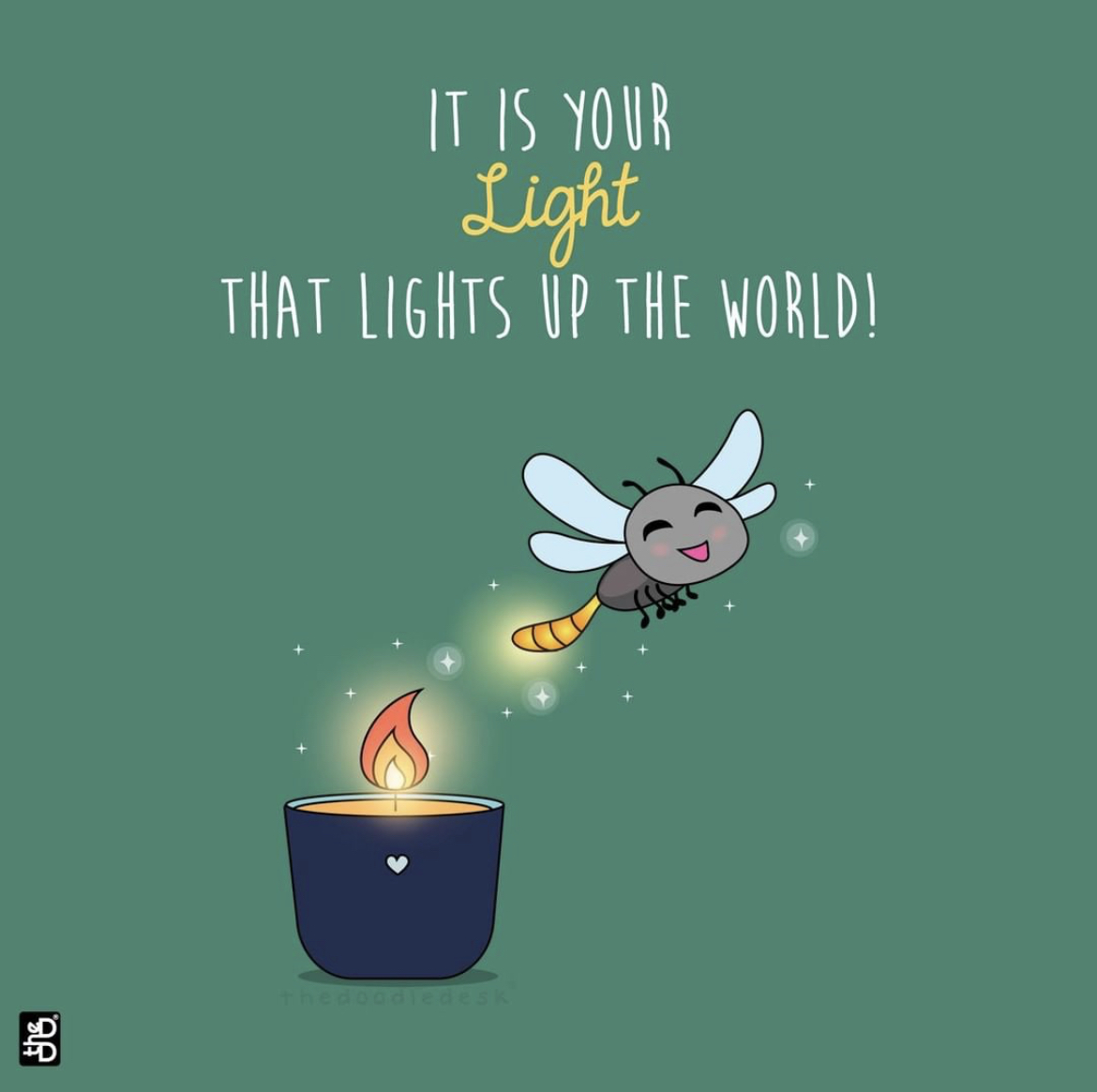
Diwali ~ Be the Light

India is a land of festivals and today we have Deepavali (or Diwali) which literally means “rows of lamps”. Throughout the world, all Hindus celebrate Deepavali or Diwali with great pomp and enthusiasm. Here is a story about the origins of Diwali.

Once upon a time there was a great warrior, Prince Rama, who had a beautiful wife named Sita. 

There was also a terrible demon king, Ravana. He had twenty arms and ten heads, and was feared throughout the land. He wanted to make Sita his wife, and one day he kidnapped her and took her away in his chariot. Clever Sita left a trail of her jewellery for Rama to follow.

Rama followed the trail of glittering jewellery until he met the monkey king, Hanuman, who became his friend and agreed to help find Sita. Messages were sent to all the monkeys in the world, and through them to all the bears, who set out to find Sita.

After a very long search, Hanuman found Sita imprisoned on an island. Rama’s army of monkeys and bears couldn’t reach the island, so they began to build a bridge. Soon all the animals of the world, large and small, came to help. When the bridge was built, they rushed across it and fought a mighty battle.

When Rama killed the evil Ravana with a magic arrow, the whole world rejoiced. Rama and Sita began their long journey back to their land, and everybody lit oil lamps to guide them on their way and welcome them back. 

Ever since, people light lamps at Diwali to remember that light triumphs over dark and good triumphs over evil.


When I hear of light, I am immediately transported to the Presidential inauguration of Joe Biden where Amanda Gorman stole the show with her poem “The Hill We Climb”. The 22 year old poet wowed the crowd with her reading and I was deeply touched by the last 3 lines.

For there is always light, 
If only we’re brave enough to see it. 
If only we’re brave enough to be it.

When day comes, we ask ourselves where can we find light in this never-ending shade? 
The loss we carry, a sea we must wade. 
We’ve braved the belly of the beast. 

We’ve learned that quiet isn’t always peace, 
and the norms and notions of what “just” is isn’t always justice. 
And yet, the dawn is ours before we knew it. 
Somehow we do it. 
Somehow we’ve weathered and witnessed a nation that isn’t broken, 
but simply unfinished. 
We, the successors of a country and a time where a skinny Black girl descended from slaves and raised by a single mother can dream of becoming president, only to find herself reciting for one.

And yes, we are far from polished, far from pristine, 
but that doesn’t mean we are striving to form a union that is perfect. 
We are striving to forge our union with purpose. 
To compose a country committed to all cultures, colors, characters, and conditions of man. 
And so we lift our gazes not to what stands between us, but what stands before us. 
We close the divide because we know, to put our future first, we must first put our differences aside. 

We lay down our arms so we can reach out our arms to one another. 
We seek harm to none and harmony for all. 
Let the globe, if nothing else, say this is true: 
That even as we grieved, we grew. 
That even as we hurt, we hoped. 
That even as we tired, we tried. 
That we’ll forever be tied together, victorious. 
Not because we will never again know defeat, but because we will never again sow division.

Scripture tells us to envision that everyone shall sit under their own vine and fig tree and no one shall make them afraid. 
If we’re to live up to our own time, then victory won’t lie in the blade, but in all the bridges we’ve made. 
That is the promise to glade, the hill we climb, if only we dare. 
It’s because being American is more than a pride we inherit. 
It’s the past we step into and how we repair it. 

We’ve seen a force that would shatter our nation rather than share it. 
Would destroy our country if it meant delaying democracy. 
This effort very nearly succeeded.
But while democracy can be periodically delayed, 
it can never be permanently defeated. 
In this truth, in this faith, we trust,
for while we have our eyes on the future, history has its eyes on us. 
This is the era of just redemption. 
We feared it at its inception. 
We did not feel prepared to be the heirs of such a terrifying hour, 
but within it, we found the power to author a new chapter, to offer hope and laughter to ourselves.
So while once we asked, ‘How could we possibly prevail over catastrophe?’ now we assert, ‘How could catastrophe possibly prevail over us?’

We will not march back to what was, but move to what shall be: 
A country that is bruised but whole, benevolent but bold, fierce and free. 
We will not be turned around or interrupted by intimidation because we know our inaction and inertia will be the inheritance of the next generation. 
Our blunders become their burdens. 
But one thing is certain: 
If we merge mercy with might, and might with right, then love becomes our legacy and change, our children’s birthright.

So let us leave behind a country better than the one we were left. 
With every breath from my bronze-pounded chest, we will raise this wounded world into a wondrous one. 
We will rise from the golden hills of the west. 
We will rise from the wind-swept north-east where our forefathers first realized revolution. 
We will rise from the lake-rimmed cities of the midwestern states. 
We will rise from the sun-baked south. 
We will rebuild, reconcile, and recover.
In every known nook of our nation, in every corner called our country, 
our people, diverse and beautiful, will emerge, battered and beautiful.
When day comes, we step out of the shade, aflame and unafraid. 
The new dawn blooms as we free it. 
For there is always light, 
if only we’re brave enough to see it. 
If only we’re brave enough to be it.

The Man in the Mirror

When I read this quote, I immediately thought of the famous golfer Bobby Jones. In the 1925 U.S. Open, as Bobby set up to hit out of the rough grass, his ball moved ever so slightly, a motion that calls for a stroke penalty. He was the only one who saw it, and yet, he called the penalty on himself. The penalty eventually cost him the championship. When people tried to congratulate him on his sportsmanship, Jones replied, “That’s like congratulating someone for not robbing a bank.”

He was truly a man of integrity. Bobby Jones personified the saying, “Character is what you do when no one else is looking.” Men of integrity value what is honest, true, noble, trustworthy, kind, and right, ahead of personal gain. When it is firmly embedded in our foundation, integrity ceases to be optional but instead becomes a way of life.

This reminds me of one of my favorite poems,

The Man in the Mirror
by Dale Wimbrow

When you get all you want and you struggle for self,
and the world makes you king for a day,
then go to the mirror and look at yourself
and see what that man has to say.

For it isn’t your mother, your father or wife
whose judgment upon you must pass,
but the man, whose verdict counts most in your life
is the one staring back from the glass.

He’s the fellow to please,
never mind all the rest.

For he’s with you right to the end,
and you’ve passed your most difficult test
if the man in the glass is your friend.

You may be like Jack Horner and “chisel” a plum,
And think you’re a wonderful guy,
But the man in the glass says you’re only a bum
If you can’t look him straight in the eye.

You can fool the whole world,
down the highway of years,
and take pats on the back as you pass.
But your final reward will be heartache and tears
if you’ve cheated the man in the glass.

Staying Positive

It is really hard to find something positive in our darkest days. However staying positive is the only way to make it through the tough times. Sometime back I came across the inspirational story of Liz Murray, a woman who overcame tremendous odds to become the best selling author, motivational speaker and a strong voice for women who are also working towards goals despite dealing with significant hardship.

Source: Twitter

Liz, born in the Bronx, New York, recalls her earliest memories of her parents spending their welfare payments on heroin and cocaine whilst she and her sister starved. “We ate ice cubes because it felt like eating. We split a tube of toothpaste between us for dinner.”

The sisters watched as their parents were rendered hopeless by drug addiction and poverty. Her mother would steal their birthday money, sell the TV and even a donated Thanksgiving Turkey in order to get her next hit. Liz would arrive at school scruffy where she was subject to bullying, dropping out as a result.

Her mother’s mantra was “one day life is going to be better.” When Liz was 15, her mother revealed that she was HIV positive and had aids. Shortly afterwards she succumbed to the illness and was buried in a donated wooden box.

Unable to pay the rent, the remainder of the family was evicted. Liz’s father went to a shelter, her sister to a friend’s place and Liz, to the streets.

Becoming homeless at 16, Liz would steal food and at the same time she shoplifted self-helps books and studied for exams in a friend’s hallway. Having not attended school for a number of years, at 17 Liz pledged to become a straight-A student and completed her high school education in just 2 years.

She then did a years work term while attending night classes. A teacher saw the drive she had and mentored her. When he took his top 10 students to Harvard Liz decided that was where she was headed and started to research ‘New York Times’ Scholarships.

Liz graduated from Harvard and went on to become a best-selling author as well as motivating teenagers to resist the temptations of drugs and gangs.

I need to take advantage of life right now. If I don’t, it will pass me by. It’s just that easy.

Liz Murray

The ultimate message is not to use the hardships of childhood or even our current situation as an excuse not to take on opportunities. Stay positive to keep making investments into your future.