The Crab Mentality

There once was a man who sat on a fishing dock and observed how a bunch of live crabs, in a bucket, behaved.

While all of them squirmed at the bottom, every now and then, one crab would crawl up the side in an effort to reach the top and escape. But each time it made its way closer to the rim, a crab from below would reach up and pull it back down. Then, another crab would climb upward, and again, one crab from the bottom would tug it back down.

A crab placed alone in a bucket will easily climb out and escape, but when you place it with a few of its mates, this interesting phenomenon occurs: One at a time, as the crabs try to escape, other crabs will pull them back down to their misery and the group’s collective demise.

In psychology, this behavior became known as “The Crab Effect,” or “The Crab Mentality,” as a way to illustrate the selfish, harmful, and jealous mindset of some members in a group, who will try to undermine and halt the progress of the other better-performing members in the group.

The Crab Mentality thrives on the fixed mindset that was described above, but this mindset is also an extension of what Stephen Covey described in his book, The 7 Habits of Highly Effective People, as the scarcity mindset: “People with a scarcity mentality tend to see everything in terms of win-lose. There is only so much; and if someone else has it, that means there will be less for me.”

It’s a mindset we cultivate from our environment and one that is built on the assumption that if someone else becomes successful, this would somehow mean that we can no longer reach higher levels of success anymore.

And this kind of thinking will suck the joy out of your life: You’ll perceive your peers as competitors rather than people you can collaborate with and learn from. You’ll work from a place of fear, emptiness, and insecurity rather than a place of self-worth and confidence. You’ll narrow-down your vision and so you’ll only see the one small piece of the pie, not the entirety of it.

So, here’s how you can build and maintain a mindset of growth and abundance:

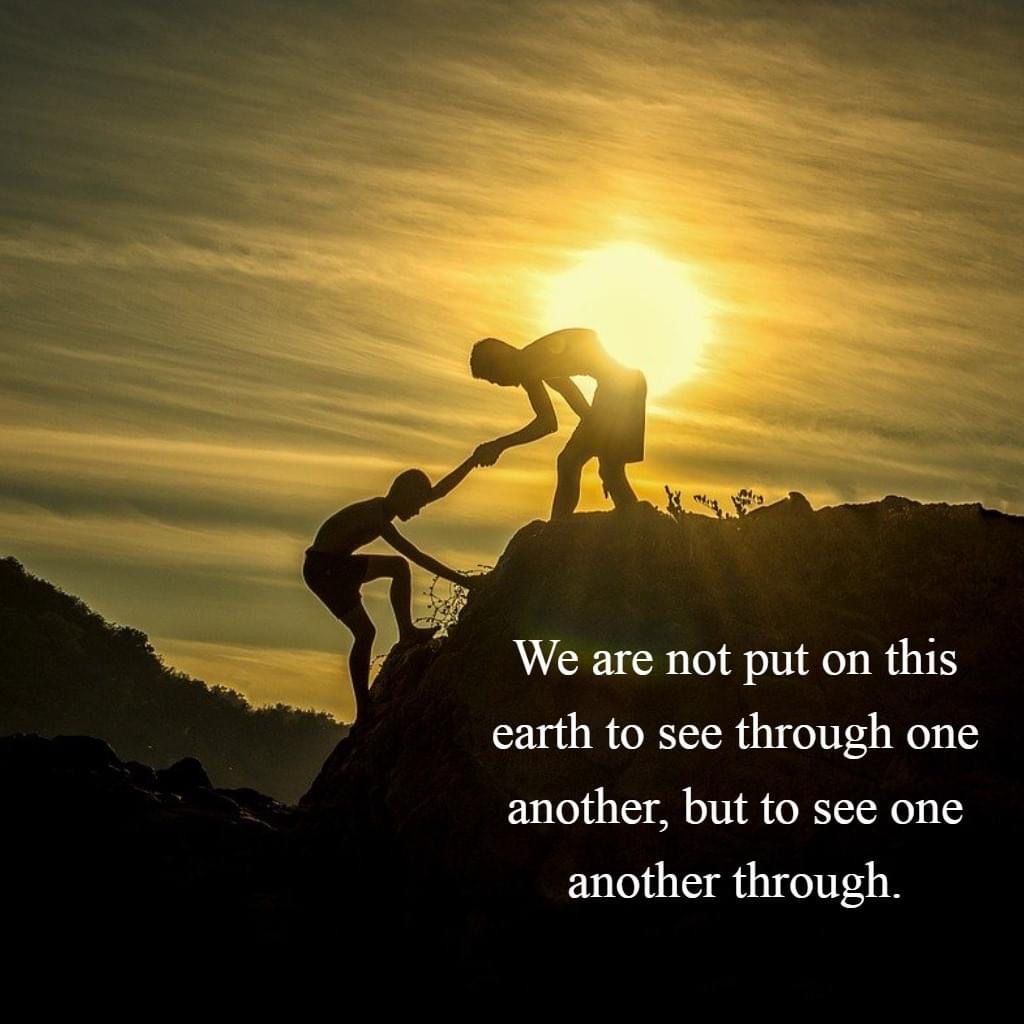
Push, don’t pull. You don’t need to be the crab pulling others down. Instead, you can be the one who lifts them up. Learn to give and be in service to other people.

The best way to find yourself is to lose yourself in the service of others.

Mahatma Gandhi

Consciously practice gratitude. Gratitude is the secret to an abundance mindset, and the daily practice of it trains your mind to see all the good that is already there.

Stop comparing. Only compare yourself to your previous self. Sure, it’s easier said than done.

Drop “I’m jealous” from your daily use. Jealousy will ruin you. It breeds unjust feelings of hate and resentment. When someone works hard for something, and they share their news of triumph with you, reply with “I’m proud of you,” or “I’m happy for you,” or “I admire what you’re doing.” These words will elicit more joyful emotions in you than “I’m jealous.”

Don’t judge others, see their light as inspiration instead. You can paint somebody’s success in a negative light. You can point out flaws in their achievements. You can say they don’t deserve it, complain that it’s unfair, succumb to the pitiful victim role, and judge this person for all the luck they’ve enjoyed along the way. Or you can be compassionate. You can recognize the vulnerable effort that a person endured. You can view him or her as a source of light and inspiration that sparks the fire in you. It all lies in your perspective.

You don’t have to be the victim of your environment. You can also be the architect of it… If you want to maximize your odds of success, then you need to operate in an environment that accelerates your results rather than hinders them.

James Clear

Form a new tribe. One that inspires you. That supports you. That helps you fully step into your own world so you can lean into what calls you—what you know is right for you—and swim in the deep end of the sea, away from the shallow end, where everyone else swims.

  • Find someone who will water your strengths.
  • Find someone who will dim the voice of your inner critic so you can raise that of your confident-self.
  • Find someone who will lift you up, not claw you down.

Ultimately, no one can keep you in a confined box except you. Yes, it’s difficult to succeed when people are constantly trying to pull you down, but it’s not impossible. It can be done, and it has.

We can all strive to be a dreamer, a visionary, someone seeking something better for yourself, then start the crawl upward, because before you know it, the constant effort, struggle, and sacrifice will forge the wings upon which you will soar, and fly.

And once you climb out of that bucket, the open sea is yours to discover.

Do what you say you’re going to do

It’s easy for us to lose focus when we have so much going on all around us. We set lofty goals, new resolutions and start well. And then we lose track of what we set out to achieve. But more importantly I think it’s important to do what you say you will do even with the daily tasks at work or at home. Do you mean what you say? Do you say you will do something and then not do it?

I’m sure we all experience this often. Someone says they will call and they don’t. Someone says they will follow through on a project and they don’t. Someone says they will get something important finished by a particular time and they don’t. How do you feel about someone who says they will do something and they don’t do it?

Here are 3 reasons to do what you say you’re going to do.

  1. Integrity
    For me, doing what I say I will do is a matter of integrity. I wouldn’t feel good about myself if I didn’t keep my word. My word means something to me — I do not take it lightly. If your keeping your word doesn’t mean much to you, why is that?
  2. Trust & Reliability
    If someone lets you down a number of times, then you know they are not reliable. I find that this limits my desire to spend time with them, which is sometimes sad, but I have learned to accept that I cannot trust them to follow through on what they say they are going to do. Friendships and deeply connected relationships thrive on trust.
  3. Self-worth
    We cannot feel worthy when we let ourselves down by letting others down. People who renege on their word do not value themselves enough to act with integrity. Are you kidding yourself that you can feel inwardly worthy when you don’t keep your commitments? Self-worth is the result of treating ourselves and others with caring and respect.

We are all human.  We make mistakes.  We forget.  We fail.  The point here is to not make this a habit.  If you’re known as someone who doesn’t meet promises and expectations, you will face consequences.  Strive to be someone of your word.  Especially when it’s a “small thing,” make sure you do it.  After all, if you fail at the “little stuff,” no one will trust you with the “big stuff.”

When to be Silent, When to Speak Up

The popular saying “speech is silver but silence is golden” dates back to ancient Egypt. It probably means that in some circumstances the less you say the better it is. I can imagine that when you are in the company of strangers, discretion would be more appropriate than indiscretion.

Remaining silent also can represent a risk. In today’s world of overwhelming chatter and information overload, “silence is the most toxic strategy” to reputation and integrity. If we remain silent, someone else will fill the void with more made-up chatter and misinformation.

A lot of us also often tend to sit on the fence. To sit on the fence means you choose not to pick a side in an argument or fail to make a decision on a subject.

To me sitting on the fence is not a good character trait because I think it is important to clearly state what you believe in regardless of whether it fits with the popular consensus or not.  Your words and action are what people identify you with so if you are known to sit on the fence it would be difficult to assess your mindset.

Although I believe you shouldn’t sit on the fence, I understand that there are some situations which you may not be able to give a clear-cut answer due to the complexities of the scenario.

How then should we determine when is the time to remain silent and when is the time to speak? Each situation becomes a judgment call. I ask myself:

  1. Will my voice make a difference?
  2. Does engaging this time mean I will be more, or less effective the next time?
  3. How will I see myself in 20 years if I don’t speak up?”

I believe we should consider the well-being of those who will be impacted by our decision not to speak up.

As I see it, two of the fundamental values are fairness and loyalty. By remaining silent when faced with injustice, we are neither fair to others nor loyal to ourselves and our values.

As William Faulkner once said, “Never be afraid to raise your voice for honesty and truth and compassion against injustice and lying and greed. If people all over the world … would do this, it would change the earth.”

Embracing Minimalism

More people than ever are becoming curious about minimalism. Also known as simple living, or minimalist living, minimalism isn’t just about eliminating physical objects from your life; at its core, it’s about removing anything that isn’t adding value to your life. In doing this, you create more space for the things that will. 

A beautiful concept in theory, but how does one go about establishing a minimalist lifestyle?

One of the key starting points is to identify why you want a simpler life. Chances are that something specific is spurring you to seek out minimalism. Whether you’d like to focus more on self-care, to travel more, to reassess your career or to simply cultivate more “me time,” knowing your motivations will help to guide you on your new adventure.

Simplicity, clarity, singleness: These are the attributes that give our lives power and vividness and joy as they are also the marks of great art.

Richard Holloway

Modern culture has bought into the lie that the good life is found in accumulating things—in possessing as much as possible. They believe that more is better and have inadvertently subscribed to the idea that happiness can be purchased at a department store.

But they are wrong. Embracing minimalism brings freedom from the all-consuming passion to possess. It steps off the treadmill of consumerism and dares to seek happiness elsewhere. It values relationships, experiences, and soul-care. It lets us see all that we already have and reminds us to be grateful.

Embracing minimalistic living will change your life for the better, giving you much needed time and space to pursue things that actually matter.


Being Wise, Being Smart

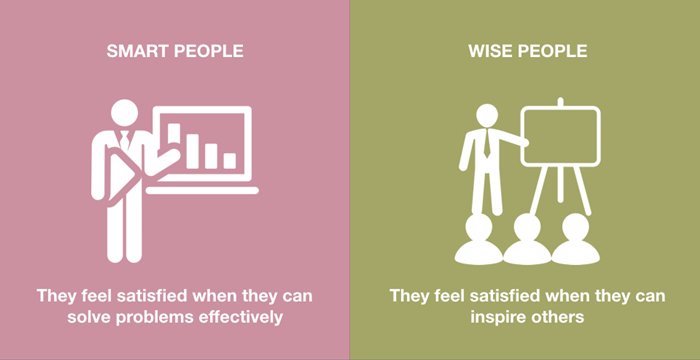
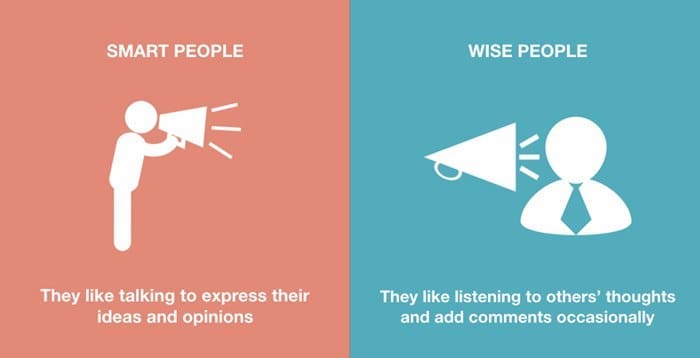
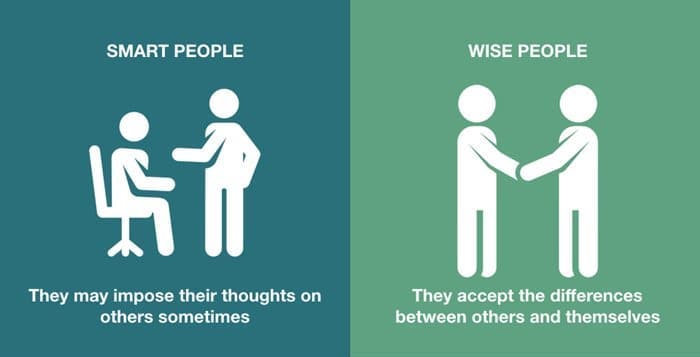
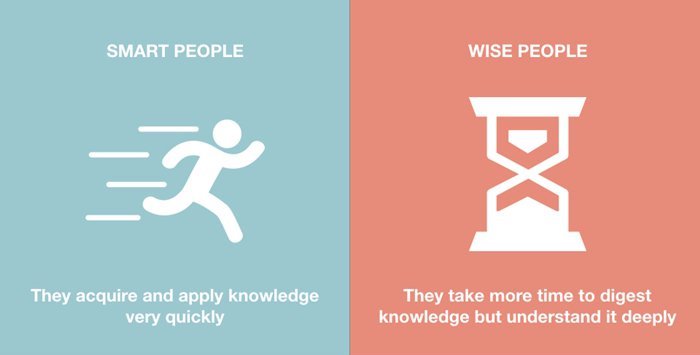
The difference between being smart and being wise might just sound like a question of semantics, but really there’s much more to it than that! Smart people focus absorbing as much knowledge as possible and showing the world that they’re cleverer than average, whereas wise people also find knowledge within and aren’t so focussed on showing it off. Of course, a smart person can become a wise person if they’re willing to make a few changes and put in some effort. I came across these eight graphics on Lifehack which show the major differences between being wise and being smart. Take a look and see for yourself!

1. Sensitivity
2. Satisfaction levels
3. Processing information
4. Opinions
5. Solving Problems
6. Dealing with differences
7. Understanding, Absorbing Information
8. Self Awareness

The ideal plan is to work on being wise and smart. Allow your thinking to be challenged in order to get sharper. Apply what you learn in order to turn your knowledge into wisdom. If you know but do not do, you’re considered someone smart. If you learn and apply that knowledge, even though you may make mistakes, you’re working toward becoming wise. And by doing so, you will notice a difference in the way you handle people, overcome challenges, resolve issues, manage money, and increase your value in your occupation.

Plant a Seed

There are so many things we want our near and dear ones to understand, change. For example, a parent trying to help their wayward teenage child, a teacher attempting to help her class understand a concept, a friend trying to gently admonish a struggling colleague, a manager trying to get the best out of his/her team.

In every sphere of our lives — personal and professional — situations arise in which we wish to influence other people and make them understand something that we believe to be important, something that we are sure will help them.

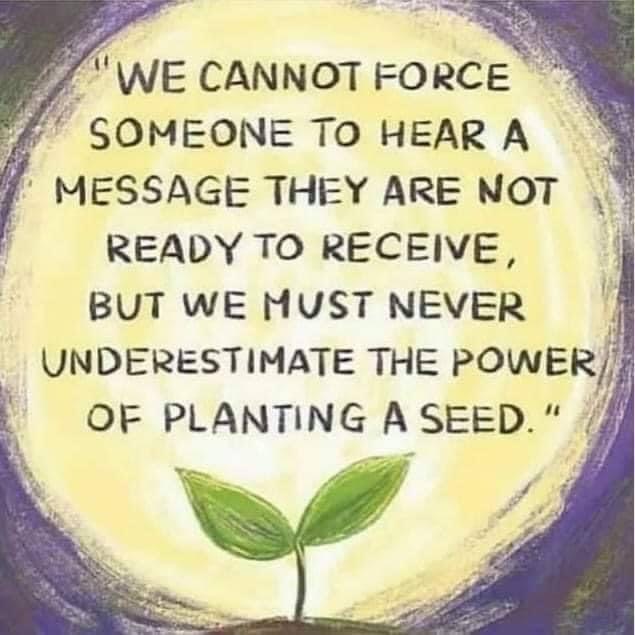
But no matter how hard we try, we cannot force people to comprehend and accept what we’re telling them. No matter how much we’d like to, we cannot force them to understand. We cannot force them to change. We cannot force them to grow. 

Even so, we can plant seeds. We can do our best to communicate the message firmly but kindly—planting that seed of thought. And then do our best to nurture that seed, patiently waiting and hoping for growth. While there’s no guarantee of a seed we plant ever sprouting and growing, there’s absolutely no chance of a harvest if the seed is never planted! 

So plant those seeds. We need more people planting positive seeds wherever they are and wherever they go. Keep it up, and a harvest inevitably will come!

The Right Place, The Right Time

A mother and a baby camel were lying around under a tree.

Then the baby camel asked, “Why do camels have humps?”

The mother camel considered this and said, “We are desert animals so we have the humps to store water so we can survive with very little water.”

The baby camel thought for a moment then said, “Ok…why are our legs long and our feet rounded?”

The mama replied, “They are meant for walking in the desert.”

The baby paused. After a beat, the camel asked, “Why are our eyelashes long? Sometimes they get in my way.”

The mama responded, “Those long thick eyelashes protect your eyes from the desert sand when it blows in the wind.

The baby thought and thought. Then he said, “I see. So the hump is to store water when we are in the desert, the legs are for walking through the desert and these eye lashes protect my eyes from the desert then why in the Zoo?”

Skills and abilities are only useful if you are in the right place at the right time. Otherwise they go to waste.

The Elephant Rope

As a man was passing the elephants, he suddenly stopped, confused by the fact that these huge creatures were being held by only a small rope tied to their front leg. No chains, no cages. It was obvious that the elephants could, at anytime, break away from their bonds but for some reason, they did not.

He saw a trainer nearby and asked why these animals just stood there and made no attempt to get away. “Well,” trainer said, “when they are very young and much smaller we use the same size rope to tie them and, at that age, it’s enough to hold them. As they grow up, they are conditioned to believe they cannot break away. They believe the rope can still hold them, so they never try to break free.”

The man was amazed. These animals could at any time break free from their bonds but because they believed they couldn’t, they were stuck right where they were.

Like the elephants, how many of us go through life hanging onto a belief that we cannot do something, simply because we failed at it once before?

Failure is part of learning; we should never give up the struggle in life.

Everyone has a Story

A 24 year old boy seeing out from the train’s window shouted…

“Dad, look the trees are going behind!”

Dad smiled and a young couple sitting nearby, looked at the 24 year old’s childish behavior with pity, suddenly he again exclaimed…

“Dad, look the clouds are running with us!”

The couple couldn’t resist and said to the old man…

“Why don’t you take your son to a good doctor?” The old man smiled and said…“I did and we are just coming from the hospital, my son was blind from birth, he just got his eyes today.”

Every single person on the planet has a story. Don’t judge people before you truly know them. The truth might surprise you.

Puppies for Sale

A shop owner placed a sign above his door that said: “Puppies For Sale.”

Signs like this always have a way of attracting young children, and to no surprise, a boy saw the sign and approached the owner. “How much are you going to sell the puppies for?” he asked.

The store owner replied, “Anywhere from $30 to $50.”

The little boy pulled out some change from his pocket. “I have $2.37,” he said. “Can I please look at them?”

The shop owner smiled and whistled. Out of the kennel came Lady, who ran down the aisle of his shop followed by five teeny, tiny balls of fur.

One puppy was lagging considerably behind. Immediately the little boy singled out the lagging, limping puppy and said, “What’s wrong with that little dog?”

The shop owner explained that the veterinarian had examined the little puppy and had discovered it didn’t have a hip socket. It would always limp. It would always be lame.

The little boy became excited. “That is the puppy that I want to buy.”

The shop owner said, “No, you don’t want to buy that little dog. If you really want him, I’ll just give him to you.”

The little boy got quite upset. He looked straight into the store owner’s eyes, pointing his finger, and said “I don’t want you to give him to me. That little dog is worth every bit as much as all the other dogs and I’ll pay full price. In fact, I’ll give you $2.37 now, and 50 cents a month until I have him paid for.”

The shop owner countered, “You really don’t want to buy this little dog. He is never going to be able to run and jump and play with you like the other puppies.”

To his surprise, the little boy reached down and rolled up his pant leg to reveal a badly twisted, crippled left leg supported by a big metal brace. He looked up at the shop owner and softly replied, “Well, I don’t run so well myself, and the little puppy will need someone who understands!”